Ten Years #36: The Mountain Goats


Decade of last.fm scrobbling countdown:
36. The Mountain Goats (846 plays)
Top track (37 plays): Home Again Garden Grove, from We Shall All Be Healed (2004)
Featured track: Fault Lines, from All Hail West Texas (2002)

Back in my later high school days, when my early obsession with metal music coexisted with an active participation in games like Magic: The Gathering and Dungeons & Dragons, I remember stumbling across a 1/1 beast in Ice Age that I became bound and determined to name a pseudo-grim heavy metal band after:
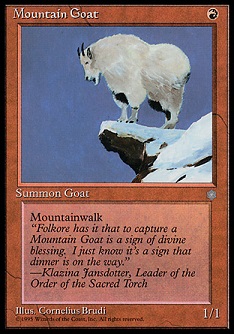
I was very briefly disappointed to find that a band had already beaten me to the punch on that one. One of the things that makes John Darnielle an awesome person, though, is the very real possibility that this is no coincidence and he took his band name from M:tG too. (Probably not, given that his first album came out in 1994, but you never know.) This guy has made a guest appearance on an Aesop Rock hip-hop album and written an acoustic love song set to a Marduk black metal concert in the same year; his appreciation for the awkward and out-of-place couples with an above-average awareness of other musical scenes to conjure a constantly befuddling self-image. The first time I saw him live, before I was very aware of his works, I wasn’t sure if I ought to take the dialogue between each track as stand-up comedy or legitimate commentary by someone who was hopelessly socially inept. In retrospect, it was more the former, but the heart-felt sincerity Darnielle packs into everything he says or writes is both a quintessential part of the act and a reflection of who he really is–someone both incredibly aware and controlling of his public image and just a little bit legitimately weird. He has made his claim to fame writing sentimental solo acoustic songs with over-the-top lyrics and awkward subject matters that are simultaneously heart-felt and tongue-in-cheek. He has cultivated his awkwardness into some of the best solo acoustic albums recorded since Bob Dylan.

Lately, The Mountain Goats have evolved from a solo project to more of a full band. Last time I went to their show the audience had expanded from about a hundred to a few thousand, and Darnielle was hamming up the rock-star image with a shit-eating grin on his face the whole time. I absolutely love this guy and his works, and while I can’t say that I’ve kept up with him consistently over the years (his discography is massive), I’ve certainly listened to him enough to rank in my top 50 most played artists of the past decade. Here are the lines to Fault Lines, to give you some idea of his brilliantly bizarre lyrics:

Down here where the heat’s so fine
I’ll drink to your health and you drink to mine
As we try to make the money we scored out in Vegas hold out for a while
We drink vodka from Russia
We get our chocolates from Belgium
We have our strawberries flown in from England
But none of the money we spend seems to do us much good in the end
I got a cracked engine block, both of us do
Yeah the house, the jewels, the Italian race car
They don’t make us feel better about who we are
I got termites in the framework, so do you
Down here where the watermelon grows so sweet
Where I worshiped the ground underneath of your feet
We are experts in the art of frivolous spending
It’s gone on like this for three years I guess
And we’re drunk all the time, and our lives are a mess
And the deathless love we swore to protect with our bodies
is stumbling across its bleak ending
But none of the rage in our eyes
Seems to finish it off where it lies
I got sugar in the fuel lines, both of us do
Yeah the fights and the lies that we both love to tell
Fail to send our love to its reward down in hell
I got pudding for a backbone, and so do you
La la la la! Hey hey!
Song of the Day: Orion (by Metallica)


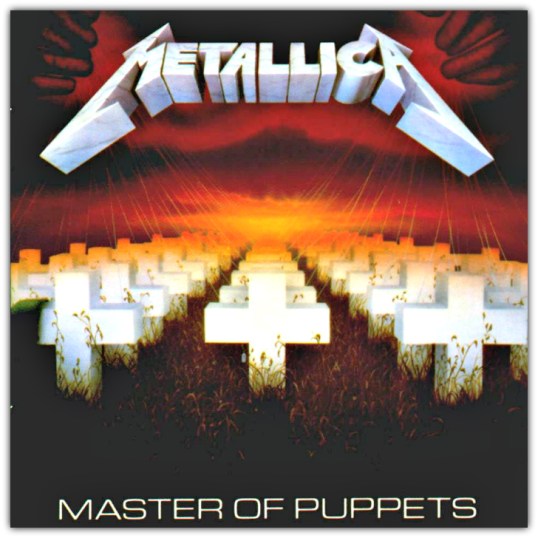
MasterofPuppets Been more than a bit listless and tired of late so what do I do to fix that than listening to some classic metal. One can’t get any more classic metal than one of the best metal instrumentals ever: Metallica’s “Orion” off of their Master of Puppets full-length album.

“Orion” would mark one of the the last great works by Metallica’s great bassist, Cliff Burton. He would pass away while on tour to promoting this album. Details of his passing could be read anywhere so will bypass that to instead celebrate one of his great achievements with this extended instrumental which just showed how great a metal bass player he was, but also just one of the greatest metal musicians of his time.

Fans of metal always wonder just how much more he could’ve contributed to Metallica’s success if he had lived. Would their later albums have been up and down in quality? Would he have gone along with the changes wrought by the band’s producer after his death, Bob Rock, whoguided the band out from their thrash metal roots and into a more pop-friendly hard rock sound. Metal will never know the answer to these questions, but if Burton had lived and remained with the band it’s more than likely that Metallica wouldn’t be the one we know now after their many stylistic changes, but probably still considered by their early, loyal fans as being pure thrash.

One thing for sure, we probably would’ve been given more extended instrumentals like “Orion”.

AMV of the Day: Let Them Eat Rei (Neon Genesis Evangelion)


LetThemEatRei

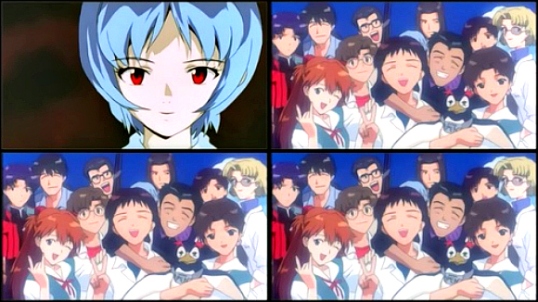
In honor of GLaDOS’s cameo in Pacific Rim as the A.I. voice of the American Jaeger, Gipsy Danger, I’ve chosen an oldie, but goodie AMV from 2008 as the next “AMV of the Day”.

This has to be the very first AMV I’ve ever seen and it was in the spring of 2008 when I attended my very first anime convention with Anime Boston 2008. The video had won Best In Show and Best Drama. It used scenes from the very popular mecha anime Neon Genesis Evangelion, but more important to the convention attendees was the song used for the video: Jonathan Coulton’s “Still Alive” featuring the voice of GLaDOS herself, Ellen McClain.

“Let Them Eat Rei” was the name of the video and it does a great job in combining some of the dark humor from both the song and the anime, but also it’s more darker dramatic aspects. When I think about it I’m not even sure if this video had won Best Drama or Best Comedy, it could’ve won either in addition to Best In Show.

Anime: Neon Genesis Evangelion (Death & Rebirth), Neon Genesis Evangelion (End of Evangelion)

Song: “Still Alive” by Jonathan Coulton feat. Ellen McClain

Creator: jbone

Past AMVs of the Day

Ten Years #37: Drudkh


Decade of last.fm scrobbling countdown:
37. Drudkh (841 plays)
Top track (67 plays): Fate, from The Swan Road (2005)

Ukraine was my gateway into black metal. My earliest exposure to bm in general was met with a closed mind; I remember picking up IX Equilibrium not long after it came out, hearing nothing but distortion and blast beats, and wondering what all the fuss was about, as if its brilliant classical component was non-existent. But somehow Nokturnal Mortum’s Goat Horns blew my mind on first exposure, when I was still a teenager rocking out to In Flames, Opeth, Iced Earth and the like. That pagan spirit screaming murder beneath a wall of chaos struck me with more force than “satanic” or “progressive” bm ever would, then or now. I spent a substantial chunk of my paychecks at The End Records in the years that followed, and I was not searching for “black metal” so much as “Ukraine”. The consequence was that I got to enjoy bands like Drudkh, Hate Forest, and Astrofaes before it was “cool” to do so. (Let’s face it, hype always influences our perspective on a band in one way or another, whether we like to admit it or not.)

Drudkh quickly became my second favorite band in that scene after Nokturnal Mortum, and what I have heard in them over the years is nothing like the steady degradation from Forgotten Legends downward that supposedly “old school” fans are inclined to proclaim. I don’t know why so many people see Drudkh as a one-track band. Perhaps it is because the rate at which they release new material softens perception of the major shifts in their evolution as artists. Handful of Stars (2010) was the only album on which fans actually had to stop and go “wait, is this still Drudkh?”, and the band answered that question decisively with the Slavonic Chronicles EP. But if you listen to Drudkh as a band who played the same solid thing for four or five albums and then got too successful and lost their touch, you’re fairly misguided. It’s true that their first three albums have a lot of similarities. I sort of feel as though their vision on all three was roughly the same, with Swan Road (2005) marking the point at which they had enough recording experience to really make their sound fully capture that vision. The band has rarely repeated the same sound since. Blood in Our Wells (2006), my personal favorite, was a tremendous shift in favor of their pagan undertones, with songs like “Solitude” and “Eternity” crushing the listener through anthems more than atmospherics. Songs of Grief and Solitude (2006) was perhaps the best folk interlude album in black metal since Ulver famously did it, and Estrangement (2007) completely revisioned their sound, replacing characteristic deep plods with rabid, shrill blast beats and grittier production. Microcosmos (2009) was a significant change in production towards the other end of the spectrum, and I rather doubt the gut-wrenching quality of “Ars Poetica” (a song I still think has an almost screamo vibe to it at the climax) would have hit home so forcefully otherwise.

Drudkh’s trip to France on Handful of Stars (2010) may have left some fans disgusted, but it would be frankly stupid to call a band so consistently open to change “sell-outs” the moment their vision failed to reflect stereotypical expectations of aggression, masculinity, whatever the fuck tr00 cvlt dandies demand. And anyone who thinks Eternal Turn of the Wheel (2012) was some grand return to the good old days is in stark denial of the (I think quite intentional) persistent French influence underlining this newest chapter in their discography.

If I seem to be taking a defensive stance here, it might be in part because I’m arguing against my own initial inclinations. I’ve made the shallow mistake of blowing off Drudkh as washed up many times before, and I never fail to regret it once I’ve given the album in question substantially more time to grow on me. (My initial review here of Eternal Turn of the Wheel was cautiously negative. Today I would say it’s great.) I think over the years I’ve developed some boneheaded stereotype of Ukraine as a third world nation–an opinion based mainly on Ukrainian Americans whose pseudo-heritage reeks of self-debasing Cold War propaganda and “world music” zines. (“Only my American non-profit organization can preserve the endangered culture of our pathetic, eternally oppressed, utopianly pacifistic Slavic ancestors! I’ll give you a cultural awareness award and my new Carpathian-Caribbean fusion cd! Buy my shitty handicrafts! Send money!”) I try to forget about it and remind myself that these people are the ultimate American idiots with no actual connection to the people they pretend to represent, but I still find it hard at times to give Slavic musicians the intellectual credit they deserve. Roman Saenko and co are actually among the most intelligent musicians of our generation, and when I remind myself of that and revisit their discography, I realize again that it has been consistently solid from start to finish.

Song of the Day: Pacific Rim Theme (by Ramin Djawadi feat. Tom Morello)


1044764_525696860829949_349808455_n

Ok, to say that my latest musical obsession comes directly from Pacific Rim shouldn’t be quite a surprise. I’ve been so hyped about Guillermo Del Toro’s valentines card to all things mecha and daikaiju that it is only logical that it should progress right to it’s soundtrack. The latest “Song of the Day” is the awesometastic and auralgasmic opening theme song to Pacific Rim composed by Game of Thrones composer Ramin Djawadi featuring the lead guitar stylings of Rage Against the Machine’s Tom Morello.

The “Pacific Rim Theme” is quite the homage to the classic mecha and giant robot anime series of the 70’s and early 80’s. It doesn’t go for the recent trend of classical-based opening credits song with the latest mecha series from  Japan, but it instead goes for the full-on rock’n’roll treatment. It’s mostly brass and strings with some cameos from the horn section. It also makes great use of the electronic style that evokes early John Carpenter and some of the scifi action films of the early 80’s.

It helps to have Tom Morello of Rage Against the Machine doing lead guitar duties throughout the piece.

In the film, the Jaeger pilots were seen as rock stars by the public and this theme made damn sure that we know that when it plays out in the beginning.

Ten Years #38: Split Lip Rayfield


Decade of last.fm scrobbling countdown:
38. Split Lip Rayfield (789 plays)
Top track (46 plays): Thief, from Never Make It Home (2001)
Featured track: Barnburner, from Split Lip Rayfield (1998)

I chose the soundtrack to my four years in Texas appropriately: 92.5 The Outlaw. Poor San Antone lost its favored child–the only country station in the area that focused specifically on bands from Texas and the surrounding region–about a year after I left. (The owners thought they could make more money by instead offering another ultra-right Rick Perry-worshipping neo nazi talk show station.) Well, I didn’t actually ever hear Wichita, Kansas-based Split Lip Rayfield on The Outlaw anyway, oddly enough, but I did stumble upon them while listening to last.fm radio playlists of Texas country bands. It’s not like I’d never heard boisterous, edgy folk music before; the stuff The Outlaw was spinning had more balls than half the heavy metal out there. But to hear it in bluegrass was still a bit of a novelty to me at the time, and to hear it with this degree of technical proficiency blew me away.

They/their label unfortunately seems to have fallen pray to that fallacy that non-mainstream file sharing diminishes revenue–as if people just randomly buy albums from groups they’ve never heard without sampling a track or two first–so I can’t offer any studio selections, but the live video I’m showcasing here was one of the first recordings of the band I ever heard. In retrospect, it was a huge influence on my own personal guitar style. A bit of guitarist and singer Kirk Rundstrom’s total disregard for any supposedly necessary point of transition from acoustic to electric guitar has resonated in everything I’ve written or performed since. Sad to say, he tragically passed away of esophageal cancer right around the time I started listening to them. Rest in peace.

Ten Years #39: Camera Obscura


Decade of last.fm scrobbling countdown:
39. Camera Obscura (786 plays)
Top track (228 plays): Country Mile, from Let’s Get Out of This Country (2006)
Featured track: Razzle Dazzle Rose, from Let’s Get Out Of This Country (2006)

The presence of Camera Obscura on my decade-spanning last.fm charts might be the only fluke in this series. They basically got here because I listened to “Country Mile” on repeat for about 12 hours one day. Let’s Get Out of This Country is the only album I’ve really listened to extensively in their discography (they just released their fifth last month), and while I did get the pleasure of seeing them live once, I can’t say I know much about the band. But I do think this album is absolutely delightful–a little hidden ray of light in my mostly heavier music collection that warmed my heart the first time I heard it and still does today. Its retro vibe feels oddly more authentic than any of the actual classic pop sounds it replicates, made fresh by a heavy dose of 2000s indie aesthetics and Tracyanne Campbell’s angelic vocals. Let’s Get Out of This Country takes me back in time so vividly that I swear I remember growing up surrounded by the wallpaper on the album’s cover. It’s flooded with innocent ennui, played out in front of a kitchen window on a rainy Saturday afternoon. Its depression is refreshing and nostalgic, replaying some childhood memory in which boredom seemed to be the worst thing life had to offer.

Ten Years #40: Ensiferum


Decade of last.fm scrobbling countdown:
40. Ensiferum (782 plays)
Top track (38 plays): One More Magic Potion, from Victory Songs (2007)

Ensiferum descended on metal in 2001 with a force sufficient to crush any lingering doubts that folk metal was a genre in its own right. Their self-titled debut coincided with the first instance in which I was aware enough of metal music to fully recognize the birth of something new, and for that I’ll always view them with a sense of nostalgia. When I was first encountering the likes of Finntroll and Thyrfing, metal in general was still something of a novelty for me. The fledgling trend towards incorporating folk-centric fantasy and pagan themes graced my ears uncontextualized and thus timeless. When I first heard Ensiferum, I finally realized that this was an emergent process. The clerics of musical trendiness had been persuaded to change allegiance, and Odin and Thor would have their day in place of Satan for a time.

Ensiferum’s discography is not the sort of thing that ought to necessarily make them the hallmark of that glorious and now fading trend we call folk metal. Their history is a bit more rocky, oscillating between excellence and something less. Iron (2004) frankly bored me, and I could never quite get beyond the feeling that From Afar (2009) was a collection of Victory Songs (2007) b-sides–outstanding to be sure, but extremely similar and never quite as perfect. Unsung Heroes (2012) stands taller, I think, and its negative reviews are likely a consequence of a forgivably weak ending and single-minded fans looking for Victory Songs 3.0. But no, it’s not consistency of quality that makes “Ensiferum” one of the first names to pop into my head when I think of folk metal. It’s more a matter of timeliness–of peaking when it mattered most. Ensiferum (2001) sounds a little washed out now, but it was a triumph in its day, and it appeared at the cusp of the genre’s transition from an underground pulsation to a self-declared musical movement. Victory Songs (2007), their best album (I think most fans can agree to this), emerged at the pinnacle of the genre, when the original artists were coming into their mid-career highs and the best of the bandwagoners were leaving their marks. It was supported by a grand-slam of folk metal tour bar none here in North America the following year: Ensiferum playing in the USA for the first time, closing for a mind-blowing opening line-up of Eluveitie, Týr, and Turisas at Paganfest 2008.

Unsung Heroes (2012) appeared in time to claim ownership of folk metal’s end. I’ve been getting the sad feeling lately that 2011 marked the style’s grand last hurrah. It was a loaded year for metal, with a huge number of releases. The new trend away from earthy folk towards ethereal post-black was ever present, 2000s legends duking it out for album of the year with metal newcomers like Krallice, Liturgy, Altar of Plagues, and Deafheaven–those bands I’ll wax nostalgic about ten further years from now. Ensiferum got their two cents in a year late, in a sense, but perhaps this amounts to the honor of writing the final post-script. Sure, folk metal bands aren’t going away, but the spark of collective musical inspiration has moved elsewhere. Ensiferum happened to leave their greatest marks in the opening chapter, climax, and epilogue.

I’ll leave you with a really beautiful song from Unsung Heroes: Burning Leaves.

Ten Years #41: Our Lady Peace


Decade of last.fm scrobbling countdown:
41. Our Lady Peace (765 plays)
Top track (30 plays): Angels Losing Sleep, from Healthy in Paranoid Times (2005)

We are all entitled to a guilty pleasure or two. I would humor calling Our Lady Peace mine, but only if we agree to restrict their cause for lameness to the lyrics. Their popularity, especially as those “Canadian softies” emerging amidst much heavier U.S. trends, overshadows the fact that they are absolutely amazing. Raine Maida’s voice is capable of making anything sound great, and capable of making me not give a shit about singing a falsetto at the top of my lungs at traffic lights with my windows down. Even as I was signing the final divorce papers with my radio in the late 90s and letting my affair with Napster and heavy metal be known, I was probably listening to 1999’s Happiness…is Not a Fish That You Can Catch more than any other album on the market. I’ve definitely listened to it more than most other 1990s albums–even the grunge greats–in my more informed years to follow.

How people have experienced OLP over the years probably varies drastically depending on where you’re from. The late 1990s and early 2000s marked the final days of musical segregation, with Americans barely having a clue who Radiohead, Blur, and Muse were. (Didn’t one of them do that “woo-hoo” song?) The U.S. and Canada were a bit more in sync, but Our Lady Peace was definitely not the overhyped megaband down here that my Canadian friends recall. They were just “that band that did Clumsy and Superman’s Dead”. The singles on Happiness received minimal air time, and the only song since that I’ve really heard extensively here was “Somewhere Out There” (Gravity, 2002). (I can’t honestly speak for their last three albums of course. Maybe “Angels Losing Sleep” was huge–it deserves to be–but I hadn’t listened to mainstream radio in years by then.) My main point here is that, while OLP might have been played to the point of annoyance in Canada, down here they were presented modestly enough to not face serious media pollution. I had a better opportunity to engage them by choice–and choose which songs I liked best.

Our Lady Peace are a band that has definitely catered to the radio single. Even on their first album, Naveed (1994), a few tracks stood out as decisively more catchy than the status quo. Their albums by and large are never perfect; there are plenty of second-rate tracks in their discography. What they have really accomplished throughout their career is a consistency of top-notch quality among the handful of main focus tracks they produce for a given album. They are a band better set to a playlist, and even as recently as Burn Burn in 2009 they’ve pumped out new material worthy of that mix. (“Signs of Life”, “Paper Moon”–featured above) Happiness…is Not a Fish That You Can Catch remains, I think, their best album by far, because it is the only one for which I can safely say there are no downer tracks. Every song on that album could be a single. But I really do enjoy the full discography, and I have a tendency to queue it up from start to finish when I’ve got a long project to work on at home. Something about the more ho-hum tracks projects a sort of humility on the big picture–the sense that these guys are down to earth, not supernaturally brilliant in the sense of contemporaries like Smashing Pumpkins and Pearl Jam. Their lyrics are frequently incredibly lame, but that’s the only major fault I hear in a band that was perhaps a bit too successful to be appreciated for their real worth.

Our Lady Peace: a guilty pleasure? Maybe, but I’ll keep singing along.

Song of the Day: Haunted (by Rob)


Maniac

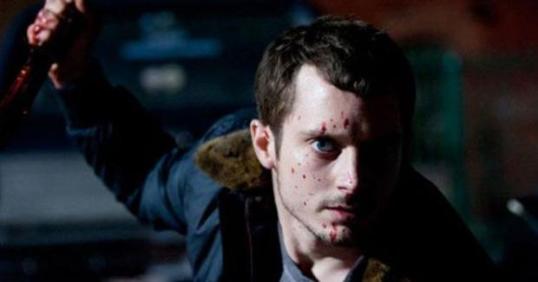
Today’s song of the day is an instrumental piece from the latest horror remake, Maniac.  Composed by the French musician Rob, Maniac‘s score is just as important to the film’s unlikely success as Elijah Wood’s disturbing performance in the lead role.  Reminiscent of the scores composed and performed by Goblin for the films of Dario Argento, Rob’s work here results in one of the best horror scores ever recorded.

Here is Haunted.