Happy Labor Day! In honor of this holiday, I’d like to take a moment to acknowledge a unique genre of film that truly sparked my love affair with cinema. That genre, as you may have already guessed, was Italian horror.
Today’s song of the day comes from one of the greatest of the Italian horror films, Lucio Fulci’s Zombi 2. While the film’s very true artistry is often overshadowed by its infamous reputation and the score itself is clearly a product of its time (the late 70s), I think that Zombi 2 was a cinematic high point in general and a masterpiece of horror in specific. And a large part of that was due to Fabio Frizzi’s operatic yet foreboding score.
Here then is today’s song of the day, Fabio Frizzi’s Main Theme from Zombi 2.
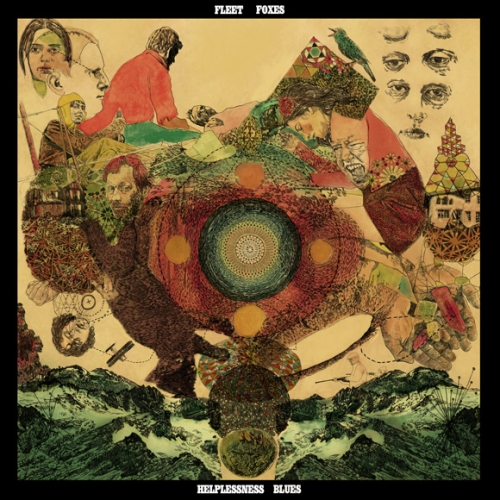
I’m sure nice things can be said about Helplessness Blues, the new album by Fleet Foxes. You won’t hear them here. The amount of praise and acclaim this album has received makes me want to puke, and it’s high time someone pointed out its potential mediocrity.
The confusion arises from the fact that their 2008 debut was brilliant. I was hoodwinked the same as everyone else up front, buying their new album without even downloading it first. The other misleading factor–the one I didn’t personally succumb to–is the fact that they’re still trying. I have no reason to believe Fleet Foxes did not attempt to create a good album. They aren’t sell-outs in the classic sense. Sure, it sounds like over the past three years they quit showering and traded an indie song-writing mindset for feelings-sharing stories around a campfire, but becoming a hippy is like contracting a deadly disease. That’s different from selling out.
When you desperately want an album to sound good and you know the band is still trying I guess it’s easy to ignore your ears and pretend you like it. But I’m a metal fan at heart; I don’t have to make apologies for a style I don’t obsess over. So let me quit immaturely bashing Helplessness Blues and get on with why I don’t like it.
Helplessness Blues
The vocal melodies aren’t melodic. Oh, that might be a mathematically false statement; I don’t concern myself with such things. But just listen to what’s going on in this song. I can’t think of any kind way of putting it; Helplessness Blues just consistently fails to resolve any of its melodies on appealing notes, and that’s 90% of the problem. Try to take this in context. After a half dozen listens today I started to kid myself into thinking the album was fairly decent (and I really have grown hopelessly fond of this particular song’s chorus), but it only took a listen to Ragged Wood and Blue Ridge Mountains to go “Oh, yeah, that’s what I meant” on the proof-read. This is Fleet Foxes we’re talking about. Their self-titled had some of the most subtly beautiful vocals I’ve ever heard, and they always, always rewarded the listener even at their most depressing points. By comparison, Pecknold sings all over the place on Helplessness Blues with no real guidance–without any real ear for making it all work. In a lot of cases there’s no resolution whatsoever. Listen from the transition at 2:50 on, then go listen to Blue Ridge Mountains, and I’m confident you’ll understand what I mean.
This isn’t the criticism. This is the problem. It opens the door for the criticism to come pouring in. See, from start to finish, certainly not just in this one instance, Helplessness Blues is a softy. It always chooses the path of least resistance, not the happy, upbeat resolve. That’s fine. But if you do nothing with it, then it’s also very boring. In order for Helplessness Blues to be an above-average album, if the choruses and focal melodies are not rewarding in their own right, then you have no choice but to ask how they play off their surroundings–how they fit in to the big picture productively. How do they serve to make this the album of the year contender so many sites consider it to be? Or if they don’t, then what makes it so great in spite of them?
It’s not the lyrics, that’s for sure. When they aren’t generic lines about being lonely or sad or having relationship issues, they’re often borderline nonsense. The song Lorelai especially stands out. Up until the chorus it hangs on the brink of greatness, and then he starts cooing “I was old news to you then, old news, old news to you then” over and over again ad nauseam to such a painful extent that you soon forget the song was about anything at all. Or take the second half of the song currently featured–the title track (long after the rubbish about the singer realizing he was not “unique among snowflakes”.) There’s nothing clever or creative about repeating “If I had an orchard, I’d work till I’m sore” a half dozen times. And it’s too odd and repetitive to be heartwarming. Sure, he throws in “And you would wait tables and soon run the store”. Like, we’d work hard for each other out of love and soon accomplish something, maybe, but I’m still thinking “An orchard? Really?” and wondering how many times he’s going to say the same strange thing over again. And then the end line, again musically unresolved and unsatisfying, “Someday I’ll be like the man on the screen,” might be intended as a twist, something thought-provoking, if the common association of celebrities with unauthentic lives can be applied, but the irritable melody doesn’t really incline me to put much thought into it, and in any case I’m still thinking “An orchard? Really?”
The lyrics on average are only insightful in that “I don’t get it” sort of way. That is, they only inspire those thoughtful enough to derive deep meaning out of just about everything and those thoughtless enough to think their inability to derive meaning out of something is a sign of its brilliance.
Someone You’d Admire
Not all of the lyrics are dull. Someone You’d Admire, for example, is decent enough. Perhaps if the song didn’t fall victim to my complaint about the melody I’d think it clever. And that’s what we’re looking for, right?: Something that makes the weak vocal melodies appropriate or makes the songs good in spite of them. Maybe if the lyrics were coupled with really good instrumentation it would all come together. But they aren’t. The dude’s just strumming basic chords on a guitar devoid of emotion. Oh, he alters the intensity a little here and there, but there’s never any fire in his strumming. It’s little more than variant degrees of volume. And that’s what you get with the bulk of the instrumentation on this album–moments that are loud and moments that are quiet, typically not transitioning so much as switching at random. Oh, and the ending is unresolved again.
The Cascades
The instrumental track The Cascades is a good example. The acoustic guitar in the first minute isn’t playing anything particularly melodic, and it doesn’t compensate with emotion. It’s just kind of there–the sort of bedroom recording I’d create in one take and delete soon after. Around 55 seconds something awesome happens, and for a brief moment the song feels like what I actually expected a new Fleet Foxes album to sound like, dreamy, beautiful, crea—wait, it’s over. By 1:18 it’s over, and it doesn’t even fade or transition. It just ends, and we’re solo acoustic guitar again. Oh wait, here, it’s coming back again at 1:35. Oh nevermind, it’s gone again at 1:45, erm, did this song just end?
The comings and goings, the ins and outs, whether it’s merely from quiet to loud and back again or from boring to beautiful and back again, it’s all borderline random. You never feel the transition. Nothing is natural. And with the average song clocking in at only about four minutes, there’s almost never time for something coherent to develop out of it all. Just like the vocal melodies, the instrumental dynamics pretty much never develop into or resolve on an appealing sound.
So their new approach to vocals is out. Their new approach to instrumentation is out. The lyrics demand more attention and aren’t sufficient to satisfy. Basically, none of their new ideas work. Not one, in the big picture. I will leave you with the one counterexample that I felt utilized them all successfully (perhaps in part because it’s not such a decisive break from their old material.) If the whole album was more like this next one, well, then I could really appreciate it:
The Plains/Bitter Dancer
Now I was being blatantly mean to the band in my introduction, and that’s quite unfair. If Helplessness Blues hadn’t gotten such rave reviews I would have been content to call it fairly uninspiring, harmless folk. As a pretty piss-poor musician myself, I have strong reservations against criticizing bands for the music they produce (at least if it doesn’t pretend to be awesome.) The frontman Robin Pecknold even so much as stated that he intended the album to be “less poppy, less upbeat and more groove-based.” He succeeded, for better or worse. There’s no sense in pointing out how direct yet subtle, uplifting and beautiful, the vocals and instrumentation all were (and unobtrusive the lyrics) on their self-titled release, if Helplessness Blues was expressly intended to be different. That it’s not what I wanted to hear is no excuse to slander them.
If I’m starting to sound apologetic now, make no mistake. I think Hopelessness Blues is pretty bad, and I would even absent the disappointment of expecting a repeat of 2008. I just want it to be clear that my accusative tone is a product of the Pitchfork and co “way to go champs, you were struggling but it paid off, 11/10” type reviews, not Fleet Foxes themselves. It didn’t pay off. It resulted in something dubious–something you might find a great deal of merit in–hell, something I hope you can appreciate a lot more than I can. But to think it’s unquestionably brilliant is just stupid. It’s ambitiously, recklessly experimental, and you can love it or hate it with equally good taste.
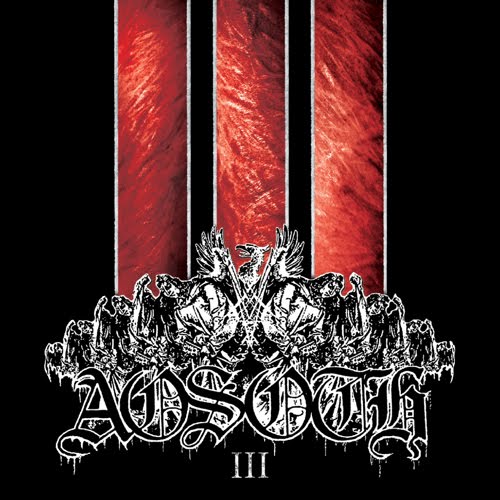
French black metal as crushing chaos is something of a novelty to me this year. I think I was sort of envisioning the metal scene there as composed of a dozen Neige side projects and Deathspell Omega. Blut Aus Nord and Aosoth’s new albums have both thus thrown me for a bit of a loop. I didn’t really listen to either band prior to this year, and both have recently released something tormented to the point of being both fascinating and entirely unpleasant to listen to.
II
Unlike 777 Sect(s) though, III doesn’t give me any sort of moving vision. It doesn’t so much take me on a journey through a nightmare I’d rather avoid as confront me head on. There’s a lot less to latch onto beneath the wall of noise, and what does surface isn’t exactly friendly. You can expect an album that’s tormented from start to finish, and unrelenting even in its slow parts. If II is the most frantic song on the album, it’s also perhaps the most direct example of this. At the transition around 1:15, what emerges as the song’s most defining characteristic is something of an instrumental tornado. Here the black metal serves as sort of a portal, a summoning sphere that conjures forth sinister elements from the beyond. On II it might be a tornado ready to rip you limb from limb. More frequently it’s a slow-moving monster with equally ill intentions, and the ritual that invokes it is likewise more of a methodical blood-letting than a butchery.
III
III is a bit more characteristic of what you can expect to hear throughout–a lot of slow, haunting progressions interlaced with blast-beat brutality. Again the song’s most memorable moment fades in. The break around 2 minutes doesn’t explode back into full-throttled black metal. It slowly builds up. A deeper guitar tone takes its sweet time to emerge out of the filth and present, around 3:45, possibly the most crushing, albeit brief, moment on the album, soon to be buried again beneath higher-pitched, haunting sounds and blast beats.
It wasn’t for a while after reviewing 777 Sect(s) that it really grew on me, and likewise Aosoth’s III might take more time than I’m willing to give it to develop in my ears into something not enjoyable, it will never be that, but at least more intriguing than it is unbearable. But then, the two albums don’t really compare as much as I’m making them out to, I just haven’t heard enough music like this to better describe it. There are definitely no good vibes to derive from Aosoth. Like I said, it’s not a journey filled with hidden horrors–it’s direct. What’s there to be heard I think you can take in in one attentive listen. It shares the ability to terrorize without any real relief, and for better or worse that may be its only effect. The songs are fairly diverse, but the bad vibe is consistent. As something I doubt was meant to be enjoyed I think it’s pretty successful. Prepare to walk away feeling a bit less content than when you started.
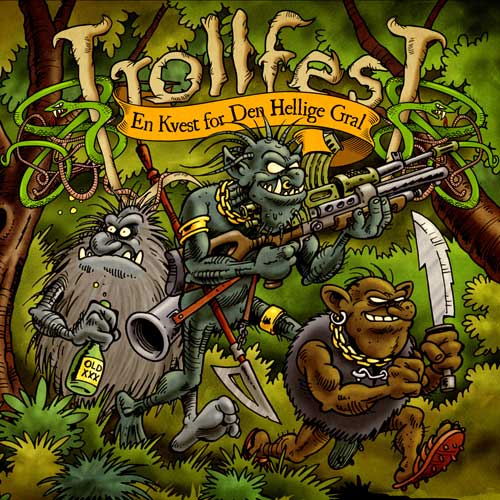
TrollfesT certainly aren’t for everyone, but I sometimes wonder whether a lot of people who criticize them even bother clicking play first. The biggest complaint I tend to see about TrollfesT is that they’re just a Finntroll ripoff. After all, they both have “troll” in their names. And they’re both bands. It must be a ripoff.
Undermålere (I am lead to believe this is a fan creation, not an official music video.)
Right. Well, now that you’re hearing this you’ve probably experienced more of the band than a lot of the people who’ve written negative reviews of them. What I think you get when you hear TrollfesT isn’t so much “another folk metal band” as a bunch of music students who’ve got some decent professional training but decided they enjoyed drinking and playing live more than grad school. TrollfesT is a clusterfuck of klezmer, Balkan and gypsy folk, and whatever else they were introduced to in musicology 101 and decided to incorporate. For better or worse.
One thing you’re not going to hear on En Kvest for Den Hellige Gral, or on any of their other albums, is much of a folk/viking metal ethos. There’s a decent chance they’re more familiar with Taraf de Haïdouks than with Bathory (though they have as much of an awareness of metal as all the other styles they incorporate). Hell, they’re probably the least serious band that can be called folk metal. The lyrics are barely coherent gibberish. En Kvest for Den Hellige Gral isn’t in German or Old Norse or anything of the sort. It’s exactly what it sounds like: “The Quest for The Holy Grail” as written by someone a little bit slow, like say, a troll? I think it’s supposed to be consistently coherent enough to be understandable if you know Norwegian, but it’s not a real language.
Each release is a concept album, and while I can’t speak for this one they’ve come package in the past with a mini-comic telling the tale. It usually involves a bunch of imbecilic trolls going on an epic journey for booze (I’m sure the Holy Grail here is some self-replenishing tankard of ale) and pillaging, plundering, slaughtering Christians and all those other good light-hearted folk metal topics along the way. It’s never going to make a statement or push a particular world view, it’s just meant to be fun.
Die Verdammte Hungersnot
Far from being “Finntroll ripoffs”, the band is so unique that there’s nothing I can really compare this to besides their own past works. So what I have to say about En Kvest for Den Hellige Gral specifically will be, I guess, pretty brief. One thing I noticed was a lot of breaks in the folk side of their sound. You’ll find a lot more 30 second or so segments of straight-up metal on this album than on Villanden. That, to me, is a bad thing, because when they’re not playing folk or doing something weird they’re pretty generic.
On the plus side, the folk is largely a continuation of Villanden. That is, rather than the home-grown sort of sounds they used on their first two albums, they incorporate recognizable styles that you can have some fun trying to identify. The recording quality seems to have improved a bit too, which in their case I found kind of disappointing. Villanden’s raw sound gave it a sort of primitive feel that I thought complimented their style.
In a lot of ways it’s their most mature and diverse work, but it lacks some of their last album’s lasting appeal. The songs aren’t quite as catchy. The way the middle of Die Verdammte Hungersnot instantly sticks in your head was a bit more commonplace in the past. The vocals aren’t nearly as unique, and if it sounds all around more professional, well, that doesn’t necessarily work as well for their image. If Villanden was borderline insane, En Kvest for Den Hellige Gral is merely pretty weird.
Der Sündenbock Gegalte
That all being said, if you’re new to the band entirely and intrigued I recommend Villanden over this one. I have a love/hate relationship with it that extends way beyond my interest in anything else they’ve released. But En Kvest for Den Hellige Gral is still pretty good, and it’s a promising sign of things to come that they’ve continued to expand their sound.
I have never heard anyone say that a Radiohead album was bad. They’re probably the most respected group of musicians in the world, and not without good reason. But they do change quite a lot. Not every album is for everybody. Kind of like Kid A, In Rainbows just really didn’t do much for me when it was released. Oh, I recognized it as one of the better albums of the year, but it just wasn’t my thing. The problem was an eight year gap. By 2011, I’d long played all of the others to death. Radiohead had faded from my favorite band in the world to a distant memory–some pleasant reminder of my high school years and nothing more.
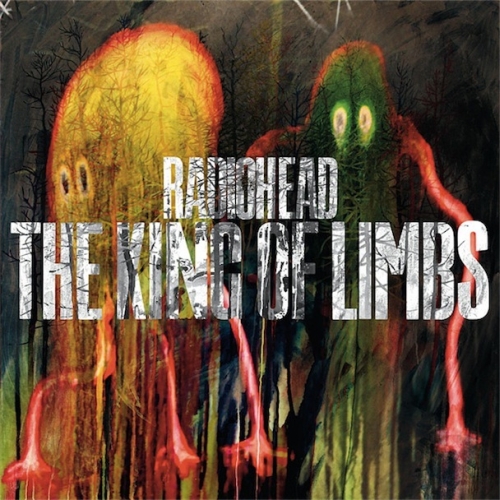
So The King of Limbs is pretty much a dream come true. As that kid who always liked Amnesiac more than Ok Computer, what I would have ideally wanted in a new Radiohead album probably doesn’t comply with the average opinion. But I won. The King of Limbs is a return to that smooth, laid back, jazzy side of the band that poked its head out in 2001 and then went into hiding for a decade.
Bloom
It’s pretty hard to talk about what makes any Radiohead album good, but I think I can safely point to the bass effects as The King of Limb’s most dominant feature. The first three tracks are all similarly constructed–short drum loops that vary little over the course of a given song, underpinned by bass sounds that are always looking forward and lending a great deal of flavor to otherwise very repetitive music. There’s a gliding feeling present throughout, like the songs are sliding across ice in perpetual motion. Little electronic bubbles of sound dot the bass progression, lighting the path. You don’t anticipate the destination, you just enjoy the ride. Vague? It’s a Radiohead album. You can only really talk about it in metaphors.
Morning Mr. Magpie
Like any Radiohead album, the track order matters for better or worse, despite being only 37 minutes long. I’m not going to say there’s a definite, intentional progression to it, but everything feels like it’s in the right place to create a well-rounded picture. The first three songs all have this incredibly chill Amnesiac feel to them–the same sort of vibe I get from say, I Might Be Wrong and Dollars and Cents. You can’t necessarily feel a transition coming in Little By Little, but it’s decidedly less dreamy than the first two. If they’re going to make a move, it’s the best one to lead off from. What follows might not be expected though. Feral turns out to be one of those experimental glitchy Radiohead à la Aphex Twin efforts that found some presence in The Gloaming but were otherwise regulated to b-sides starting on the Knives Out and Pyramid Song singles.
Track five, Lotus Flower, returns to elements of the first three songs, but there’s nothing smooth about it. It feels pretty tense if you ask me. Thom’s voice is more longing, an eerie keyboard sneaks in and out of the background, and there’s this kind of creepy clapping hand effect that makes me feel like the whole song is about ready to snap. I haven’t yet convinced myself that I like it, and the span of Feral and Lotus Flower is definitely the weak link of the album for me, but better to keep the tension to the middle than to throw me off at the beginning or end. From track six on it’s a calm ride again.
Codex
Codex, my favorite track, might start out feeling like Pyramid Song, and it has a lot of the same dreamy qualities, but it never picks up. It’s just Thom, a piano, and some minimal mournful effects. What he’s singing is anybody’s guess half the time, and the cd packaging offers no guidance there, but what I looked up put it as “Slight of hand, jump off the end into a clear lake, no one around. / Just dragonflies flying to the side. No one gets hurt. You’ve done nothing wrong. / Slide your hand, jump off the end. The water’s clear and innocent. The water’s clear and innocent.” Simple and beautiful, and the antithesis of the song that precedes it.
The next song, Give Up the Ghost, follows the same trend, replacing minimalistic piano for equally subdued guitar and a backing vocal loop that has a sort of blues feel to me. The two go together perfectly to round out the real meat of the album. I think I’d describe the first seven tracks as gliding forward smoothly, hitting a rocky road, and being content to stand perfectly still and fade away. Then there’s Separator.
Separator
I’m not sure where this song comes from. It feels out of place and yet perfectly fitting, a sort of ending credits. Radiohead have a long tradition of putting the most out of place song at the end, usually with great results, and this is no different. Separator is smooth and upbeat, a lot like the first three songs, but it’s stationary like Give Up the Ghost. Who knows what the band’s getting at here, but it’s suggestive in a lot of ways. It’s a song about waking up. The album is done, the dream is finished, but “if you think this is over with you’re wrong.“. It’s just the separator; there’ll be more to come. Never mind how fatalistic the last two tracks felt, no one is giving up the ghost here.
Radiohead have been around for an awfully long time, but it’s only the brevity of this album that makes it feel like a late-career effort to any extent. It’s difficult to rate the quality in comparison to other Radiohead albums because of the lack of quantity, but it’s excellent in its own right. If anything it feels more like Radiohead in their prime to me than In Rainbows did (if I can call that 1997-2003 without much debate), but it also demands a more timely follow-up than they’ve been offering lately. I’m sure if you already like Radiohead you don’t require any convincing to check this one out, but I especially recommend it to my fellow Amnesiac fans.
“The verb troll originates from Old French troller, a hunting term.” I kind of want to end right there. But I’ve read reviews of 2009’s Ballade cuntre lo Anemi francor, one of my favorite albums ever, that basically accused Famine of making something intentionally horrible. To just say no, Ballade was a work of genius, L’Odure is their intentionally horrible album, without any justification, would be a bit naive.
I don’t think I can really say what I want to say about L’Ordure without taking a good look at Ballade though, so let me start with the opening song of their 2009 album.
La Mesniee Mordrissoire (on Ballade cuntre lo Anemi francor)
Following a short introduction track, La Mesniee Mordrissoire kicks off perhaps the most dark and disturbing album I’ve ever heard. Famine’s infamously twisted vocals, the peculiar, unnatural way in which the album is distorted, the unity of all of its seemingly random features, the cackles, the ultra-nationalistic chants, the contrast of all this to riffs and beats that are sometimes happy, sometimes longing in an entirely human sort of way, everything about this album is warped beyond belief. And it just gets “better”. I wish I was a psychopath just so I could have the fulfillment of jabbing my victims with a red-hot poker while dancing to track 3. … Ok well, anyway…
I refuse to believe that this album was a fluke. I refuse to believe that Famine’s real intention was to create something really awful and he just by accident shit out a masterpiece. Sure, it might have vastly exceeded his expectations–works of this caliber often surpass their creators–but it was not a complete accident.
At the same time, a lot of what you hear on Ballade couldn’t have been recorded with a straight face by a normal person, and I have no reason to believe Famine isn’t one. I for one don’t think I could chant “sieg heil! sieg heil!” or sing a chorus of “la la la la lala” without busting out laughing regardless of how well it fit my artistic vision. I typically see Famine being accused of immaturity, not of being a radical, but I fail to see why he couldn’t have taken the album seriously and still gotten a kick out of the elements of it which, when taken out of context, are completely ridiculous.
When I say L’Ordure à l’état Pur, translated to something like Garbage in its Pure Form, is horrible, I’m saying that I think Famine intended it to be horrible. I think it has next to nothing conceptually in common with its predecessor. It’s like he’s saying “No, this is immature. Do you see the difference?”
L’Ordure à l’état Pur came packaged with an image change for the band that might clarify the difference.
Cochon Carotte Et Les sœurs Crotte
This is the only song I’m going to sample from L’Ordure à l’état Pur, because I think it’s all you really need to hear to decide whether you want to pick up the whole thing or not. If you can appreciate sound samples from scat pornography, belching noises substituted for drum beats, Famine doing his best impression of an irritated chicken, and really bad techno, maybe this album is for you. Hell, maybe you can kid yourself into thinking the band is making some statement about society. But for me, Famine is just trolling here. Maybe he wanted people to derive some sort of meaning from it all, or maybe he just wanted to sit back and laugh at all the people who try to. I think I’ll not risk falling victim to the latter.
L’Ordure à l’état Pur has a few really great features, but by and large it’s awful. Take the album title literally. You might think there is meaning buried beneath the joke, but that is the joke.
I’ve seen this tagged black metal, and I really have to wonder. I’m not familiar with the band’s history. I haven’t heard any of their earlier releases but To the Nameless Dead, and that only twice back in 2007. So maybe they were black metal once, I don’t know. But calling this anything but Celtic metal would fail to properly describe it. It bleeds green.
No Grave Deep Enough
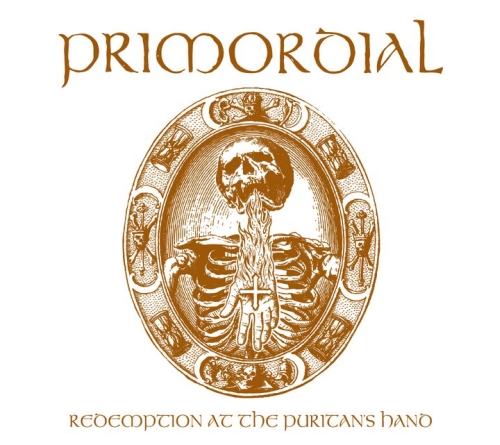
And like many Irish bands, the lyrics are the focal point. Redemption at the Puritan’s Hand is an album about death. The band stated that much pretty bluntly when they released it. But it doesn’t approach the subject through the music (unless metal or Irish melodies can be said to be connected to it by default), nor does it settle for less mature pseudo-poetic lines about chaos and evil and all that nonsense you hear in metal. It’s an in-your-face, unfanciful confrontation. You might not get the bigger picture of each song every time. I’m not going to pretend I do. But line by line it often hits hard and direct, in a powerful vocal style you can understand without having to look up the lyrics.
To the Nameless Dead must not have immediately impressed me too much, because I never did end up giving it an attentive listen. Redemption at the Puritan’s Hand had me hooked by the opening chorus. “Oh death, where are your teeth that gnaw on the bones of fabled men? Oh death, where are your claws that haul me from the grave?” The album is packed full of lyrics you’ll not soon forget.
Bloodied Yet Unbowed
As such, its highs and lows are related. An album like this can be difficult to pull off, because it gives the listener the feeling that every line sung has to matter in some direct, accessible way. Sometimes they simply don’t. For every moment like No Grave Deep Enough’s chorus, you’re going to find an opportunity lost. The song Bloodied Yet Unbowed is a case in point. When the time comes for a powerful stand-alone statement to conclude the opening lines, they really don’t deliver, settling for “You may say I have lost to a better man . . . yet maybe one who did not dare to be wrong or even to be right.” However much meaning might be intended there, and however much you might accurately read into it, there’s a sense of nonsense about it that leaves me unimpressed.
Don’t get me wrong. If I didn’t think Redemption at the Puritan’s Hand had great lyrics I wouldn’t keep going on about them. But they don’t hit home every single time they’re intended to, and that’s at least a minor, petty disappointment.
I haven’t even mentioned the music yet. As you can tell plainly enough from Bloodied Yet Unbowed, there really is a black metal side to them. It just plays no role in driving or defining the album.
The Puritan’s Hand
The penultimate track, The Puritan’s Hand, is my favorite on the album. I about wrecked my car the first time I heard it. Without following a completely direct path of progression, the music evolves from something slow and fairly formless, to something borderline happy that you can really rock out to, to something powerful and intense.
I’m struck by the relative simplicity of the guitar and drumming throughout, and especially in the middle. I’m not sure what direct effect this has, but the track gives off more of an Irish vibe than any other on the album to me. Also the ending is interesting, because it’s the sort of intensity I’d expect in post-rock or pre-commercial success screamo (What’s the acceptable term for that these days? Emo violence?), certainly not from a band with black metal roots. But then, I get the same impression from their fellow countrymen Altar of Plagues, and they’re black metal. Make what you will of that.
Being pretty much new to Primordial, Redemption at the Puritan’s Hand was a delightful surprise–probably the last thing I ever expected from a band generally tagged “folk black metal.” The vocals, the attitude, the unique guitars and drumming that defy thorough classification, an actual regard for the power of words, it all comes together into something pretty unique and refreshing. This one’s definitely worth picking up.
A few months ago I placed this album in my top 5 of 2011 so far, but I really didn’t have much to say about it. Despite having listened to ample amounts of this band over the years, I really am still in no position to thoroughly compare it to their past works (though I’ll certainly try). Moonsorrow has always been a band I’ve listened to in passing–something I put on for the mood it sets, not to appreciate its intricacies. In this sense Varjoina Kuljemme Kuolleiden Maassa is no different. But in the span of just, what, six months, I’ve listened to it more than all of their other albums combined since I first heard about them. So it’s got to have something special going for it.
Tähdetön
The first thing that makes Varjoina Kuljemme Kuolleiden Maassa so effective is showcased in the first minute of the opening song. That deep, crushing guitar tone that kicks it off doesn’t lose the spotlight until at least half way through the album, and it’s never abandoned completely. A quick skip through their larger discography tells me this is something fairly new. It’s not their first album to be largely driven by guitar chords, but I’ve found nothing as deep, encompassing, or persistent as this. The result is a fuller sound that keeps me connected as the surrounding styles vary. Tähdetön might move over time from something grim to something sweeping and beautiful, but a thread connects it all. The opening song doesn’t transition in the same sense as their previous works; it follows a steady progression.
Huuto (first 15 minutes)
The folk elements of the album are also worth noting. If a bit less authentic in feel than they used to be, they’re far more in touch with the music that surrounds them. I can’t help but think of Equilibrium’s Sagas throughout Huuto, and to a lesser extent on the other three tracks as well. You’ll find little in the raw here; it’s typically encased in or entirely consistent of dreamy keyboards that feel more fantasy than folk. This isn’t something entirely new for the band. They’ve always been pretty synth-heavy. But I don’t think you’ll find a parallel to Huuto’s intro on their past albums. I think it would have started out with just an acoustic guitar and the keyboards would have entered along with the distortion, or else would have been more of a drone than a dreamy accompaniment. Just like the intro to Tähdetön gives you a distinct example of what has changed on this album metal-wise, the intro to Huuto shows their new approach to folk. The keyboards and traditional sounds are inseparably fused, not two distinct elements of the band.
The third great thing for me is that they’ve returned to writing reasonably short songs. Their last couple releases have been made up predominantly of 30+ minute marathons that are hard to engage from start to finish. The longest song on Varjoina Kuljemme Kuolleiden Maassa is sixteen minutes. I have the option to single out a song once in a while and really get into it from start to finish, making each track a bit easier to appreciate.
Kuolleiden Maa (first 10 minutes)
A lot of what I’ve said about this album doesn’t really apply to the final song, Kuolleiden Maa, which is a fourth of the entire album. It is decidedly darker, and the only track that can really be described as black metal. It’s just as enormous as the rest of Varjoina Kuljemme Kuolleiden Maassa, but the feel is very different. That it’s my least favorite track should be no slight against it; it probably sounds more like what you would have expected on a new Moonsorrow album than any of the others. And it’s well placed to not disrupt the rest of the album. The three generally upbeat tracks come packaged together before the bleak conclusion. It also ends where the first track begins (though this sample doesn’t get that far into it), making the whole album very repeatable. The annoying bit of static you hear on the left in this sample is the product of youtube, by the way, and not something to worry about on the album proper.
In short, everything about Varjoina Kuljemme Kuolleiden Maassa feels bigger, more surreal, and all around more engaging than their past works. It has an incredibly dark ending, but I’d also say it’s all in all more happy and optimistic than their past works–something that certainly appeals to me when I’m in the mood for folk metal. As quintessentially Moonsorrow as it may be, it’s a definite step in a new direction, and the result is my favorite release by them to date. I didn’t actually sample my favorite track here. That would be Muinaiset. But all four feature songs (the rest are short intro/outro/transition tracks) are superb, and you’re definitely missing out if you don’t pick this one up.
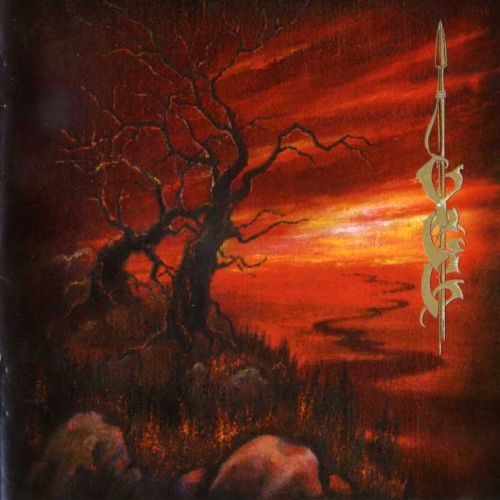
I don’t know if I’m just a big fan of the Ukrainian metal scene so I’m inclined to notice or if that country really is popping out more bands than anywhere else in the world, but it seems like a year doesn’t go by that I can’t talk about a new band, probably from Kharkiv, releasing an impressive debut album. Ygg is comprised of three musicians from other bands you may have heard of–Nokturnal Mortum, Khors, and Святогор/Svyatogor to name a few–but I wouldn’t call it a side project. Members of that scene collaborate to such an extent that there’s next to no musician you can associate with only one act. The influences are thus a little more engrained, and it would be kind of silly for me to describe Ygg as sounding like a mix of other bands; they sound like Ukrainian metal. And they sound awfully good.
…Знаю, Висел Я В Ветвях На Ветру…(…I know, I hung in the branches in the wind…)
The album kicks off with one of the more effective intros I’ve heard in a while. Alone it might incline you to expect a pretty elementary album. Simple ambient synths, the overlapping sounds of wind blowing and waves crashing (or are those rustling leaves?), and a jew’s harp that they don’t so much play as randomly wank on amounts to something anyone could create in one take given a keyboard and a sufficiently grim, frostbitten basement.
What I’ve come to find over the course of a couple listens though is that the rest of the album is persistently faithful to the mood it sets. I wouldn’t have even noticed the continued presence of that wind and water effect buried beneath the distortion of the first metal track if the intro hadn’t brought it to my attention, and the jew’s harp bleeds into the next song as well. Over the course of the remaining six tracks these effects fade to be replaced by others, but in a way that maintains consistency from song to song.
YGG
So they’re not really switching gears here. They’re presenting the same scene as the intro from a metal perspective. The trance-like mix of tremolo chords and a moderate steady beat certainly maintains that particular ambient feel, and it’s executed in a way that should make any Drudkh fan happy.
The other elements are perhaps a little less accessible though. The kind of wavy, kind of bubbly keyboard sound would seem a bit out of place for me if Nokturnal Mortum hadn’t used the exact same thing so effectively on Weltanschauung. There is already precedence for associating it with paganism, so the sort of futuristic vibe I originally got from it isn’t an issue here. I imagine if I hadn’t listened to specifically Weltanschauung so many times before it might throw me for a loop.
The most obviously distinguishing feature of the album, the vocals, also require a little consideration. It’s a style very seldom used, and I imagine it would inevitably come off as pretty cheesy on first encounter. Previous bands that have employed it have tended to aim for an effect of pure hatred or insanity, for which it’s probably better suited. I don’t really think that fits Ygg’s picture though. Their sound focuses on nature and paganism, at least as I hear it. The track/album/band name is itself one of the many traditional names for Odin, and the introductory track’s title approximates the opening line of the Rúnatal, a 13th century recording of Odin’s self-sacrifice to acquire the wisdom of the runes. No, the vocals aren’t trying to express insanity or hatred.
So I’m inclined to hear the singing as a sort of vocal reproduction of the howling wind in the introduction. I don’t know, maybe that’s a stretch, but it’s an interpretation that works for me. It’s a sound that’s a bit harder to pull off, because a less chaotic theme requires more precision. When his voice occasionally sounds a bit too human it’s more of a brief letdown for me than a poignant reminder of music’s theme. But at this point perhaps I sound so absurdly full of myself that I’m doing the album more harm than good. I’ll just stop. Suffice to say I really like this, and I think a lot more went into its conception than just three guys jamming black metal and landing on something nice. It’s a rewarding work that’s fairly complex in its simplicity, and I highly recommend it.
I’ve been listening to this album for months now and I’m still not sure what exactly I want to say about it. The songs are very well written in a format you might come to expect from Ukrainian metal; In some ways I feel like they’re better written than most others in their scene, including Kroda’s past works. But there is a lack of intensity in the execution that leaves me unable to be really moved by it. I don’t know if it’s a matter of performance or production, but something just isn’t there.
First Snow
The result is rather uncharacteristic. I mean, what do most Slavic metal bands have in common if not a degree of savage intensity that puts all other metal scenes to shame? Schwarzpfad goes for a much more mellow approach. It’s got this weird dual effect of highly dynamic song writing and almost monotonal atmospherics. The acoustic breaks, the woodwind solos, the occasional peak into a triumphal chorus, they all just kind of blend together for me. Like on this song, nothing really stands out to mark the switch into the guitar and vocal peak that starts about two minutes in. I sometimes barely notice anything has changed.
Now, I’m not calling this a fault. I don’t know what Eisenslav intended, so I’m in no position to say he missed the mark. But it certainly makes for a difficult listening experience. You just have to force yourself to pay attention, because it can be very inaccessible at times.
Forefather of Hangmen
Any complaints I might have about the sound quality of this album (and these youtube rips actually sound a lot better than the 192 cbr copy I found) shouldn’t overshadow its many positive traits, but what makes Schwarzpfad good I’ve had equal difficulty describing. The songs are just really well written, and I might have to leave it at something as vague as that. Honestly, the juxtaposition of really great songs and what I feel is a really bad recording make both pretty difficult to describe. I can’t hear the good attentively without thinking of the bad, and vice versa. I’ve invested a tremendous amount of time into this album and all I’ve taken out of it is a conviction that there’s something really great here and I’m not hearing it, so I think it’s time I called it quits. If they actually decide to tour the United States for once I’ll be the first in line to find out just how good Schwarzpfad really is, but until then I think I’ll give this one a rest and wait for their next album.