4 Shots From 4 Vincent Price Films


4 Shots From 4 Films is just what it says it is, 4 shots from 4 of our favorite films. As opposed to the reviews and recaps that we usually post, 4 Shots From 4 Films lets the visuals do the talking!

I woke up today to discover that Vincent Price was trending on Twitter. He was specifically trending because someone did a thread about Price’s political activism. This was something that I already knew about but most people on Twitter are stunned to discover that people actually did good things before the creation of social media.

Once I got over feeling elitist and superior, I thought to myself that it was actually kind of nice that people still love Vincent Price. He’s definitely one of my favorite actors. He started out as a mainstream studio actor, reading for the role of Ashley Wilkes in Gone With The Window and being considered for Mr. Potter in It’s A Wonderful Life. But he found his true stardom as a horror actor, bringing life to films that often would have been dead without his wonderful presence.

There’s no way that we can do Horrorthon without paying tribute to the great Vincent Price. Here are….

4 Shots From 4 Vincent Price Films!

House on Haunted Hill (1959, dir by William Castle, DP: Carl E. Guthrie)


The Masque of the Red Death (1964, dir by Roger Corman, DP: Nicolas Roeg)


Witchfinder General (1968, dir by Michael Reeves, DP: John Coquillon)


Scream and Scream Again (1969, dir by Gordon Hessler, DP: John Coquillon)

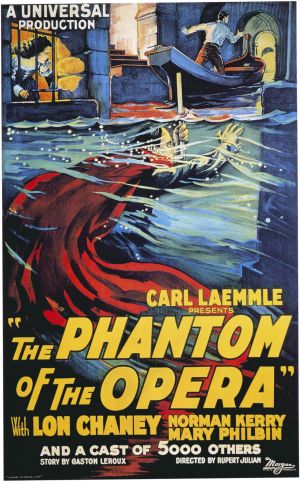
Horror On The Lens: The Phantom of the Opera (dir by Rupert Julian)


Today’s horror movie on the Shattered Lens is both a classic of silent era and one of the most influential horror films ever made.  It’s one that I previously shared in 2013, 2015, 2016, 2108, 2019, and 2020 but it’s such a classic that I feel that it is worth sharing a second (or fifth or even a sixth or perhaps a seventh) time.

First released in 1925, The Phantom of the Opera is today best known for both Lon Chaney’s theatrical but empathetic performance as the Phantom and the iconic scene where Mary Philbin unmasks him. However, the film is also a perfect example of early screen spectacle. The Phantom of the Opera was released during that period of time, between Birth of the Nation and the introduction of sound, when audiences expected films to provide a visual feast and Phantom of the Opera certainly accomplishes that. Indeed, after watching this film and reading Gaston Leroux’s original novel, it’s obvious that the musical was inspired more by the opulence of this film than by the book.

This film is also historically significant in that it was one of the first films to be massively reworked as the result of a poor test screening. The film’s ending was originally faithful to the end of the novel. However, audiences demanded something a little more dramatic and that’s what they got.


Horror on TV: Friday the 13th: The Series 1.19 “The Quilt of Hathor” (dir by Timothy Bond)


On tonight’s episode of Friday the 13th: The Series, it appears that Ryan might be tempted to abandon searching for haunted antique when the quest to find a cursed quilt leads him to a religious cult that has rejected “modern” society.

Honestly, at this point, a religious cult that has rejected social media could probably win over a lot of adherents.  However, I think things are a bit more sinister in this case.

Tonight’s episode first aired on May 7th, 1988.  Fear not the “To be continued” ending!  We’ll have the second part of this story tomorrow night!

Enjoy!

The TSL’s Grindhouse: The Last Laugh (dir by Jeremy Berg)


Myles (Steve Vanderzee) is a once-hot comedian whose career has been going downhill ever since 1) his wife died in a car accident and 2) he started taking medication to control his moods. Myles has now gone from playing packed comedy clubs to appearing in sleazy dives where he’s regularly cheated out of getting paid.

However, it appears that Myles finally has a chance to get back up on top! He’s been booked as the opening act for an egotistical comedy superstar! All Myles has to do is deliver one good set and his life will no longer be a joke. The only problem is that there’s a dead body in Myles’s dressing room and the staff of the theater is disappearing one-by-one. There’s a murderer stalking the theater and, at times, it seems like only Myles can see him. Is Myles — who hasn’t taken his pills — losing it or is there really a killer in the wings?

That’s the question asked by 2020’s The Last Laugh. It’s an intriguing question and the premise has a lot of promise but, unfortunately, the execution leaves even more to be desired. Not only are the victims rather generic but you also never really feel as if you know Myles. The film doesn’t show us much of his act so you really don’t know if the guy’s even all that funny. Since a lot of the movie hinges on whether or not Myles is willing to blow his shot at stardom in order to expose the murderer, it would be helpful to actually care about whether or not Myles becomes a star or not. Unfortunately, Myles isn’t really that likable or interesting of a character so who cares?

I did like the fact that the people behind The Last Laugh paid homage to some classic Italian horror films. Several of the shots of the killer creeping through the theater appeared to pay homage to Michele Soavi’s StageFright and there’s also a clever shout out to the Short Night Of The Glass Dolls at the end of the film. Unfortunately, there’s not really enough to the plot of The Last Laugh to make it memorable and the ambiguous ending will probably leave most viewers angry rather than intrigued. (Personally, I usually like ambiguous endings but, in this case, it just felt a little lazy.)

The Last Laugh has promise but it doesn’t really live up to it.

The Cost of Living, Short Film Review by Case Wright


I would’ve put up a poster pic for this, but they were all terrible- Much like this short film. Sometimes an artist just gets in her own way and forgets that you need a story first and not just adapt a Bazooka gum wrapper joke to film. I get it- doing things IS hard. BUT, why bother me with your terrible terrible work? What did I do to you? I’m just a humble math-oriented-handsome-Italian with a love of film and artists, but more importantly, I like to be entertained. I don’t sit down and take time from my busy life to groan.

This short is boring, corny, overdone, and cost WAY too much to make because I’m assuming that production cost over 50 dollars or….. pounds. It’s about a hipster couple who pays the rent by letting their “Bloodsucking Landlord” drink the boyfriend’s blood because…get this… the landlord’s a vampire…see what they did there? *Eye Roll so hard that eye is now at Trader Joe’s 2 miles away*

UGHHHHHHH. I never thought that I’d watch something that made me long for the days of watching Sabrina on Netflix because at least post-season one the lighting was so dark that I could pretend that I wasn’t watching. Plus, I watched it with Lisa, which was fun. Whereas this horrible garbage trash is neither fun, nor good.

Maybe if you had gas-station-sushi or drank the month old chocolate milk because hey…chocolate and you brought your phone with you on your emergency run…maybe it’s worth a watch? Maybe?

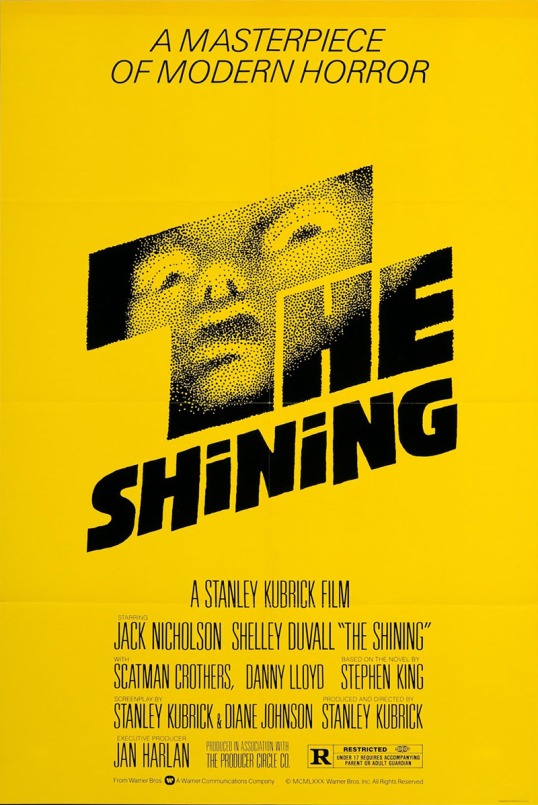
Horror Scenes That I Love: The Redrum Scene From The Shining


Today, the Shattered Lens wishes a happy 49th birthday to Danny Lloyd, the child actor who — at the age of 6 — brought Danny Torrance to life in Stanley Kubrick’s version of The Shining. After appearing in one made-for-TV movie after The Shining, Lloyd retired from acting. (He did make a cameo appearance in Doctor Sleep.) He went on to become a teacher. Somewhat sweetly, it’s been reported that, during the filming of The Shining, Kubrick went out of his way to keep Lloyd from knowing that he was appearing in a movie about killer ghosts and a father attempting to kill his family.

In honor of Danny’s birthday, here’s a scene that I love from Stanley Kubrick’s The Shining!

Horror Novel Review: The Boy Next Door by R.L. Stine


Oh my God, a super cute boy has moved in next door! Squee!

Seriously, Scott, the title character of this 1996 YA thriller from R.L. Stine, seems like he could be the perfect neighbor. He’s handsome. We’re told that he’s charming, though you don’t really see much of that in the book. He’s a star football player and, obviously, that’s a very important thing in the world of R.L. Stine. And, perhaps most importantly, Scott’s single! Of course, Scott’s single because he previous kind of girlfriend jumped into a pool that happened to be empty at the time. Scott was the one who encouraged her to do it.

Scott, you see, has some issues. He expects every girl that he meets to live up to an impossible ideal that he’s apparently created from watching old sitcoms from the 1950s. What the means is no makeup, no flirting, and definitely no short skirts! Scott really gets worked up over short skirts, to the extent that he’ll kill anyone who wears one. AGCK!

(If I had been a student at Scott’s high school, I would have been so dead.)

Scott’s new neighbor Crystal and her best friend, Lynne, both think Scott is totally hot and want to date him. Unfortunately, they both wear short skirts and Scott even catches Lynne putting on lipstick. Even if he wasn’t a puritanical incel murderer, Scott would still be creepy because he always seems to be staring through the windows of Crystal’s house. You would think that would be a red flag but …. well, Scott’s a football player and this is an R.L. Stine novel.

Fortunately, Crystal has a sister named Melinda who likes to read books and who doesn’t wear makeup so it seems pretty clear that she’s going to be the secret weapon to stopping Scott. But will it be too late for either Lynne or Crystal?

Scott is revealed to be a killer during the first few pages of this book so I have to admit that, the whole time I was reading it, I was waiting for one of those out-of-nowhere R.L. Stine twists. I was expecting Scott to discover that he was actually suffering from amnesia and that his real name was Jake. I was waiting for someone to reveal themselves to be a ghost. I was thinking, at one point, that it was all a dream. But nope, there’s no twist. This is one of the most straight-forward Stine books that I’ve ever read.

At times, the book felt like one of those weird Lifetime movies where everyone keeps talking about “girl power” and how no one has the right to judge you for behaving and dressing the way you want but, at the same time, you can’t help but notice that it’s always the really independent and fun-loving girls that end up getting killed. The Boy Next Door seems to be all over the place. On the one hand, Scott is a crazy puritan. On the other hand, almost every girl in the book is portrayed as being shallow and easily fooled. I was happy that Scott was presented as being a total monster but couldn’t the girls have been a little less naïve? Couldn’t they have at least acknowledged that Scott’s behavior was pretty creepy even before he turned out to be a killer? It doesn’t help that the plotting throughout the book feels rather random. There’s a lot of convenient coincidences, including one that happens during the climax. Chekhov wrote that, if you introduce a gun at the start of the story, it must be fired by the end of the story. One gets the feeling that Stine would be the type to forget to introduce the gun but still have someone fire it. One also gets the feeling that Stine may have been in a hurry when he wrote The Boy Next Door.

(Don’t worry, though. you’re still loved, R.L! Thank you for Fear Street!)

Anyway, the lesson here is that if the boy next door flies into a rage every time you put on lipstick, you don’t need him in your life! Even if he does play football….

Book Review: Spaghetti Nightmares, edited by Luca M. Palmerini and Gaetano Mistretta


Do you love Italian horror?

If you answered yes, Spaghetti Nightmares is a book that you simply must own.  Actually, you probably already do own it.  You’re probably looking at it sitting on your book shelf right now.  And you’re thinking, “Gee, thanks Lisa.  Maybe next you’ll tell me that giallo is named after the cheap yellow paper that thriller novels were published on in Italy and then you’ll really blow my mind!”

Okay, well fine.  Make me feel bad.  That’s okay.  I hope you’re proud of yourself.  It’s a pretty good thing that we both love Italian horror because, if we didn’t, I’d probably never speak to you again….

Anyway, just in case you don’t own this book, you really should.  First published in 1996, Spaghetti Nightmares is a collection of interviews with some of the top figures in Italian horror.  Michele Soavi, Dario Argento, Ruggero Deodato, David Warbeck, Umberto Lenzi, Lamberto Bava, Luigi Cozzi. Antonio Margheriti, and many more answer questions about their careers, their artistic visions, and their feelings about the future and the past of the Italian film industry.  What makes this volume special is that it was written at a time when Italian horror was just starting to be appreciated.  So, the questions and the answers are a bit more honest than they probably would be now that everyone is a confirmed Italian horror fan.

This book also features what I believe was Lucio Fulci’s final interview before he passed away.  He describes himself as being Italian cinema’s “last zombie” and displays a strong knowledge of cinematic history.  Unlike some of the directors interviewed, who come across as being competent (if charming) craftsmen, Fulci comes across as being a true artist.  The interview with Michele Soavi is also poignant as he would soon abandon filmmaking to take care of his son.  (Fortunately, he has since returned.)

So, if you don’t own this book, get it!

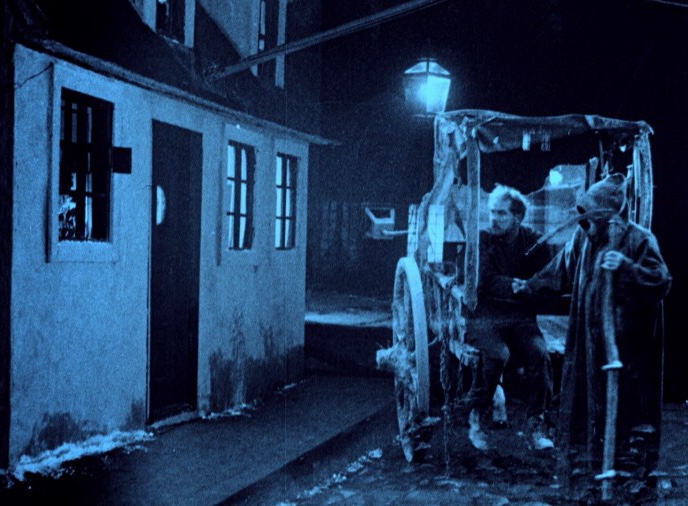
International Horror Film Review: The Phantom Carriage (dir by Victor Sjöström)


In this 1921 silent film from Sweden, Sister Edit (Astrid Holm) is dying on New Year’s Eve. She has tuberculosis, an illness that was once as common and as feared as COVID is today. Knowing that she doesn’t have long to live and that she probably won’t even make it through the night, she makes one last request. She wants to talk to David Holm (played by the film’s director Victor Sjostrom).

This request shocks everyone because David Holm is known for being a petty criminal and a notorious drunkard. As if to the prove their point, David is spending New Year’s Eve in a cemetery, getting drunk with two friends of his. He tells his friends about a legend that the last person to die on New Year’s Eve is cursed to spend the next year driving death’s carriage and collecting souls. David is obsessed with this legend because, last year, his best friend Georges died right before the clock turned twelve.

Believe it or not, David is actually right. Georges (Tore Svennberg) is currently steering his phantom carriage through the streets of the city, stopping to collect the souls of the recently departed. It’s not a job that Georges wants but it’s one that he’s destined to do until the end of the night. Once a new year begins, someone will take Georges’s place.

When a fight breaks out at the cemetery, David is struck over the head with a bottle, just as the clock strikes midnight. Georges promptly appears. It looks like David has a new job but, before he can get started, he has to deal with both Sister Edit’s request and his guilt over the collapse of his marriage to the tragic Anna (Hilda Borgström). Anna is now near death herself, struck down by the same disease that is killing Sister Edit, a disease that was quite possibly given to both of them by David himself. (It’s easy to imagine someone making a modern version of this film, with COVID replacing the consumption.)

When one hears that The Phantom Carriage is a Swedish film about death, one can probably be excused from thinking, “Aren’t all of them?” And it is true that Ingmar Bergman regularly cited The Phantom Carriage as being a huge influence on his own films, especially The Seventh Seal. And yet, to say that either The Phantom Carriage or The Seventh Seal are solely about death is to do a disservice to both films. The Phantom Carriage is about many things; love, guilt, regret, addiction, destiny, and the promise of redemption. In the end, it’s a film about life. After he’s struck on the head, David reflects on the life that led him to that moment and, finally, he sees how his life not only effected the lives of so many others but how their lives effected his own. It’s only after he’s hit on the head with that bottle and he rides the phantom carriage that he understands what the life he had was truly about.

Of course, for most people, the main appeal of the film will be viewing the ghostly carriage as it moves, unseen by the living, through the streets of the city. The film’s supernatural effects were captured through the use of double exposures, which may sound simple today but which was a very new technique way back in 1921. The images of the transparent ghosts and the carriage making is way through the living remain haunting. There’s a real sense of melancholy that runs through this film, an atmosphere of loss and regret that, a hundred years later, is still effective. It’s a film that plays out like a dream of life and death, light and darkness.

For a film that was released in the early (some would say primitive) years of narrative cinema, The Phantom Carriage holds up remarkably well. Though the film has its overly sentimental and melodramatic moments (it is, after all, a silent movie), the sight of that carriage continues to be hauntingly sad and beautiful.