Retro Television Review: All-American Girl: The Mary Kay Letourneau Story (dir by Lloyd Kramer)


Welcome to Retro Television Reviews, a feature where we review some of our favorite and least favorite shows of the past!  On Sundays, I will be reviewing the made-for-television movies that used to be a primetime mainstay.  Today’s film is 2000’s All-American Girl: The Mary Kay Letourneau Story!  It  can be viewed on YouTube.
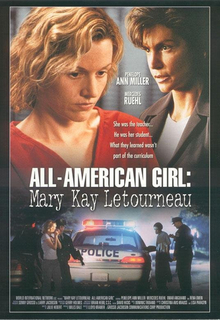
In 1996, a 34 year-old teacher named Mary Kay Letourneau decided that she had fallen in love with someone who was not her husband.

A 34 year-old deciding that they are no longer happy in their marriage and subsequently deciding that that they’ve found love with someone else is hardly an unusual or even surprising occurrence.  What made Mary Kay Letourneau’s case a national scandal was that the person that she decided that she was in love with was a 12 year-old student named Vili Fualaau.  Mary Kay started her affair with Vili when she was his sixth grade teacher.  When she was arrested and charged with two counts of second-degree rape of a child, Letourneau was pregnant with Vili’s child.  Even after being arrested, Letourneau insisted that she and Vili were soulmates.  After giving birth to Vili’s child, Letourneau was sentenced to six months of prison and somehow managed to avoid having to register as a sex offender.  After serving her sentence, Letourneau was promptly arrested again with Vili and was sent back to jail, where she gave birth to Vili’s second child.

All-American Girl opens with Mary Kay Letourneau (Penelope Ann Miller) in jail, insisting that everything that happened between her and Vili was consensual and that their love is real.  The majority of the film is shown in flashbacks.  Some of those flashbacks deal with Mary Kay, her husband (Greg Spottiswood), and Vili (Omar Anguiano).  Watching the flashbacks, I couldn’t help but notice that the film really did seem to be on Mary Kay’s side, to an almost ludicrous extent.  Her husband is portrayed as being a soulless sociopath, even before Mary Kay starts sneaking around with Vili.  As for Vili, he is presented as being the one who initiated his relationship with Mary Kay, flirting with her in class and comforting her when she starts crying in a school hallway.  The actor playing Vili looked, acted, and sounded considerably older than just 12 years old.  At times, he appeared to be nearly as old as Penelope Ann Miller.  And I’ll admit that it’s totally possible that Vili could have looked older than his age and maybe he did have a surprisingly mature vocabulary.  But still …. he was 12 years old!  Apparently, Letourneau cooperated with the film’s producers and that’s pretty obvious from the first minute we see Vili giving Letourneau a wolfish smile in the 6th grade.

The flashbacks dealing with Letourneau’s childhood are a bit more interesting, if just because Letourneau was the daughter of a congressman who ran for president in 1972.  (One of her brothers served in the first Bush White House.  Another served as an advisor to the 2016 Trump campaign.)  At one point, she taunts a group of protestors that have gathered outside of her family’s home and her father praises her courage.  The film hints that it was the twin traumas of her brother’s death and the discovery that her beloved father had fathered two children with a mistress that led to Letourneau’s subsequent instability.  Perhaps that’s true, though I think the film is a bit too eager to accept that as an all-purpose explanation.

You may have guessed that I had mixed feelings about this film.  Penelope Ann Miller gave an excellent performance as Mary Kay but the film’s attempts to portray May Kay as being even more of a victim that Vili were undeniably icky.  

As for the real Mary Kay, she married Vili four years after being released from prison.  They separated a year before Mary Kay died in 2020.  Their relationship inspired several films, most recently May/December.

Live Tweet Alert: Watch Silent Predators with #ScarySocial


As some of our regular readers undoubtedly know, I am involved in a few weekly live tweets on twitter.  I host #FridayNightFlix every Friday, I co-host #ScarySocial on Saturday, and I am one of the five hosts of #MondayActionMovie!  Every week, we get together.  We watch a movie.  We tweet our way through it.

Tonight, for #ScarySocial, Deanna Dawn will be hosting 1999’s Silent Predators!

If you want to join us on Saturday night, just hop onto twitter, start the film at 9 pm et, and use the #ScarySocial hashtag!  The film is available on Prime and YouTube.  It’s a friendly group and welcoming of newcomers so don’t be shy.

Cyclone Fury (1951, directed by Ray Nazarro)


Brock Masters (Mark Roberts) has been awarded a contract to supply the army with horses.  Corrupt businessman Grat Hanlon (Clayton Moore) wants that contract for himself so he sends his henchmen to kill Brock.  Because Brock has no known relatives, Grat believes that both the horses and the contract will soon be his.

However, Brock does have an heir!  He adopted an Indian child named Johnny (Louis Lettieri).  Johnny inherits the contract and both the Durango Kid (Charles Starrett) and Smiley Burnett are going to make sure that Johnny is able to deliver the horses.  Smiley is also going to find some time to sing some songs that have even less to do with the story than usual.

Cyclone Fury was one of the later entries in the Durango Kid series.  By the time it was made, Colombia was no longer willing to spend much money on the series so that majority of the film’s action scenes are lifted from other Durango Kid movies.  If you’ve never seen another Durango Kid movie, the action scenes are exciting and feature some impressive stunts.  If you have seen another Durango Kid movie, this one is going to seem really familiar.

For western fans, the main appeal here will be seeing Clayton Moore playing a bad guy.  Moore had already played The Lone Ranger when he appeared in this movie.  At the time Cyclone Fury was made, Moore had been unceremoniously fired from his most famous role and The Lone Ranger was being played by John Hart.  Hart would only last a season and Moore would subsequently be invited back to play the role that defined his career.  As for Cyclone Fury, Moore is convincing as Grat, though the character himself is just a typical Durango Kid bad guy.  The Durango Kid was always going up against seemingly respectable businessmen who were actually outlaws.

One final note: Moore’s Lone Ranger co-star, Jay Silverheels, appears in this film but only in archival footage from an early adventure of The Durango Kid.

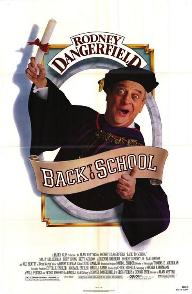
Live Tweet Alert: Join #FridayNightFlix For Back To School!


As some of our regular readers undoubtedly know, I am involved in a few weekly live tweets on Twitter and Mastodon.  I host #FridayNightFlix every Friday, I co-host #ScarySocial on Saturday, and I am one of the five hosts of #MondayActionMovie!  Every week, we get together.  We watch a movie.  We tweet our way through it.

Tonight, at 10 pm et, we’ve got 1986’s Back to School!

If you want to join us this Friday, just hop onto twitter, start the movie at 10 pm et, and use the #FridayNightFlix hashtag!  It’s a friendly group and welcoming of newcomers so don’t be shy.

Back to School is available on Prime and Tubi!  See you there!

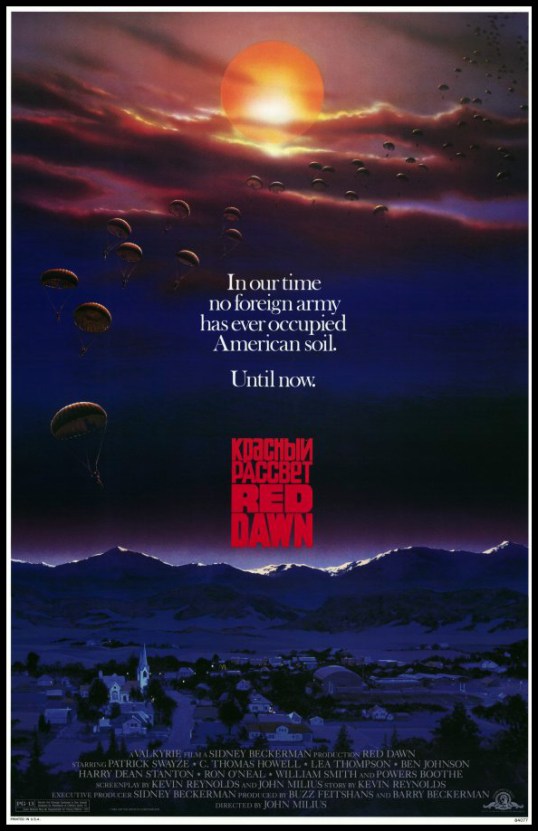
Scenes That I Love: The Traitor Scene From Red Dawn


The original Red Dawn doesn’t get as much credit as it deserves.

It’s often described as just being an anti-communist film but actually, it’s a lot more complex than that.  Yes, it’s about a group of teenagers who wage guerilla warfare against communist invaders.  But it’s also about how those teenagers lose their innocence as a result and how they all come to realize that war is not as simple as they thought it was.  The movie celebrates the Wolverines while also mourning that they were put in the position to have to risk and sacrifice their lives in the first place.

That’s what today’s scene that I love is all about.  After they are tracked down and attacked by a group of Russian soldiers, the Wolverines discover that one of the original members of the group visited his father in town and was forced to swallow a tracking device.  In this scene, the group is forced to deal with the reality of war.  The fact that the traitor was a friend to all of them and popular enough to be president of his class just adds to the difficulty of emotionally processing with his betrayal.  Patrick Swayze can’t bring himself to pull the trigger.  C. Thomas Howell, on the other hand, is so quick to shoot his former friend that you realize just how consumed by hate he has become.

Today’s scene was directed by the brilliant John Milius.

3 Desperate Men (1951, directed by Sam Newfield)


Tom and Fred Denton (Preston Foster and Jim Davis) are two frontier lawmen who are frustrated with their jobs.  They are both owed backpay.  When they shoot an outlaw, they are expected to pay the $80 burial fee.  Neither Tom nor Fred feels that they are appreciated by banks and the railroads that expect them to risk their lives on a daily basis.

When Tom and Fred are informed that their younger brother, Matt (Kim Spalding), has been convicted of murder and sentenced to hang in another town, they ride off to save him.

Even though Tom and Fred can both provide an alibi for Matt and it is obvious that Matt has been framed by a corrupt railroad agent, the town is still determined to hang him.  Tom and Fred manage to rescue him from the gallows but, in the process, a deputy is killed.  Now wanted by the authorities, the Denton brothers are forced to team up with the same outlaws that they used to hunt.  Soon, the Dentons are robbing banks and trains and their old friend, Pete Coleman (Monte Blue), has been ordered to captured them, dead or alive.

One of the many low budget westerns to be produced by the Lippert Company, Three Desperate Men is a cut above the usual B-western.  None of the Dentons want to be outlaws but they are forced into it by circumstances out of their control.  The real villains of the film are the bankers and the railroad tycoons who hoard the land and the money and who try to cheat men like Tom and Fred out of their rightfully earned wages.  The Denton brothers ultimately decide that their number one loyalty is to each other and that leads to the movie’s fatalistic conclusion, which is surprisingly violent for a 1951 western.  Preston Foster, Jim Davis, and Monte Blue head a cast that is full of tough and authentic western veterans and the action scenes are imaginatively staged by director Sam Newfield.  Three Desperate Men is a B-western that can be enjoyed even by those who don’t like westerns.

4 Shots From 4 Films: Special John Milius Edition


4 Or More Shots From 4 Or More Films is just what it says it is, 4 shots from 4 of our favorite films. As opposed to the reviews and recaps that we usually post, 4 Shots From 4 Films lets the visuals do the talking!

Today is John Milius’s birthday and you know what?  It should be a national holiday!

It’s time for….

4 Shots From 4 John Milius Films

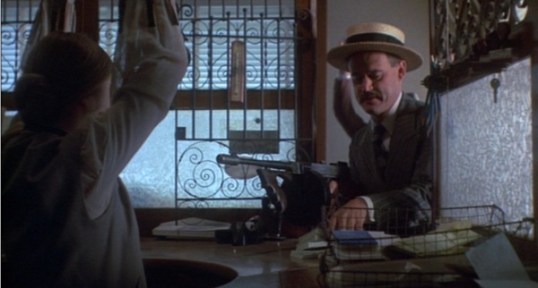
Dillinger (1973, dir by John Milius, DP: Jules Brenner)

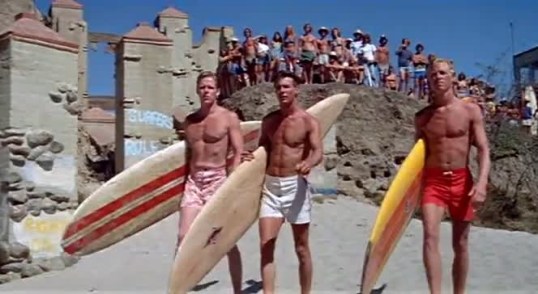
Big Wednesday (1978, dir by John Milius, DP: Bruce Surtees)

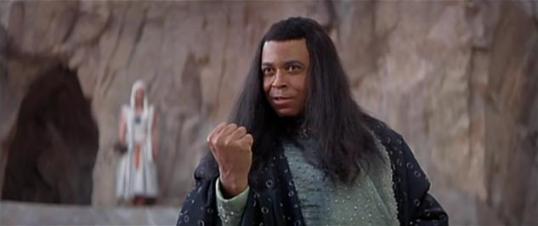
Conan The Barbarian (1982, dir by John Milius, DP: Duke Callaghan)

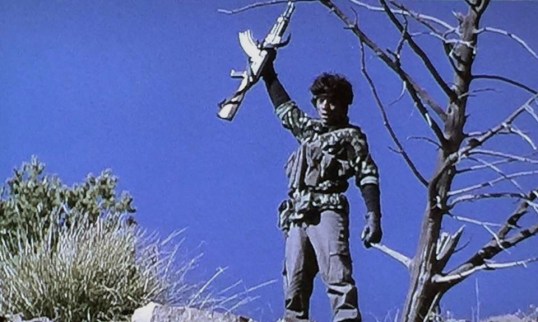
Red Dawn (1984, dir by John Milius, DP: Ric Waite)

Here Is The Official Cannes Lineup!


The lineup for the Cannes Film Festival has been announced.  After a rather subdued Sundance, film lovers like me are desperately looking to Cannes to add some excitement to 2024.  Considering that Cannes is going to see the premiere of new films from Francis Ford Coppola, Paul Schrader, Sean Baker, Kevin Costner, Andrea Arnold, George Miller, David Cronenberg, and Yorgos Lanthimos, it might do just that!

In the past, Cannes has always been hit-and-miss when it comes to the Oscars.  But lately, films like The Zone of Interest, Parasite, and The Tree of Life have followed success at Cannes with success with the Academy.

With that in mind, here’s the lineup.  If you’re going to Cannes in May, you’re going to have a good time!

Full lineup of the 2024 Cannes film festival.

The Second Act Quentin Dupieux (Opening Film) (Out of Competition)

Competition

L’Amour Ouf Gilles Lellouche

All We Imagine As Light Payal Kapadia

Anora Sean Baker

The Apprentice Ali Abbasi

Bird Andrea Arnold

Caught by the Tides Jia Zhangke

Emilia Perez Jacques Audiard

The Girl With the Needle Magnus von Horn

Grand Tour Miguel Gomes

Limonov: The Ballad Kirill Serebrennikov

Marcello Mio Christophe Honoré

Megalopolis Francis Ford Coppola

Motel Destino Karim Ainouz

Oh Canada Paul Schrader

Parthenope Paolo Sorrentino

The Shrouds David Cronenberg

The Substance Coralie Fargeat

Wild Diamond Agathe Riedinger

Kinds of Kindness Yorgos Lanthimos

Out of Competition

Furiosa: A Mad Max Saga George Miller

Horizon, an American Saga Kevin Costner

Rumours Evan Johnson, Galen Johnson, Guy Maddin

She’s Got No Name Chan Peter Ho-Sun

Un Certain Regard

Armand Halfdan Ullmann Tondel

Black Dog Guan Hu

The Damned Roberto Minervini

L’Histoire de Souleymane Boris Lojkine

My Sunshine Boku No Ohisama

Norah Tawik Alzaidi

On Becoming a Guinea Fowl Rungano Nyoni

Le Royaume Julien Colonna

Santosh Sandhya Suri

September Says Ariane Labed

The Shameless Konstantin Bojanov

Viet and Nam Truong Minh Quý

The Village Next to Paradise Mo Harawe

Vingt Deux! Louise Courvoisier

Who Let the Dogs Bite? Laetitia Dosch

Midnight Screenings

The Balconettes Noémie Merlant

I, The Executioner Seung Wan Ryoo

The Surfer Lorcan Finnegan

Twilight of the Warrior Walled In Soi Cheang

Cannes Premiere

C’est Pas Moi Leos Carax

Everybody Loves Touda Nabil Ayouch

The Matching Bang Emmanuel Courcol

Misericorde Alain Guiraudie

Rendez-Vous Avec Pol Pot Rithy Panh

Le Roman de Jim Arnaud Larrieu, Jean-Marie Larrieu

Special Screenings

Apprendre Claire Simon

La Belle de Gaza Yolande Zauberman

Ernest Cole, Lost and Found Raoul Peck

Le Fil Daniel Auteuil

The Invasion Sergei Loznitsa

Film Review: Berlin Correspondent (dir by Eugene Forde)


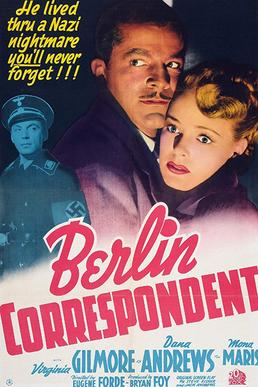
In the 1942 film, Berlin Correspondent, Dana Andrews plays Bill Roberts.

Bill is an American journalist, working out of Berlin.  Because the film takes place before America’s entry into World War II, Bill pretends to report only what the Germans want him to report.  Even while there are bombs exploding outside of the studio, Bill and his fellow correspondents report that everyone in Berlin is happy and that the German government is doing a great job.

However, Bill fills his reporting with code words, which are then interpreted by listeners in the American Intelligence service.  They understand that when Bill says that the people are happy, that means that they’re actually miserable.  When Bill says that the weather in Berlin is cloudy, that means that there is dissent brewing in the government.

Still, Captain Von Rau (Martin Kosleck) comes to suspect that Bill might be sending out secret messages and he decides to send someone to not only compromise Bill but to also discover who is feeding Bill information.  Von Rau sends his own fiancée, Karen Hauen (Virginia Gilmore), to seduce Bill.  Little does Von Rau suspect that Bill’s source of information is Karen’s own father (Erwin Kalser) and that Karen herself is going to end up falling in love with Bill.

Berlin Correspondent is typical of the films that were made to try to build support for the American war effort during the Second World War.  The hero is a tough and cynical American who pretends to not care about what is happening in the rest of the world but who eventually reveals himself to be an idealist with a strong sense of right and wrong.  Bill may say that he’s only in Berlin to report the news but, when Karen’s father is sent to a concentration camp, Bill proves himself to be willing to risk his own life to help the older man make it to Switzerland.  Karen’s father stands in for the members of the German resistance who worked from the inside to bring down the Nazis.  Bill and Karen’s love serves as a reminder that the world can come back together but only after Hitler has been defeated.

The two main Nazi villains are played by Martin Kosleck and Sig Ruman, two German actors who immigrated to the United States to escape the real-life Nazis.  Kosleck and Ruman play their characters as being buffoonish bullies who are easily outsmarted by street smart Americans like Bill.  It’s the film’s way of saying to the audience, “Are you really going to let these idiots think that they can defeat America?”  Still, a scene is included in which a crippled girl is described as being someone who should be put to death.  It’s a necessary reminder that the Nazis may be idiots but they’re also a legitimate threat.

Berlin Correspondent clocks in at a brisk 70 minutes and it features a typically strong leading performance from Dana Andrews.  If you needed someone to fight for America, 40s-era Dana Andrews would definitely be a good pick to go with.  It’s a joy to watch him outsmart the Nazis.

Law of the Canyon (1947, directed by Ray Nazarro)


When a gang of outlaws starts hijacking freight wagons and then ransoming them back to their owners, government agent Steve Langtry (Charles Starrett) is sent to investigate.  He both goes undercover as an inexperienced traveler and as the masked Durango Kid.  As always, he is accompanied by Smiley Burnette.  In this installment, Smiley tries to invent a machine that can find silver and he also sings a few songs.  His backing band, The Lone Star Cowboys, follow him everywhere that he goes but they don’t actually get involved in the action.

This is another Durango Kid movie, with all of the usual horse chases and shootouts.  The same action montage that started Phantom Valley also starts this movie.  As always, Charles Starrett is convincing when riding a horse or shooting a gun.

What sets this Durango Kid movie apart from the others is the main villain.  Dr. Middleton (played by a regular member of the Durango Kid stock company, Fred F. Sears) appears to be a kindly man who serves as a middleman between the citizens and the outlaws.  Actually, he is working with the outlaws and receives a commission of every ransom that he negotiates.  The reason he can get away with it is because he’s drugged the Sheriff (George Cheseboro)!  He attempts to drug Durango too but luckily, Smiley drinks the water instead.

While it won’t convert anyone who isn’t already a fan of the genre or the character, this is another entertaining outing for the Durango Kid.