Under the Moon’s Shadow: The Many Faces of the Modern Werewolf in Cinema


“Beneath the full moon’s gaze, the werewolf’s howl reminds us that the monster we fear most lives within.”

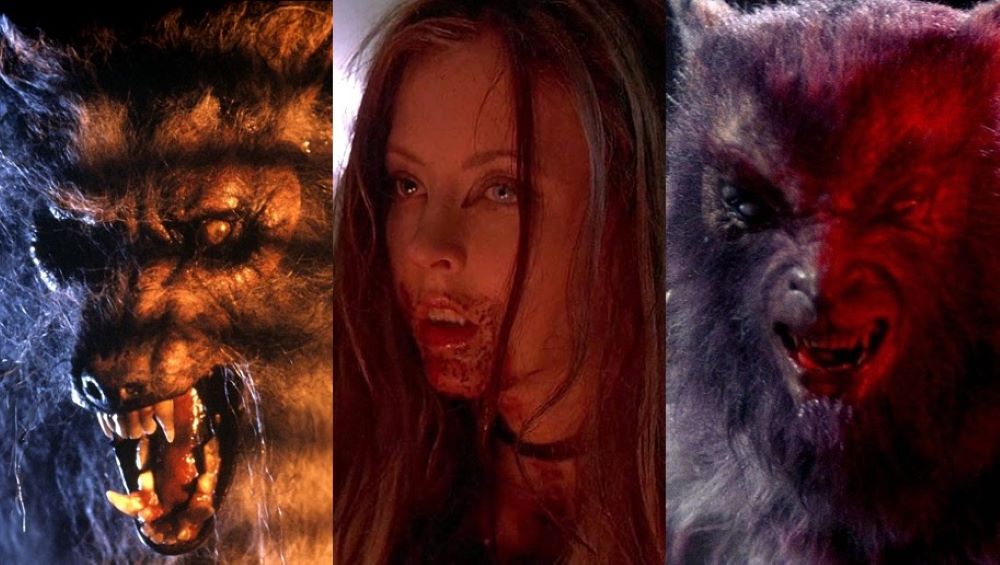
Werewolves have been haunting movies for almost a century, capturing our deepest fears and hidden desires. But today’s werewolf films go beyond the classic horror formula, offering fresh takes that reflect different genres, tones, and cultural vibes. From the intense, action-packed Dog Soldiers to the emotionally charged coming-of-age story in Ginger Snaps, modern werewolf stories keep evolving. This piece explores five standout films—Dog Soldiers (2002), Ginger Snaps (2000), Wolfen (1981), The Howling (1981), and An American Werewolf in London (1981)—to see how they each put their unique spin on the age-old monster myth.

The Werewolf as Warrior: Dog Soldiers’ Brutal Siege

Neil Marshall’s Dog Soldiers breaks away from the lonely, tragic werewolf trope and cranks up the action. Set deep in the Scottish Highlands, it throws a squad of British soldiers against a ferocious pack of werewolves. This film turns the myth into a survival war story packed with tension and raw energy, reminiscent of classics like Aliens and Zulu. The werewolves here aren’t lonely victims—they’re terrifying predators, more beast than man, rarely fully shown to keep the suspense sharp. The movie focuses on the squad’s fight to survive and the bonds they share, putting teamwork and instinct front and center.

The werewolves are intentionally faceless threats, less about human drama and more about pure danger. Instead of personal transformation, Dog Soldiers is about external combat, the struggle between man and beast in its rawest form.

Adolescence Unleashed: Ginger Snaps and the Lycanthropic Metaphor

Ginger Snaps takes a totally different route, using werewolf transformation as a metaphor for female puberty and all the confusing emotions that come with growing up. The bridge between monster and metaphor is Ginger’s first period, which triggers her curse and mirrors the changes and fears of adolescence. The movie digs deep into sisterhood, identity crises, and the loss of control, wrapping its horror in psychological drama and dark humor.

Instead of flashy creature effects, Ginger Snaps keeps things subtle, focusing on emotional truth. It’s a personal story about change and fear of becoming “other,” making the monster symbolic of real-life struggles rather than just an external threat.

Urban Shadows: Wolfen’s Mystical Guardians of Decay

Wolfen stands apart for taking the werewolf myth into the world of urban decay and social unrest. Set in New York City’s rundown South Bronx, it follows detectives chasing a mysterious “Wolfen” creature tied to Native American spirituality. These aren’t just monsters—they’re ancient protectors fighting back against the destruction of nature by the city.

This movie trades fast-paced horror for slow-building atmosphere and social commentary. It uses the werewolf myth to reflect on displacement, environmental trauma, and the clash between nature and modern life.

Satire and Savagery: The Howling’s Shifting Tones

Joe Dante’s The Howling mixes body horror, camp, and satire in a way few horror movies do. The film tracks a journalist who stumbles upon a hidden werewolf colony and shifts effortlessly between chilling scares and self-aware humor. The transformation scenes set a new standard with unforgettable effects, and the movie sneaks in sharp critiques of media culture and cult mentality.

The werewolves in The Howling have a raw, animalistic design inspired by medieval art, which adds to the unsettling vibe. The film plays with expectations, flipping between serious horror and playful camp to keep viewers on their toes.

Tragedy and Humor: An American Werewolf in London’s Genre Fusion

An American Werewolf in London changed the game by blending horror, comedy, and tragedy all in one. It tells the bittersweet story of an American backpacker cursed after a werewolf attack in England. The special effects were groundbreaking, making the transformation scenes legendary. But more than the effects, its mix of sharp wit and real sadness gives it an emotional depth rare for horror films.

Unlike the external threats in Dog Soldiers or Wolfen, this film focuses on the inner turmoil of becoming a monster and the tragic human cost. The humor lightens the mood but never undercuts the emotional punch.

Thematic and Stylistic Divergence: A Closer Look

What stands out most when looking at these films is just how differently each approaches the werewolf myth, using it to tap into a wide variety of fears and ideas.

Tone and Mood

The films differ widely in tone. Dog Soldiers is intense and gritty, pulling viewers into a tense battle for survival marked by an unrelenting external threat. In contrast, Ginger Snaps is more reflective and symbolic, presenting the werewolf as a metaphor for adolescent change and identity struggles, especially in the context of female puberty. Its tone is intimate and emotionally charged.

Wolfen adopts a slower, more brooding atmosphere, emphasizing mystery and social critique through ecological and urban decay themes. The Howling fluctuates between genuine body horror and camp satire, challenging viewer expectations with its mix of fear and humor. Finally, An American Werewolf in London balances horror and comedy with a tragic undertone, creating an emotional complexity that few other werewolf films achieve.

Narrative Focus

The stories told by these films further highlight their differences. Dog Soldiers centers on a group dynamic, focusing on survival against a faceless external menace. Ginger Snaps is more inward-looking, exploring personal growth, family bonds, and the emotional upheaval of transformation.

Wolfen zooms out to look at social and environmental issues, making the werewolf a symbol of nature fighting back against urban chaos. Similarly, The Howling blends personal horror with cultural critique, exploring media obsession and cult psychology, all while keeping the story focused on its characters. An American Werewolf in London chooses to dive deep into one man’s tragic journey, showing the emotional impact of becoming a monster.

Cultural Themes

Together, these films show how the werewolf myth can reflect whatever fears or themes society is grappling with. Dog Soldiers taps into worries about survival and overwhelming outside forces; Ginger Snaps gets at the confusion and pain of growing up; Wolfen reflects alienation and environmental concerns; The Howling examines media hype and societal madness; and An American Werewolf in London highlights inner conflict and loss.

This broad range of themes and styles proves the werewolf legend is still incredibly adaptable—still a powerful way for films to engage with human experience in all its complexity.

Other Modern Werewolf Films in Context

Beyond these main works, many other films contribute to the werewolf legacy. The Company of Wolves (1984) explores gender and sexuality through fairy tale visuals. Silver Bullet (1985) adapts Stephen King for a small-town horror tale. Joe Johnston’s The Wolfman (2010) revives gothic horror with modern effects and includes standout makeup work by Rick Baker, delivering a visually rich yet emotionally complex take on the classic. Mike Nichols’ Wolf (1994) uses lycanthropy as a metaphor for aging and desire.

Most recently, Leigh Whannell’s remake of The Wolfman (2024) offers a fresh perspective on the myth, blending psychological horror with visceral transformation sequences. Whannell’s version emphasizes the protagonist’s internal struggle and familial curses within a contemporary setting, melding suspense with a nuanced character study and updated special effects to appeal to modern audiences while honoring the gothic roots.

Adding a lighter touch is The Monster Squad (1987), where a group of kids face off against classic monsters—including a reluctant Wolfman—in a mix of horror, adventure, and youthful courage. Its playful tone offers a nostalgic, fun take on the werewolf legend, proving that these creatures can captivate across genres and generations.

Together, these films highlight how the werewolf myth keeps evolving, adapting to reflect new cultural moments and storytelling styles.

Conclusion: Why the Werewolf Still Howls

The lasting power of werewolves in cinema lies in their extraordinary adaptability. These films show how the werewolf morphs to fit different narratives and cultural concerns: from brutal external threats in Dog Soldiers to metaphors for personal growth in Ginger Snaps; from mystical protectors in Wolfen to symbols of media mania in The Howling; and from tragic heroes in An American Werewolf in London to youthful adventurers in The Monster Squad.

The werewolf is not just a monster of flesh and fur but a cultural shape-shifter—malleable, symbolic, and endlessly fascinating. Its transformations mirror not only physical change but societal anxieties, personal struggles, and the complexities of human nature. This versatility guarantees the werewolf’s howl will echo across cinema for generations to come.

4 Shots From 4 Horror Films: 1950s Part One


This October, I’m going to be doing something a little bit different with my contribution to 4 Shots From 4 Films.  I’m going to be taking a little chronological tour of the history of horror cinema, moving from decade to decade.

Today, we look at the start of the 1950s.

4 Shots From 4 Horror Films

The Strange Door (1951, dir by Joseph Pevney)

The Strange Door (1951, dir by Joseph Pevney)

The Black Castle (1952, dir by Nathan H. Juran)

The Black Castle (1952, dir by Nathan H. Juran)

The Maze (1953, dir by William Cameron Meznies)

The Maze (1953, dir by William Cameron Meznies)

House of Wax (1953, dir by Andre De Toth)

House of Wax (1953, dir by Andre De Toth)

Watch Your Back (AI Short Film), Review by Case Wright


What film would Alex Magana make if he were a robot? This is a question that no one wanted answered, but Elevate Studios said, TOUGH, you are gettin it! And get it we did!

Many worry that AI will take over the world and our jobs; well, I’m here to tell you that you are 50% correct! AI will likely take your job, but not the world because it’ll just be too busy making boring/terrible short films.
Hey Robots, look I get that you feel like you got a full head of steam here, but why make terrible movies? We have people for that and those are jobs that are too good for you.
This short is about a priest called into perform and exorcism and he proceeds to punch the possessed woman and the demon leaves her. Yes, that was the whole film. I feel less now that I have seen this.

I put together a short myself using AI to show what it will be like when AI displaces humans:

Will the Robot unalive us all? I don’t know, but they will sure try to bore us to death!

Horror On The Lens: Teenage Caveman (dir by Roger Corman)


Future serious actor Robert Vaughn made his film debut in 1958’s Teenage Caveman.  Directed by Roger Corman, Teenage Caveman tells the story of a rebellious young man (that’s Robert Vaughn) who chooses to defy his father’s warnings and venture beyond the caves and into “the forbidden zone.”  He’s told that monsters roam in the forbidden zone and indeed, at least one of them does.  However, neither the Teenage Caveman nor his father are prepared for what lies at the heart of the forbidden zone.

(What will he find out there, Dr. Zaius?)

Robert Vaughn later said that, out of all the bad films that he made, this was the worst.  Personally, I think he was being a bit too hard on the film.  It’s not good but it is definitely fun.  Along with watching all of the dinosaur stock footage, you get to wonder how a caveman — especially a teenage caveman! — could possibly have such perfect hair.  Even more importantly, if you stick with it, this film has a twist ending that has to be seen to be believed.

Here is Teenage Caveman:


October Positivity: Allison’s Choice (dir by Bruce Marchiano)


In 2015’s Alison’s Choice, Chanel Marriott plays Alison.

Alison is a teenager who has a difficult relationship with her father.  He holds back his emotions from her.  She’s been left feeling insecure as a result and is perhaps a bit too dependent upon validation from other men.  For instance, her no-good boyfriend, Rick (Julian Alexander), bullies her into having sex in his tiny car.  When Alison later discovers that she’s pregnant, Rick’s response is to tell her to get rid of it.  He tells her to go find a clinic and have an abortion and then talk to him later.  Rick makes it clear that he will not paying for the procedure.  He also leaves it up in the air as to whether or not he’ll even come to the clinic to support Alison.

Classy guy, that Rick.

At the clinic, Alison finds herself having doubts.  Does she really want to get an abortion?  The clinic’s rather harsh and antiseptic atmosphere doesn’t make things any easier.  One nurse (Liz Randall) tries to pressure Alison to go through with her abortion.  The doctor (Britt Prentice) confesses that he can’t guarantee that abortion isn’t murder.  At the front desk, Ms. Glo (Bunny Gibson) asks Alison is she’s really sure she wants to go through with the procedure.  A pushy social worker named Marta (Amy Lydon) assures Alison that it’s not big deal.  Lecretia (Alicia Monet Caldwell) makes fun of Alison for being a first-timer.

And, of course, Jesus (Bruce Marchiano) shows up as a janitor and encourages Alison not to get an abortion.  Actually, he encourages everyone all over the world not to get an abortion and, whenever anyone does, he starts crying.  He says that he’s been working as a janitor since 1973.  That, of course, was the year of Roe v Wade.

Bruce Marchiano has played Jesus in a number of films.  He played Jesus in The Encounter, which is something of a guilty pleasure of mine.  Marchiano has a calm and soothing voice and his eyes tend to radiate kindness, which makes him a good choice to play Jesus.  From what I’ve seen of him in various faith-based productions, he’s not a bad actor at all.  He can deliver his lines without looking straight at the camera and he’s capable of showing emotion.  By the standards of many faith-based films, that makes him almost Brandoesque.

Unfortunately, Alison’s Choice is so heavy-handed and awkwardly acted by everyone else in the cast that Marchiano’s characteristically good and empathetic performance can’t really save it.  I’m not going to get into the specifics of whether or not the film is correct about abortion, beyond saying that this is not a film that is going to change anyone’s mind about the issue.  It’s a heavy-handed pro-life tract.  (Then again, there’s also been more than a few heavy-handed pro-choice tracts.)  What I will say is that Alison, as a character, is so indecisive and, quite frankly, annoying that it didn’t take me long to lose interest in her.  Even after she becomes convinced that she’s actually talking to Jesus, she still can’t decide whether or not she loves her boyfriend.  Girl, Jesus just told you that your boyfriend is no good.  I don’t care what anyone thinks about abortion.  If Jesus suddenly shows up and tells you to dump your boyfriend, you do it.

Eh.  I’m going to go watch The Encounter again.

The Human Duplicators (1965, directed by Hugo Grimaldi)


Who’s an android and who’s not!?

It’s hard to keep track in The Human Duplicators.  Dr. Kolos (Richard Kiel) is an alien who is sent down to Earth.  He thinks that he’s not an android but how can he be sure?  He goes to the laboratory of Dr. Vaughan Dornheimer (George Macready) and tells Donheimer that they will be working together to create androids that are perfect duplicates for humans and that Kolos will be the “master.”  But then an android is built of Dornheimer himself and android Dornhiemer declares that he is the master.  Kolos is distracted because he’s fallen in love with Dornhiemer’s daughter, a blind pianist named Lisa (Dolores Faith).

Glenn Martin (George Nader) of the National Intelligence Agency is assigned to figure out what is happening at the Dornhiemer mansion and, wouldn’t you know it, there’s already an android version of Glenn.  Glenn’s girlfriend is played the brassy Barbara Nichols, a comedic actress who was briefly groomed to be the next Marilyn Monroe and who comes on like the star of a burlesque show.  Glenn’s boss is Austin Wells and he’s played by Hugh Beaumont, which makes this film feel like a weird episode of Leave It To Beaver where Wally has to save the world.  I don’t think the bad guys ever duplicate Hugh Beaumont and that’s good because real trouble could be created by an evil version of Ward Cleaver.

The presence of Richard Kiel and Hugh Beaumont is really the only thing that The Human Duplicators have going for it.  There are plenty of fights between Glenn and the androids but it turns out that the androids are easy to beat into oblivion so there’s not much suspense or excitement to be found.  At times, it feels as if it’s trying to be an episode of The Avengers just without the wit of Patrick Macnee or the charm of Diana Rigg.  The Human Duplicators seems to take itself very seriously and I’m not sure why.

After The Human Duplicators, Richard Kiel later went on to play Jaws in The Spy Who Loved Me and Moonraker.  Hugh Beaumont retired from the movies.

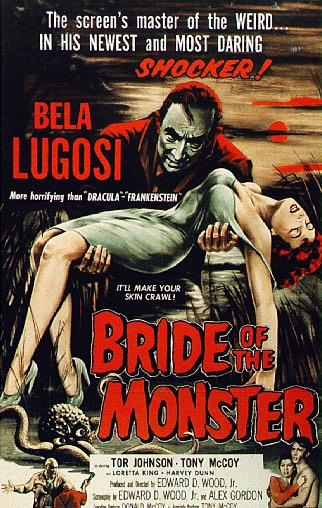
Horror Scenes That I Love: Bela Lugosi in Bride of the Monster


“Home?  I have no home.”

So begins the monologue that serves as the centerpiece of the 1955 Ed Wood film, Bride of the Monster.  The monologue is delivered by Bela Lugosi, appearing in one of his final roles.

Far too often, people tend to be snarky about the work that Lugosi did under the direction of Ed Wood.  But you know what?

He actually delivers a pretty good performance in Bride of the Monster.

Ignore all of the stuff about atomic supermen and instead, just pay attention to the way Lugosi delivers the lines.  Pay attention to the pain in his voice as he says that he has no home.  Pay attention and you’ll discover that Lugosi actually gave a good performance in Bride of the Monster.  He delivers the lines with such wounded pride that you can’t help but think that maybe we should let him create a race of atomic supermen.

Among the old horror icons, Lugosi has always been the most underrated actor.  He got typecast early and he appeared in some unfortunate films but Bela Lugosi had real talent and you can see it in this scene.

October True Crime: Looking for Mr. Goodbar (dir by Richard Brooks)


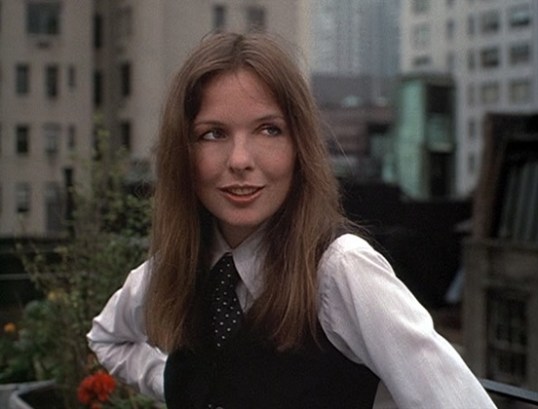
In 1977’s Looking for Mr. Goodbar, Diane Keaton plays Theresa Dunn.

A neurotic and single woman who has never emotionally recovered from her childhood struggle with scoliosis, Theresa is trying to find herself in the wild and promiscuous world of the 1970s.  After losing her virginity to a condescending college professor (Alan Feinstein), Diane goes on to have relationships with a needy social worker (William Atherton) and an hyperactive petty criminal (Richard Gere).  During the day, she teaches deaf children and she’s good at her job.  She even manages to win over the distrustful brother (Levar Burton) of one of her students.  At night, she hits the bars.  She buys drugs from the neighborhood dealer (Julius Harris).  She tries to read the book that she always carries with her.  (Some nights, it’s The Godfather and other nights, it’s something else.)  She picks up strange men and takes them to her roach-infested apartment.  One of those men, Gary (Tom Berenger), turns out to both be a bit insecure about his masculinity and also totally insane….

Looking for Mr. Goodbar is an adaptation of a novel that was inspired by the real-life murder of a New York school teacher named Roseann Quinn.  The book was best seller and, just as he had with a previous best-selling true crime novel, director Richard Brooks bought the rights and both wrote and directed the film.  Diane Keaton, who at that point was best-known for playing Kay Adams in The Godfather and for appearing in Woody Allen’s comedies, took on the demanding role of Theresa and, whatever one may think of the film itself, it can’t be denied that Keaton gives a brave performance as the self-destructive Theresa.  In fact, I would say it’s one of Keaton’s best performances, outside of her work with Woody Allen and The Godfather Part II.  If she had been played by a lesser actress, Roseann could have been unbearable.  As played by Diane Keaton, though, she’s everyone’s best friend who just need some time to find herself.  The viewer worries about her and wants to protect her as soon as they see her, making her ultimate fate all the more tragic.

As for film itself, I’ve watched Looking For Mr. Goodbar a few times and I’m always a little bit surprised by how bad the movie actually is.  The film actually gets off to a strong start.  The scenes between Theresa and the professor make for a sensitive portrait of a repressed young woman finally getting in touch with her sexuality and, in the process, discovering that she deserves better than the man she’s with.  But once Theresa moves into her apartment and starts hitting the bars at night, the film takes on a hectoring and moralistic tone that leaves the viewer feeling as if the film is blaming Theresa for the tragedy that’s waiting for her at the end of the story.  Diane Keaton and Tuesday Weld (who plays her sister) both give excellent performances but everyone else in the film either does too much or too little.  This is especially true of Richard Gere, who is very hyperactive but still strangely insubstantial in his role.  (Whenever Richard Gere appears on screen, one gets the feeling that they could just walk right through him.)  A scene where Gere jumps around the apartment is meant to be disturbing but it’s more likely to inspire laughter than chills.

It’s an overly long film and the moments in which Theresa has dark, sexually-charged fantasies are never quite as powerful as the film obviously meant for them to be.  (Brian Dennehy makes his film debut as a doctor who kisses Theresa’s breast during one of her fantasies.)  As opposed to the empathy that he brought to In Cold Blood, one gets the feeling that director Richard Brooks didn’t like anyone in this movie and that he was more interested in Theresa as a cautionary tale than as a human being.  With this film, Brooks seemed to be standing athwart the Sexual Revolution and shouting, “Stop!”  That said, the film’s final moments are genuinely disturbing and difficult to watch.  It’s the one moment where Brooks’s lack of subtlety pays off.  Those last minutes are about as horrific as anything you could expect to see.

As for Roseann Quinn, her killer was eventually arrested.  John Wayne Wilson hung himself in prison, 5 months after murdering her.

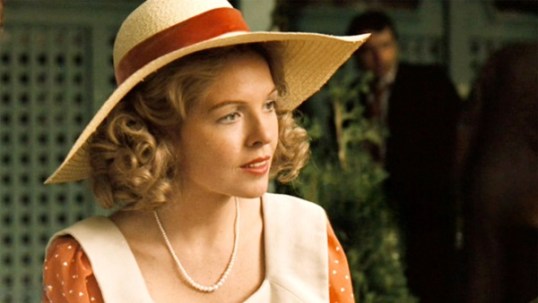
Diane Keaton, RIP


I’m so sad to hear the Diane Keaton has passed away.  She was 79 years old.

A great actress, she was also one of the few performers who seemed to be as genuine off-screen as she was on-screen.  She brought Kay Adams to life in The Godfather, adding a certain edge that wasn’t present in the novel or the script.  She starred in Woody Allen’s best films.  She lent her voice to Finding Dory.  She won an Oscar for Annie Hall and was nominated for a few other films as well.  In 1996’s Marvin’s Room, she easily stole the film from showy performers like Meryl Streep and Leonardo DiCaprio and earned perhaps her most deserved Oscar nomination.    At a time of generic faces and publicist-written statements, she was refreshingly real.

Diane Keaton, RIP.  She will be missed.


Horror Song of the Day: Mater Tenebrarum by Keith Emerson


Inferno (1980, dir by Dario Argento, DP: Romana Albano)

Today’s horror song of the day comes from Keith Emerson’s soundtrack of Dario Argento’s Inferno.  Emerson did not have an enviable task, having to follow up Goblin’s soundtrack for Suspiria.  But Emerson pulled it off, crafting a score that compliments Goblin’s earlier work while maintaining an identity of its own.