Film Review: Murder on the Orient Express (dir by Sidney Lumet)


There’s been a murder on the Orient Express!

In the middle of the night, a shady American businessman (Richard Widmark) was stabbed to death.  Now, with the train momentarily stalled due to a blizzard, its up to the world’s greatest detective, Hercule Poirot (Albert Finney), to solve the crime.  With only hours to go before the snow is cleared off the tracks and the case is handed over to the local authorities, Hercule must work with Bianchi (Martin Balsam) and Dr. Constantine (George Coulouris) to figure out who among the all-star cast is a murderer.

Is it the neurotic missionary played by Ingrid Bergman?  Is it the diplomat played by Michael York or his wife, played by Jacqueline Bisset?  Is it the military man played by Sean Connery?  How about Anthony Perkins or John Gielgud?  Maybe it’s Lauren Bacall or could it be Wendy Hiller or Rachel Roberts or even Vanessa Redgrave?  Who could it be and how are they linked to a previous kidnapping, one that led to the murder of an infant and the subsequent death of everyone else in the household?

Well, the obvious answer, of course, is that it had to be Sean Connery, right?  I mean, we’ve all seen From Russia With Love.  We know what that man is capable of doing on a train.  Or what about Dr. No?  Connery shot a man in cold blood in that one and then he smirked about it.  Now, obviously, Connery was playing James Bond in those films but still, from the minute we see him in Murder on the Orient Express, we know that he’s a potential killer.  At the height of his career, Connery had the look of a killer.  A sexy killer, but a killer nonetheless….

Actually, the solution to the mystery is a bit more complicated but you already knew that.  One of the more challenging things about watching the 1974 version of Murder on the Orient Express is that, in all probability, the viewer will already know how the victim came to be dead.  As convoluted as the plot may be, the solution is also famous enough that even those who haven’t seen the 1974 film, the remake, or read Agatha Christie’s original novel will probably already know what Poirot is going to discover.

That was something that director Sidney Lumet obviously understood.  Hence, instead of focusing on the mystery, he focuses on the performers.  His version of Murder on the Orient Express is full of character actors who, along with being talented, were also theatrical in the best possible way.  The film is essentially a series of monologues, with each actor getting a few minutes to show off before Poirot stepped up to explain what had happened.  None of the performances are exactly subtle but it doesn’t matter because everyone appears to be having a good time.  (Finney, in particular, seems to fall in love with his occasionally indecipherable accent.)  Any film that has Anthony Perkins, John Gielgud, Lauren Bacall, Sean Connery, Ingrid Bergman, and Albert Finney all acting up a storm is going to be entertaining to watch.

Though it’s been a bit overshadowed by the Kenneth Branagh version, the original Murder on the Orient Express holds up well.  I have to admit that Sidney Lumet always seems like he would have been a bit of an odd choice to direct this film.  I mean, just consider that he made this film in-between directing Serpico and Dog Day Afternoon.  However, Lumet pulls it off, largely by staying out of the way of his amazing cast and letting them act up a storm.  It looks like it was a fun movie to shoot.  It’s certainly a fun movie to watch, even if we do already know the solution.

Film Review: Testament (dir by Lynne Littman)


The 1983 film, Testament, is about death.  It’s about the death of a family, the death of a town, the death of a way of life, and the death of hope.

And you may be saying, “Well, gee, Lisa — that sounds like a really happy movie.”

Well, it’s not meant to be a happy movie.  Testament is a painfully grim movie about the end of the world.

The movie takes place in the town of Hamelin, California, which we’re told is 90 minutes away from San Francisco.  It’s a nice town, the type of place where everyone knows each other.  Mike (Mako) runs the local gas station and cares for his disabled son, Hiroshi (Gerry Murillo).  Elderly Henry Abhart (Leon Ames) spends his time on his radio, talking to strangers across the world.  Fania (Lilia Skala) offers up piano lessons.  Father Hollis (Philip Anglim) looks over the spiritual needs of the parish.  It’s a normal town.

The town is home to the Weatherlys.  Carol (Jane Alexander) is a stay-at-home mom who does volunteer work and who is directing the school play.  Tom (William Devane) is a common sight riding his bicycle through town every morning before heading off to work in San Francisco.  They have three children.  Mary Liz (Roxanna Zal) is a teenager who is taking piano lessons.  Brad (Ross Harris) is always trying to impress his father and is looking forward to his 14th birthday.  Scottie (Lukas Haas, in his first film) is the youngest and never goes anywhere without his teddy bear. They’re a normal family living a normal life in a normal town.

And then, one day, everything changes.  Scottie is watching Sesame Street when the program is suddenly interrupted by a clearly terrified anchorman who announces that New York has been bombed.  The president is about to speak but, before he can, there’s a bright flash of light, an distant explosion, and the entire town loses power.

At first, the people of Hamelin try to remain hopeful.  Though Tom works in San Francisco and San Francisco is among the many cities that have apparently been bombed (by who, we never learn), he also left a message on the family’s answer machine, telling them that he was on his way home.  Even with Tom missing, Carol continues to insist the he’ll be coming home at any minute.

Tom doesn’t come home.

The rest of the film follows the slow death of the town.  Even though the town was not damaged by the blast, the fallout soon hits.  Cathy (Rebecca De Mornay) and Phil (Kevin Costner) bury their newborn baby after it falls ill from radiation poisoning.  Mike, Henry, and Fania all start to grow physically ill and, in some cases, dementia sets in.  Father Hollis goes from being hopeful to being tired and withdrawn as he tries to attend to each and every death.  Larry (Mico Olmos), a young boy whose parents have disappeared, briefly moves in with the Wetherly family.  He disappears about halfway through the movie and we never learn if he left or if he died.  All we know is that no one mentions him or seems to notice that he’s gone.

Over the course of the film, Carol buries two of her children.  By the end of the film, her remaining child is starting to show signs of being sick, as is she.  Testament, which opened with bright scenes of a happy town, ends in darkness, with only a handful of people left among the living.  Even those who are alive are clearly dying and can only speak of the importance of remembering all of it, what they had and what they lost.

Sounds like a really happy film, right?  Well, it’s meant to be depressing.  It was made at a time when nuclear war was viewed as being not just probable but also inevitable.  Testament is a film that portrayed what a lot of people at the time were expecting to see in the future and, as a result, it’s not meant to be a particularly hopeful movie.  It’s a film that accomplishes what it set out to do, thanks to a great (and Oscar-nominated) performance from Jane Alexander and Lynne Littman’s low-key direction.  Unlike a lot of atomic war films, Testament does not feature any scenes of burning buildings or excessive gore.  That actually what makes it even more disturbing.  Even after the war, Hamelin still looks like it did beforehand, with the exception that many of the houses are now empty and that all of the residents are slowly dying.

(Would I have reacted as strongly to the film if I hadn’t watched it at a time when many people are afraid to go outside?  Perhaps not.  But this pandemic has brought extra power to a lot of films that may not have had as much of an impact in 2018.)

Testament is a powerful film, though not necessarily one that I ever want to watch again.

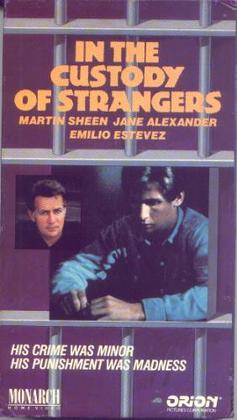
In The Custody of Strangers (1982, directed by Robert Greenwald)


In this television film, Emilio Estevez plays the world’s worst son but his behavior makes sense because he also has the world’s worst father (played by Estevez’s real-life father, Martin Sheen).

When teenager Danny Caldwell (Estevez) gets arrested for crashing into a police car while driving drunk, his mother, Sandy (Jane Alexander), wants to bail him out and bring him home.  However, Frank Caldwell (Sheen) is an old-fashioned disciplinarian and he decides that his son needs to spend a night in jail in order to teach him a lesson.  Even though, as a juvenile, Danny is given a private cell, he still snaps when the older inmate in the cell next door starts coming onto him.  After smashing the man’s head against the cell bars, Danny picks up a battery charge and is sucked into the system.

While Frank and Sandy struggle to get Danny released from jail, Danny falls deeper and deeper into despair and anger.  It’s an overcrowded, busy jail and Danny is often left in isolation for both his safety and the safety of the other prisoners.  Even though the warden (Kenneth McMillan) is sympathetic to Danny and can tell that he’s not really a hardened criminal, there’s only so much that he can do for him.  Meanwhile, on the outside world, Frank stubbornly refuses to admit that he made a mistake by leaving Danny in jail overnight.  When a job opportunity presents itself in another state, the unemployed Frank misses some of Danny’s hearings so that he can interview for it, leaving Danny feeling abandoned all over again.

For obvious reasons, the casting of Martin Sheen and Emilio Estevez as father and son works very well in this film.  Not only is there the obvious family resemblance but both Sheen and Estevez project the same attitude of anger and resentment towards the world.  If Danny has a chip on his shoulder, it’s because he inherited from his father.  In The Custody of Strangers does a good job of showing how being imprisoned can often turn someone who made a mistake into a hardened criminal but, even though it’s mostly critical of the criminal justice system, it doesn’t let Frank off the hook either.  Frank may say that he was just trying to discipline his son but the film makes clear that what he actually wanted was for jail to do his job as a parent.  The results are disastrous and the film ends on a note of ambiguity.  After what Danny has been through, it’s clear that he’ll never be the same person again.

Sheen, Alexander, and Estevez all give good performances in In The Custody of Strangers.  The only ray of hope that the film offers is the kindly warden and he’s also the film’s biggest flaw because it’s hard to believe that, with everything else going on in the jail, he would have had time to take such a benevolent interest in just one inmate.  In real life, Danny Caldwell would have been even more lost than in this movie.

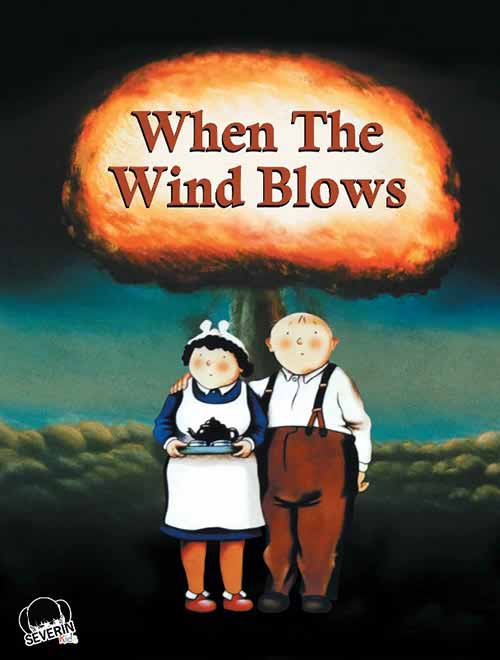
Film Review: When The Wind Blows (dir by Jimmy Murakami)


Over the past few years, I’ve seen some extremely depressing animated films.

I cried during the first fifteen minutes of Up.  I cried during the final ten minutes of Toy Stories 3 and 4.  Actually, now that I think about it, I think I’ve sobbed through every single PIXAR film, with the exception of the movies about the talking cars and the one about the good dinosaur.  My point is that I’m not one of those people who automatically assumes that, just because a film is animated, it’s necessarily going to make me laugh.  I fully understand that not all animated films are for children and that a cartoon can be just as serious and dark as a live action movie.

That said, I don’t think anything could have prepared for the 1986 film, When The Wind Blows.  To say that When The Wind Blows is bleak would be an understatement.  Is When The Wind Blows a depressing film?  Yes, you could say that.  It’s a film about an elderly couple facing the end of the world with optimism and a never-ending faith that things will turn out okay.  This is the most trusting couple in the world and, in the end, they end up crawling into their own separate potato sacks, where they struggle to recite the Lord’s Prayer as they both die a slow and painful death.  It’s not just that When The Wind Blows is depressing.  It’s also that it’s a film that takes place in a world bereft of hope.  It’s a film that has a message but, at the same time, it also seems to be convinced that it’s a message to which no one will bother to listen.

Jim and Hilda Bloggs (voiced by John Mills and Dame Peggy Ashcroft) are a loving couple who own a rather nice cottage in rural England.  They’re very content in their life and more than a bit complacent.  They have faith that both the milk and the paper will be delivered every morning.  Hilda has a nice garden going.  Jim regularly takes the bus down to the library, where he reads the newspapers and picks up pamphlets about what to do in case of a nuclear attack.  When the news comes over the radio that Britain will probably be attacked in 3 days, Jim industrially sets out to make a shelter for himself and Hilda.

It’s not much of a shelter.  In fact, it’s really just two doors leaning against a wall.  However, Jim and Hilda are simply following the instructions that they found in a government-printed pamphlet and both of them have a good deal of faith in the “power that be.”  As they wait for the war to break out, they remember just how much they enjoyed World War II.  Everyone was in it together during World War II!  And Jim has faith that everyone will continue to be in it together during this latest war.

The bomb eventually drops.  The animation, which previously had the feel of an old school Christmas special, becomes dark and ominous as the world around Jim and Hilda’s house erupts into flames.  Jim and Hilda hide in their little shelter.  Though the pamphlets say that they shouldn’t leave the shelter for at least two weeks, Jim and Hilda leave within a few hours.  They walk around outside and look at the charred remains of the garden.  Hilda wonders what fallout looks like.  Jim isn’t sure.

And, at this point, we know they’re both as good as dead.  (Interestingly enough, it does appear that they survived longer than their neighbors, who perhaps did not hide behind a door.)  The rest of the film is essentially watching Jim and Hilda waste away while remaining convinced that someone from the government is going to come and save them.  You find yourself wondering if the two of them are really as naive as they seem or if they’re both in a shared denial about what’s happened.  It’s probably a combination of the two.

It’s an undeniably effective film.  It not only works as an anti-war film but also as an anti-government film.  Both the Left and the Right will find things to appreciate in the film’s story.  But my God is it ever a depressing movie.  It’s a well-made film that I’ll probably never voluntarily watch again.

19

Hanging By A Thread (1979, directed by Georg Fenady)


A group of old friend who call themselves the Uptowners’ Club (yes, really) want to go on a picnic on top of a remote mountain.  The only problem is that they have to ride a cable car up to the mountain and there are reports of potentially bad weather.  It’s not safe to ride in a cable car during a thunderstorm.  Drunken ne’er-do-well Alan (Bert Convy) doesn’t care and, since his family owns both the mountain and the tramway, his demands that he and his friends be allowed to ride the cable car are met.  One lightning strike later and the members of the Uptowners’ Club are stranded in a cable car that is perilously suspended, by only a frayed wire, over treacherous mountain valley.

With no place to go, there’s not much left for the members of the Uptowners’ Club to do but bicker amongst themselves and have lengthy flashbacks that reveal every detail of their own sordid history.  Paul (Sam Groom) is angry with Alan because Alan is now engaged to his ex-wife (Donna Mills).  Sue Grainger (Patty Duke) is angry with everyone else because they don’t want to admit how their old friend Bobby Graham (Doug Llewellyn) actually died.  The other members of the Uptowners’ Club are angry because there’s not much for them to do other than watch Duke and Convy chew on the scenery.  Because of the supposedly fierce winds, someone is going to have to climb out on top of the cable car and repair it themselves.  Will it be Paul or will it be cowardly drunk Alan?  On top of everything else, Paul is set to enter the witness protection program and has got hitmen who want to kill him.

This made-for-TV disaster movie was produced by Irwin Allen.  Are you surprised?  It’s also three hours long and amazingly, Leslie Nielsen is not in it.  It’s hard to understand how anyone could have produced a cable car disaster film and not given a role to Leslie Nielsen.  Cameron Mitchell’s in the film but he’s not actually in the cable car so it’s a missed opportunity.  Any film that features Patty Duke detailing how her friends got so drunk that they ended up killing the future host of The People’s Court is going to at least have some curiosity value but, for the most part, Hanging By A Thread gets bogged down by its own excessive runtime and lack of convincing effects.  Hanging By A Thread came out at the tail end of the 70s disaster boom and it shows why the boom didn’t continue into the 80s.

Film Review: The Divide (dir by Xavier Gens)


It seems like whenever there’s any sort of disaster, people are advised to seek shelter.  Often, if the disaster is national news, people are told to take shelter in their basement, as if everyone in the world has a basement.  This is a bit of a pet peeve of mine because I live in North Texas, where the land is completely flat and no one has a basement, a cellar, or any other sort of underground shelter.  (We also don’t have mud rooms and, in fact, I’m not even sure what a mud room is.)

That said, there’s a part of me that’s glad that it would be impossible for me to take shelter because, from what I’ve seen in the movies, it appears that spending months in a shelter can actually be worse than dying in a disaster.

Take the 2011 film, The Divide, for instance.

The Divide opens with several people watching while a mushroom cloud blooms over New York City.  Eight of those people all end up taking shelter in the same basement.  While that means that they don’t get incinerated by the nuclear blast, it also means that they now have to figure out how to live together.  That’s not going to be easy because it doesn’t take long to realize that none of these people should be anywhere near each other.

For instance, there’s Mickey (Michael Biehn).  Mickey’s the one who built the shelter.  He says that he specifically built it so that, in case of a nuclear war or a terrorist attack, he could safely sit underground and laugh at everyone dying above him.  That’s not a nice sentiment but Mickey is played by Michael Biehn so he’s still one of the more likable characters in the film.

There’s Josh (Milo Ventimiglia) and his brother Adrien (Ashton Holmes) and their friend Bobby (Michael Eklund), three idiots who are clearly destined to end up going crazy before the ordeal is over.

There’s Eva (Lauren German) and her boyfriend, Sam (Ivan Gonzalez), who are both obviously destined to be the voices of reason to which no one is going to listen.

And then there’s Marilyn (Rosanna Arquette) and her daughter (Abby Thickson), who are there because it’s not a shelter-movie without a child being put in jeopardy.

Lastly, there’s Devlin (Courtney B. Vance), who is there to be the older authority figure who ultimately fails to exercise much authority.

After an effectively chilling scene where the basement is briefly invaded by some mysterious men in Hazmat suits, The Divide settles down to be a fairly predictable and, to be honest, rather unpleasant examination of a group people going crazy from the stress of being trapped together.  It may seem odd to complain that a film about the aftermath of a nuclear apocalypse was unpleasant and I guess it is.  But The Divide runs a little over two hours and it’s so relentlessly bleak and everyone is ultimately so nasty that it becomes a bit of a chore to sit through.  By the time the torture scenes begin, The Divide has slipped into Hostel territory and it’s hard not to feel that the film is being grotesque simply for the sake of being grotesque.

That said, the film does have its strength.  The shelter is an effectively claustrophobic location and Michael Biehn does what he can with the role of Mickey.  When some of the characters end up getting radiation sickness, it creates some effectively scary visuals.  I mean, if you ever thought it would be cool to poison yourself with radiation, this film will change your mind.  That’s a good thing, I suppose.

The Divide is a very long movie about some very unpleasant people in an even more unpleasant situation.  It’s well-made but not particularly entertaining to watch.  In the end, it’s easy to feel that everyone would have been better off just staying above ground and getting it over with.

Here’s The Trailer For The Death Of Me!


“How am I still alive!?”

That’s always a good question.  The usual answer is that your either in Purgatory or you’re having a dream or someone is trying to drive you crazy by making you think that you died and then came back to life.

I don’t know if any of that is true about the upcoming film, Death of Me, but I do like the trailer.

And here it is:

Death of Me is scheduled to be released on October 2nd.

Here’s The Trailer For Scare Me!


The trailer for Scare Me features a man and woman staying in a cabin in the woods and attempting to scare one another.  Seriously, that’s the whole trailer.  I assume that there’s more to the movie but who knows.  Maybe that’s the whole movie, too.

Personally, I can relate.  Jeff and I played the same game the last time we were up at Mt. Nebo.  I have to admit that I get scared a bit more easily than the people in this trailer.  In fact, when I was six, I was scared to death that this barn near our house was haunted and I used to imagine seeing all sorts of things in the shadows of that barn.  And then, when I was 11, I was outside in the front yard and it suddenly occurred to me that there could be a lion or a tiger inside my house.  So, I literally sat out on the front porch until my mom came home and opened the door and showed me that there weren’t any wild animals in the living room.  So yeah, definitely, I can relate….

Anyway, here’s the trailer for Scare Me!

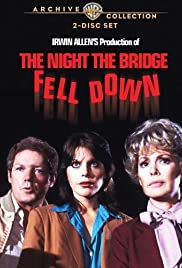
The Night the Bridge Fell Down (1983, directed by Georg Fenady)


When civil engineer Carl Miller (James MacArthur) discovers that the Madison Bridge is on the verge of collapsing, he goes to his superior (Philip Baker Hall!) and explains that the bridge has to be closed down or people could die.  Since there wouldn’t be a movie if anyone listened to Carl’s concerns, he’s ignored.

No sooner has Carl been told that he doesn’t know what he’s talking about than the bridge suddenly starts to collapse.  With both ends of the bridge collapsing into the river below, a diverse group of people find themselves stranded in the middle.  The group is made up of the usual group of disaster movie characters and, of course, one of them is played by Leslie Nielsen.  This time, Nielsen is a crooked businessman with a mistress (played by Barbara Rush) and a baby to worry about.  Eve Plumb (who was a member of the original Brady Bunch) is a nun.  Richard Gilliland is a wounded cop.  Gregory Sierra is a landscaper.  Perhaps most improbably, clean-cut Desi Arnaz Jr. is a bank robber who keeps losing his temper and pointing a gun at everyone.  Carl has to figure out how to get everyone off of the bridge before the entire things collapses.  This leads to many shots of chunks of concrete falling off what’s left of the bridge, as if we need to be reminded that it’s dangerous to be on a bridge that’s in the process of very slowly collapsing.

After finding success making movies about fires, overturned ocean liners, volcanoes, cave-ins, and killer bees, I guess it only makes sense that Irwin Allen would finally get around the producing a movie about a collapsing bridge.  The Night The Bridge Fell Down was filmed in 1980 but it wasn’t aired until 1983.  When it did air, it played opposite the series finale of M*A*S*H, which remains one of the highest rated single episodes of television ever aired.  It’s obvious that no one had much faith in a three hour film about a collapsing bridge and it only aired because NBC needed something — anything — to air at a time when they knew no one would be watching.

Because of the lengthy amount of time between the film’s production and it’s airing, The Night The Bridge Fell Down is the type of serious and plodding disaster film that was popular in the 70s but, by the time 1983 rolled around, had been rendered obsolete by the satiric bards of Airplane!  Airplane‘s Leslie Nielsen even appears here, giving the type of serious performance that he specialized in before people discovered that he was actually a very funny man.  Nielsen doesn’t give a bad performance but everything he says is thoroughly undercut by how difficult it is to take Leslie Nielsen seriously.  No matter what Nielsen says, it always seems like he’s on the verge of adding, “And don’t call me Shirley.”

The main problem with The Night The Bridge Fell Down is that it’s a three-hour movie and that’s a long time to spend with a group of thinly characterized people on a bridge.  I guess the film does feature an important message about maintaining roads and bridges.  Watch it next Infrastructure Week.

Film Review: Sunset (dir by Jamison M. LoCascio)


What do you get when you mix sanctimonious liberalism with the type of production values that one would normally associate with an evangelical-produced film about the rapture?

The 2018 film, Sunset, opens with a birthday party and it’s all downhill from there.  Elderly Henry (Liam Mitchell) may have just wanted to celebrate the fact that his wife Patricia (Barbara Bleier) had managed to survive another year despite being in poor health and almost constant pain but he made the mistake of inviting Julian (Austin Pendleton,  who always seems to get cast in roles like this) to the party and all Julian wants to do is talk politics.

Julian is concerned that the United States has been carpet-bombing the Middle East.  Henry thinks that the Middle East is getting what they deserve because a group of terrorists set off a nuclear bomb in Los Angeles and apparently destroyed the West Coast.  Julian isn’t so sure that the destruction of Los Angeles justified the destruction of the rest of the world.  (Take that, City of Angels.)  Fortunately, before things can get too intense, Chris (David Johnson) says, “Let’s get this party started!” and all of the political talk is abandoned.

However, the next morning, everyone wakes up to discover that missiles will soon be hitting the East Coast!  (This movie made me happy to live in the middle of the country.)  Everyone is making plans to evacuate the coasts and move to the red states, where they’ll presumably demand a state income tax and a Wawa on every street corner.  (To quote the Texas waitress in Hell or High Water, “Some asshole from New York ordered a trout.  We ain’t got no goddamned trout.”)  However, Patricia refuses to leave her house because she’s old and in constant pain and she wants to end her life on her own terms.  Of course, since Patricia refuses to leave, that means that Henry is now obligated to stay there with her and die as well, despite the fact that he has a sister in Missouri who would probably take him in.  Way to go, Patricia.

While Patricia is getting ready to kill her husband, the other people who were at her party are making plans as well.  Chris uploads a YouTube video where he talks about how scared he is about the end of the world.  Ayden (Juri Henley-Cohn) and Breyanna (Suzette Gunn) do a Google search on the effects of nuclear war and they decide that they don’t want any part of that.  (I wouldn’t want any part of it either.  Nuclear war sounds gross.)  Smarmy little Julian pops up occasionally and basically spouts the type of boomer political blather that makes Stephen King’s twitter feed so tedious.  Every few minutes, someone turns on a radio or television and we hear a reporter talking about how the world is about to end.   This is a low-budget film so we don’t actually see any of those reporters, we just hear their voices.

Usually, this is where I would point out that the film at least has good intentions regardless of its aesthetic shortcomings but …. eh.  Good intentions can only go so far and the aesthetic short comings here are dramatic.  This is one of those films where people are dealing with a huge, emotional event but everyone seems to spend their time speaking as if they were a Wikipedia article come to life.  Add to that the fact that Patricia’s desire to die in her house seems more selfish than noble and you’ve got a film that really doesn’t work.

That said, I did like the final five minutes of the film and not just because they indicated that the film was almost over.  Those final five minutes do give the film a much-needed sense of grace.  One gets the feeling that the entire film was made so that the director could have those final five minutes and, regardless of how bad the rest of the movie may be, the ending does have an isolated impact.  If you just saw those five minutes (and not the 80 minutes that came before them), you would be sincerely moved.

Anyway, as far as films about the end of the world go, Sunset didn’t end it quickly enough for me.