What Lisa Watched Last Night #213: Is There A Killer On My Street? (dir by Jake Helgren)


Last night, I watched the latest “premiere” on the Lifetime Movie Network, Is There A Killer On My Street?

Why Was I Watching It?

I have to admit that Lifetime fooled me.  I thought this was a brand new movie, largely because it was listed as having been released in 2020.  When I saw that, I was like, “Well, there’s no way I’m going to miss a new Lifetime movie!  Especially one that isn’t a sentimental Christmas film!”

Well, it turns out that Is There A Killer On My Street has been around for at least two years.  It was originally released under the title The Neighborhood Nightmare, way back in 2018.  When Lifetime aired the movie, they changed the title and apparently, that was enough for this movie to reclassified as a 2020 release.

That said, I’m not angry at Lifetime.  The COVID-19 outbreak shut down a lot of productions and I can only imagine how many Lifetime movies were put on indefinite hold earlier this year.  So, Lifetime picked up an old movie and changed the title.  Big deal.  It was still new to the network, right?

Don’t worry, Lifetime.  I’ve got your back.

What Was It About?

It’s time for another round of sex and sin in the suburbs!  Having escaped from an abusive marriage, Lindsay Porter (Julie McNiven) and her teenage daughter have settled down in a beautiful house in a beautiful neighborhood.  (Seriously, there’s never been an ugly house in a Lifetime movie.)  Lindsay even starts to date her new neighbor, Dr. Stephen Lane (Trevor Donovan).  However, when strange things start to happen and eventually someone shows up dead, Lindsay is forced to consider how much she knows about not just Stephen but her neighbors as well!

What Worked?

I always love a good Lifetime sin-in-the-suburbs film and Is There A Killer In My Street had all the right ingredients.  Melodrama, murder, yoga, swimming pools, a good-looking cast, and a director who was willing to let everyone go just a little overboard.  This was an entertainingly sordid movie and that’s exactly what I was looking for on Friday night.

I will say that the film also did a surprisingly good job of keeping you guessing.  I thought I had figured out who the murderer would be just to then discover that I was totally wrong.  I’m usually really good at predicting who the murderer is going to be in a Lifetime whodunit so I have to give this film a lot of credit for keeping me on my toes.  I’ve seen a lot of these films and it’s always nice to discover that I can still be surprised.

What Did Not Work?

I could nitpick but screw that.  This movie was too much fun for nitpicking.  I mean, let’s be honest.  We’re all pretty much going to be stuck in our current bizarre situation for the forseesable future.  Films like Is There A Killer On My Street are going to be essential for keeping us entertained.

“Oh my God!  Just like me!” Moments

I appreciated that Lindsay and I both have red hair.  I share her struggle.

Lessons Learned

If you even have to ask whether or not there’s a killer on your street, you’re already in trouble.
The TSL’s Horror Grindhouse: Shriek of the Mutilated (dir by Michael Findlay)


“The shriek of the mutilated!”

Listen, if there’s noting else that can be said about this 1974 film, Shriek of the Mutilated is a brilliant title.  I mean, it’s not only catchy but it’s honest.  The mutilated do tend to shriek.  You see a title like that and how can you look away?  How can you not watch just to see if the film itself lives up to the title?  That’s the genius of the grindhouse right there.  Promise a lot in the title.  Even if the film fails to deliver, people will remember the title.  Let’s be honest — I could say right now, “Shriek of the Mutilated is the worst movie ever made,” and the only thing you would hear me say is “Shriek of the Mutilated.”

Anyway, as for the film itself, it’s an Abominable Snowman film.  There’s a lot of bigfoot films but Shriek of the Mutilated is one of the few films that I’ve ever seen about the Abominable Snowman.  I’ve always wondered what makes the Snowman so abominable.  I mean, did he just choose that name or was it forced upon him?  Abominable doesn’t sound like a compliment so I’m going to guess that the Snowman was named that by someone who he owed money to.  I imagine if the Snowman had his say, he’d prefer to be known as the “The Wonderful Snowman” or maybe “The Triumphant Snowman” but, because he must live his days in hiding, he’s been given no choice.  It just doesn’t seem fair to me.

If it seems like I’m padding out this review, that’s because there’s more to Shriek of the Mutilated than just the Abominable Snowman but if I tell you too much about the plot, I’ll be spoiling the film.  And before you say that there’s no way you’d ever watch this film in the first place so it doesn’t matter if I spoil it, allow me to point out that not only is Shriek of the Mutilated available on Prime but it’s also been included in a quite a few of those cheap Mill Creek box sets.  So, chances are, you will be watching Shriek of the Mutilated at some point in your life.  And I don’t want to spoil it for you.  I want you to watch this film and shake your head and say, “What the Hell was that all about?”

Basically, a professor recruits four of his students to come search for the Snowman with him.  The students agree, despite the fact that one of the professor’s former students warns them against it.  As he explains it, he had a bright future until he joined the professor on one of his quests.  Now, he’s the school janitor and he’s a drunk!  That’s why the Snowman is abominable by the way.  He ruins lives!

Anyway, the Snowman does kind of make an appearance but, far more important than the Snowman, is a plot twist that’s so silly and so stupid and so out-of-nowhere that it simply has to be seen to be believed.  The entire film has a kind of “make it up as you go along” feel to it and it wouldn’t surprise me if someone just randomly thought up the twist in the middle of filming.  And listen — the film looks incredibly cheap and the acting is terrible but that twist is such a “WTF” moment that I recommend watching the film just to experience it.

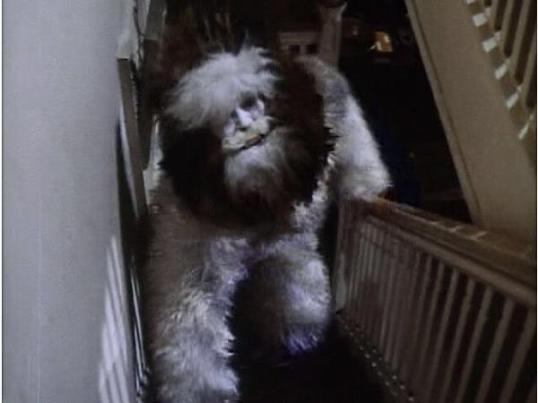
I also recommend the film just because of the Snowman.  Check him out:

Shriek of the Mutilated was directed by Michael Findlay, who was one of the pioneers of the grindhouse cicruit.  His best films — like the Flesh trilogy — achieve a sort of dream-like intensity.  Even his worst films, like this one, are entertainingly weird.  He also directed a film called Slaughter which achieved a certain infamy when the producer (without Findlay’s input) filmed some extra scenes, renamed the movie Snuff, and then advertised it as being an actual snuff film.  Tragically, Findlay was killed in a helicopter accident in 1978 but his wife, Roberta, continued to direct movies through the 80s.

Shriek of the Mutilated is a frequently inept movie but it’s also strange enough that everyone should watch it at least once.


Cinemax Friday: Witchcraft VII: Judgment Hour (1995, directed by Michael Paul Girard)


Warlock-turned-attorney-turned-police consultant Will Spanner is back for the 7th time in Witchcraft VII.  However, the usual witches and warlocks are nowhere to be seen.  Instead, this installment finds Will and the gang battling a vampire businessman who wants to take over the world’s blood supply.

As is typical of the Witchcraft films, all of the usual characters are present but they’re all played by different actors.  Will is now played by David Byrnes while April Breneman steps into the role of Will’s girlfriend, Kelli.  Detectives Garner and Lutz also return.  However, Garner (John Cragen) is now much younger and, as opposed to the previous film, has a full head of hair.  Meanwhile, Lutz, who was a man in the previous film, is now played by Alisa Christensen.  (In a later movie, it would be explained that this Lutz is supposed to be a relative of the original Lutz but that’s never mentioned in Witchcraft VII.)

Will is still tortured by his past and his powers but it’s less of a problem in this film because he’s not battling a warlock.  Instead, while he’s visiting friends in the hospital, he just happens to spot Rachel (Ashlie Rhey) coming back to life.  Rachel, who was the latest victim of vampire Martin Hassa (Loren Schmalle), is now a vampire who preys on joggers but only after having sex with them because this is a Witchcraft movie, after all.  It won’t be easy for Will to defeat Hassa because Hassa has a mansion full of frequently naked vampires.  In fact, it’s so difficult that Will ends up dead.

That’s right, Witchcraft VII was originally meant to be the end of the series.  Realizing that there was nothing left to do with Will Spanner, Witchcraft VII had him battle a vampire and then killed him.  The next Witchcraft film would not feature Will in any way.  However, you can’t keep a good warlock down so Will would eventually return in Witchcraft IX.

Witchcraft VII would not have been a bad film to go out on.  Even with its low budget and its softcore aesthetic, Witchcraft VII is better than the previous few Witchcraft films.  David Byrnes is the best Will Spanner since Charles Solomon and Loren Schmalle is a good villain.  Though it may seem strange that a film called Witchcraft wouldn’t actually feature any witches, the vampire angle actually brings some new energy to the franchise.  Will gets to go out a hero and the world is a little bit safer for joggers.

Unfortunately, nothing ever truly ends in the world of direct-to-video.  Witchcraft would return with Witchcraft 8, albeit temporarily without the character of Will Spanner.

International Horror Film Review: The Washing Machine (dir by Ruggero Deodato)


Yuri the pimp is dead and his body has been stuffed into a washing machine …. or has it?  The body’s missing.  Did the cat eat it?  Is someone lying about finding the body?  Or is there something else going on?

Those are the questions that are raised by the 1993 Italian film, The Washing Machine.  Directed by Ruggero Deodato (of Cannibal Holocaust and House on the Edge of the Park fame), The Washing Machine takes place in Budapest.  It tells the story of three sisters.  Vida (Katarzyna Figura) is a prostitute.  Ludmilla (Barbara Ricci) is a percussionist who often emerges from the shadows, carrying a triangle with her.  Maria (Ilaria BorellI), who is also known as Sissy, works with the blind.  They all live together in a rather nice, two-story building and they have a washing machine located on the first floor.  Yuri (Yorgo Voyagis) is Vida’s pimp and sometime lover.  When Via discovers that Yuri has a piece of jewelry with Sissy’s name on it, it leads first to a fight and then to makeup sex in the kitchen, all while Ludmilla watches from the staircase and plays the triangle.  Later, Ludmillas calls the police, claiming that she has discovered Yuri’s bloody body in the washing machine.

Inspector Stacev (Philippe Caroit) is sent over to investigate but, by the time he arrives, Yuri’s body has disappeared.  There’s a rather self-satisfied black cat wandering about.  “Did the cat eat the body?” I asked, just to then have another character in the film suggest the exact same thing.  Stacev isn’t sure whether or not Yuri is actually dead but then again, it quickly becomes apparent that Stacev is more interested in the three sisters than he is in solving the case of death of a pimp.  Despite the fact that Stacev has a loyal girlfriend named Irina (Claudia Pozzi), he is soon cheating on her with the sisters.  When Irina finds out, she commits suicide.  Stacev just shrugs it off.

So, you may have guessed that Inspector Stacev is not a particularly likable character.  Normally, that might be a problem but it fits right into The Washing Machine‘s chilly view of a world that’s defined and ruled by greed and lust.  Set and filmed in Budapest, The Washing Machine is full of shadowy and gothic images.  Every location looks as if it’s hiding a hundred secrets and every shadow seems like it’s on the verge of coming to life.  An atmosphere of continual menace haunts nearly every frame of The Washing Machine.  It helps, of course, to know something about the history of Hungary.  The Washing Machine is set just a few years after the collapse of Soviet-style communism in Eastern Europe.  The characters in The Washing Machine move, speak, and act like people who lived too long with secrets and paranoia as their most valuable possessions to give them up now.

I liked The Washing Machine.  The plot doesn’t make much sense but Deodato does such a good job of creating a sense of dread that it doesn’t have to make sense.  A work of existential horror, The Washing Machine takes place in a world that’s governed by chaos and where men like Yuri and Stacev arrogantly assume that their place in society will somehow protect them.  In the end, no one is innocent, no one is safe, and willful blindness is the downfall of everyone.

Horror Film Review: American Nightmares (dir by Darin Scott and Rusty Cundieff)


I’m always a little bit cautious about anthology films.  There’s been a few that I’ve liked.  (I recently enjoyed Tales From Parts Unknown, for instance.)  But most of the time, horror anthology films tend to leave me feeling rather disappointed.  The good segments always seem as if they’re too short while the bad segments seem to go on forever and it’s hard not to feel that the only reason the film was made was because the filmmakers couldn’t be bothered to come up with a full-length story.  Plus, there’s always some wrap-around segment and, more often than not, it’s usually kind of stupid and it leaves you feeling as if the film wasted the talents of whoever it was they hired to host the film.

And that brings us to American Nightmares.

In American Nightmares, two dorky guys who might as well have millennial tattooed on their foreheads, find their perusal of internet porn interrupted by the appearance of Mr. Malevolent (Danny Trejo), who proceeds to introduce not one, not two, not three, but SEVEN stories about terrible Americans getting their just deserts.  The two dorky guys are rather blase about it all, being more concerned with watching twerking videos than really considering Mr. Malevolent’s stories about hypocritical people getting what they deserve.

Some of the stories are okay but there’s seven of them so it’s hard not to feel that the film is overstuffed.  Plus, when you’ve got seven stories in one film, it just takes one or two clunkers to make the whole thing feel pointless.  For instance, the first story — which deals with the perfect man and what he turns out to be — is okay and the second story — about a D.A. getting bitten by karma — is cartoonish but crudely effective.  But then you hit the third story — which is about racists going to a fantasy world where “no blacks” are allowed — and the story is so heavy-handed, poorly acted, and slow that you kind of tune out.  You end up ignoring several of the stories that come after because that third one was so dumb and poorly executed.

Danny Trejo is not a bad choice to play the host of a horror anthology.  As is always the case with Danny Trejo, he brings a lot of energy to the role and he seems to be having a great time.  His co-host is Nicelle Nichols, of Star Trek fame.  She doesn’t get to do much other than nod approvingly as Trejo introduces each story.  The stories themselves are full of familiar faces, though the film could hardly be called “all-star.”  Instead, it’s more like, “Here’s a bunch of people who you might recognize and who needed the money.”  In other words, the film is full of people like Jay Mohr, Chris Kattan, Vivica A. Fox, and Brendan Sexton III.  Most of them give rather broad performances, as if they want to make sure you know that they’re just appearing in this movie as a favor to someone and not because they were desperate for work.  It’s a bit like Movie 43, just with a less prestigious cast and more dead babies.

Anyway. American Nightmares is not particularly good.  It’s overstuffed with stories and none of the stories are really as clever as the film seems to think that they are.  Danny Trejo, though, is a badass.


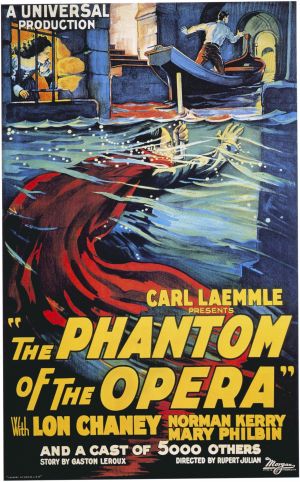
Horror On The Lens: The Phantom of the Opera (dir by Rupert Julian)


Today’s horror movie on the Shattered Lens is both a classic of silent era and one of the most influential horror films ever made.  It’s one that I previously shared in 2013, 2015, 2016, 2108, and 2019 but it’s such a classic that I feel that it is worth sharing a second (or fifth or even a sixth) time.

First released in 1925, The Phantom of the Opera is today best known for both Lon Chaney’s theatrical but empathetic performance as the Phantom and the iconic scene where Mary Philbin unmasks him. However, the film is also a perfect example of early screen spectacle. The Phantom of the Opera was released during that period of time, between Birth of the Nation and the introduction of sound, when audiences expected films to provide a visual feast and Phantom of the Opera certainly accomplishes that. Indeed, after watching this film and reading Gaston Leroux’s original novel, it’s obvious that the musical was inspired more by the opulence of this film than by the book.

This film is also historically significant in that it was one of the first films to be massively reworked as the result of a poor test screening. The film’s ending was originally faithful to the end of the novel. However, audiences demanded something a little more dramatic and that’s what they got.

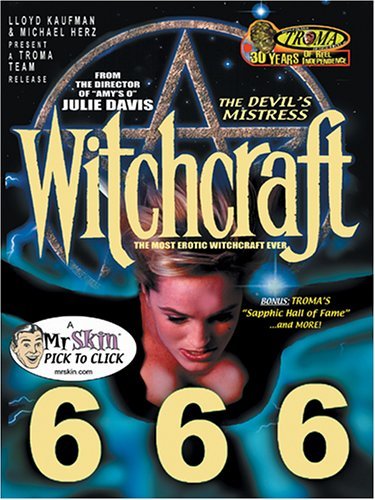
Witchcraft VI: The Devil’s Mistress (1994, directed by Julie Davis)


Warlock-turned-attorney William Spanner is back in the sixth installment of the strangely long-running Witchcraft franchise.

Previously, William was a defense attorney and then he was an insurance attorney and now, he’s apparently a divorce attorney who occasionally consults with the police on cases involving the occult.  In this film, William is played by an actor named Jerry Spicer.  This would be the only film in which Spicer would play Spanner.  He doesn’t do a bad job in the role.  He’s not as memorable as Charles Solomon was in parts two, three, and four but he’s not as boring as Marklen Kennedy was in part five.

When a serial killer starts targeting women who wear cross necklaces, Detectives Lutz (Kurt Alan) and Garner (John E. Holiday) consult with William.  Though William is still reluctant to acknowledge his warlock ancestry, it doesn’t take him long to realize that the women are being sacrificed to Satan.  Mr. Savatini (Bryan Nutter) has to find a virgin to sacrifice at the next solar eclipse but virgins are hard to find in Los Angeles.  So, Savatini has ordered his followers to target any woman wearing a cross, on the chance that she might be religious instead of just fashionable.

Witchcraft VI not only tells us that there aren’t any virgins left in Los Angeles, it also shows us why that is.  If nothing else, the success of the Witchcraft series was proof that people, especially people in the 90s, would sit through anything if there was a chance that they would get to see some breasts.  Everyone’s getting it on in Witchcraft VI, except for William’s secretary, which means that she’s destined to be the next victim.  Unless, of course, William can call upon his powers once again.

Witchcraft VI is dumb, poorly acted, and sloppily directed but it was still a major turning point in the Witchcraft franchise.  It introduced the characters of Lutz and Garner and established the idea of William being the police department’s unofficial police consultant.  It’s not a bad idea.  If not for all of the softcore sex, the Witchcraft films could pass for a TV show.  Of course, it wouldn’t be a very good show.  Witchcraft VI was another direct-to-video hit so, of course, it was followed by Witchcraft VII.

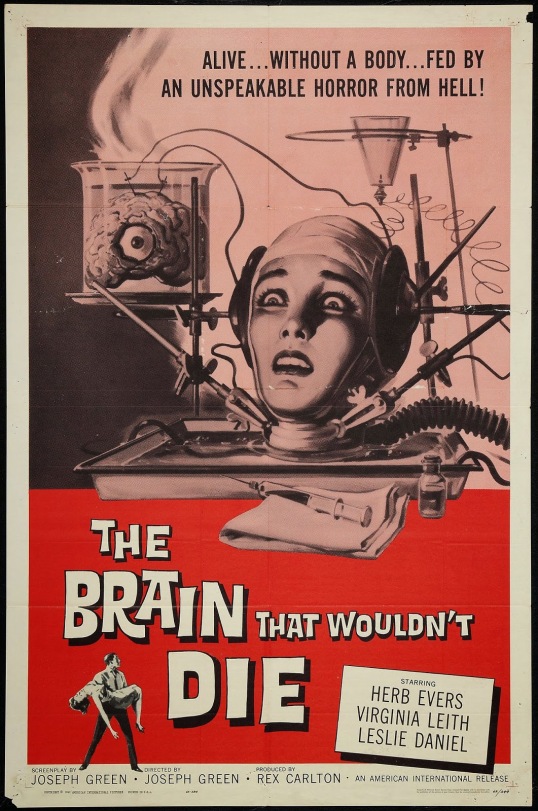
Horror on the Lens: The Brain Wouldn’t Die (dir by Joseph Green)


I hate to say it but it’s getting more and more difficult to find public domain horror films on YouTube that we have yet to share on this site.  I mean, the fact of the matter is that we’ve been doing these horrorthons for ten years now and there’s definitely a limited supply of films to choose from.  (For the most part, I try to pick films that I know aren’t going to get yanked down because of a copyright claim.  For instance, you might be able to find something like Hereditary or Midsommar on YouTube but I can guarantee you that it won’t be there long.)

Last night, I was really happy when I came across The Brain That Wouldn’t Die on YouTube.  “Finally!” I said, “A film were haven’t used yet!”  Then I did some research and I discovered that we did share it, way back in 2011.

Well, guess what.  We’re sharing it again.  After all, it’s always a good time to watch a movie about a disembodied head, a monster in a closet, and a man losing his arm in a scene that’s surprisingly graphic for 1962.  To me, the best thing about this film is just how pissed off that head is at being brought back to life.

So, for a second time, enjoy The Brain That Wouldn’t Die!

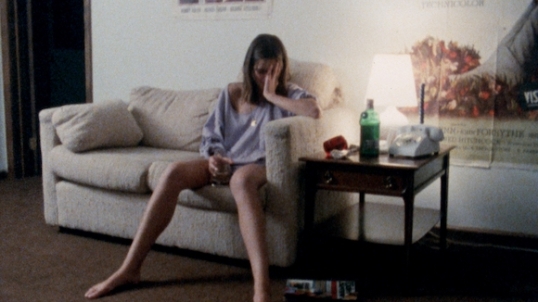
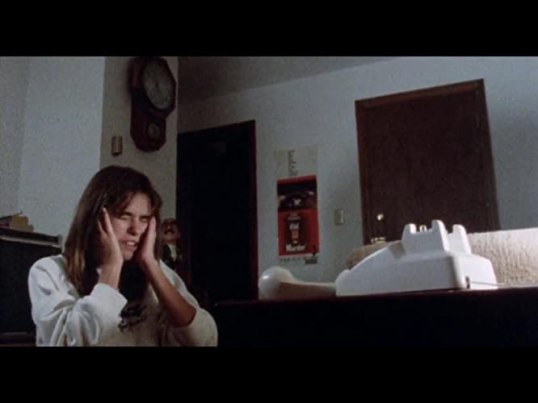
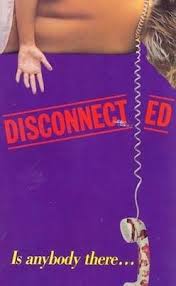
The TSL’s Horror Grindhouse: Disconnected (dir by Gorman Bechard)


Disconnected, an independent and low-budget horror film from 1984, is an odd one.

Actually, odd might be too mild of a description of this film.  It’s about Alicia (Frances Raines, niece of Claude) who works in a video store and who keeps getting strange phone calls.  Alicia has a boyfriend named Mike (Carl Koch) and a twin sister named Barbra Ann (Raines, again) and, one night, she answers her landline phone and suddenly hears Mike and Barbara Ann talking about the affair that they’re having!  She then starts having nightmares in which Mike and Barbara Ann team up to kill her.

At the same time that Alicia is dreaming about being murdered, Franklin (Mark Walter) actually is murdering women all over town.  Franklin also keeps asking Alicia for a date and, after she discovers that Mike has been cheating on her, Alicia finally says yes.  One morning, Franklin wakes up in bed, grabs a knife, and attempts to stab Alicia, just to discover that she’s already left for the day.  Franklin just ends up stabbing a pillow, which is unfortunate because it was a nice pillow.

Meanwhile, Detective Tremaglio (Carmine Capobianco) is trying to figure out the identity of the serial killer.  For some reason, Detective Tremaglio spends a good deal of the film talking directly to the camera, as if he’s being interviewed.  Tremaglio is quick to point out how cheap the police station looks and he also says, at one point, that he feels like he’s in a low-budget horror film.

It creates a rather odd atmosphere.  On the one hand, you’ve got Franklin wandering around town, hitting the bars and searching for new victims.  On the other hand, you’ve got Alicia isolated in her apartment, dealing with the phone constantly ringing and basically having a Repulsion moment.  Who is calling Alicia?  It’s hard to say.  It’s definitely not Franklin.  Is Alicia imagining the phone calls?  Or is it some sort of a supernatural force?  And how is it connected to the mysterious old man who keeps wandering through the film at certain points, popping up like a red herring from the 2nd season of Twin Peaks?

Disconnected raises a lot of questions but it doesn’t answer many of them.  And while it’s tempting to suggest that this is just a case of sloppy storytelling, there’s enough intentionally arty moments in the film that I actually think that Disconnected was intentionally designed to be a riddle wrapped in an enigma.  For instance, there’s a scene where Alicia answers the phone.  For some reason, the camera is placed directly in front of a window.  The sun is streaming in through the window, which leads to an almost blinding lens flare.  The viewer is vaguely aware of Alicia moving around the room and answering the phone but, due to that lens flare, it’s impossible to actually make out any real details.  It sounds like an error in camera placement and yet the scene goes on for so long that there’s no way it wasn’t intentional.  (It should also be noted that the scene itself wasn’t particularly important so, if that lens flare was an honest mistake, there’s no reason why the scene couldn’t have been left on the cutting room floor.)  Obviously, the director liked the effect and just decided to go with it.  And yes, it’s kind of annoying but it’s kind of fascinating too.

The entire plot of Disconnected has a kind of “let’s make this up as we go along” feel to it and it’s hard not to appreciate the film’s enthusiastic incoherence.  At its best the film achieves a sort of dream-like intensity.  In the end, it all means nothing and yet, thanks to Frances Raines’s better-than-average performance, you are invested in what happens to Alicia.  You want to know what it all means, even if it only adds up to the ringing of that cursed phone.

So, does that means I’m recommending Disconnected?  Kinda.  As I’ve said many times in the past, I have a weakness for low-budget, amateur films.  This one was filmed out in the middle of Connecticut and most of the actors were obviously not professionals.  There’s something oddly likable about a film like this, one that makes no sense but, at the very least, was still made and — 36 years later — is still being watched and reviewed.  So …. yeah, I am kind of recommending this film.  It’s weird enough to be worth at least one viewing.

Witchcraft V: Dance with the Devil (1993, directed by Talun Hsu)


Warlock-turned-attorney William Spanner is back and he’s getting dumber all the time.

In this, the fifth film of the improbably long-running Witchcraft sage, William Spanner is no longer played by Charles Solomon.  A considerably more bland actor, Marklen Kennedy, has taken over the role.  William is still an attorney and he’s still dating Kelli (Carolyn Taye-Loren).  He’s also still in denial about how impossible it is for a former warlock to live a normal life.

Usually, franchise heroes get smarter with each film but William gets progressively dumber.  This time, he allows his girlfriend to take him out to yet another club that’s secretly a front for Satanism.  Though he should know better than to put himself in the situation, William allows a hypnotist to call him on stage.  The hypnotist is Cain (David Huffman), who uses his power to take control of William’s mind and use him to kill his enemies.  In order to keep William from breaking free, Cain’s servant, Mala (Nicole Sassaman), frequently sneaks into William’s house in the middle of the night so that they can take part in the type of softcore sex scenes that would, for most people, eventually come to define the future entries in the Witchcraft franchise..

Realizing that something is wrong, Kelli goes to her minister, Rev. Meredith (Lenny Rose).  Rev. Meredith sends over a white witch who is played by Aysha Hauer, the daughter of Rutger Hauer.  The white witch doesn’t do much but the Hauer connection is cool.  Another cool thing is that Greg Grunberg has a small, uncredited role as a bartender, proving that everyone had to start somewhere.

Although the first four Witchcraft films were passably entertaining, Witchcraft V is too dumb to be believed.  For someone who doesn’t want to be a warlock, William has a really bad habit of getting involved in stuff that only a warlock could get involved with.  Given his long history of dealing with Satanists and sleazy club owners, there’s no way that William should have been dumb enough to allow someone named Cain to have a chance to hypnotize him in the first place.

Probably the best thing that the previous Witchcraft films had with them was the idea of William being both an attorney and warlock.  He had the potential to be an interesting character.  Unfortunately, in Witchcraft V, William is not just stupid but also reduced to being a supporting character.  He doesn’t get to do much, which seems unfair to the three or four people who might actually be invested in his story.  Instead, most of the movie focuses on Cain and, strangely, Reverend Meredith.  Neither one of them is really interesting enough to carry a movie.

William Spanner would return, albeit played by a different actor, in Witchcraft VI.