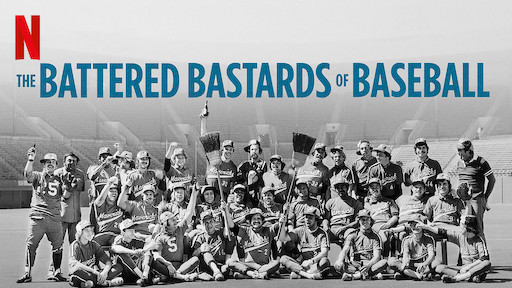
The Battered Bastards of Baseball (2014, dir. by Chapman Way and Maclain Way)


If you’re like me and you’re already missing baseball, I recommend watching a documentary called The Battered Bastards of Baseball.

In 1972, Portland, Oregon lost their minor league baseball team when the Portland Beavers abandoned the city in order to become the Spokane Indians.  At the same time, actor Bing Russell, a former minor leaguer and the father of Kurt Russell, had grown tired of Hollywood and was looking to get back into baseball.  Relocating to Portland, Russell announced that he was going to start his own independent minor league team, the Portland Mavericks.

At first, no one took the Mavericks seriously.  Because they weren’t affiliated with a major league team, the Mavericks roster was largely made up of misfits and rulebreakers, many of whom had been released from other organizations and who had been blacklisted from the major leagues.  On average, most of the Mavericks players were older than the average major leaguer.  Many of them were players who were looking for one last shot at glory and Bing refused to cut any of them because he felt that that they deserved that chance.  When the skeptical media asked Bing what the Mavericks were going to offer that other baseball teams couldn’t, he replied, “Fun.”

And he delivered.  From 1973 to 1977, the Mavericks played exciting baseball, won divisional and league titles, and, most importantly, they put on a good show.  Playing mostly for the love of the game (because Russell never had much money to spend on salaries), the Mavericks reminded people of what baseball was all about.  They pulled off amazing plays on the field while their off-field antics were legendary.  The Mavericks played baseball the way that people wanted to see baseball played, with one manager living every fan’s dream by punching an umpire.

The Battered Bastards of Baseball tells the story of the Mavericks and Bing Russell.  It features archival footage of the Mavericks at play, along with interviews with people like Kurt Russell, who briefly played for the Mavericks and then served as one of their vice presidents.   The documentary pays tribute to the players who never gave up, the fans who eventually welcomed them to a new town, and most of all to the vision and determination of Bing Russell.  Even while Bing was bringing the fun back to baseball, he was also breaking down other barriers by hiring professional baseball’s first female general manager, as well as the first Asian American general manager.

Most importantly, though, The Battered Bastards of Baseball reminds us of why people love baseball in the first place.  It celebrates the game, the players, and most of all the fans.  It’s a documentary that will just leave you in a good mood.  That’s something we all could use!
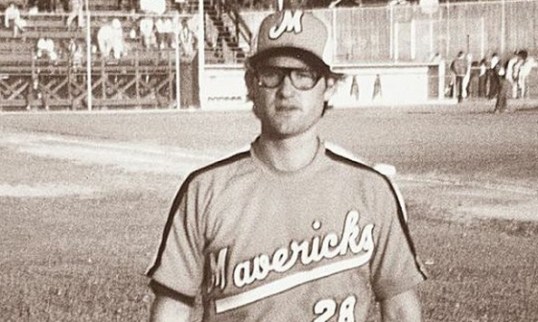
Kurt Russell as a Maverick

Charlie’s Angels (2019, dir. by Elizabeth Banks)


In the latest version of Charlie’s Angels, the Angels have become an elite force of international super spies and there are now hundreds of Angels instead of just three.  There’s also more than one Bosley as this movie establishes that Bosley is actually a codename that’s given to Charlie’s lieutenants.  Djimon Hounsou is a Bosley and Patrick Stewart is a Bosely and Elizabeth Banks is a Bosley.

Two Angels, Sabina (Kristen Stewart) and Jane (Ella Balinska), are assigned to protect a corporate whistleblower named Elena (Naomi Scott) because Elena has discovered that Callisto, a renewable energy device, can also be used to trigger fatal seizures in selected targets.  When an assassin attempts to take out Elena, he kills one of the Bosleys and Elena becomes an Angel.  What I don’t get is why the assassin would try to shoot Elena in public when he could have just used the Callisto device to give her a seizure.

I wanted to like Charlie’s Angels because “Girl power!” but I got bored pretty quickly.  All of the action scenes were done better in the last Mission Impossible and most of the jokes fell flat.  Too much of the humor was built around someone saying something awkward and then everyone else standing around with a confused look on their face.  For a movie that’s supposedly about celebrating girl power, I noticed that the Angels made a lot of stupid mistakes.  It also bothered me that we were expected to laugh when an innocent security guard was killed by the Callisto but it was supposed to be a big emotional moment when one of the Bosleys died.  It’s also supposed to be a big emotional moment when Jane thanks Sabina for teaching her that it’s okay to work with other people but since Jane never seemed like she had a problem working with other people, I wasn’t sure what she was talking about or why I should care.

Elena learns how to stick up for herself, Jane learns how to trust other people, and Sabina doesn’t learn anything but at least Kristen Stewart finally gets to smile.  None of them can hold a candle to Drew Barrymore, Cameron Diaz, and Lucy Liu in the first Charlie’s Angels movie, which was both fun and empowering.  This new version just can’t compete.

30 More Days of Noir #2: Blonde Ice (dir by Jack Bernhard)


1948’s Blonde Ice tells the story of Claire Cummings (Leslie Brooks), the society columnist for a San Francisco newspaper.  Almost every man that Claire meets falls in love with her.

Les Burns (Robert Paige), the paper’s cynical sports reporter?  Les is so in love with Claire that he keeps getting involved with her despite the fact that she cheats on him with almost every man that she meets.

Al Herrick (James Griffith)?  Yep, he’s still in love with her too.

Carl Hanneman (John Holland), one of the wealthiest men in San Francisco?  Carl is so in love with Claire that he’s willing to marry her even after he catches her kissing Les on the day of the wedding!

Congressional candidate Stanley Mason (Michael Whalen)?  He’s so in love with Claire that he’s willing to sacrifice his political career just to be with her.

How about Blackie Talon (Russ Vincent), the pilot who witnesses Claire doing some things that she probably wouldn’t want the world to know about?  Well, Blackie never gets around to declaring his love for Claire but his obsession with blackmailing her is probably just his way of dealing with the massive crush that he has on her.

The only person who doesn’t appear to be in love with Claire is Dr. Kippinger (David Leonard), a psychiatrist who immediately picks up on the fact that Claire is cold and manipulative.  There’s a reason why Les refers to her as being …. can you guess? …. “Blonde Ice!”

Of course, even with all of these men falling in love with her, no one loves Claire as much as Claire loves herself.  Claire is a narcissist and a sociopath and she has no problem killing one lover and framing another for the crime.  In fact, it’s something that she attempts to do several times over the course of Blonde Ice.  Claire, it has to be said, is pretty clever about it too.  Her natural ability to manipulate, combined with her total lack of empathy for anyone but herself, makes Claire a dangerous character.

Blonde Ice is somewhat obscure as noirs go.  It was clearly a poverty row production, with only a 74-minute running time and a cast largely made up of obscure contract players.  And yet, Blonde Ice is a personal favorite of mine, largely because of the ferocious performance of Leslie Brooks.  Brooks rips into the role of the femme fatale, delivering her cynical lines with aplomb and murdering anyone who gets in her way.  Considering that this film was made in 1948, I was actually a bit shocked at just how high the body count climbed in just an hour and a few minutes.  Claire is basically willing to kill anyone and the film often seems to take a perverse delight in showing how easily she can convince others of her innocence.  Perhaps the most interesting thing about the film is that Claire attempt to frame the same man for not one but two murders and, even after all that, he still doesn’t seem to be emotionally capable of telling her to get out of his life.  In a world of weak men, Claire comes in, takes control, and offers up no apologies.

Obscure though the film may be, Blonde Ice is an enjoyable noir and can be found on YouTube.

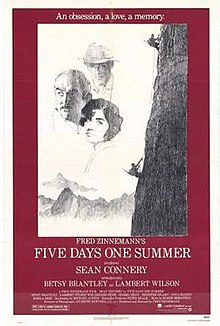
Five Days One Summer (1982, directed by Fred Zinnemann)


In 1932, Dr. Douglas Meredith (Sean Connery) is living in Switzerland with a much younger woman named Kate (Betsy Brantley), whom Meredith introduces as being his wife.  When Meredith and Kate go on a climbing holiday in the Alps, they hire a young guide named Johann (Lambert Wilson).  As they climb the mountains they not only discover a dead body but Meredith becomes suspicious that Kate might be falling for their guide.  Meanwhile, Johann discovers that truth between Meredith and Kate’s forbidden relationship.  Two men may go up the mountain but, in the end, only one man comes down.

Director Fred Zinnemann had a long career behind the camera, starting as an apprentice in Germany before coming to Hollywood in 1929.  (He was one of the many German and Austrian directors to immigrate as things grew steadily worse in post-war Germany.  He would soon be joined by Fritz Lang, Billy Wilder, Robert Siodmak, and many others.)  Zinnemann was a master craftsman who made several good film without ever really developing a trademark style.  Among his best-known (and Oscar-nominated) movies are High Noon, From Here To Eternity, The Nun’s Story, A Man For All Seasons, and Julia.  Unlike a lot of his contemporaries, Zinnemann never resorted to changing his filmmaking habits in an effort to keep up with the new wave of the 60s and the 70s.  As a result, he never humiliated himself the way that some of the other Golden Age directors did during the final years of their careers.  Instead, he continued to put together well-constructed but old-fashioned and occasionally stodgy movies.  Five Days One Summer was his final film.  It was one that he had been trying to make for close to 40 years and the combination of the critical drubbing that greeted the film and its failure at the box office inspired Zinnemann to retire from filmmaking.

The love story at the center of Five Days One Summer is a bland one and Brantley doesn’t have much in the way of chemistry with either Connery or Wilson.  But the love story is just a distraction from the true star of the movie, the mountain.  Some of the mountain climbing segments are amazing to watch and knowing that the three stars were actually putting their lives at risk to get some of the shots makes it all the more impressive.  At its worse, the film is a visually impressive but old-fashioned travelogue.  At its best, it puts you right on the mountain.  The film is far from perfect and it’s certainly not one of Zinnemann’s best but, at the same time, it is hardly the disaster that it’s often described as having been.  I think some critics are so wedded to the narrative of the once-great director making a film that proves how out of touch he is with contemporary audiences (think of the final films of Otto Preminger, Richard Brooks, Elia Kazan, and George Stevens) that they overlooked that Zinnemann’s final film is a respectable, middle-of-the-road feature.

Ignore the film’s wan story and instead just concentrate on the amazing scenery and you’ll see that Five Days One Summer was not a terrible film for an old craftsman like Fred Zinnemann to go out on.

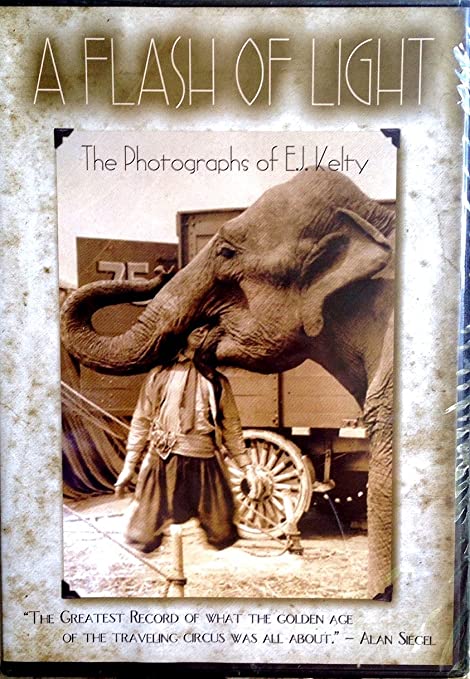
A Flash Of Light: The Photographs of E.J. Kelty (2005, dir. by Will Kelty)


Who was Edward J. Kelty?

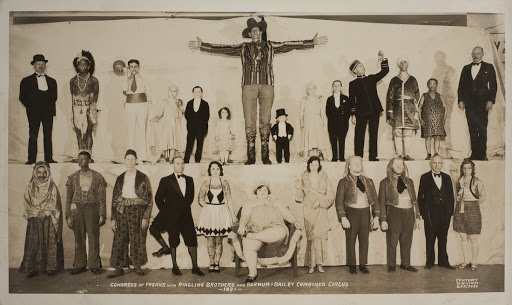
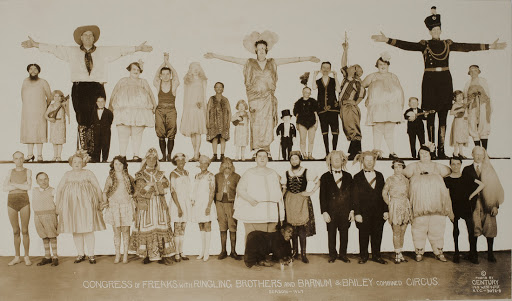
That’s the question that’s explored in the documentary, A Flash of Light.  A hard-drinking Manhattan-based photographer, Kelty would spend his summers following the circus as it traveled across the country.  Along the way. Kelty would take picture of the performers.  Some of them were candid shots while some of them were posed but they all captured the humanity of a group of people who were usually not treated with much respect by the rest of society.  From the 1920s through the 40s, Kelty captured indelible images of circus life but then, suddenly, he apparently abandoned both photography and the circus and he moved to Chicago.  It was only after his death that collectors started to realize just how special Kelty’s photographs were.  In the documentary, one collectors says that he hung one of Kelty’s pictures between pictures taken by Diane Arbus and Irving Penn and that Kelty’s picture was the one that visitors always commented upon!

by E.J. Kelty

Featuring hundreds of Kelty’s photographs, along with interviews with collectors and his surviving family members, this documentary gives Kelty his due.  While Kelty’s personal life may remain mysterious, his art can speak for itself and A Flash of Light shows not only why Kelty’s photographs are so popular among collectors but also why they are such important documents of their time and place.

I recommend A Flash of Light to anyone who is interested in either the circus or photography.

by E.J. Kelty


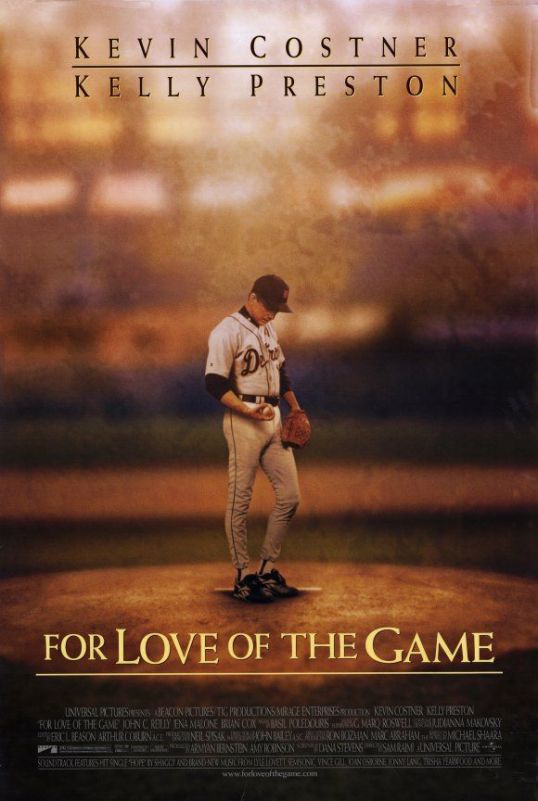
For Love of the Game (1999, dir. by Sam Raimi)


Last week, the Dodgers won the World Series and brought the 2020 MLB season to a close.  For me, it was a disappointing season because the Rangers ended up with the worst record in the American League and came nowhere close to the playoffs.  I should be used to that by now but it still hurts every season.

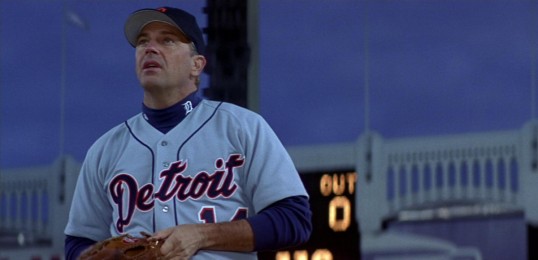
If only we could have had a pitcher like Billy Chapel, who Kevin Costner plays in For Love of the Game.  Billy Chapel is a forty year-old veteran who has been playing baseball his entire life and who has spent his entire major league career as a member of the Tigers.  Before the start of the team’s final game against the Yankees (the Yankees have already clinched the playoff berth while the Tigers are at the bottom of their division, kind of like my Rangers), Billy is told that the Tigers have been sold and that Billy is going to be traded to the Giants.  Will Billy go to San Francisco or will he retire and go to London with the woman he loves, Jane Aubrey (Kelly Preston)?

That’s the decision that Billy is going to have to make.  But first, Billy’s going to throw a perfect game against the New York Yankees.

While Billy is pitching the game, he’s also thinking about Jane and having flashbacks to how they first met and fell for each other.  Billy loves Jane but he also loves playing baseball and it keeps the two of them apart.  Jane doesn’t want to be a baseball groupie and she needs a man who she knows is going to be there for her and her daughter, instead of spending most of the year traveling around the country.  Billy, meanwhile, doesn’t want to give up the game that’s defined his life.  As Billy throws his perfect game, he has to decide whether or not to keep playing until he can no longer get the ball across the plate or whether to start a new chapter with Jane.  Meanwhile, Jane is stuck in an airport, watching Billy play the game of his life.

For Love Of The Game is a good love story but it’s a great baseball movie.  I loved the scenes of Billy standing out on the mound, carefully evaluating each batter while blocking out all of the noise around him.  (The only villains in this movie are the New Yorkers who won’t stop yelling at Billy during the game.)  I enjoyed the interplay between Billy and the catcher (John C. Reilly) and I especially appreciated the way that the movie showed that it takes more than a good pitcher to have a perfect game.  It takes teamwork and focus.  It’s not just Billy’s perfect game.  It’s the entire team’s perfect game.

For Love of the Game may be a romantic drama but it’s also a celebration of everything that makes baseball great.  It’s America’s pastime and this movie shows why.  Watching Billy Chapel get his perfect game made me look forward to seeing what will happen next year.  Who knows?  Maybe the Rangers will even shock everyone and make the postseason.  If Billy Chapel can throw a perfect game while playing the Yankees in New York City, then anything can happen!

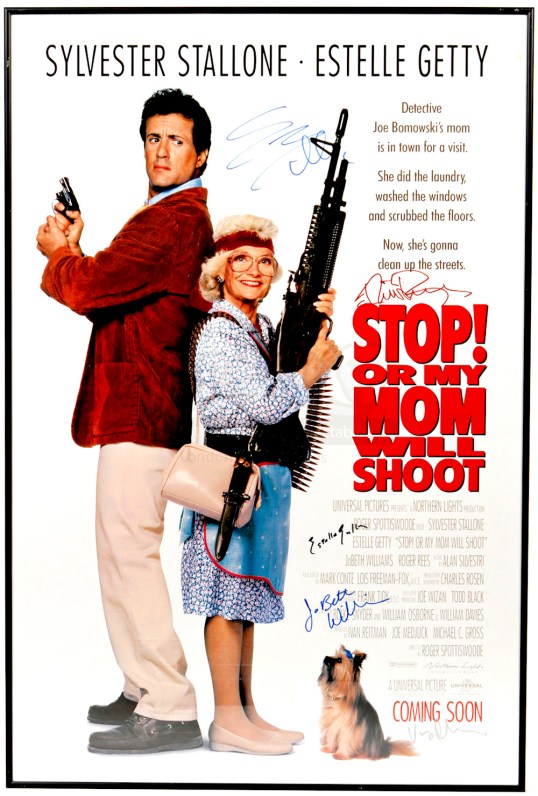
Stop! Or My Mom Will Shoot (1992, dir. by Roger Spottiswoode)


I always thought this was a made-up movie but it does exist!  I just watched it on Showtime.  This thing is real!

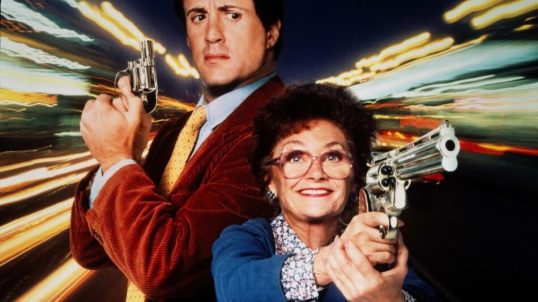
Sylvester Stallone is a tough cop whose mother (Estelle Getty) comes to visit him.  She witnesses a murder and, even though she could easily identify the killers and get them off the streets and save lives, she decides to lie to the police because she’s looking for an excuse to spend more time with her son.  Mother and son team up to take down the bad guys and Sylvester Stallone shouts, “Stop!  Or my mom will shoot!”

I laughed a few time when the movie started, because it was actually funny to see Sylvester Stallone freaking out because his mom was coming to visit.  I even laughed when his mother decided to clean his service revolver with Clorox.  I probably shouldn’t have laughed when Estelle Getty pointed the barrel of the gun right at her face so that she could check to see if it was loaded but I couldn’t help myself.

But then, mom witnesses the murder and lies to the police and Stallone has a dream where he’s an adult but he’s still wearing a diaper.  There are car chases and shoot outs and Getty tries to help Stallone hook up with his boss by sending her a hundred red roses.  Getty shoots a man and then says that no one hurts her boy.  During the entire film, Stallone has a look on his face like he knows that he’s just made the worst decision of his life but it’s too late to get out of it now.  Stop! Or My Mom Will Shoot really one has one joke, which is Sylvester Stallone being nagged and embarrassed by his mom.  That jokes get stale after 15 minutes.  By the time mom actually shoots, there’s nothing left.


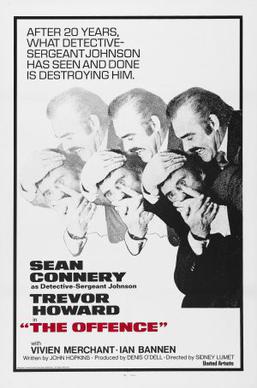
The Offence (1972, directed by Sidney Lumet)


After a suspected child molester named Baxter (Ian Bannen) dies while being interrogated in police custody, Detective Superintendent Cartwright (Trevor Howard) head up the internal affairs investigation.  Baxter was beaten to death by Detective Sergeant Johnson (Sean Connery), a 20-year veteran of the force who has seen the worst that humanity has to offer.  Did Johnson allow his anger over Baxter’s crimes to get to him or did something else happen during the interrogation?

When Sean Connery agreed to play James Bond for a final time in Diamonds are Forever, he did it under the condition that United Artists agree to back two of Connery’s non-Bond film projects.  UA agreed, though they did insist that neither film cost more than $2,000,000.  One of those projects was an adaptation of Macbeth, which was canceled in the wake of Roman Polansi’s version of the Scottish play.  The other project was The Offense.

Based on a play by John Hopkins, The Offence is the type of movie that probably would have never been made if not for the interest of a big star, like Connery.  The story is downbeat and grim and audiences are essentially asked to spend nearly two hours in the presence of two very unlikable men.  Baxter is an accused child molester while Johnson is a bully who has been driven so mad by the things that he’s seen that he’s not only violent on the job but also on at home.  Director Sidney Lumet directs with a cold and detached style, refusing to provide any sort of relief from the intensity of the film’s interrogations.  The film is set up as an acting showcase for Connery and Bannen, giving both of them a chance to show what they could do with two unpredictable characters.

Unfortunately, not many people got a chance to see their performances.  Even though Connery kept the budget under a million dollars and despite both the film and his performance being critically acclaimed, United Artists barely released The Offence and it took 9 years for the film to make back it’s meager budget.  It didn’t even get released in France until 2007.  Connery, however, often cited The Offence as being one of his best films and said that his performance in the film was his personal favorite.

The movies is too stagey and talky to be entirely successful but Connery was right about his performance.  It’s one of his best and it retains its power to disturb to this day.  Connery often chafed at being typecast as James Bond.  With The Offence, Connery plays a character who is nothing like Bond.  Everything about Johnson is brutal and seedy.  While it’s impossible not to initially sympathize with his anger towards the state of the world, Connery reveals that Johnson’s self-righteous anger is actually a shield for his own dark thoughts and desires.  He’s a bully, an angry man who grows more and more insecure as the film progresses and Baxter continues to see through him.  Connery makes Johnson sympathetic, frightening, pathetic, and dangerous all at the same time.  The Offence is a film that proves that Sean Connery was not only a good Bond but also a great actor.


30 More Days Of Noir #1: Bunco Squad (dir by Herbert I. Leeds)


Welcome to Noirvember!

Yeah, yeah, I know.  That sounds kinda silly, doesn’t it?  However, November is traditionally the month that classic film bloggers tend to concentrate on writing about film noir.  It provides a bit of grit and cynicism in between the horror fun of October and the holiday schmaltz of December.

I have to admit that I’m a little bit torn when it comes to taking part in Noirvember.  On the one hand, I love a good film noir and there’s quite a few obscure and underrated ones available on YouTube right now.  On the other hand, as a natural-born contrarian, I don’t like the idea of hopping on any bandwagons.

In the end, my love of film noir won out.  So, welcome to my first entry in 30 More Days of Noir.

The 1950 film, Bunco Squad, tells the story of Tony Weldon (Ricardo Cortez), a con man who specializes in using a phony psychic routine to swindle rich people out of their money.  He runs a fake enlightenment center and he claims that he can speak to the dead.  His latest target is the wealthy Jessica Royce (Elisabeth Risdon).  After he finds out that her son was killed during the invasion of Normandy, he and his associates go out of their way to trick her into believing that Tony can contact her son and that her son wants her to leave all of her money to Tony’s organization.  It’s actually kind of interesting watching as Tony and his gang manage to track down information about Jessica and her son, asking the most mundane of questions to find out things that Jessica believes only her son would know.  Watching Tony operate, I was reminded of those documentaries and news reports that you see about phony faith healers and other people who claim they can speak to the dead but who actually just go on very vague fishing expeditions.  (“I’m sensing something about the letter L.  Does that mean anything to you?”)

Tony is not just a con artist.  He’s also a murderer, one who specializes in cutting brake lines on cars.  If you try to expose Tony, you’re probably going to end up driving off of a cliff.  I guess you can get away with that when you’re a con artist in California.  Myself, I live in North Texas where the land is totally flat.  Someone could cut my brake lines and I would probably just keep going forward until I eventually ran out of gas.  Once that happened, someone would probably pull over and offer to give me a lift to the nearest gas station.  That’s one reason why someone like Tony Weldon could never pull off any of his crimes in my home state.

Fortunately, the detective of the LAPD’s Bunco Squad know what Tony’s doing.  The only problem is that they have to get some proof that Tony is swindling Ms. Royce and they have to manage to do it before Tony gets a chance to tamper with all of their brakes.  Leading the Bunco Squad is Steve Johnson (Robert Sterling) and you better believe that there’s no way someone named Steve Johnson is going to be anything other than honest and upright.  Working with a real-life magician named Dante, Johnson attempts to expose all of Tony’s tricks.

It’s probably open for debate whether or not Bunco Squad is a true noir.  On the one hand, Tony and his schemes are very noirish.  On the other hand, Steve and the members of the Bunco Squad are so upright that there’s none of the ambiguous morality that you find in the best film noirs.  I guess I would call this a half-noir.

The best thing about Bunco Squad is that it’s only 67 minutes long, which is all the time that it needs to tell a compact and occasionally interesting story.  There’s no excessive padding to try to force the story out to an unwieldy 90 minutes.  Instead, Bunco Squad jumps right into its story and it doesn’t let up until things come to an end.  The other good thing about Bunco Squad is that you’ve got Ricardo Cortez, giving a charmingly evil performance as Tony Weldon.  The film’s heroes are a pretty dull bunch but Cortez brings a nice charge of danger to the proceedings.

Bunco Squad is an obscure film but it moves quickly and the story is interesting enough to hold your attention for an hour.  It can be found on YouTube.

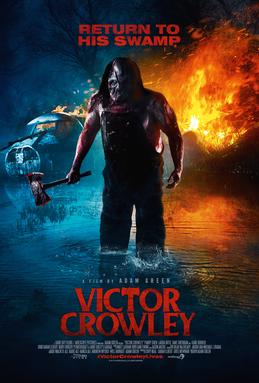
The TSL’s Horror Grindhouse: Victor Crowley (dir by Adam Green)


“Hey, did I mention that I recently watched Victor Crowley as a part of the Last Drive-In on Shudder?”

“Who’s Victor Crowley?”

“It’s a movie! About a killer named …. well, Victor Crowley. He’s played by Kane Hodder and he kills people in the swamp in various gruesome ways.”

“Oh, is that the guy from the Hatchet films?”

“Yes, the same.”

“And aren’t those the slasher films that are really bad but you’re not supposed to care because they wink at the audience and acknowledge that the suck?”

“Yep, exactly. Victor Crowley is the latest installment in the Hatchet series. It came out in 2017. An airplane crashes in a swamp. All of the passengers are in some way connected to the previous Hatchet films. Victor kills them all one-by-one.”

“Was it any good?”

“I personally didn’t care much for it.”

“What as wrong with it?”

“It took forever for the action to actually get going and the humor often felt forced, even by the standards of the Hatchet films. Some of the deaths were creative but since the characters were all pretty much just cardboard figures, it was hard to really care about it. Kane Hodder was an imposing killer, though. He’s definitely the best thing about the film.”

“I like Kane Hodder.”

“Me too. It’s funny. He’s always killing people but he seems like such a nice guy in real life. To be honet, the best thing about watching Victor Crowley on The Last Drive-In was that Joe Bob Briggs would interrupt every few minutes and share his thoughts on the film. Joe Bob, I should mention, liked the film far more than I did.”

“So, do you or do you not recommend Victor Crowley?”

“Well, it’s funny. I didn’t like it but I can understand why some people do like it. Because it’s over-the-top and intentionally silly and it doesn’t make any apologies for being what it is. It’s kind of like the slasher version of a good Lifetime film. So, I can’t really sit here and totally trash the film. It wasn’t for me but if you’re a fan of the Hatchet movies, it’ll give you exactly what you’re expecting — i.e., blood, humor, and Kane Hodder ripping off Felissa Rose’s arm.”

“So, you’re recommending the film?”

“To fans of the Hatchet series, yes.”

“I hope they enjoy it.”

“Me too. Isn’t that what life’s all about?”