Melissa Joan Hart — Sabrina! — plays the events coordinator at a ski lodge in this 2019 Christmas movie. It’s the holiday season and the everyone wants to go skiing …. including her ex-boyfriend!
I like this film. It has nice scenery, it has holiday cheer, it has Ted McGinley, and it has Melissa Joan Hart. It has all the necessary ingredients for a fun Lifetime holiday film.
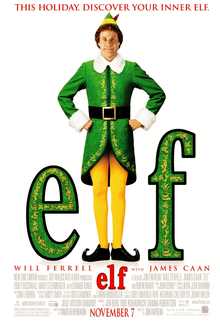
I’m an adult and I learned the truth about Santa Claus a long time ago but I still put up the tree the day after Thanksgiving, still hang stockings with the names of my sisters on them, and I still get excited when I see the Christmas lights going up across the neighborhood. I am unapologetically, deliriously in love with Christmas. And every single year, without fail, I curl up with the same worn-out blanket, the same bowl of freshly-popped popcorn, and I watch Elf. I don’t watch it because it’s cool or ironic. I watch it because it’s as unabashedly in love with Christmas as I am.
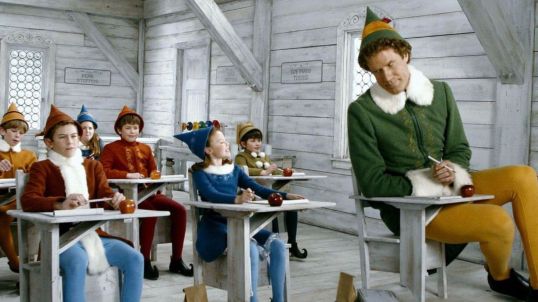
The older you get, the more cynical the world wants you to be about everything. Elf doesn’t have time for cynicism. Will Ferrell plays Buddy, a human who was raised by Santa’s elves and who goes to New York City to find his real father (James Caan) and who never loses his innocence and Christmas spirit, no matter what the world throws at him. Buddy isn’t dumb, not really. He’s someone who still believes in giving and celebration and love. When he tells the fake Santa that he sits on a throne of lies, he’s not trying to make trouble. Buddy knows the real Santa and he’s not going to let some fake in a beard steal the credit for his work. (Especially when he’s played by Artie Lange!) Buddy is ridiculous. He’s too tall, too loud, too earnest, too everything. He puts maple syrup on spaghetti and calls it gourmet. He spins in revolving doors until he’s dizzy with joy. Everyone should be as lucky as Buddy. Everyone should be as filled with joy and wonder as Buddy. Buddy doesn’t let the world get him down but, even more importantly, he never loses his belief. Just as Linus will always wait for the Great Pumpkin, Buddy will always believe that Santa is coming.
This is my favorite Will Ferrell performance. The way he throws himself into every moment makes me smile every time. But I like everyone in this film, from Bob Newhart as Buddy’s adopted father to James Caan as his real father to Ed Asner as Santa. When Zooey Deschanel starts singing Santa Claus Is Coming To Town, I feel it in my heart because I believe it. Elf believes it too, without apology. That’s what makes Elf a great movie.
I’m an adult. I’ve been an adult for a while. I still love Elf and I always will!
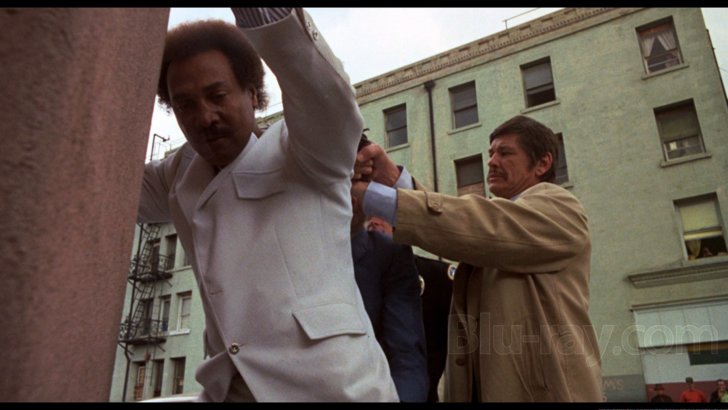
THE STONE KILLER opens in Spanish Harlem with detective Lou Torrey (Charles Bronson) following a young man, who had just shot a cop, into an abandoned building. When the young man refuses to turn himself in, and even tries to shoot Torrey, he gets blown away. In trouble with his superiors on the force, and being dragged in the press for the shooting, Torrey decides to change locations and continue his law enforcement career under his friend Les Daniels (Norman Fell) in Los Angeles. Soon after he arrives in Los Angeles, Torrey and his partner Mathews (Ralph Waite) are working a case against a drug dealer, when they arrest “Bootlace” Armitage (Eddie Firestone), a drug addict, but also a well-known hitman from New York. Torrey is delivering the “mechanic” back to New York for outstanding warrants when Armitage says that he is willing to give up some big information on “Wexton” in exchange for a reduced sentence. When Armitage is gunned down in what is obviously a professional hit, it’s clear that there is something going on that involves the name Wexton. We soon learn more as we meet mafia leader Al Vescari (Martin Balsam). As Vescari walks through a cemetery, he tells the leader of his operation, Lawrence (Stuart Margolin), of his plans to get revenge for a string of mafia killings that occurred 42 years earlier by using “stone killers,” in this case, former military men with no connection to the mob. As the film moves forward, Detective Lou Torrey and his fellow cops will eventually put the pieces together and find themselves taking on these “stone killers” and the mob!
I’ll just go ahead and say up front that I’m a big fan of THE STONE KILLER these days, but that’s because the movie has grown on me over the years with repeat viewings. When I first watched the film as a teenager in the 1980’s, I enjoyed it as a tough cop film, but it wasn’t one of my favorites. I think that part of the reason I didn’t appreciate it as much back then is the more convoluted plot of the film. Most Bronson films have simple and easy to follow plot lines, but THE STONE KILLER includes a somewhat complicated mafia assassination plan, and it also sends the cops on wild goose chases that have nothing to do with the actual story. Watching the film as an adult, I appreciate Director Michael Winner taking us with him on some of those 1970’s flavored tangents that include getting to hang out with some hippies at an ashram, as well as some unjustly accused black militants.
Even though the plot is more complicated than the average Charles Bronson film, director Michael Winner gives us some of the best action sequences of Charles Bronson’s career. There are two sequences in particular that stand out to me. After the impressive opening scenes where Torrey blows away the gun wielding young man in Spanish Harlem, it takes a while to get to the next extended action sequence, but it’s definitely worth the wait. The scene involves Detective Torrey in a car chase where he’s after one of the stone killers, Albert Langley (Paul Koslo), who’s on a motorcycle. In an era of great car chases, this is a doozy that features many amazing and dangerous stunts. The late 60’s and early 70’s are an embarrassment of riches for cinematic car chases and this one stands the test of time. The next great action sequence occurs later in the film when Detective Torrey and the cops bust the home and facility where the killers have trained for the planned massacre. Bronson is still in his physical prime in 1973, and his athletic prowess is clearly on display as he slides across floors, jumps on tables, and does anything else that is required to take down the bad guys. The film is not wall to wall action, but what’s here is as badass as it gets.
Detective Lou Torrey is a really good role for Charles Bronson. In his best roles, Bronson is tough, but you can also tell that he cares about other people. That’s definitely the case here as he consistently shows empathy for some of the people he’s after. For example, at the beginning of the film, he has to shoot the young man in Spanish Harlem in self-defense, but he later explains to his sister that he didn’t want to do it, even expressing some understanding of how the young man may have found himself in that situation. A little later while arresting a drug dealer with his partner Mathews, Torrey is clearly disgusted when his partner uses racial slurs during the arrest. Torrey then talks to the man with respect and gets the needed information to arrest the man buying the drugs. There are further examples later in the film as he deals with other drug addicts and militants. I say none of this to insinuate that Bronson’s character is weak in any way. Rather, he seems to want to do his job and arrest criminals in a professional manner. He’s also a complex character in some ways as he will bend the rules to get what he needs if he has to. He does end up punching the car thief, Jumper (Jack Colvin), a couple of times during an interview. While this is definitely not legal, in the context of this film, it’s required in order to get to the facts of the case. Bronson is actually quite great in the film.
Besides international superstar Charles Bronson, Michael Winner put together an amazing cast for THE STONE KILLER. Martin Balsam had won an Oscar a few years earlier, and he’s good here as the mafia boss with four decades worth of patience for revenge. Ralph Waite is also excellent as Bronson’s incompetent, racist partner Mathews. It’s hard to believe the guy would go on to play Papa Walton based on the ignorance he shows in both this film and in the Bronson/Winner collaboration CHATO’S LAND from the prior year. It’s fun watching both Norman Fell and John Ritter work together in this film, especially knowing that they would be making television history a few years later on the classic TV sitcom “Three’s Company.” The last two actors I want to mention are Stuart Margolin as the leader of the stone killers, Lawrence, and Paul Koslo as the bi-sexual badass musician Albert Langley. Both actors, especially Koslo, are good here and would have important roles with Bronson the next year as well. Margolin was an important character in DEATH WISH, and Koslo may have even outdone his work here the next year as a particularly slimy weasel in MR. MAJESTYK. Oh yeah, be sure to look for a short, uncredited cameo from B-movie queen Roberta Collins! I also want to shout out the musical score from Roy Budd, who also did the score for GET CARTER (1971). Thanks to Budd’s work, the opening credits are very cool and memorable.
THE STONE KILLER was marketed as Charles Bronson’s “Dirty Harry” and meant to be his breakout hit in America. Unfortunately, while the film was an international hit, the actual grosses in the United States were respectable but not as much as the filmmakers had hoped for. As such, we didn’t get any more entries in the case log of Detective Lou Torrey and Bronson would have to wait another year for his American box office breakout with DEATH WISH. But that’s okay because THE STONE KILLER has stood the test of time as an excellent 1970’s cop film, emerging in my personal rankings as a major feather in the cap of Charles Bronson’s career.
“What I do is not against the law. What I don’t do… is.” — Christian Wolff
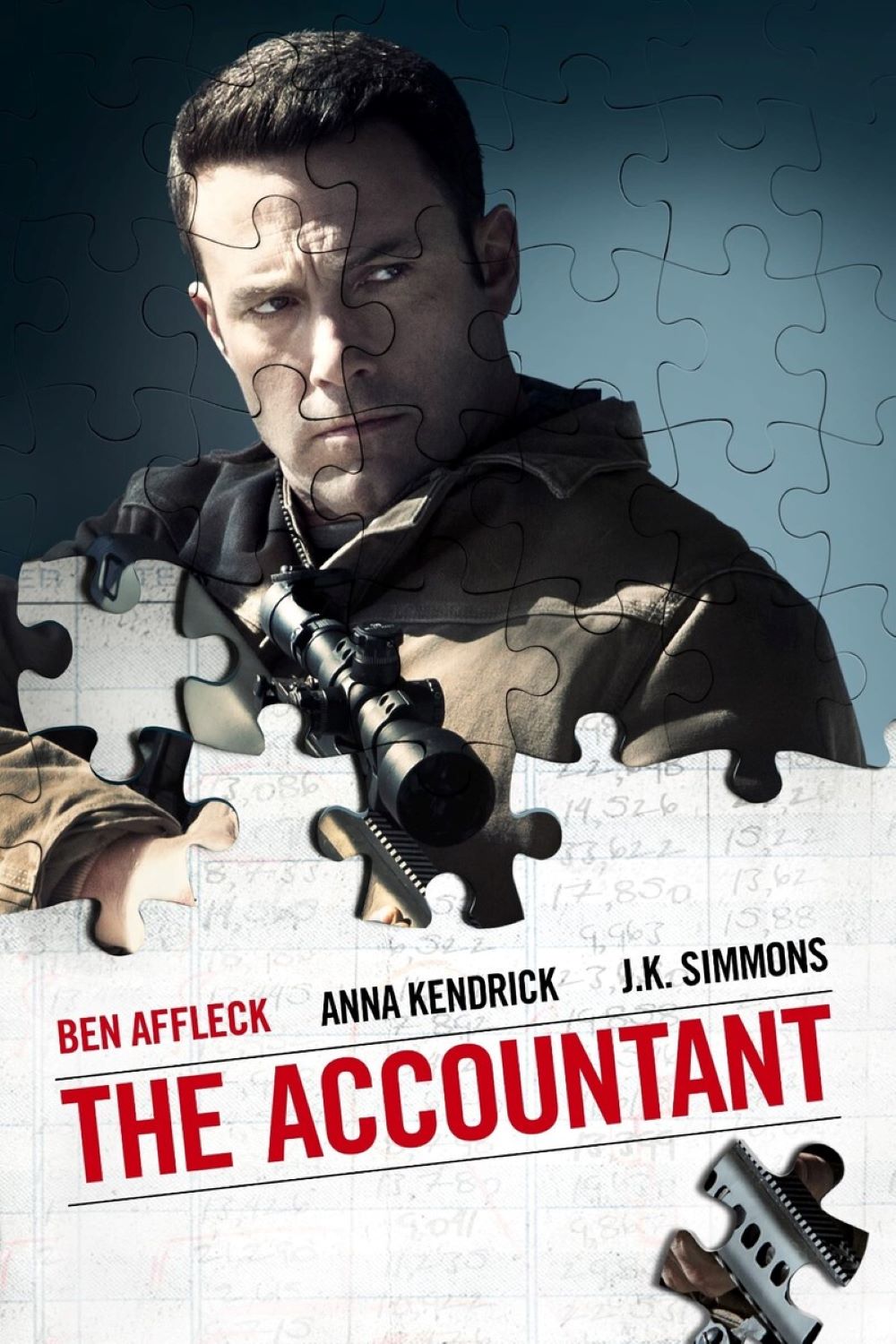
The Accountant is a 2016 action thriller that mixes elements of character drama, crime mystery, and family dynamics into a unique storyline. The movie follows Christian Wolff, a man with autism and exceptional math and accounting skills, who works as a freelance accountant for criminal organizations. Raised by a strict military father who pushed him to develop precision and discipline, Christian has a rigid moral code that guides his actions. As Christian unravels financial fraud within a robotics company, he finds himself hunted by a Treasury agent. The film blends intellectual mystery with high-stakes action, presenting a different take on the typical thriller formula.
Ben Affleck leads as Christian Wolff, bringing a quiet intensity that captures the character’s inner complexities and unique worldview. Anna Kendrick plays Dana Cummings, the robotics company accountant whose discovery of financial irregularities kicks off the central conflict, offering a relatable and warm counterpoint. J.K. Simmons portrays Raymond King, the sharp Treasury agent on Christian’s trail, adding layers of tension and moral ambiguity. Jon Bernthal embodies Braxton Wolff, Christian’s estranged brother and a rugged former military operative, whose presence heightens the family drama. The brothers’ strict and demanding father is portrayed by Rob Treveiler, who appears mainly in flashbacks that showcase the rigorous military-style training and discipline shaping Christian’s development. These performances ground the film’s ambitious mix of genres, making the characters feel lived-in and believable.
Christian Wolff stands out as a well-rounded character whose autism shapes his personality without becoming a mere plot device. The film shows his struggles alongside his strengths, like sensory sensitivities, social awkwardness, and laser focus on details. He relies on strict routines and coping tools to handle his surroundings, mirroring real experiences on the autism spectrum. Affleck’s portrayal draws from this backstory—those intense father-son training montages with Treveiler—to explain Christian’s discipline and guarded emotions, giving audiences a clear window into what drives him.
At the movie’s core sits Christian’s personal moral compass. He might balance the books for shady clients, but he draws a hard line at true ethical breaches, stepping in with his own form of justice. This anti-hero vibe keeps things gray and intriguing. His bond with Dana, played by Kendrick, offers rare moments of connection amid the chaos, though it stays somewhat surface-level and misses chances for deeper emotional pull.
The plot tracks Christian’s dive into massive fraud at the robotics firm, all while dodging Simmons’ relentless agent. The accounting scenes impress with their detail—Christian pores over ledgers, spotting irregularities that expose embezzlement on a grand scale. This cerebral side contrasts sharply with the brutal action, like the raw fights between Affleck’s Christian and Bernthal’s Braxton, which mix physical showdowns with buried family pain. Those brotherly clashes tie back to their shared traumatic past, ramping up the stakes beyond just numbers and guns.
The Accountant handles autism with real care, steering clear of clichés. It spotlights Christian’s sensitivities, routine needs, and social hurdles while celebrating his smarts and toughness. Affleck makes these traits feel authentic, turning what could be quirky into profoundly human. This approach avoids stereotypes, letting viewers connect with Christian on a deeper level and appreciate how his mind works in high-pressure situations.
The film has room for refinement in a few spots. It crams in crime plots, sibling secrets, and shadowy ops, which can jumble the pace as it bounces from fights to feels to financial deep dives. Relationships like Christian and Dana’s, or the Wolff brothers’, might hit harder with extra screen time to build that emotional core and make the risks feel more intimate.
Tonally, The Accountant strikes a balance—serious stakes lightened by Christian’s offbeat interactions and fresh outlook. Autism never turns into a joke; instead, it builds empathy. The ethical murk in his world—cooking books for crooks one day, punishing them the next—flips hero tropes on their head, keeping you guessing.
Overall, The Accountant shines by fusing brainpower and brawn in its lead and narrative, transcending standard shoot-’em-ups as a thoughtful character piece that honors its hero’s nuances. It probes unconventional strengths and ethics in a murky reality while illustrating thriving with distinct abilities and hurdles in a harsh landscape, all while clinging to personal principles—delivering thrills with substance on neurodiversity and payback. Fans of smart action will dig this blend of suspense, puzzles, and character depth, even if the threads tangle at times, making it a solid pick for thriller seekers wanting more than explosions.
Today, we have another cute little Christmas film from the insanely prolific director, Fred Olen Ray.
In 2014’s Christmas In Palm Springs, Dina Meyer is a divorced workaholic who is due to give a presentation in Palm Springs. Patrick Muldoon is her ex-husband, who would like to get back together with her. Fortunately, their children want them to get back together as well and will do anything to make it happen….
It’s cute and Christmas-y and Ian Ziering and David Chokachi in small roles. (You may remember Chokachi as the speedo-wearing Baywatch lifeguard that my friend Evelyn nicknamed “The Bulge.”) And it’s also a Starship Troopers reunion. Personally, I just like it when Patrick Muldoon shows up in these movies!
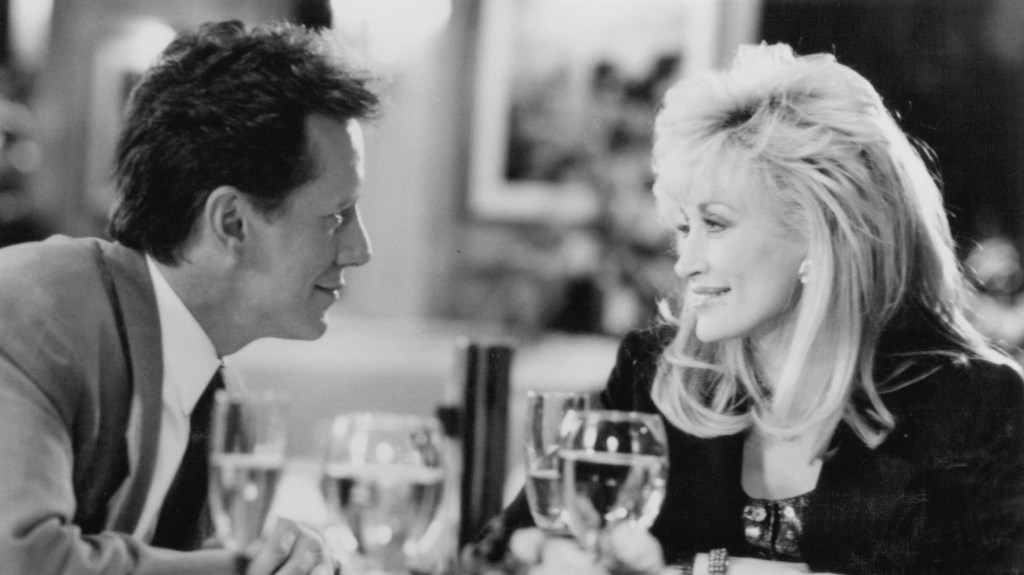
STRAIGHT TALK opens with Shirlee Kenyon (Dolly Parton) having a bad day in the town of Flat River, Arkansas. First, she gets fired from her job at a dance studio because she likes to talk to the customers more about their problems than she does teaching them to dance. Then she goes home to her lazy, unemployed boyfriend Steve (Michael Madsen), who’s more interested in drinking beer and bowling than talking to her. She tells him she wants to leave town and go to Chicago for a fresh start. He heads to the bar, so she packs her bags and heads to the Windy City. Upon arriving, she finds a job as a receptionist at a local radio station. Through a case of mistaken identity that can only happen in the movies, Shirlee finds herself on air as “Dr. Shirlee,” where she begins fielding calls from people with all kinds of problems. With her homespun wisdom, Dr. Shirlee soon finds herself to be the toast of Chicago. Feeling guilty that the station is advertising her as a “Doctor” when she’s not, Shirlee reluctantly continues on when her boss Alan (Griffin Dunne) convinces her she’s a “doctor of the heart.” Alan takes that simple lie and creates an entire fake public identity for Shirlee. When reporter Jack Russell (James Woods), in serious need of a story, senses that something’s not adding up with Dr. Shirlee, he convinces his editor Milo Jacoby (Jerry Orbach) to let him try to get close to the city’s new star to see if he can dig up some dirt. As he gets to know her, however, he’s charmed just like the rest of city and the two begin to fall in love. With Shirlee feeling guilty about being marketed as someone she’s not, and with Jack feeling bad about deceiving her for a scoop, is there any chance that their love can survive when the truth finally comes out?
STRAIGHT TALK is one of those movies that lives or dies based on whether or not you like its stars. This early 90’s romantic comedy was made for Dolly Parton’s fans, of which there are many. She looks beautiful, she has a great wardrobe, she sings the catchy soundtrack tunes, and she dispenses down-home country wisdom in a way that only Dolly can. And then there’s James Woods as the cynical reporter / love interest. Not traditionally handsome or known for his performances in romantic comedies, he brings his unique style to the role, and somehow it really works. As a huge fan of Woods, I may be a little biased, but I think that he has a great chemistry with Dolly. There does seem to be some basis for my claim as the two seemed to really enjoy each other on the set. Dolly has been quoted as saying that he’s “a great kisser” and a “thrill to be around.” Woods recently posted on social media that “Dolly Parton is the nicest person I’ve ever worked with…. She’s everything you imagine and so much more. Anybody who’s ever spent any time with her absolutely adores her.” I think these genuine feelings show through on the screen and provide levels of entertainment that transcend what’s on the pages of the script.
Aside from the excellent chemistry of its leads, STRAIGHT TALK does lean hard into romantic comedy cliches, and honestly that’s okay with me. I enjoyed the familiar plot lines… Will Shirlee become a star in the big city? Will reporter Jack expose her past? Will the two fall in love? Will her old boyfriend Steve show up? Will her “on-air” advice cause some unexpected problems? Well, of course, on all accounts! As these well worn stories play out against the backdrop of an early 90’s movie version of Chicago, I enjoy the movie for what it is, an entertaining fluff piece. The interesting supporting cast (Griffin Dunne, Michael Madsen, Jerry Orbach, John Sayles, Spalding Gray, etc.) do their jobs well, further enhancing my appreciation of the movie.
With all that said, I do recognize that the joy of movies is purely a subjective experience, and if you’re not a fan of Dolly Parton, you probably won’t enjoy STRAIGHT TALK. It’s not a great movie in traditional terms, but it is a great “Dolly Parton” movie. I like Dolly, and I especially enjoy her relationship with James Woods within the film, so this is another one of those movies from my youth that I like to watch every few years. I enjoy it every single time.
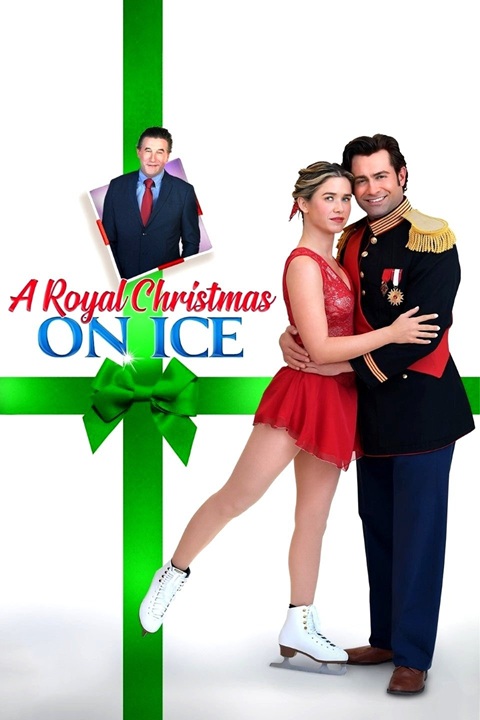
Consider the plot of 2022’s A Royal Christmas On Ice.
He’s a prince.
She’s a former Olympic skater turned hard-as-nails coach.
They meet in a small town.
They fall in love….
AT CHRISTMAS!
Seriously, has there ever been a film more obviously made for me? This is a cute movie and a reminder that you can find just about anything in Fred Olen Ray’s filmography.
In this scene, from Sergio Corbucci’s Django, the film’s title character (played by my man, Franco Nero) reveals what’s actually in the coffin that he’s been dragging from town to town.
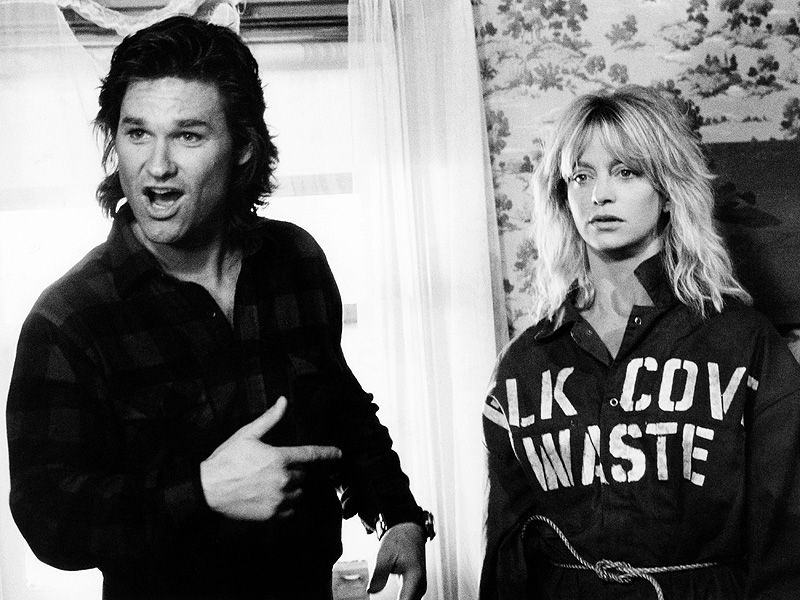
Spoiled heiress Joanna Stayton (Goldie Hawn) hires carpenter Dean Proffitt (Kurt Russell) to remodel a closet on her yacht. Unsatisfied with his work and completely unreasonable about everything, she refuses to pay him and when he presses her for the $600, she pushes him and all of his tools overboard. Needless to say, the lady’s a “bitch” (Dean’s word) and nobody can stand her, including her husband, Grant Stayton III (Edward Herrman), and their butler Andrew (Roddy McDowell). And then something interesting happens a few days later… Joanna accidentally falls off her yacht, and when she’s fished out of the ocean, she’s still difficult to deal with, but she doesn’t have a clue who she is. Unable to identity her, the hospital puts the “amnesia lady” on the news hoping someone will recognize her. Sensing a chance to get rid of the anchor around his neck, Grant Stayton III pretends he doesn’t know her and heads out of town. This is where Dean hatches up his own plot to get revenge. He heads to the hospital and through a series of happenstances and coincidences, he’s able to convince everyone, including Joanna, now dubbed as “Annie,” that she’s his wife. He takes her home with him and makes her take care of his four wild boys, cook their food, and clean his house. Dean figures she owes it to him. But wouldn’t you know it, even though “Annie” hates it at first, over time she begins to soften towards her new life, bonds with the boys, and some sparks of love start flying between her and Dean. When she unexpectedly gets her memory back, she has to decide whether to return to her life as a spoiled heiress or stay with the man and boys she’s grown to love.
I have a soft spot in my heart for OVERBOARD, because this is a movie that my mom and I both loved, and we watched it together many times in the late 80’s and early 90’s. My mom and I didn’t often have the same taste in movies, so this was kind of “our movie.” There are a couple of other notable favorites for both me and mom, and those movies are RUTHLESS PEOPLE (1986) and LETHAL WEAPON (1987). I guarantee if I called my mom right now, interrupted her Hallmark Christmas movies, and told her I was coming over with OVERBOARD, she’d say “Come on! I’ll get something together for you to eat!” That actually sounds like a pretty good idea!
Another reason I love OVERBOARD is the fact that it stars Kurt Russell. I became a big fan of Kurt Russell during my teenage years, as I was 14 when this movie came out. A couple of years earlier, Russell starred in the films THE BEST OF TIMES (1986) and BIG TROUBLE IN LITTLE CHINA (1986), and a couple of years later he would make movies like TEQUILA SUNRISE (1988), TANGO & CASH (1989), and BACKDRAFT (1991). I wanted to watch every movie that Russell was in, and all of these films are staples of my VHS years and nostalgic favorites. In OVERBOARD, Russell starts off as a gruff, grudge-holder, but as he begins to fall for “Annie,” his natural charm and likability emerge, but so does a newfound guilt for lying to her and possibly even kidnapping her. One question for the lawyers out there, is it kidnapping when her husband had a chance to claim her and chose to abandon her instead? I’m not sure if it’s a felony or not, but I’m guessing there has to be something on the law books that doesn’t jive with what happens here. Anyway, I’ll just say that it’s best not to think of these types of pesky realities when judging this fairy tale and just go along for the ride.
Along with the Russell’s fun performance, Goldie Hawn is so perfect as the horrifically spoiled snob of an heiress who transforms into a caring substitute mother and the woman of Dean’s dreams. I know she’s great in the movie, because I can’t stand her at the beginning, but I find myself falling for her too as the movie progresses. I would not really call myself a fan of Goldie Hawn, because I haven’t spent much of my life revisiting her films, but I love her here. A couple in real life, the natural chemistry between Russell and Hawn sparkles as they fall in love on screen and only the most cold-hearted cynic isn’t pulling for them to live happily ever after as the movie closes in on its ending. As far as the supporting cast, Edward Herrmann, Katherine Helmond, Mike Hagerty, and Roddy McDowall all have good moments sprinkled throughout the film.
I do have one complaint about OVERBOARD, and that’s the “Wonders of the World Miniature Golf Course,” which is the dream business of Dean and his best friend Bad Billy Pratt (Mike Hagerty). As someone who grew up in the 70’s and 80’s playing miniature golf on the courses in Branson, MO, I would never want to play their course. Its design appears over-the-top and cheesy to me, the type of course where the scores on the holes would be determined as much by luck as by skill, which is something I find offensive. However, just like the potential kidnapping storyline, I’ve had to let my disdain for the quality of the course design go as well so I could enjoy that section of the film. I will admit this one is harder for me personally, and I still struggle with it.
Overall, OVERBOARD is not high art, and its premise is about as silly as it gets, but through a magical combination of personal 1980’s nostalgia, an appreciation for the chemistry of its stars, and a complete willingness to suspend my disbelief as we head towards an irresistibly happy ending, I still love this film. I watch it just about every year, especially if I need a pick me up as I hammer away at tax returns!
I watched Christmas Caper with Lisa and, as always, it was a wonderful time. It’s weird to have a friend who is way cooler than you, but I’ll take it! “Christmas Caper” had some great lines and a clear story arc, but was what really stands is its similarity to “Dazed and Confused” in this way: it was a springboard for many careers attached to it. April Blair, the writer, went on to write for… everything and the actors all had bright careers for decades. I’m used to Hallmark, which is A LOT more strict. I was in talks to have script made for Hallmark, but it was funny and had Mrs. Claus as the heroine and they just couldn’t wrap their heads around a female lead like that. Here, we have Cate Dove (Shannen Doherty), a gentlewoman thief, who is the heroine- Hallmark would say – BLASPHEMY!!!! Needless to say, I was primed to enjoy this movie.
The film opens with Cate and Clive (Conrad Coates) who are doing a “Mission Impossible” style heist at a home that has A LOT of security. For a plot device, both Cate and Clive remove their masks for the security cameras. (Note: To the homeowner, maybe you should move?I get that you have this fancy pants gem in your house and the schools are a 10/10 on “SchoolDigger,” but if you have this many problems with crime, have you considered another neighborhood or starting a neighborhood watch? I understand it’s hard to move, but I had to pull the trigger on that and leave my beloved Seattle. It’s ok bro, let’s hug it out and call Remax.) They steal a precious gem, but Clive runs off with the gem, leaving Cate to escape as best she can, but there’s a APB out for her with a picture of her everywhere.
Cate flees to NYC to go to her fence Duffy (Michael Northey) to figure out her next move. The inciting incident is that Cate has a goody too shoes sister Savannah (Sonya Salomaa) who is trapped in the Caribbean with her husband Brian and they need child care. Cate is Savannah’s last choice because she’s a degenerate, but Cate decides to watch her niece and nephew because she needs to lay low. Cate goes to Comfort, USA and watches the kids. She rekindles a relationship with her ex who is Sheriff Harrison (Ty Olsson). The mixture of family time, romance, and Christmas puts her on a good character arc.
However, when she tries to get the gem back from Clive, she involves her niece and nephew. I didn’t really that for stranger danger issues, but it added some good comic relief and key plot point. When Cate thinks she has no money to escape and avoid arrest, she steals everyone’s Christmas presents like the Grinch, BUT her heart grows three sizes that day and she returns them all – sort of.
The movie has a nice ending and I liked the act breaks a lot. The movie had clear plot points and that makes sense because the writer, April Blair, had a HUGE career writing for television. I absolutely recommend watching this film on Tubi. It really is a lot of fun!

 Through the Shattered Lens