Alex (Megan Ward) is a suburban teen still trying to come to terms with the suicide of her mother. She and her friend, Nick (Peter Billingsley), spend all of their time hanging out at the local video arcade, Dante’s Inferno. (Symbolic name alert!) Also hanging out at Dante’s Inferno is a man (John de Lancie) who is desperate to find people willing to play what he says is the next step in the evolution of gaming. The game, which is simply called “Arcade,” is a virtual reality simulator and soon, all the teens want to play it!
Unfortunately, there’s a problem with Arcade. It was partially programmed with the brain cells of a child who had been beaten to death by his mother. Don’t ask why anyone thought this was a good idea because this is a Charles Band production so you know no one would explain even if they could. The child wants either friends or revenge so, as a result, the game is stealing the souls of the people who play it and transporting them to the virtual reality world.
Realizing that all of her friends will soon be gone, Alex enters the virtual reality world to save them and thwart Arcade! She’ll have to defeat skulls, serpents, and every other CGI challenge that the game can throw at her.
If you remember this film, it’s probably because you’re like me and you saw it on HBO when you were kid. Though the film has an R-rating because of some awkwardly deployed bad language, the film really is a teen boy fantasy, one in which you can enter the world of your favorite video game and save the world with Megan Ward, a hot girl who loves video games just as much as you do. When it was released, Arcade’s special effects were pretty impressive. If you watch the movie today, it’s obvious that the actors have just been superimposed against a virtual background. Watching the film today, I had the same feeling that I had when I recently hooked up my old Xbox 360 and played a few games. It was more primitive than I remembered but that rush of nostalgia was enjoyable for a few hours.. Arcade features an energetic cast (including Seth Green and AJ Langer in supporting roles) and Dante’s Inferno was the coolest arcade I’ve ever seen. It was a hundred times better than the one from Joysicks.
One final note: If you needed any more evidence that Disney is evil, they actually sued Charles Band because they claimed Arcade was too similar to Tron! As a result, Band, working with Peter Billingsley, actually had to redesign a good deal of the CGI before the film could be released. Disney was right about Arcade being a goof on Tron but who cares? I doubt anyone has ever said, “I’ve seen Arcade, I don’t need to see Tron.” Chill out, Disney. There’s room for at everyone at the arcade.
1957’s I Was A Teenage Werewolf combines two genres that were very popular in the late 50s.
On the one hand, it’s a film about a teenage rebel. Tony Rivers (Michael Landon) is a teenager that means well but he keeps losing his temper. If he can’t learn to control his anger, he could very well be looking at a life behind bars.
On the other hand, it’s also a horror film. When Tony visits a hypnotist (Whit Bissell), the end result is Tony turning into a werewolf and going on a rampage, all while still wearing his letterman jacket.
Wow, there certainly are a lot of vampires in New Mexico!
Well, I guess I can understand the logic behind it. My family used to visit New Mexico frequently. We even lived there for a few months when I was a kid. If you’re looking for a place to hide out, New Mexico is a good place to do it. You can drive for hours without seeing another car or another person. Add to that, New Mexico is state where people respect your privacy. No one’s going to show up at your house demanding to know why you only come out at night.
Of course, if I was a vampire, I might avoid New Mexico because of the bright sunlight. Seriously, if you’re trying to escape being touched by the sun, the New Mexico desert might not be the ideal place to hide out. I don’t know, though. I’ve never been a vampire.
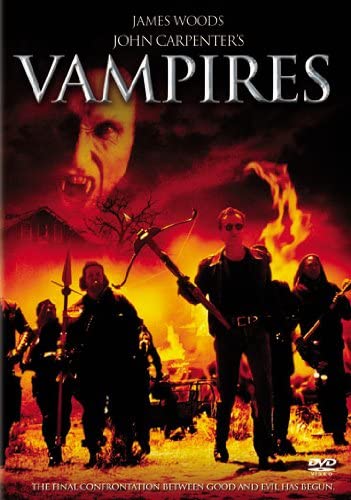
In John Carpenter’s 1998 film, Vampires (actually, John Carpenter’s Vampires because everyone know the power that the Carpenter name holds for horror fans), Jan Valek (Thomas Ian Griffith) is the world’s oldest vampire and he’s looking to perform a ceremony that will take care of that whole sunlight issue. If he can perform the ceremony, he’ll be the most powerful creature in the world.
Fortunately, the Vatican has put together a team of ruthless vampire exterminators. Led by Jack Crow (James Woods), these guys have no problem tracking down vampires and riddling their undead bodies with bullets that have probably been dipped in holy water. Unfortunately, with the exception of Jack and his second-in-command, Tony (Daniel Baldwin), the vampires hunters aren’t too smart because Valek gets the drop on them while they’re partying at a hotel with a bunch of prostitutes. The only survivors are Tony, Jack, and Katrina (Sheryl Lee), a prostitute who was previously bitten by Valek.
After teaming up with an enthusiastic but inexperienced priest named Father Guiteau (Tim Guinee), Jack tries to find a way to stop Valek. Meanwhile, Tony finds himself falling for Katrina despite the fact that Katrina will soon be transforming into a vampire and he and Jack have pledged to destroy every vampire that they come across. It leads to several chases, several bloody shootouts, and a lot of panoramic shots of the New Mexico desert.
The first time I ever watched Vampires, I thought it had its moments of demented fun and I thought that James Woods gave a wonderfully frantic performance as Jack Crow but overall, I got a little bit bored with the film’s constant violence. There’s only so many times that you can watch people die in slow motion before you get tired of it. The second time I watched the movie, I was able to better appreciate the film’s self-awareness. As directed by John Carpenter, it’s intentionally over-the-top in just about every regard and it’s definitely not meat to be taken seriously. It’s a mix of a western and a vampire film and Carpenter is basically saying, “If we’re going to do this, let’s go crazy with it.” The film still has its flaws, of course. Daniel Baldwin seems lost in the role of Tony and the film is oddly paced, It ends awkwardly, with the promise of a direct sequel that was never made. (There were sequels, don’t get me wrong. But Jon Bon Jovi is no substitute for James Woods at his most nervy.) But the important thing is that, on a second viewing, those flaws were overshadowed by John Carpenter’s kinetic direction and the performances of James Woods, Sheryl Lee, and Thomas Ian Griffith.
The first time I watched the film, I thought it was just another movie about modern-day vampires killing people while being hunted by unconventional extrerminators. However, the second time that I watched it, I found myself considering that Vampires is actually a movie about Catholics kicking ass! Yay! The lesson here is to always do a second viewing. Flaws and all, Vampires was far better than I remembered.
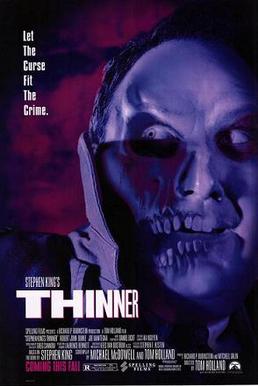
Billy Halleck (Robert John Burke, in a fat suit) is a morbidly obese attorney who might be destined to die of a heart attack but who definitely will not be serving jail time despite running over an old gypsy woman. After a corrupt judge and crooked cop, both of whom are friends of Billy’s, conspire to get Halleck acquitted, all three of them are cursed by the woman’s husband (Michael Constnatine). The judge turns into a lizard while the cop is covered in sores. Halleck, however, finally starts to lose weight! At first, he’s happy. He’s finally getting thin and all he had to do was run over an old woman! But then, he realizes that he’s never going to stop getting thinner and he’s going to just waste away.
Thinner is based on a novel by Richard Bachman, who was actually Stephen King. Like most of the Bachman books, Thinner is nastier than most of the King books. Billy is a terrible character and he deserves exactly what’s coming to him. The book is not usually listed as being one of King’s better efforts and the movie doesn’t get much love either. I’ve always liked Thinner, though. It’s like a really good episode of Tales From The Crypt, with Billy paying the price for his sins. Billy actually gets several chances to redeem himself but, because he’s such a terrible character, he keeps messing them up. Instead of begging for forgiveness, Billy hires a gangster (Joe Mantegna) to try to take out the gypsies. Even when the dead woman’s husband gives Billy a chance to escape his fate with some shred of dignity, Billy would rather go after his perceived enemies. Many bad things happen to Billy but he brings them all on himself. Even when it becomes obvious that he’s under a curse, he still thinks he can plea bargain his way out of it. He’s a lawyer, through and through.
Thinner is frequently cartoonish and broad but that works for the story that it’s telling. Robert John Burke’s performance may not have many shadings to it but again, it’s right for the story that’s being told. My favorite performance in the film was Joe Mantegna’s turn as the gangster and fans of Late Night Cinemax will feel a rush of nostalgia when Kari Wuhrer makes an appearance as the beautiful daughter of the woman that Billy ran over. Thinner is a middle-tier King adaptation, neither as bad nor as good as some others. I dug it.
This 1982 Spanish-produced slasher film was advertised, at least in the United States, with the brilliant tag line: “You don’t have to go to Texas for a chainsaw massacre.” And indeed, Pieces takes place in Boston, Massachusetts. And yet, it’s a Boston that has little relation to the Boston of the real world. (Some of that may be because, while a few scenes were filmed in Boston, the majority of the film was shot in Spain.) Indeed, one can argue that Pieces takes place in an alternate reality, one that was created with bits of giallo suspense, slasher gore, and scenes randomly borrowed from every other exploitation film ever made.
In the 1950s, a little boy wears a bowtie and plays with a pornographic jigsaw puzzle. His mother takes the puzzle away from him, which he doesn’t appreciate at all. It leads, as things usually do, to an axe murder.
In the 1980s, a college student tries to roller skate down a sidewalk, just to suddenly lose control. As she helplessly rolls down the street, two workman carrying a sheet of glass just happen to step out in front of her. Pieces of blood-stained glass fly everywhere. As is typical of Pieces, this actually has nothing to do with the larger plot of the film. We never learn the girl’s name. We never hear learn if she survived nor do we hear much else about the accident. Instead, it’s just a random incident, tossed in to illustrate that the world is going mad.
On campus, a chainsaw killer is killing students and teachers. He’s the boy with the bowtie, all grown up. He takes body parts home with him so that he can stitch them together, recreating the jigsaw puzzle that was stolen from him years before. Oddly enough, he never makes much of an effort to hide his chainsaw. He casually gets on an elevator with one of his victims. She notices that he’s carrying a chainsaw but she doesn’t say anything about it until he actually turns it on.
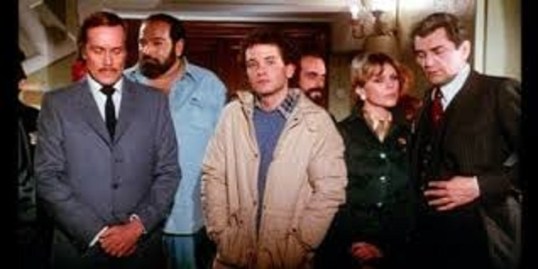
Dean Foley (played by Eurohorror veteran Edmund Purdom) is upset that students keep getting dismembered on campus, as well he should be. Lt. Bracken (Christopher George, barking out his lines with the same annoyed energy that he brought to Graduation Day) is also upset because he’s supposed to arrest criminals and stuff. Unfortunately, all of Bracken’s cops are incredibly incompetent. Bracken is forced to rely on the help of Kendall James (Ian Sera). Despite being kind of scrawny and unappealing, Kendall is the most popular student on campus. Kendall also knows every victim and discovers the majority of them. You would think that Kendall would be the obvious suspect but instead, Kendall somehow ends up directing the entire investigation. Kendall’s not a cop but he’s soon ordering around the veteran detectives and everyone’s okay with that. (One detective even mentions that Kendall might as well be a part of the force.)
Lt. Backen decides that the best way to solve the case is to send in Mary Riggs (Linda Day George), who is not only an undercover cop but also a top-ranked tennis player! There’s a lot of tennis in Pieces, as Mary works on her game in between working with Kendall to solve the murders. Kendall and Mary aren’t very effective though. After discovering that one victim was chopped in half in the showers while Kendall and Mary were trying to find the source of some loud marching band music, Mary lets the killer know exactly what she thinks of him.
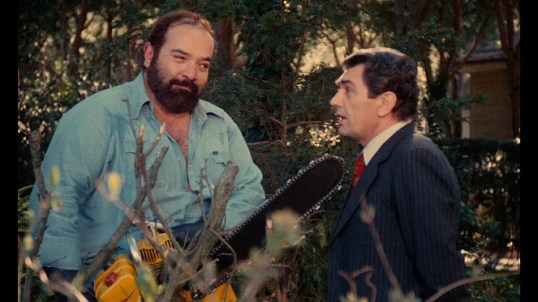
But who is the killer? Because Pieces was as inspired by the giallo genre as the slasher genre, there are several suspects. Kendall seems like the obvious one but, for whatever reason, no one makes that connection. Instead, we’re left to wonder if maybe it could be the Dean. Or how about Prof. Brown (Jack Taylor), the somewhat odd professor who seems to be a bit repressed? Or maybe it’s the handyman, Willard (Paul L. Smith)? Willard is creepy and he works with a chainsaw! There are a lot of suspects and helpfully, after a murder at the pool, every single one of them shows up at the scene of the crime. At one point, they all even gather in the same corner and look straight at the camera. You half expect Kendall to announce, “Well, I can’t possibly solve this one! Can you?”
But that’s not all! When Kendall and Mary aren’t solving murders, they’re having to deal with all of the other weird things that happen on campus. At one point, Mary is randomly attacked by the school’s karate instructor. After Kendall shows up and explains who the man in, they all laugh it off as being the result of “bad chop suey.” Later, Kendall walks Mary back to her place and, after she rejects his attempts at romance, Kendall turns around to be confronted by another student who taunts him by yelling, “Casanova!” Meanwhile, other students are still walking around campus in the middle of the night and making plans to meet up in a room that contain the height of campus luxury, a waterbed!
(Yes, a murder does occur on the waterbed. Yes, water goes everywhere. It’s Chekhov’s waterbed. You can’t introduce it without including a scene where it gets punctured.)
Many things happen, none of which make sense. The entire film is so over-the-top in its combination of gore, overacting, and general absurdity that it becomes strangely fascinating. From today’s perspective, it’s easy to imagine that the film was actually meant to be a parody but director J. Piquer Simon has said that it was meant to be viewed as a serious thriller, regardless of how the film was subsequently advertised in the United States. Even the film’s ending, in which someone who is not the killer is randomly castrated just because, was meant to be taken seriously. Every weird moment was included to give the audience what they wanted. Audiences loved Bruce Lee so, of course, a random karate fight was tossed in. People love chainsaws so, of course …. well, you get the idea.
On the one hand, Pieces is a really heavy-handed and mean-spirited film, one in which the victims are almost exclusively women and where sex and violence are too often connected. Mary may be an absurd character but you’re happy when she shows up because she’s the one woman in the film not presented as being a passive victim. On the other hand, Pieces is just so over-the-top and absurd that it’s hard not to watch the film all the way through. Perhaps the only thing that keeps the film from being incredibly offensive is that, regardless of what the director has claimed, it is so obviously not meant to be taking place in the real world. When that plate glass was shattered, it obviously opened a vortex that sucked the campus into a world where every slasher and giallo trope has been adapted to the point of absurdity. This is one of those films that just gets more and more strange with each passing minute. You watch it and you find yourself continually thinking, “This movie can’t get any weirder” and then it manages to do just that. Watching the movie is like stepping through a portal into some sort of strange alternate reality. Just try to look away.
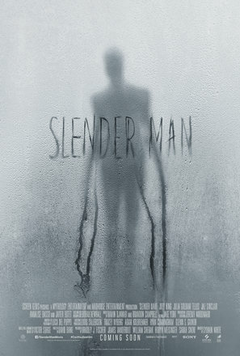
Slender Man is a 2018 horror film about the Slender Man, the mysterious supernatural being who appears in online photographs and videos and who …. well, I’m not sure what it is that he does exactly. Apparently, he targets children and teenagers and he uses his long arms to either abduct them or drive them crazy or maybe take them to a different realm of existence. Who knows? That’s actually probably a part of the appeal of Slender Man. He can pretty much be whoever or whatever anyone wants him to be.
In this Massachusetts-set film, four teenage girl decided to summon the Slender Man. Their ceremony works but it turns out that summoning a demonic figure who hunts children is not as good an idea as the girls originally assumed. Who would have guessed it, right? After one of the girls disappear, the other three try to figure out how to deal with Slender Man. It all leads to death, insanity. and panic. Yay!
Slender Man is one of those films where nearly every scene is severely underlit and it’s often difficult to actually tell what’s happening in each scene. This has become a very popular technique in recent years, one that some directors have embraced almost to the point of absolute absurdity. (Watch any horror-themed program on Netflix and you’ll see what I’m talking about.) I imagine the idea is to create a creepy and shadowy atmosphere and to keep you wondering about what might be lurking in the darkness. There’s nothing wrong with that, if the film itself is genuinely scary. However, in a film like Slender Man, the underlit look feels rather lazy. It’s as if the director and the cinematographer realized that the film’s story was never going to make sense so they specifically turned off the light to try to keep us from noticing. Instead of trying to improve the script or maybe come up with something interesting for Slender Man to do, they instead did the cinematic equivalent of shoving the audience into a dark room, locking the door, and then shouting boo in the vain hope of tricking them into being scared.
Of course, a huge part of the problem with Slender Man is that real life is often scarier than anything that will ever appear in a movie. In 2014, two teenage girls really did stab one of their friends and they did attempt to blame their crime on Slender Man, whom they claimed they were tying to impress. This led to a moral panic, one in which parents worried that internet memes were turning children into sociopaths. My own personal opinion is that if your child is stabbing one of their friends, they have problems that go far beyond anything they may have seen online. Moral panics are a lot like Slender Man, in that they can be whatever the participants want them to be. In this case, the panic over internet memes allowed parents the luxury of not reflecting on whether or not their own bad parenting has anything to do with the actions of their children. “No,” parents could say, “it wasn’t that we raised a sociopath! It’s that some anonymous user posted a silly picture of Slender Man peaking out from behind a tree!” It is much easier to demand that a website be taken down or censored than to actually ask yourself why your children would be 1) stupid enough to believe in Slender Man in the first place and 2) eager to impress him.
Though Sony Pictures always denied it, it’s obvious that the Slender Man movie was made to capitalize on the publicity surrounding the Slender Man trial. Unfortunately, the film itself just isn’t scary. It’s poorly paced, poorly acted, and way too dark. No wonder Slender Man hasn’t been seen in a while….
Watching The Creeping Terror is an October tradition here at the Shattered Lens. How could anyone resist a film about a killer carpet, especially one that features a random dance party? This film was directed by an enigmatic figure named Vic Savage. No one is really sure who he actually was. No one is sure what happened to him after The Creeping Terror was finally released. But what we do know is that he made a film unlike any other.
“Time is on my side….” sings an ancient Sumerian demon, who is apparently a huge fan of the Rolling Stones.
“Do you like cream?” asks a possibly crooked detective who is played by a slightly less heavy than usual James Gandolfini.
Donald Sutherland walks through a shadowy police station and flashes his big smile.
A detective played by John Goodman talks on the phone and makes cheery jokes while investigating a brutal murder.
A demon jumps from person to person, possessing everyone for a matter of seconds, just so he can freak out one specific person.
“Beware my wrath,” a white-haired businessman says to Denzel Washington.
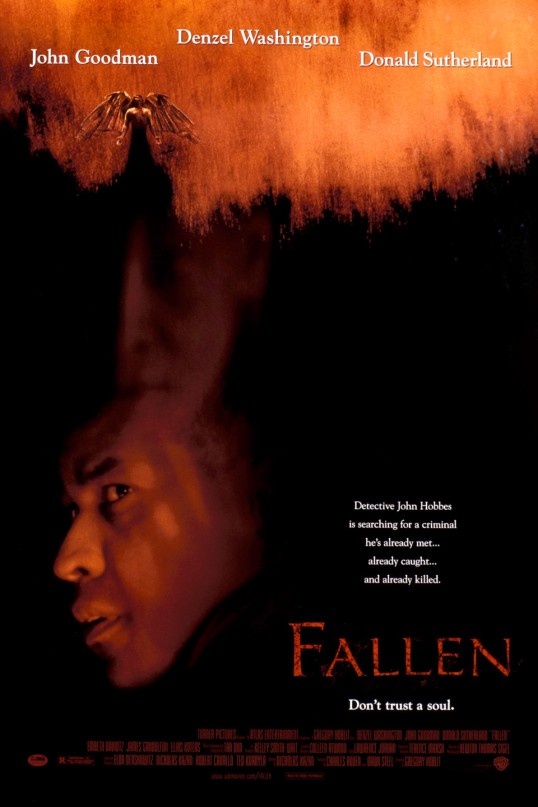
There’s no way to deny it. 1998’s Fallen is a film that’s full of strange moments. Some of it works and some of its doesn’t but it’s never boring. Denzel Washington plays John Hobbes, a Philadelphia detective who has achieved a small amount of fame as the result of capturing serial killer Edgar Reese (Elias Koteas). Reese asks to see Hobbes before he’s executed and it turns out that, for a man about to pay the ultimate price for his crimes, he’s in a surprisingly good mood. Before he goes in the gas chamber, Reese chants something in Aramaic.
Soon, new murders are being committed in Phladelphia. Hobbes and his partner, Jonesey (John Goodman at his most Goodmanesque), suspect that the killer is a copycat, trying to capture some of Reese’s notoriety for himself. Gretta Milano (Embeth Davidtz), the daughter of a detective who committed suicide after being accused of committing a series of murders, tells Hobbes that the new killings are actually being committed by a demon named Azazel. Azazel can jump from body to body and can compel people to do terrible things. Gretta asks Hobbes if he belives in God. Hobbes says it’s hard to have faith when you deal with murder every day, a somewhat clichéd line that Washington makes work through the absolute conviction of his delivery,
Denzel Washington is the key to this film’s success. Sure, there’s a lot of murders and a lot of twists and a lot of possessions and there’s a lot of scenes that are shot from the point of view of the demon but, in the end, Fallen works because Washington is absolutely convincing as a man who is facing an evil that is beyond human understanding. Washington gives a very naturalistic and grounded performance, one that keeps an element of reality in Fallen regardless of how messy the story may get. When it becomes apparent that the demon is going to try to harm his brother and his nephew, Washington’s fury feels real. When Hobbes discovers that the demon has gotten to one of them, Washington’s underplayed reaction makes the scene even more poignant and painful. It’s hard to imagine Fallen being anywhere near as effective with an actor other than Denzel Washington in the lead role.
Fallen is a twisty movie. The demon moves quickly and it always seems to have a backup plan. He manipulates Hobbes into doing some things that are so terrible that you’re not sure that Hobbes is every going to recover, even if he does somehow manage to defeat Azazel. Hobbes and Azazel are worthy adversaries and, as a result, the film gets away with a lot of stuff that wouldn’t otherwise work. Even the use of Time Is On My Side pays off, as the one character who you don’t want to hear sing the song suddenly starts doing a Mick Jagger impersonation and you’re just like, “Oh no, what’s going to happen now?” The film’s high point is a lengthy sequence where Hobbes stands on a busy street and watches as Azazel jumps from body to body. Everyone who passes Hobbe gives him a death glare. It’s a frightening moment, one in which Fallen captures the intensity of a nightmare.
I watched Fallen earlier today. I can’t really say that I was expecting much from it but I was surprised. It’s actually one of the better horror films that I’ve watched for the first time this month. It’s big and strange and creepy and it’s got Denzel Washington doing what he does best. What more could you ask for?
Two years after ripping off Alien with The Terror Within, producer Roger Corman decided to rip it off a second time with The Terror Within II. This time, star Andrew Stevens hopped into the director’s chair and, along with the sex-crazed monsters, a religious cult was also added. A year after The Terror Within II was released, Alien 3 was released and it also featured a religious cult. Was it a coincidence or was Roger Corman predicting the future?
Speaking of the future, The Terror Within II returns us to the crappy future that was predicted by the first film. As the previous film’s only survivor, scientist Andrew Stevens is walking across Colorado to take a position at yet another lab. Along the way, he meets a young woman named Ariel (Clare Hoak). No sooner have they met than they’re doing their bit to repopulate the human race. Meanwhile, a cult wants to kidnap Ariel and offer her up to the mutants. (The mutants were called Gargoyles in the first film. Now, they’re called Lusus.)
Meanwhile, at the other lab, the scientists, including Stella Stevens and R. Lee Ermey, are studying a mutated finger, which appears to be spontaneously regenerating into a Gargoyle or a Lusus or whatever its called now. Does it occur to anyone at the lab that growing their own monster is a stupid idea? No. Humanity is doomed.
The Terror Within II was shot for even less money than the first film but it’s also a marked improvement. That’s mostly due to Andrew Stevens being a far more competent filmmaker than the director who did the first film. Stevens know how to shoot an action scene and, when the monsters inevitable do end up storming the lab, it’s more exciting in the second film than it was in the first. Plus, whereas The Terror Within only had George Kennedy to lend it some class, The Terror Within II has both R. Lee Ermey and Stella Stevens! It’s an improvement, all around.
Unfortunately, there was never a third film. The Lusus probably would have won anyways. There’s only so many underground labs that humanity can hide out in.
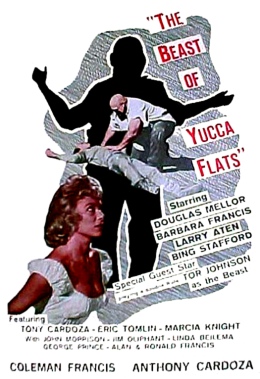
Since today is Tor Johnson’s birthday, it only seems appropriate that today’s Horror on the Lens should be one that he starred in, 1961’s The Best Of Yucca Flats.
My friend, the writer and chef Tammy Dowden, claims that this is the worst movie ever made.
Well, technically, she may be right. The Beast of Yucca Flats is a thoroughly inept film that makes next to no sense and has massive continuity errors. It’s a film that also features the legendary Tor Johnson as a Russian scientist who gets mutated by radiation and becomes a monster, but not before taking off almost all of his clothes while walking through the desert. For that matter, it’s also a film about a family that comes together though adversity — namely, being shot at by the police after the family patriarch is somehow mistaken for Tor Johnson. And finally, it’s the story of how a dying monster can find comfort from a rabbit and that’s actually kind of a sweet message.
Here’s the thing — yes, The Beast of Yucca Flats is bad but you still owe it to yourself to watch it because you will literally never see anything else like it. Plus, maybe you’ll be able to figure out what the whole point of the opening scene is.
Because I’ve watched this film a few times and I still have no idea!
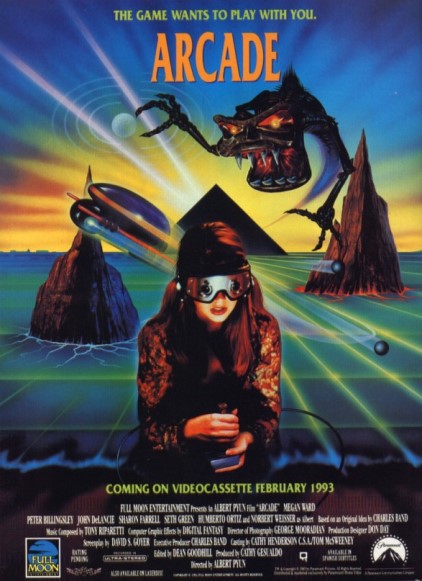 Alex (Megan Ward) is a suburban teen still trying to come to terms with the suicide of her mother. She and her friend, Nick (Peter Billingsley), spend all of their time hanging out at the local video arcade, Dante’s Inferno. (Symbolic name alert!) Also hanging out at Dante’s Inferno is a man (John de Lancie) who is desperate to find people willing to play what he says is the next step in the evolution of gaming. The game, which is simply called “Arcade,” is a virtual reality simulator and soon, all the teens want to play it!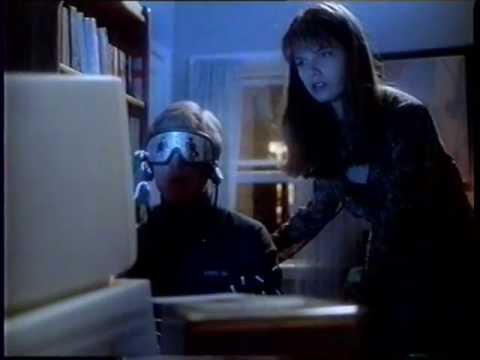

 Through the Shattered Lens