October Positivity: The Daylight Zone (dir by Dave Christiano)


There’s an old joke that goes something like this:

How do you know someone’s an atheist?

Give them five minutes and they’ll tell you.

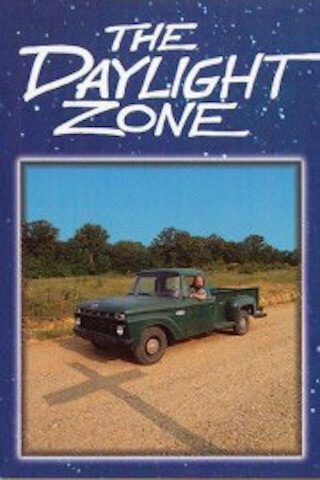
That’s certainly the case with Carl Smith (Keith Salter), the character at the center of 1986’s The Daylight Zone.  Because The Daylight Zone is set up as a parody of The Twilight Zone, a Rod Serling-style narrator informs us that Carl is a 35 year-old school teacher from Johnson City, Texas.  Carl is driving back to Johnson City in his beat-up old pickup truck.  He stops at a roadside fish stand and gets a fish sandwich.

It quickly becomes apparent that there are two things that obsess Carl Smith.  One is his dislike of religion.  The other is his obsession with fish sandwiches.  Seriously, I’ve never seen someone get so excited over a fish sandwich.  (Then again, I live in Texas, I’ve driven down more than a few country roads, and I’ve never seen a guy selling fish sandwiches off the side of the road.)  The only thing that ruins Carl’s fish sandwich experience is that there’s a bunch of a Christians eating nearby.

“Are you Jesus freaks!?” Carl demands.

Carl flies into a sputtering rage, saying that Jesus doesn’t exist because Carl’s never met him.  The Christians respond by asking Carl if he believes in George Washington, seeing as how Carl has never met him either.  Carl replies that his great-great-great-great-grandfather lived next door to the Washingtons.  Carl’s not just an atheist!  He’s also a damn liar!

Anyway, Carl drives off with his fish sandwich.  Unfortunately, he’s forced to take a detour.  Soon, mysterious people are approaching his truck and asking Carl if he’s heading to Jerusalem and if he’s going to the Crucifixion.  Carl laughs them off.  Interestingly, Carl never seems to notice that everyone is now dressed in the hottest 33 AD fashion.  Of course, none of them seem to find it odd that Carl is driving a pickup truck.  Whenever Carl asks if he’s on the right road to Johnson City, everyone responds with, “Yes, you are heading to Jerusalem.”  Carl doesn’t understand what they mean.  Perhaps he’s confused by the fact that everyone still has a Texas accent.

Indeed, it’s not until Carl is stopped by a bunch of Roman soldiers who demand that he pay an arbitrary tax that it occurs to him that something strange is happening.  And make no doubt about it, Carl is an obnoxious and annoying character, the type who never stops complaining and who won’t even share his fish sandwich with a shepherd.  But it’s hard not to sympathize with him when he gets arrested for tax evasion.  Taxation is theft!

(That said, it’s interesting that the Roman soldiers are confused by Carl’s American money but not by his pickup truck.)

This is an early Christian film from the Christiano Brothers.  On the one hand, the story moves quickly and it’s obvious that the brothers understood the format of The Twilight Zone.  Instead of just using the show as a gimmick, The Daylight Zone actually does pay homage to the classic Twilight Zone style.  On the other hand, Carl is so obnoxious that it’s hard to care one way or the other what happens to him and those thick Texas accents do tend to take away from the whole “He’s been transported to ancient Judea” angle of the story.  This one gets an A for effort but a C for execution.  Actually, I’ll bump it up to a C+ because of the whole anti-IRS subtext of the film.  Seriously, the IRS sucks.
The TSL’s Horror Grindhouse: H.P. Lovecraft’s Monster Portal (dir by Matthew B.C.)


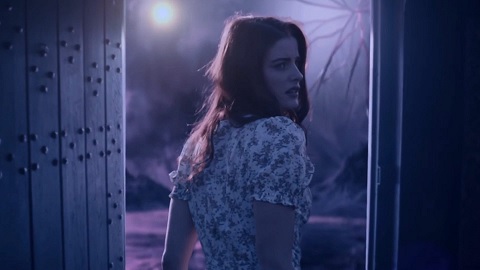
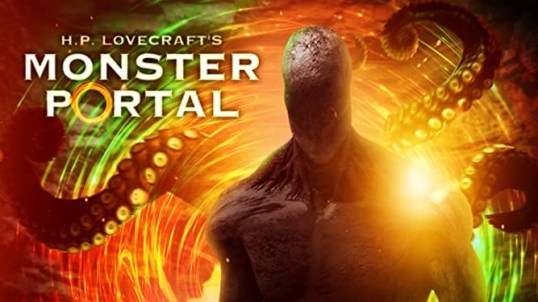
After the mysterious disappearance of her father, Celine (Sian Altman) travels to his estate with her boyfriend, Rich (Louis James) and their friends, April (Sarah Alexandra Marks) and Nick (George Nettleton).  Celine wants to deal with her memories and figure out what led to her father disappearing.  Rich wants to help her.  Nick, meanwhile, just wants to get drunk.  April just wants to be anywhere but near Nick.  It’s a bit of a dysfunctional group.  Personally, I probably would have left Nick behind but I guess the hope was that Nick would lighten the mood whenever things started to get too heavy.

Upon arriving at the estate, they notice a few weird things.  For instance, the housekeeper (Judy Tcherniak) has a habit of chanting and she keeps talking about the old ones.  There are dead rabbits all over the place.  The housekeeper says that the cat must have killed them but there doesn’t seem to be cat anywhere nearby and, as Rich quickly notices, it looks more likely that the rabbits were murdered as a sort of sacrifice.  There are strange books and paintings to be found all over the house and there are black-robed cultists who only seem to come out at night.  And, of course, there’s the portal in the back yard, which leads to another dimension but also from which spring giant, sacrifice-demanding demons.  One should probably be careful about building one of those.  I mean, sure, a gazebo looks nice but is it worth losing your soul over?  It’s something to consider.

You can probably guess where H.P. Lovecraft’s Monster Portal is heading.  Just the appearance of H.P. Lovecraft’s name in the title should tell you all that you need to know.  (The film is also known simply as The Offering, which again kind of gives away the plot.)  To the film’s credit, it actually does make proper and respectful use of the Cthulhu mythos and, even more importantly, it frequently captures the feel of a H.P. Lovecraft short story.  Lovecraft often wrote about people who were investigating the mysterious sins of their family and, of course, he was never hesitant to toss in a robed cultist or two.  Even more importantly, the film captures Lovecraft’s view of humanity as just being an insignificant pawn in the grand scheme of things.  There have been a lot of films that have claimed Lovecraft as an inspiration but Monster Portal is one of the few to really convince you that it was made by fans of his work.

The film’s low budget is obvious in nearly every frame but the monsters themselves are actually pretty impressive and director Matthew B.C. does a good job creating a properly ominous atmosphere.  The estate itself looks great.  The acting is a bit inconsistent but, for the most part, Sian Altman and Sarah Alexandra Marks are sympathetic in the lead roles and Judy Tcherniak goes so over-the-top as the housekeeper that she’s actually a lot of fun to watch.  Monster Portal is an enjoyable tribute to Lovecraft’s work.

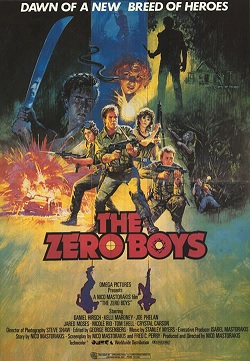
The Zero Boys (1986, directed by Nico Mastorakis)


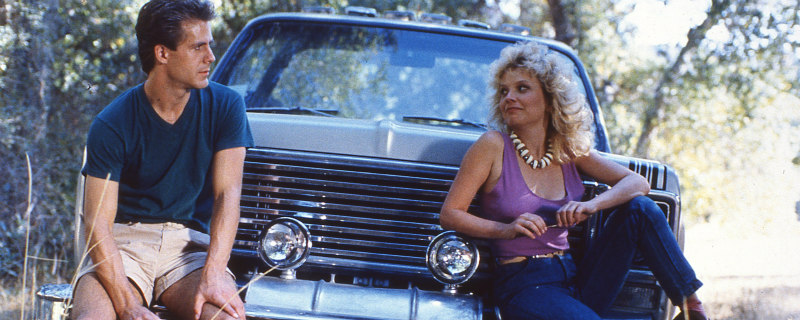
When a paintball team known as the Zero Boys wins the big tournament, they decide to celebrate by spending the weekend in the woods with their girlfriends.  Accompanying the group is Jamie (Kelli Maroney), who was put up as a side bet by her boyfriend, who just happens to be the wannabe Nazi dork who lost the tournament.  The wilderness fun and games take a disturbing turn when the group comes across a deserted cabin and decide to camp there for the night.  The cabin belongs to family of hillbilly survivalists (one of whom is played by Martin Sheen’s brother, Joe Estevez) and they don’t intend to let anyone leave alive.  Soon, the Zero Boys are forced to put their paintball knowledge to the test in a real battle for survival.

The Zero Boys is one of those films that always used to come on television when I was growing up and I would always watch it because I thought it was going to be a standard, Friday the 13th-style slasher film.  When I was a kid, I would always end up getting annoyed with the film’s deliberate pace and its weird mix of the action and slasher genres.  I would usually watch for about an hour and then I would change the channel and try to find something better.  I thought The Zero Boys was just that, a big zero.

Now that I’m older, I realize that I was wrong and I better appreciate The Zero Boys and the way that it pokes fun at both the action and the slasher genres.  The Zero Boys opens with a really intense battle scene, between the Zero Boys and Casey, who is wearing a swastika armband.  It plays out like a standard Cannon action film, up until the moment that the Zero Boys catch up to Casey and shoot him in the head with a paintball. Our “heroes” are not mercenaries or former vets looking to rescue their brothers-in-arms from a POW camp.  There’s not a single Chuck Norris among them.  Instead, they’re just a bunch of dorky teens who are good at paintball and think that they have survival skills.  (One of them looks at a picture of Rambo and says, “Sly, eat your heart out.”) The movie goes on to further upend the audience’s expectations by introducing Jamie, a heroine who is anything but the typical, virginal final girl.  When it becomes obvious that the group is being stalked by a group of killers, the Zero Boys and their girlfriends actually fight back and it’s a definite change of pace from other slasher films of the era,  When it comes to horror films, The Zero Boys has more in common with The Hills Have Eyes than with Friday the 13th.

The Zero Boys is an action/horror hybrid that is willing to poke fun at itself.  It’s also one of the many superior genre pictures that Kelli Maroney made in the 80s.  Between this film, Chopping Mall, and Night of the Comet, Kelli Maroney was the crush of every 80s and 90s kid who spent too much time searching HBO and Cinemax for R-rated horror films.  She was cute but tough and, even if no one else in the movie realized it, she could definitely take care of herself.  Whether fighting malfunctioning robots, zombie scientists, or killer hillbillies, there was no one better to have on your side.

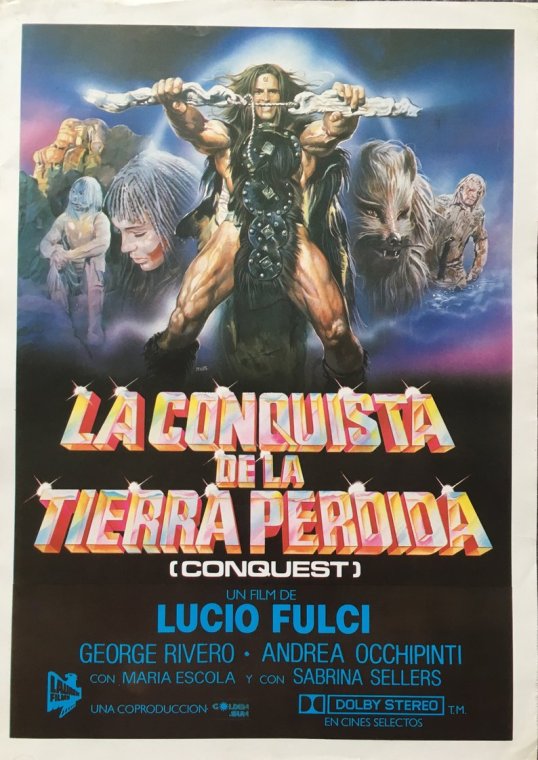
International Horror Film Review: Conquest (dir by Lucio Fulci)


First released in 1983, Conquest takes place in a mystical land, one where humans, dolphins, and sheep live alongside witches, werewolves, and zombies.  It’s a place of magic, evil, and multiple decapitations.  As the film begins, a young man named Ilias (played by Andrea Occhipanti, who also appeared in Lucio Fulci’s The New York Ripper) has just turned 18 and is heading out on his first quest.  His father gives him a magic bow, which shoots laser-like arrows.  Illias boards a raft and sails off to do whatever people do on quests.  To be honest, it’s always strange to me that people in films like this always want to go on quests.  I mean, it never turns out well.

Ilias finds himself in a land that is ruled by Ocron (Sabrina Sian), a naked witch who spends her time fondling a snake and snorting what appears to be cocaine.  During one of her drug binges, Ocron has a vision of a faceless man who carries a magic bow.  She realizes that the man could potentially destroy her and end her reign of evil.  She orders her werewolf soldiers to take a break from their usual routine of killing cave people so that they can scour the land and destroy the man with the bow.

Fortunately, Ilias has made a new friend!  Mace (Jorge Rivero) is a wandering outlaw who claims that he doesn’t care about anyone but who takes an instant liking to Ilias.  Soon, Mace and Ilias are inseparable as they walk through the countryside together, stopping only to kill a hunter and steal his food …. wait, that doesn’t sound very heroic.  Mace’s argument is that hunters themselves are not heroic but still, it really does seem more like cold-blooded murder than anything else.  It’s a weird scene but, then again, this Italian film is a weird movie.

Eventually, Ilias decides that his destiny is to destroy Orcan.  Though Mace doesn’t think that it’s a good idea to cross the most powerful witch in this strange world, he does agree to escort Ilias to the seashore.  (One gets the feeling that if Conquest had been released more recently, as opposed to 1983, Ilias and Mace would have launched a thousand ships.)  But things get complicated on the way, with both Ilias and Mace going through several different changes of heart.  Of course, they also run into zombies, underground monsters, and super-intelligent dolphins….

Conquest was directed by Lucio Fulci, the Italian filmmaker who was responsible for some of the most visually striking and narratively incoherent horror films ever made.  With Zombi 2, Fulci launched the Italian zombie boom.  With The Beyond trilogy, Fulci directed three of the most intriguingly surreal horror films ever made.  With The New York Ripper and Don’t Torture A Duckling, Fulci took the giallo genre to its logical and most disturbing conclusion.  Fulci made blood-filled films, ones in which the overall plot was never as important as the set pieces.  That’s certainly the case of Conquest, which pays homage to the old sword-and-sorcery films while also including zombies and a few rather graphic torture scenes.  (The scene in which one person is literally split in half is shocking, even by the standards of Fulci.)  And yet there’s an odd earnestness to Conquest, as both Ilias and eventually Mace are horrified by Ocran’s cruelty and willing to risk their lives to put an end to it.  The friendship between Ilias and Mace comes out of nowhere but the film takes it seriously and, as a result, the final scenes are far more emotional than you might expect from a director of Fulci’s reputation.  It’s tempting to consider Conquest as a bit of a prequel to The Beyond trilogy.  Perhaps we’re looking into the Beyond itself and discovering that, even in that disturbing world, there are people who are willing to risk their lives to battle evil.

Conquest was not one Fulci’s box office successes, which is a bit of a shame as it really does seem to be a film that he put his heart into.  Unfortunately, Conquest was followed by the controversy surrounding The New York Ripper and the critical failure of Manhattan Baby.  Fulci’s career went into decline and he soon found himself directing stuff like Aenigma.  It’s a shame but I think many of Fulci’s so-called failures are ready to be rediscovered and reappraised.  That’s certainly the case with Conquest.

Horror Film Review: Children of the Corn (dir by Fritz Kiersch)


What to say about the original Children of the Corn?

First released in 1984, this film was based on one of Stephen King’s least interesting short stories. It’s a pretty dumb and poorly-paced movie, featuring villainous puritan children who are more annoying than menacing. The heroes aren’t particularly likable, even if one of them is played by Linda Hamilton. And yet, somehow, Children of the Corn spawned an 11-entry film franchise. (The 11th Children of the Corn film was released in 2020, 36 years after the original.) The original film was remade in 2009 and it continues to be a familiar reference point on the pop cultural landscape. I’ve lost track of the number of Children of the Corn parodies that I’ve seen.

The plot is pretty simple. One day, all of the children in a small rural town get together and kill all the adults. They worship a mysterious entity called He Who Walks Behind The Rows and they sacrifice any adult who is stupid enough to wander into town. The leader of the children is shrill-voiced little twerp named Isaac (John Franklin) and his second-in-command and chief enforcer is the sullen Malachai (played by Courtney Gaies). The children all dress like 1880s settlers and they spend a lot of time staring at each other. Eventually, Malachai overthrows Isaac and ties him to a cross, which leads to a seemingly endless scene of Isaac screeching, “Malachai!” over and over again.

Meanwhile, two adults have accidentally driven into town, Burt (Peter Horton) and his girlfriend, Vicky (Linda Hamilton). They end up running over a child who was trying to flee the cult. They put the body in the trunk of their car and then they kind of forget about it. In their defense, they’ve got a lot to deal with. The children want to sacrifice Vicky and Burt wants to lecture all of the children about how their backwards ways are ruining America. I’m not kidding. This film about children wearing old timey clothes and talking about He Who Walks Behind The Rows tries to convince the viewers that it has a sincere message.

Children of the Corn was not the first movie about killer children but it’s certainly one of the most influential. You have to wonder why because the film itself simply isn’t very good. Beyond the bad acting and the heavy-handed sermonizing, the film’s pacing is all off. A simple story shouldn’t have this many slow spots. Director Fritz Kiersch falls so in love with shots of that haunted cornfield that he forget to use them to tell a compelling story.

And yet, it can’t be denied that there is an audience for this film and the many sequels that followed. I imagine some of it has to do with the fact that people are just fascinated by the idea of evil children. We’re expected to like and forgive the behavior of children, regardless of how obnoxious they may be. Movies like Children of the Corn exploit a real fear that many people have, that children will figure out that they can get away with murder and therefore, they will. It’s a simple and not particularly well-executed idea but it’s one that led to an 11-film franchise so I guess one should never discount the value of keeping it simple.

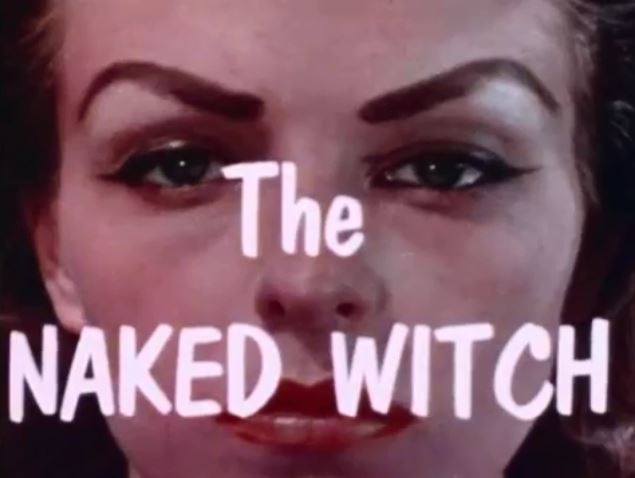
Horror On The Lens: The Naked Witch (dir by Larry Buchanan)


Today’s Horror on the Lens come to us for director Larry Buchanan.

Larry Buchanan was not only born in Texas but he made most of his films here too.  In 1964’s The Naked Witch, a college student is doing a research project on the German-speaking villages in Central Texas.  It’s while visiting one such village that this idiot accidentally brings an ancient witch back to life.  In many ways, this is a typical Buchanan film.  The budget is low and the plot is sometimes incoherent.  But the film is also fairly atmospheric.  In my case, it helps that I’ve actually spent time in Central Texas and I know how creepy things can sometimes get out there.

Enjoy The Naked Witch!

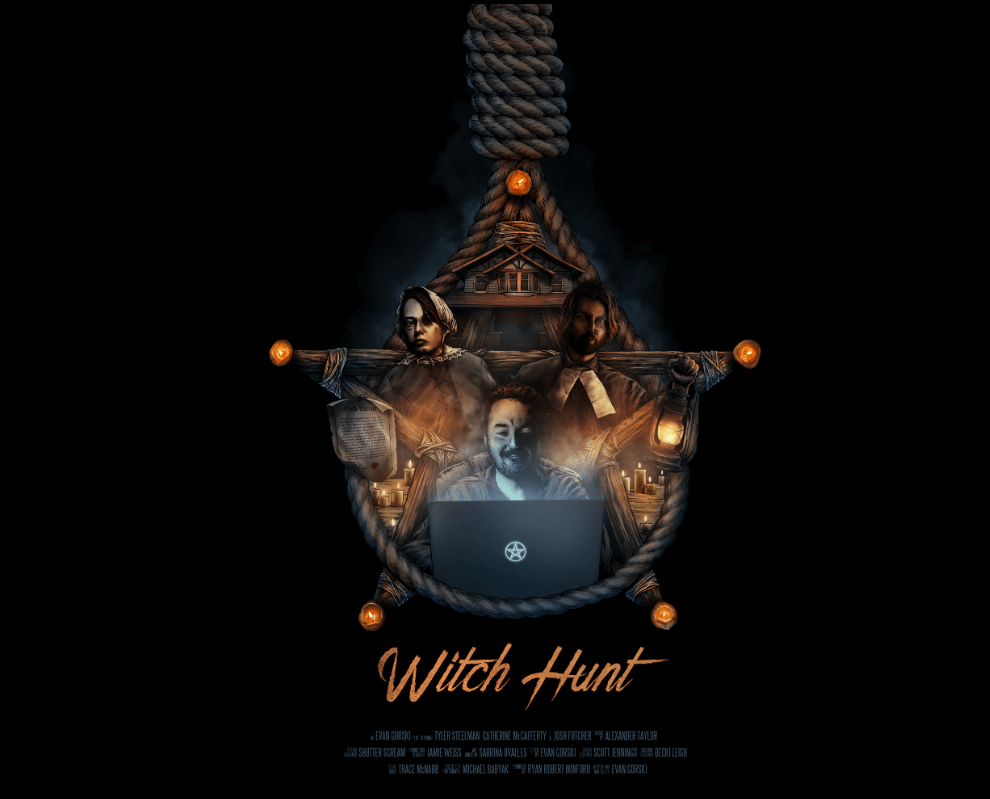
Witch Hunt, Review by Case Wright


Oof

I know many of you wonderful readers must think that I’m rooting for failure. I really want artists to do a good job and not be terrible. The short film is the farm team for many writers, directors, and actors. It forces you to have a clear idea, vibrant characters, be economical with your dialogue, and how to show not tell. This short was 8 minutes and change and it was awesome for the first four minutes. Then…..

The film has a great hook: without any dialogue, we see that the MC is a Twitter troll. He gets a knock at the door. She’s a pilgrim at the door and he proceeds to creep on her in at least three ways. This is a good setup. Then, a witch hunter from the past appears at the creep’s door with an arrest warrant. I’m getting a great twilight zone feel.

The artist shifts gears with a twist that it’s two of his Internet victims in Party City outfits who want to hang him. Then, they hang him. This is so anti-climatic. I get that he murdered their reputations so they murder him IRL. I could see this happening. If someone is recording someone to make them infamous, I could see someone thinking- well I might as well kill this guy. We always work under the assumption that people will play by the rules. This is a stupid way to be because we have obvious examples that it’s not true i.e. Road Rage.

The reveal didn’t pop the narrative suspense balloon with a bang, it deflated it … slowly and sadly. It was more fun for the pilgrims to be ghosts summoned for revenge than two people with a grudge who would be easily caught. Maybe….Maybe, it could have worked if it were clearer through a scene or two what this man had done that warranted his murder. The heroine did mumble something about what he did, but it was rushed exposition. It did not feel justified.

The writer grasped the idea that a payoff is critical in a story and especially a short, but to have a payoff – you need a pay-in. We did get the idea that the MC was a jerk, BUT hanging a man on his porch and seeing his asphyxiated face was not earned. Revenge stories are great, but the target has to be more than a jerk. We need to be clear with a slow burn that this man had harmed the killers so greatly that we agree with them that this guy needed killing. It felt unfair, not disturbing. It felt awkward and disappointing.

It’s a shame because the writer has some talent, but not enough.

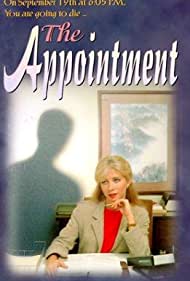
October Positivity: The Appointment (dir by Rich Christiano)


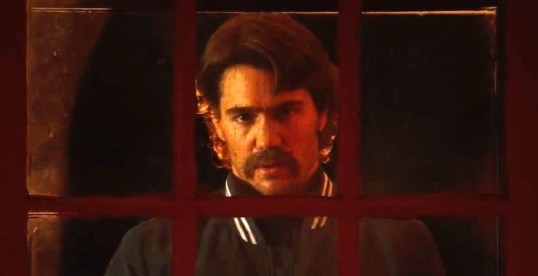
First released in 1991 and filmed in Arkansas (which means that I might very well be distantly related to half the cast), The Appointment opens with people all across a small town reading a newspaper column that’s been written by Liz (Karen Jo Briere).  Liz’s column is all about how much she hates Christians and how she wishes that they would stop opening up new churches and demanding that everyone give them money.  Judging by the reactions of the people reading the column, this is apparently the only thing that Liz ever writes about.

At the newspaper, Liz is getting angry calls from people who she describes as being “religious nuts.”  At one point, she says that the paper has gotten fifteen calls!  Now, I know that probably doesn’t sound like that many calls to you city folks but we’re talking about small-town Arkansas here.  In Arkansas, for every one person who complains, there’s probably about twenty who are just holding their tongue out of politeness.  In other words, Liz has upset a lot of people but she doesn’t care.  She hates religion and, besides, she’s going to Hawaii in just a few weeks.

But then, a mysterious man enters Liz’s office.  We never actually see the man.  Instead, we just see things from his point-of-view and we hear his voice when he speaks.  He informs Liz that he has a message from the Lord.

“The Lord who?” Liz asks.

“The Lord Jesus Christ,” the man replies.

(What was Liz expecting to hear?  Does she regularly get messages from the House of Lords or something?)

The man tells Liz that she’s going to die on September 19th at 6:05 pm.  She laughs him off and says that she can’t die because she’s going to Hawaii and she’s never seen it before.

“You never will,” the man replies.

AGCK!

The Appointment is a seriously creepy film.  What really makes it creepy is that no one at the newspaper seems to be that upset by this mysterious man who shows up in their office and tell their star columnist that she’s going to die.  Even though it’s established that everyone can see and hear the man, it doesn’t occur to anyone to call the cops after he leaves.  No one asks Liz if she’s okay.  When the mysterious figure shows up a second time, no one seems to be alarmed.  When the hour of what she’s told will be her death approaches, no one volunteers to stay with Liz or to protect her or offers her any words of comfort whatsoever.  I guess the 90s were a more innocent time but still, it seems like people should have been at least a little bit alarmed by all of this.  At the very least, maybe someone could have offered to walk Liz to her car.

The Appointment is one of those Christian films that attempts to convert viewers by scaring them.  I’m not really a fan of that approach and there’s something undeniably distasteful about the joy the film seems to take in counting down the minutes until Liz dies and presumably heads to Hell.  That said, it’s a surprisingly well-directed film and the amateur cast actually does a pretty good job.  The film’s musical score is loud, otherworldly, and totally intrusive, which is exactly right for this film.  The scenes in which the camera creep through the newspaper office feel more appropriate for a horror film than a faith-based film.  Agree or disagree with the film’s message, it’s still effective in its own crude sort of way.

Add to that, the film was shot in Arkansas, which is one of the many states in which I grew up and still have family.  As I watched the film, it was kind of nice to hear some familiar accents.

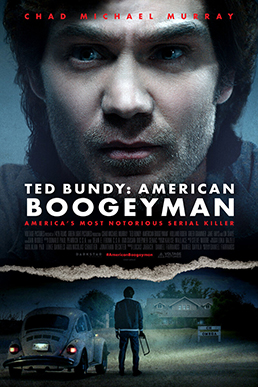
The TSL’s Horror Grindhouse: Ted Bundy: American Boogeyman (dir by Daniel Farrands)


The 2021 film, Ted Bundy: American Boogeyman, is yet another film about the life and crimes of America’s first celebrity serial killer, Ted Bundy.

In this particular film, Bundy is played as being a handsome nonentity by Chad Michael Murray.  The film follows Bundy as he moves from Seattle to Utah to Colorado and eventually to Florida, leaving a path of death in his wake.  Investigating his crimes are Seattle Detective Kathleen McChesney (Holland Roden) and FBI profiler Robert Ressler (Jake Hays).  McChesney not only has to track down Bundy but she also has to deal with her sexist police chief and his idiot son, both of whom think that Bundy’s victims are to blame.

Ted Bundy: American Boogeyman is the latest true crime horror film to be directed by Daniel Farrands.  The frustrating thing about Farrands is that, if you can overlook the subject matter of his recent films, he’s actually a talented horror director who knows how to create suspense and who can be counted on to come up with at least one effective jump scare in all of his films.  That said, he keeps making films that are almost impossible to defend because they exploit real-life tragedy.  Farrands’s best film, The Haunting of Sharon Tate, worked because of Hilary Duff’s committed performance in the title role and the fact that the film itself was fully on Tate’s side.  However, Farrands’s The Murder of Nicole Brown Simpson was a tacky piece of exploitation that, despite Farrands’s strong visuals, appeared to have little compassion for the woman whose murder served as the film’s inspiration.

Ted Bundy: American Boogeyman is neither as effective as The Haunting of Sharon Tate nor as bad as The Murder of Nicole Brown Simpson.  For the most part, the film plays loose with the facts of the case.  At one point, McChesney even shows up at one of Bundy’s crime scenes and takes a shot at him as he flees.  (Tarantino also played around with history in Once Upon A Time In Hollywood but, by allowing Brad Pitt and Leonardo DiCaprio to kill the members of the Mason family, he also allowed their victims to live.  Ted Bundy: American Boogeyman, on the other hand, is willing to change history to allow McChesney to arrive at the crime scene but it’s not willing to change history to allow any of Bundy’s victims to survive.  It’s hard not to feel that the film would have benefitted from following Tarantino’s approach and allowing Bundy’s victims to beat him to death.)  There are a few odd scenes in which Bundy is showing fondling several mannequins.  The scenes appear to pay homage to William Lustig’s Maniac but again, it doesn’t seem to be based on anything the actual Bundy did.  The film hints at the intriguing idea of Ted Bundy being America’s first celebrity serial killer but it doesn’t really follow up on it.  The whole thing feels rushed and rather icky.  It certainly doesn’t add any insight into Bundy or killers in general.

That said, our longtime readers know that I hate to end on a totally negative note so I will say that the film uses its low budget to its advantage.  The sparse sets and the small cast give the film something of a surreal feel, with Bundy as an evil specter who randomly shows up to haunt the dreams of a nation.  Lin Shaye and Diane Franklin appear in small roles.  Franklin plays a distraught mom who asks McChesney to kill Bundy rather than arrest him.  Shaye plays Bundy’s overprotective mother and gives a nicely creepy performance.  As I said earlier, it’s not so much that the film is badly made as the subject matter is so icky and the script is so bereft of any new insight that most viewers will wonder why the film needed to be made at all.

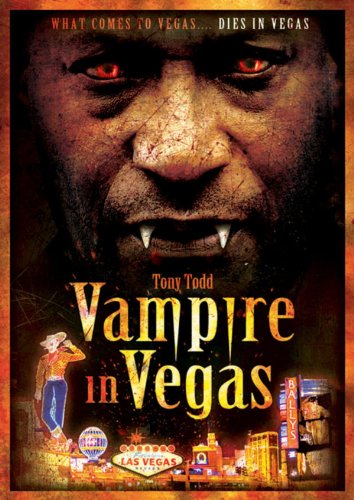
Vampire in Vegas (2009, directed by Jim Wynorski)


In this thoroughly jumbled film, Tony Todd plays Sylvain.  Sylvain is a centuries-old vampire who now lives in a mansion in Las Vegas.  He wants to run for governor of Nevada and then he hopes to become President of the United States.  Before he can campaign, Sylvain has to find a way to spend time in the daylight without bursting into flames.  He recruits Dr. VanHelm (Delia Sheppard) to conducts experiments and develop an anti-sun serum.  When Dr. VanHelm tests a prototype of the serum on three female vampires who have been tied to stakes in the desert, the experiment is observed by a camping couple who call the police.

At the same time, Jason (Edward Spivak) is engaged to marry Rachel (Sonya Joy Sims), so his friends decide to have one last hurrah by dragging him to Vegas and throwing a party with strippers.  Unfortunately, the strippers are all vampires who work for Sylvain.  Jason and his friends become Dr. VanHelm’s latest serum guinea pigs.  When Rachel and her friend Nikki (Brandin Rackley) decide to surprise Jason in Vegas, they are also drawn into Sylvain’s web of conspiracy when it turns out that Nikki is hoping to become the newest of Sylvain’s vampiric servants.

From the minute the film opens with a lengthy exposition dump and footage of Sylvain throughout the years, Vampire in Vegas is obviously a Jim Wynorski film.  With this film, Wynorski not only recreates the nonsensical vampire politics of the Twilight movies but he combines it with the bromantic decadence of The Hangover movies.  It’s not a successful mix.  Sylvain is determined to walk in the sunlight and to run for governor of Nevada but the movie never explains why.  With his mansion and his legion of loyal followers, Sylvain has done very well as a vampire who can only come out at night.  Why would he want to potentially lose everything that he has, just so he can run for governor and eventually president?  Why would Sylvain trade everything that he has now for a job that would mostly involve renaming highways and signing whatever bills end up on his desk?  And how does Sylvain think that he’ll be able to run for governor without someone investigating his past and discovering that he’s a vampire?

That’s a lot of questions and Jim Wynorski makes no attempt to answer them.  Instead, the movie focuses on the strippers stripping and Sylvain waiting for his chance to brave the sun.  It’s a Wynorski film so no shock there.  Tony Todd plays the role with dignity, the rest of the cast is negligible in this Vegas bet that didn’t pay off.