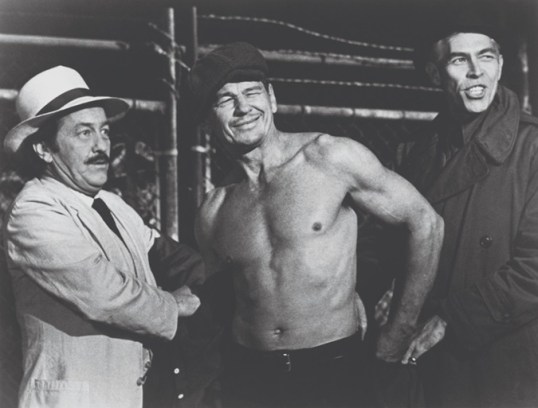
DEATH WISH II – Bronson wears a beanie!


I’m on Day 2 of my discussion of Charles Bronson’s DEATH WISH series in chronological order. This series has brought me countless hours of entertainment over the last 40 years, so enjoy and let me know your thoughts!

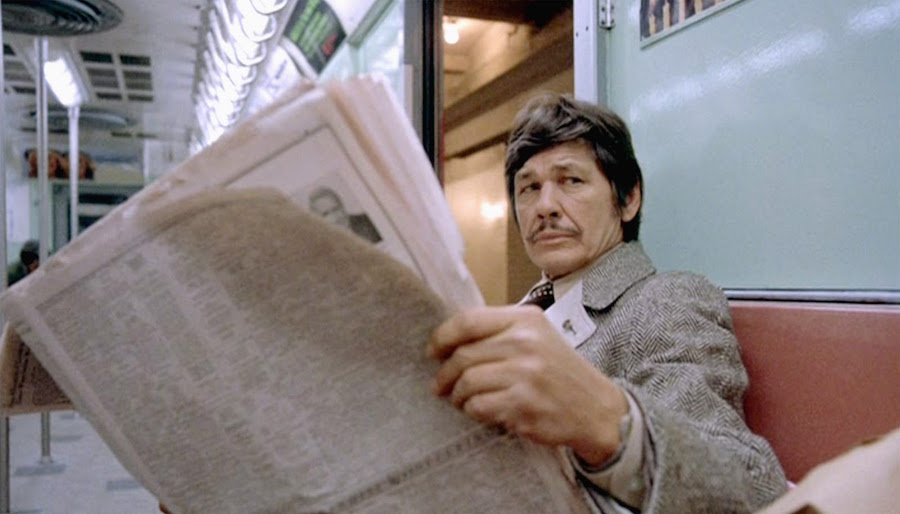
Charles Bronson returns as vigilante Paul Kersey in DEATH WISH II. In this installment, Kersey is trying to get his life back on track in Los Angeles with his daughter Carol, who’s still traumatized from the events of the first film, and with his new lady friend Geri Nichols (Jill Ireland). One day when he takes these two out for a fun day of shopping and ice cream, Kersey runs afoul of a group of young thugs who take his wallet. They use the wallet to find Kersey’s address, stand outside his house and make a plan like they’re diagramming a back yard football play, and then break in and rape his housekeeper. They set up shop to wait on Kersey to come home. When Kersey and his daughter finally arrive, the thugs knock out Kersey and kidnap his daughter. They take her back to their warehouse / hideout, where they rape her and she then falls to her death trying to escape. After this series of horrific events, Paul Kersey again turns vigilante to hunt down and kill every person responsible. 

DEATH WISH II (1982) came along at a time in Charles Bronson’s career when he needed a box office hit. His prior three movies, DEATH HUNT, BORDERLINE & CABOBLANCO, had barely made a dent at the box office. Around the same time that Bronson needed a hit, the infamous Cannon Films, recently purchased by cousins Menahem Golan & Yoram Globus, was also looking to make a big splash in the American movie market. Cannon decided that a sequel to DEATH WISH was just what they needed, and with a big paycheck, they were able to convince Bronson to come along for the ride. Director Michael Winner was also hired to direct. The resulting film was a big success, earning back eight times its production budget at the box office alone. Its success also started a relationship between Bronson & Cannon Films that lasted for a total of eight films all the way to the end of the 1980’s. 

Now that we’ve discussed how important DEATH WISH II was to extending Charles Bronson’s leading man career and providing Cannon Films a needed hit, let’s talk about the movie itself. I’m just going to say upfront that it’s my least favorite of the DEATH WISH series. Even though it presents itself as a serious film, it’s more of an exploitative retread of the 70’s classic than a realistic continuation of the Kersey character. And the first thirty minutes is hard to watch. Not content with just allowing Kersey to lose a beloved family member, Winner has crafted two graphic rape and murder sequences. These scenes are rough. While they do make sure we want to see Paul Kersey get his revenge, they leave a bad taste in our mouth that doesn’t go away as the creeps are being dispatched one by one. Vincent Gardenia returns as Frank Ochoa, the New York detective who investigated the original vigilante killings in DEATH WISH. Gardenia was so good in the original, but he’s not given much to do here. Jill Ireland doesn’t really add much either as his new lady friend. 

This is a Charles Bronson film though, so there are definitely some things about DEATH WISH II that I really do like. First, I think Bronson looks like a total badass in his beanie that he wears when he’s hunting down the creeps on the mean streets of LA. It’s a classic 80’s Bronson look. Second, Kersey has some cool sayings as he dispatches the bad guys. The “Do you believe in Jesus” exchange is the best example. Third, it’s fun seeing a young Laurence Fishburne show up as one of the creeps, extending the franchise’s ability to cast future big stars as horrific rapists. Jeff Goldblum had that distinction in DEATH WISH. And finally, Led Zeppelin guitarist Jimmy Page composed the music for DEATH WISH II. It’s a memorable soundtrack that’s different than just about anything I’ve ever heard. It’s the most unique thing about the entire movie! 

The bottom line is that I would watch Charles Bronson read a phone book, so I will always find something to enjoy about his films. Well, maybe every one but LOLA. DEATH WISH II isn’t as fun as most Bronson movies, even if it does have some good moments. I’m glad DEATH WISH 3 went a completely different direction with Kersey’s character.

BONUS: Robert “Bobby” Lyons had a part in DEATH WISH II. On our THIS WEEK IN CHARLES BRONSON PODCAST, my partner Eric Todd and I interviewed Bobby about his time on DEATH WISH II and a whole bunch of other topics. He has some interesting stories to tell about working with Charles Bronson, as well as clashing on the DEATH WISH II set with Michael Winner. Give it a listen if you get a chance!
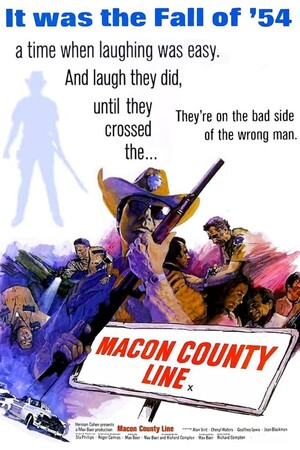
MACON COUNTY LINE – Jethro goes mad!


Max Baer, Jr. co-wrote, co-produced and co-starred in this southern fried thriller about a couple of good ‘ole boys (brothers Alan & Jesse Vint) who break down in the wrong county. The sheriff (Baer), who’s somewhat suspicious of the boys, goes after them with fierce vengeance when his wife is murdered.

I’m a big fan of this classic drive-in film. For one, I think it’s cool that Max Baer Jr., so well known as Jethro Bodine in the classic sitcom THE BEVERLY HILLBILLIES, took on this role of the somewhat racist sheriff who goes mad with rage in this movie. I enjoyed his performance very much. I also like these ‘70’s drive-in films. You get exactly what you expect in this tale, and it’s very entertaining. Finally, I like the Vint Brothers. Alan had an important role a year after this film was made in the Charles Bronson film BREAKOUT.  And what can I say about Jesse. Over the last few years, he’s actually become a friend in real life. He’s such a great guy, and he’s very proud of this movie. He told me one day that Tarantino had said it was one of “the best stories in cinema!” In the first season of his Video Archives podcast, I’ve personally heard Tarantino really brag on Jesse’s performance in the movie THE FORBIDDEN WORLD. I love it when good things happen to good people.

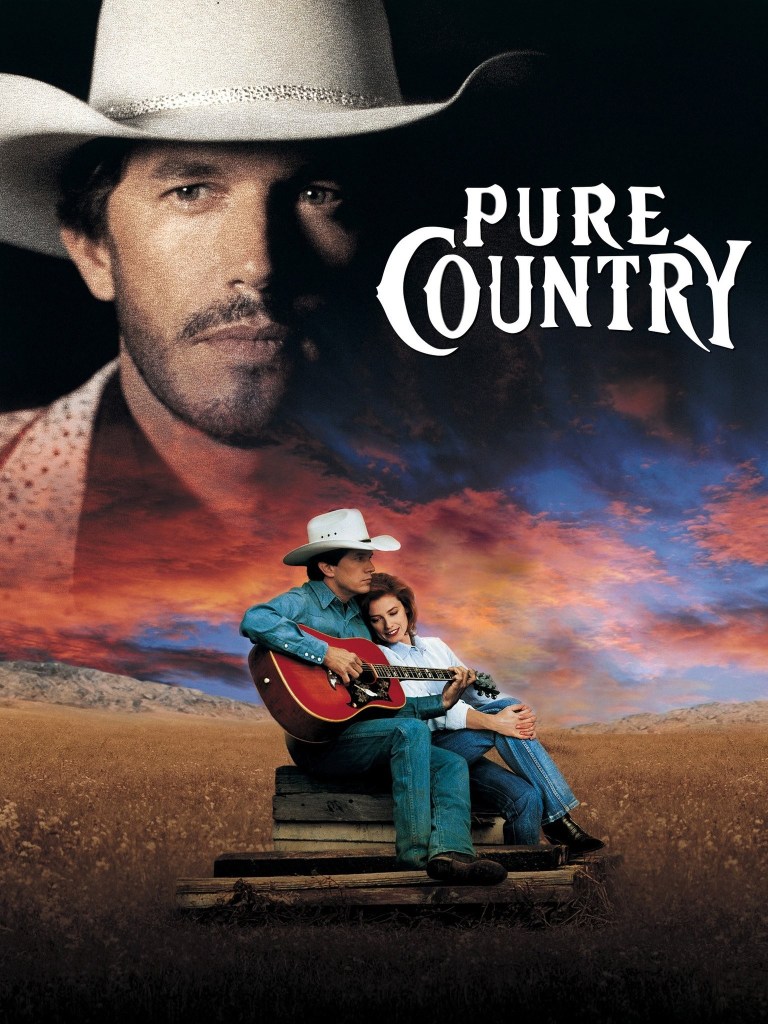
PURE COUNTRY – George Strait made a movie in 1992 and I liked it!


There are certain movies I like that I don’t ever hear anyone else talk about. PURE COUNTRY, starring country music legend George Strait, is such a movie. As you might imagine, it has a great soundtrack. I remember singing one of its songs, “I Cross My Heart,” at a co-worker’s wedding in the summer of 1993. I butchered the hell out of it. It does make me wonder if they’re still married. I haven’t seen that person in close to 30 years, so I’d say it’s a 50/50 proposition. I also remember really liking a song called “Heartland,” another called “When Did You Stop Loving Me,” and another called “Where the Sidewalk Ends.”

I’m a sucker for romance movies, and one of my favorite types of romance movies is where a famous person falls in love with a regular person. In PURE COUNTRY, George Strait is Dusty, a huge country music star who’s tired of the loud music and the big special effects that have come to define his shows. He longs to get back to his roots and just grab his guitar and sing. Unfortunately, his longtime friend and manager Lula (Lesley Ann Warren) isn’t ready to scale down the show since they’re playing to 20,000 fans at every concert. So, after a show one night, Dusty heads out for a walk and doesn’t stop. He does stop by a barber shop where they cut his Steven Seagal ponytail and shave his scruffy beard. Then he heads to an old honkytonk he used to play at when he was in college and reminisces on the good old days. After having a few too many adult beverages, he starts smiling at the lovely Harley Tucker (Isabel Glasser) who doesn’t recognize him as the superstar Dusty. One thing leads to another and he ends up trying to defend her honor from this big obnoxious guy who won’t take no for an answer. A drunk Dusty is no match for the big jerk, and he ends up getting the crap beaten out of him. Thankful that he tried to defend her honor and that he’s cute, Harley takes him to her house to try to mend his wounds. Dusty’s not ready to resume his life as a megastar so he gives Harley his middle name, which is Wyatt. I really like Harley’s family. Her brothers are a couple of dorks, but they love their sister. Her grandpa is played by Rory Calhoun!!! I love Rory Calhoun going back to his westerns in the 40’s and 50’s. And thus begins a fun romance movie where he’s a huge star, and she thinks he’s a regular guy. Of course there will be complications along the way, and the truth will eventually be exposed, but the fun is seeing how it all plays out.

What about George Strait’s acting you might ask? Well, Strait isn’t a very good actor, but that doesn’t keep me from enjoying the film. I do like the way he tells the arrogant Buddy Jackson (Kyle Chandler), “Get your ass outta here!” in one of the scenes. He even repeats it just as well! It’s an important scene and he rises to the occasion. All in all, Strait’s good enough and he’s got the fact that he’s George Strait going in his favor. If you read this and like PURE COUNTRY, please take the time to leave me a comment. I’m looking for other fans. It gets lonely out here!

DEATH WISH – It’s a wonderful life…at least it has been for me!


Over the next 5 days, I will discuss Charles Bronson’s DEATH WISH series in chronological order. This series has brought me countless hours of entertainment over the last 40 years, so enjoy and let me know your thoughts!

“Don’t ever make a death wish, because a death wish always comes true!” – I’ve always thought this was kind of a corny saying on the original DEATH WISH trailer, but as one of the world’s biggest Charles Bronson fans, I still hold the original DEATH WISH (1974) in extremely high regard. This is the 70’s revenge classic that made Bronson a box office superstar in his home country, while simultaneously influencing the way vengeance was depicted on screen for decades to come. DEATH WISH is one of the most underrated and influential films from a decade that was full of great films.  

If you’re reading this review, I’d be about 99% positive that you know the basic story of the film. Charles Bronson plays Paul Kersey, a conscientious objector whose wife is killed and whose daughter is raped by a group of criminal thugs in New York City. When the police are incapable of providing justice, Kersey turns into a sidewalk vigilante and stalks the streets and subways of New York, luring thugs to mug him so he can shoot them with his 32-caliber Colt Police Positive pistol. Vincent Gardenia plays detective Frank Ochoa, who’s put in charge of finding the vigilante and putting an end to his one-man mission of justice.  

It’s been 50 years since DEATH WISH was released into theaters and it’s hard to fathom just how controversial the film was in its time, especially since I wasn’t even 1 year old when it was released. The graphic rape scene that kicks off the events of the film, combined with the vigilante subject matter, turned off so many big stars, including Jack Lemmon, Henry Fonda and George C. Scott. This opened up the door for Charles Bronson who didn’t have any such misgivings. They just didn’t understand what a nerve the film would touch with the filmgoing public, who were tired of their cities being overrun by violent criminals. The movie became an audience participation movie unlike any others of the time with cheering in the seats every time Kersey offed another criminal. The controversial film became one of the top box office hits of the year and the biggest of Bronson’s career. 

DEATH WISH was the fourth of six films directed by Michael Winner and starring Charles Bronson. In typical Winner fashion, the film has some strange touches, but the director is extremely effective in building the motivation for vigilante justice that was required for the film to thrive. He handles the action sequences well, and his cast is outstanding. Bronson & Gardenia are perfect in the lead roles, and the lovely Hope Lange has the brief, infamous role as Kersey’s brutalized wife. Stuart Margolin is especially memorable as the Arizona businessman who gives Kersey his gun. There are also a number of actors in small roles who were not well known when the movie was made who would go on to successful film careers. The biggest is Jeff Goldblum who has the most memorable role of the three muggers who attack Kersey’s wife and daughter at the beginning of the film. It’s a brief, but no holds barred performance for sure. Oscar winning actress Olympia Dukakis has a small role as a cop who expresses her frustration about the amount of leg work expected of her by Detective Ochoa. And finally, Christopher Guest has one scene as a young cop who finds the wounded vigilante and recovers his gun.  

On a personal note, this film holds a special place in my heart as the first Charles Bronson film I ever saw. It was probably in 1984 or ‘85, and I stayed up with my dad to watch the late movie on our local TV station. The movie happened to be DEATH WISH. As bad things were happening to Kersey’s family at the beginning of the film, my dad told me not to worry, that “Charles would get them.” That intrigued me and let me know that Bronson had a reputation that preceded him. From that point forward, I wanted to rent a Charles Bronson film every time we went to the video store. And the rest, as they say, is history!

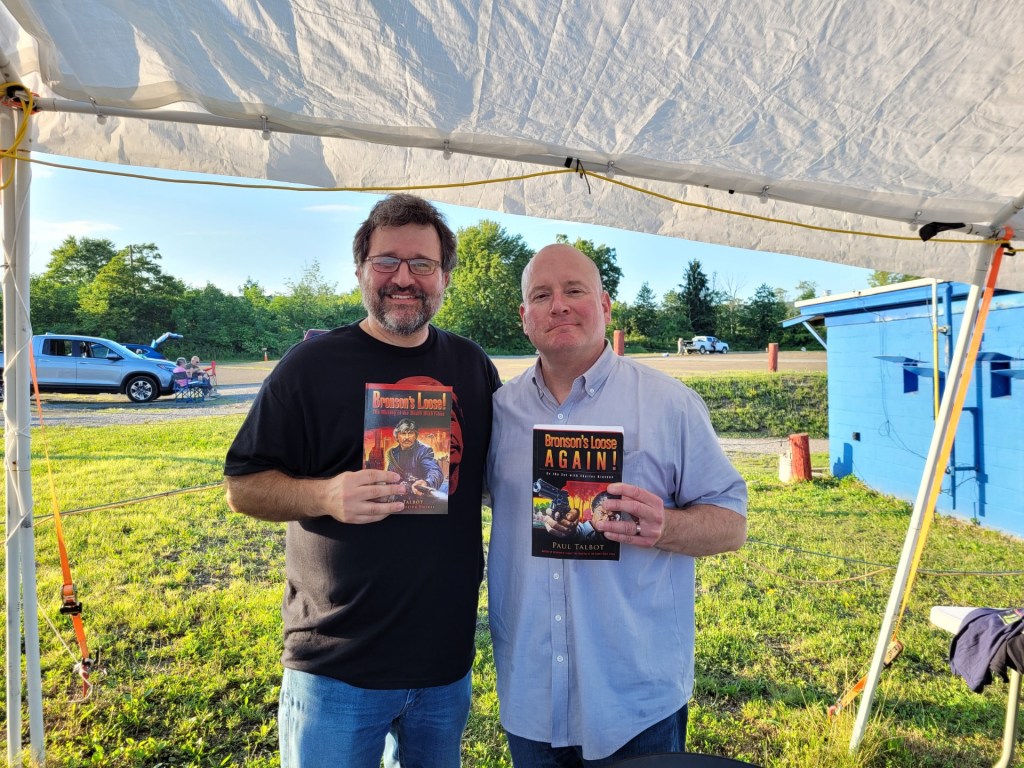
BONUS: The definitive book about the DEATH WISH film series was written by my friend, author and film historian Paul Talbot. The name of the book is BRONSON’S LOOSE: THE MAKING OF THE DEATH WISH FILMS. If you have any interest in Charles Bronson, the DEATH WISH series or Cannon Films, I can’t recommend Paul’s books more highly.

Introducing #Sunday Shorts, with BLIND FURY!


Since Sunday is a day of rest for a lot of people, I’m introducing #SundayShorts, a weekly mini review about a movie I’ve recently watched.

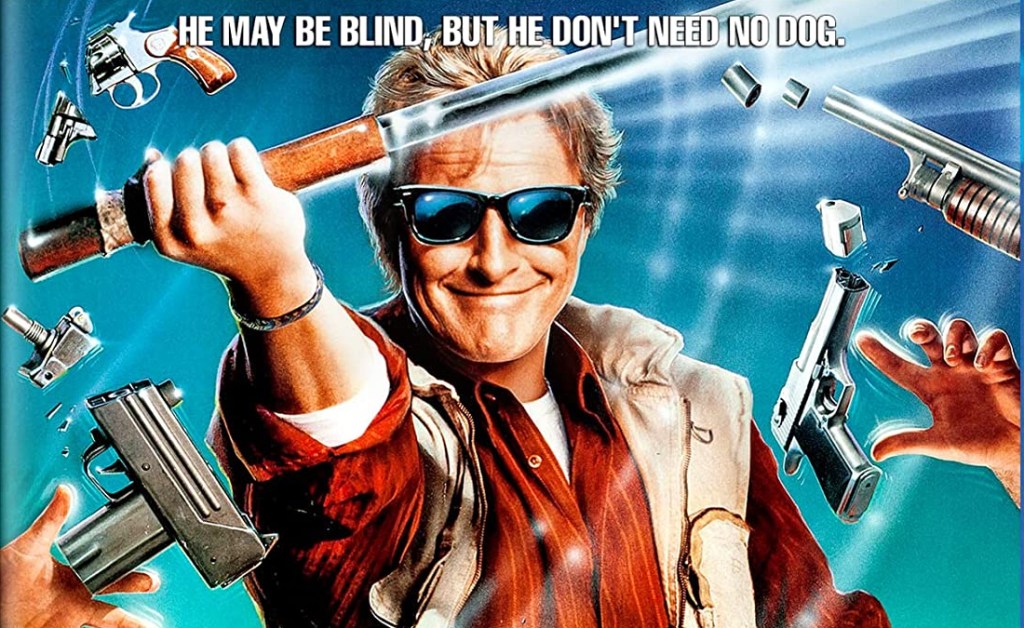
In BLIND FURY, Rutger Hauer does his best Zatoichi impersonation in a loose remake of a 1967 Japanese film called ZATOICHI CHALLENGED. The movie’s strongest quality is its ability to be both a kickass action film and a comic action film. That’s a fine line to walk and BLIND FURY does it exceedingly well.

Fast Facts:

  1. Star Rutger Hauer is probably the greatest Dutch actor of all time where he often starred in the films of director Paul Verhoeven. My favorite of Hauer’s foreign movies is SOLDIER OF ORANGE.
  2. ZATOICHI CHALLENGED, the inspiration for BLIND FURY, stars legendary Japanese actor Shintaro Katsu as a blind masseuse named Zatoichi. Katsu would play this amazing character in 26 films and 100 TV episodes between 1962 and 1989. You owe it to yourself to search out these films.
  3. Former heavyweight boxer Randall “Tex” Cobb plays a heavy in BLIND FURY. In his time, he beat Leon Spinx and went the distance with Larry Holmes.
  4. Australian director Phillip Noyce directed BLIND FURY. He’s an underrated director whose other credits include DEAD CALM, PATRIOT GAMES, and THE BONE COLLECTOR.

I highly recommend BLIND FURY!

THE KILLER – The film that introduced Hong Kong Heroic Bloodshed and Chow Yun-fat to the rest of the world!


It was 1997 and I was in an outlet mall in Branson, MO. Being a film buff, I found myself looking for entertainment related books and noticed a book with Jackie Chan on the cover called “Hong Kong Babylon.” Jackie was enjoying some popularity in the United States at the time due to the financial success of RUMBLE IN THE BRONX. I opened up the book and started browsing through the various chapters. I saw blurbs about a bunch of movies I had never heard of and blurbs about a bunch of people I had never heard of. Jackie Chan was the only person I knew anything about. I put the book down because I saw another book about Hong Kong movies. This one was called “Sex & Zen and A Bullet in the Head.” I opened it up and saw some of the same people and movies mentioned in the other book. I liked this book better because it had more pictures. I remember this second book opening with a chapter called “10 that Rip.” It was their listing of 10 movies that would determine if you were a potential Hong Kong movie fan or not. Watching these movies would either open up that part of your mind that got excited about Hong Kong movies, or you would be hopelessly lost and not a candidate for Hong Kong movie fandom. As I looked closer, I noticed this same man in both books. He was usually holding a gun and looking extremely cool. That man’s name was Chow Yun-fat, and somewhere in the back of my mind, I thought I remembered seeing him years earlier on a VHS box at our local Hastings Entertainment Superstore. Not really being a fan of foreign movies at the time of the Hastings notice, I didn’t pay much attention, but now I really took notice. Chow caught my attention, but I also found it interesting that there were so many other movies that I’d never heard of, and I thought I knew a lot about movies. I bought both books and took them home with me. It’s no exaggeration to say that these books changed my life, and I was soon lost in a world of Hong Kong films.

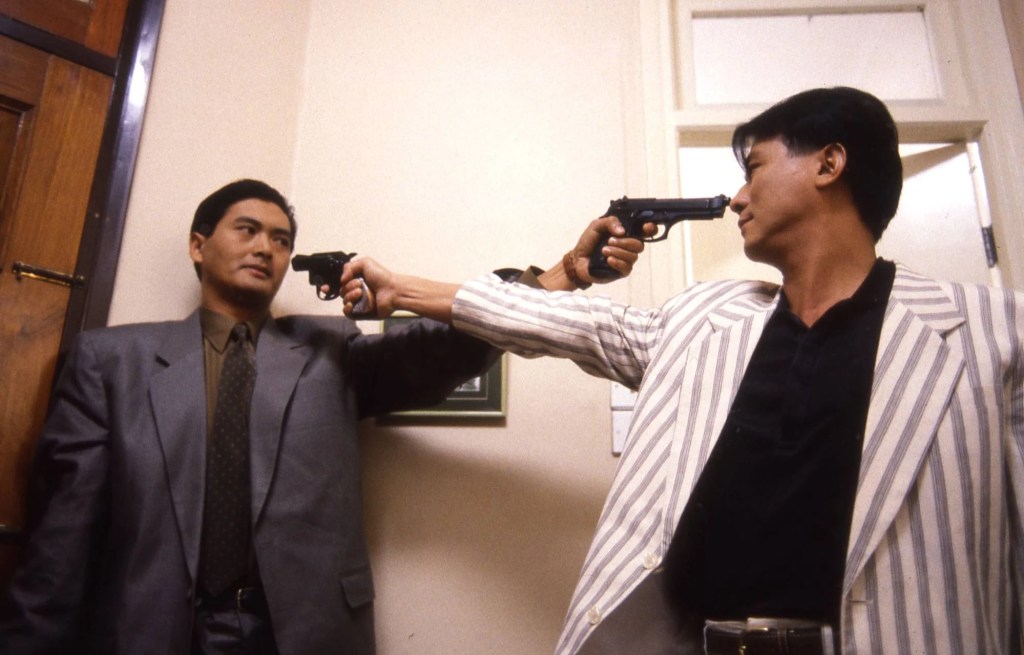
No film exemplified my newfound love for Hong Kong movies more than THE KILLER, which was directed by John Woo and starred my new obsession, Chow Yun-fat. I was happy to find that it was readily available on VHS. I watched it on repeat. I had not seen anything that I thought was so awesome. The story is simple. It’s about a hitman, the killer of the title (Chow Yun-fat), accidentally blinding a nightclub singer (Sally Yeh) when he’s performing a job. Feeling devastated that he hurt this beautiful woman, he spends the next few months hanging around the nightclub hoping to have a chance to help her. He finally gets a chance one night when a group of young hooligans attack her on her way home. Chow steps in and beats the crap out of the guys and sends them on their way. This starts a beautiful relationship and the two fall in love. The killer has to perform one more job to get the money needed for a surgery that will hopefully restore her eyesight.  When performing that last job, a tough cop (Danny Lee) finds himself on the trail of the killer and will do anything to get his man. John Woo has somehow crafted a story where Chow Yun-fat is an honorable “killer” on a noble mission to protect this young woman, and who is now the target of the Chinese triads trying to eliminate him. While trying to bring down the killer, the tough cop finds himself caught in the crossfire between the killer and the triads. When Chow goes out of his way to take a hurt young girl to the hospital, our tough cop realizes the hitman isn’t that bad after all, and the two men begin to have a respect for each other. There’s no time to rest though, as they find themselves having to team up to take on an army of triad soldiers armed to the teeth and out for blood.

I had never seen anything like THE KILLER up to that point in my life. The action had a style and flare that aroused everything I love about movies. I soon learned it fit into a subgenre of Hong Kong films labelled “heroic bloodshed,” a genre that I would go deep, deep, deep, into! The opening action sequence features the impossibly charismatic Chow Yun-fat dressed impeccably, taking on an underworld boss and his henchman, with two guns blazing in stylish slow motion. John Woo’s work has been endlessly copied by this point, but that does not take away how I felt watching this movie for the first time. I also loved the shameless sentimentality in the film, first between the killer and the singer, and then later between the killer and the cop. For a movie that’s balls to walls action, it has a huge heart. I was hooked.

I immediately began searching out all of John Woo’s films including A BETTER TOMORROW, BULLET IN THE HEAD and HARD-BOILED. After I watched those movies, I started trying to find every Chow Yun-fat film I could. I’ll never forget how I felt when I saw GOD OF GAMBLERS for the first time. I realized that Chow could do anything, not just cool heroic bloodshed films. I will tell anyone who’ll listen that Chow Yun-fat is my favorite living actor. After being a fan for 27 years, I still search the internet for any news I can find about a movie he may be working on.

And it all started at an outlet mall in Branson, MO, and when I first got my hands on THE KILLER.

HARD TIMES – Charles Bronson & James Coburn take on New Orleans!


HARD TIMES is probably the best movie that features Charles Bronson in the lead, and it’s my personal favorite movie of all time as of the date of this review. I reserve the right to change this opinion at any time!

Charles Bronson is Chaney, a drifter who’s riding the rails in the south during the great depression. Soon after getting off the train in some unnamed southern town, Chaney comes across an underground “fight” where we first meet Speed, played by the great James Coburn. It seems Speed is the money man for this big lug of a fighter who gets his butt kicked in front of God, the local underground fighting world, a man with horrible teeth, and Chaney. After witnessing this fiasco, Chaney follows Speed to a local restaurant where he apparently waits in the shadows until Speed goes up to the counter to get a refill of oysters and a couple of lemons. I say this because when Speed turns from the counter with his newly filled tray, Chaney is sitting at Speed’s table. I’m surprised that Speed even talks to him because the first thing Chaney does is help himself to an oyster, WITHOUT EVEN ASKING! Even with this breach of etiquette, Speed discusses the fight from earlier in the evening with Chaney, who offers his fighting services to Speed since the “big lug” is clearly not a good investment into the future and who is probably in a hospital overnight dealing with a concussion. Speed is hesitant to accept this offer since Chaney appears to be fairly old (Bronson was 53 when he made the film), but he changes his mind when Chaney offers his last $6 bucks to Speed to bet on him. Cut to Chaney getting his chance to fight. This is a fun scene because his opponent is the same fighter from earlier who kicked the big lug’s butt. The guy even taunts Chaney for being too old. The fight starts and it consists of two hits, Chaney hits the smartass, the smartass hits the ground. Somewhat amazed, Speed takes Chaney to New Orleans, and the two embark on an odyssey together to win fights and make thick wads of cash. The remainder of the film documents that odyssey, although it does take time out for a few “in-betweens.”

HARD TIMES is one of Bronson’s best films, and one of the main reasons why is that it provides a boatload of audience satisfaction. There are many examples of this. First is the scene mentioned above where Chaney takes out the smirking, dismissive fighter who sees our hero as too old. Too old my ass! In another scene, a bunch of unrefined Cajuns out in the boondocks refuse to pay up after Chaney kicks their fighter’s butt. Rather than pay up, the slimy Cajuns pull out a gun and dare Speed and Chaney to come take the money. Our heroes leave at that time, but Chaney convinces them to hang around out in the country for awhile so they can surprise the Cajuns under the cover of darkness at the local honkytonk, which happens to be owned by the head slimy Cajun. Chaney takes the gun, takes the money, and then shoots up the place with the gun, grinning as he saves the last bullet to shoot a mirror he’s looking directly into. It’s a fun scene that ends with Chaney, Speed and the gang speeding off into the night laughing like hyenas! In another scene, Chaney takes on the big, bald-headed, unbeatable fighter Jim Henry (Robert Tessier) in an awesome cage match. Let’s just say Jim Henry thought he was unbeatable and leave it at that. And finally, a competing New Orleans money man (Jim Henry’s guy) just can’t stand that he no longer has the top fighter in town, so he brings in a fighter from Chicago to take on Chaney. I won’t tell you what happens, but it’s some really fun stuff! 

The cast of HARD TIMES also elevates the film to top tier status. I’ve already discussed Bronson and Coburn, but Strother Martin and Jill Ireland also add to the joy. Martin plays Poe, Chaney’s drug addict cut man, who dresses up like he could grow up to be Colonel Sanders in his older age. It’s a fun performance that adds a lot to the film. Jill Ireland plays Chaney’s love interest. She’s quite beautiful, but she seems to always be giving Chaney a hard time about what he does for a living. His response is usually to simply leave when she starts that BS. I thinks that’s kind of fun too. 

And finally, this was the directorial debut of Walter Hill, the man behind THE WARRIORS, THE DRIVER, THE LONG RIDERS, SOUTHERN COMFORT, 48 HOURS, and RED HEAT. His movie is lean and mean, without a wasted moment that isn’t moving the film along. Hill has crafted a fun movie, filled with great performances. I think it’s one of the most underrated films of the 1970’s!

The Films of 2024: Horizon: An American Saga: Chapter One (dir by Kevin Costner)


Horizon: An American Saga: Chapter One is the rather unwieldy title of the first part of what Kevin Costner has said will be an epic four-part movie about the settling of the American frontier.

It’s very, very long.

It has a running time of three hours, during which time a lot of characters are introduced and a lot of plotlines are initiated but, because this is the only first chapter, none of them come to a close.  In fact, as the film ends, it’s still a mystery as to how some of the characters are even related.  I watched all three hours and I took my ADD meds this morning so you can be assured that I was actually paying attention.  That said, I still struggled to keep track of who everyone was or even where they were in proximity to each other.  Indeed, it was only towards the end of the film that I realized that several years were supposed to have passed over the course of the first chapter’s running time.

That’s not to say that the film is a disaster.  While it’s not quite the nation-defining epic that Costner obviously envisioned it as being, it’s also not quite the cinematic atrocity that several critics made it out to be.  It’s a throwback of sorts, to the epic westerns of old.  As such, the film features taciturn gunslingers, a woman with a past, dangerous outlaw families, fierce Indian warriors, and a wise Indian chief who has dreamed of the coming of the white man.  The film is full of actors — like Michael Rooker, Sienna Miller, Sam Worthington, Danny Huston, Will Patton, James Russo, Dale Dickey, and Kevin Costner himself — who feel as if they belong to a different era of filmmaking.  Just about everyone in the film is heading to the settlement of Horizon, which sits in Apache territory.  Despite the efforts of the Indians to kill every settler who shows up, they keep coming.  As one army officer explains it, the Indians have made the mistake of thinking that the settlers will come to believe the land is cursed while the settlers, all of whom are full of American optimism, instead chose to believe that the previous settlers were unlucky but that the next wave of settlers will make it work.  Costner has the right visual sensibility for a western.  The film reveals a director who is obviously in love with the Western landscape and the film is at its best when it simply frames the characters against the beauty of the frontier.  But when it comes to actually telling a compelling story, he struggles.  There are a lot of moving parts to the first chapter of Horizon and the problem is not that they don’t automatically connect but instead that Costner never gives us any reason to believe that they’ll ever connect.  There are no visual clues or bits of dialogue to assure the viewer that everything they’re watching is going to eventually pay off.  Costner asks his audience to have faith in him and remember that he directed Open Range and Dances With Wolves while forgetting about The Postman.

The first hour, which features a brutal raid on the settlement by a group of Indians, is the strongest.  It really drives home the brutality of what we now call the old west.  In the style of Michael Cimino’s The Deer Hunter, Costner closely observes the individual customs of the film’s settlers and carefully introduces several appealing characters who leave the viewer feeling as if they’ve met a very special and very unique community of people.  That makes it all the more devastating when the majority of those characters are subsequently wiped out with casual cruelty in a raid led by the Indian warrior Pionsenay (Owen Crow Shoe).  (Later — much later — a tracker played by Jeff Fahey will show similar brutality while wiping out a group of Apaches.)  The first hour establishes the frontier as being beautiful but also dangerous and it also drives home the mix of determination, desperation, and even madness that led so many to follow Horace Greeley’s advice and “Go west!”  Though the film was shot in early 2023, the brutality of the raid brought to mind the terrible images of the October 7th attacks on Israel.  The subsequent scenes in which Pionesenay and his followers ridiculed those in the tribe who wanted peace mirrored the current schism that’s driving apart the worldwide Left.  The U.S. Army, for their part, arrives a day late and can only offer up not-so subtle condescension.  The surviving settlers, however, remain determined to make a home for themselves.

The second hour focuses on Hayes (played by Costner), who rides into a mining town and gets involved with a family of outlaws who are looking for the woman who shot their father.  The second hour is a bit more of a traditional western than the first hour, though some of the violence is still shockingly brutal.  (Even being comedic relief won’t save you in this film.)  Abbey Lee gives a good performance as the woman with a past and a baby and Kevin Costner is  …. well, he’s Costner.  He could play this type of role in his sleep.

The third hour is a mess, introducing a wagon train and featuring a miscast Luke Wilson as the leader of the settlers and Jeff Fahey giving a strong performance as a ruthless tracker.  The third hour meandered as a whole new set of characters were introduced and I was left to wonder why the film needed new characters when the characters from the first two hours were perfectly adequate.  It was during the third hour that I started to really get impatient with the film and its leisurely approach to storytelling.

The film ends with a montage of what we can expect from the next few chapters of Horizon and I will say that the montage actually looked pretty cool.  That’s because the montage was almost totally made up of action scenes, with none of the padding that caused Chapter One to last an unwieldy three hours despite only having 90 minutes worth of story.  Still, one has to wonder if we’ll actually get to see the next three chapters.  The first chapter bombed at the box office and didn’t exactly excite critics.  Costner is producing and financing the films himself and I doubt he’ll give up on them.  The Horizon saga will be completed but will it made it to theaters or will it just end up on streaming?  Personally, I think the whole thing would work best as a miniseries but who knows?  (If Horizon was airing on Paramount, it would probably be a Yellowstone-style hit.)  All I really do know is that Chapter Two has yet to be released.  And that’s a shame because, for all of Chapter One‘s flaws, I’d still like to see how the story turns out.

Late Night Retro Television Review: Friday the 13th: The Series 2.16 “Scarlet Cinema”


Welcome to Late Night Retro Television Reviews, a new feature where we review some of our favorite and least favorite shows of the past! On Fridays, I will be reviewing Friday the 13th: The Series, a show which ran in syndication from 1987 to 1990. The show can be found on YouTube!

This week, a nerdy film students takes his love of a 1940s horror film too far!

Episode 2.16 “Scarlet Cinema”

(Dir by David Winning, originally aired on February 20th, 1989)

Darius Pogue (Jonathan Wise) is a nerdy film student who is obsessed with The Wolf Man.  When Darius steals an old antique movie camera, he discovers that, by looking through the camera’s view finder, he can bring The Wolf Man to life and send him to kill anyone who annoys him.  Darius kills a snooty antique store manager.  He kills a bully.  He kills his professor.  He even sends the wolf after Ryan and a girl that Darius likes.

However, as much as Darius enjoys sending the Wolf Man after people, he wants to be the Wolf Man himself.  After allowing the Wolf Man to scratch him, Darius shoots him with silver bullets.  Transforming into a werewolf himself, Darius goes after Ryan, Micki, and Jack.  Unfortunately, Darius didn’t consider that film stock is full of silver nitrate.  Live by the film, die by the film….

This episode was a case where the premise was pretty interesting but the execution didn’t quite work.  The episode mixes in archival footage from The Wolf Man with scenes of Darius’s victims meeting their fate.  So, for example, one sees Lon Chaney Jr. turning into the Wolf Man and then the viewer sees The Wolf Man killing one of Darius’s classmates.  The problem is that the Friday the 13th werewolf makeup doesn’t really look much like the Wolf Man makeup.  Regardless of how darkly lit each scene is, it’s pretty obvious that the Wolf Man from the film is not the same Wolf Man that is doing Darius’s bidding.  It not only negates the whole idea behind the cursed antique but it’s also pretty distracting for those of us just trying to watch the show.  And, again, it’s a shame because the idea behind this episode was actually pretty clever.

Myself, I’ve always liked the original Wolf Man.  Eventually, Larry Talbot got a bit too whiny for his own good and it’s pretty much impossible to buy the idea of the hulking, very American Lon Chaney, Jr. as the son of the sophisticated and very British Claude Rains.  But, even with all that in mind, The Wolf Man holds up as a classic American horror film, full of atmosphere and featuring a pretty impressive monster.  Friday the 13th deserves some credit for making Darius a Wolf Man fan because The Wolf Man, with its portrait of a man being driven mad by a curse that he cannot control, fits in perfectly with the main idea behind Friday the 13th.  Darius, like most of the villains on this show, isn’t really evil until he starts using the camera.  Each times he picks up the camera, his actions become progressively worse.  Just as Larry Talbott was cursed by the werewolf, Darius is cursed by the camera.  Much like a drug addict, Darius falls in love with the camera and he just can’t stop using it.  His addiction changes his personality as it becomes all-consuming,.  Eventually, it drives him to become the Wolf Man himself.

The episode ends with another cursed antique safely hidden away and Darius joining Larry Talbot in the cold embrace of death.  There was a lot of potential to this episode so it’s a shame that it didn’t quite work.

The Films of 2024: Gary (dir by Robin Dashwood)


Wow, what a depressing documentary!

I’m taking about Gary, which is currently streaming on Peacock.  Gary tells the story of former child actor-turned-security guard Gary Coleman, who went from being one of the top stars in television to eventually struggling to pay the bills.  The documentary tells the story of Coleman’s life, from his start as a cute kid with a mischievous smile to his stardom, his health struggles, and the controversy over why all the money that he made as a child eventually disappeared.  Gary blamed his parents.  His parents blamed Gary’s managers.  The woman who eventually married Gary blamed everyone.  Gary, himself, ended up as tabloid fodder, in which he was treated as not only being the poster child for the problems that young stars encounter but in which he was also regularly ridiculed for having those exact same problems.  Watching the documentary, one gets the feeling that the world took an odd joy in Gary Coleman’s downfall.  Coleman himself died under mysterious circumstances and the documentary, though even-handed, leaves one feeling that there’s definitely a lot about his death that could stand to be examined.

Gary Coleman’s stardom was a bit before my time, though I have seen a few episodes of Diff’rent Strokes online.  The show, to be honest, always seems a bit cringey to me but, still, it’s obvious that Coleman was a capable actor even when he was having to repeat the catch phrases that he came to hate.  Unfortunately, his kidney problem stunted his growth and, as he got older, the acting opportunities dried up.  He was reduced to parodying his former stardom, appearing on talk shows and sitcoms and repeating, “What you talkin’ about” to anyone who asked.  The documentary was painfully sad to watch.  Gary Coleman definitely comes across as being a bit of an eccentric but it’s hard not to feel that he never allowed to grow up and that the people who should have been looking out for him, like his parents and his manager and his wife, were only looking out for themselves.

The film features interviews with the people who failed Coleman.  None of them really take any sort of responsibility for their actions.  At first, his wife comes across like she really cared about him but, as the documentary progresses, we hear too many stories about her abusing and manipulating him to take anything she says at face value.  When she sells a picture of Coleman on his death bed to a tabloid, that’s pretty much last straw as far as any sympathy for her is concerned.  Coleman’s business manager also initially comes across as being genuine and sincere but, again, there are just too many stories of misusing Coleman’s money.  If he doesn’t seem to be as ruthlessly mercenary as Coleman’s wife, it’s still obvious that he shouldn’t have been managing Coleman’s career.  As for Coleman’s parents, the less said about them the better.  Everyone that is interviewed is very good at blaming someone else for what happened after Coleman’s stardom ended.

Again, this was depressing documentary.  Watching this, I really felt bad about Gary Coleman.  It’s hard to know what to do about child stars.  On the one hand, there are child stars who grow up to lead what appear to be perfectly normal and stable lives.  But, there’s also a lot like Gary Coleman, whose lives are pretty much destroyed by their early success.  No kid should be supporting their family.  And no family should be paying their bills exclusively with their kid’s salary.  To me, it all comes down to the parents.  You can’t depend on an industry to raise your child for you.  In the end, though, Coleman was let down by a lot of people.  There’s more than enough blame to go around.