Horror Review: Dead City (by Joe McKinney)


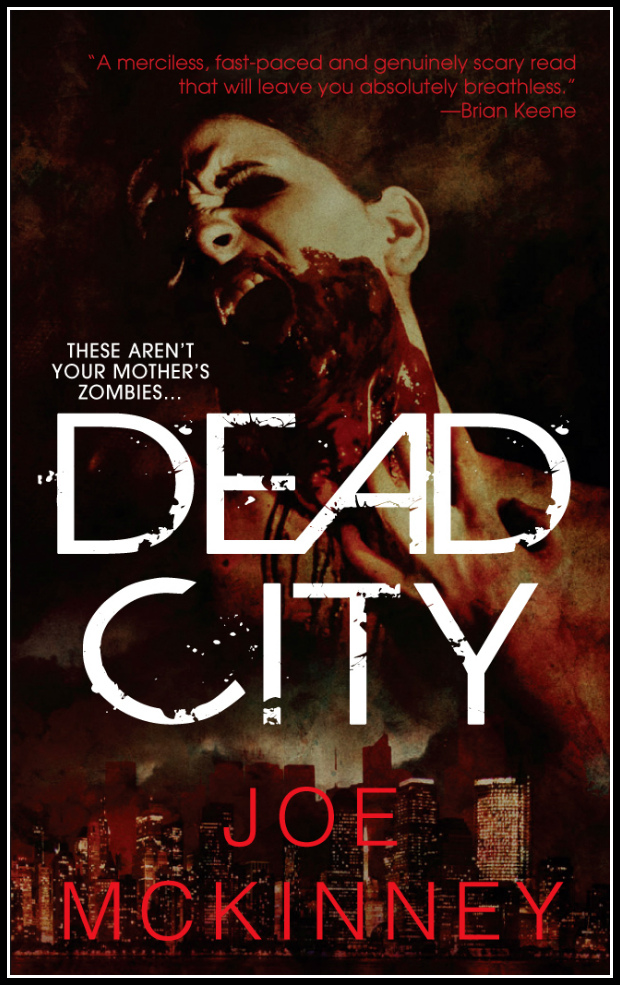
Joe McKinney’s debut novel, Dead City, is quite an impressive piece of writing for a first-timer. It’s doubly impressive for taking the zombie tale and just making it unfold as one long nightmare with little or no prelude or wasted exposition about what led up to it. McKinney’s novel is not overlong or full of filler chapters that does nothing but try to extend the telling of the tale far longer than necessary.

Dead City is not too different from many of the zombie novels and stories that continues to see a renaissance of sorts these past couple years. McKinney takes a more novel approach in his setting by using the hurricane disasters which plagued the Gulf from Katrina and onwards. It is during the aftermath of a series of non-stop super hurricanes hitting the Texas Gulf Coast where we meet the main protagonist of this novel. Eddie Hudson is a police officer in the San Antonio Police Department who we see balancing the problems he’s having with his wife with that of the devastation left by the passing of the major hurricanes over San Antonio. The action and horror begins pretty quickly as Hudson and his partner for the night head off to a disturbance call in one of San Antonio’s neighborhoods. What they encounter at the scene is one they’ve not been trained for. Confusion and lack of relevant knowledge to combat the newly zombified citizens of San Antonio leads to disaster for Hudson and the rest of his police and emergency services brothers.

McKinney does a great job of showing the confusion and disbelief Hudson goes through as a real-life horror film comes to life in front of his very eyes. There’s the disbelief in seeing their attackers continue to move towards him and his partner with a focused determination despite being pepper sprayed at point-blank range, then hit by shotgun beanbags then to lethal gunshots to the body. It is only when shot cleanly through the head and thus destroying the brain do their crazed assailants finally stop for good. This revelation comes way too late from most of Hudson’s fellow police officers and he’s left to his own dwindling supplies of ammunition and a vow to get to his own family before the nightmare he’s seen reaches them. Along the way Hudson meets up with other survivors from undocumented workers, a high school teacher and amateur zombie researcher, to other fellow officers who have managed to survive the first few hours of the zombie outbreak.

Throughout Hudson’s attempts to get to his wife and six month-old son, more of the extent of the zombie outbreak makes itself know to Ernie and those who tags along with him as they travel the streets of a devastated San Antonio. McKinney gets high marks from this fan of the zombie genre for not shying away from describing the sort of damage these zombies can do to a human body. The gore quotient in Dead City is quite high and I think one that would satisfy any fan like myself. In fact, I will very much like to see how this novel will look like adapted into a film. The story is pretty simple and a horror road trip through a devastated city with the simple goal of a man trying to find his family amongst all the horror he has seen and still to see.

Dead City is by no means a perfect novel and at times it shows. Characters sometimes have a certain cookie-cutout feel to them. From the gung-ho and adrenaline junkie cop whose wisecracking attitude is suppose to balance out the near-desperation and panic Hudson seems to be in all the time. Then there’s the angry black man whose mistrust of the police makes him blind to the need for cooperation. Some characters seem to be there looking to become a major role in the making then quickly gone thirty pages later under the assault and tearing hands and teeth of the zombies. I think the size and length of the novel may be one reason why characterization on some of the people on the periphery got a bit shortchanged. It doesn’t bring down the overall quality of the story but it does show that this is indeed a debut novel. But with the amount of quality storytelling McKinney was able to put together I am more than confident that this writing style will improve with each successive book.

In the end, Joe McKinney’s Dead City is one roller-coaster ride of a debut horror novel which doesn’t pull its punches. The story never lets up for a moment to give our main protagonist a moment of respite from the dangers around him. Like Officer Ernie Hudson, the reader becomes bombarded with horrific images after horrific images and only until the end to we find the respite and time to relax. I hope McKinney has more tales of the undead ahead of him and that he shares it with those likeminded people who displa the same kind of interest in the black sheep of the monster genre. I very much recommend Dead City to those who enjoy a very good zombie yarn.
Horror Review: I Am Legend (by Richard Matheson)


“[I am] a new superstition entering the unassailable fortress of forever. I am legend.”Robert Neville

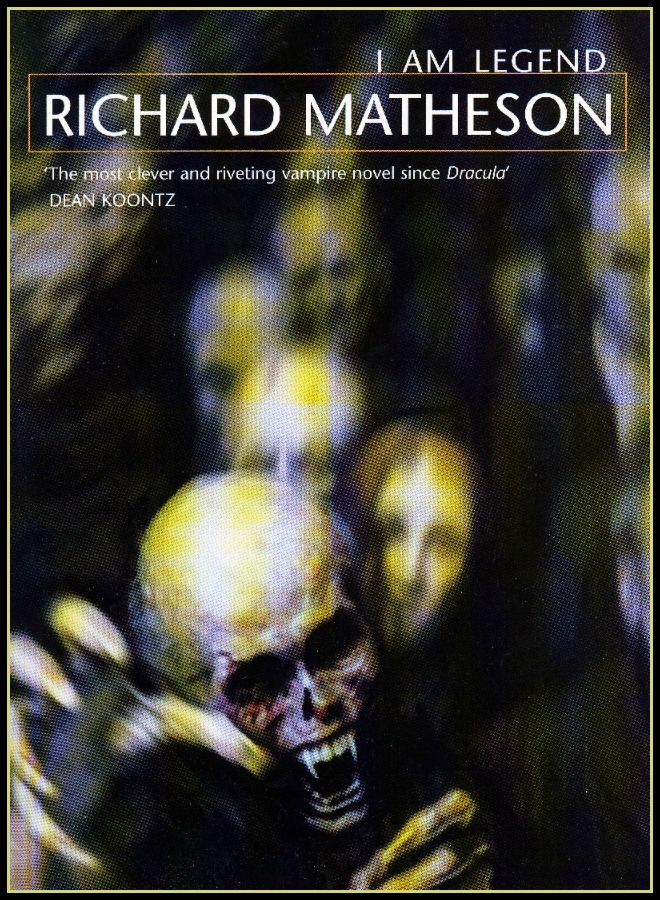
In 1954, Richard Matheson published a novel that would influence so many future generations of science-fiction and horror writers and film directors. Matheson’s body of work prior to 1954 could be summed up as good but nothing too exciting. His work thus far overlapped such pulp genres as horror, science-fiction and fantasy. This style would be the hallmark of his brand of story-telling. It would be in his novel I Am Legend that his unique style of combining different genres that Matheson would have his greatest and most epic work to date.

I Am Legend takes the vampire tale and brings it out of the shadows and darkness, so to speak. Set in the late 1970’s, I Am Legend begins its tale with humanity pretty much on the quick path to extinction due to a pandemic where the bacterium or virus involved caused symptoms very similar to what folklore had called vampirism. The protagonist of this tale was one Robert Neville. An unassuming man living in a Los Angeles suburban neighborhood who might just be the only living human being, or at least the only un-infected one, on the face of the planet. Neville’s been reduced to a day-to-day routine of defending his fortified home from the vampire-like infected humans who’ve tried attacking him and his home once night falls. This routine has become so ingrained in Neville that it starts him on a downward spiral to utter despair. He knows that he might just be the only human left and the prospect of such an idea almost becomes too much for his psyche. It’s this growing despair which gradually causes Neville to make little mistakes in his routine that puts him in greater levels of danger from those turned who see him as nothing but cattle.

His attempts to solve the mystery of why he’s the only one not affected by the disease becomes his way of keeping himself sane. Neville’s work in trying to find the answer leads him to take chances in keeping a vampire survivor alive and bound instead of just killing it outright. His experiments ranges from disproving the myths surrounding the vampire creature and acknowledging the scientific and/or psychological explanations to certain behavioral traits of these nocturnal creatures.

Neville’s studies on captured vampires tell him why certain things like garlic and sunlight causes such an extreme reaction on these creatures. Why do they have a certain invulnerability towards bullets but not a stake through the heart is one question he tries to answer through his research. He even surmises that the vampires aversion to crucifix was more psychological than anything supernatural. Neville arrives at this after observing a vampire’s reaction to a Star of David was similar to the reaction of another one towards the crucifix.

It’s events such as these which puts I Am Legend in a category all by itself. It still uses themes of horror which the vampires fulfill to great effect, but it also does a great job of taking the vampire tale out of the supernatural realm and into the scientific and logical. Neville’s attempts to keep himself sane, as his loneliness begin to weigh on his psyche and health, through these studies and experiments adds a level of the science-fiction to this tale. It’s the combination of these two genres which makes I Am Legend such an epic tale in scope yet it’s not that which gives the tale its heaviest impact. It’s Neville himself, more to the point, his desperate situation of being the last man on earth weighing on his mind. This tone gives this apocalyptic vampire tale such an intimate feel that the reader hopes and wishes for some sort of peaceful end to Neville; better yet, some hope that he might find clues that he might not be the last.

As the story moves forward, the line between who is human, who is monster and who is the true survivor become blurred as Neville’s forays into the city for supplies lead him to a community of others who have not succumbed to the monstrous effect of the pandemic. It’s this discovery that gives Neville a semblance of hope which momentarily lifts the heavy weight of inevitability from his mind. But not everything is at it seems at first glance. Neville finds this out as his encounters with this thriving community continue to give him more and more insight as to how they’ve survived. The climactic end to this tale has become such a classic ending that any other resolution wouldn’t have worked. The end worked as the best possible ending to Matheson’s tale. It also gives the books title a deeper and more profound meaning to it.

I Am Legend will continue to go down in literary history as one of the best examples of fantastic literature. It’s seemless blending of horror, science-fiction and the apocalyptic gives the tale both an epic and intimate feel and tone. It’s not wonder the very themes and premise of this story has influenced such horror writers and filmmakers as Stephen King (The Stand, Salem’s Lot) and George A. Romero (Night of the Living Dead, Dawn of the Dead, Day of the Dead). I Am Legend takes the vampire tale out of the shadows and darkness it usually in habits and brings it out to the light of science and logic with surprising results. A true classic piece of writing from Richard Matheson and one that still stands as the benchmark for apocalyptic tales.

Happy Birthday, Rip Torn!


Today is the 80th birthday of the legendary Texas-born actor Rip Torn.  Let’s celebrate the man and the myth by watching him beat up Norman Mailer in the 1970 film Maidstone

(Maidstone, by the way, is only available on a Region 2, French DVD so clicking on the link will only take you to a page where you can order a paperback copy of the script.  And the script, to be honest, isn’t that great of a read.  Sorry.)

Here’s a little background.  Maidstone was the third film to be “directed” by writer Norman Mailer.  Like his previous films (and the Beatles Magical Mystery Tour), the idea was to get a bunch of odd people all together in one location, give them a loosely structured plot, and then allow them to just improvise.  The plot, in this case, was that Mailer was a famous film director who was also running for President and Torn was his brother who has been paid money to assassinate him.

According to the Peter Manso’s Mailer: His Life and Times, the entire shoot was a disorganized mess.  Torn, quickly, grew frustrated with Mailer as both a director and a human being.  The final straw apparently came when Torn saw Mailer using the film’s cameras to make a home movie of him playing with his children. 

So, Torn walked up to Mailer, announced that he was going to kill him, and bashed him on the head with a hammer.  Mailer responded by biting off a piece of Torn’s ear. 

Maybe it’s just the white trash country girl in me, but I always get a sneaky little thrill out of watching men actually fight for real.  However, that said, it’s not just the brawl that makes this a classic clip.  It’s the conversation between Mailer and Torn afterward.  Rip Torn’s just a badass and here’s wishing him a happy 80th birthday!

Book Review: The Eurospy Guide by Matt Blake and David Deal


Sometimes, believe it or not, I feel very insecure when I come on here to talk about movies because, unlike most of my fellow writers and the site’s readers, I’m actually pretty new to the world of pop culture and cult films.  Up until 8 years ago, ballet was my only obsession.  It was only after I lost that dream that I came to realize that I could feel that same passion for other subjects like history and writing and movies.  In those 8 years, I think I’ve done a fairly good job educating myself but there’s still quite a bit that I don’t know and, at times, I’m almost overwhelmed by all the movies that I’ve read so much about but have yet to actually see.  And don’t even get me started on anime because, honestly, my ignorance would simply astound you.  What I know about anime — beyond Hello Kitty — is pretty much limited to what I’ve read and seen on this site.  (I do know what a yandere is, however.  Mostly because Arleigh explained it to me on twitter.  I still don’t quite understand why my friend Mori kept using that as her own personal nickname for me back during my sophomore year of college but that’s a whole other story…)

The reason I started soul searching here is because I’m about to review a book — The Eurospy Guide by Matt Blake and David Deal — that came out in 2004 and I’m about to review it as if it came out yesterday.  For all I know, everyone reading this already has a copy of The Eurospy Guide in their personal collection.  You’ve probably already spent 6 years thumbing through this book and reading informative, lively reviews of obscure movies.  You may already know what I’ve just discovered.  Well, so be it.  My education is a work in progress and The Eurospy Guide has become one of my favorite textbooks.

The Eurospy Guide is an overview of a unique genre of films that started in the mid-60s and ended with the decade.  These were low-budget rip-offs — the majority of which were made in Italy, Germany, and France — of the Sean Connery-era James Bond films.  These were films with titles like Code Name: Jaguar, Secret Agent Super Dragon, More Deadly Than The Male, and Death In a Red Jaguar.  For the most part, they starred actors like George Nader, Richard Harrison, and Eddie Constantine who had found the stardom in exploitation cinema that the mainstream had never been willing to give to them.  They featured beautiful and underappreciated actresses like Marilu Tolo and Erika Blac and exotic, over-the-top villainy from the likes of Klaus Kinski and Adolfo Celi.  Many of these films — especially the Italian ones — were directed by the same men who would later make a name for themselves during the cannibal and zombie boom of the early 80s.  Jess Franco did a few (but what genre hasn’t Jess Franco experimented with) and even Lucio Fulci dabbled in the genre.  Their stories were frequently incoherent and, just as frequently, that brought them an undeniably surreal charm. 

And then again, some of them were just films like Operation Kid Brother, starring Sean Connery’s younger brother, Neil.  (Operation Kid Brother was an Italian film, naturally.)

Well, all of the films — from the good to the bad (and no, I’m not going to add the ugly) — are covered and thoroughly reviewed in The Eurospy Guide.  Blake and Deal obviously not only love these films but they prove themselves to be grindhouse aficionados after my own heart.  Regardless of whether they’re reviewing the sublime or the ludicrous, they approach each film with the same enthusiasm for the potential of pure cinema run amuck.  It’s rare to find reviewers who are willing to pay the same respect to a film like The Devil’s Man that they would give to a sanctioned classic like The Deadly Affair.

Along with reviewing a countless number of films, Deal and Blake also include two great appendices in which they detail the review some of the film franchises that came out of the genre and provide biographies of some of the more prominent stars of the eurospy films.

The highest compliment I can pay to The Eurospy Guide is that, even with all the various films guides I own (and I own a lot), I found films reviewed and considered in this book that I haven’t found anywhere else.  Everytime I open this book, I learn something that, at least to me, is new.  The book was an obvious labor of love for Blake and Deal and I love the results of their labor.

So, if you already own a copy, you rock. 

And if you don’t, order it.

A Quickie With Lisa Marie: Smashed Blocked (performed by John’s Children)


Four years ago, I was in Recycle Books in Denton, Texas and I came across a book called something like “Unknown Legends of Rock and Roll.”  The book came with a CD that featured music by some of the bands featured in that book.  The first song on that CD (and my personal favorite) was Smashed Blocked, a song from a band called John’s Children. 

(It’s a good book, too.)

A Few Thoughts On The Girl With The Dragon Tattoo Remake


Have I mentioned how much I loved The Girl With The Dragon Tattoo?  Have I suggested that the late Stieg Larsson, in the Millenium Trilogy, did for Europe what James Ellroy did for America with the American Tabloid trilogy?  Have I gone into the fact I think Noomi Rapace’s performance as Lisbeth in both the original film and its sequels will probably be remembered as one of the greatest film performances of all time?  Have I explained that I think, even beyond Rapace’s performance, Lisbeth herself is one of the best characters in the history of film?  For that matter, have I talked about the hours that I’ve spent standing with my back to a mirror and looking over my shoulder and debating on which shoulder-blade a dragon would look most appropriate?  Personally, I think my left shoulder-blade is a bit nicer than my right but last night, my friend Jeff was telling me that…

Sorry, I’m losing focus here.  Okay, getting the ADD under control.  Anyway, the point of the matter is that I love The Girl With The Dragon Tattoo. 

That’s why I feel a lot of caution about the upcoming, David Fincher-helmed remake.  First off, quite frankly, I really don’t see what can be improved on the original films.  It’s not as if the original film version of the Girl With The Dragon Tattoo failed to do justice to the book (if anything, the book fails to do justice to the film that eventually made from it).  I suppose a remake would give people who can’t handle subtitles the chance to see the story but honestly, who cares about those losers?  Speaking of the story, the rumors I hear seem to indicate that this remake is going to be an “Americanized” version of The Girl With The Dragon Tattoo, which I’m not really sure can be done as the entire book is basically meant to act as a metaphor for Swedish society.  Of course, it is possible that the remake is going to be set in Sweden as well but if that’s the case, what’s the point of the remake?

I know the usual argument to these concerns is that, as a director, Fincher will not allow the film to be Hollywoodized.  At one point that may have been true but, judging from The Curious Case of Benjamin Button, Fincher’s got more Hollywood in him than most people want to admit.  The fact that he’s also teamed up with Aaron Sorkin (an establishment figure if there ever was one) to direct a movie about Facebook doesn’t exactly fill me with confidence but I’ll hold off on judging until the Social Network actually shows up in theaters.

However, I am encouraged by the news (announced yesterday) that Fincher has cast Daniel Craig as the male lead, Mikael Blomkvist (or whatever his name is going to be in the Hollywood version).  Craig’s name had been mentioned for the role ever since the remake was first announced but there were also reports that the role would go to Brad Pitt (who, of course, has already made 3 films with Fincher).  Nothing against Brad Pitt (who I think is a truly underrated actor) but it’s hard to think of a worst choice for the role of Mikael.  Mikael’s defining characteristic is just how ineffectual he is.  He’s the ultimate well-meaning intellectual, the type of guy who wants to fight injustice but is to insulated from the harsh realities of life to effectively do so.  (That’s why he needs Lisbeth, she represents everything he wishes he could do but can’t.)  In short, Mikael is a hero by default and casting an actor like Brad Pitt would throw the entire movie off-balance.

Mikael is not a role for a star.  Mikael is a role for a character actor and, James Bond aside, that’s exactly what Daniel Craig is.  (That’s one reason why Craig’s Bond is dull, regardless of how good a performance Craig gives in the role.)  Not only is Craig the right age, he projects just the right amount of idealistic weariness for the role.  Admittedly, it helps that Craig bears a passable physical resemblance to the original Mikael, Michael Nyqvist which, if nothing else, will make it easier for fans of the original film — like me — to accept him.

(For the record, my personal choice for Mikael would have been Tim Roth.)

Of course, the question now is who will win the role of Lisbeth and why would they want it?  For me, Noomi Rapace is Lisbeth.  She is the girl with dragon tattoo.  It’s hard to think of single mainstream actress in her 20s or early 30s who could hope to match Rapace’s performance.  (Perhaps a young Angelina Jolie could have though physically, Jolie is all wrong for the part.)  However, even beyond what Rapace did with the character, Lisbeth is one of the most vivid and memorable characters in recent literary history.  Even without having to worry about the shadow of Rapace’s previous performance, the role is not an easy one.

Originally, rumor had it that Kristen Stewart was a lock for the role.  At the risk of being burned at the stake as a heretic, I’m going to say that I think Stewart could have been an adequate (though not a great) Lisbeth except for the fact that she’s about ten years too young.  (While Lisbeth is described as looking like a teenager, she also projects a worldliness of someone much older.  Physical appearance can be faked but life experience can not.)  Carey Mulligan, star of An Education (the best film of 2009, by the way), was another actress who was frequently mentioned.

Well, according to Entertainment Weekly, neither Stewart nor Mulligan will play Lisbeth Salander.  Neither will Natalie Portman who, according to EW, was offered the role but turned it down.  The offer to Portman makes sense as she’s physcially right for the role and she’s an undeniably talented actress.  However, much as Pitt could never have been convincing as Mikael, Portman would have been miscast as Lisbeth.  Portman may be a talented actress but she’s also a rather passive one.  Even in her previous “action” roles (Leon, V For Vendetta), Portman essentially played a lost, damaged character (much like Lisbeth) who needed an older male figure to serve as her mentor (which, needless to say, is nothing like Lisbeth).

Again, according to EW, the role of Lisbeth has been narrowed down to four actresses: Rooney Mara, Lea Seydoux, Sarah Snook, and Sophie Lowe.  It’s probably a good sign that none of these actresses are household names exactly.  Competing with the shadow of Noomi Rapace’s Lisbeth is going to be difficult enough without also having to deal with the shadow of their own previous performances.  (For instance, even if Stewart gave a brilliant performance as Lisbeth, it would still be impossible for me to get through the remake without making at least one Twilight joke.)

For me, the real question is not who is going to be cast as Libseth but if Fincher and his producers are going to give us the real Lisbeth — this would be the unapologetically lesbian Lisbeth who can only befriend Mikael once she’s sure that she doesn’t any sort of sexual attraction towards him — or if we’re going to get a more mainstream, Hollywood version of Lisbeth.  Are we going to get the real Lisbeth who needs no one or are we going to get another version of what Hollywood claims to be a strong woman, one who can fight up until the final 30 minutes of the film at which point she’s suddenly rendered helpless by the demands of Mainstream Filmmaking 101.

More than anything, that will be the test that Fincher’s Girl With The Dragon Tattoo will have to pass if it wants to be anything more than an unneeded imitation of the original.

(Incidentally, the perfect Lisebth Salander would be Jena Malone.  End of story.)

A Quickie With Lisa Marie: Death Disco a.k.a. Swan Lake (by Public Image, Ltd.)


Recently, I’ve been reading Clinton Heylin’s history of punk rock, Babylon’s Burning: From Punk To GrungeNot surprisingly, one of the main characters in this book is John Lydon (a.k.a. Johnny Rotten).  Along with detailing Lydon’s time as the lead singer for the Sex Pistols, the book also examines Lydon’s subsequent career as the frontman for Public Image, Ltd.  The book also inspired me to track down and listen to one of PIL’s earliest efforts, a song that was originally called Death Disco (though it was also released under the name Swan Lake for reasons that become obvious once you listen to the song).

Death Disco was written after and in response to the death of Lydon’s mother.  Though the song is now over 30 years old, it remains a powerful and cathartic cry of pain and loss.

As an added bonus, here’s two interviews with Lydon, one from the late 70s that was recorded shortly before he formed Public Image, Ltd. (and in which he looks so incredibly young and, dare I say it, rather adorable in his bratty way) and one from 2007 in which he discusses the meaning of life.

My Top Ten Books About The Movies


I love movies and I love books so I guess it would stand to reason that I love books about movies the most of all.  (I also love movies about books but there are far fewer of those, unfortunately.)  Below are my personal favorites.  I’m not necessarily saying that these are the ten greatest film books ever written.  I’m just saying that they’re the ones that I’m always happy to know are waiting for me at home.

10) Soon To Be A Major Motion Picture by Theodore Gershuny — This is one of the great finds of mine my life.  I found this in a used bookstore and I bought it mostly because it only cost a dollar. Only later did I discover that I had found one of the greatest nonfiction books about the shooting of a movie ever written!  Gershuny was present during the filming of a movie called Rosebud in the early 70s.   I’ve never seen Rosebud but, as Gershuny admits, it was a critical disaster that managed to lose a ton of money.  The book provides a fascinating wealth of backstage gossip as well as memorable portraits of director Otto Preminger and actors Robert Mitchum (who was originally cast in the lead role), Peter O’Toole (who took over after Mitchum walked off the set), and Isabelle Huppert.   If nothing else, this book should be read for the scene where O’Toole beats up critic Kenneth Tynan.

9) Suspects by David Thomson — A study of American cinema noir   disguised as a novel, Suspects imagines what would happen if George Bailey from It’s a Wonderful Life fell in love with Laura from the movie of the same name.  Well, apparently it would lead to Sunset Boulevard’s Norma Desmond having an affair with Chinatown’s Noah Cross and to one of George’s sons, sensitive little Travis, getting a job in New York City as a Taxi Driver.  And that’s just a small sampling of what happens in this glorious mindfuck of a novel.

8 ) Profondo Argento by Alan Jones — Long-time fan Alan Jones examines each of Dario Argento’s films (even Argento’s obscure historical comedy The Five Days of Milan) and proceeds to celebrate and (in many cases) defend Argento’s career.  Jones also interviews and profiles several of Argento’s most frequent collaborators — Daria Nicolodi, Asia and Fiore Argento, Simon Boswell, Claudio Simonetti, Keith Emerson, George Romero, Lamberto Bava, Michele Soavi, and many others.  Jones’ sympathetic yet humorous profile of Luigi Cozzi is priceless.

7)  Spaghetti Nightmares by Luca Palmerini — Spaghetti Nightmares is a collection of interviews conducted with such Italian filmmakers as Dario Argento, Ruggero Deodato, Umberto Lenzi, Lucio Fulci, and others.  Among the non-Italians interviewed are Tom Savini (who, as always, comes across as appealingly  unhinged) and David Warbeck.  (Sadly, both Warbeck and Fulci would die shortly after being interviewed.)  What makes this interesting is that, for once, Argento, Fulci, et al. are actually being interviewed by a fellow countryman as opposed to an American accompanied by a translator.  As such, the subsequent interviews turn out to be some of the most revealing on record.

6) Sleazoid Express by Bill Landis and Michelle Clifford — Landis and Clifford’s book is both a history and a defense of the old grindhouse theaters of New York City.  Along with describing, in loving and memorable detail, some of New York’s most infamous grindhouses, they also write about some of the more popular movies to play at each theater.  Along the way, they also offer up revealing profiles of such legendary figures as David Hess and Mike and Roberta Findley.  Reading this book truly made me mourn the fact that if I ever did find myself in New York City, I won’t be able to hit the old grindhouse circuit.

5) Beyond Terror: The Films of Lucio Fulci by Stephen Thrower — Fulci has always been a terribly underrated director and, indeed, it’s easy to understand because, in many ways, he made movies with the specific aim of alienating and outraging his audience.  It requires a brave soul to take Fulci on his own terms and fortunately, Stephen Thrower appears to be one.  Along with the expected chapters on Fulci’s Beyond Trilogy and on Zombi 2, Thrower also devotes a lot of space to Fulci’s lesser known works.  Did you know, for instance, that before he became the godfather of gore, Fulci specialized in making comedies?  Or that he also directed two very popular adaptations of White Fang?  Thrower also examines Fulci’s often forgotten westerns as well as his postapocalyptic sci-fi films.  And, best of all, Thrower offers up a defense of the infamous New York Ripper that, when I read it, actually forced me to consider that oft-maligned film in a new light.  That said, Thrower does admit to being as confused by Manhattan Baby as everyone else.

4) Immoral Tales by Cathal Tohill and Pete Toombs — Tohill and Toombs offer an overview of European “shock” cinema and some of the genre’s better known masters.  The book contains perhaps the best critical examination of the work of Jean Rollin ever written.  The authors also examine the work of Jesus Franco and several others.  This is a great book that reminds us that the Italians aren’t the only ones who can make a great exploitation film.

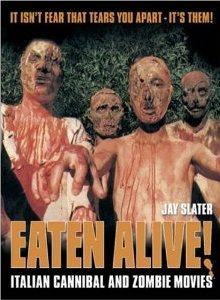
3) Eaten Alive by Jay Slater — This book offers an overview of the Italian film industry’s legendary cannibal and zombie boom.  Along with reviewing every Italian movie to feature even the slightest hint of cannibalism or the living dead (this is one of the few books on Italian cinema that discusses both Pasolini and Lucio Fulci as equals), Eaten Alive also features some very revealing interviews with such iconic figures as Catriona MacColl, Ian McCullough, and especially Giovanni Lombardo Radice.  Radice, in fact, also contributes a memorable “guest” review of one of the movies featured in the book.  (“What a piece of shit!” the review begins.)  Memorable reviews are also contributed by Troma film founder Lloyd Kaufman who brilliantly (and correctly) argues that Cannibal Holocaust is one of the greatest films ever made and Ramsey Campbell who hilariously destroys Umberto Lenzi’s infamous Nightmare City.

2) The Book of the Dead by Jamie Russell — If, like all good people, you love zombies then you simply must do whatever it takes to own a copy of this book.  Starting with such early masterpieces as White Zombie and I Walked With A Zombie, Russell proceeds to cover every subsequent zombie film up through George Romero’s Land of the Dead.  Russell offers up some of the best commentaries ever written on Romero’s Dead films, Fuci’s Beyond Trilogy, Rollin’s Living Dead Girl, and Spain’s Blind Dead films.   The pièce de résistance, however, is an appendix where Russell describes and reviews literally ever zombie film ever made.

1)  All The Colors Of the Dark by Tim Lucas  — This is it.  This is the Holy Grail of All Film Books.  If you’ve ever asked yourself if any book is worth paying close to 300 dollars, now you have your answer.  This one is.  Tim Lucas offers up the most complete biography of director Mario Bava ever written.  In fact, this may be the most complete biography of any director ever written!  Lucas examines not only Bava’s life but also every single movie that Bava was ever in any way connected to, whether as a director or as a cameraman or as the guy in charge of the special effects.  This is 1,128 pages all devoted to nothing but the movies.  This is the type of book that makes me thankful to be alive and I owe a huge debt of gratitude to Tim Lucas for writing it.

Trailer: Pride and Prejudice and Zombies Prequel


I rather enjoyed the literary classic and genre mash-up that was Seth Grahame-Smith’s Pride and Prejudice and Zombies. That mash-up soon spawned other copycats and imitators from Sense and Sensibilities and Sea Monsters right up to Adventures of Huckleberry Finn and Zombie Jim. There’s actually even more classics which have been mashed-up with genre staples such as zombies, vampires, werewolves and even steampunk. Writer Seth Grahame-Smith even follow’s up his best-selling Austen collab with a historical what-if to be titled, Abraham Lincoln: Vampire Hunter.

With Grahame-Smith busy with that book Quirk Books turned to Steve Hockensmith to write the prequel to Pride and Prejudice and Zombies. This prequel will keep the original’s title with the additional title tag of Dawn of the Dreadfuls. This prequel will explain how the Bennett girls from the original novel were such good zombie-hunters and killers. This prequel will be a major detailing of the backstory of the existence of zombies in Austen’s literary world.

There’s already a film adaptation of Pride and Prejudice and Zombies in the works with Natalie Portman headlining the cast. This trailer for the prequel novel just gives a gory and quite awesome glimpse at just how awesome (did I say awesome twice because it definitely is) the film adaptation would look.

Some have been saying that all these literary classics being mashed up with zombies is getting old. I say those people do not know what fun is when it kicks them in the groin. I, for one, think zombies added to anything makes them better in the long run.