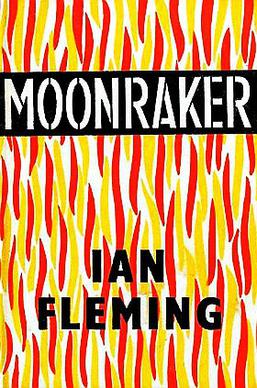
Book Review: Moonraker by Ian Fleming


First published in 1955, Moonraker was the third of the original James Bond novels and it was also the first of the series to be totally set in Great Britain.  At no point does Bond leave his home country.  In fact, he spends a great deal of the book in his office.  (If you’ve ever wondered what Bond’s job entails when he’s not on a mission, this is the book to check.)  That said, it’s appropriate that Moonraker remains in Bond’s home country because it starts with a very British problem.

Hugo Drax is the most popular man in Britain.  Drax was horribly disfigured during the Second World War but, despite all of the scars and a somewhat boorish manner, he has managed to make himself into one of the most important industrialists in the world.  Drax is building an immensely powerful nuclear missile, the Moonraker.  His missile will keep Britain safe from both the USSR and the USA.  At the start of the novel, even Bond admires Drax.  Except…

…DRAX CHEATS AT CARDS!

It turns out that M and Drax both play cards at the same club and M is sure that Drax must be cheating.  Why would such a powerful man feel the need to cheat?  Even more importantly, how can a man be trusted with Britain’s security when he can’t even be trusted to play bridge?  Both to prevent a public scandal and to make sure that Drax really can be trusted, M bring Bond to the club so that Bond can beat Drax at his own game.

One bridge game later and suddenly, Bond has been assigned to work at Drax’s laboratory.  Already on the case and working as Drax’s secretary is Special Branch officer Gala Brand.  Bond being Bond, he discovers that Drax is at the head of a nefarious scheme.  He also tries to figure out why Gala Brand is apparently the only woman in the world who is not won over by his manly charm…

Moonraker is one of my favorite Bond novels.  Drax is an interesting villain and Fleming makes a good decision by having Bond initially admire the man.  Fleming takes a lot of joy in describing both Drax’s bad manners and grotesque appearance.  Drax started a tradition of Bond having to face physically unappealing bad guys.  After playing a minor role in the first two books, M takes a more central role in Moonraker and we also get a chance to explore his paternal but strict relationship with 007.  Gala is one of the few of the so-called Bond girls to be portrayed as being an equal to Bond and the book’s final scene between her and Bond is considerably more poignant than it has any right to be.  Finally, Fleming’s love of Britain is evident on every page.  If Fleming spent Casino Royale and Live and Let Die being snarky about the places that Bond visited, Moonraker finds both the author and his most famous creation in a surprisingly sentimental mood.

Moonraker came close to being the first James Bond novel to make it to the big screen.  In 1955, American actor John Payne pursued the rights to the book, hoping to star as Bond in the film version.  However, it would be another 24 years before Moonraker was adapted to film.  Other than featuring Drax as a villain, the film version would have little do with the original novel.

Book Review: Live and Let Die By Ian Fleming


(Minor Spoilers)

Having recovered from both the horrific torture he suffered in Casino Royale and the suicide of Vesper Lynd, British secret agent James Bond is ready to return to the field.  His latest mission takes him to America, where his job is to investigate Mr. Big.  Mr. Big is Harlem-based gangster who is suspected of helping to finance Russian operations through his criminal enterprises.

(Specifically, Mr. Big has been selling 17th Century gold coins that are believed to be a part of a legendary pirate treasure that was buried somewhere in Jamaica.  Ian Fleming knew his pirate lore and devotes a good deal of the beginning of the book to discussing Sir Henry Morgan.)

In America, Bond partners up with his old friend Felix Leiter but he soon discovers that taking down Mr. Big is not as easy as he thought it would be.  Using the fear of voodoo to control his minions, Mr. Big has agents all across America.  As well, Mr. Big also has the services of Solitaire, a beautiful Creole fortune teller.  The case takes Bond and Felix from New York to Florida to Jamaica.  It also costs one of them a leg and an arm.  In order to maintain some suspense, I will refrain from revealing who gets attacked by a shark.

Reading the original James Bond novels can be enjoyable but it can also lead to a good deal of culture shock.  Because Bond is constantly changing in the movies and the role is regularly recast, we tend to forget just how long the character of James Bond has been around.  In the movies, Bond is forever the same age and his villains and their plots continually change to reflect whatever’s going on in the world.  In SPECTRE, Blofeld was even reinvented as a bored Christoph Waltz.

The books, however, are frozen in time.  They all reflect the attitudes and concerns of the time period in which they were written.  That can often make for a fascinating read but it can also leave modern readers cringing.  Ian Fleming was a man of his time and he shared both the strengths and the weaknesses of his time and his class.  That’s a polite way of saying that, in the Bond novels, Fleming tends to treat anyone who is not British, white, and male with, at best, a patronizingly condescending attitude.  (At worst, Fleming treats them with outright disdain.)  That’s especially obvious in Live and Let Die, in which Mr. Big and all of his henchmen are black.

Live and Let Die was first published in 1954.  Interestingly enough, Fleming doesn’t come across as being as prejudiced as some of his contemporaries.  For instance, even when the action moves the American south, the n-word never appears in the book.  (Then again, neither do any redneck sheriffs.)  I wouldn’t call Fleming a racial progressive but, at the same time, it’s obvious that he means it to be the highest compliment when Bond describes Mr. Big as being the “first great Negro criminal.”  But then Fleming introduces us to two sympathetic black characters who do nothing but happily take orders from Bond and then he starts writing dialogue in phonetic dialect and you just find yourself cringing and saying, “Oh my God, Ian, stop it!”

Here’s what does work as far as Live and Let Die is concerned: Mr. Big is a great villain, far less of a wimp than Casino Royale‘s Le Chiffre.  As well, James Bond is a far more active character in this book and less whiny than he was in Casino Royale.  Bond once again gets tortured but he doesn’t threaten to quit the service just because his finger gets broken.  Instead, he seeks revenge.

As an American, it was interesting for me to read Fleming’s thoughts on my home country.  While Bond seems quite comfortable in New York, both he and Felix are absolutely miserable in Florida.  In fact, Fleming portrays Florida as being Hell on Earth, hot and full of ill-tempered old people.  It’s impossible not to be amused by just how viscerally Fleming disliked Florida.

Finally, Fleming’s skills as a storyteller were even stronger in Live and Let Die than in Casino Royale.  I mean, whatever else you might say about the book, who can resist that perfect one line dismissal of a opponet: “He disagreed with something that ate him.”

Tomorrow, we take a look at Moonraker!

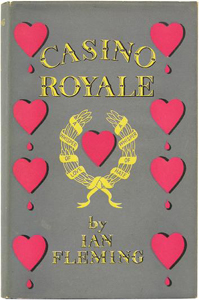
Book Review: Casino Royale by Ian Fleming


(SPOILERS)

Earlier this year, I decided to reread all of Ian Fleming’s James Bond novels.  On this site, I’ve written many times about how much I love all of the James Bond films so I thought it would be interesting, especially since a few years have passed since I originally read them, to reread the original novels.

The first Bond novel was Casino Royale.  First published in 1953, Casino Royale introduced the world to not only MI6’s James Bond but also to the CIA’s Felix Leiter, the sinister assassins of SMERSH, and the tragic Vesper Lynd.

The story starts with a deceptively simple mission.  James Bond has been sent to the Casino Royale, with specific orders to play against and humiliate Le Chiffre, a union boss who works for the Russians.  Bond succeeds at his mission but quickly discovers that Le Chiffre is not the type to accept the loss of eighty million francs gracefully.  Bond ends up undergoing a truly horrific torture, one that is described in harrowing details by Fleming.  While it’s not a spoiler to reveal that Bond survives (after all, Casino Royale was followed by 11 novels and 2 short story collections), it comes at the cost of a terrible scar and a terrible tragedy.

In his first appearance, Bond already possesses several of the traits for which he’s best known.  He’s a meticulous eater, a frequent drinker, and a chain smoker.  He’s ruthless and is described as being cruelly handsome.  When Vesper Lynd first meets him, she exclaims that he looks like Hoagy Carmichael, the British musician who Fleming originally hoped would play Bond in the films.

At the same time, while rereading Casino Royale, I was surprised by how passive Bond was for the majority of the book.  Beyond the scene where he plays baccarat with Le Chiffre, Bond really doesn’t take a very active role in his first novel.  When he’s captured and tortured, he doesn’t escape through his wits.  In fact, he doesn’t escape at all.  He’s rescued by SMERSH, who have decided that they no longer need Le Chiffre to launder money for them.  After being rescued, he decides to retire from intelligence work and marry Vesper Lynd.  Vesper Lynd is a double agent but Bond never figures that out on his own.  He only discovers this fact from Vesper’s suicide note.

(Which, of course, leads to the novel famous and bitter final line: “The bitch is dead.”)

In fact, there are times when Bond almost seems to be … well, dorky.  Early on, we’re informed that he hopes to create and make a fortune off of a new drink.  (Minutes after meeting Vesper, he announces that he’s going to name the drink after her.)  When he’s in the hospital recovering from being beaten, he’s hardly the Bond we all know and love.  Instead, he’s rather petulant.  When he explains that he’s quitting the service, he comes across like an angry teenager announcing that he’s not going to go to school anymore.

As for the novel itself, it’s a quick read and, even after all these years, I can see why it caused a stir when it was originally released.  It’s not just that Fleming was telling a spy story that was full of intrigue and deceit.  It’s also the Fleming was giving readers a glimpse into a glamorous world that they probably would never have a chance to experience for themselves.  Fleming describes the casino with such care and attention to detail that you literally feel like you’re there, watching Bond gamble.

For the record, here’s my favorite line from the book.  It occurs shortly after Bond first meets Felix Leiter and discovers that Felix is from my homestate:

“Bond reflected that good Americans were fine people and that most of them seemed to come from Texas.”

And finally, here’s the ingredient for Bond’s drink, the Vesper:

“Three measures of Gordon’s, one of vodka, half a measure of Kina Lillet. Shake it very well until it’s ice-cold, then add a large thin slice of lemon peel.”

(Apparently, some of these ingredients are out-of-date.  I rarely drink so I have no idea.)

Casino Royale was followed by Live and Let Die, which I’ll review tomorrow.

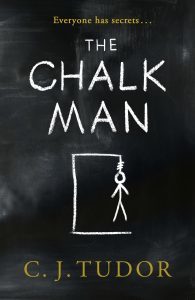
Book Review: The Chalk Man by C.J. Tudor


Last Wednesday night, we got hit by a huge storm.  Around 11:00, after a brilliant flash of lightning, we lost all power.  (The power wouldn’t return for nearly 12 hours.)  Since I didn’t want to go to sleep until the power came back on, I ended up sitting in the living room and reading, by the glow of the flashlight, C.J. Tudor’s The Chalk Man.

In the year 1986, in a small English village, five children stumbled across a mystery.  Eddie, Fat Gav, Metal Mickey, Hoppo, and Nicky followed a series of chalk drawing into the woods and what they found changed both them and the town forever.  Their discovery would not only reveal several carefully held secrets but would also lead to accusations and tragedy.

30 years later, Eddie still lives in the village and that discovery continues to haunt him.  Actually, many things haunt Eddie.  He has yet to recover from watching his father slowly die of Alzheimer’s.  A compulsive thief as a child, he’s now grown up to be a hoarder.  In his more reflective moments, he admits that he’s become an alcoholic.  He’s still a friend to some of his classmates from 1986 but his closest relationship is with his border, the much younger Chloe.  He fears that, as a teacher, he’s not reaching his students.  When Eddie was younger, there was one teacher who reached him, a teacher who was linked to that discovery in the woods.

And then, one night, an old acquaintance shows up on Eddie’s doorstep, bringing with him a business proposal.  And soon, Eddie is once again trying to solve the mysteries of 1986.  Everyone still has their secrets.  No one can claim to be totally innocent.  Not even Eddie.

The debut novel of C.J. Tudor, The Chalk Man alternates between scenes set in 1986 and scenes set in 2016.  Though the structure may bring to mind Stranger Things or Stephen King’s It, The Chalk Man quickly establishes its own identity.  It’s an intriguing book, one that uses its central mystery to explore themes of aging, loss, memory, and prejudice.  While the book has a few flaws that are common to most first novels, it’s still an enjoyable and compulsive read and I look forward to reading what C.J. Tudor comes up with next.

Incidentally, I also look forward to inevitable film version of The Chalk Man.  As long as Ewan McGregor plays the grown-up Eddie, I’ll be happy…


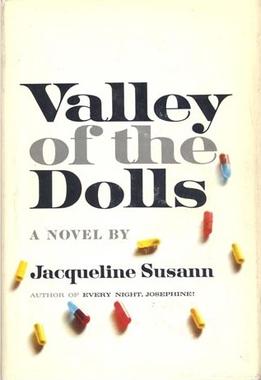
Guilty Pleasure No. 35: Valley of the Dolls by Jacqueline Susann


Way back in January, I took the time to read the 1966 novel, Valley of the Dolls.  While I had already seen the film that this work inspired, this was my first time to read the actual book.

Before I even opened to the front page, I knew that Valley of the Dolls had been a best-seller, that it inspired a countless number of imitations, and that it had a reputation for being really, really bad.  As soon as I started to read the first chapter, I discovered that the book’s reputation was well-earned.  To call author Jacqueline Susann’s prose clunky was a bit of an insult to clunky prose everywhere.

Opening in 1945 and covering 24 years in cultural, sexual, and drug history, Valley of the Dolls starts with Anne Welles leaving her boring home in New England and relocating to New York, where she promptly gets a job at a theatrical agency.  Everyone tells Anne that she’s beautiful and should be trying to become a star but Anne says that she’s not interested in that.  (You’ll be thoroughly sick of Anne’s modesty before reaching the tenth page.)  Everyone says that Anne is incredibly intelligent, even though she never really does anything intelligent.  Everyone says that she’s witty, even though she never says anything that’s particularly funny.  In short, Anne Welles is perhaps the most annoying literary character of all time.  Anne spends about 20 years waiting for her chance to marry aspiring author Lyon Burke.  When she does, Lyon turns out to be a heel and drives Anne to start taking drugs.  I assume it’s meant to be somewhat tragic but who knows?  Maybe all of the pills (or “the dolls” as the characters in the book call them) will give Anne a personality.

They certainly worl wonders for everyone else in the book.  Neely O’Hara is constantly taking pills and she’s the best character in the book.  Unlike Anne, she’s never modest.  She’s never quiet.  She’s actually funny.  Even more importantly, she doesn’t spend the whole book obsessing over one man.  Instead, she’s always either throwing a tantrum or having an affair or abandoning her children or getting sent to a mental institution.  Neely’s a lot of fun.  Unfortunately, we don’t really get to see much of Neely until after having to slog through a hundred or so pages of Anne being boring.

The other major character is Jennifer North, a starlet who was apparently based on Marilyn Monroe.  The parts of the book dealing with Jennifer are actually about as close as Valley of the Dolls actually gets to being, for lack of a better term, good.  In fact, if the book just dealt with Jennifer’s tragice story, it would probably be remembered as a minor classic.  Instead, Jennifer is often overshadowed by Neely (which is understandable since Neely’s insane and therefore capable of saying anything) and Anne (who, as I mentioned before, is the most annoying literary characters of all time).

Why is Valley of the Dolls a guilty pleasure?  A lot of it is because of all of the sexual melodrama and pill-popping, the descriptions of which are often so overwritten that they’re unintentionally hilarious.  Most of it is because Neely O’Hara goes crazy with so much overwrought style.    Whenever the book focuses on Neely, Susann’s inartful prose is replaced with a stream-of-consciousness tour of Neely’s paranoid and petty mind.  Interestingly enough, some of the most infamous scenes from the movie are also present in the novel.  Remember that scene where Neely rips off Helen Lawson’s wig and then flushes it down a toilet?  That’s actually in the book!

Anyway, it’s an incredibly silly but compulsively readable book … or, at least, it is if you can make it through all the boring stuff with Anne at the beginning.  Then again, as annoying as Anne is, she doesn’t exactly get a happy ending.  Perhaps that’s why Valley of the Dolls is such a guilty pleasure.

Previous Guilty Pleasures

  1. Half-Baked
  2. Save The Last Dance
  3. Every Rose Has Its Thorns
  4. The Jeremy Kyle Show
  5. Invasion USA
  6. The Golden Child
  7. Final Destination 2
  8. Paparazzi
  9. The Principal
  10. The Substitute
  11. Terror In The Family
  12. Pandorum
  13. Lambada
  14. Fear
  15. Cocktail
  16. Keep Off The Grass
  17. Girls, Girls, Girls
  18. Class
  19. Tart
  20. King Kong vs. Godzilla
  21. Hawk the Slayer
  22. Battle Beyond the Stars
  23. Meridian
  24. Walk of Shame
  25. From Justin To Kelly
  26. Project Greenlight
  27. Sex Decoy: Love Stings
  28. Swimfan
  29. On the Line
  30. Wolfen
  31. Hail Caesar!
  32. It’s So Cold In The D
  33. In the Mix
  34. Healed By Grace

Book Review: Need To Know by Karen Cleveland


How well do you know the people you love?

That’s the question that’s at the heart of Need to Know, the debut novel of Karen Cleveland.

When we first Vivian Miller, the main character and narrator of Need to Know, she has a life that, on the surface, many would envy.  She has four children, a nice house in the suburbs of D.C., and a handsome and charming husband named Matt.  Of course, there are problems.  Money’s tight.  One of her children has a heart defect, one that will undoubtedly require surgery in the future.  Honestly, Vivian would be happy to stay home and spend all of her time taking care of the children but, as Matt always reminds her, they need the money that her job brings in.

Vivian works for the CIA.  She’s an analyst and, as glamorous as working in intelligence might sound, her job basically involves spending a lot of time in the office, searching through the computers of suspected Russian agents.  For instance, there’s the mysterious Yury.  When Vivian searches through Yury’s files, she comes across a folder that is labeled “Friends.”  Inside the folder are five pictures of five people who might or might not be working for the Russians.

Four of the pictures are of total strangers.

The fifth picture is of Matt.

If nothing else, Need to Know is a book that will keep you guessing.  Is Matt a Russian agent or was his picture placed in the folder just to compromise Vivian’s position with the CIA?  Has Matt spent ten years being a perfect and supportive husband or was he actually a passive aggressive manipulator?  What do the Russians want and how far are they willing to go to get it?  And, even more importantly, how far is Vivian willing to go to protect her children?

Need to Know is a strong debut novel, a perfectly paced thriller that will take consistently take you by surprise.  Karen Cleveland is a former CIA analyst herself and she puts that background to good use in Need to Know, supplying a lot of interesting details that you wouldn’t get from a book written by … well, by someone like me, whose national security expertise is pretty much limited to what I’ve seen in the movies.

(Speaking of movies, apparently Charlize Theron will be producing and starring in the film version of Need to Know.  Personally, the entire time I was reading the novel, I pictured Naomi Watts as Vivian, Jeremy Renner as Matt, and Richard Jenkins as Vivian’s boss, Peter.)

I did have a few issues with the final few chapters of the book.  Though it didn’t effect my overall enjoyment of the novel, I would have liked a stronger ending.  That said, the ending does potentially leave room for a sequel and I will definitely be reading the next book that Karen Cleveland writes!

If you’re in the mood for a good and intelligent spy thriller, Need to Know is definitely one to check out.

2017 In Review: Lisa Marie’s Ten Favorite Non-Fiction Books of 2017


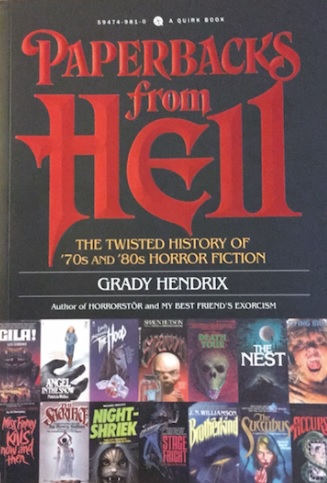
A word about Paperbacks From Hell, my favorite nonfiction book of 2017.  One of my goals for 2018 (and probably 2019, as well) is to read every single book mentioned in Paberbacks From Hell.  I’ve been told that it won’t be easy because several of the books are apparently no longer in print.  But that’s okay.  I’m looking forward to searching for them almost as much as I’m looking forward to reading them!

  1. Paperbacks From Hell by Grady Hendrix
  2. Shirley Jackson: A Rather Haunted Life by Ruth Franklin
  3. Broad Strokes: Fifty Women Who Made Art and Made History (in that order) by Bridget Quinn
  4. Mrs. Sherlock Holmes by Brad Ricca
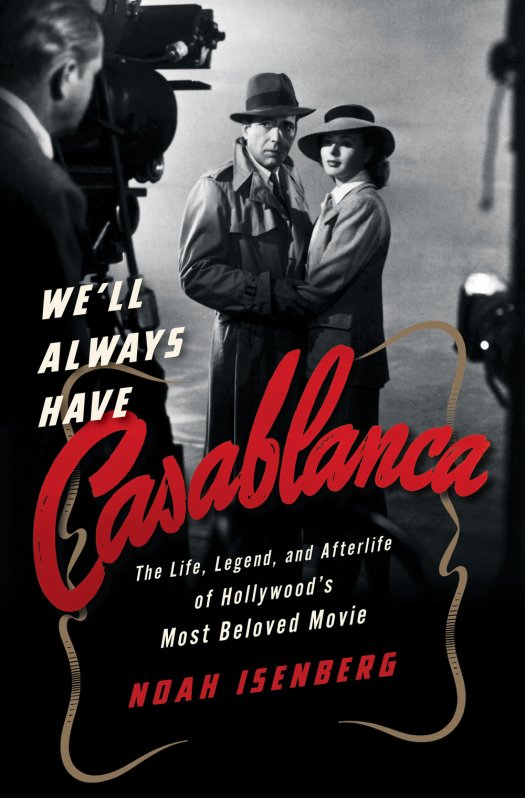
  5. We’ll Always Have Casablanca: The Legend and Afterlife of Hollywood’s Most Beloved Film by Noah Isenberg
  6. Ava Gardner: A Life in the Movies by Anthony Uzarowski and Kendra Bean
  7. How To Murder Your Life by Cat Marnell
  8. Black Dahlia, Red Rose: The Crime, Corruption, and Cover-Up of America’s Greatest Unsolved Murder by Piu  Eatwell
  9. High Noon: The Hollywood Blacklist and the Making of an American Classic by Glenn Frankel
  10. The Apparitionists: A Tale of Phantoms, Fraud, Photography, and the Man Who Captured Lincoln’s Ghost by Peter Manseau

On Wednesday, I’ll be listing my picks for the best of Lifetime and then, on Friday, I’ll finally wrap up my look back at 2017 with my picks for the best 26 movies of the year!

Previous entries in the TSL’s Look Back at 2017:

  1. 2017 in Review: Top Ten Single Issues by Ryan C
  2. 2017 in Review: Top Ten Series by Ryan C
  3. 2017 In Review: Top Ten Collected Edition (Contemporary) by Ryan C
  4. 2017 In Review: Top Ten Collected Editions (Vintage) by Ryan C
  5. 2017 in Review: Top Ten Graphic Novels By Ryan C
  6. 25 Best, Worst, and Gems I saw in 2017 by Valerie Troutman
  7. My Top 15 Albums of 2017 by Necromoonyeti
  8. 2017 In Review: Lisa Marie’s Picks For the 16 Worst Films of 2017
  9. 2017 In Review: Lisa Marie’s Final Post About Twin Peaks: The Return (for now)
  10. 2017 in Review: Lisa Marie’s 14 Favorite Songs of 2017
  11. 2017 in Review: The Best of SyFy by Lisa Marie Bowman
  12. 2017 in Review: 10 Good Things that Lisa Marie Saw On Television in 2017
  13. 2017 in Review: Lisa Marie’s 12 Favorite Novels of 2017

2017 In Review: Lisa Marie’s 12 Favorite Novels of 2017!


I wish I had read more in 2017.  I really dropped the ball last year but I’m going to make up for it this year!

With all that in mind, here are my 12 favorite novels of 2017!

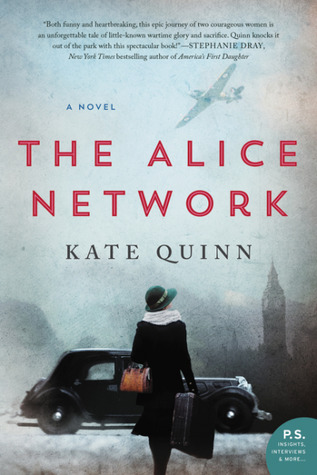
  1. The Alice Network by Kate Quinn
  2. Magpie Murders: A Novel by Anthony Horowitz
  3. Into the Water by Paula Hawkins
  4. Before We Were Yours by Lisa Wingate
  5. Without Merit by Colleen Hoover
  6. Final Girls by Riley Sager
  7. Dusk or Dark or Dawn or Day by Seanan McGuire
  8. Wait For It by Mariana Zapata
  9. The Ghost Writer by Alessandra Torre
  10. Little Fires Everywhere by Celeste Ng
  11. The Grip of it By Jac Jemc
  12. Ginny Moon by Benjamin Ludwig

My look back at 2017 will conclude next week.  On Monday, I’ll post my picks for the best non-fiction books of 2017.  On Wednesday, I’ll post my picks for the best of 2017 Lifetime.  And then, on Friday, my picks for the best 26 films of 2017!

(My apologies for dragging things out but I do need the extra time so I can catch up on a few films that I missed in 2017.)

Previous entries in the TSL’s Look Back at 2017:

  1. 2017 in Review: Top Ten Single Issues by Ryan C
  2. 2017 in Review: Top Ten Series by Ryan C
  3. 2017 In Review: Top Ten Collected Edition (Contemporary) by Ryan C
  4. 2017 In Review: Top Ten Collected Editions (Vintage) by Ryan C
  5. 2017 in Review: Top Ten Graphic Novels By Ryan C
  6. 25 Best, Worst, and Gems I saw in 2017 by Valerie Troutman
  7. My Top 15 Albums of 2017 by Necromoonyeti
  8. 2017 In Review: Lisa Marie’s Picks For the 16 Worst Films of 2017
  9. 2017 In Review: Lisa Marie’s Final Post About Twin Peaks: The Return (for now)
  10. 2017 in Review: Lisa Marie’s 14 Favorite Songs of 2017
  11. 2017 in Review: The Best of SyFy by Lisa Marie Bowman
  12. 2017 in Review: 10 Good Things that Lisa Marie Saw On Television in 2017

Lisa’s Week In Review: 1/1/18 — 1/7/18


What’s This?

Hi there!  Welcome to Lisa’s Week In Review.  This year, on Monday, I’m going to post everything that I watched, read, and listened to during the previous week.  Since I love to make lists, I’m hoping that this will encourage me to see more, read more, and listen to more this year than I did last year!

I’m happy that 2017 started on Monday, which is also the start of the week.  I like it when things are neat and orderly like that.  For the first three days of 2018, the temperatures in DFW were below freezing though, unlike the rest of the country, we didn’t get any snow or ice.  Around Wednesday, the temperature got up above 32 degrees and the last few days have actually been wonderfully pleasant.  Of course, I spent most of the week lying on the couch with a cold.

Anyway, without further ado, here’s my week in review!

Movies I Watched:

  1. The Bachelor Next Door (2017)
  2. Blood, Sweat, and Lies (2018)
  3. Cast A Deadly Spell (1991)
  4. Cradle Swapping (2017)
  5. Dazed and Confused (1993)
  6. Deadly Exchange (2017)
  7. Dr. No (1962)
  8. From Russia With Love (1963)
  9. Goldfinger (1964)
  10. Honey 3: Dare to Dance (2016)
  11. Insidious: The Last Key (2018)
  12. The Love-Ins (1967)
  13. Neverknock (2017)
  14. Psycho Brother-in-Law (2017)
  15. Psycho In-Law (2017)
  16. Psycho Wedding Crasher (2017)
  17. Riot on the Sunset Strip (1967)
  18. The Sandman (2017)
  19. The Sisterhood of the Traveling Pants 2 (2008)
  20. Stage Fright (2017)
  21. Stickman (2017)
  22. A Tale of Two Coreys (2018)
  23. Tiny House of Terror (2017)
  24. Thunderball (1965)
  25. What a Girl Wants (2004)
  26. The Wrong Mother (2017)

TV Shows I Watched

(For whatever reason, I watched a lot of true crime last week.)

  1. 2018 Winter Olympic Trials
  2. 60 Days In
  3. The 75th Annual Golden Globe Awards
  4. The Amazing Race 30
  5. American Justice
  6. American Monster
  7. The Bachelor 22 — I usually stop watching The Bachelor once all the crazy people get kicked off the show.
  8. Betrayed
  9. Cheaters
  10. Dance Moms
  11. Dead Silent
  12. Degrassi
  13. Dr. Phil
  14. Evil Lives Here
  15. Full House
  16. Hell’s Kitchen 17
  17. Homicide Hunter: Lt. Joe Kenda
  18. House Hunters
  19. Intervention
  20. It’s Always Sunny In Philadelphia — For the record, I laughed so hard at the episode where Frank and Dee got a job selling knives door-to-door that I literally fell off of my couch.
  21. King of the Hill
  22. Last Call With Carson Daly
  23. Model Killers
  24. Murder in the Heartland
  25. My Evil Sister — I had to make Erin watch this with me.
  26. The Office — The Prison Mike episode.
  27. People Magazine Investigates
  28. Project Runway All-Stars
  29. Saved By The Bell
  30. Shattered
  31. The Twilight Zone — SyFy always does a Twilight Zone marathon on January 1st.
  32. Twin Peaks: The Return
  33. U.S. Figure Skating Championships
  34. The X-Files
  35. Your Worst Nightmare

Books I Read

(I’m ashamed to say that, over the course of last week, I watched over 60 different movies and TV shows but I only read two books.  This will change in the future.)

  1. Fahrenheit 451 by Ray Bradbury (1953) — I found a copy of this at Half-Price Books last week.  The copy that I found once belonged to a student named Ashley and she filled the margins with notes about her friends Taylor and Sidney.  At the start of the book, they were best friends.  About halfway through, she suddenly hated both of them but, by the end of the book, they were friends again.  Yay!
  2. You’re Ok, Your Cat’s Ok: How to Establish A Meaningful Relationship With Your Cat by Marcus Schenk and Jill Caravan (1992) — This book is full of helpful hints on how to get along with your cat.  Of course, it’s also full of pictures of cute kitties, which is the main reason we own it.

Music I Listened To

  1. Amy Winehouse
  2. Anders Nilsen
  3. Armin van Buuren
  4. Avicii
  5. Big Data
  6. Blanck Mass
  7. Bob Dylan
  8. Britney Spears
  9. Calvin Harris
  10. Chappell Roan
  11. Charli XCX
  12. The Chemical Brothers
  13. Cindy Alma
  14. Coldplay
  15. Daft Punk
  16. Dillon Francis
  17. Donots
  18. Elle King
  19. Fitz and the Tantrums
  20. Ghastly
  21. Gerry Rafferty
  22. Icona Pop
  23. Jakalope
  24. Jeff Buckley
  25. Lindsay Cardy
  26. Lindey Stirling
  27. Martin Garrix
  28. Nghtmre
  29. P!nk
  30. Rebecca & Fiona
  31. The Shelters
  32. Steve Aoki
  33. Superorganism
  34. Taylor Swift
  35. Totally Enormous Extinct Dinosaurs
  36. The White Stripes


Links From Last Week

(These are blog posts that I saw last week that I’m recommending you check out.)

  1. In honor of National Take A Poet To Lunch Day, I shared my favorite poem at SyFyDesigns.
  2. From the Ferguson Theater, Derrick Ferguson shares his picks for the best films of 2017.
  3. From Musings Of A Classic Film Addict, a tribute to the late Peggy Cummins.
  4. On the World’s Common Tater, Tater shared his year in reading for 2017.
  5. On Film Grimoire, Anna shared her top ten songs of 2017, something I’ll be doing on this site during the upcoming week.
  6. On Ted Book, Ted shares a story about how Amy Winehouse inspired him to reopen his site.
  7. From the Daily Grindhouse, here’s a review of a book about Christmas horrors on tv and in the movies.
  8. Janika, a member of the Late Night Movie Gang, writes about watching Cast A Deadly Spell with us and several other things.
  9. Here’s a poem from John Coyote.
  10. On the Immortal Jukebox, Thom Hickey goes on the radio.
  11. Over on her photography site, my sister Erin shared a picture of a squirrel getting ready for 2018.

On this site, be sure to check out:

  1. Patrick’s reviews of Driving While Black and House of Salem,
  2. Val’s picks for the 25 Best and Worst Things she saw last year,
  3. Erin’s picture for the New Year,
  4. Gary’s reviews of The Wild Angels, The Poseidon Adventure, and Willard,
  5. Jeff’s tribute to Isaac Asimov,
  6. Necromoonyeti’s Top 15 albums of 2017,
  7. Ryan’s thoughts on Cut Away Comics, Crust, and everything else he read last week!
  8. If I may brag on myself, check out my history of the men might have been Bond.

Have a great week everyone!


Book Review: WE’LL ALWAYS HAVE CASABLANCA by Noah Isenberg (W.W. Norton 2017)


gary loggins's avatarcracked rear viewer

CASABLANCA was released seventy-five years ago today, and The Cult of Casablanca is stronger than ever! The film resonates with young and old alike in its themes of lost love, redemption, and answering to a higher moral authority. Noah Isenberg’s latest book, WE’LL ALWAYS HAVE CASABLANCA: THE LIFE, LEGEND, AND AFTERLIFE OF HOLLYWOOD’S MOST BELOVED MOVIE, takes a look behind the Silver Screen to track the history of the film  from its beginnings through its continuing popularity today.

Isenberg, a professor of film studies at The New School and author of the definitive EDGAR G. ULMER: A FILMMAKER AT THE MARGINS (2014), gives the reader a three-pronged look at the film. In the first, he meticulously delineates the screenplay’s roots, from its birth as the play Everybody Comes to Rick’s by Murray Burnett and Joan Alison, to the adaptation by brothers Julius and Philip Epstein, to the contributions of writers…

View original post 395 more words