Book Review: Beowulf by Anonymous


Wow, what an annoying book!

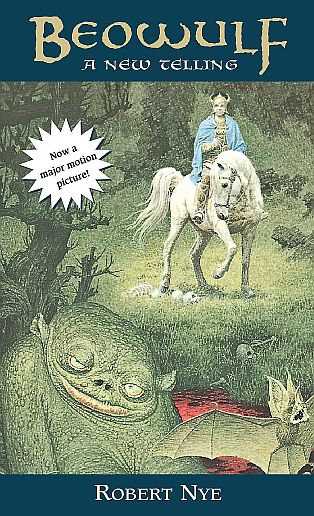
First published in 975, Beowulf tells the story of a Danish king named Hrothgar who can’t be bothered to be a good neighbor.  The loud parties at his mead hall ends up annoying both Grendel and his mother so Grendel takes it open himself to start killing Hrothgar’s men.  Hrothgar and his men are forced to abandon their mead hall …. which, well, that would be the solution right there, wouldn’t it?  I mean, they could just go somewhere where there isn’t a monster living nearby and build a new mead hall.  And maybe they could establish some new mead hall rules, like “Keep it down after 10 pm” and “You Don’t Have To Go Home But You Can’t Stay Here.”  But instead, Hrothgar decides to cry about it.  Seriously, dude, it’s just a mead hall!

Anyway, this jerk named Beowulf sails over to help out Hrothgar.  But before Beowulf can help out Hrothgar, he has to spend a lot of time bragging on himself and telling everyone that he’s the greatest warrior that has ever lived.  I mean, he goes on for so long that I was wondering if maybe he was just planning on boring everyone to death.  Beowulf goes on to kill Grendel with his bare hands and then, when Grendel’s mother complains, Beowulf kills her too.  Uhmmm …. yay, I guess.

Many years later, Beowulf is the king and one of his slaves steals a gold cup from a dragon.  Needless to say, the dragon is not happy about this and really, who can blame it?  I imagine that dragons spend a lot of time collecting their gold and it’s always struck me as odd that humans seem to think that they have the right to just steal from the dragons whenever they feel like it.  With the dragon threatening his kingdom, Beowulf has to come out of retirement to fight one final beast….

The main problem with Beowulf is that the main character is kind of a jerk and he has a really bad habit of bragging on himself.  If I was one of his subjects, I would dread having to ask him for help because Beowulf is apparently incapable of just doing something without using it as an excuse to puff himself up.  Instead, he has to brag about how he’s the only person in the world who could possibly do it and, to top it all off, he has to make everyone else feel bad about the fact that they’re having to ask Beowulf for a favor.  Beowulf is such a long-winded jerk that he makes Grendel and the Dragon seem sympathetic by comparison.

I’m not surprised that the author of Beowulf is anonymous.  Who would want to take credit for this?  For a far better look at life in the 8th Century, check out John Gardner’s Grendel.  Or go watch the Robert Zemeckis-directed 2007 film adaptation, which has its flaws but also features Angelina Jolie, Crispin Glover, Anthony Hopkins, and John Malkovich!  How can you wrong with a cast like that?

Book Review: The Assassination Chain by Sybil Leek and Bert R. Sugar


Here’s a few things you should know about me.

I don’t believe in ghosts.

I don’t believe in aliens.

I don’t believe in reincarnation.

I don’t believe in manifesting events and I sure as heck don’t believe in the power of Twitter prayer circles.

I do believe that Lee Harvey Oswald acted alone.

That makes me a bit of a rarity in our conspiracy-crazed culture but, to me, the idea of one loser killing the most powerful man in the world makes more sense than the idea of some gigantic, complex conspiracy coming together and developing a needlessly complicated plot to kill someone who they could have just as easily blackmailed or circumvented through other methods.

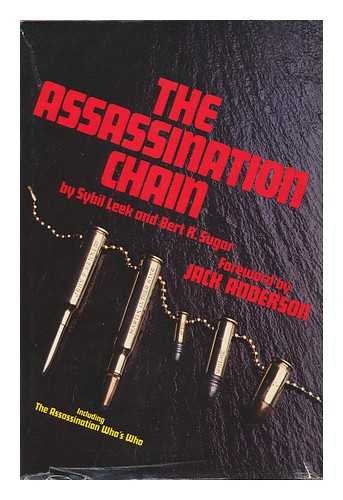
That said, just because I don’t believe in conspiracy theories doesn’t mean that I don’t find them to be oddly fascinating.  Take, for instance, the 1977 conspiracy tome, The Assassination Chain.

Written by Sybil Leek and Bert R. Sugar, The Assassination Chain takes a look at the theories surrounding the assassination of John F. Kennedy.  Each major theory — from Oswald acting alone to accusations against the CIA, the FBI, the Mafia, Castro, the anti-Castroites, the military-industrial complex, and various right-wing oilmen — is given its own separate chapter.  With the exception of the official story, each theory is given respectful consideration.  After detailing the JFK theories, The Assassination Chain features chapters about the assassinations of Martin Luther King, Jr, and Robert F. Kennedy.  It even takes a look at the attempted assassination of George Wallace and suggests that both Sirhan Sirhan and Arthur Bremer were brainwashed by people who were concerned that either RFK or Wallace could keep Nixon out of the White house.

And, in conclusion, the book suggest that the guilty party was …. EVERYONE!  Everyone from the CIA to the FBI to the Mafia to the Pentagon to the richest men in Texas came together in a gigantic plot to not only kill JFK but to also to kill Rev. King, RFK, and Wallace.  (I think this might be the only book to suggest that MLK and George Wallace had the same enemies.)  Who could stand at the controls of such a plot?  Almost as an afterthought, the book accuses Howard Hughes, the famously eccentric billionaire who was later played by Leonardo DiCaprio in The Aviator.

The book’s conclusions aren’t particularly convincing but they do provide an interesting insight into the conspiracy mindset, which states that the only evidence that matters is the evidence that supports the conclusion that you’ve already reached.  There’s actually far more evidence to suggest that Oswald acted alone than there is to suggest that the CIA would risk its existence by assassinating the President as opposed to just threatening to leak the details of the President’s extramarital affairs to the press.  But it’s comforting to assume that the world’s events are the result of a conspiracy as opposed to just the act of one loser who was upset because his wife left him.  Conspiracies provide a way to understand the whims of fate.  There’s a comfort in believing that everything happens as a part of a deliberate chain as opposed to just being random events.

The thing is, though, The Assassination Chain makes for an interesting read.  Regardless of whether you buy the conspiracy angle or not, it’s always interesting to explore the darker corners of the 60s and early 70s.  One reason why the JFK assassination conspiracy theories are so fascinating is because they all involve shady and downright weird characters, like alcoholic ex-FBI agent Guy Bannister and his partner, a hairless pilot and amateur cancer researcher named David Ferrie.  The Assassination Chain provides a tour through the fringes of the 60s and introduces to many of the characters who were made their home in those fringes.  The book’s final chapter is a detailed Who’s Who of everyone who, up to that point, had been caught up in the assassinations and the theories that followed and it’s an interesting collection of eccentrics, wannabe spies, and mentally unstable blowhards.

The worn and beat-up copy of this book that I read was obviously an old library book.  It reeked of cigarette smoke and, as I leafed through the book last week, I found myself imagining the previous owner, chainsmoking while trying to understand the chaotic and random nature of the world.  Whomever that person was, I hope they found some sort of answer.

Book Review: The 103rd Ballot by Robert K. Murray


Cinematically, the 1968 Democrat Convention has been done to death.

There have been a lot of movies made about the 1968 Democrat Convention and certainly, I can understand why.  Not only did you have an epic battle taking place in the Convention Hall between the Democrat establishment and the reformers but there were also riots in the streets.  The police were beating up protestors and slogans were being chanted and Haskell Wexler was filming footage for Medium Cool.  Yes, it was all very cinematic but again, it’s just been done to death.  We don’t need another movie about what happened in 1968.

Instead, what is needed is a movie about the 1924 Democrat Convention, which was held in Madison Square Garden and which lasted for two and a half weeks because none of the men running for President could get enough votes.  The two major candidates were Al Smith of New York and William McAdoo of California.  Smith was an anti-prohibitionist and was seeking to become the first Catholic to be nominated by a major political party.  McAdoo was the son-in-law of America’s greatest monster, Woodrow Wilson.  Smith’s campaign was managed by a young Franklin D. Roosevelt, who was making a political comeback after being previously struck down by polio.  Though he was not himself a member and had no use for the organization, McAdoo found himslef being supported by the Ku Klux Klan, who was then at the height of its political influence and which opposed Smith because of his Catholicism.

With neither Smith nor McAdoo able to command a majority of the delegates, other “favorite son” candidates emerged.  U.S. Sen. Oscar Underwood of Alabama, a longtime opponent of Klan, was not only nominated but also fought a heroic but losing battle to insert a plank condemning the Klan into the Democrat platform.  West Virginia’s John W. Davis was nominated, as was Kansas’s Jonathan M. Davis.  Meanwhile, in the wings, William Jennings Bryan managed the presidential campaign of his brother, Charles, and waited to see if the Convention would perhaps turn to him and put him on the national ticket for a record fourth time.  (Little did Bryan know, of course, that the Scopes Monkey Trial was waiting for him, right around the corner….)

In the end, 58 men received votes for the presidential nomination at the 1924 Democrat Convention.  It took a record 103 ballots for the party to finally nominate a candidate who, after all of that, would still have to run against the enormously popular incumbent, Calvin Coolidge.  Along the way, there were fist fights, political chicanery,  and many accusations of lies, bad faith, and prejudice.  FDR re-launcher his career with his pro-Smith speech but, in doing so, he also inspired the jealousy that would lead to Al Smith becoming one of the leading opponents of the New Deal.  Meanwhile, the aging William Jennings Bryan struggled to control a party that no longer had much use for him.

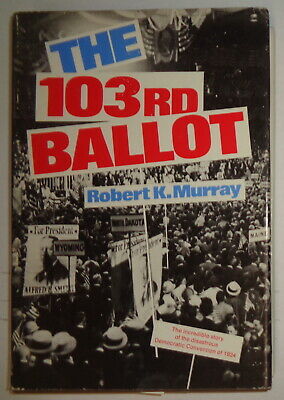
It’s a fascinating story, and one that I know about because I read a book called The 103rd Ballot, which tells the story of not only the convention but also the election that followed it.  The book was written by Robert K. Murray and it was originally published in 1976.  It’s been around for a while but the issues that it deals with and the politicians that are profiled all feel very familiar.  Today, control of the major political parties is still being fought over by the activist who do the work and the politicians who reap the rewards.  Extremism is still a threat.  Just as the Democrats did in 1924, Americans are still trying to figure out what the country’s role in the world should be.  As described by Robert K. Murray, historic figures like FDR, Al Smith, McAdoo, Calving Coolidge, and John W. Davis all come to life.  Their motivations are often petty but their actions change the course of history.

The next presidential election is going to be the 100-year anniversary of the 1924 debacle and the issues that made that convention so chaotic are the same issues that political types are still dealing with today.  In 1924, America was recovering for a war and a pandemic.  In 2024 …. well, you get the idea.  The main difference, of course, is that we now have air conditioning.  At the 1924 convention, air conditioning was still a relatively new concept and the delegates spent two and a half-weeks jammed into Madison Square Garden in the summer.  Agck!

So, seriously, some aspiring Aaron Sorkin (though not Sorkin himself, that’s the last thing we need) needs to buy the rights to this book and get to work on a movie or a miniseries about what happened in 1924.  I can’t wait to see who plays Al Smith!

Book Review: Shooting Midnight Cowboy: Art, Sex, Loneliness, Liberation, and the Making of a Dark Classic by Glenn Frankel


As you can probably guess from the title, Glenn Frankel’s Shooting Midnight Cowboy: Art, Sex, Loneliness, Liberation, and the Making of a Dark Classic is all about the making of one of the darkest films to ever win the Oscar for Best Picture, Midnight Cowboy.

Released in 1969 and based on a novel by James Leo Herlihy, Midnight Cowboy stars Jon Voight as Joe Buck.  Joe is a simple-minded but handsome man from a small-town in Texas.  After both he and his girlfriend are raped by some local rednecks, Joe puts on his cowboy hat, hops in a bus, and heads for New York City.  Joe figures that he can make a lot of money as a hustler but he soon discovers that New York is a far more dangerous, nightmarish, and depressing place than he ever realized.  Not only is he not smart enough to make it as a hustler but he’s not even the only cowboy hanging out around Times Square.  Eventually, Joe meets Ratso Rizzo (Dustin Hoffman), who has a bad leg, a hacking cough, and the worst apartment in New York.  Joe and Rizzo become unlikely roommates and eventually, they even become friends.  (And depending on how you interpret certain scenes and lines of dialogue, they might even become more.)  Rizzo helps Joe to survive in New York but Rizzo himself is dying.  Not even a chance to hang out with a group of Warhol superstars can cure Rizzo of what ails him.  Rizzo wants to see Florida and Joe wants to get out of New York.  How far will Joe go to escape and save his only friend?

Midnight Cowboy was controversial when it was first released, with some critics calling it a masterpiece and other claiming that the film was a symbol of America’s cultural and moral decay.  It went on to become the first and only X-rated film to win Best Picture.  Midnight Cowboy‘s victory over films like Hello Dolly! and Anne of the Thousand Days was seen as a sign that mature and adult-themed films could actually find both acclaim and an audience.  Midnight Cowboy‘s success helped to bring Hollywood into the modern era.  For many, it was also responsible for establishing New York as being the dirty and heartless city that would appear in so many of the films that followed.  Indeed, there’s many different lessons that one can take from Midnight Cowboy but the main one seems to be that everyone should stay the heck out of New York.  Seen today, Midnight Cowboy is no longer all that shocking and director John Schlesinger occasionally seems to be trying too hard to establish his auteur credentials.  But the film’s story still remains effective, as do the lead performances of Hoffman and Voight.  Though being very much a film of its time, Midnight Cowboy is still watchable today.  It’s not only an effective film but it’s also a milestone in Hollywood history.

As for Shooting Midnight Cowboy, it tells you pretty much everything you need to know about both the film and the controversy that has surrounded it over the years.  Starting with the novel that was written by James Leo Herlihy, Shooting Midnight Cowboy meticulously follows the production of the film, exploring not only how both Voight and Hoffman came to star in the film but also how these two very competitive actors came together to create an unforgettable portrait of an unlikely friendship.  It also explores everything from director John Schlesinger’s efforts to bring his vision to life to the concerns that mainstream audiences would refuse to see the film because of its adult context to the writing of the film’s famous theme song, Everybody’s Talkin’.  Perhaps the most harrowing chapter deals with the ordeal that Jennifer Salt suffered through while playing the small role of Joe Buck’s Texas girlfriend, Annie.  Shooting Midnight Cowboy puts the movie into its proper historical and cultural context, showing how the film commented on the issues of the time while also telling a story that remains effective even when viewed outside of the 60s.  It makes for an interesting and informative read, for both the film lover and the cultural historian.

Novel Review: Oath of Office by Steven J. Kirsch


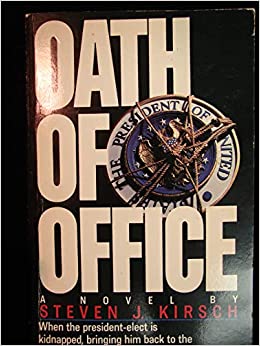
Last week, I returned to exploring my aunt’s old collection of paperback books and I read Oath of Office, a political thriller that was originally published way back in 1988.

U.S. Sen. Jonathan Starr has just been elected to the presidency of the United States of America.  As the first Jewish person to win the presidency, Starr is set to make history as soon as he’s sworn in.  However, there’s a problem.  Starr’s been kidnapped!  The morning after his upset victory, Starr finds himself in the trunk of a car and later confined to a cell.  With no knowledge of who has kidnapped him or what his ultimate fate is going to be, Starr can only wait and have numerous flashbacks to the events that led to him winning the presidency.

Meanwhile, the man that Starr defeated, President Sutherland, is trying to figure out who is behind the kidnapping.  Was Starr abducted by the Russians?  Or perhaps the kidnapping is the work of one of the Middle Eastern terrorist groups who is trying to thwart Sutherland’s efforts to bring peace to region?  Maybe it’s the senator from Texas whose dialogue consists of stuff like, “Ah’ve been workin’ on this deal …. we’ll git it through befo’ the election.”  (That’s an actual quote from the book, by the way.  It seems like it would have been simpler just to say that the man had an accent but some writers just have to be cute about things.)  There’s a lot of possibilities but we know that Starr’s kidnapping was masterminded by an imprisoned mobster, largely because the book tells us early on.  I personally would have dragged out the suspense but no matter!

While secret service agent Andy Reynolds is trying to track Starr down, the Speaker of the House is plotting to take power for himself.  He and his people have come across what they believe to be a loophole in the Constitution, which will keep the electoral college from being able to vote for either Starr or his running mate.  In which case, the Speaker will automatically become president as soon as the incumbent’s term expires.  So, yes, this is another political thriller where the plot largely hinges on a reading of the Constitution that any halfway experienced attorney would easily be able to shoot down.

As you can probably guess, this book has its flaws.  According to the blurb on the back, this was the author’s first novel and I have no idea if he ever wrote a second one.  There are a lot of points in the story that don’t ring true, especially in the flashbacks to Starr’s early political career and the author has a bad habit of telling us things as opposed to showing them.  And, of course, there’s that terrible attempt to capture the Texas accent.  Don’t even get me started on that. 

That said, the idea behind the book is an interesting one.  Only two people of Jewish descent have ever been nominated by a major political party.  Barry Goldwater was an Episcopalian while Joseph Liebermann found himself being opposed by the anti-Semites in his own party.  Of course, neither one of those men made it to the White House.  Oath of Office does make an attempt to seriously consider the challenges that would face the first Jewish president and it’s also honest about how anti-Semitism is a prejudice that is often overlooked by even those who brag about their progressive credentials.  As I said, the book has an interesting idea but the plot just keeps getting in the way.

2021 In Review: Lisa Marie’s 10 Top Novels


Be sure to check out my picks for 2020, 2019, 2018, 2017, 2016, 2015, 2014, 2013, 2012, and 2011!

  1. Once Upon A Time In Hollywood by Quentin Tarantino
  2. Verity by Colleen Hoover
  3. The Final Girl Support Group by Grady Hendrix
  4. Widespread Panic by James Ellroy
  5. Last House on Needless Street by Diane Chamberlain
  6. Back in the Burbs by Avery Flynn and Tracy Wolff
  7. Last Thing He Told Me by Laura Dave
  8. The Lost Apothecary by Sarah Penner
  9. Nothing’s Ever Easy by Amanda Lee Dixon
  10. Red Thorns by Rebel Hart

Lisa Marie’s 2021 In Review:

  1. 10 Worst Films
  2. 10 Favorite Songs
  3. 10 Top Non-Fiction Books

2021 In Review: Lisa Marie’s 10 Top Non-Fiction Books


Be sure to check out my previous picks for 2020, 2019, 2018, 2017, 2016, 2015, 2014, and 2013!

  1. Come Fly The World: The Jet-Age Story of the Women of Pan Am by Julia Cooke
  2. The Babysitter: My Summers With A Serial Killer by Liza Rodman and Jennifer Jordan
  3. Trejo: My Life of Crime, Redemption, and Hollywood by Danny Trejo
  4. Brat by Andrew McCarthy
  5. Shooting Midnight Cowboy by Glenn Frankel
  6. Mike Nichols: A Life by Mark Harris
  7. The Case of the Murderous Dr. Cream: The Hunt For A Victorian-Era Serial Killer by Dean Jobb
  8. Dress Codes: How The Laws of Fashion Made History by Richard Thompson Ford
  9. Hollywood Eden by Joel Selvin
  10. Rock Me on the Water: 1974-The Year Los Angeles Transformed Movies, Music, Television, and Politics by Ronald Brownstein

Lisa Marie’s 2021 In Review:

  1. 10 Worst Films
  2. 10 Favorite Songs

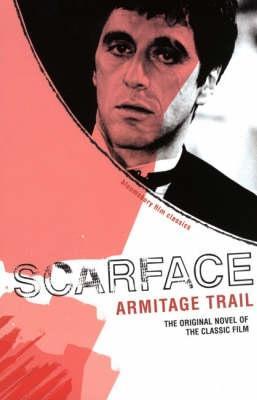
Novel Review: Scarface by Armitage Trail


First published in 1930, Scarface tells the story of Tony Guarino.  Tony was an 18 year-old hoodlum, working his way through the Chicago rackets.  Unfortunately, for Tony, he started to draw too much attention from the cops and his gangster boss told Tony to stop hanging around so much.  Miffed, Tony decided to join the Army.

Tony served with a valor in World War I.  He was natural leader and had no hesitation when it came to killing people.  He was “a good soldier,” as the novel puts it.  When he’s wounded in battle, he’s left with a facial scar that changes his appearance to the extent that even his own family doesn’t recognize him when he returns to Chicago.  Of course, due to a clerical mistake, they also think that Tony’s dead.  After killing his former mistress and her new lover, Tony somewhat randomly decides to change his name to Tony Camonte and take over the Chicago underworld.

He gets a job working for Johnny Love.  Scarface Tony, as he is called now, works his way up.  Soon, Tony is in charge of the Lovo mob and he even has a girlfriend, a former “gun girl” named Jane.  Unfortunately, Tony also has a lot of enemies.  Captain Flanagan may take Tony’s money but he still wants to put Tony behind bars.  The DA may take Tony’s money but he still wants to put Tony behind bars.  The cops way take Tony’s money but …. well, okay, you get the idea.  Tony can’t trust anyone.  Complicating things is that his older brother is moving his way up in the police force and his younger sister has been hanging out with Tony’s main gunman.  And there’s a new gang boss in town.  His nickname is Schemer.  You know he has to be bad with a nickname like that!

I read Scarface yesterday.  It’s only 181 pages long and it’s a quick read.  It’s also not a particularly well-written book.  The prose is often clunky.  The dialogue is awkward.  Tony really doesn’t have any motivation beyond the fact that he’s a jerk.  We’re continually told that Tony has become one of the most powerful gangsters in the country but we don’t really see any evidence of it.  One of the basic rules is that it’s better to show than to tell and this novel is all about telling instead of showing.  What there is of a plot feels like it was made up on the spot.  For instance, with the exception of an off-hand mention of her in the first chapter, the character of Tony’s sister doesn’t even figure into the story until it is nearly done and, yet, the story’s conclusion pretty much hinges on her existence.  Though not as well-written, Scarface is still a bit like The Epic of Gilgamesh.  Writer Armitage Trail just kept coming up with complications until he finally ran out of tablets and had no choice but to abruptly end things.

That said, the book is notable in that it served as the inspiration for Howard Hawks’s 1932 film, Scarface.  The Hawks film, which only loosely follows the plot of Trail’s book and which wisely abandons some of the less credible plot points, would later be remade by Brian De Palma, with Al Pacino stepping into the role of Tony.

And the rest, as they say, is history.

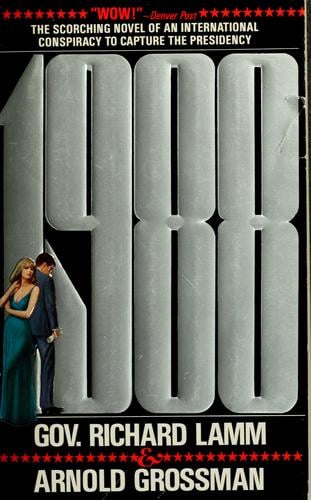
Novel Review: 1988 by Richard D. Lamm and Arnold Grossman


From my aunt’s paperback collection, comes 1988!

1988 is a novel about the 1988 Presidential election. It was published in 1986 so, when it first came out, it was meant to be a look at a possible future. But read today, it’s more like a work of alternate history. What if, the book asks, the 1988 election had been disrupted by a third party candidate?

That candidate is Stephen Wendell, who is the governor of Texas. You can tell that this book was written a long time ago because Wendell is described as being a Democratic governor of Texas. There hasn’t been a Democrat elected statewide in Texas for a while and that’s probably not going to change anytime soon. (Sorry, Beto, but it’s true.) Wendell is also a conservative Democrat, which is yet another reminder that we’re dealing with an old book. With neither the Republican nor the Democratic candidate exciting the country, Wendell sees an opening for his populist, anti-immigration message.

Jerry Bloom is a former 60s radical who now works as a campaign consultant. At first, he resists Wendell’s attempts to hire him but Bloom finally gives in. Some of it is because Wendell seems to be more reasonable than Bloom originally assumed. A lot of it is because Bloom wants the challenge. As a result of Bloom’s hard-hitting and frequently viscous commercials, Wendell starts to rise up in the polls.

Bloom’s conscience is bothered, however. He used to believe in stuff but now he finds himself as just a political mercenary, turning the country against itself. Plus, Bloom comes across evidence that there’s a secret conspiracy behind Wendell’s campaign, one that could put the future of the Republic at stake!

1988 is an okay political thriller. The plot isn’t particularly surprising and you’ll figure out what’s going on long before Bloom does but, for the most part, it’s a well-written book and Jerry Bloom is an interesting character. I do think that the book overestimates that power of Bloom’s commercials. For the most part, they sound like the type of stuff that The Lincoln Project posted throughout 2020, commercials that would speak to the already converted while turning off the undecided voters. Bloom’s commercials sound like they would be popular with Wendell’s base but they don’t sound like the sort of thing that would make him a potential president.

The book also makes the mistake of including a character named Harrison Chase, who I guess is supposed to be some sort of Edward R. Murrow type. He gives commentaries on the evening news and 1988 devotes page after page to Harrison Chase bitching about the election. Most of the commentaries come across as being pompous and self-important, which might be the most realistic part of the book. But it still doesn’t make them particularly interesting to read. They slow down the action and they also contribute to the book ending on an annoying ambiguous note.

Political junkies will enjoy counting up all of the real-life politicians who are mentioned in the book. (Joe Biden gets a shout-out because he’s been around forever.) Some may also find it interesting that one of the book’s co-authors was governor of Colorado at the time that he wrote the book. One has to wonder how much of that experience contributed to the book’s portrait of the electorate as being easily led and intellectually vapid.

1988 is okay. It goes a little heavy on the “political consultants are bad” angle. It’s not a bad message but it’s hardly a revolutionary. Still, it’s always interesting to read older political books and see how much things have changed and also how much they’ve remained the same.

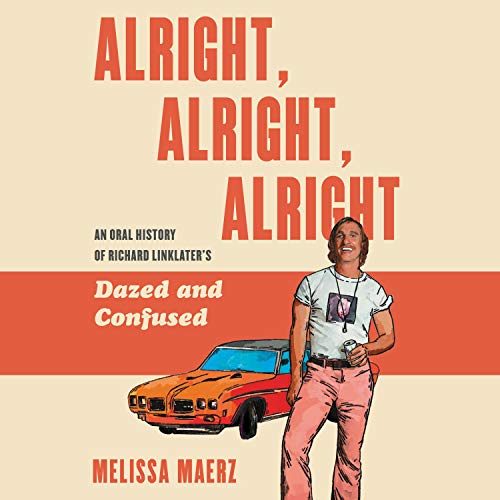
Book Review: Alright, Alright, Alright: The Oral History Of Richard Linklater’s Dazed and Confused by Melissa Maerz


There are a lot of different ways that I could praise this 2020 book about the 1993 high school film, Dazed and Confused.

I could point out that it is the definitive history about the making of one of my favorite films, told by the people who were there.

I could point out that it’s a book that captures a very important time in the development of modern independent film.

I could point out that anyone who is a fan of Richard Linklater should read this book to discover the struggles that Linklater went through while directing his second feature film.  Linklater learned a lot during the filming.  He’s also an endlessly fascinating interview subject, a filmmaker who has figured out how to balance the needs of art with the needs of commerce.

If you’re a Texan, you definitely have to read this book because Dazed and Confused is a part of our culture.

I would also point out that this book is about more than just went on while the movie was being shot.  It’s also about how the movie effected and continued to effect the lives of the people who were in it and who have seen it..  Some cast members, like Matthew McConaughey, Ben Affleck, Parker Posey, and Renee Zellweger (even though she’s only visible for a second and isn’t actually credited in the film), became big stars.  Others, like Anthony Rapp and Adam Goldberg and Nick Katt, have emerged as strong characer actors, the type of people who you love to see in any movie.  Others had a bit less success and most of them do not hold back on discussing why stardom did or did not come calling.

Featuring interviews with just about everyone who was involved in the film, Alright Alright Alright begins with Richard Linklater finding arthouse success with Slacker and then moving on to Dazed and Confused.  As many people in the book point out, Linklater’s first few films helped to define both Austin and the entire Texas film scene.  At a time when most Texas films were about cowboys and oilman, Linklater revealed that there was a lot more going on.  And yet, when Linklater went on to find his own quirky brand of mainstream success, many of his former colleagues in Austin felt left behind.  Linklater acknowledges their feelings while also making no apologies for not spending the rest of his life remaking Slacker.

The full production of Dazed and Confused, from casting to the film’s release, is covered.  We learn about some of the people who tried out for the film but, ultimately, weren’t cast.  (Linklater seems to feel almost guilty for not casting Vince Vaughn in a role.)  We learn how Matthew McConaughey almost randomly found his way into the cast and then subsequently transformed Wooderson from being a minor character into being the heart of the film.  We follow Wiley Wiggins as he comes of age on the film set.  Just about everyone is interviewed and no one holds back.  It was a frequently wild set, with a young cast who, to a certain extent, recreated high school while the film was being shot.  I was sad to learn that Michelle Burke did not get along with Parker Posey and Joey Lauren Adams.  I was happier to read that Jason London was apparently as cool off-camera as he was when he was playing Randall “Pink” Floyd.  And, considering the way that his character just vanished from the film, I have to say that I wasn’t surprised to discover that no one seemed to get along with Shawn Andrews.

Shawn Andrews, of course, played Kevin Pickford.  Pickford was originally meant to be an almost shamanistic character, though the concept of the character started to change once filming actually started.  (“There’s a reason we called him Prickford,” Rory Cochrane says, at one point.)  Two chapters are devoted to everyone in the cast taking about how much they disliked working with Shawn Andrews.  No one really seems to hold back, which I have to admit almost made me feel sorry for the guy.  Like many young actors, he went a bit too far trying to be method.  Nick Katt compared him to Jared Leto at his worst.  The otherwise easy-going Jason London talks about nearly getting into a fistfight with him.  Linklater attempts to be diplomatic while discussing what happened but even he admits that Andrews didn’t gel with his vision for the film.  Pickford was originally meant to be a major character.  He was meant to be on the football field with Randall and Dawson.  He was also originally meant to be the one heading out to get Aerosmith tickets.  However, with more and more actors basically refusing to deal with the actor who was playing him, Pickford was replaced in scene after scene by Matthew McConaughey’s Wooderson.  (Andrews, apparently, felt that Pickford should die in a dramatic car accident towards the end of the film.)  Perhaps not surprisingly, Andrews was one of the few actors to decline to be interviewed for the book.

The final few chapters of the book are a bit sad, as some members of the cast discuss their careers after Dazed and Confused.  We read about a cast reunion that occurred in Austin that turned a bit awkward when the actors who had become big stars reunited with the actors who hadn’t.  Jason London, who dealt with a great personal tragedy shortly after the filming of Dazed and Confused, talks about the experience with a wistfulness sadness that is actually a bit heart-breaking.  One gets the feeling that London’s mixed feeling weren’t so much about not becoming a Matthew McConaughey or Ben Affleck-style star as much as they were an acknowledgement that the past is the past.  The unstated theme running through the book is that, as good a time as everyone had while making Dazed and Confused, everyone’s older now and that moment can never be recaptured.

(Kind of like high school!)

The book does end with some speculation about a Dazed and Confused sequel.  Linklater seems to have given it some thought, though he also says that it will never happen.  Personally, I think that’s the right decision.  Dazed and Confused is perfect as it is.  Alright, Alright, Alright is the book that helps us to understand why that is.