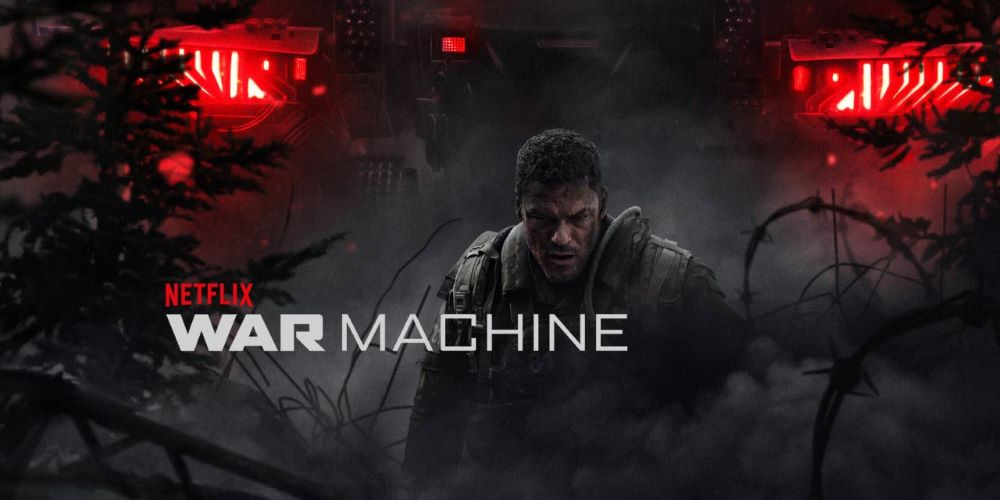
Review: War Machine (dir. by Patrick Hughes)


“It’s not about us anymore. It’s warning everybody that thing’s coming.” — Staff Sergeant 81

War Machine is a slick, mid-budget sci-fi actioner that mostly does exactly what it promises: put Alan Ritchson in a killbox with something inhuman and let the cameras roll. It is also a film that keeps bumping up against more interesting ideas than it has time—or maybe courage—to fully explore.

Set around a Ranger Assessment and Selection Program (RASP) training exercise, War Machine drops a squad of U.S. Army candidates into what should be a controlled simulation and then twists the dial from “routine” to “existential threat” in a single, nasty turn. Patrick Hughes uses the military-training frame as a clean, modular structure: we get the briefing, the banter, the march into the woods, and then the sense that something is just off before the real problem reveals itself. That problem, teased heavily in marketing, is a non-human adversary that pushes the movie from grounded war-games thriller into full-on sci-fi horror-action.

On a pure premise level, the film is almost aggressively simple: what if you locked a handful of Rangers-in-the-making in with an advanced, alien threat and watched them improvise their way out? The script never strays far from that line. It moves briskly from beat to beat—contact, casualties, regroup, “this isn’t part of the exercise,” reveal—without a lot of digressions. That tightness keeps the pacing snappy, but it also means character work often comes in shorthand: a line about a family here, a rivalry there, enough to suggest depth without really digging for it.

Ritchson is easily the film’s biggest asset, and the filmmakers know it. Coming off Reacher, he arrives with a built-in persona: the big, capable, slightly sardonic soldier who you just instinctively trust to solve violent problems. War Machine leans into that, but it also asks him to play a little more vulnerability than his Amazon series typically allows. There are moments—usually between set-pieces—where you see the strain and confusion creeping in, and the performance keeps the movie from turning into a pure pose-fest.

Most of the supporting cast is drawn in broad strokes but works well enough in the moment. You get the expected squad dynamics: the true believer, the skeptic, the joker, the one who freezes when things get ugly. The film rarely surprises you with what these people do, but the actors sell the camaraderie, and when bodies start dropping, the losses feel at least momentarily sharp instead of purely mechanical. Still, if you walked out of the movie and had trouble naming more than two characters, that would be understandable; the movie cares more about how they move than who they are.

Hughes’ direction sits in that modern streaming-action pocket: clean, serviceable, with a couple of standout moments but nothing that radically redefines the genre. The early training beats are shot with a straight military grit that grounds the later sci-fi escalation; you can feel the weight of gear, the slog of the environment, the tight focus on lines of advance and retreat. When the alien threat fully enters the frame, the film shifts into a more stylized mode, with harsher lighting, heavier VFX integration, and some nicely framed silhouette shots that emphasize size and speed over detailed anatomy.

Action-wise, War Machine is at its best when it uses geography and tactics instead of just spraying bullets into darkness. A mid-film set-piece in a partially collapsed structure, where the squad tries to funnel the creature into a kill zone, shows how much more interesting the movie becomes when the characters think rather than simply react. You get coordinated movement, overlapping lanes of fire, and the sense of a plan barely holding together. Other sequences lean more on chaotic spectacle, with quick cuts and digital mayhem that get the job done without really sticking in your memory.

The creature itself—both in concept and in execution—is solid, if not iconic. Hughes has mentioned that his original instinct was to completely hide the sci-fi angle in marketing and even within the film for as long as possible, turning the reveal into a full-on genre pivot. You can feel that tension: the movie is structured like a long-burn mystery, but the way it’s framed assumes you already know there is some kind of alien or advanced threat in play. As a result, the first half can feel like it is coyly dancing around a surprise that you walked in expecting, which blunts some of the intended impact.

Once revealed, though, the alien threat has a tactile, physical presence that helps sell the danger, especially when Ritchson is forced into close-quarters encounters. The effects and practical elements blend reasonably well, particularly in dim environments where the film smartly avoids overexposing any weaknesses in the design. You’re never watching the thing and thinking “instant classic,” but you also rarely feel like you’re staring at a dated video-game cutscene, which is no small feat at this budget level.

Where War Machine wobbles is in its relationship to its own ideas. The RASP setting, the simulated-mission-gone-wrong structure, and the presence of an unprecedented threat all hint at questions about how militaries adapt to non-traditional warfare, how much human soldiers matter in a future of machines, and what “training” even looks like when the enemy doesn’t follow any known playbook. Every so often, the screenplay brushes up against those questions—usually in a line about command decisions or acceptable losses—and then quickly retreats back into “shoot, move, communicate.”

There is also a thread about trust in authority and the expendability of trainees that could have turned this into a sharper, more cynical film. Instead, War Machine opts for a more earnest, almost old-fashioned faith in individual bravery and brotherhood. The movie clearly admires these soldiers and wants you to admire them too, so it stops short of really indicting the system that put them in harm’s way. That choice keeps the tone accessible and avoids turning the movie into a lecture, but it also leaves some dramatic meat on the bone.

In terms of craft, this is very much a “Friday night streamer” movie—for better and worse. It looks good enough on a living room screen, with clean sound design that makes each impact and gunshot feel beefy without blowing out your ears. The editing rarely confuses basic spatial relationships, which already puts it ahead of a lot of action on the platform, but it also seldom lingers long enough on a moment to let you fully savor the choreography or the creature’s movement. You get the sense of a film that has been trimmed for pace and attention-span metrics more than for rhythm or mood.

There has already been talk of this being a “spectacle worth watching” if you like Ritchson and sci-fi action, paired with the caveat that it is a decent, familiar entry in a crowded space whose lead performance carries it over the line. That feels about right. War Machine is not trying to be the next genre landmark; it is trying to give fans of Reacher a chance to see their guy punch, shoot, and strategize his way through a different kind of nightmare. On that level, it mostly delivers.

The ending leaves the door open for more, without dunking you in a full-on cliffhanger. You can watch this, feel like you got a complete story, and still understand why the creative team is already floating sequel ideas and talking about “War Machines” in the plural. Whether that happens will depend on the usual streaming calculus—completion rates, social buzz, how long people keep it in their “Recently Watched.” Creatively, there is room to expand the world and dig into the implications that this first film mostly uses as background texture.

If you come to War Machine looking for tight, character-driven military sci-fi with big thematic swings, you’ll probably walk away thinking about what could have been. But if you want a solid, competently staged sci-fi shoot-’em-up anchored by a physically commanding lead turn, this is a pretty easy recommendation—especially if you are already waiting for the next season of Reacher and need something in the same physical, bruising register to fill a couple of hours.
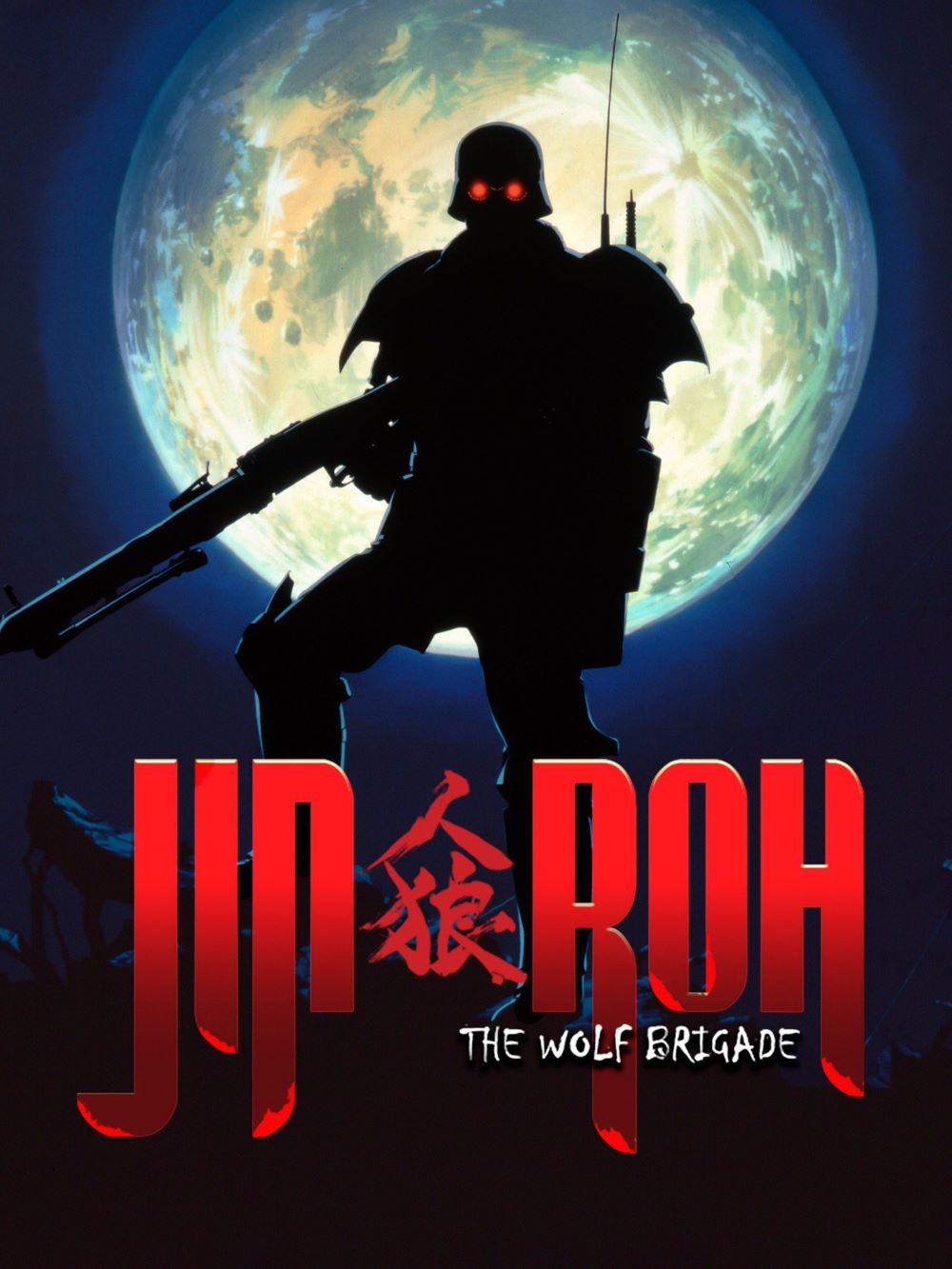
Anime You Should Be Watching: Jin-Roh


“We are not men disguised as dogs. We are wolves disguised as men.” — Hachiro Tohbe

Jin-Roh: The Wolf Brigade stands out as a gripping 1999 anime film that blends political intrigue, psychological depth, and haunting visuals into something truly unforgettable. Directed by Hiroyuki Okiura with a screenplay by Mamoru Oshii, it drops you into an alternate post-WWII Japan where the Allies lost, Nazi influence lingers, and society teeters on chaos from endless terrorist attacks and brutal crackdowns. This isn’t your typical high-octane anime romp; it’s a slow-burn character study wrapped in a thriller that forces you to confront the monsters we become in times of fear and division, making it an absolute must-watch for anyone craving mature storytelling in animation.

Right from the opening scenes, the film hooks you with its oppressive atmosphere. We meet Kazuki Fuse, a stoic member of the Kerberos Panzer Cop (KPC), an elite anti-terror unit decked out in powered exoskeletons called Protect Gear that make them look like armored wolves prowling the streets. Fuse chases a young female terrorist from the far-left Sect group into the sewers. She’s just a scared girl clutching a bomb, and when he has her dead to rights, he hesitates—can’t pull the trigger. She blows herself up instead, leaving him shell-shocked and questioning everything. That moment alone is a gut-punch, setting up Fuse’s arc as a man caught between duty and his fraying humanity. The animation captures it perfectly: shadows swallow the damp tunnels, rain-slicked streets reflect flickering neon, and every footstep in those heavy suits echoes like doom approaching.

What elevates Jin-Roh is its alternate history setup, which feels eerily plausible. Japan never got nuked or occupied by the U.S.; instead, it’s a pressure cooker of failed U.S. aid, communist uprisings, and a government unleashing paramilitary forces to keep control. The Capital Police clash with regular cops and intelligence agencies like Public Security, all vying for power amid riots and bombings. It’s not just backdrop—it’s the beating heart of the story, mirroring real-world tensions like Cold War paranoia or modern insurgencies without ever feeling preachy. Fuse gets sidelined to “re-education” after his hesitation, where he’s grilled by superiors and hauntedJin-Roh: The Wolf Brigade stands out as a gripping 1999 anime film that blends political intrigue, psychological depth, and haunting visuals into something truly unforgettable. Directed by Hiroyuki Okiura with a script from Mamoru Oshii, it crafts an alternate history where Japan never fully shakes off authoritarian shadows after a failed U.S. occupation, making it a slow-burn thriller that demands your attention from the first frame.

The story kicks off in a dystopian 1950s Tokyo gripped by unrest, where the government deploys the elite Kerberos Panzer Cops—think heavily armored stormtroopers in powered exosuits—to combat the far-left Sect, a terrorist group using young girls as human bombs. Our protagonist, Kazuki Fuse, is one of these wolfish enforcers, a guy hardened by the grind of urban warfare. Early on, he chases a teenage Sect courier, Nanami Agawa, into rain-slicked sewers. She’s got a bomb vest strapped on, and point-blank, he hesitates to pull the trigger. She blows herself up instead, leaving Fuse shell-shocked and facing a psych evaluation that sidelines him from the force.

This hesitation isn’t just a plot device; it’s the spark that ignites Fuse’s unraveling. Reassigned to retraining, he bumps into an old academy buddy, Izaki Henmi, now with Public Security, the sneaky intel arm plotting to dismantle Kerberos in favor of subtler tactics. Henmi feeds Fuse details on Nanami, stirring guilt that pulls him to her makeshift grave. There, he meets Kei Amemiya, who claims to be Nanami’s big sister. She’s soft-spoken, cooks him hearty meals like beef stew in her cramped apartment, and slowly cracks through his armored exterior. Their bond feels genuine amid the paranoia—nights reading Little Red Riding Hood, her teasing him about his wolfish instincts—but it’s laced with unease as factions clash in bloody street riots.

What elevates Jin-Roh is how it weaves the fairy tale of Little Red Riding Hood into its core. Fuse embodies the wolf, disguised in human skin but driven by primal loyalties. Kei plays Red, vulnerable yet complicit, her red hood symbolizing the Sect’s cloaked threats. The film flashes back to Fuse’s dreams of this story, narrated in a chilling child’s voice, mirroring his internal war: Can a wolf become a man, or is he doomed to devour what he loves? This allegory sharpens the political knife—Kerberos as fascist wolves protecting the state, Public Security as scheming hunters, the Sect as radical prey fighting back with desperate ferocity.

Visually, it’s a knockout. Production I.G.’s animation captures a gritty, oppressive Tokyo with meticulous detail: foggy streets lit by harsh sodium lamps, the clank of Protect Gear suits echoing like mechanized doom, sewers dripping with menace. No flashy mecha battles here; action hits hard but sparse—a riot scene with cops mowing down protesters in slow-motion chaos, bullets sparking off armor. The color palette stays muted, grays and blues amplifying isolation, while intimate moments glow warmer, like candlelit dinners that hint at fragile humanity. Sound design seals it: muffled gunfire, pounding rain, a sparse score by Shigeto Saegusa that lets silence breathe tension.

Thematically, Jin-Roh doesn’t pull punches on loyalty’s cost. Fuse grapples with betrayal at every turn—Henmi’s double-dealing, Kei’s true role as a Public Security plant coerced into luring him out. Deeper still, it probes dehumanization: soldiers conditioned to kill become liabilities if empathy creeps in. The film’s climax in a foggy junkyard twists the knife—Fuse, reinstated by the shadowy Jin-Roh (a rogue Kerberos splinter), faces an impossible order. Kei recites the fairy tale’s climax, embracing him as he fires, her death echoing Red’s fate. No heroes triumph; just wolves feasting in the dark.

Pacing might test casual viewers—it’s deliberate, more mood piece than adrenaline rush, clocking 99 minutes of brooding buildup. Voice acting shines, especially Fuse’s quiet torment from Hideo Sakaki and Kei’s wistful edge from Yurika Hino. Supporting cast, like the stone-cold Kerberos captain, adds layers without stealing focus. Influences nod to Oshii’s Patlabor and Ghost in the Shell, but Okiura’s touch feels more personal, less cyberpunk flash.

So why is Jin-Roh: The Wolf Brigade a must-watch? First, its prescience. Released amid late-’90s stability, it nails endless cycles of terror and counterterror, loyalty tests, and institutional rot—echoes in today’s headlines that make it feel ripped from 2026 newsreels. Alternate history aside, the human core endures: hesitation as rebellion, love as trap, violence as identity. It’s “grown-up anime” that trusts you to connect dots, rivaling Akira in ambition but surpassing in emotional gut-punch.

Second, technical mastery holds up flawlessly. In an era of CGI slop and quippy spectacles, Jin-Roh‘s hand-drawn grit reminds why anime conquered global imaginations. Every frame rewards rewatches—spot the wolf motifs in shadows, the Red hoods in crowds. It’s not fan service; it’s artistry that lingers, haunting like a bad dream.

Third, it challenges easy morals. No side’s clean: Sect kids are pawns, cops brutal zealots, intel weasels manipulative. Fuse’s arc forces you to question: Is mercy weakness in a wolf’s world? Or the last spark of manhood? This ambiguity sparks debates, perfect for film buffs dissecting authoritarianism or trauma’s scars. Pair it with Patlabor 2 for the full Kerberos saga—it’s expanded universe done right, sans MCU bloat.

Critics rave for reason: 7.3/10 on IMDb, cult status among cinephiles. If you dig thrillers like Children of Men or The Lives of Others, this bridges anime and live-action prestige. Stream it on Crunchyroll or Blu-ray for that crisp transfer—worth every penny. Skip if you crave explosions; dive in if mature stories with fangs appeal.

Ultimately, Jin-Roh argues we’re all wolves under pressure, cloaked in civility until the hood slips. Fuse’s tragedy warns that in fractured states, personal redemption crumbles against systemic hunger. It’s not hopeful—ending on solemn wolf howls—but that’s its power: a mirror to our baser selves, urging vigilance. Must-watch for anyone serious about anime’s potential beyond tropes. It’ll chew you up and spit out questions that stick.

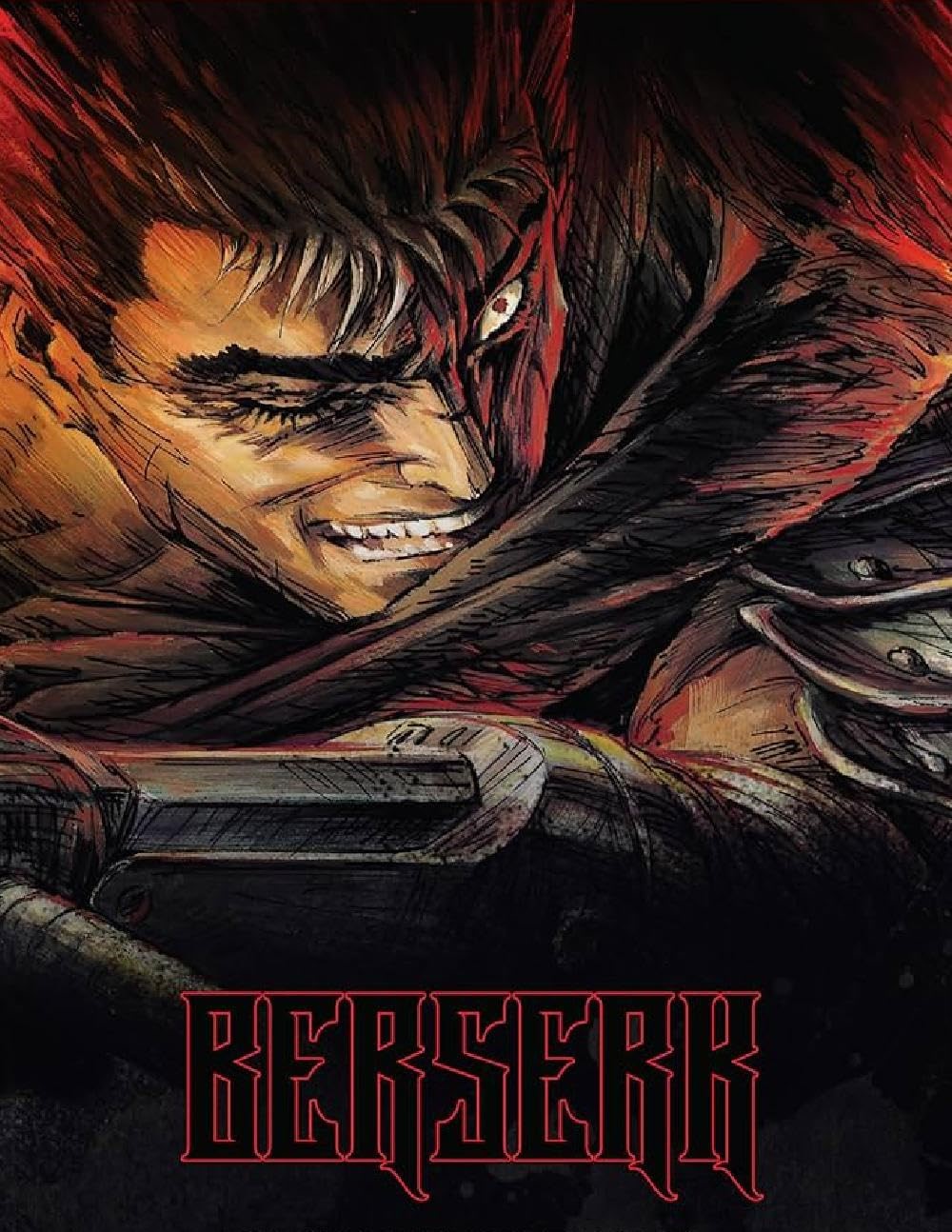
Anime You Should Be Watching: Berserk (Kenpū Denki Berserk)


“This thing… called a heart… it’s just a dream.” — Guts

The 1997 Berserk anime adaptation dives headfirst into Kentaro Miura’s brutal manga world, turning its already savage Golden Age arc into a gut-wrenching visual nightmare that still haunts fans nearly three decades later. This 25-episode series, aired from October 1997 to March 1998, kicks off with a flash-forward to Guts as the Black Swordsman before rewinding to his mercenary days with Griffith’s Band of the Hawk, capturing the raw rise-and-fall tragedy without pulling punches. What makes it stand out is how it cranks up the manga’s inherent darkness, using stark animation and eerie sound design to make themes of betrayal, rape, and demonic sacrifice feel even more inescapable and visceral.

Right from the opener, Berserk the anime slams you with a blood-soaked tease of Guts’ rage-fueled future, setting a tone that’s less hopeful fantasy and more unrelenting descent into hell. The manga already paints a medieval-inspired world of endless war, ambition, and causality—where fate pulls strings like puppet masters—but the anime condenses this into a tighter, more oppressive narrative arc. It skips some manga side elements like Puck the elf or deeper political intrigue in Midland, which actually sharpens the focus on human frailty, making the horror hit harder without distractions. Critics have called it the pinnacle of dark fantasy, praising how its hand-drawn grit and shadowy palettes evoke the ugliness of war better than polished modern takes.

At its core, the series explores ambition’s toxic price through Griffith, the silver-haired charmer whose dream of kingship devours everyone around him. In the manga, Griffith’s charisma shines amid detailed backstories, but the anime amplifies his fall by lingering on his psychological cracks—torture scenes drag with feverish close-ups, his tongue severed, body broken, eyes hollowed out in a way that feels more pathetic and monstrous than the page’s subtlety. This ramps up the grimness; where Miura’s art might imply despair through intricate shading, the anime’s limited budget forces raw, unflinching stares that bore into your soul, turning Griffith from lowborn visionary into a symbol of corrupted free will. Guts, voiced with gravelly intensity by Nobutoshi Canna, embodies endless struggle—born from a corpse, abused as a kid (hinted brutally but not shown in full like the manga), he swings his massive Dragonslayer like an extension of his trauma.

Casca’s arc gets the darkest upgrade, transforming her from fierce Hawk commander to shattered victim in ways that make the manga’s tragedy feel almost restrained. The anime doesn’t shy from her rape during the Eclipse—depicted with nightmarish silence, blood sprays, and Femto’s (Griffith reborn) cold violation right before Guts’ helpless eyes—losing his arm and eye in a frenzy of futile rage. Manga fans note how the adaptation’s Eclipse outdoes even later films in horror: black voids swallow screams, demons tear flesh with grotesque intimacy, and the lack of music lets raw voice acting convey utter hopelessness. This isn’t gratuitous; it’s the manga’s themes of human nature’s depths—betrayal, causality’s spiral, religion as blind comfort—boiled down to soul-crushing visuals that linger longer than words on a page. The God Hand’s emergence, offering Griffith godhood for his band’s sacrifice, hits like cosmic indifference, making the Eclipse not just gore but a philosophical gut-punch on destiny versus defiance.

Susumu Hirasawa’s soundtrack seals the deal, with synth-heavy tracks like “Forces” and “Guts” weaving ethereal dread into every sword clash and quiet betrayal. Where the manga relies on Miura’s hyper-detailed panels for atmosphere, the anime’s OST—haunting flutes over clanging armor—amplifies isolation, turning battles into dirges and the Eclipse into a silent scream. It’s no wonder fans say time flies despite the deliberate pacing; the slow build to horror keeps you hooked, pondering ambition’s cost and humanity’s fragility.

Culturally, the 1997 Berserk anime exploded as a gateway drug to dark fantasy, pulling in viewers who then devoured the manga and reshaped anime tastes. Before it, Japanese fantasy leaned lighter—think Dragon Quest quests—but Berserk proved you could blend Conan the Barbarian savagery with psychological depth, influencing giants like Attack on Titan‘s doomed soldiers, Goblin Slayer‘s trauma-soaked gore, and even Game of Thrones-style betrayals. It sold millions, won Tezuka Osamu nods for the manga, and got rereleased on Blu-ray as recently as 2024, proving its timeless pull. Western critics hail it as intellectually demanding, transcending tropes with Kurosawa-like violence that underscores humanity amid apocalypse.

The anime dials up the manga’s grimness by necessity—budget constraints meant fewer frills, so every frame prioritizes emotional weight over flash, making demons feel mythically terrifying and losses irreparable. Manga’s Golden Age builds subtle bonds; the show condenses them into feverish intensity, so Griffith’s sacrifice stings deeper, Guts’ rage boils hotter. Themes like predetermination—Guts branded for endless demon pursuit—gain visual permanence via the glowing Brand of Sacrifice, a constant night-haunting reminder absent in static panels. Religion’s critique shines too: Midland’s church ignores atrocities until apostles devour believers, a bleak commentary amplified by animation’s hordes of mangled corpses.

Even flaws enhance the darkness—no fairy-tale elf Puck lightens moods, politics skimmed leave a hollow kingdom, and the cliffhanger ending (mid-Eclipse tease) mirrors life’s unfinished cruelties. Later adaptations like 2016’s CGI mess diluted this; 1997’s raw style keeps the manga’s mud-and-blood realism intact, arguably grimmer for its restraint. Voice acting sells it—Canna’s guttural roars, Yuko Miyamura’s Casca cracking under pressure—pairing with Hirasawa’s score to etch trauma into memory.

Today, Berserk‘s legacy towers: over 70 million manga copies sold, crossovers in Diablo IV, endless merch, and debates on its Eclipse as anime’s bleakest peak. It proved dark themes—child abuse hints, schizophrenia-like breaks, ambition’s cannibalism—could captivate without cheap shocks, birthing “grimdark” as genre staple. For a low-budget ’97 relic, it outshines flashier takes by leaning into despair, making Miura’s world feel like fate’s cruel joke you can’t look away from.

Diving deeper into why it darkens the source: manga’s art allows interpretive distance—shadowed horrors imply pain—but anime forces confrontation, blood arcing in real-time, faces twisting in agony. Guts’ childhood rape allusion becomes a spectral flashback nightmare; Griffith’s torture a year-long montage of pus and screams, eroding his beauty into ruin. The Hawks’ slaughter isn’t panel-flipped pages but prolonged screams fading to silence, each apostle maw chewing comrades we grew to love—Judeau’s wit silenced, Pippin’s bulk rent apart. This visceral amp makes causality’s theme suffocating: no escape, just branded survival in a demon-riddled world.

Culturally, it bridged East-West fantasy gaps, echoing Hellraiser body horror and Excalibur medieval grit while predating Dark Souls (born from Miura’s influence). Fans worldwide cite it as therapy-triggering yet cathartic, sparking forums on trauma, resilience, toxic bonds. Its impact endures—Miura’s 2021 passing spiked sales, proving Berserk as monolith.

Ultimately, the 1997 adaptation doesn’t just adapt; it weaponizes the manga’s shadows, forging a bleaker legend that demands you question humanity’s fight against oblivion.

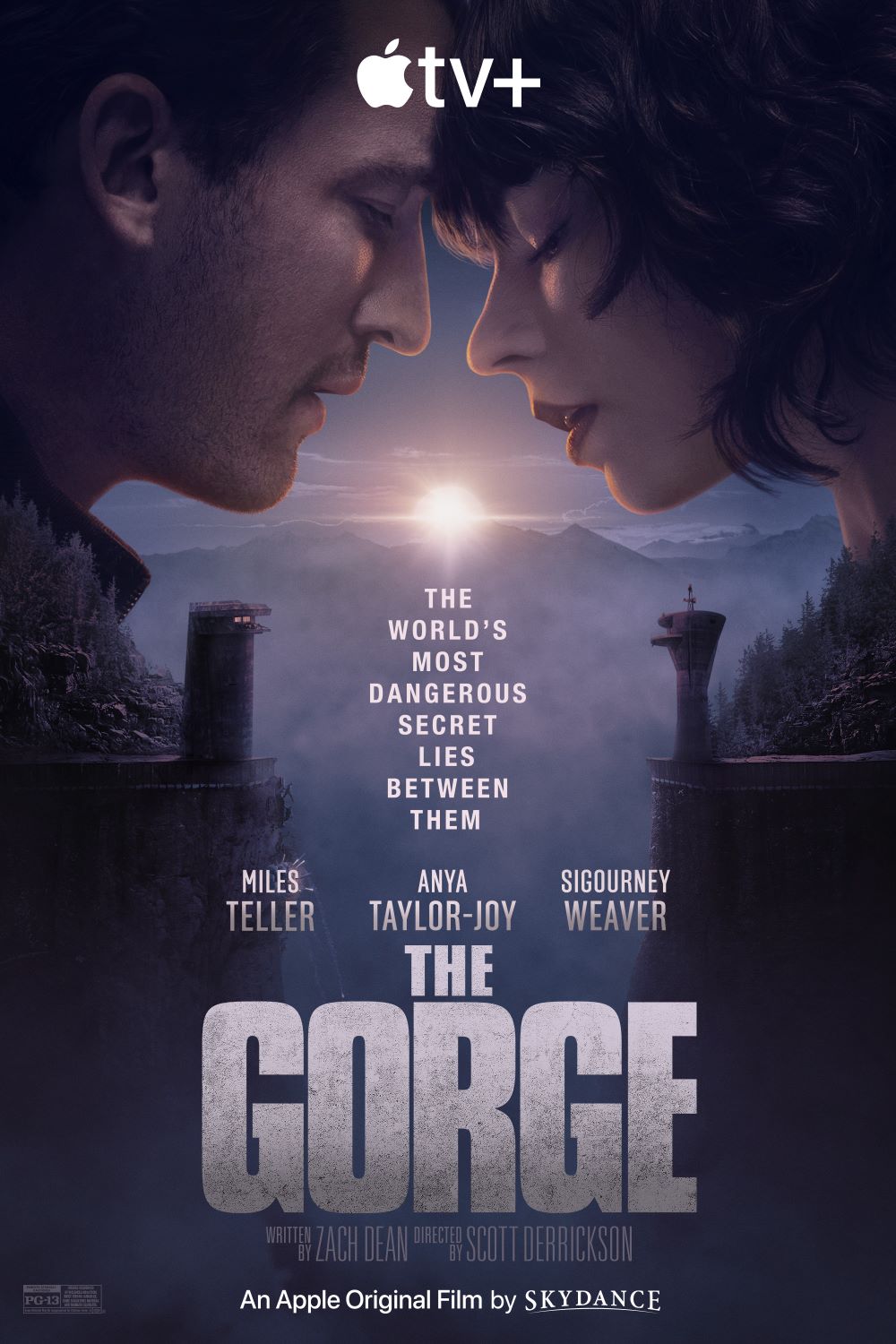
Review: The Gorge (dir. by Scott Derrickson)


“The theory I think summarizes the situation most succinctly is, the gorge is the door to Hell and we’re standing guard at the gate.” — Jasper “J.D.” Drake

The Gorge delivers a gripping streaming thriller anchored by a fresh premise and strong performances, even if it doesn’t always sustain its early promise. Directed by Scott Derrickson, this Apple TV+ film stars Miles Teller and Anya Taylor-Joy as elite snipers posted on opposite rims of a massive, shadowy chasm, charged with guarding against mysterious dangers rising from its depths. Mixing sci-fi intrigue, budding romance, and horror-tinged action, it hooks you early but shows some cracks later on.

The setup grabs attention right away. Levi Kane (Teller), a haunted ex-Marine sniper, signs on for a year-long solo stint in a high-tech tower overlooking the gorge’s west side—no outside contact allowed, and strict radio silence with whoever’s stationed opposite. Anya Taylor-Joy’s Drasa, a tough Lithuanian operative with Kremlin roots, faces her own isolation on the east rim, wrestling with personal demons tied to her family’s struggles. Trapped in these fortified outposts, they scan the foggy abyss through scopes and monitors, the vast divide amplifying their solitude. Sweeping drone shots make the gorge feel alive and oppressive, a character in itself that looms over every scene.

The film’s strongest stretch comes in the first half, where tension simmers through daily grind broken by fleeting human sparks. Levi copes with PTSD nightmares by scribbling poetry in quiet moments, while Drasa bends rules on her birthday—flashing signs across the void to goad Levi into a long-distance shooting duel. What starts as competitive jabs turns into warm, flirtatious banter, like forbidden notes swapped in a deadly game. Teller brings coiled intensity with an everyman edge, making Levi instantly sympathetic, while Taylor-Joy layers Drasa with fierce independence and subtle vulnerability. Their chemistry bridges the chasm convincingly, nurturing a romance that cuts through the routine. When threats finally breach the surface—nightmarish entities clawing upward—the defense sequences snap to life: precise sniper fire synced with automated turrets and mine blasts, all taut and thrilling.

Derrickson keeps the pace deliberate yet engaging, drawing on isolation vibes from classics but spiking them with sharp combat and emotional beats. Sound design builds dread masterfully—distant rumbles and unnatural cries echoing from below—while the score pivots from pulsing synth menace in fights to softer strains during tender interludes, like Levi’s daring zipline crossover for a candlelit meal from scavenged supplies. A shared poem moment lands with quiet impact, balancing the gunfire without veering into cheese. It’s this blend of intimacy and adrenaline that gives the movie its heart.

The story shifts midway when Levi’s routine relief mission derails spectacularly, pulling both snipers into the gorge’s underbelly for a chaotic fight for survival. What follows cranks up the stakes with bigger set pieces—vehicle chases, mercenary clashes, and desperate ingenuity against escalating horrors—but the momentum dips as exposition rushes in and spectacle overtakes nuance. Some creature designs impress with gritty practical work, though CGI falters in brighter spots, and the human drama gets sidelined by the frenzy. The leads hold it together, capping things with a synchronized shot that unveils hidden tech and forces tough choices. The wrap-up aims for bittersweet punch but ties threads a bit too neatly, dodging bolder risks.

Teller and Taylor-Joy shine as the core duo. Teller charts Levi’s arc from withdrawn loner to committed partner with grounded charisma that tempers the sci-fi weirdness. Taylor-Joy owns every frame as Drasa, her sharp gaze conveying both killer instinct and inner turmoil. Sigourney Weaver’s cameo as a steely handler adds weighty presence, though her role follows a familiar path. The tight cast serves the contained story well, with no fat to trim—brief warnings from predecessors hint at deeper peril without overexplaining.

Visually and technically, The Gorge punches above streaming norms. Derrickson’s flair for genre hybrids—honed on atmospheric horrors—lends moody lighting: hazy green fog in the depths versus sterile tower blues. Action choreography feels authentic, rooted in real stunts for those sniper exchanges, and the gorge’s scale stuns in wide shots. The soundscape lingers, from guttural threat growls to metallic turret whirs. A few nitpicks persist—runtime drags in probe-heavy stretches, and some effects look dated up close—but the craftsmanship stands out.

At its best, the movie teases thoughtful isolation amid global secrecy, but it leans harder into creature chaos and corporate shadows than profound mystery. Romance fans will warm to the leads’ spark, action lovers get solid payoffs, while horror buffs might crave more bite given the PG-13 leash. It promises slow-burn depth yet settles for crowd-pleasing beats, leaving a few gorge secrets hanging just out of reach.

Overall, The Gorge works as a lively genre cocktail, driven by star power and a killer hook. It nods to tight-quarters thrillers with extra heart and hardware, making for engaging viewing despite uneven gears. The leads and atmosphere carry it far enough to recommend for fans of smart popcorn flicks on a chill night.

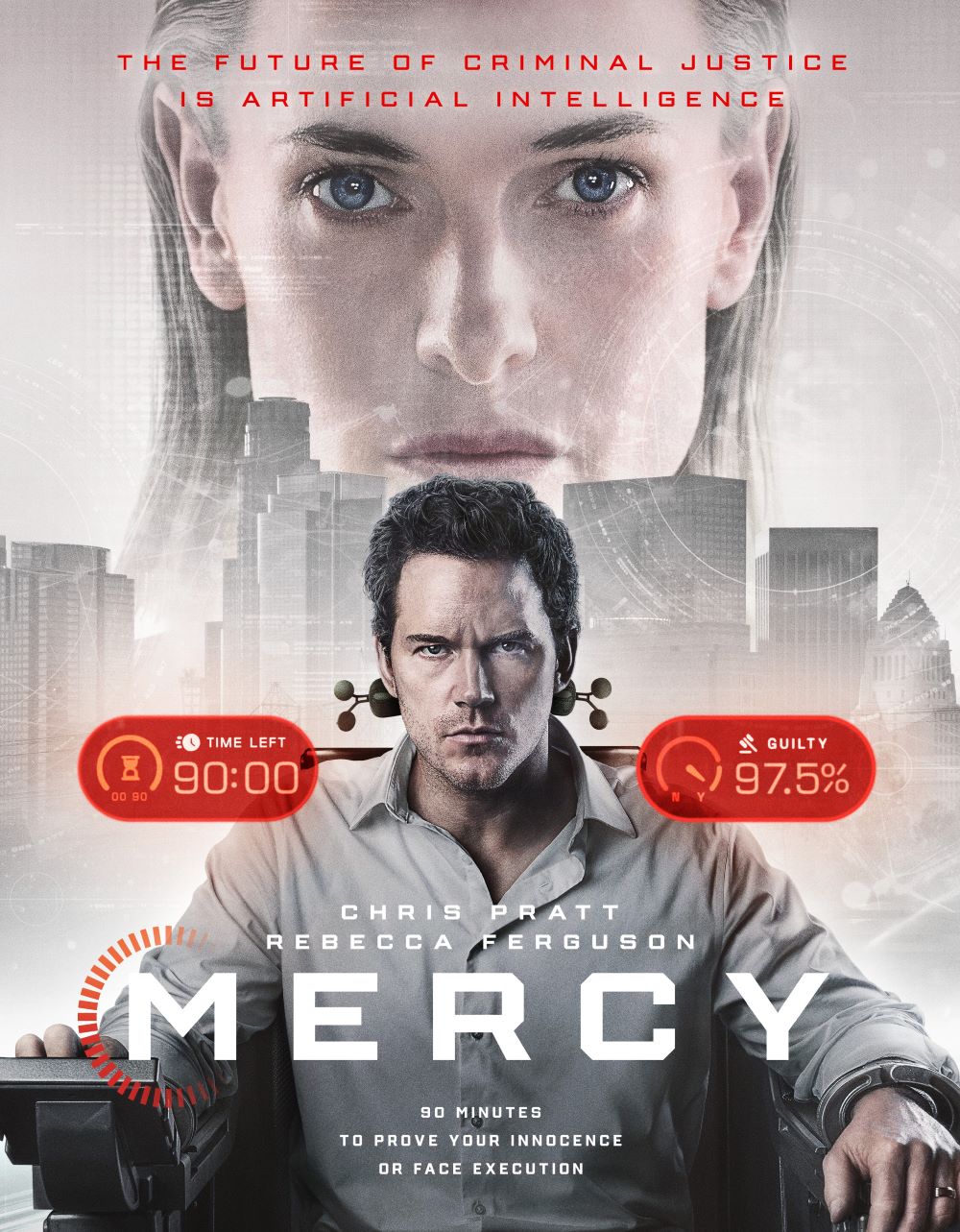
Review: Mercy (dir. by Timur Bekmambetov)


“You and I both know that this clock is bullshit. You make your decisions about the people in this courtroom before they’re even in this chair.” — Det. Chris Raven

Mercy is the kind of movie that looks great in a trailer and promises a slick, high‑concept thriller, but then sputters once you sit through it. It’s set in a near‑future Los Angeles where the LAPD relies on a program called the “Mercy Court,” in which AI judges rapidly process violent crime cases, and the whole thing is framed as a techno‑noir twist on the courtroom thriller. The central gimmick is compelling on paper: detective Chris Raven wakes up strapped into a high‑tech chair, accused of brutally murdering his wife, and has 90 minutes to prove his innocence before being executed by a sonic blast. That setup alone should guarantee at least a tense, scrappy B‑movie; instead, the film keeps undercutting itself with lazy writing, cluttered subplots, and a surprising lack of nerve.

The biggest problem is the script, which feels like it’s trying to be three different movies at once and doesn’t really commit to any of them. On one level, Mercy wants to be a real‑time investigation, where Raven works with an AI judge to access security feeds, social media, emails, and police databases to piece together his wife’s murder. In practice, this becomes a series of exposition dumps—Raven talking out his thought process, the AI reciting rules, and side characters popping in just long enough to drop information before the movie rushes on. It’s not building tension; it’s building a checklist. The film’s pacing stays brisk, but that’s because so much of the middle act feels like procedural filler rather than a genuine mystery.

Tonally, Mercy swings wildly between modes. At times it’s going for something like a sleek, dystopian Minority Report–style narrative, then it veers into a revenge‑driven character drama about a cop who may be too reliant on an authoritarian justice system, and then it suddenly transforms into a generic bomb‑plot action movie. The initial setup—a world where people suspected of murder are strapped into a chair, presumed guilty, and given a brutally short window to prove themselves—feels genuinely unsettling. But the movie doesn’t really sit with those implications; it flirts with the moral and ethical questions and then rushes off to a more conventional, physical threat. What should be a caustic, uncomfortable critique of automated justice reduces to another last‑minute rescue mission.

The central mystery is another missed opportunity. The evidence stacked against Raven is substantial—blood on his clothes, footage from cameras, his drinking problem, and a history of violent outbursts—but the film telegraphs the real culprit so early that the final reveal feels less like a twist and more like a completion of prior signposting. The story tries to make the framing of Raven seem like a master‑plan‑level conspiracy, but the plan hinges on an almost impossible level of predictability on his part. The more the movie explains, the harder it becomes to buy into the logic of the setup. Instead of feeling like the net has tightened around him in a sophisticated way, it feels like the script is forcing contrivances to land on top of him.

Chris Pratt’s performance is an odd fit for the material. The movie seems determined to present him as a darker, more tortured version of himself, and there are a few moments where that dynamic works—Raven’s vulnerability, his self‑loathing, his conflicted belief in the system he helped create. But the script never really lets him live in the morally grey space it clearly wants him to inhabit. Instead, it keeps reassuring us that he’s essentially a good cop who’s been wronged, which undercuts any real tension about whether he might actually be guilty or at least dangerous. You get glimpses of a more interesting character, but they’re constantly being smoothed over by the need for a likable protagonist.

The AI judge, voiced and embodied by Rebecca Ferguson, is one of the few genuinely strong elements here. She plays the voice and presence of the system with a cool, clipped rationality that occasionally shades into dry wit, and her interactions with Raven hint at a more ambitious film lurking underneath. The idea of an AI judge slowly questioning its own assumptions—pushing back on emotional appeals, probing inconsistencies, and gradually developing something resembling curiosity—is inherently compelling. Ferguson gives the character enough personality and nuance to make that arc feel plausible, but the script mostly treats her as a glorified search engine and a moral referee for the final act, when she should be the co‑lead driving the film’s central conflict.

The supporting cast is fine, but underused. Raven’s partner mostly exists to run errands off‑screen—tracking suspects, raiding houses, reacting over the comms—so the movie can cut away from the courtroom whenever it gets bored. Raven’s AA sponsor is saddled with a mix of clumsy foreshadowing and heavy‑handed motivation, which only becomes relevant when the revenge angle kicks in. Raven’s daughter functions almost entirely as emotional leverage and a hostage, escalating the stakes in a way that feels mechanical rather than organic. You can tell the film wants these relationships to carry weight, especially when it leans on family flashbacks and guilt, but they play out like bullet points instead of lived‑in dynamics.

Visually, the film leans into its creator’s usual fondness for screens within screens, overlay graphics, and multimedia collage. The Mercy Court itself is a striking concept—an almost clinical chamber where Raven is strapped into a chair while the AI’s interface shifts around him—yet the movie keeps cutting away to external action once the premise might otherwise grow too tense or claustrophobic. The pacing is brisk, and there are a few set‑pieces—an intense raid on a suspect’s house, the final assault on the courthouse—that deliver a basic level of genre competence. The issue is that competence is about as high as Mercy ever aims; it never really experiments with the form or stakes of its own setup.

Where the film stumbles most is in its attempt at commentary. The world it presents is, on paper, horrifying: defendants are presumed guilty, strapped into a chair, surveilled across every aspect of their digital life, and given a brutally short window to clear their name before being executed. That’s fertile ground for a scathing critique of mass surveillance, algorithmic justice, and the erosion of due process. But the movie is oddly kind to the system itself; by the end, the AI judge is portrayed as more reasonable and “fair” than most humans, and the real villain is just an individual with a personal grudge. The film nods at privacy violations and the moral grey zones of automating justice, then quickly moves on to a more traditional, physical threat. For something that positions itself as a provocative AI courtroom thriller, it ends up feeling strangely apolitical and conflict‑averse.

To be fair, there are a few things Mercy gets right. The core structure—a detective investigating his own case against a clock—remains inherently watchable, even when handled clumsily. Ferguson’s performance gives the material a center of gravity whenever it threatens to spin out into nonsense. And there’s an occasionally interesting tension between Raven’s instinct‑driven, emotionally charged approach and the AI’s cold, probabilistic logic, suggesting a better film that really pits those worldviews against each other instead of letting them conveniently converge. If you go in with low expectations and a tolerance for generic sci‑fi thrillers, you might find it mildly diverting.

But for anyone hoping Mercy would be a sharp, nasty, high‑concept genre piece with something to say about AI, policing, and due process, it’s a disappointment. The movie leans on an admittedly strong premise, some slick production design, and a few scattered performances, yet it never commits to either being a full‑tilt B‑movie or a genuinely thoughtful techno‑thriller. It’s not unwatchable, just frustratingly timid—content to skim the surface of its own ideas and then blow something up when things get complicated. By the time the credits roll, you’re left with the sense that the AI judge wasn’t the only one operating on a strict time limit; somewhere along the way, the film seems to have run out of patience with itself, too.

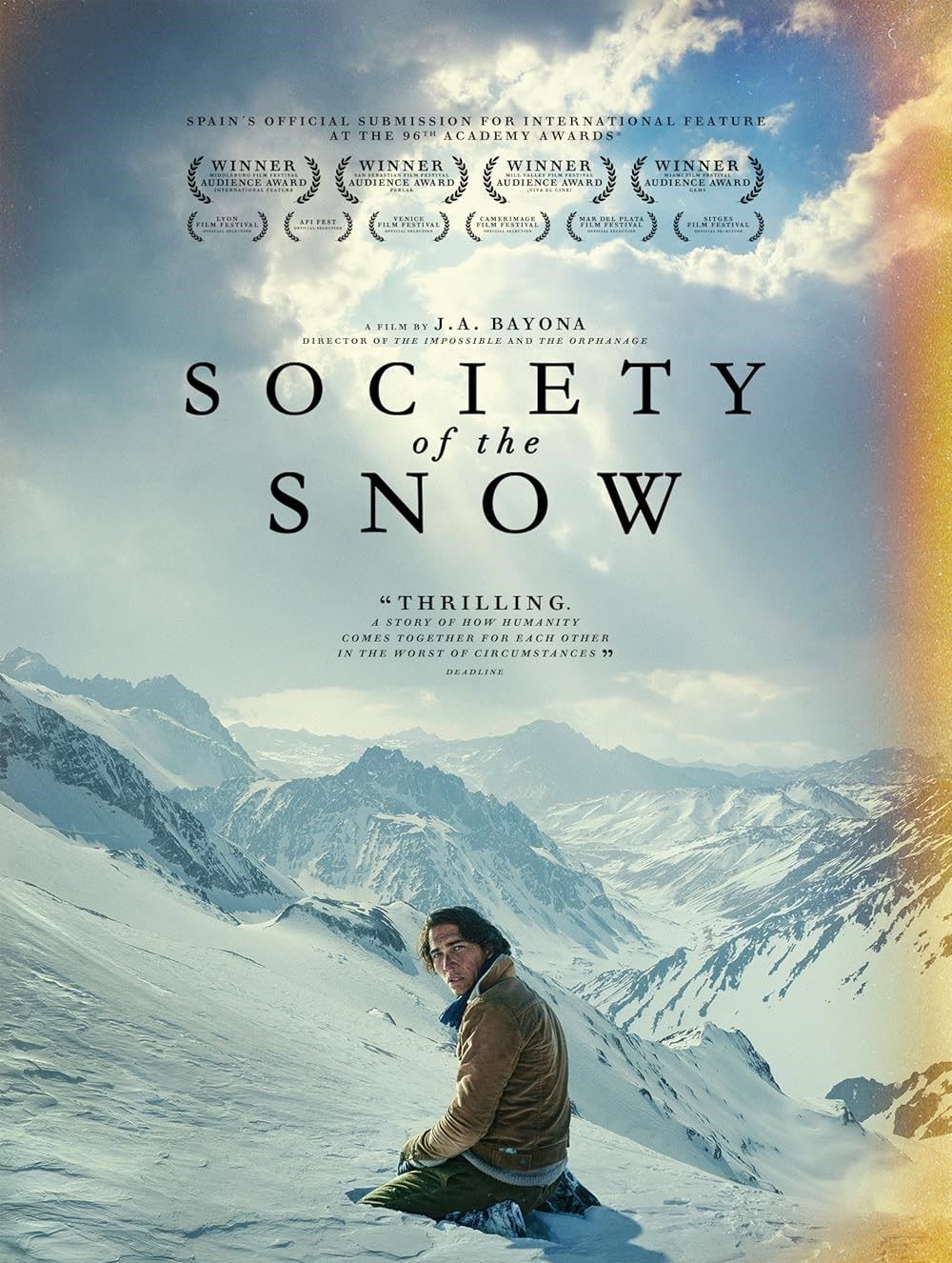
Review: Society of the Snow (dir. by J. A. Bayona)


 “Now when they remember us, they ask themselves: Why didn’t we all get to come back? What does it all mean? You’ll need to find out yourselves. ‘Cause the answer is in you.” — Numa Turcatti

Society of the Snow is the kind of survival movie that sneaks up on you, starting as a rugby team’s joyride and morphing into an existential gut-punch about faith, God, and what binds people when hell freezes over. Directed by J.A. Bayona, it revisits the 1972 Andes crash of Uruguayan Air Force Flight 571, stranding the Old Christians rugby club, pals, and kin in a snowy nightmare 72 days long. No heroes hog the spotlight; it’s an ensemble of mostly newbie Uruguayan and Argentinian actors embodying a group forged by crisis, tackling taboos like cannibalism not as shock value, but as a collective leap of desperate faith.

The setup hooks you quick: carefree banter on the flight from Montevideo to Santiago, singalongs, rugby dreams bubbling. Then boom—the wings shear off, the fuselage cartwheels into a glacier, and 45 souls face subzero isolation with slim rescue odds. Bayona’s crash sequence is visceral chaos: screams swallowed by crunching metal, bodies tumbling, sudden silence under starlit peaks. It’s not Hollywood gloss; it’s the indifferent brutality of nature claiming lives, leaving the rest to improvise in a metal tomb.

Early days blur into tending wounds, rationing snacks, scanning skies for choppers that never come. Characters emerge gradually—Numa Turcatti’s narration grounds us, Nando Parrado’s grit shines later, Roberto Canessa’s smarts anchor medicine—but it’s the group’s dynamic that carries the load. Some introductions rush by, making deaths more statistical than soul-crushing at first, a fair knock since 16 eventually perish from crashes, avalanches, exposure. Still, that haze mirrors real panic, where faces and flickers of personality become your lifeline.

As weeks grind on, Society of the Snow almost becomes an existential exercise in the meaning of faith, belief in God, and how disaster can pull survivors together despite their differences to make that collective decision to perform something that others safe and sound would consider abhorrent. These devout Catholics debate God’s role: Is the crash punishment, test, or sheer accident? Priests invoke Eucharist parallels—body of Christ sustaining the living—while doubters rage at a silent heaven amid freezing nights and howling winds. Disaster doesn’t just bond them through shared misery; it forces this collective buy-in, where atheists, believers, and everyone in between hash it out in the fuselage’s dim light, snow piling up outside.

Differences in personality or background fade fast when hypothermia and starvation make every choice a referendum on humanity itself; rugby jocks, quiet thinkers, hotheads form a tribe, voting on the unthinkable: eating the dead to cheat death themselves. Safe outsiders might recoil in horror, but up there, it’s reframed as sacred reciprocity, a group oath blending survival instinct with spiritual rationale. Bayona doesn’t linger on gore—he shows enough to unsettle, focusing on the hushed consent, the tears, the way it reshapes their souls without breaking the bond.

Visually, it’s stunning restraint: Pedro Luque’s cinematography paints the Andes as majestic jailer, vast whites dwarfing ant-like survivors. Makeup sells the toll—cheeks hollow, skin ashen, eyes haunted—as bodies waste away on meager flesh. Sound design immerses: fuselage creaks like a dying beast, wind a constant roar, silence after avalanches deafening. Score stays subtle, melancholic strings underscoring faith’s quiet wrestling rather than cueing cheap tears.

Mid-film drags a tad, the routine of despair—avalanche buries them alive, failed expeditions limp back—testing patience as it mirrors their grind. At 144 minutes, repetition risks numbing, though it aptly conveys time’s cruelty. Humor peeks through: dumb jokes, rugby chants, home stories keeping spirits flickering, proving they’re not just victims but vibrant lives interrupted.

Climax shifts to Parrado and Canessa’s epic trek—shoeless, rag-wrapped, scaling cliffs with rugby posts as ice axes. Physically punishing to watch, it culminates in that eerie rescue meet: a gaucho across a torrent, civilization’s whisper after eternity. Their return sparks media frenzy, but the film ends introspective, faith renewed not in miracles, but in human will and collective defiance.

Bayona’s take earns widespread acclaim, including Oscar nods for International Feature, makeup, and score, praising its dignity over prior adaptations like Alive. It honors survivors’ input, shot partly on location with Uruguayan authenticity. Downsides? Ensemble sprawl blurs some arcs; heavy themes demand stamina, no popcorn thrills here. If gore or bleakness turns you off, skip it—but for raw humanity amid atrocity, it’s top-tier.

Ultimately, Society of the Snow lingers because it asks: What’s faith when God seems absent? How does abhorrence become salvation through unity? Just as Frank Marshall’s 1993 Alive left an indelible mark on that generation’s filmgoers, grappling with survival’s raw ethics amid the early ’90s thirst for true-story grit, this film resonates powerfully in today’s fractured world. In an age of endless online division and existential dread—from climate crises to global unrest—it spotlights unbreakable human bonds forged in the worst conditions, reminding us that shared ordeal can still transcend differences and redefine what we’re capable of. Disaster doesn’t divide; it welds them, turning horror into testament. Powerful, flawed, profoundly human.

Review: Ballerina (dir. by Len Wiseman)


“You don’t choose to be a killer, you are chosen.” — The Chancellor

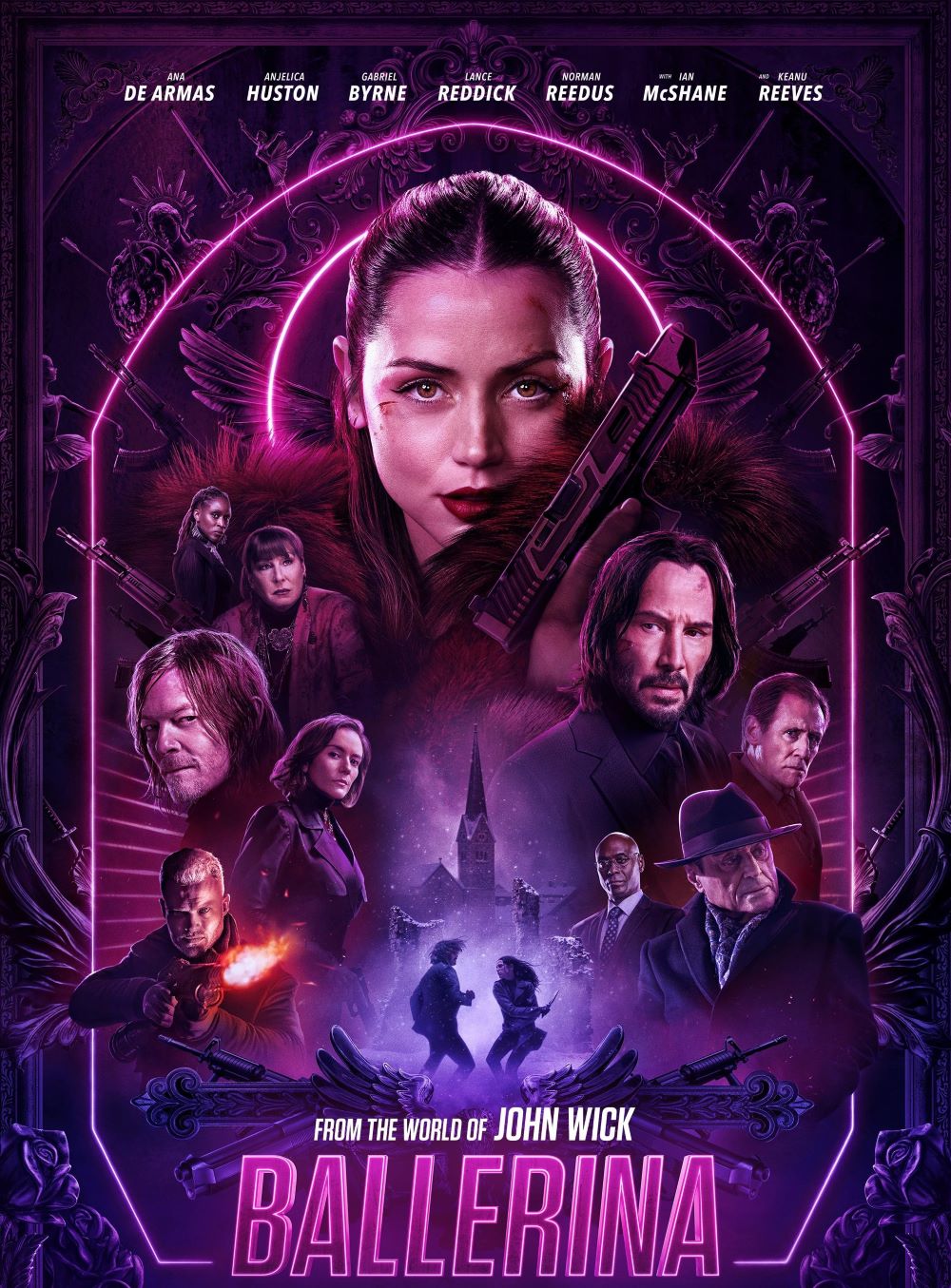
Ballerina lands in theaters feeling like someone finally turned the volume up on the quieter, more balletic side of the John Wick universe. Anchored by Ana de Armas’s poised, ferocious turn, the film doesn’t reinvent the neon‑lit, bullet‑cartoon rules of the franchise so much as rearrange them into a new rhythm. It’s still a very familiar kind of action movie—assassins, codes, bodies on the floor—but it carves out its own niche by centering a woman who’s not just another lethal accessory to John’s world, but someone the world has already trained into a weapon.

At the same time, Ballerina leans hard on the style and flourish of the later John Wick films, and that’s both its main selling point and its biggest limitation. The way shots linger on gun grips, the way the camera circles around bodies mid‑spin, the way every hallway fight feels like stage choreography—it’s all very familiar, very polished, and very much a continuation of the franchise’s visual language. That’s great if you’re here for the aesthetic, but it also means the film sometimes feels more like an extension of the Wick universe’s attitude than a story that confidently stands on its own two feet.

Ana de Armas plays Eve Macarro, a young assassin who grew up in the shadow of the Ruska Roma and the Continental, groomed to kill long before she fully understood what she was doing. The story unfolds in a loose “between films” slot in the Wick timeline, so fans who care about franchise continuity will get their little Easter eggs and cameos, but the film smartly never gets completely bogged down in explaining how this fits into every rulebook. Instead, it leans into the idea that the John Wick universe is big enough that other hunters can walk around in it, following their own grudges and grief. Eve’s motive is straightforward: she wants to track down the people she believes killed her father when she was a child, and along the way she has to square off against both the old guard of her upbringing and the cult‑like killers who seem to operate just outside the established order.

Like a lot of John Wick entries, though, Ballerina is ultimately more interested in expanding the world and reinforcing its rules than drilling deep into its own plot. Eve’s revenge‑driven quest gives the film its spine, but the mechanics of that revenge are often secondary to the chance to show off another assassin enclave, another weird code, or another showdown that feels like a set‑piece first and a character beat second. You can feel the priorities: where she travels, who she bumps into, and how this underworld operates often matter more than whether her arc is especially surprising or emotionally rich. The plotting starts to feel like connective tissue between bigger, more stylized sequences, and that’s where the reliance on franchise style starts to hurt more than help.

The film’s greatest strength is how it employs the language of ballet and violence in the same breath. The title Ballerina might make you expect a lot of literal tutus and pirouettes, and there’s a bit of that in the opening stretches, but the real choreography is in the fight scenes. Eve’s movement is light‑on‑her‑feet one moment—a few spins, a quick sidestep—and then suddenly brutal, close‑quarters savagery the next. The camera doesn’t just document her skills; it dances with them, letting wide‑angle shots show off the architecture of a fight before snapping into tight, impact‑heavy close‑ups. It’s unmistakably a Wick‑style approach, only dialed into a slightly more feminine, almost theatrical register.

De Armas deserves a lot of credit for making Eve feel like a real person, not just a killing machine with a pretty face. She’s cold, yes, but there’s weariness under the surface, the kind that comes from being raised in a world where emotions are a liability. The script doesn’t drown her in backstory; it just lets small moments—a hesitation, a glance at a photo, the way she holds a gun—do the work. When she finally loses her composure and starts to scream, grunt, and visibly struggle during later fights, the effect is more powerful than if she’d been effortlessly killing everyone from minute one. She sweats, she bleeds, she gets thrown around, and that makes her victories feel earned, not just cool.

Stylistically, Ballerina is very much in line with the rest of the franchise: glossy, slightly over‑the‑top, and hyper‑aware of its own aesthetic. The camera work is sleek, the color grading pops, and the score leans into synth textures that feel like a slightly more elegant cousin of the usual Wick pulse. There are also some deliberately playful musical choices—bits of Tchaikovsky and other classical motifs that echo in the background during key scenes—which tie the idea of ballet back to the film’s emotional core. The setting shifts from the familiar New York–style Continental spaces to a quieter, almost fairy‑tale European village that houses a different kind of assassins’ retirement community. It’s a neat trick: the filmmakers give us something that still feels like the same universe but just enough of a different flavor that it doesn’t feel like a rerun.

But that lush style also underlines how much the film is prioritizing world‑building over a tight narrative. Conversations about the Ruska Roma, the Continental, and the cult‑like assassins’ outpost are there less to advance Eve’s inner journey and more to remind us that the John Wick universe is vast, layered, and full of hierarchies. Fans who love the lore will probably eat that up, but if you’re hoping for a more self‑contained narrative, it can start to feel like you’re watching a very expensive lore compendium. The emotional core is there—it just has to fight for space amidst all the visual flexing and mythology maintenance.

Where Ballerina becomes a bit uneven is in its plotting. The basic “one girl, one very long night of revenge” template is solid, but the script doesn’t always give it enough depth or surprise. There are too many conversations where characters explain the rules of the world to each other, or recap what’s already been established, rather than using those moments to add nuance to the characters or relationships. The side figures—like various crime bosses, elders, and reluctant allies—do their jobs entertainingly enough, but they don’t all get the same level of interior life that Eve has. Some of the supporting performances are strong across the board, but the material doesn’t always push them to do anything more than punctuate the action beats.

Keanu Reeves drops in briefly as John Wick, and the cameo is handled with the kind of restraint that makes it feel like a favor rather than a stunt. He doesn’t hang around; he makes a sharp, efficient entrance, has a few quiet exchanges, and then exits, leaving the movie firmly in Eve’s hands. That’s crucial, because one of the criticisms of earlier spin‑off ideas was that they’d feel like vanity detours or glorified cameos. Here, John’s presence actually reinforces the idea that this is someone else’s story now, and that he’s just another player in a much larger ecosystem of killers.

The film’s worst moments are also some of its most visually striking: the bigger, more outlandish set‑pieces that lean fully into the franchise’s “go‑no‑go” action logic. The final third, in particular, is one long, almost goofy crescendo of fights, stunts, and absurdly lethal props. It’s a lot of fun in the moment, but it also underlines how thin the actual plotting can be. When the camera is spinning around a flamethrower‑wielding Eve or a hallway of assassins dropping in from the ceiling, the movie doesn’t always give us enough emotional context to care about who’s living or dying beyond the immediate spectacle. It’s the kind of sequence that will make fans cheer in the theater, but might look a bit clumsier on a second viewing.

One area where Ballerina arguably improves on the core series is its handling of gender dynamics. Eve isn’t fetishized; she’s allowed to be both emotionally grounded and physically dominant without being framed as some kind of fantasy object. The film nods to the idea of “girl power” in the assassin world, but it also lets the character operate within familiar constraints—tradition, hierarchy, and expectation—instead of pretending she’s a one‑woman revolution. She’s tough, but she’s also vulnerable, and that balance keeps the tone from tipping entirely into empty empowerment sloganeering. The way the movie treats her relationships—with her father’s memory, with her mentors, and with the people she’s ordered to kill—adds a layer of emotional sophistication that earlier entries in the franchise often glossed over for the sake of pure momentum.

If you’re coming into Ballerina expecting a radical reinvention of the series, you’ll probably leave a little underwhelmed. It doesn’t rip up the rulebook or deliver a huge thematic twist on what we already know about this universe. Instead, it refocuses the camera on a different kind of protagonist, lets the familiar style breathe a little differently, and proves that the world of John Wick is big enough to house more than just one lone wolf. It’s a stylish, violent, occasionally silly, definitely pulpy action film that knows exactly what it wants to be: a long, bloody ballet in which the lead is a woman who’s finally ready to dance on her own terms—even if the choreography sometimes matters more than the story it’s supposedly telling.

John Wick Franchise (spinoffs)

John Wick: Chapter 4 (dir. by Chad Stahelski) Review


“Those who cling to death; live. Those who cling to life; die.” – Caine

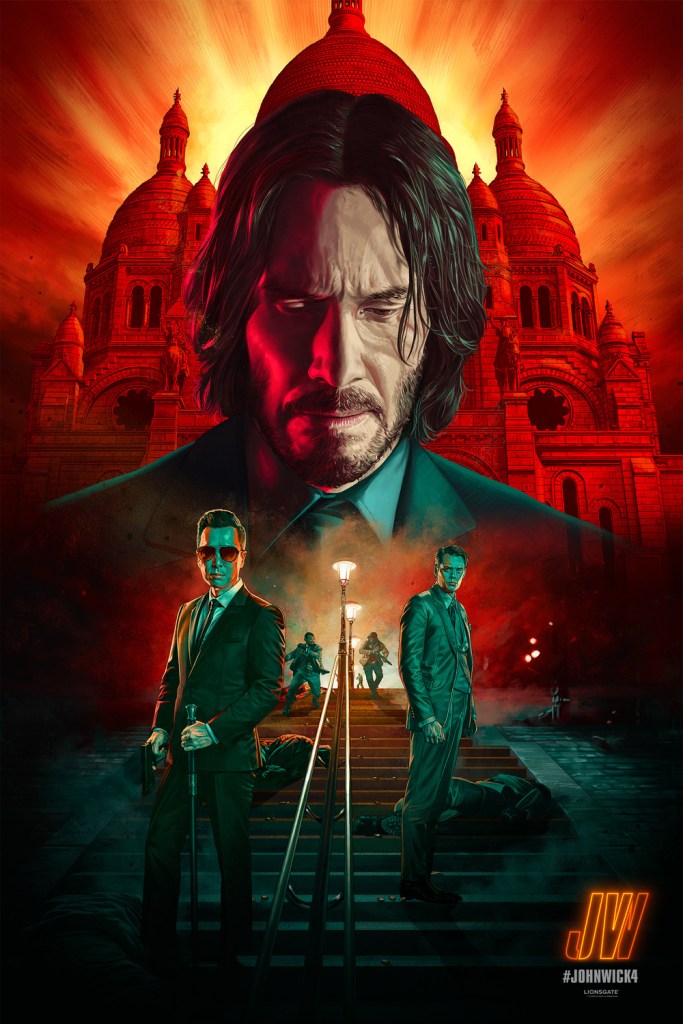
John Wick: Chapter 4 is the kind of action movie that doesn’t just lean into the spotlight—it steps into it, throws a flak vest over its suit, and then spends the next three hours filleting an entire world of assassins with brutal, balletic precision. At this point in the franchise, you’re either all‑in on the rules of the High Table, the Continental, and Wick’s endless mourning for his wife Helen, or you’re just here for the sheer spectacle of seeing Keanu Reeves beat up a continent’s worth of bad guys. The film not only respects that split audience, it tries really hard to satisfy both with a mix of operatic emotion, globe‑trotting locations, and a ridiculous amount of meticulously choreographed carnage.

One of the first things that stands out in John Wick: Chapter 4 is how much the world has expanded since the first film. The script doesn’t reinvent the core idea—Wick wants out, the system wants him broken, and the only way he can be free is by killing his way to the top—but it does layer on new zones, new factions, and a whole supporting cast of assassins who feel like they’re pulled out of their own B‑movies. From Morocco to Berlin, from New York to Paris, the film leans into a kind of hyper‑theatrical world‑building where every hotel lobby, nightclub, and underground fighting arena looks like it was designed by a comic‑book artist with a fetish for brutalism and neon lighting. That’s not a bad thing; it makes the universe feel lived‑in, even if it occasionally borders on self‑parody. The film also shuffles in a few fresh faces that give the usual assassin lineup some new flavors, including Donnie Yen as Caine, the stoic, blind assassin who carries both lethal efficiency and a quiet moral weight; Hiroyuki Sanada as the disciplined Shimazu, whose traditional demeanor and craftsmanship with a sword add a very grounded, almost old‑world element to the chaos; and Rina Sawayama as the high‑ranking assassin Akira, whose presence brings a mix of ruthless professionalism and a genuinely intriguing emotional arc that doesn’t feel like an afterthought.

There’s also Scott Adkins playing against his usual type as Killa Harkan, the head of the German Branch of the High Table, showing up in a surprisingly decent‑looking fat suit that gives him a grotesquely imposing presence while still hinting at the physicality audiences know from his other action roles. The character leans into the film’s tendency toward the theatrical, but he’s not just a walking gag; he fits into the world as one of the more visually exaggerated enforcers of the High Table’s rule. Alongside him, Shamier Anderson brings a lean, relentless energy as the Tracker, Wick’s shadowy, almost dog‑like pursuer whose loyalty to the system makes him more than just another interchangeable goon, while Marko Zaror crops up in the Berlin arena sequences as a brutal, wiry fighter whose style adds yet another distinct flavor to the movie’s unusually diverse fight roster. Taken together, these additions don’t just pad the body count; they give the film a sense that the John Wick universe is big enough to host everyone from classical swordsmen to modern martial‑arts specialists and even a few horror‑movie‑style fanatics, all orbiting the same doomed man.

The villain this time around is the Marquis Vincent Bisset de Gramont, played by Bill Skarsgård, and he’s the kind of High Table emissary who exists purely to make John’s life harder while reminding the audience that the system is more bureaucratic than it is mysterious. He’s got the cold, manipulative air of a corporate executive who’s never actually touched a gun but still has the power to ruin people’s lives on paper. His presence allows the film to spend more time on the politics of the assassin underground, which in turn forces John to pull in a wider network of allies, return favors, and, in a few cases, rebuild old friendships that were already on thin ice. That network includes the Bowery King, Caine, and the rest of the new cast, all of whom add texture to the usual slug‑fest even if the plot’s core emotional arc is still very much about a man who keeps remembering the wife he can’t get back.

Where Chapter 4 really flexes its muscles is in the action, and nowhere is that more obvious than in the extended Paris set‑piece that basically becomes the film’s centerpiece. It starts on the open city streets at night, with Wick already on the move, guns blazing and bodies piling up as the camera weaves through car‑chase energy and close‑quarters shoving. The chaos then escalates when the sequence shifts to the Arc de Triomphe roundabout, where the circular layout turns the whole area into a spinning, three‑dimensional shooting gallery. Cars whip around the monument, bullets ricochet off stone and metal, and the sheer spatial awareness of the choreography makes it feel like you’re watching a real‑time videogame map being systematically cleared in concentric circles, except the “map” is an iconic piece of Parisian infrastructure.

The escalation doesn’t stop there. The action migrates into a mostly empty, half‑abandoned apartment complex that feels like a brutalist concrete maze, each floor and hallway turning into a new arena for sprinting, reloading, and last‑minute dodges. The geography of the building becomes a character of its own, with shots that snake down stairwells, peer through doorways, and frame John as a lone figure ducking and weaving through a vertical death‑trap. It’s inside this apartment complex that the film drops one of its most memorable visual flourishes: a frenetic, prolonged shootout using dragon’s breath shotgun shells—incendiary rounds that send flaming pellets spraying outward—captured from an isometric, top‑down angle that directly evokes the look of indie action‑game favorites like The Hong Kong Massacre. The camera rides high above each room as Wick storms through, watching clusters of fire and bullets explode outward in geometric patterns, turning the interior layout into a living level map. It’s a moment that feels less like traditional cinema and more like a loving, hyper‑stylized homage to the way videogames can turn gunplay into a choreographed light show.

The final stretch of this extended Paris gauntlet is the brutal climb up the Rue Foyatier stairway to the Sacré‑Cœur steps, where the film’s choreographic and camera work reach their most expressionistic peak. The wide shots of Paris looming below, the narrowing of the stairway itself, and the way the camera sometimes drifts into an almost dreamlike, slightly elevated angle all combine to make the sequence feel like an endurance ritual rather than just another fight. By the time Wick reaches the top—after being hurled back down and forced to claw his way up again—the audience feels just as exhausted as he looks, which is exactly the point.

That’s part of what makes the film work when it isn’t just going hand‑to‑hand with you for nearly three hours. Beneath all the shooting and stabbing, John Wick: Chapter 4 is also quietly insistent on the idea that this is a tragedy. John Wick isn’t just a guy who happened to fall into a secret society of killers; he’s a man who has been reshaped by grief, loss, and the realization that every compromise he’s made along the way has only made his cage tighter. The film doesn’t over‑explain this; instead, it lets you watch him limp, cough up blood, and drag his battered frame through one more ambush, as if his body is the only thing strong enough to keep him breathing. The supporting characters—especially those tied to the High Table or to his past, including the newer faces like Caine, Shimazu, Akira, Killa Harkan, the Tracker, and the arena fighters—get a few moments to show that they’re not just cannon fodder, either. They have responsibilities, hierarchies, and codes that clash with the arbitrary cruelty of the Table, even if most of them still end up in the path of Wick’s bullets.

On the flip side, the movie is also unapologetically aware of how silly it is. There’s a knowing winking about the dialogue, the neon‑lit set designs, and the way lines like “You have until sunrise” are delivered with the gravity of a Shakespearean prophecy. The film doesn’t try to make you forget that this is ultimately a high‑end first‑person‑shooter turned into a live‑action ballet. It leans into the absurdity of escalating stakes, the way the world keeps conspiring to throw more and more assassins at John, and the fact that even when he’s bleeding out, he still insists on finishing a fight with a signature flourish. For some viewers, that will feel like a strength, a kind of self‑aware celebration of the genre. For others, it’ll feel like the moment the franchise tips from cool to camp, especially when the pacing starts to drag a bit in the middle section and the mix of formal duels, fat‑suited branch leaders, and endless negotiations begins to feel a little overstuffed.

The film’s length is its biggest liability. At around 169 minutes, John Wick: Chapter 4 is not shy about giving you more than enough time to live inside its world, but it also doesn’t always feel like it needs every last minute. The middle act, in particular, spends a lot of time on formalities, treaties, duels, and metaphysical negotiations with the High Table, which can slow the momentum when what you really want is for John to do another hallway‑fight or another truck‑pile‑up. There are times when the script feels like it’s stretching itself out to keep the spectacle going rather than tightening the storytelling, and that’s when the silliness of it all—like the deliberately over‑the‑top presence of Killa Harkan and the packed gallery of new faces—can start to work against the emotional weight the film is trying to build. A leaner, more ruthless edit would probably make the overall experience feel sharper and more focused.

Still, there’s a lot to admire in what the film manages to pull off. The sound design, the camera work, and the way the choreography is almost always shot in wide, relatively clear takes all combine to make the action feel substantial rather than edited into incomprehensible chaos. The supporting cast—Donnie Yen, Hiroyuki Sanada, Rina Sawayama, Scott Adkins, Shamier Anderson, Marko Zaror, and others—add texture and personality to a world that could otherwise feel like a series of interchangeable goons. They’re not just there to get shot; they’re there to give the film a sense of a larger, more complicated ecosystem of killers, each with their own rules and reasons.

In the end, John Wick: Chapter 4 is less a strict narrative continuation and more of a cinematic endurance event. It doesn’t reinvent the franchise, but it pushes the Wick formula into more extreme, more theatrical, and more emotionally committed territory. It’s messy in places, overstuffed in others, but it also has a few moments of pure, jaw‑dropping action that will probably end up in “best of the decade” lists among genre fans, especially that Paris mega‑set‑piece that starts on open streets, spirals through the Arc de Triomphe, invades an empty apartment complex for that dragon’s‑breath top‑down firefight, and climaxes on the Rue Foyatier stairs. If you’re someone who cares about emotional coherence and tight plotting, the film will probably test your patience. If you’re someone who’s here for the ballet of bullets, the operatic bloodshed, the eccentric new cast, and the sight of Keanu Reeves refusing to stay down no matter how many times the universe tries to kill him, then John Wick: Chapter 4 is a pretty satisfying send‑off—or at least a very loud, very stylish stop on the way there.

Weapons used by John Wick throughout the film

  • Glock 34 (TTI Combat Master Package) – His primary pistol early on, including the Morocco sequence against the new Elder and during the Osaka Continental battle.
  • Agency Arms Glock 17 – Used by Wick during the garden fight at the Osaka Continental after he takes it off a High Table enforcer.​​
  • TTI Pit Viper – The “hero gun” of the movie, custom‑built for Chapter 4, used heavily in the Paris staircase and duel lead‑up sequences.
  • Thompson Center Arms Encore pistol – custom-made single-shot pistols created specifically for the Sacre-Couer duel.
  • TTI Dracarys Gen‑12 – The dragon’s‑breath shotgun he grabs during the Paris apartment sequence, used in the isometric top‑down “videogame” style scene.
  • Spike’s Tactical Compressor carbine – Used by Wick after he takes it from High Table enforcers during the Osaka Continental fight.

John Wick Franchise (spinoffs)

John Wick: Chapter 3 – Parabellum (dir. by Chad Stahelski) Review


“Nothing’s ever just a conversation with you, John.” — Sofia Al-Azwar

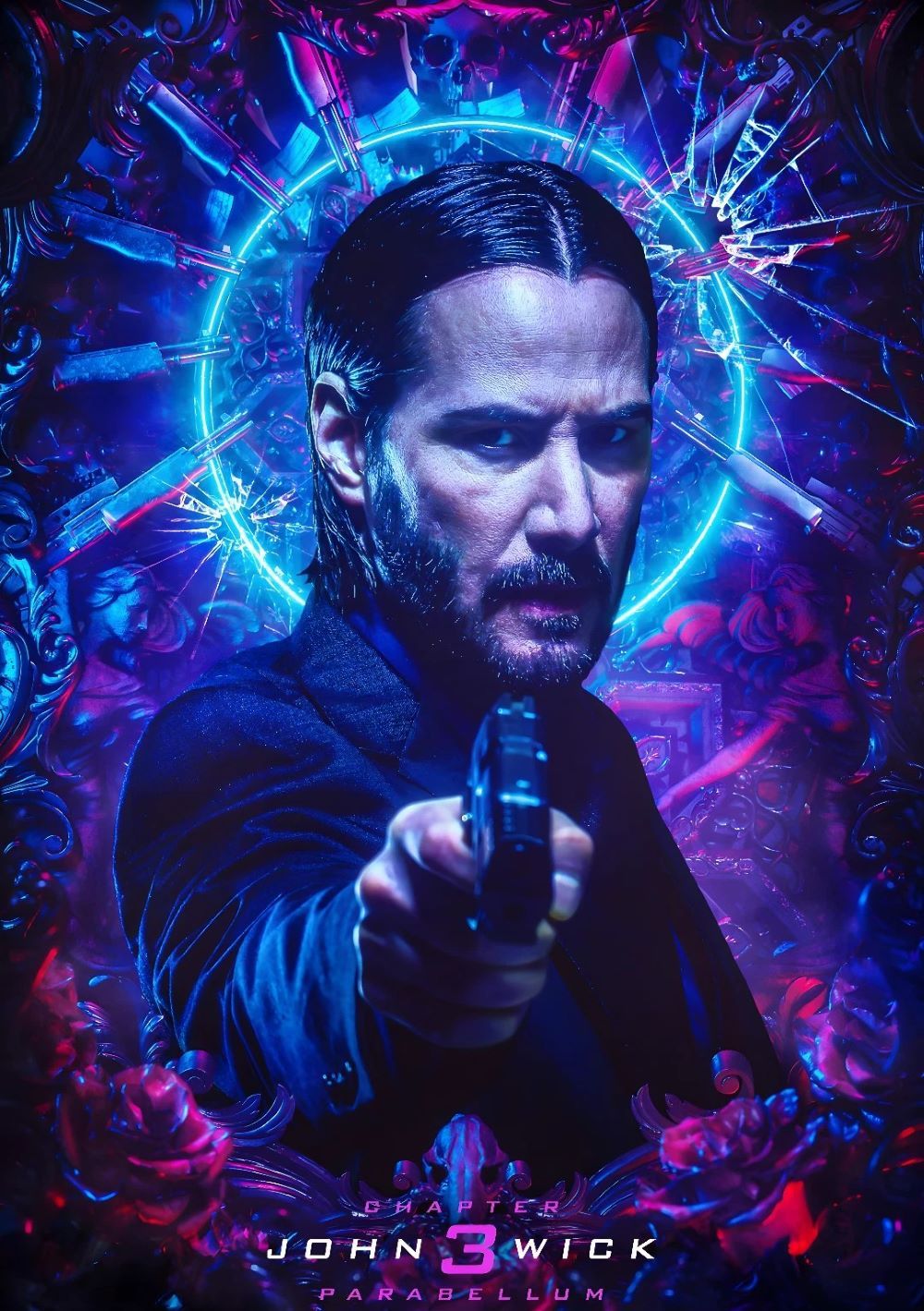
John Wick: Chapter 3 – Parabellum launches straight from the previous installment’s shocking finale, hurling John into a frantic dash through New York’s underbelly as a $14 million bounty turns every shadow into a threat. This chapter dials the franchise’s signature intensity even higher, plunging you into an assassin underworld bound by ironclad rules that start to fracture under pressure. The action explodes with creative savagery, though the storyline sometimes buckles beneath its ambitions, offering a pulse-pounding yet slightly bloated addition to the saga.

The movie opens with John scrambling through New York streets, his excommunicado status ticking down like a bomb. He’s got one hour before every killer in the city turns on him, and boy, do they. Keanu Reeves is back in top form, looking battered but unbreakable, his puppy-dog eyes conveying more grief and determination than any monologue could. The film’s Latin subtitle, Parabellum—meaning “prepare for war”—sets the tone perfectly as John grabs weapons from the oddest places, like a horse stable or a knife shop where he gets to use blades almost like guns with each throw.

What makes this entry stand out is how it expands the Wick-verse without losing that gritty intimacy. We dive deeper into the High Table’s bureaucracy, with the Adjudicator (Asia Kate Dillon) showing up as this cold, efficient enforcer who judges allies like Winston (Ian McShane) and Charon (Lance Reddick) for helping John. It’s a smart addition, adding layers to the rules that have always governed this world—markers, blood oaths, no business on Continental grounds. Halle Berry pops in as Sofia, an old flame running a Moroccan palace full of attack dogs, leading to one of the film’s wildest sequences where pooches tear into bad guys alongside John. Mark Dacascos as Zero, the sushi-loving villain who’s bald and sports a penchant for movie quotes, brings some quirky charm, even if he’s no Santino from Chapter 2.

Director Chad Stahelski, a former stuntman himself, continues to treat action like high art, and man, does Chapter 3 flex its muscles here harder than ever. The choreography is balletic and brutal, blending gun fu with knives, swords, and even books—there’s a library fight where John uses a volume as a shield and club, then politely reshelves it, which is peak Wick weirdness. Fights escalate from motorcycle sword duels slicing through rainy streets to hall-of-mirrors mayhem that nods to Enter the Dragon, with reflections multiplying the chaos into a dizzying ballet of blades. Indonesian martial arts legends Cecep Arif Rahman and Yayan Ruhian, The Raid 2 alumni who make their franchise debut here, light up the massive finale melee, trading blows with John in a flurry of fists, elbows, and blades that feels like a love letter to silat and caps the chaos perfectly.

Every sequence feels meticulously planned, relying on practical stunts that make CGI-heavy blockbusters look lazy and fake—think real falls, real crashes, real bone-crunching impacts that leave you wincing. The gun fu style—precise headshots amid flips, slides, and reloads—never gets old, evolving with fresh twists like pencil kills upgraded to book barrages or horse-mounted shootouts. The film’s true strength lies in these set pieces: they’re not just fights, they’re symphony-like spectacles where camera work syncs breathlessly with the violence, spatial awareness stays razor-sharp so you track every bullet and block, and the escalation feels organic, building from claustrophobic knife scraps to epic rooftop brawls. It’s the kind of action that honors the genre’s legends while pushing boundaries, making you forget any plot gripes amid the sheer kinetic joy.

That said, it’s not all flawless, and one drawback from Chapter 2 creeps back in here: the film leans heavily into more world-building of its universe, which puts character development on the back burner. John’s arc—fighting to earn back his freedom—repeats beats from the previous entry, and some twists, like Winston’s apparent betrayal, land more as fan service than emotional gut-punches. At 131 minutes, it drags in spots, especially during quieter moments that try to humanize John but end up repetitive, while the dialogue stays sparse and stylized, leaving characters like the Elder (Saïd Taghmaoui) feeling underdeveloped. But then again, the franchise has staked its claim on being action-focused from the jump, so if fans are bought into this wild ride by now, they’re probably here for the balletic bloodshed over deep psychology anyway—it’s like the film loves its assassins’ code more than fleshing out motivations beyond revenge.

Visually, it’s a stunner. Dan Laustsen’s cinematography turns New York into a neon-soaked hellscape, with rain-slicked streets and ornate Continental lobbies popping in crisp 2.40:1. The Morocco desert scenes add exotic flair, though they borrow heavily from The Good, the Bad and the Ugly. Tyler Bates and Joel J. Richard’s score pounds with industrial electronica, syncing perfectly to the violence, while select tracks like Team Rezo’s “Pray for Kaeo” amp up horse chases. Sound design is Oscar-worthy—the thud of fists, crack of gunfire, all mixed to immerse you in the carnage.

Keanu Reeves carries it all, 54 at release but moving like a man half his age thanks to rigorous training. His physical commitment sells John’s exhaustion; you see the toll in every limp and gasp. Supporting cast shines too—McShane’s suave Winston steals scenes with dry wit, Reddick’s Charon is unflappably loyal, and Berry holds her own in dog-assisted fury. Dacascos adds levity, slicing foes with a sunny disposition, but Dillon’s Adjudicator is more menacing presence than fleshed-out foe. It’s ensemble work in service of spectacle, not drama.

For fans of the series, John Wick: Chapter 3 delivers bigger, bolder chaos that honors stunt performers as the real stars. It celebrates cinema history with nods to Buster Keaton (a horse chase echoes The General) and Hong Kong action flicks, all while pushing practical effects. Critics raved about the thrills, calling it “blissfully brutal” entertainment that shames neighbors like generic superhero fare. Audiences loved the over-the-top kills and Reeves’ stoic heroics.

To keep it fair, though, this isn’t exactly groundbreaking stuff. The simplicity that charmed in the original—a widower’s rampage—has bloated into a globe-trotting saga chasing its own tail. Female characters, while badass like Sofia, still orbit John’s story, and the violence, though stylish, borders on cartoonish excess. Some felt it lost narrative steam, prioritizing set pieces over heart, turning Wick from grieving everyman to invincible machine. Compared to Chapter 2‘s operatic betrayal, this one’s more procedural, like a video game level grind.

Ultimately, John Wick: Chapter 3 – Parabellum is a love letter to action cinema, casual fun if you’re in for the mayhem. It’s not deep, but damn if it doesn’t make you cheer as John unleashes hell. Grab popcorn, dim the lights, and prepare for war—you won’t regret it, unless you’re after Oscar bait. Solid 8/10 for pure, delirious popcorn thrills.

Weapons used by John Wick throughout the film

  • TTI STI 2011 Combat Master: Iconic pistol from the armory scene—John’s “2011” choice with optics, extended mags, and flawless reliability for extended shootouts.
  • Glock 19 / 19X / 17: Multiple pickups during mint guard fights in Casablanca and Continental siege; versatile Glocks he commandeers mid-battle.
  • Walther PPQ / CCP: Snagged from assassins during the motorcycle chase; quick-use comped models for on-the-run defense.
  • TTI SIG-Sauer MPX Carbine: Siege standout with Trijicon MRO sight, Streamlight laser, and +11 mags—John’s signature stance shines in hallway clears.
  • SIG-Sauer MPX / MPX Copperhead: Casablanca mint raid grabs; compact 9mm shredders with red dots and grips for close-quarters fury.
  • Benelli M4 Super 90: Climactic Continental siege with Charon; armor-piercing slugs, extended tubes, ghost rings—devastating hallway blasts.
  • Benelli M2 Super 90 (TTI Ultimate package, implied variants): Siege support; Charon favors these, John grabs similar for enforcer waves.

John Wick Franchise (spinoffs)

John Wick: Chapter 2 (dir. by Chad Stahelski) Review


“You stabbed the devil in the back and forced him back into the life that he had just left. You incinerated the priest’s temple, burned it to the ground. Now he’s free… What do you think he’ll do?” — Winston Scott

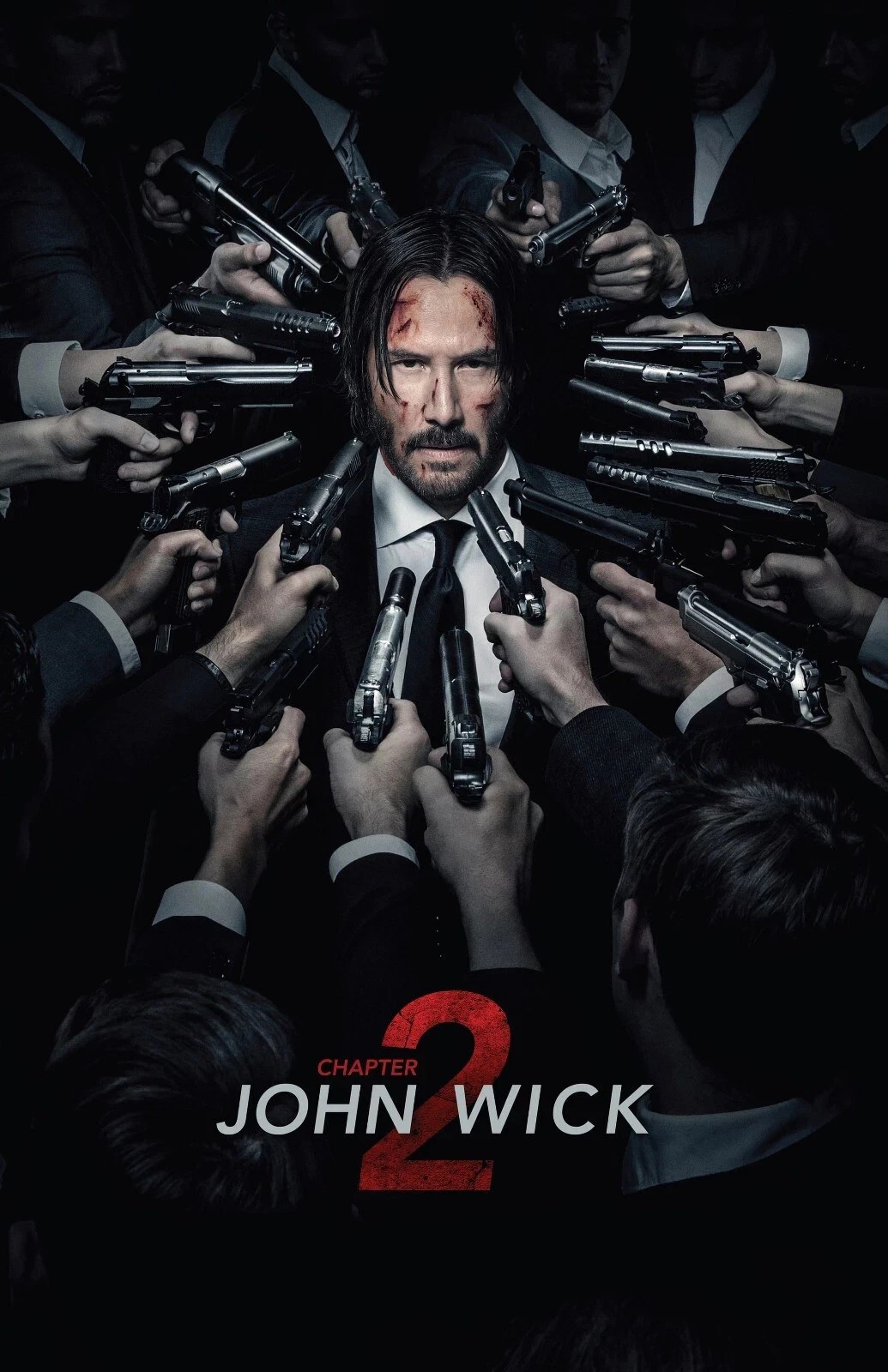
John Wick: Chapter 2 picks up right where the first film left off, diving headfirst into a world of high-stakes assassinations and stylish revenge with Keanu Reeves back as the grieving, unstoppable hitman. It’s a sequel that doubles down on the balletic action and expands the mythology without losing that raw, personal edge from the original. Directed by Chad Stahelski, it delivers non-stop thrills but occasionally stumbles with its sprawling plot and relentless pace.

John Wick is trying to lay low after avenging his dog’s death and reclaiming his car, but fate—or more specifically, a blood oath called a “marker”—drags him back into the game. An Italian crime lord named Santino D’Antonio cashes in that marker, forcing Wick to assassinate his own sister so Santino can take over the family empire. What starts as a reluctant job spirals into a city-wide manhunt, with Wick racking up bodies across New York and Rome while navigating the Continental Hotel’s strict no-kill rules and the politics of a shadowy assassin network. The story is still simple at its core—do a job, get betrayed, fight your way out—but it peels back more layers of this underworld, introducing gold coins as currency, tailors who outfit killers like runway models, and sommeliers who pair firearms with clients like fine wine.

Keanu Reeves owns the role here, his stoic intensity and physical commitment making every punch and headshot feel earned. He’s not exactly stretching himself as an actor—his deadpan delivery borders on monotone—but in this context, that restraint works, turning Wick into a mythic figure who’s equal parts broken widower and relentless killing machine. The supporting cast adds plenty of flavor: Common shines as Cassian, Santino’s loyal bodyguard and Wick’s equal in a fight, with their subway duel using silenced pistols becoming an instant standout for its mix of tension and dark humor. Ian McShane returns as Winston, the Continental’s suave manager, bringing a dry, almost amused detachment to the chaos, while Ruby Rose makes an impression as Ares, Santino’s mute enforcer whose sign-language threats and sharp physicality speak louder than words. Laurence Fishburne appears as the Bowery King, chewing scenery and hinting at deeper rivalries to come. Not every character is fully fleshed out—Santino himself sometimes veers into cartoonish villain territory—but the ensemble keeps the film lively and fun to watch.

The action is where John Wick: Chapter 2 truly shines, cranking the first film’s gun-fu into something close to operatic. Much of the authenticity in the gunplay choreography stems from Keanu Reeves’ legendary dedication to his craft—he trained extensively with celebrity gun trainer Taran Butler and Taran Tactical Innovations, becoming an expert 3-gun practitioner in the process. Taran Tactical not only provided the custom guns for this film and its subsequent sequels but also helped craft the realistic, fluid shooting sequences that feel like a masterclass in tactical movement. The opening car chase and warehouse brawl set the tone, with Wick dismantling goons using everything from knives to close-quarters takedowns. Later comes the much-teased moment where he turns a humble pencil into a lethally precise weapon. The Rome sequence is a highlight: Wick moves through catacombs and nightclubs like a walking arsenal, turning ancient corridors into a bullet-riddled maze, then facing a relentless wave of assassins amid concert lights and stone arches. The stairwell brawl with Cassian is brutal and almost slapstick in its escalation, as the two tumble down step after step, refusing to quit. A hall-of-mirrors shootout plays with reflection and distortion, turning gunfights into something visually playful as well as deadly. The camera stays steady and clear, letting you appreciate the choreography instead of hiding it behind shaky cam and quick cuts, which makes the violence feel both visceral and strangely elegant.

Visually, the film is a neon-soaked feast, trading the first movie’s moody blues for more varied, vibrant palettes. Cinematography leans into bold colors and strong compositions: the Continental’s warm golds, Rome’s stony greys and rich reds, New York’s cold night streets lit by harsh white and electric signage. The production design sells the assassin world as both stylish and slightly surreal. You get bespoke atelier shops that sell tactical suits lined with experimental ballistic-resistant fabric, underground vaults where every weapon looks museum-ready, and Continental sommeliers who double as gun experts, recommending the best weapons for whatever task is at hand. The score and sound design lean heavily into pulsing electronic beats and percussive hits that sync with the rhythm of gunshots and blows, giving big set pieces a musical, almost dance-like quality.

That said, the film is not without its flaws. At a little over two hours, it sometimes feels like it’s indulging its world-building at the expense of pacing. The explanation of markers, excommunication rules, and the High Table is cool in theory, but the movie occasionally pauses too long to explain its own lore when you’d rather keep the momentum going. Compared to the raw emotional drive of the first film—where a dead dog and stolen car were more than enough to get you fully on Wick’s side—this one’s central motivation feels more mechanical. He’s bound by honor and obligation here, which makes sense for the character, but doesn’t hit with the same gut-level impact. There’s also less room for genuine character development; Wick mostly shifts between “tired” and “angry,” and the supporting cast, as entertaining as they are, tend to orbit him rather than grow in their own right.

Tone-wise, John Wick: Chapter 2 leans even harder into heightened, borderline comic-book absurdity. The idea that there are assassins on every street corner, all answering the same call, is fun but pushes the world toward parody if you think too hard about it. The body count is enormous, the kill shots are almost always headshots, and the film rarely slows down to let the gravity of that register. There are moments of humor—deadpan exchanges, visual gags, Wick’s resigned reactions to yet another betrayal—that keep it from feeling grim, but they’re more like pressure valves than fully integrated wit. If you’re looking for commentary on violence or a deconstruction of the hitman myth, this isn’t that movie. It’s more interested in giving you the cleanest, slickest version of the fantasy and trusting you to go along for the ride.

On representation and subtext, the movie is pretty standard action fare: mostly male, mostly focused on coolness over any deeper exploration of gender, race, or class. Characters like Ares and Gianna D’Antonio hint at more interesting female perspectives within this world, but they’re quickly sidelined or removed from play. The Bowery King’s network suggests a class-conscious angle—homeless people as invisible eyes and ears of the city—but the film doesn’t dwell on it beyond the “secret army in plain sight” trope. None of this ruins the film, but it does keep it from feeling particularly fresh outside of its choreography and design.

Where the movie really succeeds is in firmly establishing John Wick as an ongoing franchise rather than a one-off surprise hit. The ending pushes Wick into even more precarious territory and sets up a larger arc without feeling like pure sequel bait. It expands the playground, raises the stakes, and leaves him in a place where you genuinely want to see what comes next. If the first film was a tightly contained revenge story, John Wick: Chapter 2 is the moment the series decides to become a full-blown saga.

Overall, John Wick: Chapter 2 is a stylish, hyper-violent, and extremely entertaining sequel that leans into its strengths—choreography, world-building, and Keanu Reeves’ physical presence—while showing a few growing pains in pacing and emotional weight. It may not have the purity or surprise factor of the original, but it compensates by embracing a larger, crazier canvas and delivering some of the most memorable action set pieces of the last decade. If you’re on board with the idea of a grief-stricken assassin turning his pain into an art form of meticulously staged carnage, this chapter absolutely delivers.

Weapons used by John Wick throughout the film

  • Glock 34 (TTI Combat Master Package): His go-to sidearm early on, customized by Taran Tactical Innovations (TTI); dual-wielded in the catacombs and against Gianna’s guards in Rome.​​
  • Heckler & Koch P30L (compensator-fitted): Opens the film disarming a henchman; buried post-use along with first-film gear.
  • Kimber Super Carry Custom (reverse two-tone, compensator): Provided by the Bowery King and used chasing Santino.
  • TTI TR-1 Ultralight (AR-15 carbine build): Iconic Rome rifle from the sommelier, with BCM mods, Trijicon scope, and PRI compensator; catacombs massacre shootout.
  • Benelli M4 Super 90 (TTI customized): Sommelier special in Rome; shredded through catacombs enemies.

John Wick Franchise (spinoffs)