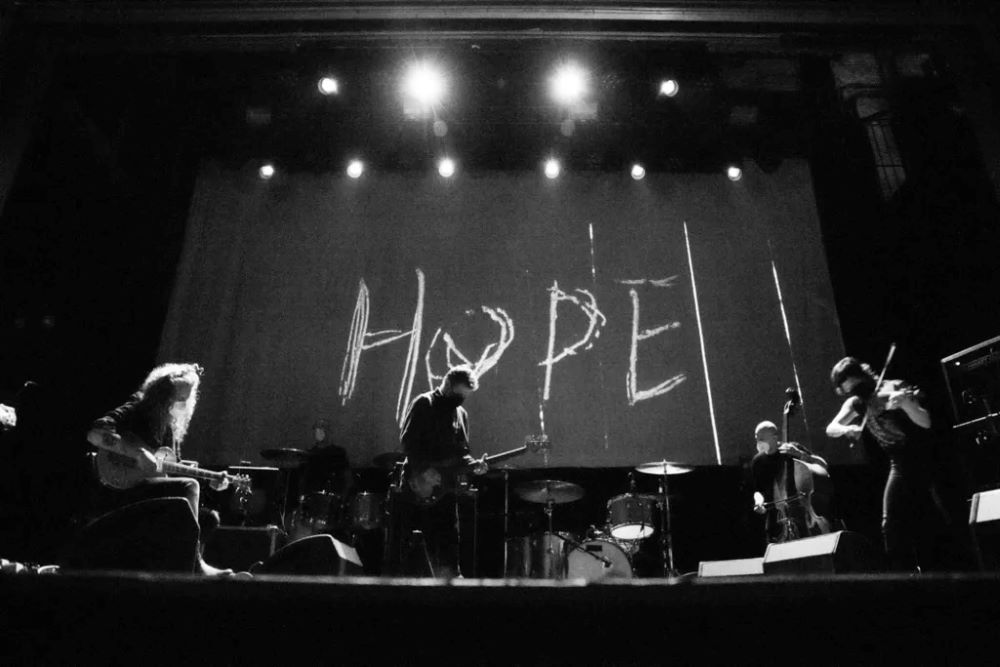
We’re now halfway through the week-long horror-themed “Song of the Day” feature and the first three days has been all Italian composers. Two of them were known for working in the grindhouse film scene while the other has been more well-renowned for having worked in spaghetti westerns and more mainstream, albeit very artful, film projects. The fourth selection in this fourth day of the series is the epic song “East Hastings” by the Montreal-based eclectic band Godspeed You! Black Emperor.
“East Hastings” was chosen because of not just its apocalyptic sound and tone, but also how it was used in an excellent way to highlight the desolation in Danny Boyle’s “zombie-faux” film, 28 Days Later.
The song begins after a brief prologue and shows Cilliam Murphy’s character walk the deserted and silent streets of London after waking up from a coma. His lost and dazed travel through the empty streets and by-ways of England’s capital was quite haunting and the song by GY!BE just added to the tension building up on the screen. If there ever was a song that typified the British viewpoint about how the world ends it would be “East Hastings”.
Day Three of the week-long horror-themed “Song of the Day” feature brings us one of the greatest pieces of film music ever composed. I’m talking about the score for John Carpenter’s remake of The Thing from Another World. The remake retains only the first two words of the original’s title, and that alone speaks volumes.
At first listen, one might mistake this music as being composed by John Carpenter himself—an accomplished film composer in his own right, known for scoring most of his own films. Its similarity to his iconic Halloween theme and even his earlier work on Assault on Precinct 13 makes the connection understandable. But one would be wrong to assume Carpenter had a hand in writing it. For the first time, Carpenter allowed someone else to compose the score, and for the task he selected none other than the Italian maestro Ennio Morricone.
By the time he collaborated with Carpenter on this sci-fi horror masterpiece, Morricone was already firmly established as one of the great masters of film composition. Audiences knew him best for his legendary work on Sergio Leone’s “spaghetti westerns” as well as numerous classics of Italian cinema. While Morricone’s full score for The Thing deserves a complete discussion of its own, I’ll focus on the one track that most powerfully captures the themes of horror, isolation, dread, and paranoia that make Carpenter’s film such a landmark: “Humanity (Part II).”
The piece opens with a heartbeat-like sequence that pulses steadily through most of its length. Strings layer on top of this rhythm, creating a mournful, dirge-like quality, while the bass thump lurks ominously just beneath the surface, as though danger is present but unseen. For much of its runtime, the music exudes a stark sense of emptiness, forcing the listener into the same suffocating isolation as the characters onscreen, stranded in the vast Arctic wasteland. The repetition and looping structure almost feel like a trap, with no release or resolution, mirroring the crew’s paranoia as suspicion and fear close in tighter than the snowstorms outside. Each cycle draws the listener deeper into a psychological cage, heightening the dread with its unrelenting stillness.
It isn’t until the final two minutes that the track breaks from its oppressive restraint. Here, Morricone channels Carpenter’s trademark minimalism with unsettling synthesizer tones, jagged and piercing against the steady backdrop. The music shifts from mournful to dissonant, almost alien, capturing the horrifying essence of the creature in its most grotesque form. This sharp intrusion is not just an auditory shock but a symbolic transformation—the moment when the lurking horror finally emerges from shadow into focus, confirming that the paranoia has been justified all along. It is this careful build, held back until the very end, that demonstrates Morricone’s mastery at fusing Carpenter’s sensibilities with his own, delivering a piece that is both restrained and devastatingly effective.
There’s a reason so many film aficionados cite Carpenter’s The Thing as one of their all-time favorites. Its reputation owes much to Carpenter’s skill as a filmmaker and editor, but Morricone’s score plays an equally crucial role in shaping the film’s atmosphere. “Humanity (Part II)” stands as one of the finest pieces of horror film music ever written.
The second song in the week-long special edition of the “Song of the Day” feature I’ve chosen the main theme to the infamous and controversial Italian horror film Cannibal Holocaust from Italian filmmaker Ruggero Deodato. The song is part of the film score composed wholly by Italian film composer Riz Ortolani.
The main theme to this greatest of film in the cannibal horror subgenre always take new listeners by surprise. For a film which shows some extreme examples of violence towards people and animals the theme is actually quite gentle and serene with just a hint of sadness in the suite. This theme really doesn’t prepare the viewer for what they’re about to see (though anyone watching Cannibal Holocaust for the first time should at least have an inkling what the film will be about just from the title alone).
It’s a testament to Ortolani’s talents that he was able to create a synth-based theme which has only gotten more popular with the passage of time. The theme could almost be considered the unofficial theme to the glory days of grindhouse cinema of the 70’s and 80’s. It’s even become the theme song to the greatest film (both long and short form) ever made: Treevenge. Just watch for yourself right below and you’ll understand why I say it’s the greatest thing ever put on film.
Halloween is less than a week away and for the next few days there’ll be more song of the day choices and this time around it will all be centered on horror. To start things off I chose the theme from George A. Romero’s Dawn of the Dead which was composed by the Italian prog-rock band Goblin.
The theme’s titled “L’alba Dei Morti Viventi” and it definitely creates a dissonant tone which just creeps along and makes one feel more than just a bit uncomfortable. Goblin used a lot of their electronic music background to make this such a signature and iconic horror theme. Anyone who has seen the original Dawn of the Dead will automatically recognize this theme and the feeling it brings up. A feeling of dread and of creeping horror which perfectly describes the zombies from Romero’s grand opus.
Horror fans everywhere have Italian horror maestro Dario Argento for having gotten Goblin to create the score for Romero’s film (Argento was one of the key producers for the film and even re-cut it for the European market). Goblin had already worked with Argento on previous films with their best early work with the filmmaker being the score for ProfondoRosso (known as Deep Red in the US and English market). But no matter how many other Italian horror scores the band has made since Dawn of the Dead (and the ones after have been great in their own right) it will be their score for that film which will indelibly link the band in film music history.
PS: as an added bonus below is the band’s theme for Argento’s Profondo Rosso.
There’s always been one constant in Robert Kirkman’s award-winning and fan favorite comic book series for Image Comics. The Walking Dead is not all about the zombies which dominate the background and always present an ever-looming danger to the survivors. No, the series has always been about the characters of the survivors and how they’ve had to cope with the apocalyptic setting that’s turned their world upside down. While the ever-present danger of the zombies have inflicted on Rick Grimes and his band of survivors their fair share of casualties it always falls to other human survivors to take the greatest toll on everyone.
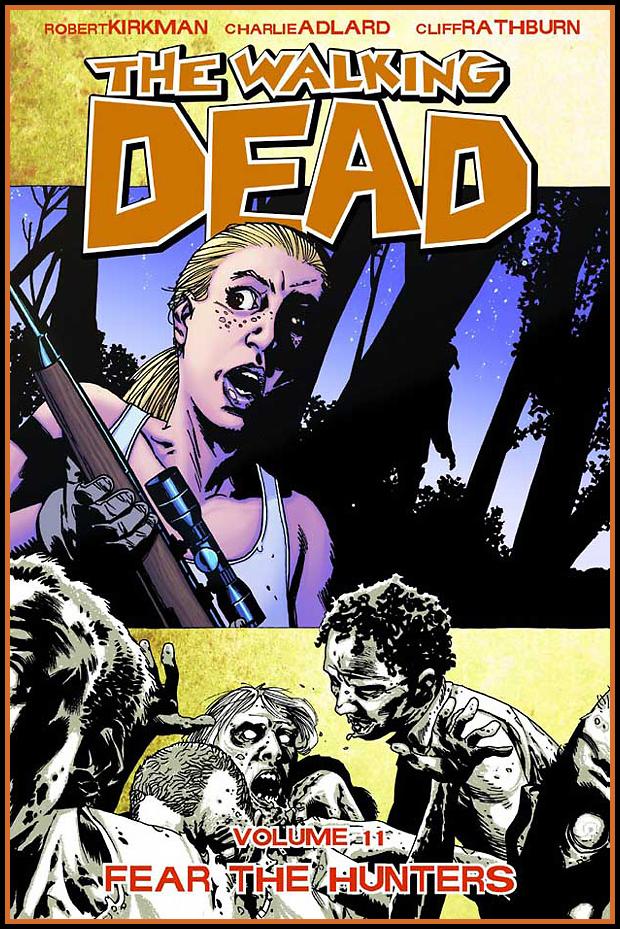
Volume 11 of The Walking Dead has been titled “Fear the Hunters” and that is quite an apt title to the story-arc which dominates this volume. Collecting issues 61 thru 66, this volume brings the danger of other humans to the forefront. We’ve spent the last two volumes dealing with the ramifications and after-effects of the Governor’s attack on the prison and the subsequent fleeing of Rick and those who remain in his group. We’ve seen how the loss in life has finally taken enough of a toll on Rick that it’s started to manifest itself and he’s not sure how to deal with it. His son Carl has also shown that he’s had to grow up fast in this new world. While it’s definitely shown him to be a hardened survivor it has also shown how humanity and innocence has no place in this new world. Either one grew up fast to deal with the problem or become victim to it. Carl has chosen to be the former even if it means he’s trodding down a dark path his own father has tried to shield him from.
“Fear the Hunters” will end up taking several more original members from Rick’s group. All three deaths had a sense of inevitability to them but now they died still doesn’t diminish the shock of Kirkman once again proving that no one’s truly safe. The fact that Carl becoming used to all the violence around him was directly responsible for one of the deaths remains one of the most shocking sequences in a series full of them. It definitely brings up a possibility that father and son may one day come at crossroads when something will put them at odds with each other.
The one other thing about this volume which brings the darker side of humanity to the forefront is the aforementioned “Hunters” themselves. A band of human survivors whose will to survive has taken them past the precipice of whatever human decency they had left and brought them to a place which has made them worse than the zombies around them. They harass, terrorize and inflict damage on Rick and his people to the point that Rick’s own retribution once the two groups have finally come face-to-face for the final time will probably shock some readers. Readers who may still believe that decency and humanity still has a place in a world which has none.
As I read this story-arc I came to the conclusion that if I was in Rick’s shoes I don’t know if I would’ve done what he did. To say that his actions (though only hinted at in the illustrations) went beyond the pale would be an understatement. But I did understand why he did what he did and also why those who went with him either assisted or didn’t stop it. I feel like this story-arc has finally shown how those who have disapproved of Rick’s methods to keep the group alive have finally come to their very own conclusion that he has taken it upon himself to do some evil to protect the group and that it has taken a toll on him. The rest are now willing to take their share of this if just to help relieve Rick of some of the guilt he carries with him for his past actions.
This volume has been one of the strongest one in the series and shows why Frank Darabont and Gale Anne Hurd fell in love with the series to adapt it for tv. The Walking Dead is all about the characters and has tapped into a rich source of material about how people in general deal with adversity and how some rise above it while most fail in their attempts to remain human. Rick and those with him remain on the precipice but so far has kept enough of their decency not to go over it the way the “Hunters” obviously had done so. But they remain balanced on a razor’s edge and sooner or later Rick or someone he’s close to will go over and that would make a tragic situation that readers will have to deal with whether they want it to happen or not.
Short but sweet…Congratulations to the San Francisco Giants for winning the National League Pennant to move onto the Fall Classic aka The World Series to the bandwagoners.
This team has taken torture baseball (almost as painful as watching torture porn flicks) and brought it to a new level. The nation will now learn and discover The Beard, The Freak, The Boss, The Kung Fu Panda and The Rally Thong.
No matter what happens in the World Series this Giants team has been fun to watch even if it has brought me to having a coronary more than a few times this year. But as the song says…
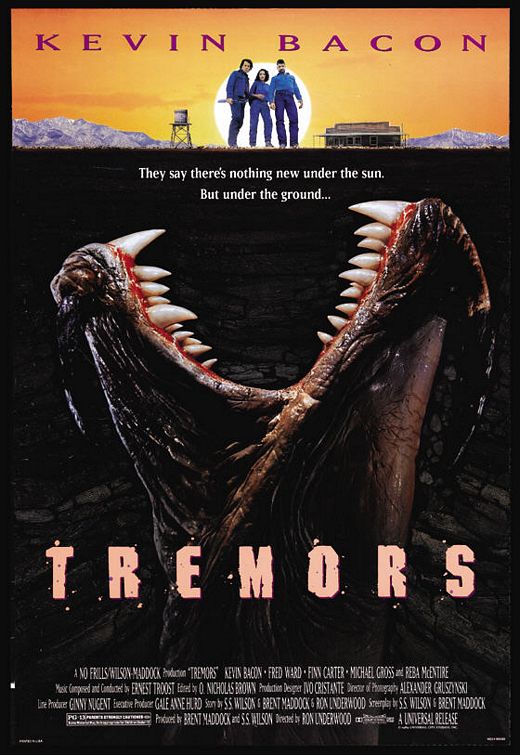
I just happened to catch one of my favorite creature-feature films on cable this morning and I had forgotten just how much fun this film was and is to still watch. I am talking about 1990’s horror-comedy Tremors by director Ron Underwood (who would follow it up with the very successful and funny City Slickers a year later) and starring the comedic duo of Kevin Bacon and Fred Ward. I was still in high school when I saw this in the theaters and even then this film had me from the get-go.
Tremors is a throwback to all the Saturday matinee creature-features and monster mash films that were huge during the 50’s and through the 60’s. It’s plot was simple enough that even a little kid could keep up with what was going on. We had a small, rundown mining town in the middle of nowhere (it always happens to be one of those small desert or valley towns which dotted the landscape once the national interstate was completed) whose fortunes have seen better days, hell better decades from the looks of it. The town has its cast of characters with Fred Ward and Kevin Bacon’s roles of Earl and Val the two main leads. We even get long-time genre actor Victor Wong in a supporting role as the town’s only store owner and also it’s two-bit hustler always looking to find a new way to make a buck. One of the funniest roles goes to Michael Gross (the dad in the 80’s hit family show Family Ties) who, with Reba McEntire as his wife, play some crazy-ass survivalists who try fighting off the creatures of this feature the giant, underground worms the survivors have dubbed “Graboids” for their propensity to grab people and animals with prehensile tentacle like appendages which shoot out from their mouths.
No, Tremors wasn’t some live-action version of the ever popular hentai, though I wouldn’t be surprised if the writers of the film were subconsconsciously influenced by them. What the film ended up being was one of the funnier horror comedies which ended the 80’s and announced the 90’s. It was also one of the last few great non-CGI creature features to come out of Hollywood. The Graboids were definitely animatronic and rubber-suited props, but they moved and looked real that one didn’t question whether they were real or not. It would be these creatures who would end up the stars and highlight of this film (the ensemble cast a good second) and follow-up sequels would and could never live up to it. It didn’t help that the sequels ended up using too much CGI which just ruined the illusion built-up by the original.
So, if you ever feel bored and suddenly see that one of the many basic cable channels are showing this little horror-comedy gem from the 1990’s I recommend you watch it with snacks and drinks on hand. There are many ways to make one stop being bored by watching something on the “Tele” and I say Tremors is one of those ways.
Scott Stewart’s film about the Biblical Apocalypse was one film that I was very hyped to see in the first weeks of 2010. I had heard some very good buzz about it when a red band sizzle reel was shown in at 2009 San Diego Comic-Con. This was Stewart’s first major work (he had made a smaller film in 2000 called What We Talk About When We Talk About Love) and with his background in the special effects industry I thought that this film of his would at least be a feast for the eyes. I knew going in what to expect from something about God, Angels, the Apocalypse and uneding amounts of guns and ammo. So, it was with a profound disappointment when I finally saw Legion and, despite my low expectations, was roundly disappointed with everything about it.
Legion is about God deciding that he’s had enough of humanity’s bullshit and shenanigans (a term I would put on this film) and turned his angelic hosts loose upon the world to start things new. This was God’s version of shaking the Etch-a-Sketch that is the world. He has his two favorite Archangels in Michael and Gabriel leading the vanguard of this Apocalypse with Michael tasked with making sure a baby doesn’t get born before the divine enema has been completed. Well, Michael being the introspective sone decides that he still has faith in humanity and refuses to do God’s bidding. We see Michael go through removing his wings (which also unlocks the very BDSM God collar all the angels wear) then find a huge cache of weapons inside a toy company warehouse. Seems removing the wings makes him human and minus all the cool angelic powers. He says something about the Apocalypse having started then makes off towards Bethle…I mean the diner out in the Nevada desert to protect the prophesized baby who will save humanity.
Yeah, the premise for Legion sounds awesome on paper. Militant angels led by badass Archangels like Gabriel about to go “Terminator” on mankind. The story itself was like a mish-mash of some of the best cult fantasy/horror of the past. There’s some of the cool Christopher Walken film Prophecy in the plot and, of course, one cannot but see some parallels with Cameron’s Terminator. Plus, we have a humanized Archangel Michael with guns and guns and guns to battle his former brethren with his coterie of human sidekicks to help out. The trailer for this was very cool and full of action. A trailer which pretty much had all the cool parts in this film. One can watch the trailer and actually enjoy Legion more than when they watch the film itself.
For a filmmaker with a special effects background the film looked pretty lifeless with action sequences that lacked any sort of memorable action. The dialogue wasn’t awful, but everyone’s performance made it sound worse than it really was. Even Bettany in the lead role of Michael looked tired and bored with his role (a sign the film was going downhill and downhill fast). The possessed humans who made up the bulk of the opposing force against the good guys were uninteresting with the exception of Doug Jones’ “Ice Cream Man” character shown in the trailer. A scene the trailer pretty much showed almost in its entirety. That character was on the screen for less than two minutes then gone.
I actually think that people should just watch the trailer for Legion then pop into their dvd player Prophecy and Terminator. Doing that will pretty much give them the whole story of Legion and have a kick-ass time doing so. This was a film that looked good to great on paper, but once they actually started writing the script and started filming went down the septic tank. It’s films like these that makes one shout “shenanigans” at all those involved in its making. I think Kyle Broflowski would agree with me.
A little over five years ago Warner Brothers made the decision to reboot the Batman film franchise. Several names of filmmakers were mentioned as candidates to helm this reboot. One of them was director Darren Aronofsky. He has made a name for himself helming very dark (and for some very depressing) films about very damaged personalities and their struggles. The Batman/Bruce Wayne duality was perfect for Aronofsky and he had begun to do early treatments to adapt Frank Miller’s classic Batman origin tale, Batman: Year One. In the end, this Aronofsky project fell through and the reboot ended up being handled by Christopher Nolan (not a slouch of a filmmaker himself).
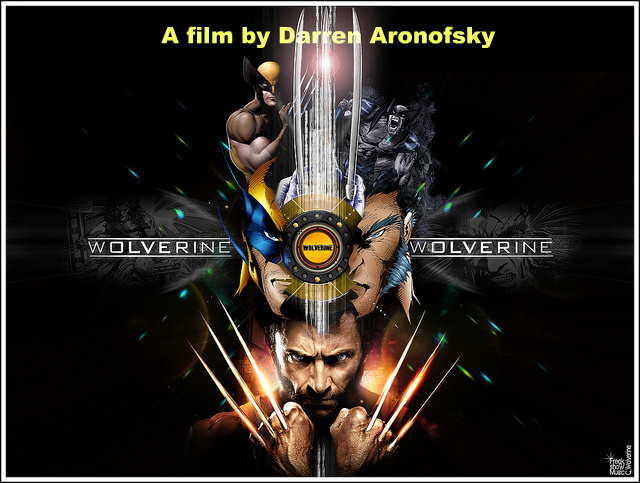
Aronofsky has made a couple of original and very personal films since then (The Fountain, The Wrestler, Black Swan), but with 20th Century Fox scrambling to put another one of their Marvel-licensed properties into production in order to keep the rights to them, they’ve decided to give the reins of the next Wolverine film to Aronofsky. Rumors of Aronofsky close to signing the deal to helm this Logan sequel was finally confirmed by none other than Hugh Jackman himself aka Wolverine in an interview for Vulture.
The first film in this character’s franchise was lackluster at best and horrible to most. The fact that a sequel has been greenlit even after the less-than-stellar box office returns of the first film was headscratching to many. Will Aronofsky’s involvement in this sequel actually erase the bad taste that Wolverine: Origins left in fans’ mouths. If there was anyone who can actually get a handle in the troubled and damaged psyche of one of Marvel’s most iconic characters it would be Darren Aronofsky.
There’s still little details as to what sort of storyline this Aronofsky sequel will take or will he just decide to reboot the franchise and start fresh. The reaction I’ve been reading has been mostly tepid with some guarded excitement from those who thinks Aronofsky will end up working his dark magic on this character on the big-screen. We’ll learn more once filming starts in early 2011.
Here’s to hoping that Aronofsky can do for Wolverine what Nolan was able to do for Batman.
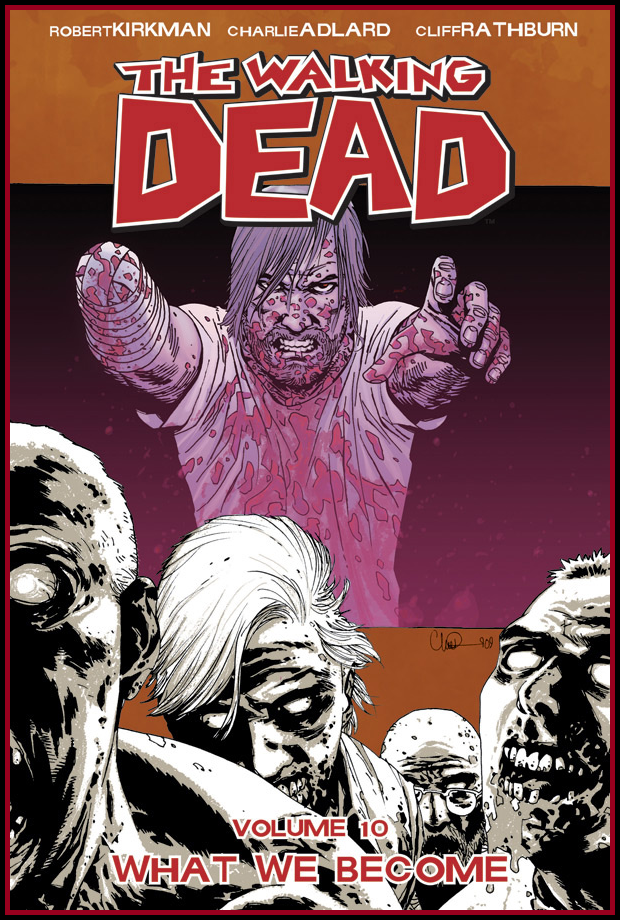
The Walking Dead is only a couple weeks away from premiering as an AMC tv series. It is an event that legions of the comic book series’ fans have been awaiting for years and counting. The fact that I am now reviewing the tenth volume in the series’ collected trades is testament to the title’s continuing and growing popularity with readers. The fifty-four issues which precedes the six collected in this volume has seen main protagonist Rick Grimes and the group of survivors he’s leading through the zombie apocalypse go through triumphs, heartache and the inevitable purging from their perceived safety behind prison walls. This tenth collection will continue to show how Rick and those in his group who have survived have changed and sometimes not for the better.
“What We Become” is an apt title for this tenth volume. Rick has always been the de facto leader of his group even when he’s tried to give the responsibility to someone else to handle. In this volume we see how the events which led to the group escaping the destruction of their prison haven has affected not just Rick mentally but also his son Carl and some of the surviving members of the group. Dale, who has been a staunch ally of Rick’s in their journey through the zombie wasteland, has become a bitter shell of his former self as he sees each and every opportunity for him, Andrea and the twin boys to find a stable, safe haven come to naught and he sees Rick as the one to blame.
It doesn’t help Rick and his original group that the new additions which joined them in the last volume (Sgt. Abe Ford, Rosita Espinoza and Eugene Porter) have added to some of the internal tension in the group. Rick and Abe do not get on the right foot as they travel together towards a new destination. A destination provided by Eugene who says he’s been in contact with surviving elements of the U.S. government in Washington, D.C. It’s a destination that not everyone believes in, but it’s a goal nonetheless.
It’s during a side mission conducted by Rick, Carl and Abe that we see the depths Rick will go to protect his son when they’re ambushed by bandits during a routine stop to rest. We don’t see exactly what Rick does to one of the bandits who tried to go all Catholic priest-like on Carl, but we see from the reaction shots from Carl and the sounds made that it wasn’t pretty and civilized. It’s the aftermath of this event that Rick and Abe begin to bond somewhat and finally understand why they’ve done some of the awful things they have had to do since the fall of civilization.
For a volume that was all about exploring the damage the zombie apocalypse has done to those left behind it was actually pretty action-packed, but it wasn’t done so for the sake of putting action and gore on the pages. These sequences helped move the story along. It did help keep the volume from being just all about exposition (I know something detractors will continue to point out about Kirkman’s writing).
“What We Become” also bring back a past characters readers haven’t seen since the first couple issues of the series and seeing what the passing year or so since Rick last left him was very heartwrenching. This were characters fans have been requesting Kirkman to bring back. They wanted to see how they’ve been doing in their own attempt to survive. What Kirkman has delivered probably wasn’t what many were expecting and it definitely took some steel pairs to do what he did.
The volume ends with the group up one more survivor with their journey to D.C. still many days or weeks left in it. For those who have been following the series since the beginning and still do then the next volume will bring in a new story-arc which Kirkman just calls “The Hunters”.
Until then grab your rifle and machete, bar the doors and windows, hoard the food and water and definitely destroy the stairs behind you.

 Through the Shattered Lens