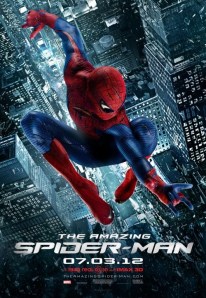
Trash Film Guru Vs. The Summer Blockbusters : “The Amazing Spider-Man”


I know, I know — it’s really not even fair, is it? To review director Marc Webb’s probably-happening-to-quickly relaunch of Marvel’s Spider-Man franchise in the wake of Christopher Nolan’s The Dark Knight Rises seems like setting this flick up for defeat. Truth be told, though, I actually saw this flick on opening night, and held off on reviewing it here on Through The Shattered Lens because, well — everybody else was already having a crack at it on here. I swear. I think this is the fourth or fifth review of this film to go up here. So I held off. And honestly, the fact that I wasn’t rushing home to sit down and review it right away should tell you something right there, shouldn’t it?

Not that The Amazing Spider-Man isn’t a perfectly decent little superhero flick, it is. But that’s all  it is. I can’t find much fault here, really — Webb’s directive from Columbia seems to have been to, in effect, Nolan-ize the Spider-Man story with this reboot, and on the surface, he seems to have done that. The tone is darker and more somber. James Garfield’s take on Peter Parker is altogether more haunted and troubling than was Tobey Maguire’s. He’s less likable, too — a development I actually welcome. Emma Stone does a nice job as high-school love interest Gwen Stacy. Martin Sheen’s Uncle Ben in an altogether more realistic and involving take on the character than we got in Sam Raimi’s first flick. Sally Field is great as Aunt May. Dennis Leary does a fine job as Gwen’s dad, police Captain George Stacy, who has a hard-on to arrest Spider-Man. Campbell Scott, in flashback scenes as Peter Parker’s dad, cuts both a kindly and haunting figure, and the decision of the filmmakers/studio to concentrate on the mystery surrounding the elder Parkers is a good one that gives the series a little bit more depth.About the only two serious knocks against the film are the normally-reliable Rhys Ifans’ take on the villainous Curt Connors/Lizard, his performance in both roles being of a distinctly lacking/mail-in-in nature, and the CGI effects in general, which are of middling quality, particularly in terms of their realization of Connors’ Lizard persona (or maybe that should be reptile-ona). They’re not bad, but they’re not up to the level we expect in our summer blockbusters at this point, and I would say they’re pretty of a piece, quality-wise, with, say, the second Hulk flick.

Anyway, by and large, the word we’re looking for here, across the board, is competent. Not inspired, by any means, and not groundbreaking — just competent.  I’ll be honest and admit I liked this flick better than Joss Whedon’s Avengers, since it at least provided some level of human melodrama to back up the action, but it seems that the lesson studios have taken from Nolan raising the bar on the entire superhero genre is not that we want more complex, challenging, higher-quality, more technically-brilliant, more multi-faceted fare, but that we just want these flicks to be “darker” and “more realistic.” They “get” what the success of the  Batman films means on a surface level, but they really don’t “get it” at all.

For those of you who are old enough to remember the “evolution” of the comics medium in the mid-to-late ’80s with books like Frank Miller’s The Dark Knight Returns  and Alan Moore and Dave Gibbons’ Watchmen, assuming you were paying attention to comics back then, this will all seem terribly familiar — after the success of those two books, the “Big Two” publishers said they got the message and that people were ready for “superheroes to grow up.” And what did we get? Not more intelligent, thought-provoking, boundary-pushing, stories and characters that challenged the conventions of the genre itself the way those works did, but a steady stream of “darker,” more “mature,” somber, soul-less versions of the same kind of crap the industry was already cranking out — a state of “creative” affairs that continues unabated to this day. Nolan’s raised the bar on superhero storytelling on the silver screen the same way that Miller, Moore, and Gibbons did on the printed page, and Hollywood seems to have taken the same “lessons” from it that Marvel and DC did a quarter-century ago.

in other words, welcome to a new age of superhero sameness. On the one extreme we’ll have pure, unfiltered, two-dimensional, check-your-brain-at-the-door, CGI-heavy slugfests, a la The Avengers. Comics could always do these and do ’em well, and now so can the movies. On the other hand, we’ll have ostensibly more “mature,” “realistic,” “darker” stuff like this. But don’t expect another series with the innate intelligence and willingness to push the envelope in new directions that we’ve gotten with the Dark Knight films anytime too soon. Meet the new boss — same as the old boss.

Mind you, all of this was pretty much written and ready to go before I saw The Dark Knight Rises — and now that I have, my initial view still stands. Reaction to one flick shouldn’t change one’s opinions on another, after all. So yeah, this is perfectly adequate, acceptable superhero fare — but in the wake of DKR , do “adequate” and “acceptable” still cut it? Should they ever have? And are we willing to settle for movies like The Amazing Spider-Man that think that all DKR and its ilk prove are that audiences want the same old stuff, albeit with “darker,” more humorless trappings — or are we going to reward work that does what Nolan’s done with his Batman series in terms of pushing the genre itself in directions we’d never before expected? Let’s vote with our dollars, and vote wisely.

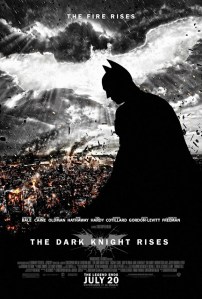
Trash Film Guru Vs. The Summer Blockbusters : “The Dark Knight Rises”


At this point, I wonder if it’s even possible to separate today’s tragic events in Aurora, Colorado from any discussion about The Dark Knight Rises and simply analyze the film based on its own merits. If so, it takes a harder heart than mine, so before we even get started here let me say that my heart goes out to all the victims of this completely senseless tragedy, as well as their families and friends. In the days to come we can analyze the motivations, the warning signs that may or may not have been missed, and debate the proper courses of policy action to take in the wake of this absolutely senseless tragedy, and that’s all well and good — we still, and hopefully always will, live in a free society where the open debate and discussion about how best to address any situation, even and perhaps especially tragic ones like this, is not only absolutely appropriate, it’s absolutely necessary. So let’s remember that before we go and start calling people “anti-second amendment gun-grabbing liberal extremists” for merely suggesting that it might be a smart idea to figure out ways for guys like this accused suspect to not get their hands on private arsenals, and before we start suggesting that somehow various Batman-related movies and comics may have “inspired” the killer. If those are your views, fine, express them and have at it, but do respectfully, calmly, and in a mature fashion, please — assuming those who don’t agree with us are somehow “the enemy,” or placing a higher value on ascribing blame for a problem than on finding ways to prevent the situation from happening again, will only guarantee more tragedies in the future. But let’s all take a deep breath and let the police and various other investigative bodies do their work before we assume we know anything, much less that we know everything (or, at the very least, all we need to) about the situation. For now I think we can all agree that this kind of senseless violence represents an unconscionable act of cruelty and that there are no, and never will be, any justifications for it whatsoever.

And speaking of toning down the rhetoric and behaving like adults, can we also all agree that any online critic — be they “professional” or “amateur” — should be free to express reservations, even outright dislike, for this or any film without being subjected to harassment, personal attack, and even death threats? It’s just a movie, people, even if it’s a really big one, and there’s nothing in this world more subjective than one’s own reaction to and/or interpretation of a work of art in any medium. If people who have opposing views from our own on issues like gun control, public safety policy, and any others that may arise in the discussions resulting from today’s  horrific acts in Aurora are not our “enemies” — and, again, they’re not — then surely people who have differing opinions than our own in regards to a goddamn film aren’t, either. If you can’t wake up to what’s really important in life in the wake of an incident like this, then I genuinely feel sorry for you, but please — dial it all back a notch or shut the hell up if you’re absolutely incapable of being reasonable and level-headed. It’s all about perspective, folks — as in, keeping things in it.

All that being said, I don’t mind segueing into discussion of the film itself by stating immediately and for the record that I absolutely loved The Dark Knight Rises. I was, quite frankly, expecting to, but yesterday I got a bit jumpy. I had read various postings online about how the basic premise here amounted to “Batman comes out of retirement to save the 1% from having their wealth redistributed,” and leaving aside the fact that I find the politics behind such a plot conceit completely antithetical to my own, it just sounded like a pretty lackluster way in which to wind up one of the biggest series in film history and like Nolan was sacrificing inspiration for the sake of being overtly topical.

I needn’t have worried. Yes, the film can certainly be read in such a manner if you strain awfully hard to do so, but it can be read with a more progressive leaning, if such in your inclination, as well, to wit : yes, the principal villain of the piece, one ‘roided-out, breathing-apparatus-of-some-sort-wearing pseudo-revolutionary named Bane (superbly portrayed by Tom Hardy with a kind of chilling nonchalance that’s absolutely palpable) does, in fact, set about “giving Gotham back,” as it were, to the dispossessed masses for his own purposes, but it’s what those purposes are, and the way in which they’re revealed, that gives lie, in my view, to the whole “Batman as champion of the 1% taking on a guy who’s suckered the 99% into falling for him”  interpretation of the movie. I shan’t say anything too specific out of respect for those who may be reading this before they actually see it, but I will say this much : the fact that Bane is (apparently) a tool more for a rival to the corporate throne of Bruce Wayne than he is any “champion of the people,” and that even that turns out to be a ruse when it’s revealed that he’s bringing down Gotham for another set of reasons entirely, reasons which tie right back to the first film in Nolan’s series, are enough for me to dismiss both the conservative championing of this movie and the liberal hand-wringing over it with relative ease. In short, maybe we all need to learn to actually see these movies for ourselves before taking to the web and opining on their political content. And yes, I include myself among those I’m (mildly) castigating here.

All of which is not to say that Nolan (who co-wrote the script for this with his brother, Jonathan) doesn’t have an agenda here — it seems to me, quite clearly, that he does. And what, pray tell, would that agenda be? I’m glad you asked (okay, glad asked) — but first, a bit of background : back when Nolan first arrived on the scene with films like Memento and Insomnia, it was pretty commonplace to hear his work compared to that of fellow Brit-come-to-Hollywood Alfred Hitchcock. Some of that died down a but when he took over the Batman franchise and his career moved squarely into blockbuster territory, but like the so-called “Master Of Suspense” himself, I think our guy Chris has taken a perverse delight in having us all on a bit. Sure, his budgets are a lot bigger now, and he’s definitely able to pack a much bigger wallop, aesthetically speaking, than he used to, but underneath all of that pomp and circumstance, I still think he’s the same guy who lives to confound our expectations and use his work to comment, above all else, on itself.

If I haven’t lost you entirely by this point, and I sincerely hope I haven’t please allow me to explain : true, on the surface, a story that revolves around how Bruce Wayne/Batman (Christian Bale, of course, who turns in a performance here that’s incredibly multi-layered as he goes from broken to redeemed to more broken than ever to quietly triumphant, complete with physical changes to match), against the wishes of mentor/father-figure Alfred (Michael Caine, as always the beating human heart of the film and here displaying the type of range few characters with his limited screen time are ever even given the opportunity to sink their acting teeth into) comes out of a self-imposed eight-year exile spurred on equally by the threat of Bane and the mysterious allure of a fetching costumed cat-burglar (Anne Hathaway, never specifically referred to as “Catwoman,”  who knocks it out of the park here as sex-appeal-with-a-social-conscience — notice how she only steals from the well-off, and is even portrayed as being sympathetic to the surface level of Bane’s machinations, ultimately false as she knows them to be), aided as always by Morgan Freeman’s beleaguered-but-hardly-dead-yet-by-a-long-shot Lucius Fox, Gary Oldman’s ethically-conflicted-but-still-holding-out-hope police commissioner, Jim Gordon, an idealistic young Detective named Blake (Joseph Gordon-Levitt, who embodies a kind of hope for the future every time he’s on screen), and a mysterious ally on his company’s board of directors named Miranda (Marion Cotillard, who’s fetchingly dangerous in her own, non-slinky-suited way), hardly sounds like it has the makings of being a truly personal directorial statement, especially when you consider that it’s got a $250 budget and a remit from the studio to keep hitting us with everything it’s got from start to finish.

And yet, that’s exactly what Christopher Nolan has delivered here. Yes, the action set-pieces are spectacular, the effects are out of this world, Wally Pfister’s cinematography is (as we’ve come to expect by now) absolutely breathtaking, and the metaphorical punches are precisely placed, perfectly executed, and pack one heck of a wallop. It’s all big-scale spectacle on a scale we’ve never seen before and backed up by brains, to boot. In short, this isn’t The Avengers, which can certainly be viewed on an intellectual level and with at least a degree of thoughtfulness involved should you so choose, but where such things aren’t necessary to fully enjoy the film. In a Nolan blockbuster, you’d better put on your thinking cap or you’ll be left in the dust.

It’s what all that thought and action, inextricably linked as they are, is put in service to, though, that really sets The Dark Knight Rises apart and reveals Nolan to be, and I say this with all due respect, a bit of a devious trickster under all that pomp and circumstance. As has been established, this film has more than enough red meat to either appease and/or infuriate both ends of the political spectrum as generally defined, and Nolan indulges himself on a scale so grand that it’s absolutely certain to provide ample fodder for both his detractors and admirers, and now, with all these pieces set, there’s nothing left for him to do but — sit back, laugh, and watch us all have it online, on television, at work, even around the family dinner table. Our reactions to how we view his movie will, in fact have already, mirror the conflict of ideals, as well as the grand-scale physical destruction, shown on screen (although, again, let’s keep it level-headed and in proportion to its actual relevance to our daily existences, please). I don’t think he started out this Batman series with the intention of it becoming The. Biggest. Thing. Ever. To. Happen. In. Movie. History. But, now that it is, he’s making the most of the opportunity and, like his predecessor Hitchcock, whose greatest character was always himself, and whose films ultimately functioned as self-commentary on their own creation and existence, he’s laid a masterfully-prepared, air-tight, $250 million dollar trap here, that once you’ve seen, you have no choice but to play into.

Some may call that cynical, and perhaps they’re right to a certain degree, but it’s cynicism with purpose, executed with almost pristine attention to detail. Even he ending, which I won’t give away, is a supreme act of self-referential commentary on where any future filmmaker could take this series, should they be daring/and or stupid enough to pick up Nolan’s gauntlet. It’s all part of an intricate puzzle designed to do nothing so much as reflect itself back upon itself , and us, once the last piece is in place, and nothing this truly audacious has ever, cinematically speaking,  been attempted on a scale this large before. Think David Lynch’s Inland Empire, only delivered on a level pretty much anyone can understand and appreciate, if not actually and actively like (although early indications are that most audiences really do love this flick), and you’ll have something of an idea of what’s been achieved here.

It may take awhile before everyone is able to fully appreciate what Nolan’s achieved here — hell, we’re still debating Hitchcock’s entire oeuvre decades later — but that’s all part of the plan, as well. This is self-contained, self-propagating, self-constructed, self-sustaining genius (a term I never use lightly) of the highest order, and the most accomplished act of thoughtful pranksterism in movie history. Tomorrow, I’ll be seeing it again — and I bet Chris Nolan isn’t surprised in the least.
 

Trash Film Guru Vs. The Summer Blockbusters : “Men In Black 3”


Right out of the gate, Men In Black 3 feels dated. Not like something out of the 1960s, which is when most of this film’s story is set, but like something out of the late 90s/early 2000s. Director Barry Sonnenfeld —- who’s had a hell of a time getting other projects off the ground in Hollywood despite helming up two incredibly successful “blockbuster” franchises (MIB and The Addams Family — just in case, like apparently most studio execs, you’d forgotten) — jumps into this thing with so much gusto that you’ll forget within minutes that it’s actually been 10 years since Will Smith’s Agent J and Tommy Lee Jones’ Agent K ran around chasing men from Mars (and even further afield) across the silver screen.

Oh, sure, a lot’s happened in that decade as far as the principals here are concerned — Smith’s been pretty quiet the last few years, for one thing, and Jones has aged pretty visibly and is more or less consigned to supporting roles these days (including here, given that his younger 1960s alter ego, played with impeccable precision by Josh Brolin, actually gets far more screen time than Jones’ present-day version), but it’s pretty clear that when it comes to carrying the load in big-budget brainless summer fare, neither of them has left a step — nor has Sonnenfeld, who puts his foot down on the gas immediately and never once lets up long enough to allow us to do the one thing that’s guaranteed to pulverize the credibility of any glitzy megamiilion-dollar Hollywood FX extravaganza : think.

And ya know what? I wouldn’t have it any other way. Sure, there’s some sappy “bromance”-type crap shoehorned in here, and a love-interest subplot involving the Agent Ks of both the swingin’ Sixties and the present day, but that’s all fine and good too in the limited doses tha Sonnenfeld serves them up. By and large, though, to the shock of absolutely no one, this flick is all about big, flashy, lighthearted, comedic fun, and that’s something that’s sorely been lacking in the midst of all these dour summer movies this year, like Prometheus, for instance, that take themselves just sooooooo seriously.

Men In Black 3, quite clearly, doesn’t, and that’s perhaps its greatest virtue.The plot’s pretty basic time travel stuff — J goes back in time to prevent K from being killed, various hijinks ensue — but this is one of those films that isn’t so much concerned with doing anything new as it is just doing what everybody and their brother (or sister, or cousin) knows it’s there to do and doing it well. Give us a likable cast, some cool eye-candy effects, a couple little nifty quirks like Andy Warhol actually being a “Man In Black” himself, and you know what? You’ve got the recipe for a very familiar, but nonetheless pleasant, little serving of celluloid. It’s not at all filling on an intellectual, or frankly even artistic, level, but come one — does everything absolutely need to be? Sometimes you just want to go out to the movies, shut your brain off, and have a good time. If that’s the kind of mood you’re in, there’s nothing else out there this summer that will satisfy you quite like Men In Black 3.

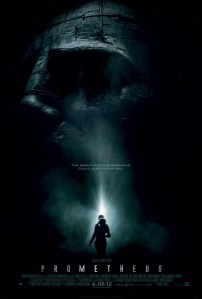
Trash Film Guru Vs. The Summer Blockbusters : “Prometheus”


It’s funny how our expectations going into a film shape our perceptions of it while we’re watching it and, ultimately, our final opinions about it after we’ve seen it. Case in point : yesterday on this very blog I was talking about Snow White And The Huntsman, a movie I frankly expected nothing from, and about how, even though it delivered nothing but a substance-free series of pretty pretty pictures to look at, I wasn’t too pissed off about spending my hard-earned money to see because I wasn’t even sure it would deliver that much (or that little). Today, on the other hand, I’m going to be discussing a flick that I flat-out expected to suck, and that pretty much delivered on those expectations — yet left me feeling pretty well ripped off even though it, too was gorgeous to look at and even though, again, I figured it would be at least as bad as it was, if not worse.

I’m talking, of course, about Prometheus, Ridley Scott’s completely unnecessary Alien prequel. The reasons I went into this with essentially no optimism whatsoever are numerous — Scott hasn’t made a good film since Blade Runner, the script was co-authored by some guy named Jon Spaihts and one of the chief culprits behind the unwatchable, thoroughly confused mess that was TV’s Lost, Damen Lindelof (who’s apparently irked huge segments of the online film geek community with a recent series of over-the-top-in-the-self-serving-department comments), and frankly because any film that set out to “explain” and “demystify” the H.R. Giger-designed evil aliens form the original film series sounded like something with the power to not only be completely pointless (some power), but to actively detract from the impact the first film had by filling in a bunch of blanks that are best left — well, blank.

Of course, there were reasons for optimism, as well — a first-rate cast, sure-fire scrumptious CGI effects, and a promised “return to the Alien series’ roots” after some rather unfortunate side-steps and detours all sounded pretty cool, but I still went into this one prepared for the worst.

I didn’t get that. Instead I got a confused, cliched, every-bit-as-unnecessary-as-I’d-expected mess of a film that, in its defense, at least really does look amazing. Which was enough for me to give Snow White And The Huntsman a pass, admittedly — but hyprocrite that I am I just can’t be as forgiving when it comes to Prometheus. Why not? Because at the end of the day I don’t really give a shit either way about the Snow White legend, but I do care about the Alien franchise. A lot. Scott’s first film rates right up there with John Carpenter’s The Thing on my list of all-time great sci-fi horrors, and I even enjoyed most of the various sequels to one degree or another. So it’s fair to say that, even though I didn’t figure it would be, I still wanted this flick to be good.

So where to begin with the reasons why it wasn’t? Well, how about we start with that stellar cast I mentioned a minute ago. It’s completely wasted. Apart from the film’s “Ripley-lite” protagonist, Dr. Elizabeth Shaw (Noomi Rapace, who turns in a heck of a good performance), none of the characters are developed at all. the very talented Idris Elba is stuck in a one-dimensional role as the titular ship’s captain and can’t even seem to decide what accent he should settle on when he’s speaking. Charlize Theron plays an ice princess — again. Michael Fassbender, at the top of pretty much every current Hollywood “hot” list, turns in a dry, uninvolved turn as the ship’s android that won’t be causing Ian Holm to lose any sleep (although, in Fassbender’s defense, the fact that Spaihts and Lindelof reveal that he’s robotic from the outset doesn’t help matters any). Guy Pearce, as old man Weyland, the expedition’s financier, might as well be replaced with a computer-generated stand-in. There’s even a completely pointless two-second cameo from Patrick Wilson inserted for reasons I can’t even begin to fathom. So much talent with oh so little to actually, you know, do.

Then there’s the script. Dear God, what a disaster. Shoehorning a bunch of unnecessary Chariots Of The Gods-style crap into the Alien “mythos” is about the worst direction these truly Lost writers could have chosen to go. Instead of illuminating anything (not , again, that much “illumination” was really needed — the original story stood on its own just fine), it just muddies the waters. There’s some laughably atrocious dialogue that wouldn’t sound out of place in an Ed Wood film (like when the ship’s geologist, in the midst of a massive freak-out, declares ” I like rocks, right? I really like rocks!”). And the main thrust of the action is essentially a direct carbon copy of the “story arc” from the first film (you know, for instance, who the only survivor is going to be from the outset). It’s like Spaihts and Lindelof can’t decide between trying to do something completely out of left field (albeit thoroughly confusing) or just settling on the same old blueprint so in the end, they go for both — and end up doing each competing narrative impulse a massive disservice.

I keep coming back to the amazing visual prowess Scott’s CGI gurus display here consistently from start to finish, and I suppose it’s worth mentioning one more time just to balance the scales here a bit, but what’s that old saying about lipstick on a pig? Prometheus cakes on the makeup, but underneath, its true face is still that of the victim of a particularly nasty car wreck. And like an accident victim, it’s so disfigured and tragic that you’re almost tempted to feel sorry for it — until you learn that said victim was driving drunk at 150 mph and the person in the other car (I guess that would be the audience in this case — bear with me as I stretch this metaphor way beyond the breaking point) didn’t make it out alive.

It takes an almost Herculean effort to not be as bad as I was fearing Prometheus would be yet still somehow leave me feeling even more cheated and let down than I would have felt had it actually been even worse (if that makes any sense at all) —yet that’s exactly what Scott, Spaihts, and Lindelof  have managed to do here. File that under “go figure” and then, to return the already-worn-out accident metaphor, move along, folks — nothing to see here.

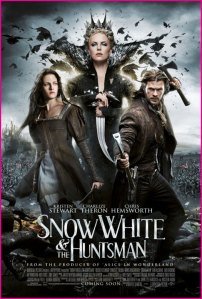
Trash Film Guru Vs. The Summer Blockbusters : “Snow White And The Huntsman”


Having proven yesterday how little I know about all things vampire with my review of Abraham Lincoln : Vampire Hunter, I figured I’d take a crack at another mythic genre, namely the fairy tale — or “folklore,” if you prefer — today. Why stop when you’re on a roll, right?

To be honest, though,  I guess what we’re here to talk about isn’t even “folklore” per se so much as the modern interpretation of a very popular piece of folklore indeed, since the film under our microscope this evening is first-time director Rupert Sanders’ Snow White And The Huntsman, the second “reimagining” of the Snow White legend to hit the screens this year following hot on the heels of Mirror, Mirror, and definitely the decidedly more “mature” of the two.

There were, frankly, a lot of reasons to be skeptical about this movie going in — Kristen Stewart sure isn’t my idea of perfect casting in the lead, for one thing — but on the whole, I actually walked out of this one pleasantly surprised. Not blown away, by any means — hell, not even bowled over — but it visually arresting enough and well-paced enough to sustain my interest throughout, even though the idea of Snow White as some kind of bad-ass warrior queen seems absurd to a guy like me who basically only knows the Disney version, and remembers it very faintly at that.

Sanders, who I understand got his start in music videos, definitely brings the kind of “these folks have a short attention span, so let’s not let up on the gas” attitude you’d expect from somebody fresh out of that milieu, and while he doesn’t really seem to be much of an actor’s director — Charlize Theron in given free reign to ham it up to the hilt with her interpretation of the evil Queen Ravenna, Chris Hemsworth is essentially just reprising his Thor role as the co-titular Hunstman, and Stewart does what she does “best,” namely look completely lost but somehow project an attitude that we’re supposed to think that’s “sexy,” and that we’re damn lucky she even inhabits the same planet as us mere mortals, as Snow White herself — but when he’s laying out a visual feast this scrumptious, I can live with a few of the ingredients being a bit sour and/or stale.

And what a feast it is! Yeah, there’s definitely a lot of liberal borrowing from the Tim Burton playbook going on here, particularly with little tricks like superimposing the heads of the likes of Bob Hoskins and Ian McShane onto CGI dwarves’ bodies, but Sanders’ overall vision of  the fantastic is considerably less color-saturated and joyful than Burton’s, and frankly a little edgier. When Burton goes “dark” or “morbid” he does so with his tongue firmly planted in his cheek, while Sanders really seems to mean it — this shit is supposed be more than just a little bit intimidating.

In that sense, he’s probably closer to the original intent of the Brothers Grimm and their contemporaries than he may even have consciously been aiming for, since “fairy tales” weren’t just designed to keep the young’uns of years gone by entertained, but to scare the shit out of them by illustrating the consequences of what would happen if they didn’t do as they were told, as well. There’s irony, I suppose, in the fact that this film, clearly billed as an “adult” take on the Snow White legend, actually ends up being closer, in tone and spirit, to the original than the decidedly more “family-friendly” Mirror, Mirror, but it’s the kind of irony I can certainly get behind, especially when the end result, while ultimately as disposable as most any other summer blockbuster fare (notice how pretty much all my praise here is aimed solely at the film’s visual sensibility and nothing else — there’s good reason for that, as the story is essentially exactly the kind of  hollow, by-the-numbers modern Hollywood take on the proceedings that you’d expect), is this downright fascinating to look at. Beneath the surface, there’s not much of anything going on in Snow White And The Huntsman, to put things as kindly as possible —but the surface is so damn lush, cryptic, and enthralling that you won’t realize, or even care, that you’ve pretty much been had until well after you leave the theater.

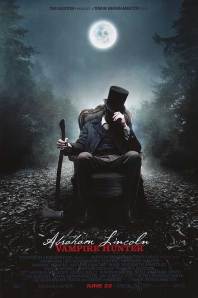
Trash Film Guru Vs. The Summer Blockbusters : “Abraham Lincoln : Vampire Hunter”


I’m not exactly sure what the advertising tagline is for this film — as a matter of fact, near as I can tell it doesn’t seem to actually have one — but I know what it ought to be : “Silver — It’s Not Just For Werewolves Anymore.”

Look, I don’t consider myself to be a scholar of the vampiric arts (or whatever they’re called)  by any means — I’ve never seen True Blood or any of the Twilight films, for instance — but I know what kills these guys : wooden stakes through the heart. Garlic. Holy water. Sunlight.

Silver? That’s for lycanthropes. But apparently not anymore. Or, rather, not in the 1800s. Don’t get me wrong — director Timur Bekmambetov’s Abraham Lincoln : Vampire Hunter (based on the novel of the same name by Seth Grahame-Smith, who also wrote the screenplay, and produced by Tim Burton, whatever that’s worth) is a clever enough little piece of throwaway historical revisionism : vampires were responsible for the death of Honest Abe (Benjamin Walker)’s parents and so, concurrent with his rise in politics, he also undertakes a crusade, under the watchful eye of his mysterious mentor, Henry Sturgess (Dominic Cooper) to kill as many of them as he can in his off-hours with this kick-ass silver-bladed trick axe that he’s got. To make matters even worse, these dastardly vampires also control the slave trade (guess it’s too controversial these days to point out that it was other human beings who were responsible for shackling, buying, selling, and ultimately working to death their brethren for generations), and we know how the man in the stove pipe hat felt about that whole dastardly business.

Okay, fair enough — while I’m sure our fellow countrymen and women south of the Mason-Dixon line might take some offense at the idea that their side in the war is depicted here as being  controlled by vampires, my honest response to that is one of “tough shit, you’re getting off easy — your real ancestors (not that it’s in any way rational to hold people responsible for the actions of their forefathers) were fighting to keep people enslaved not because they were manipulated by supernatural forces but because they were just plain greedy and racist. Feel better now?,” in point of fact it’s actually a pretty clever pretense. Even clever enough to (almost) sustain an entire film.

But then we come back to this whole goddamn silver thing.  Seriously, it’s like vampire Kryptonite in this flick. There’s just no getting around how easy it makes to kill ’em off. And that undermines what otherwise would be a pretty entertaining enough little thrill ride. The performances are perfectly decent on the whole. The costumes, sets, and effects, are all top-notch. The historicity, while complete bullshit, holds together coherently enough. And the whole thing doesn’t take itself too terribly seriously, always something this reviewer in particular appreciates. But the sheer amount of suspension of disbelief required to actually thoroughly (as opposed to in a rather half-hearted and detached “oh, that’s kinda clever” sort of way) enjoy this film becomes a bridge  just  a tad too far when we throw this annoying  new mega- wrinkle into the vampire mythos. I get why they did it, but it grates just the same, and Grahame-Smith’s story relies on it so heavily that it takes what would otherwise be an acceptable enough deus ex machina and turns it into a thick, heavy, lumbering, unyielding crutch. Think of it as the silver straw that breaks the camel’s back.

Other than that, Mrs. Lincoln, how was the play?

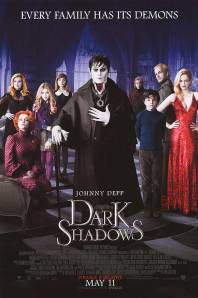
Trash Film Guru Vs. The Summer Blockbusters – “Dark Shadows”


First off, a qualification : if you’re a lifelong (or thereabouts) fan of Dan Curtis’ classic Dark Shadows TV series, I can understand why you would hate Tim Burton’s new film of the same name. It’s many things, but old-school Dark Shadows isn’t one of them. Feel free, with my full blessing (whatever that’s worth), to absolutely despise this flick right down to a molecular level if you fit into this category of viewer. But if you don’t —

— then seriously, where is all this vitriol coming from? I’m not saying it’s a tremendous or important movie by any means, but it’s brainless, entertaining, heavy-on-the-camp fun that’s pretty solidly constructed Burton-by-the-numbers.

And maybe that’s the problem. Tim Burton’s work has, indeed, become almost relentlessly formulaic by this point : de-fang horror/gothic/50s-era sci-fi concepts to make them palatable to mainstream family audiences, concentrate heavily on the visuals, strenuously avoid even the hint of any political subtext, add in a dash of blatantly-obvious-but-ultimately-respectful-to-its-source self-satire, have your admittedly talented cast skew their performances toward the knowingly pantomime, and voila! You’ve got yourself morbidity for the masses.

Apparently this is now some sort of crime. Granted, Dark Shadows is no Ed Wood or Big Fish, but it doesn’t wallow in Burtonian excess the way that the more successful (as far as the box office goes) Charlie And The Chocolate Factory or the mega-successful Alice In Wonderland did. But judging by the reaction out there on Twitter and other “social media” sites, you’d think this was somehow the nadir or Burton’s career (how quickly we seem to forget Mars Attacks!) — in fact, it seems to be generating as much overly-malignant hatred as The Avengers is generating overly-effusive praise. But hell, at least this movie is recognizably the work of a singular creative vision (albeit not one operating at its peak) rather than pure CGI assembly-line product that could have been directed by any of dozens of different self-styled “action auteurs” (I’ve said it before and I’ll say it again — if The Avengers had been helmed by Jon Favreau, it would essentially be no different) who are ultimately as interchangeable as the material they produce.

The cast is the usual mix of Burton way-more-than-regulars (Johnny Depp in the title role of Barnabas Collins, Helena Bonham Carter as family doctor/lush Julia Hoffman, Christopher Lee in a terrific cameo — as opposed to his pointless quick turn in The Wicker Tree — as an “old man of the sea”-type), talented, well-cast veterans (Michelle Pfeiffer as tired family matriarch Elizabeth Collins Stoddard, Jackie Earle Haley as the hapless Willie Loomis) and up-and-coming talents (Eva Green as Barnabas’ principal object of love/hate, Angelique Bouchard, Bella Heathcote as his principal object of love only, Victoria Winters, Jonny Lee Miller as weak-willed family weasel  Roger Collins, Chloe Grace Moretz  doing her teen-with-a-‘tude thing as Carolyn Soddard), and while none are giving what could in any way be called inspired turns, all are solid and dependable.

As is the story, an uncomplicated affair about Barnabas emerging from the grave, vamped to the hilt, in the early 70s to help his fallen-on-hard-times clan rebuild their fishing and canning empire in the face of rival competition that’s equally supernatural in origin, with a little bit of reincarnation-themed romance thrown in for good measure. It’s hardly demanding stuff, of course, but it’s perfectly suited to function as precisely what it is — a distracted afternoon’s or evening’s summer lightweight entertainment. Joss Whedon does this with a team of super-heroes and we call him a genius. Tim Burton does it with harmless comic vampires and we say he’s jumped the shark. Go figure.

All of which goes to show nothing so much as the herd mentality so prevalent amongst today’s film-buff “community.” In truth, both Dark Shadows and The Avengers are cut from remarkably similar cloth — throwaway big-budget diversionary fare that demands nothing of its audience and gives you pretty much exactly what you figure to be in for when you buy your ticket. One is being praised for it because, hey, other people immediately started talking about how good it is, and one is reviled because, hey, other people immediately started talking about how stupid it was. But you know what? At least Dark Shadows has no pretense of being anything other than precisely what it is, and no army of zombies (or vampires) doing its studios’ dirty work for it and publicizing it like mad for free.

I freely admit that might be a big reason why I actually enjoyed this a little more than Marvel’s billion-dollar-bonanza, and I also freely admit that actions taking place off-screen should , by all rights, play absolutely no part in how I react to what’s taking place on-screen. But it’s not a perfect world. And Dark Shadows is far from a perfect film. But I ended up liking it it a lot more than I was honestly expecting to — and if you go into it with an open mind, who knows? Maybe you will, too.


Trash Film Guru Vs. The Summer Blockbusters : “The Dictator”


Well, since my less than glowing review of The Avengers (not that it was all that negative — I just said it was an okay superhero flick, not the greatest thing to ever happen in the history of the world, as some were claiming) didn’t get me tarred and feathered, I thought I would avail myself of the opportunity that this site provides me to take a look at some other films that I don’t get around to reviewing on my own site, http://trashfilmguru.wordpress.com, all that often because they just don’t fit in with the overall ethos (there’s my pretentious asshole bit out of the way) of what I try to stick to (for the most part, at any rate) over there.  Our erstwhile semi-empress, Ms. Bowman, assures me that pretty much anything goes around here, though, so without any further  ado I’m going to start up a little on-again/off-again series  where I take a look at the various summer blockbusters Hollywood is serving up this summer — something which I did, in fact, do on my own site last year, where it pretty much went over like a lead balloon, given that my readers don’t tend to stop by there looking for much by way of mainstream movie criticism. I trust folks around these parts won’t mind, though, since the mainstream isn’t something my fellow scribes here shy away from.

First up is the newly-released The Dictator, the third collaboration between supposed comic “talent” Sacha Baron Cohen and director Larry Charles. First off, let me state for the record that I have no particular objection to crass, vulgar, tasteless humor. In fact, I rather like it. But The Dictator feels less like it has an actual script than a belabored series of barely-strung-together, often overly-complicated, tremendously belabored set-ups for various gross-out gags that you can see coming from a mile (at least) away. Granted, Cohen was never going to get away with pure ad-libbing of the sort that he did in Borat again, and even the half ad-libbed/half-scripted shtick he pulled in Bruno was probably going to be a bridge too far as well, but  no way in a million years did I think his first truly non-spontaneous film was going to be this, well, clunky. It just doesn’t flow at all and it’s that blatant telegraphing of oncoming supposed “jokes,” rather than the nature of said jokes themselves, that makes this flick feel like such an insult to the audience’s collective intelligence.

Plus, there’s a none-too-subtle political agenda at work here that I find particularly underhanded and reprehensible. Let’s be honest — in between wasted cameos from the likes of Megan Fox and John C. Reilly, and criminally wasting the talents of Ben Kinglsey (who, sadly, has shown is recent years that he’ll do anything for a buck), The Dictator has one driving message from start to finish : Ahmadinejad (who Cohen’s Aladeen character is clearly based on) is a crazy loon, Iran (which the country of Wadiya that Aladeen rules over is clearly based on) is not to be trusted, the Iranians really are building nuclear weapons no matter what they say, they really want to wipe Israel off the map no matter what they say, and everyone, even cool Hollywood liberals, should get on board with the idea of bombing/and or invading them right now.

Seriously, I swear I’m not being paranoid or reading too much into things here. Before he gets lost in New York after being deposed (momentarily) by his uncle and falls in love with Anna Faris while working at her food co-op, Cohen’s Aladeen snickers as he denies his nuclear program is for peaceful, energy-producting purposes, and guffaws and snickers as he promises to leave Israel alone. Of course, the US news media assures us that Iranian “dictator” (he’s not really even the head political force in the country, but hey, whatever) Ahmadinejad does, indeed, intend to build nuclear weapons (even though more or less every international regulatory body and every truly independent defense analyst and Middle Eastern policy analyst disagrees) and he did threaten to wipe out Israel and denied the Holocaust ever happened (even though accurate translations of his comments show he’s never said anything of the sort and has been intentionally, and quite shamelessly, misquoted), so obviously Cohen’s just taking his material right from the headlines, right? Besides, didn’t I say earlier that Cohen and Charles were cool Hollywood liberals? Why, just look at that admittedly quite spot-on piece of satire  at the end of the film (which also marks more or less the only time at which Cohen and Charles hit the right notes) where Aladeen lampoons each and every facet of the so-called “war on terrorism” — he’s clearly not in favor of Bush-Cheney (or maybe that should be Bush-Cheney-Obama, since nothing in this regard has changed since the Texas oilmen left office) policies, so where do I get off thinking they’re trying to push us into another stupid war (and yes,”another stupid war” is what I object to — I’m not in any way saying that Ahmadinejad is a great guy or that  Iran isn’t a country in desperate need of wholesale reform from top to bottom — all I’m saying is that bombing and invading them is blatantly hare-brained idea)?

Oh, how short our memories are. Let’s not forget, friends, that we only went to war with Iraq after we had the so-called “opposition” on board, and that a good 75% of House and Senate Democrats voted for that ill-thought-out (to put it mildly!) scheme. Quite clearly Cohen and Charles know who their audience is, and their goal isn’t to push right-wing conservatives into supporting an attack on Iran — after all, they already do — but is rather to convince the so-called “left” (what remains of it, at any rate) that it’s a good idea, as well, since that’s the only quarter any opposition to this idea might possibly come from. And hey, let’s be honest — if Cohen and Charles really understood progressive politics at all, they wouldn’t have a picture of Barack Obama hanging on the wall of Faris’ food co-op. Ralph Nader, maybe, or Bernie Sanders, or Dennis Kucinich — but Obama? Don’t think so. These guys have clearly never spent so much as a minute in a real co-op.

Still, reprehensible as this film’s political chicanery is, it’s not the most offensive thing about The Dictator. Sorry, that still goes to its tremendously lead-footed pacing and insultingly obvious joke set-ups. Seriously, this is a movie that spends over five minutes leading up to a gag about losing a cell phone inside a woman’s vagina, and spends even longer than that cobbling together a lame punchline featuring Aladeen’s even dumber double milking a woman’s boobs into a pail. Comedy 101 — the set-up to a joke should never be more complicated than the joke itself, and when the jokes are this half-assed, they don’t require any more than the briefest of lead-in time. It’s that complete and utter non-spontaneity, ineptly handled and in service of puerile, juvenile shenanigans that hardly even deliver much of a payoff, that marks  a bigger crime, in a strictly cinematic sense, than trying to push us into another useless and counterproductive war with a wink and a nudge.

Okay, So I Saw “The Avengers”


Or should that be “Okay, so I saw Marvel’s The Avengers ?”

In any case, I wasn’t going to. I was determined not to participate in the so-called “biggest event of the summer” because I’m flat-out tired of seeing Marvel (and, by extension, Disney) rake in hundreds of millions, if not billions, of dollars off the fruits of Jack Kirby’s imagination while “The King’s” estate gets more or less nothing (although in fairness — or should that be unfairness — they do get some sort of pittance for anything featuring Captain America in it, since he’s officially recognized as Cap’s co-creator along with Joe Simon). Stan Lee’s recent comments about Jack didn’t do much to up my enthusiasm level for this latest blockbuster either, and basically reaffirmed my opinion that he’s a major-league asshole who was lucky enough to glom onto the works a true creative genius that now he doesn’t even have the decency to acknowledge, much less thank, so yeah — it’s fair to say I was pretty cool to this whole thing and found most of the absolute gushing over it that’s been infecting the internet, Twitter in particular, to be annoying in the extreme.

But then the folks who are trying to put together The Jack Kirby Museum came up with a novel idea — donate the price of your ticket to their brick-and-mortar fund, so that future generations can have an actual, physical place to go and experience first-hand the power of the unfettered creative genius that everyone else but his family has gotten rich off. That sounded good to me, so for the price of a $7.50 admission and a matching $7.50 donation, my conscience was suitably assuaged  — hey, I guess I always knew there was some price at which my principles could be sold out, but it’s rather depressing to think that it could be so cheap. Still, best not to spend too much time dwelling on that —

Anyway, before I kick over the hornet’s nest of fan opinion, let me state for the record that I found The Avengers to be a perfectly fun, generally-well-executed, thoroughly entertaining superhero romp. But (and you knew there was a “but” coming, didn’t you?) — that’s all it is.

Sorry, assembled hordes of fandom, but it’s not “groundbreaking,” it’s far from “the best superhero movie ever,” (hello? The Dark Knight? Batman Begins? Spider-Man 2? Superman :  The Movie?) much less “the best comic book adaptation ever,” (hello again? American Splendor? Ghost World? Sin City? A History Of Violence?) and it doesn’t “prove” that co-writer/director Joss Whedon is a “visionary,” or the “new master of the superhero genre.”

And all those quotes I  pulled are, frankly, just a sampling of some of the less effusive praise I’ve seen bandied about online in regard to this flick. I’ve also seen it called “the new benchmark by which all others will be judged,” “the summer blockbuster to end them all,” “a singular work of astonishing breadth and scope,” and “the defining cinematic statement from the undisputed master of the craft.”

In this armchair critic’s opinion, unpopular as saying so is bound to make me, it’s none of those things. Not even close. Whedon has concocted a nice little script and brought it to life in an appealing and pleasant manner, but this isn’t a movie that bears any authorial signature whatsoever — if the credits were blank and someone told you it was directed by, say, Jon Favreau, you’d believe it, because it plays out pretty much exactly the same, in tone and style, as either of the two Iron Man films, and it doesn’t have anything like the individualistic flair of Kenneth Branagh’s Thor or Joe Johnson’s Captain America : The First Avenger. Hell, it even completely overuses the tedious inside-the-helmet perspective shots of Robert Downey Jr.’s head that Favreau is so annoyingly fond of.

In addition, our guy Joss shows no particularly deft touch with his cast. The acting ranges from surprisingly good (Mark Ruffalo positively nails it as Bruce Banner) to completely lethargic (Scarlett Johansson is completely listless as the Black Widow and is the least-convincing Russian superspy in movie history). Downey plays himself, as always, and the talented Jeremy Renner is criminally underutilized as Hawkeye, while both Chris Hemsworth’s Thor and Tom Hiddleston’s Loki, the central villain of the piece, came off much better in Branagh’s flick. Samuel L. Jackson pretty much owns every scene he’s in as Nick Fury, but I don’t think there was ever really any doubt that he would. All told,  the whole thing has the feeling of a director who just told his cast “okay — have at it” and then let the cameras roll.

In his favor, fandom’s newest and biggest crush does do a nice, pacy job with the action sequences, of which there are many (although even he can’t make the bog-standard CGI alien invaders that attack the Earth at the end and, yawn, double-cross Loki seem interesting), and doesn’t overplay his hand in the pathos department — he gives each and every character a nice little individual “story arc” that never taxes the imagination too much and remains dimly interesting without seeming intrusive vis-a-vis the “bigger picture” — which is, of course, to show all these folks coming together and fighting a menace big enough to require their assembled talents and abilities. And while Whedon has an annoying habit of defusing every potentially tense situation with a pithy little quip of some sort, on the whole the interplay between the various characters is reasonably well-handled and plausible (as far as these things so).

So The Avengers has some pluses in its favor, as well as some minuses working against it. It’s good, solid, mindless summer entertainment with a nifty, if thoroughly uninspired, visual sensibility; it plays to what the fans want in a generally competent manner; and it keeps you at least modestly interested in the proceedings throughout. It doesn’t have the mythic scope of Donner’s Superman, nor does it redefine the possibilities inherent in the superhero genre in the way Nolan’s Batman films do. It doesn’t take the time to examine the gap between what these characters symbolize and who they actually are in the way that Marvel’s two far superior summer blockbusters of last year (again, Thor and Captain America : The First Avenger) did — hell, it doesn’t even have much of anything to say about the human condition, much less the superhuman condition. And while it’s all pretty fun to look at by and large, it doesn’t have the inventive, groundbreaking, downright operatic visual flair of Burton’s forays into Gotham City. So it’s fair to say that even the things this movie does well have been done a lot better in other films of this same genre.

But it is fun. Not as fun, or as immediate, or as dramatic, or as dynamic, as the classic Avengers stories brought to life by Jack Kirby that it’s essentially a modernized (and, frankly, watered-down — proof that “The King” could do more with a pencil than Whedon can with a couple hundred million bucks) rehash of, but a good time nonetheless — and in a society as desperate for diversion and spectacle as the one we live in, I can certainly understand why it’s such a big hit. But please. Let’s stop pretending it’s anything more than what it is — modestly-well-realized, lively,  big-budget summer fun that doesn’t demand anything from its audience apart from kicking back and enjoying the ride. And let’s stop venerating Joss Whedon for what’s essentially a director-for-hire project executed in what’s basically become Marvel’s “house style.” Sure, there’s a good possibility that the financial success of The Avengers means he might be able to write his own ticket in Hollywood from here on out — and more power to him if that’s the case since other projects he’s helmed (most notably the excellent sci-fi TV series Firefly) do indeed show that he’s capable of distinctive, highly imaginative drama — but it’s just as likely that Marvel will replace him on this film’s inevitable sequel with some youthful up-and-comer who can deliver essentially the same product and will work for half the price.

Once the novelty of having all these superheroes on screen together wears off, I predict that we’re going to realize we’ve been had a little bit here — but seeing as how we had a pretty good time in the process, there’s no real harm done.

Burn “The Wicker Tree”


Honestly, friends, sometimes a person just doesn’t even know where to begin. I suppose I could individually list the catalogue of atrocities that make up writer-director Robin Hardy’s The Wicker Tree, but frankly that would mean spending more time talking about this film than I really have the energy to, and besides, our nearest thing to a “star” critic here at Through The Shattered Lens, Lisa Marie Bowman, has already done a pretty damn fine job of performing a blow-by-blow dissection of this thing’s rotted corpse in her capacity as occasional scribe over at HorrorCritic.com, so there’s no real need to duplicate what’s been done before. Allow and/or indulge me, then, as I take a slightly different tack and document my personal journey of despair with Hardy’s exercise in highly confused pointlessness.

To begin with, I should point out that the original Wicker Man is quite likely one of my ten-or-so all-time favorite films. Critics who say it’s “not actually a horror movie” are quite right, of course — it’s a unique — hell, frankly singular — amalgamation of so many different styles that the end product is well and truly unclassifiable. Part horror flick, sure, but also part musical, part (very) black comedy, part clash-of-cultures melodrama, part satire on Christian piousness, and part period-piece-albeit-in-a-then-contemporary-setting, it stands on its own as the only thing quite like it ever made. Screenwriter Anthony Shaffer perhaps put it best when he stated that his main goal was to pen a meditation on the nature of sacrifice, and everything else just sort of took off from there.

Obviously, there are so many elements about the first film that the 2011 “thematic sequel” could never hope to duplicate — songwriter Paul Giovanni is no longer with us, so right off the bat we know the music’s not going to be nearly as good because, quite frankly, it can’t be. Anthony Shaffer has passed away and therefore whatever follow-up material comes about wouldn’t in any way be his vision for how the story could or should  continue. Edward Woodward has likewise left behind this mortal coil, and his character died at the end anyway, so replicating his magnificently anally-retentive performance is probably going to prove to be out of the question, as well.  Christopher Lee is, while still awesome as hell,  also extremely frail and old at this point. And anyway — The Wicker Man still retains all its poignancy and power to this day and has only gained luster over the past 40 years. The abominable Nicolas Cage/Neil LaBute remake proved that revisiting the material was a lost cause, so why bother, five years on from that failed experiment,  with any sort of a sequel, “thematic” or otherwise?

Unfortunately, Robin Hardy wrote a book some years back called Cowboys For Christ that updated some of the concepts from his earlier film and he got the notion that it would make a decent-enough little flick. He was able to scour up $7 million-plus worth of financing, and got the folks at Anchor Bay so interested they promised not only a widespread “home viewing platform” release (and I caught this on a free screener copy that was sent my way so therefore can’t fairly comment on any extras the DVD and Blu-Ray might contain), but a even a little theatrical run, as well. It never made it to my area, and disappeared after a week from the markets it did make it into, but still —the fact that they chose to give this thing some theatrical burn when it seemingly had DTV written all over it was enough for me to, foolishly, get my hopes up.

I guess we believe what we want to believe (which is rather one of the points of the first film, after all), and a steady stream of reviews for this one that placed it at the “embarrassingly bad” end of the spectrum at worst to “maybe not quite as horrible as I’d been fearing but still pretty goddamn awful” at best weren’t enough to dampen my enthusiasm at this point. I figured it just had to be better than most folks were giving it credit for, because there’s just no conceivable way it couldn’t retain, say, at least 1/100th of the darkly charismatic charm of the first film, even if entirely by accident, right? After all, the original director was on board, and Anchor Bay wasn’t so ashamed of his finished product that they tried to hide the thing away at the bottom of some film vault (although given that it’s shot on HD, perhaps a “film” vault wouldn’t be the right place to stick it in, anyway).

It’s certainly fair to say that I wasn’t expecting greatness, or even anything of the sort, but something that still somehow cleaved to even a miniscule fraction of the spirit of the original would have been good enough for me. Unfortunately, what I got was a story about two painfully stereotypical Jesus-lovin’ Texas yokels who have gone on a mission (more typical of Mormons than of born-againers, it must be said) to evangelize in some small Scottish town that apparently has never heard the “good news.” One of our less-than-convincingly-portrayed country bumpkins, Beth Boothby (Brittania Nicol), was apparently a famous country singer with something of a “reputation” before turning her life over to Christ, while the other, her fiancee Steve Thomson (Henry Garrett), is little more just a walking, talking cowboy hat. Once in the “heathen land” of Scotland,  they enjoy the decidedly non-Southern hospitality of local nuke plant owner Sir Lachlan Morrison (Graham McTavish, in something more akin to a respectable performance than his colleagues seem capable of) and his OTT-in-the-deception-deaprtment wife, Delia (Jacqueline Leonard), but of course the dastardly couple, whose power plant has through some unexplained (and probably inexplicable, so it’s just as well Hardy doesn’t even try) means left the entire town sterile, have other plans for their simple-minded God-fearin’ visitors, plans that the Texas two-steppers are apparently too stupid to suss out even as they’re practically being openly prepared for the burning stake and, get this, the dinner table!

Yes, evidently the heathen folk of the United Kingdom’s northern reaches have taken to cannibalism in the four decades or so since our last visit, and while Hardy seems to think this somehow ups the “black comedy” factor of the proceedings, really it just serves as a cop-out by more clearly delineating who are the “good guys” here and who are the “bad guys,” a simple-minded, black-and-white approach that the first Wicker Man never resorted to even when Sgt. Howie was being burned alive (in, it must be said, one of the most visually dramatic sequences ever committed to celluloid).

And that’s a pretty much the problem at the crux of The Wicker Tree in a nutshell — sure, there are numerous and obvious others, ranging from wretched acting to dully-executed visuals to poor pacing to obvious run-time padding to inarticulate (at best) dialogue to recycled-into-a-less-involving-context story ideas to laughably one-dimensional caricatures standing in place of real, actual characters — but at the end of the day, it’s Hardy’s mistrust of his audience’s ability to make up our own collective mind, and the blatantly heavy-handed approach he takes in explaining everything for us that stems from that mistrust, that makes this such a condescending failure. I could live with the far-less-subtle approach to the “clash of cultures” theme that he takes here in comparison with the first film. I could live with the nowhere-near-as-compelling music. I could live with the rather — uhmmm — “broad strokes” with which he paints each and every character . I could live with the pointless and frankly even a bit insulting to the guy Christopher Lee cameo. Hell, I could even live with the Christian turning the tables on her pagan pursuers and winning in the end. But what I absolutely can’t abide is that Hardy thinks we’re all so unsophisticated and beneath the task of understanding his apparently-in-his-mind-quite-complex-and-challenging-themes that we need for him to hammer them home with a with a burning wicker stake through our heads. He’s had 40 years to think about how he wants to follow up a genuine, justly-lauded classic and this is what he comes up with? Set fire to me now, please, before the third installment, which he’s already working on, ever sees the light of day.