Palace Intrigue Is The Order Of The Day In “Empire Of The Dead : Act Two” #3


4212100-03

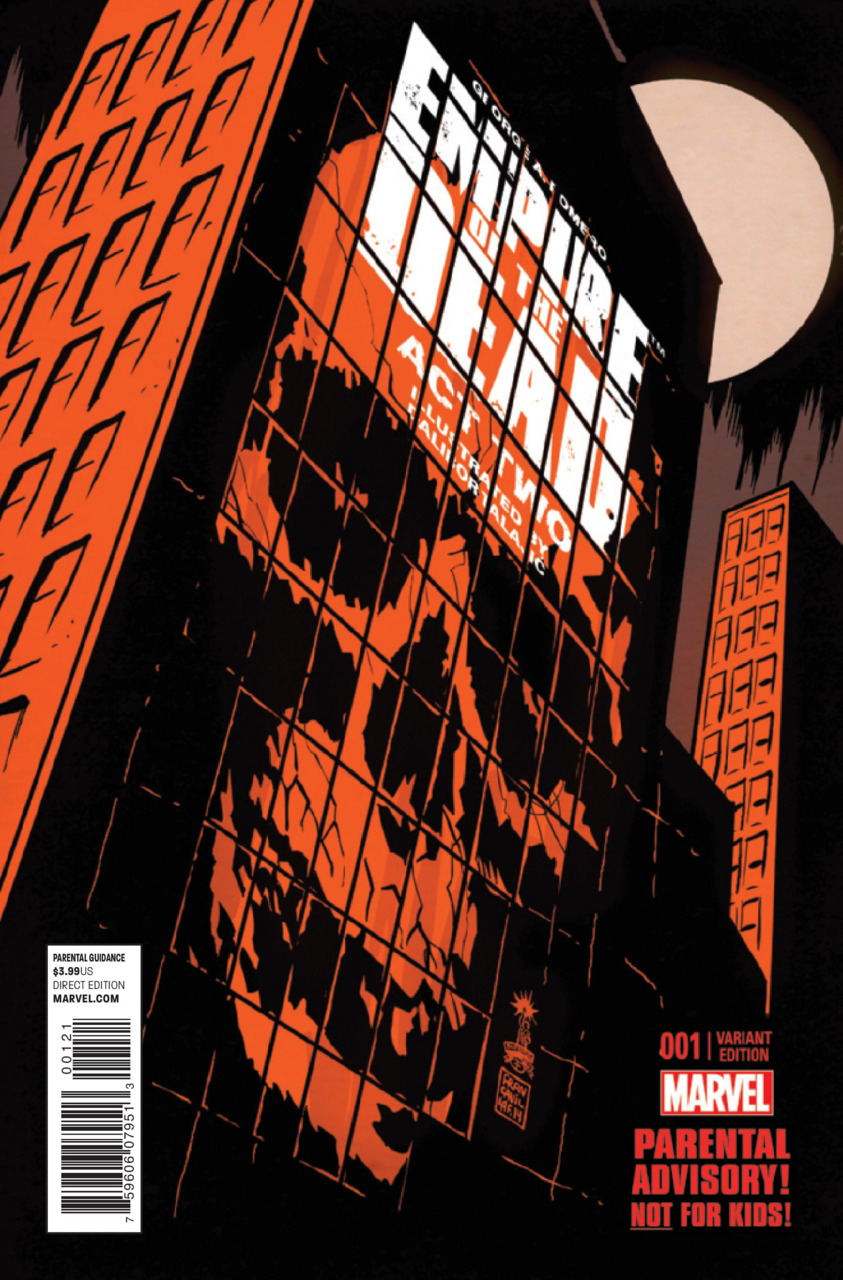
Remember that famous scene in The Godfather where Michael Corleone is having his henchmen settle all The Family’s old scores while he attends his infant son’s baptism? George Romero clearly does, because Empire Of The Dead Act Two #3 (or George Romero’s Empire Of The Dead Act Two #3 to be technically correct about things) is all about Mayor Chandrake — who’s front and center in Alexander Lozano’s stunning cover, as shown above — eliminating all threats to his leadership of both New York City and the secret vampire cabal for whose benefit the entire town is run. He’s ruthless, determined and, unlike Michael Corleone, not afraid to get his own hands dirty in the process.

The bloodbath is precipitated, as you might guess, by a visit from the cops — not Chandrake’s own loyal “security” personnel, but actual, rank-and-file NYPD detectives. Apparently, he doesn’t own them all yet, and one newcomer to the story, a certain Buckie Perez, seems to be the post-zombie apocalypse’s answer to Jim Gordon in that he can’t be bought, bullied, or otherwise strong-armed into toeing the mayor’s line. Between a true “good cop” snooping around, the seeming political ascendancy of his nephew, Billy, and the pesky presence of an “unauthorized” victim of vampirism still resting semi-comfortably in the hospital, then,  there are a lot of loose ends to tie up.

The problem is — one of the above-mentioned targets survives their attempted assassination, and there’s still that missing dirigible from a New Jersey warehouse to be accounted for.

Outside Chandrake’s desperate and homicidal machinations, though — which do lead to some interesting, if overly-expository in terms of how they’re handled, revelations (for instance, there are actually a lot fewer vampires than we’d previously been steered into assuming) — some other notable plot developments  do take place here, particularly in The Arena, where the void left by the loss of super-fighter Zanzibar ends up being filled by  — zombies who have actually learned to team up and work together? Trainer/wrangler Paul Barnum sees this, reluctantly, as a positive — but only for the time being, since he knows what it means if the same behavior patterns begin to emerge on the streets.

As for the cliffhanger, it’s a doozy — mistakenly believing that all his problems are solved, Chandrake pays a visit to his latest muse, Dr. Penny Jones, in her newly-equipped-to-the-hilt lab, and let’s just say that she might finally be getting close enough to the fire to be irrevocably burned.

All in all, then, a reasonably solid issue story-wise with one addition to the creative team worth mentioning in the form of the arrival of inker Rick Magyar, who seems to stay fairly true to Dalibor Talajic’s pencil line in that not a whole lot of stylistic difference can be discerned between this and the previous two installments, which Talajic inked himself, apart from an overall “darker” look owing to Magyar leaning a bit more heavily on his brush, so to speak, which suits both the material itself, as well as the mood it creates, quite nicely. A solid effort from all concerned, then,  that has me very much looking forward to next month.

“The Kitchen” #1 : If You Can’t Stand The Heat — Well, You Know


4212079-01

So it appears that one of the sites I’ve done a fair amount of writing for, geekyuniverse.com, has shuttered its digital doors.Furthermore, it looks as if they sold their domain name off to something called “Swagger Magazine,” whatever that is, and did all of  this without informing any of us contributors that it was happening. Am I pissed? I guess I wasn’t at first, but now I sort of am, simply because all that content I posted on there, much of which was pretty good (even if I do only say so myself), is now lost forever, and because, going by sheer numbers alone, my stuff was far and away the most popular material on the site. Seriously, most of the posts on there were lucky to generate a half-dozen “likes” and one or two faceboook and twitter “shares,” while my articles routinely got a couple hundred of each. Does that mean I think my stuff was “better” than the work of the site’s other contributors? I dunno. I guess that’s all a matter of taste. I’d invite you to compare all of our work and decide for yourself, but — it’s all gone. And somebody made a little bit of money — probably not much, but something — selling off a site that was built by the work of folks who submitted work to it for free. Pretty goddamn sleazy, really.

Anyway, I’ve tried to get an explanation as to why it all went away without explanation, but the (now former) owners of the site haven’t responded to either my tweets or my emails, so I guess all I can do it call ’em out on their bullshit here and let them know that I’m not impressed. Don’t spend that two or three hundred bucks you made in one place.

Still, what the hell does any of this have to do with Through The Shattered Lens? Well, it means — for better or worse — that I’ll have a little bit more time to contribute to this site for the next couple of months, until my super-big-project-that-I-can’t-talk-about-yet eats up all my time for a little while, and that I’ll have more time for this site again once said super-big-project-that-I-can’t-talk-about-yet is finished. It also means that my quick-fire comic book reviews — as opposed to the lengthy, detailed, serialized pieces I do for the more “academic” comic website sequart.org — are in need of a new home with the demise of GU, so you’re getting ’em here.

I figure, hey, why not? Nobody else here “talks comics” very regularly, and I know a certain number of readers (and writers) here are fans of the medium, so, for the time being at an rate, I’ll “park” my comic book review work here unless and until Arleigh or Lisa Marie or somebody tells me to take it somewhere else. Which they won’t because they’re good people who like to indulge me — right?

4212404-01-variant

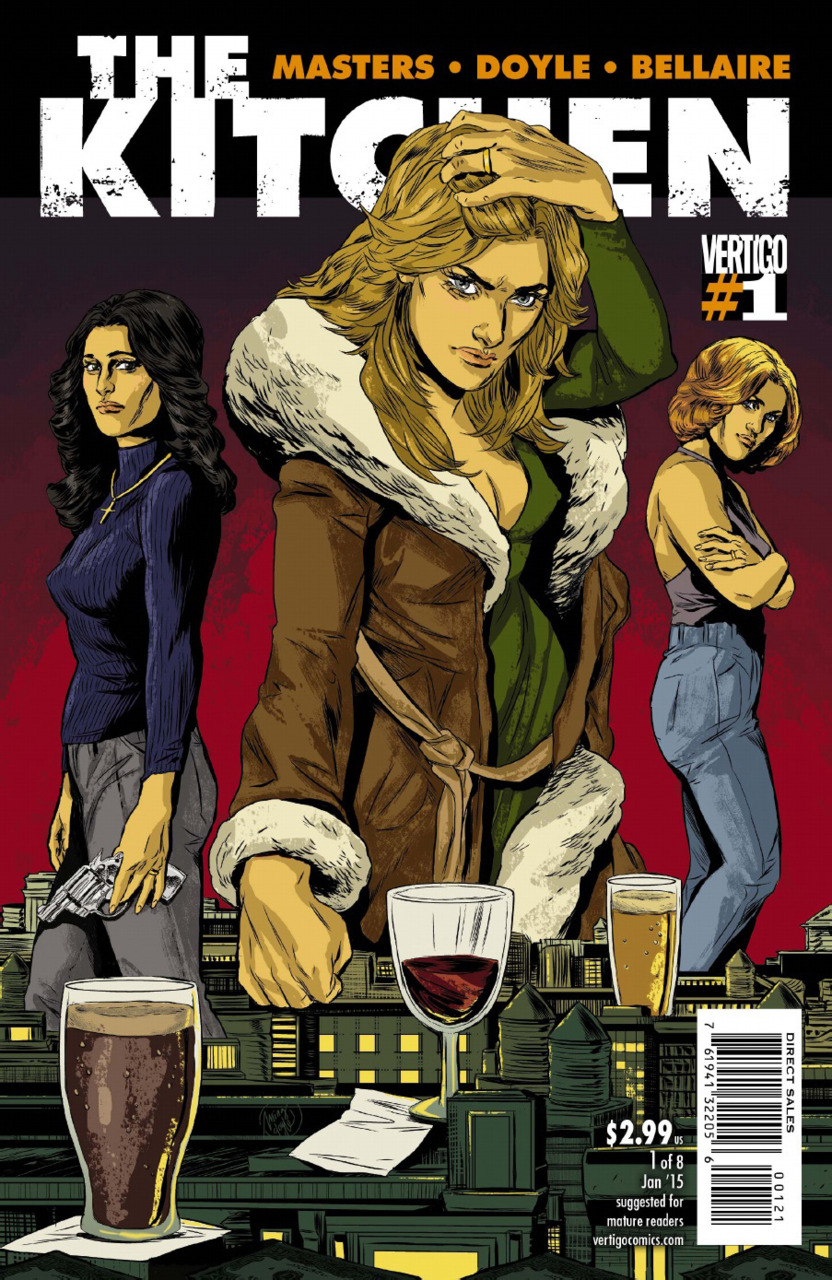
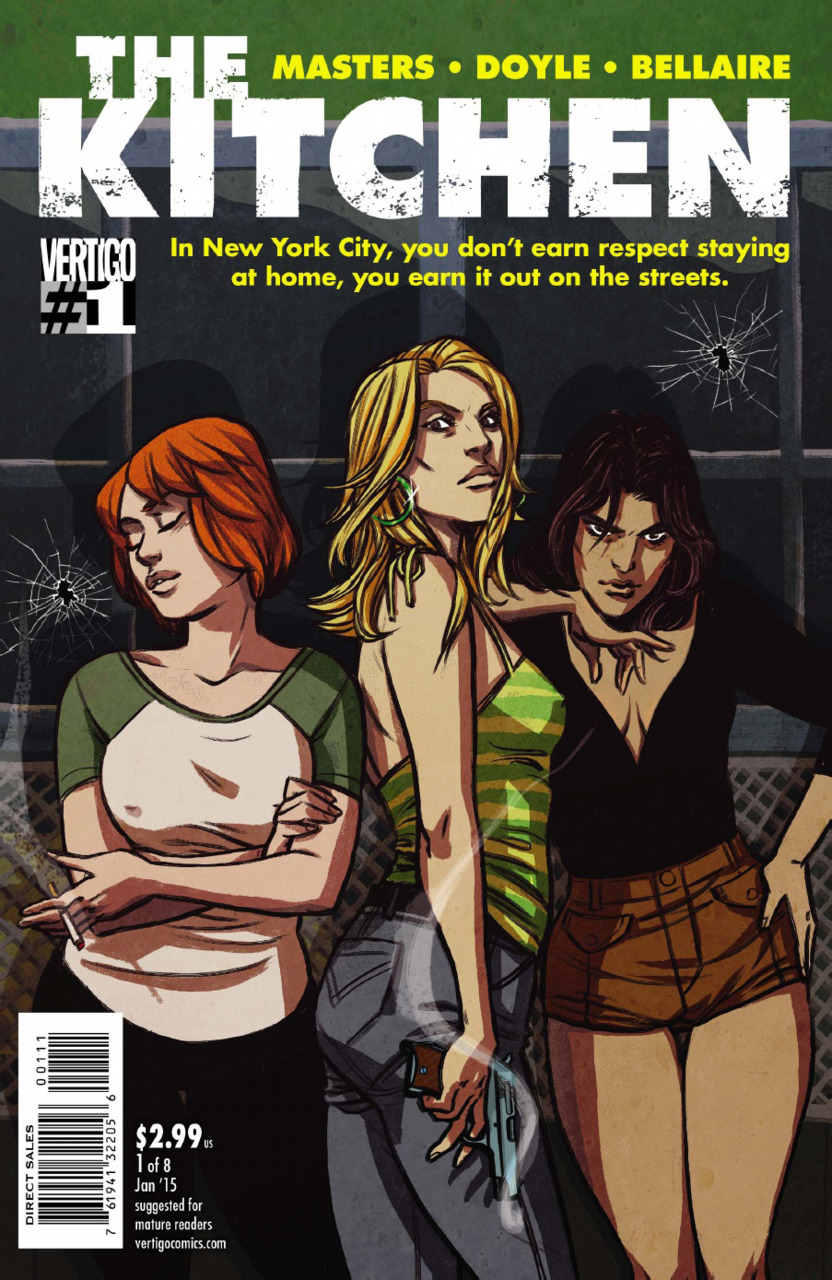
With all that preamble shit out of the way, then, let’s talk about The Kitchen #1, shall we? It’s a new eight-part creator-owned mini-series from DC’s venerable “mature readers” imprint, Vertigo, and it stands out for not only being a book centered on non-spandex-clad female characters, but for boasting a nearly-all-female creative team — except for, ya know, the writer.

Described in Vertigo’s press materials as a “talented newcomer,” author/co-creator Ollie Masters provides the only whiff of testosterone here, with the project’s artist/co-creator being the talented Ming Doyle, fresh off her run on the critically-lauded Image series Mara (which was written by apparent serial-sexual-harasser Brian Wood), the colorist being the highly-sought-after Jordie Bellaire, and covers coming our way courtesy of current “hot property” artist Becky Cloonan (except for the variant for this first issue, pictured above, which is from Doyle’s own mind and hand).

With a crew like that in place, then, you can be sure that the finished product is gonna look good — and it does. Doyle evokes the 1970s Hell’s Kitchen settings perfectly, and her characters look like real human beings of the sort you’d see at the time. Everything from the home furnishings to the cars to the street scenes to the facial expressions are all wonderfully authentic and yet also smoothly expressionistic, with everyone looking like a real, actual individual rather than a curvy superheroine who just happens to be wearing street clothes. The seventies were a wonderfully “run down” time in New York — long before Times Square and other “red light districts” got gobbled up by Disney — and the titular Kitchen was especially run down, even by then-contemporary standards. You feel every bit of that oozing, semi-intoxicating unwholesome-ness in Doyle’s art and Bellaire”s suitably drab, realistic colors.

So, then, what of the story? I’m unfamiliar with Masters’ other work — assuming he has any to his credit — but he acquits himself very nicely here. The premise goes that local loan shark/”protection” racket strongman Jimmy Brennan, a semi-connected guy in the Irish mob, has been sent away, along with two of his crew, for beating the shit out of some snitch right in plain sight of the cops, and in his absence, his brother, Jack, is letting things slide to the point that Jimmy’s wife, Kath, and her friends, Angie and Raven (who are married to the two other guys that got shipped upstate along with their boss), are finding the weekly takes from local businesses that the rely on to maintain their “lifestyles” are getting lighter and lighter all the time. Not content to let this state of affairs continue, and unable to rely om Jack to straighten it out, they decide to take matters into their own hands. Problem is, their primary target, a pizza shop owner, turns out to be a lot more than just another dime-a-dozen welcher, and “sending a message” by going after him on their first night out may prove to be a fatal mistake —

First issues can be a little bit of a tricky business because you’ve gotta introduce most, if not all, of your principal cast, give them each a semi-distinct personality, and establish the basic “through-line” of your plot, all while leaving things on nice little cliffhanger that will have your readers coming back for more. Masters manages to do all that and furthermore, he does so without ever making it feel like he’s going into overly-heavy “info-dump” mode. All in all, it’s a job very well done.

Combine great art and color (and covers) with a reasonably good, involving story, stick it between two covers, and keep the price — thankfully! — at $2.99, and you have to say that The Kitchen is definitely following a recipe for success.

Netflix Halloween 2014 : “You’re Next”


youre_next

Okay, so here’s the deal : over at my “main” site — http://trashfilmguru.wordpress.com , for those up you not aware — I’m spending the month of October looking at various horror flicks currently available in Netflix’s instant streaming queue. So far there have been some semi-winners, some semi-losers, and some real clunkers, but I promised myself that if I ever found one that was an absolute, indisputable home run, I’d write about here on TTSL and thereby hopefully spread the word about it a bit father and wider than a post on my blog alone would accomplish. I’m pleased to say I’ve found just such a film.

I’m not sure why or how I missed “splat back”/”mumblegore” director Adam Wingard’s 2011 offering, You’re Next, when it hit theaters — I certainly found the ads for it intriguing and meant to go check it out, but I never did. My loss — but not anymore, since I finally caught it the other night and damn, was I impressed.

Seriously, this has everything you want in a horror movie : an involving premise, a few characters you want to see live, even more you’d love to see die, plenty of first-rate gore, suspense, intrigue, and all kinds of ass-kicking. You might ask for more, I suppose,  if you’re picky, but come on — how often do you get it?

yn2


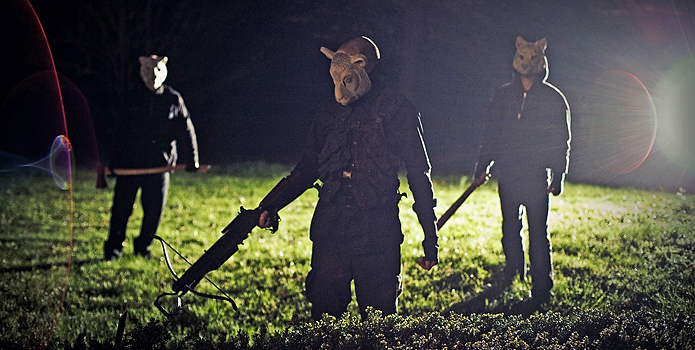
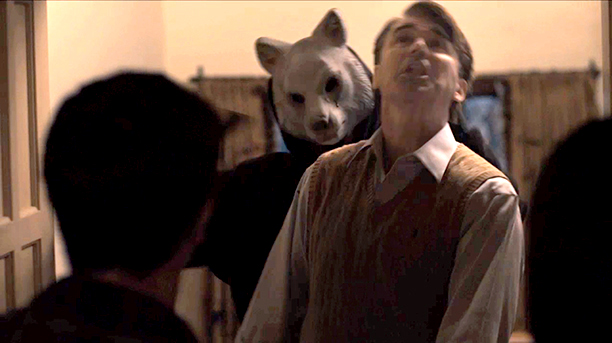
Anyway, friends, you know how it goes — you’re gathered together for a family reunion full of not-so-subtle tension and disdain (think the kind of situation where everyone would be stabbing each other in the back, except for the fact that they’re doing it out in the open), when suddenly assailants in animal masks armed with crossbows start firing away and, presto! Next thing you know, you’re all under siege and fighting for your lives.

What? That’s never happened to you? Well, it’s what happens to the family here (who, curiously enough, are never given a last name), a very well-heeled clan who have gathered at their family’s palatial “summer estate” to celebrate their mother and father’s 35th wedding anniversary. Roll call : there’s struggling- academic brother Crispian (AJ Bowen) and his Aussie girlfriend, Erin (Sharni Vison); douchebag brother Drake (Joe Swanberg) and his wife, Kelly (Sarah Myers); younger douchebag brother Felix (Nicholas Tucci) and his emo/goth “squeeze,” Zee (Wendy Glenn); darling baby sister Aimee (Amy Seimetz);  and presiding over the whole houseful of ungrateful, self-centered whelps we have dad Paul (Rob Moran) and mom Aubrey (the still-drop-dead-gorgeous Barbara Crampton). We get to know each of these characters just enough to give the first half-hour or so a strong dose of Woody Allen-esque upper-class dysfunction when the shit starts hitting the fan.

youre_next_1_20130307_1024062482


And when it hits, boy does it ever. Aside from the mere fact that it’s gleeful fun (well, at least for me) to see members of the 1% finally get what’s coming to them,  Wingard and screenwriter Simon Barrett are to be commended for not taking their collective foot off the gas pedal until the end credits are rolling, and while we quickly learn that only Erin has the smarts and guts to survive the situation thanks to her weird survivalist upbringing in the Outback, the other character revelations along the way come in measured steps and and at just the right points (usually as a means of breaking up what would otherwise be a non-stop  series of creatively brutal slayings). Still, you probably won’t see the end coming, simply because you’ll figure you’ve got the whole thing sussed out already — even though, trust me, you don’t.

youre-next

To be completely fair, I do have some relatively minor gripes with said ending — I think there was a way Wingard could have made it even more shocking, but shit, I’m not gonna complain. The conclusion he serves up is still a doozy even if it’s not exactly the one I would have gone for. If I think I’m so fucking good at this kind of thing, then maybe I should just go and direct my own movie, right?

Add in fun little cameos from the likes of fellow “new horror” icon Ti West and some wink-and-nudge homages to other genre classics, throw in a throbbing musical score that’s more than just a bit reminiscent of Goblin (hold your horses, I’m not saying it’s as good as Goblin, only that it’s stylistically similar to their justly- legendary efforts), keep the blood flowing, and you’ve got a recipe for a sure winner. Whatever you’re doing right now can wait — if you’ve got a Netflix subscription, You’re Next deserves your immediate attention.


Stand Back For A George Romero Info-Dump In “Empire Of The Dead : Act Two” #2


4143654-02

If you’ll recall, the second issue is when the wheels fell off a bit in act one of George Romero’s Empire Of The Dead Marvel Comics series, and it really took about another whole issue after that for the story to find its footing again.  I’m pleased to say the pattern doesn’t repeat itself here in the second story arc, but truth be told this book does have some rather hefty problems, and we’ll get to those in just a minute.

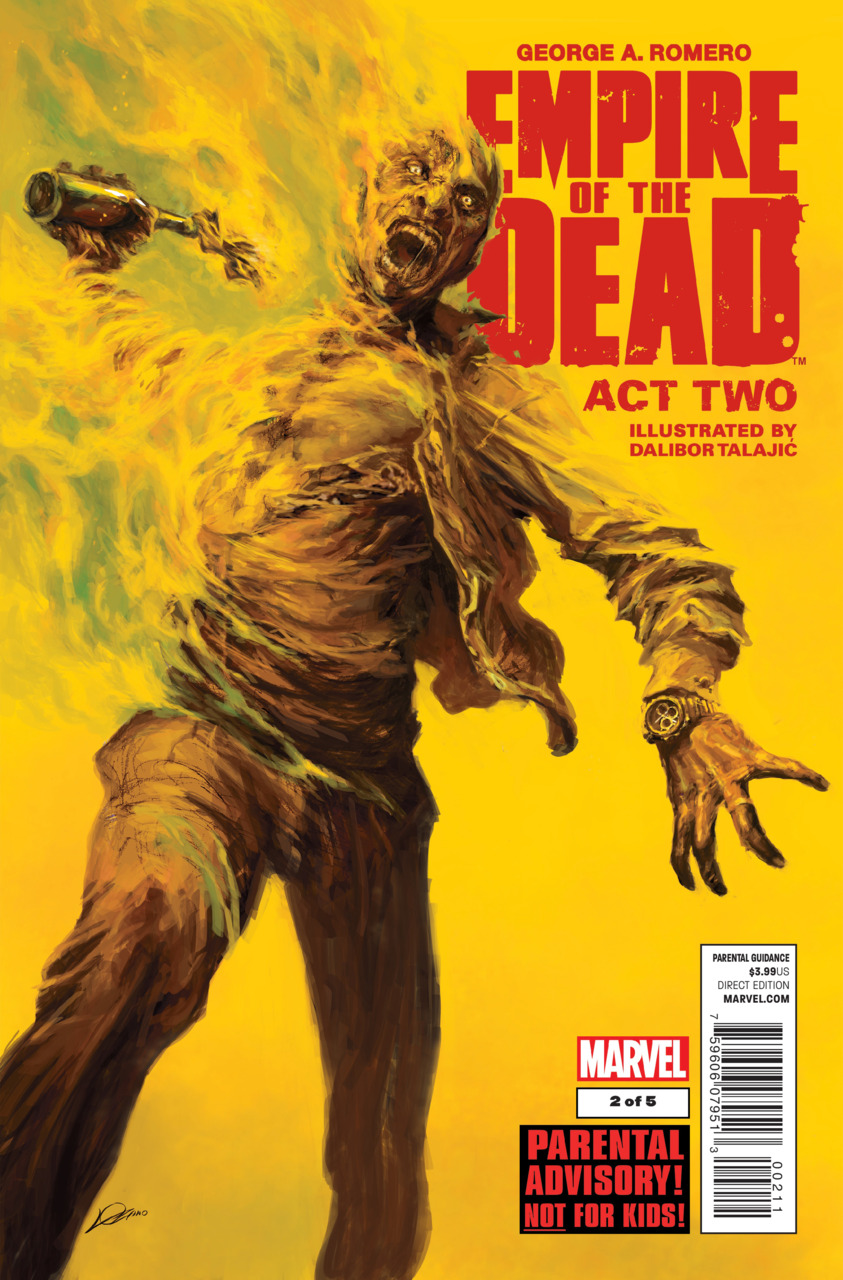
First, though, I gotta say my hat is off to Alexander Lozano for that kick-ass cover shown above. Sure, the painting of a zombie wearing what appears to be a pretty expensive watch and hurling a molotov cocktail — with the fire not doing jack shit to him, by the look of it — has nothing to do with the interior contents whatsoever, but it sure is cool-looking. Maybe my favorite cover yet, which is just as well since it’s the only one, with this issue being the first in the series to go out without any variants.I was kinda hoping that Francesco Francavilla, who did the variant last month, would stick around for a bit, but I’m not surprised that Marvel has finally scaled back to just one cover for this title, since — let’s face it — sales aren’t all that great, and it would be pretty unusual for them to keep doing two covers month in and month out on any book, much less one like this where most folks seem to be waiting for the trades rather than picking it up in singles, anyway.

What can I say, though? I’m fully aware that it’s not the economical way to go, but when I know there’s a Romero fix to be had, I need it quick, and by and large this series has been one that reads pretty well in individual installments, so I’ll keep going like I have been with it — even though, as I said before, this particular issue does have some problems.

So, hey,  let’s talk about those, shall we? It’s been hinted for some time that the vampires in the “Romeroverse” operate by a different set of rules (yes, folks, we’ve got “Romero Rules” for vampires) than we’re accustomed to, and with the main focus of the story this time around being on the patient being treated by Dr. Penny Jones who’s been bitten and, in equal portion, a young prostitute named Sarah who’s undergoing “the change” voluntarily, those rules are finally spelled out explicitly. It’s interesting reading and all, don’t get me wrong, but it’s more than a bit clunky, and doesn’t exactly flow with the rest of the proceedings. It’s more like an almost-overly-expository side-step than anything else, and there probably could — and should — have been a way to get all this information across by dint of actions taking place within the main body of the plot itself. This is stuff we need to know, without question, but we don’t need it to be spoon-fed to us this clumsily.

And speaking of clumsy — the aforementioned Dr. Jones and “zombie wrangler” Paul Barnum appear to finally be making some romantic headway this time out, but their not-quite-love scene is almost painfully awkward and clunky to read. Sorry, George, but people just don’t talk that way.

Those quibbles aside, though, there is definitely plenty to like in George Romero’s Empire Of The Dead : Act Two  #2, including the further rapid “humanization” of SWAT-officer-turned-zombie Xavier, a more complete layout of the plan to sell out Billy Chandrake and still bring down his uncle’s reign as mayor at the same time (and yeah, this part admittedly gets pretty heavily expository as well, but at least it reads better), and the emergence of a new champion in the “slaughterbowl” ring at the expense of a character who’s been with us since the beginning. All in all, then, some fairly interesting and significant plot developments do take place here, but be prepared for some complete breaks in the action that send us down info-dump avenue along the way.

On the art front, Dalibor Talajic seems to be growing into the job and I like his work here a lot better than I did last month, but damn — I still miss Alex Maleev. Talajic’s style is just fine for the conversational, “wordy” scenes, but when it comes to the bloodier zombie carnage we all love, he’s still got a ways to go to even come close to the heights his distinguished predecessor achieved. Here’s hoping he gets there at some point.

As for the ending this time around, well — that confused me, I admit. Last issue got us all good and primed for the aerial blimp assault on New York from the forces formerly aligned with southern rebel-rouser Dixie Peach, and this time they go into action — but apparently they’ve decided to stage a trial raid on Secaucus, New Jersey first. Don’t ask me what that’s all about. Hopefully next issue will reveal the method behind this particular bout of madness, because right now it just plain doesn’t make any sense. This is a series that has rewarded its reader’s patience on a few occasions before, though, so I’m optimistic that trend will continue.

Trash TV Guru — “Gotham” Episode 1, “Pilot”


4GothamCity-610x343

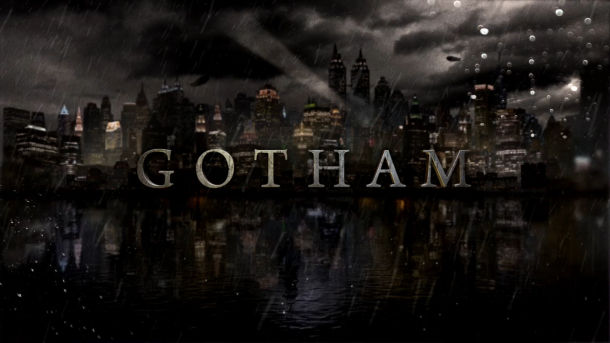
Okay, fair enough, I’m kinda late to the party here since Arleigh has already chimed in with his thoughts on the rather unimaginatively-titled first episode of Fox’s new Gotham TV series, Pilot, but as  the closest thing to a “Bat-fanatic” here at TTSL, I thought I’d go ahead and offer a second opinion — even if it’s not terribly different from the first one you fine folks have read here.

Let’s start by stating the obvious — between Year OneEarth OneZero Year, and Batman Begins, the origins of the Dark Knight detective have been done to death on the printed page and the silver screen over the last couple of decades, so only the venue is really “new” here, the basic outlines of the story this show is going to present are already well-known — aren’t they?

Well, yes and no. We all know how the series “ends,” whenever that happens to be — Bruce Wayne dons the cape and cowl and becomes Batman. Similarly, we all know how the story begins — wealthy socialites Thomas and Martha Wayne are gunned down in the notorious “Crime Alley” neighborhood of Gotham City in front of their young-at-the-time son, (here played by David Mazouz) and his life is, obviously, forever changed.

It’s what happens in between those well-established “bookends” that  events in Gotham will be playing out, and there does seem to be ample room for either whole-cloth invention, or creative re-interpretation, within the confines of that territory, and this pilot episode shows that, as was done with Smallville over the course, of — what,  ten seasons? — the principal creative minds at work here, most notably executive producer (and writer of this opening salvo) Bruno Heller, will be doing a little of both.

gotham-ben-2

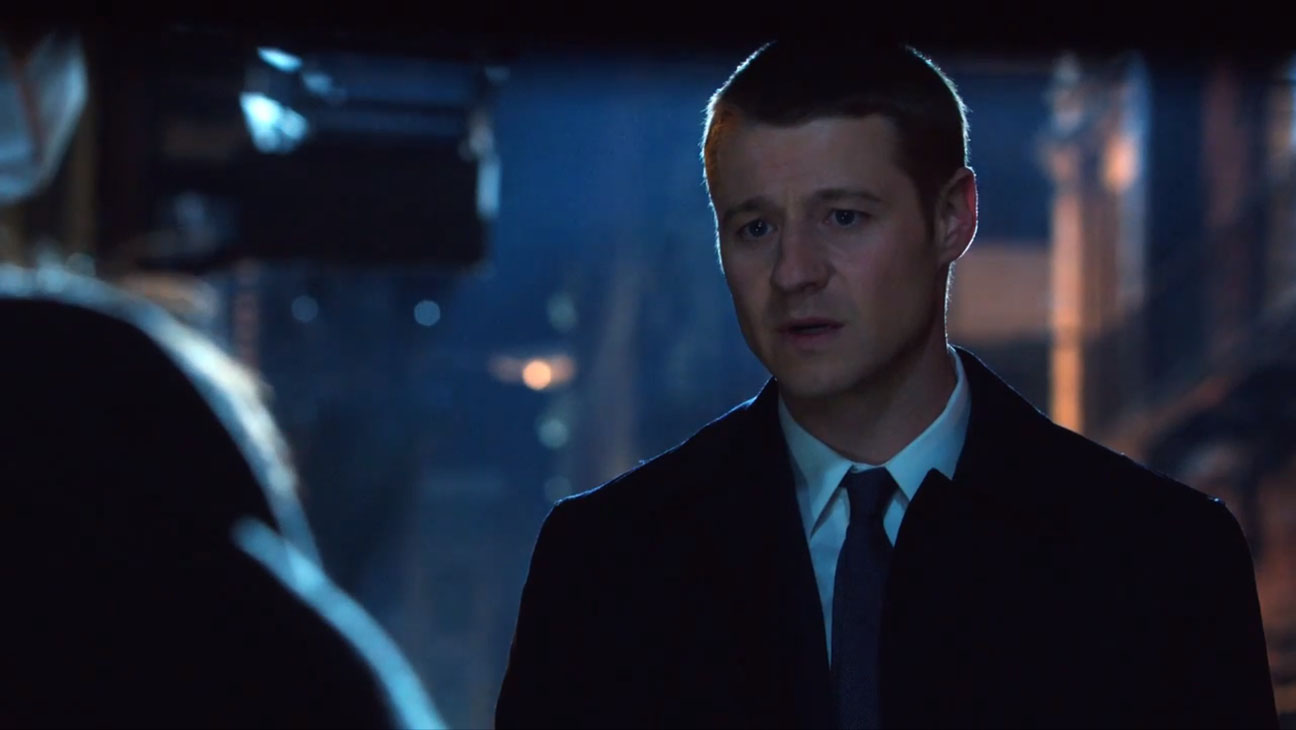
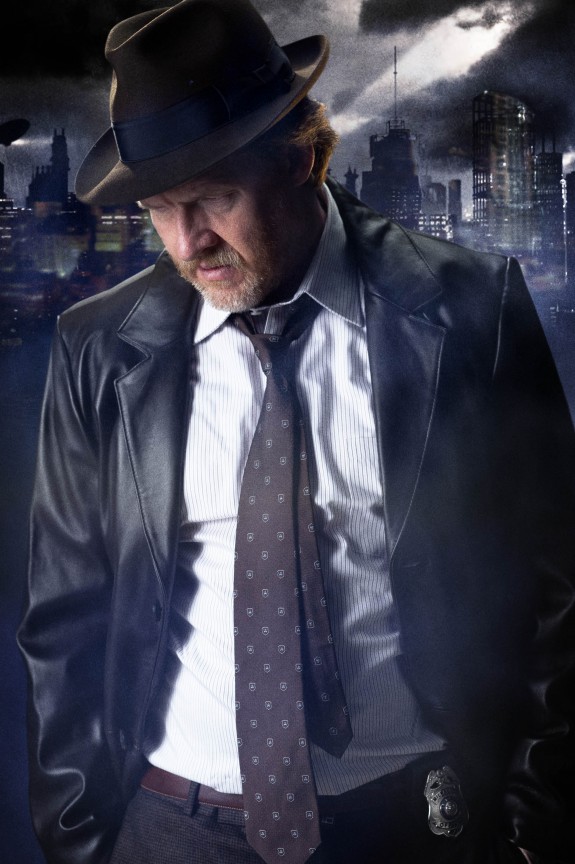
Apparently the main plot thread, at least running through the first season, will see clean-cut rookie detective Jim Gordon (Ben McKenzie) and his crooked partner, Harvey Bullock (Donal Logue), investigating the Wayne murders, and this initial episode largely focuses on them chasing a red herring in the form of a small-time hood named Mario Pepper (Daniel Stewart Sherman) , who they end up killing while he’s trying to escape, to the equal parts relief and despair of his wife and young plant-loving daughter, Ivy (Clare Foley). There’s some painfully strained dialogue that will probably make long-time Bat-fans cringe interspersed here and there, and a couple of scenes that are downright painful to watch, but by and large the story moves along at a reasonable enough little clip, the twists and turns our two protagonists encounter are generally involving, and the stage seems to be set for at least a modestly entertaining yarn as things progress.

Was the episode a great intro to the series? Not by any stretch of the imagination. Was it good enough? Sure, what the hell — I’ll be back next week for more, at any rate, and we’ll see where it goes from there.

So, how about a rundown of what Heller and director Danny Cannon get right, and what they get wrong, shall we? First, the good stuff : Mazouz is excellent as the pre-pubescent Bruce Wayne, and shows  pretty remarkable acting range for a kid. He’s by turns heartbroken, sullen, withdrawn, and determined. Good show all around. McKenzie displays a requisite amount of “regular-guy charm” as the show’s ostensible lead. Logue is a magnificent casting choice for a gruff and cynical veteran detective who’s definitely on the take — probably from more than one source — but may not be completely beyond redemption. Camren Bicondova largely lurks behind the scenes as a young Selina Kyle, but she exudes mysterious charisma to spare and you’ll definitely want to see more of her. John Doman seems intent on giving crime boss Carmine Falcome a whole new layer of depth and a set of complex motivations that really have me interested in finding out just what makes him tick. Cory Michael Smith is the perfect blend of genius and creepy in his role as police scientist Edward Nygma, who will “grow up” to become, of course, The Riddler. And Robin Lord Taylor as Oswald Cobblepot delivers his lines — and performs his physical actions — with a kind of just-beneath-the-surface insanity that shows that if and when he does become The Penguin, he’ll probably be more of the Danny DeVito ilk than the Burgess Meredith one.

The real show-stealer, though, is Jada Pinkett Smith as new character Fish Mooney, a second-tier — for now — player in the local mob scene who has brains, ambition, cunning, and sex appeal to spare. She seems to be having the time of her life sinking her teeth into the role, and it certainly shows. And if she’s not enjoying herself, well then — guess her acting is even better than I’m giving it credit for.

Oh, and just as a quick aside : does anyone else think the scene where she’s auditioning a struggling young stand-up comic for her club might be the first appearance in this series of, well — you-know-who? Maybe I’m over-thinking things, but I had to put it out there regardless.

harvey-bullock-gotham

It’s not as if Heller isn’t prone to offering other subtle hints in this episode’s script, either — one of Gordon’s superior officers just happens to be named Sarah Essen (Zabryna Guevara), and folks who have read Frank Miller and David Mazzuchelli’s Batman : Year One know that name well. Likewise, fans of the Gotham Central comics series will already be well familiar with the names Crispus Allen and Renee Montoya (played by Andrew Stewart-Jones and Victoria Cartagena, respectively), who pop up here as GCPD internal affairs agents. They’re not given much to do, admittedly, but a word of warning to Heller and all other series writers as far as this subject goes : Renee Montoya, in particular, is someone with a lot of hard-core fans, being that she represents one of the few positive portrayals of strong, independent, lesbian women of color anywhere in mainstream comics. Treat her right, or ignore her altogether, but don’t get this one wrong. There are some lurid hints dropped that she has “a past” with Gordon’s fiancee, Barbara (Erin Richards), but I wouldn’t suggest playing Montoya for pure soap opera value — it would be tremendously disrespectful to a character that was truly groundbreaking on the printed page.

Which brings us to what Gotham, at least so far, seems to be getting wrong (apart from some occasionally dodgy set design and CGI work and the script flaws previously mentioned) : Sean Pertwee (son of my second-favorite Doctor to Tom Baker) is a good casting choice as Alfred, and his protectiveness of his young charge certainly shows through, but Heller writes him as a semi-militaristic hard-ass in a move that seems to be a direct nod to the risible work of writer Geoff Johns in his limp Batman :Earth One graphic novel (please note I’m only singling out Johns’ script for criticism, as Gary Frank’s art on that book was superb). I hope they don’t go too far down that road with the world’s most famous fictional butler. Poison Ivy appears to be the victim of a radically different “re-imagining” that, so far, looks a lot less than promising. The overall tone of the proceedings appear overly concerned with shoe-horning in too many specific Bat-elements and not doing enough to establish the city as an entity separate from its most famous vigilante crime-fighter. And having Barbara be a well-heeled, glamorous socialite is a bit of a betrayal of the working-class roots of Jim Gordon and his family that we’ve all come to know — he just doesn’t look right lounging around in her fashionable penthouse apartment.

gotham

All in all, then, what we’ve got  is a case of “some good, some bad.” By the time the episode was over I was reasonably optimistic that, despite the “mix n, match” approach to re-invention and outright invention that I mentioned earlier,  we’re not looking at another Smallville clone here — i.e. a show that amounts to little more than Beverly Hills, 90210 with super-powers. The jury is still out, though,  on whether or not this show’s creators have enough of a different spin to add to the Bat-mythos to make this a worthwhile project. They’re borrowing influences from a wide range of sources, some of which I would’ve preferred having them ignore altogether, but it’s probably safe to assume that only some of those things will prove to be major factors in the series going forward. How far forward I go along with it remains to be seen, as there was nothing in the pilot episode to make me say “alright, awesome, I’m all in!” — nor was there enough to make me throw up my hands and walk away in disgust. We’ll call how I feel about things “cautious optimism” for now, with the greater emphasis being on “cautious.” Heller and co. have me interested — not it’s time to impress me.

George Romero Picks Up Where He Left Off With “Empire Of The Dead : Act Two” #1 — But What About Everyone Else?


4087873-01

I’ll admit that it brands as being in a tiny minority, but George A. Romero’s Empire Of The Dead  is my favorite ongoing zombie story right now. I’ve long since given up hope for The Walking Dead as both a TV series — blasphemy to some around these parts, I know — and a monthly comic,  with Kirkman and his cohorts long having since lost the plot, in my view, in both of that franchise’s iterations, but good ol’ George, after stumbling out of the gate a bit in Act One of this, his latest (and first printed-page) undead epic, really seems to be in the midst of getting a damn solid little tale going here, and I couldn’t be happier about it. Well, actually, I suppose I could 

For one thing, the second five-issue arc of what’s slated to be a 25-parter (bearing the official copyright title this time of George Romero’s Empire Of The Dead Act Two #1) starts off with some notable changes on the creative front. Gone is artist extraordinaire Alex Maleev, who towards the end of the first series was blowing some deadlines (not that his art wasn’t worth the wait, it most certainly was), and in is Dalibor Talajic, fresh from drawing two rather unremarkable Dexter min-series for Marvel (not that it was his fault — his illustrations were fine, but Jeff Lindsay really mailed it in on the script front, particularly in the atrocious second series,  Dexter Down Under, which is a bit of a shock given that he, ya know, created the character and everything), and who, like his predecessor, is tackling both the penciling and inking duties on the book. Talajic’s art is fine as far as these things go — and his style seems to have taken a healthy leap forward from that aforementioned Dexter work — but the change is still a jarring one, and overall the look of the series has changed from grim and gritty “naturalistic” horror to more standard-issue Marvel Comics “house style” renderings, so that’s kind of a drag. I knew the switch was coming, and it’s a little less violent than I’d feared, but — I dunno. No offense to Talajic, but I think that if bringing on a new artist was inevitable, a guy like Declan Shalvey, for instance, would have been a better fit.

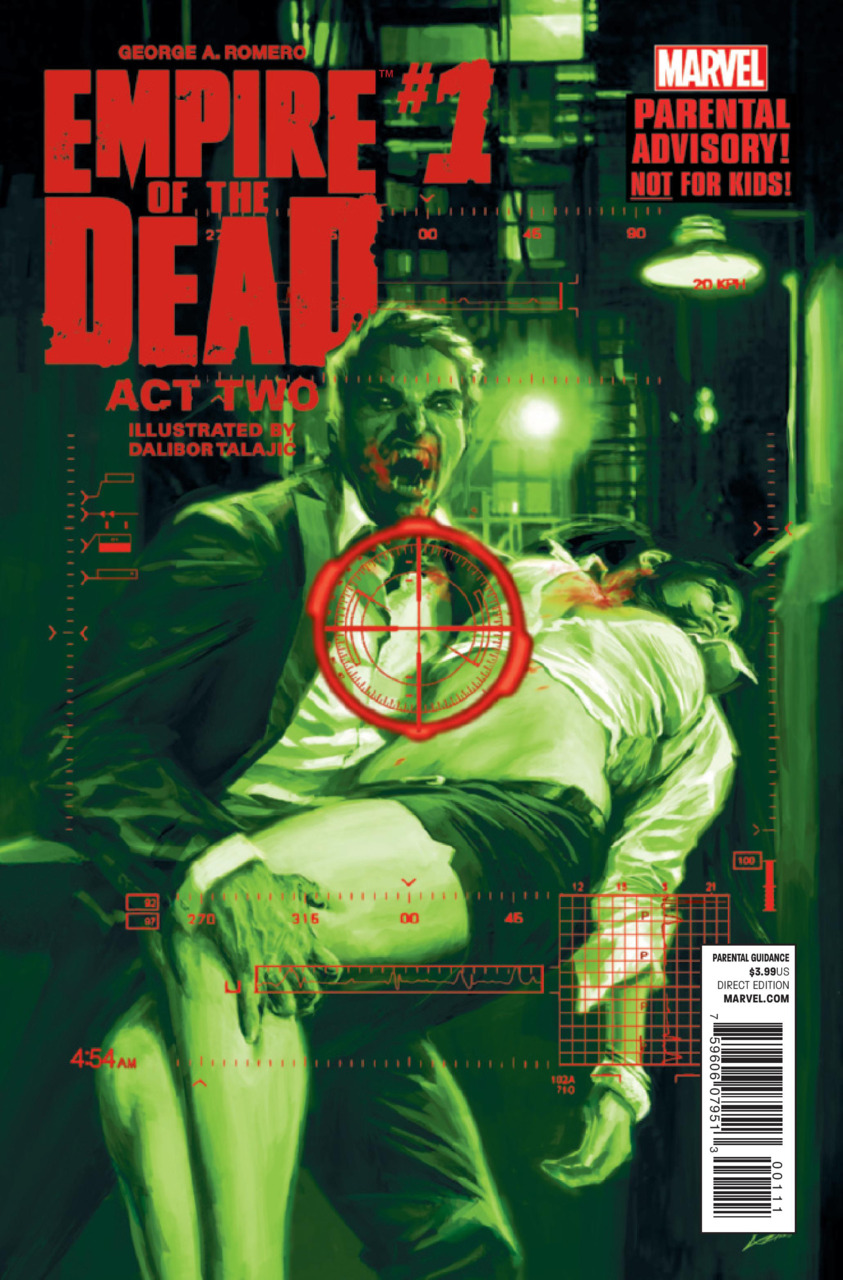
Maleev’s off the cover assignment, too, but if the work of new cover artist Alexander Lozano is any indication, we’re in good hands on that front. Yeah, admittedly, the scene depicted on the cover shown above doesn’t actually happen in the book, but so what? It’s still got a classic “old-school horror comic” vibe to it and wouldn’t feel at all out of place adorning the front of an old Warren mag like Creepy  or Eerie. I liked it a lot, and I think most other readers will, as well.

There’s also been a change of artists for the variant covers, but again, this is no problem in my estimation. Yes, Arthur Suydam’s “NYC” cover series was a blast, but when you’ve got Francesco Francavilla stepping up to the plate in his absence, well — who’s complaining? This guy has been one of my favorite cover artists for years now (have you seen the incredible work he’s been doing on Dynamite’s new Twilight Zone comic?), and my only gripe about his alternate cover for this issue (as shown below) is that my LCS didn’t get a single copy of it, otherwise you can bet that I would’ve snapped it up pronto.

4088277-01-variant

On the story front, I’m pleased to report that Romero is continuing the steady roll he’s been on since the fourth issue of Act One which is when, for my money, things really started kicking into another gear. As with most first issues (although whether or not this can actually be considered a “first” issue is debatable, I suppose), we’re in “pure set-up” mode here, but the payoffs to the various storylines that are running look like they’re going to be big, provided the father of the entire modern zombie revival doesn’t drop the ball. Semi-intelligent “walker” (whoops, wrong comic) Xavier seems to be making a quantum leap forward in becoming “civilized” under the tutelage of Dr. Penny Jones, and has formed a real emotional bond with her wayward young friend (whose name, in case you’d forgotten — as I admit I had — is Jo), and shares a secret with her that most likely will shake the entire series to its core. Dr. Jones, for her part, seems to be torn between responding to the romantic advances of the vampiric Mayor Chandrake and his head “zombie wrangler,” Paul Barnum, but rest assured there’s more to that situation than meets the eye — Barnum hints that he’s keeping a pretty big secret himself, and the Mayor, while not one to lose any sort of contest (and he drops some ominous threats to that very effect), may be forced to devote more of his attentions elsewhere, as the campaign to unseat him currently being waged by his nephew, Billy, seems to be gaining some traction. But is Billy really driving this train — or is he being set up for a spectacular “crash and burn” come-uppance?

And speaking of being set up — what of southern rebel-rouser Dixie Peach and her newly militarized entourage? A major development occurs in this issue that may end up marking her as  expendable to her own cause. I admit that the timelines attached to some of these various plot-threads do seem a bit garbled, and probably could’ve benefited from an eidotr who was paying somewhat closer attention ( the Xavier subplot seems to have advanced by several days, if not weeks, as has the mayoral race, while the subplot involving Dixie Peach and her no-longer-quite-allies seems to be picking up more or less right where it was left hanging in Act One), but if that all sounds intriguing to you — and trust me when I say it is — then put your reservations about the change behind this book’s drawing board aside, and queue up for the rest of Act Two, because it appears it could be quite a memorable ride.


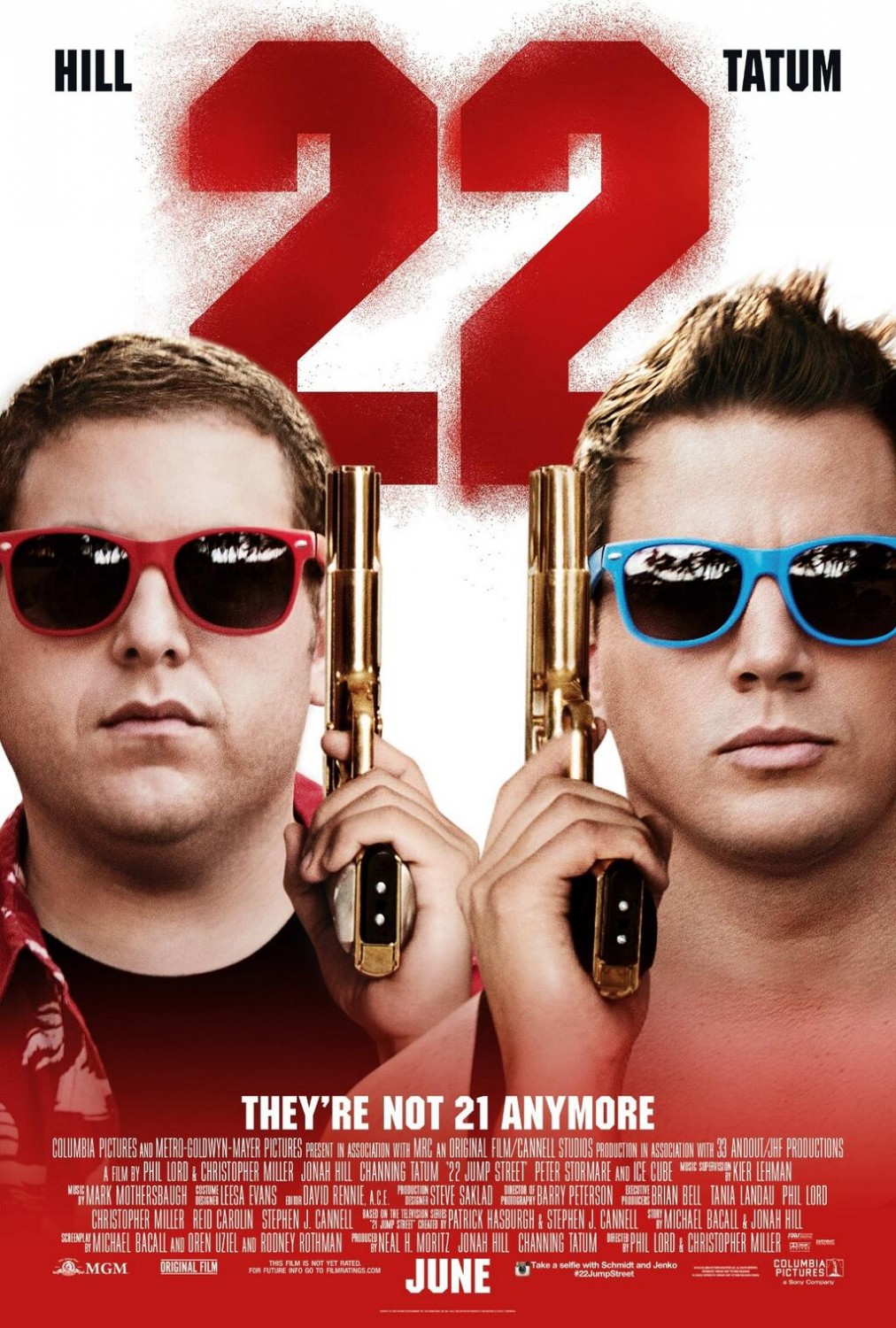
Trash Film Guru Vs. The Summer Blockbusters : “22 Jump Street”


twenty_two_jump_street_ver2_xlg

I know, I know, go on and say it — I’m getting to the party pretty late with this one and anyone who wants to see 22 Jump Street has probably already done so.  Fair enough. But, see, that’s the reason I’m getting to it so late — I had absolutely no interest in catching this flick three  years from now on a boring Saturday afternoon in the middle of winter, much less paying to watch it on the big screen, but last weekend my brother wanted to go see a movie, this was playing at the local discount house up the street (the historic Riverview on 38th Street in south Minneapolis), and so we went. Better late than never, right?

Actually, um, no. I admit I wasn’t expecting much from this flick, but even by the admittedly dire standards of the Hollywood “bromance comedy,” this is atrocious, unfunny, subpar stuff with absolutely nothing going for it.

Let me qualify that statement, though, for the sake of fairness — it has nothing going for it unless you’re into movies loaded down with self-referential “in-jokes” that make fun of the production itself on a “meta” level, or movies with tired-ass “say no to drugs” messages, or movies that make incompetent cops look like harmless nincompoops rather than walking, breathing weapons of potential mass destruction (ask the folks in Ferguson if inept, bungling, cover-your-ass policework is a laughing matter), or movies loaded with lowest-common-denominator racial and sexual “humor” designed to already divide a fractured society along cultural fault lines under the thin veneer of “uniting us in shared laughter.” If you enjoy any — or all — of that bullshit, then I’m sure you’ll find 22 Jump Street a rollicking good time, even if half (or more) of the jokes fall completely flat even under the risible set of circumstances I just outlined.

22-jump-street-2014-hollywood-movie-poster-images-18

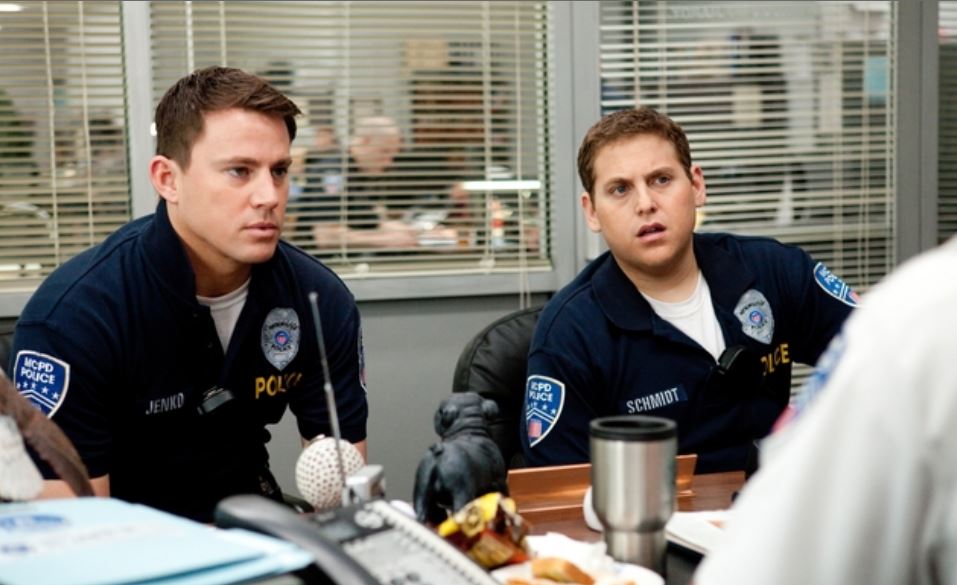
Anyway, here’s the deal, plot-wise : Jonah Hill and Channing Tatum are back as undercover 21st-century Keystone Kops Schmidt and Jenko,  respectively, Ice Cube is back as their boss in another role poking fun at his formerly-bad-ass-image, and this time his two charges are headed off to college to bust up a new “designer drug” ring rather than doing it in high school again like, I take it, they did in the first film (which I haven’t seen). Stupid shit happens, Jenko ends up on the football team, Schmidt ends up fucking Ice Cube’s daughter (played by Amber Stevens), and just when you think this steaming pile of racist, misogynist dogshit is over, they tack on about another half-hour to send the gang down to spring break in Mexico, and set this film’s place in history as the only spring break movie ever without so much as one naked female breast on display.

That’s about it as far as restraint goes, though,  in this little opus from co-directors Phil Lord and Christopher Miller (who, I take it, helmed 2012’s 21 Jump Street as well). Subtle is just not a word in these guys’ vocabulary. Shit, even at the end they keep piling it on as the credits roll, showing us one purportedly “funny” undercover scenario after another for our two “heroes,” wearing out the gag’s welcome to a degree that anyone with two functioning brain cells would consider cruel.

And then it hit me — the “two-functioning-brain-cells” crowd isn’t who flicks like this are made for. Nor is that the “target audience” for anything coming out of Hollywood’s blockbuster comedy machine these days. Dear God, there’s an entire generation of comedy “stars” who would be flipping burgers or digging ditches for a living if the public at large had any taste. Roll call : Johan Hill, Channing Tatum, Seth Rogen, Seann William Scott, Andy Samberg, Will Ferrell, Ben Stiller, James Franco, Danny McBride, Owen Wilson, Zack Galifianikis, Melissa McCarthy, Steve Carrell, David Spade,  and the worst offenders of all, the wretchedly untalented Vince Vaughn and Adam Sandler.

Whew! I’m exhausted just from pouring out that list, and I’m sure it’s not even a comprehensive one. Point is : none of these people are funny, they never have been, and they never will be.

22_jump_street_3-620x412

Look, I have no desire to sound like a curmudgeon (whoops, too late!), but we’ve got to face facts here : the state of the Hollywood comedy is no laughing matter. We’re in deep trouble. This shit is stupid, these supposed “A-listers” can’t carry a film, and the “demographic” they’re pitching this crap to is, plain and simple, the idiot crowd. If a truly inventive and talented comic performer like Bill Murray, or Richard Pryor, or Gene Wilder,  or the late, great Robin Williams came along today, Hollywood wouldn’t have  the first idea how to utilize their talents. “Come back to us with some fat jokes or fart jokes and we’ll see if we can’t find you some work. Oh, and do you know how to make fun of Mexicans? That’s always good for a laugh.”

images


Honestly, news coverage of wars or humanitarian disasters is funnier than tripe like 22 Jump Street. Just because a film is openly aware of its own absurdity doesn’t make it instantly less absurd in and of itself — in fact, quite the reverse, because it gives lazy filmmakers a crutch — “let’s admit we’re stupid so we can spend the whole rest of the movie making fun of how stupid we are.” The most talented folks in the comedy game have always understood how to point out and lampoon all of life’s admitted absurdities without insulting the intelligence of their audience. This new crop today? They think you’re such a lame-brained asshole that they can spend two hours calling you a lame-brained asshole to your face and you won’t even get upset because, hey, they’re saying that they’re lame-brained assholes, too!

If you want to keep playing along with this ruse, that’s your business, but I’m through with it. This is the last mainstream Hollywood comedy I see — even at discount prices — until they get their shit together.

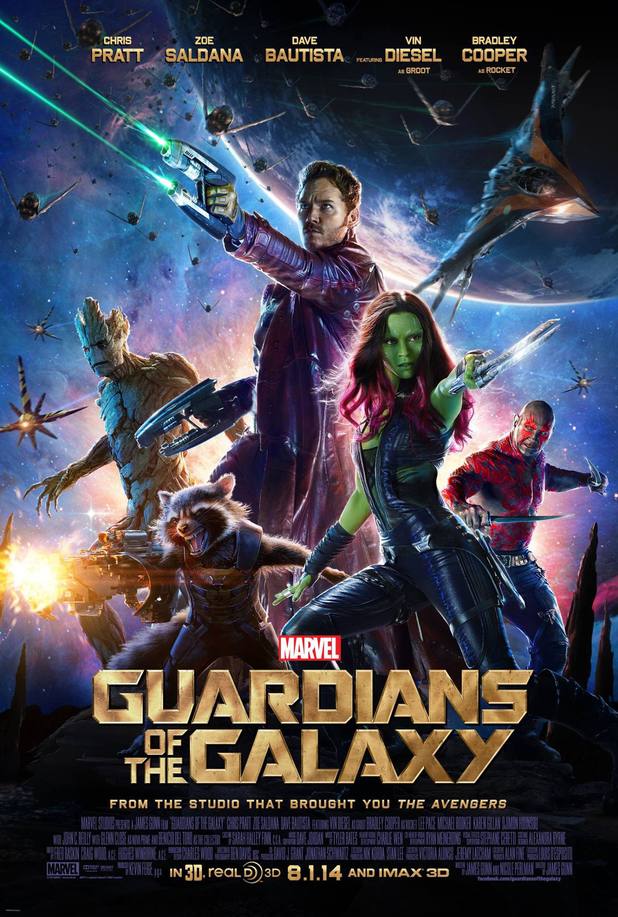
Trash Film Guru Vs. The Summer Blockbusters : “Guardians Of The Galaxy”


guardians

Here’s a question I can’t see any rational human being asking themselves, but apparently someone did : what would happen if you took bog-standard Marvel Studios super-hero fare, threw in a couple dozen extra jokes, and scooped a heavy layer of incredibly lame ’70s “power-pop” numbers like “Please Go All The Way” and “Escape (The Pina Colada Song)” on top?

The answer, of course, is director James Gunn’s newly-released Guardians Of The Galaxy, and if I’d been that hypothetical irrational person I just alluded to maybe I’d be a couple million bucks richer thanks to this film rather than sitting at home writing a review of it. So kudos to you, whoever you are, for your idea to bring this C-grade (at best) team of also-rans from their frequently-cancelled printed pages (there have been, what? Four or five Guardians  series to this point, and none has lasted more than a couple of years) to the big screen and making DisMar — a studio that has apparently entered “too big to fail” territory — hundreds of millions in box office receipts. I hope they compensate you handsomely, though given their track record I wouldn’t bet on it.

As for the rest of us, well — if you like this sort of thing, then this will be the sort of thing you like, but if you don’t, you won’t find much here over and above what you’ve already come to expect, despite the best efforts of Gunn (who also co-wrote the script with Nicole Perlman) to inject a little bit of personality into the proceedings. Any Troma alumnus who makes it to the big leagues like this (which reminds me, be on the lookout for a “blink and you’ll miss it” cameo from Lloyd Kaufman — oh, and one from Rob Zombie, too — and one from Nathan Fillion — and one from — well, you get the point here) deserves a pat on the back, to be sure, but there’s only so much our intrepid former low-budget maestro can do in the face of Marvel’s juggernaut-by-the-numbers style of production. Truth of the matter is, take out those couple dozen extra jokes and horeshit songs I mentioned and this thing is completely indistinguishable from its peers like Iron ManThe Avengers, or Captain America. Not that many folks seem to mind — but we’ll get to the sociological implications of this flick in due course.

Guardians-of-the-Galaxy-gang

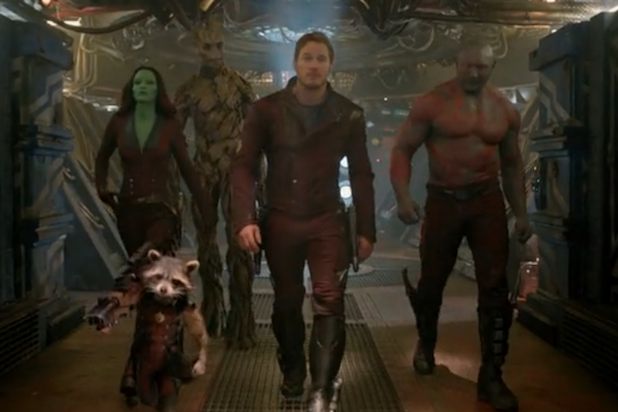
First off, credit where it’s due : Chris Pratt has displays admirable “regular-guy charisma” as Peter Quill, the self-proclaimed “Star Lord,”  leader of our planet-hopping mercenary crew; Zoe Saldana continues to her series of impressive acting turns as Gamora (and looks damn good in green body paint);  pro wrestling star Dave Bautista showcases a surprising level of humanity for a bulky alien brute;  and Bradley Cooper brings a fair degree of enthusiasm to his voice-over work for Rocket Raccoon. Vin Diesel could probably be said to do a decent enough job as Groot, the living tree, as well, but I think he just recorded one line that they play over and over again in an endless loop, so let’s not go too overboard in praising his efforts.

Anyway, the cast is good — even if its two most accomplished members, Glenn Close and John C. Reilly, are given precious little to do — but the material they have to work with is positively atrocious, and you know the old line about trying to make a silk purse from a sow’s ear. By and large the “humor” in this film feels forced and pre-planned (“okay, it’s been two minutes — time for another semi-snappy one-liner”), and when Gunn tries to play it straight, the emotional “beats” he’s going for fall flat and and hit the ground with a thud. Some of the pseudo-momentous dialogue in the “important, character-defining” scenes is so strained I literally had to wince. Ladies and gentleman, this script is just plain bad.

It’s also incredibly simple and, frankly, hackneyed. At the end of the day all we’ve got going on here is a regulation-issue “misfits forced by circumstances to work together and find their inner heroism”-type story, with a dash of “keeping a dangerous object out of the hands of the wrong people” thrown in for good measure. All the CGI in the world (and frankly some of that is surprisingly half-assed given this flick’s enormous budget) can’t cover that fact up, nor can all the precisely-timed melodrama, cribbed-from-a-greeting-card catch phrases, or mega-noisy battle sequences. I give Gunn props for trying to bluff his way to being the last guy at the table, but in the end he can’t do much about the fact that Marvel has dealt him an empty hand. Shoot — his two most interesting characters are pieces of computer animation that aren’t even really fucking there.

Guardians-of-the-Galaxy-rocket-with-gun

I do believe the director and his cast tried their best to incorporate some heart into their beast — the kind of heart that Rocket’s creator, Bill Mantlo (and please, I implore you, do what I did and donate the same amount of money you paid for a ticket to this movie to help pay for Mr. Mantlo’s continued medical care by visiting gregpak.com/love-rocket-raccoon-please-consider-donating-to-writer-bill-mantlos-ongoing-care/ —- last I heard, Marvel’s not giving this guy a dime) always brought to his scripts — but the “Marvel Method” for films is as set in stone as it always has been for comics : give the punters the illusion of something different, but for heaven’s sake, whatever you do, make sure you’re not actually doing anything truly different at all.

Guardians_of_the_Galaxy_43350

I’m slowly coming to a depressing conclusion, though — maybe the problem isn’t everyone else, maybe it’s me. The entire goddamn world is part of the Merry Marvel Marching Society now, and try as I might, I just can’t get on board. When Gunn shows Stan Lee behaving like a lecherous old creep in Lee’s studio-mandated cameo this time around, the audience in the theater howled with laughter and all I could think was  “hey, wait a minute, don’t they get it? This is what the guy is really like!”

And then it occurred to me — maybe they do get it, they just don’t care. Yeah, Lee is a rather slimy individual who takes a lot more credit that he deserves for pretty much everything, and yeah,  he’s left a trail of destitute and broken actual creators in his wake, and sure,  he even stole the idea for “his” Stiperella TV show from an honest-to-goodness stripper who he regularly spent all that money he earned from other people’s labor on, but — Stan Lee “won.” And American society loves a winner, right? We barely blink an eye when Wall Street scumbags fleece us out of trillions of dollars in order to save them from a mess they created by dint of their own greed and hubris, but when poor single mothers get  a paltry $200 a month, we’re up in arms. We even have the temerity to call them “takers,” while referring to those just-mentioned white-collar crooks as “the productive class.”

Yeah, they’re so “productive” that they can’t even run banks that make a profit while getting free money from the rest of us in one hand and charging us interest with the other. But I digress. America is no longer a nation that roots for the underdogs, or the “have-nots” — we’re too busy giving everything we’ve got the the “already-haves.” And maybe it’s high time I learned to check my brain in at the door and play along. It would save me a lot of grey hair and I’d probably find it really easy to make new friends.

What kind of friends would I be making, though? The folks in the theater I saw Guardians Of The Galaxy at laughed at every one of those cookie-cutter one-liners I was bitching about earlier. They got lumps in their throats at all the plastic-passioned “emotional turning points.” They hooted and hollered at the pre-determined outcomes of every generic battle. They did exactly what they were supposed to do, exactly when they were supposed to do it — and all I wanted to do was stand up and scream at the top of my lungs : “Dear God, is this really all you fucking people want?”

Apparently, it is.

Trash Film Guru Vs. The Summer Blockbusters : “Hercules”


hercules-rock-poster1

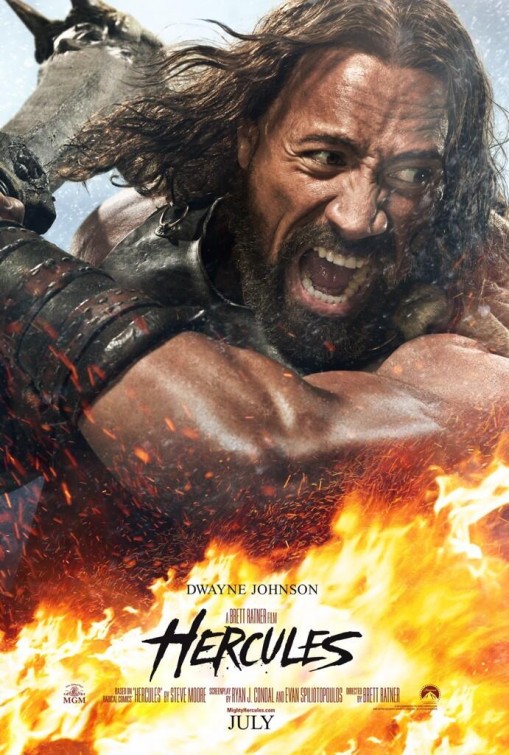
It’s been a weird week at the movies for yours truly, my friends : first off, I went to the theater three times this week, which almost never happens anymore (what do you think I am, rich?), and secondly, while I enjoyed The Purge : Anarchy about as much as I expected to (which is to say quite a bit), the other two flicks I saw both took me by surprise for different reasons : I was far less impressed with Richard Linklater’s much-celebrated Boyhood than I expected to be, and I ended up liking Brett Ratner’s new take on Hercules waaaaaayyyy more than I figured I was going to.

Though not because of anything Ratner himself did. But we’ll get to all that in a minute.

Full disclosure : I only went to see Hercules because my dad wanted to check it out. He’s a sucker for this kind of thing (he absolutely loves the old Kevin Sorbo TV series), and my mom wouldn’t touch a movie like this with a ten-foot pole, so when he mentioned he was hoping to check it out, I said I’d go with him. We’ve all gotta spend time with our parents while they’re still with us, right? But it’s fair to say, given Ratner’s involvement with this thing, that I wasn’t expecting much.

And ya know? He doesn’t deliver much — the direction here isn’t actively bad by any means, but it’s pretty straightforward stuff : the numerous “big battle” scenes are handled competently, and the actors by and large turn in decent enough performances, but there’s no real unique authorial stamp on any of the proceedings, and frankly, a  lot of the CGI is several rungs below what we’ve come to expect from these mega-budget summer popcorn flicks. All in all, technically speaking, it’s a fairly mixed bag.

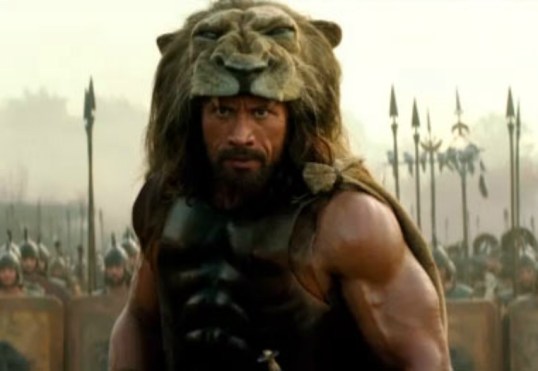
Why, then, did I find myself pleasantly surprised by this latest (and third so far this year alone, by my count) take on Greek mythology’s most famous demi-god warrior? Simply put, the script offers a neat revisionist take on the hero, and is smart, intelligent, engaging, and surprising — it’s entirely unlike any iteration of the character we’ve seen before, and for my part, I really dug it.
hercules-dwayne-johnson1

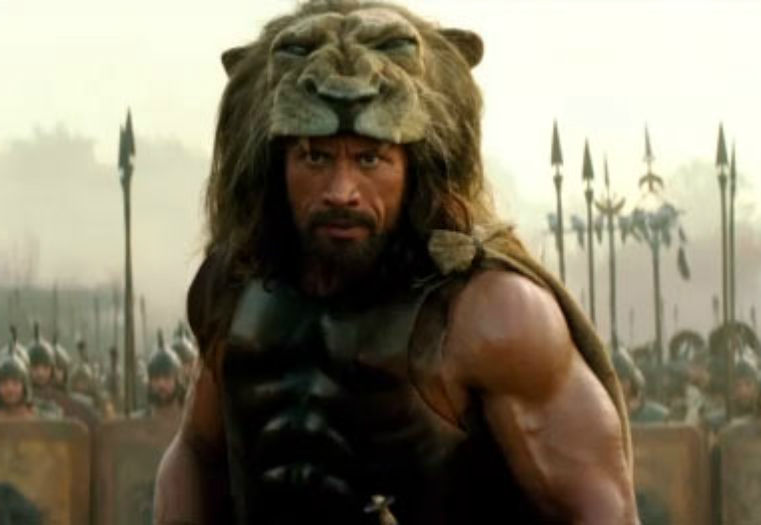
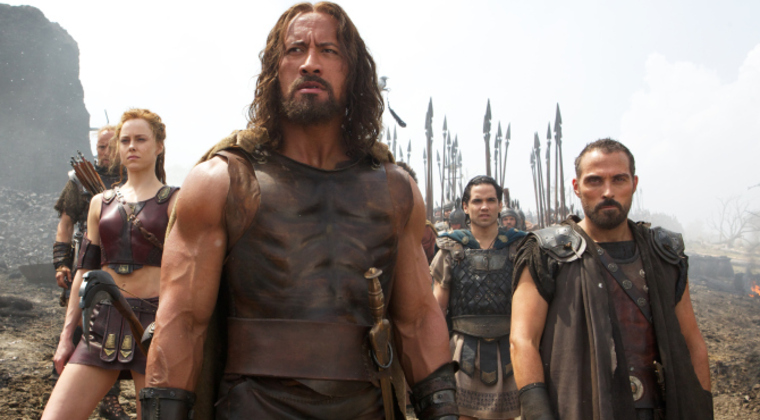
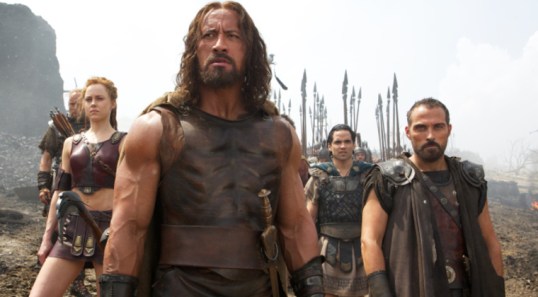
Before I give all of the (or even any) credit to screenwriters Ryan Condal and Evan Spiliotopoulos for this film’s suceess, though, let me state for the record that Dwayne “The Rock” Johnson is perfectly likable in the title role, and while he may be a pretty conservative casting choice, that’s okay — he’s more or less pitch-perfect and his supporting actors (including Ian McShane, Rufus Sewell, and Ingrid Bolso Berdal as members of his mostly-merry mercenary band and John Hurt and Joseph Fiennes as the film’s principal villains) do their jobs well, too. So kudos to everyone for putting in an honest day’s labor all the way through here. But let’s get back to the novel new twist on the whole legend/premise here, shall we?

This Hercules is radically different to his predecessors not just because he can actually talk (something Arnold Schwarzenegger, Lou Ferrigno, and Steve Reeves really weren’t so great at when they tackled the role), but because he a) may not actually be the son of Zeus; b) is leader of a group of freelance soldiers-for-hire; and c) was driven from his home after having name dragged through the mud for supposedly killing his own family. Told’ja this was a new set-up, didn’t I?

There are also some intriguing moral complexities woven into the story that I won’t give away here — hey, I want to keep things at least nominally “spoiler-free” when and where I can — and the interpersonal relationships between Hercules and his fellow travelers — as well as those they lend/sell their services to along the way — have considerably more depth than any reasonable human being would expect from action movie fare such as this. I was both mightily impressed by this intriguing series of twists, and frankly taken more than just a little aback by them. It wasn’t until the end credits rolled that my “aha!” moment came and I realized I shouldn’t have been shocked at all, if only I’d done a little bit of homework beforehand.
images

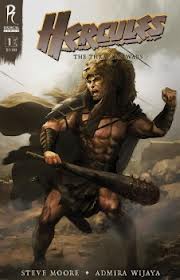
As it turns out, Ratner’s film is an adaptation of a comics series (well, two comics series, actually) penned by the late, great Steve Moore. I don’t know much about the publisher of these books, an outfit called Radical Comics , but I do know plenty about Steve Moore, and you should, too. Moore, who passed away from natural causes at his home earlier this year, is probably best known to comics fans as Alan Moore’s best friend (no relation despite sharing the same last name), and was a genuinely remarkable talent and, by all accounts, a genuinely remarkable human being. His comics work was sporadic, but he was at the forefront of the “British Invasion” of the early 1980s with works such as the criminally-underappreciated Laser Eraser And Pressbutton, and outside the field of comics he was a regular contributor to Fortean Times magazine as well as being a part-time musician and experienced occultist. He lived his entire life in the house he was born in and apparently carried on a decades-long erotic/romantic relationship with a moon goddess entity known as Cybele. All in all, then, a thoroughly interesting guy, as well as being an insanely talented creative force.

I wish I’d known about his Herclues comics when they came out — I don’t know if they just didn’t get very good US distribution or what (the cover of the first issue is pictured above), but I honestly don’t recall ever seeing a single copy of any of them out on the shelves at my local comic shop, and I’m there every week. A quick search on Amazon shows that two trade paperback collections of the series are available, but one is out of print and commanding rather high prices. Oh well, think I’ll probably order it up anyway.

Here’s the kicker, though — as much as I enjoyed this flick, now I feel kinda bad for  having shelled out any cash on it. Why, you ask? Because Steve Moore’s surviving family isn’t getting a dime off it. A quick Google search shows that Alan Moore has been absolutely up in arms about how his recently-deceased friend (and, in many respects, mentor) has been screwed over by the producers of the film, and he’s called for a boycott of it. I know, I know — Moore’s got a reputation for being a curmudgeon and for telling people not to buy, well, anything, but the damn thing is, more often than not, he’s absolutely right. The cinematic adaptation of The League Of Extraordinary Gentlemen was, in fact, every bit as horrendous as he claimed it was going to be, the Before Watchmen comics were by and large positively awful, and the V For Vendetta movie was an atrocious dumbing-down of his far superior original work. Yeah, he was none too pleased about the Watchmen film, either, but I won’t use that as an example of him being correct because by and large I kinda liked that one. Still, his criticisms are spot-on more often than not.
HERCULES

So here’s what I’m thinking knowing what I know now : Ratner’s Hercules is, in fact, a far superior effort than I felt sure it would be going in, yes — but it’s probably nowhere near as good as the comics it was based on, and the fact that Steve Moore got swindled — even (and especially) after death — from seeing so much as a penny from a big-budget adaptation of his work is positively unconscionable. Again, I haven’t read any of these comics yet, but it’s a safe bet that anything good that survived the translation from the printed page to the screen is only there because Steve Moore put it there in the first place. In short, he’s the main reason this movie is actually pretty damn good, and that makes perfect sense when you think about it because you know full well Ratner isn’t capable of delivering the goods on his own. We all remember Red Dragon, don’t we?

Okay, fair enough — I’ve tried my best to put that out of my mind, too.

So in the end I guess I’m left with something of an ethical conundrum here — I liked Herclues. I really did. But mostly for its unique and original story. And now that I know the story behind that story (whoops, I’m being repetitious here, sorry), I sorta wish I’d never seen the thing. Okay, on that note. I’m off to Amazon to order up these books.

 

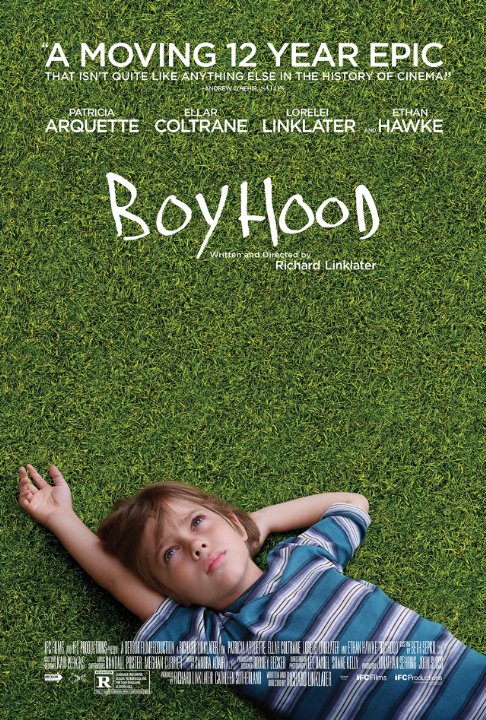
Wasted Youth : Richard Linklater’s “Boyhood”


MV5BMTYzNDc2MDc0N15BMl5BanBnXkFtZTgwOTcwMDQ5MTE@._V1_SX640_SY720_

It’s safe to say that there’s no film other film in 2014 that I was more predisposed toward liking before ever having seen in that Richard Linklater’s Boyhood. Anyone who follows my “byline” at any of the various sites I write for (please! Get something better to do with your time!) even occasionally will know that I’m a tremendous fan of the director’s other works — from his superb animated efforts such as A Scanner Darkly  and Waking Life to his honest and heartfelt live-action films such as BernieSchool Of RockFast Food NationDazed And Confused, and his breakthrough hit, Slacker (which I just recently reviewed through decidedly rose-tinted nostalgic lenses),  the guy just has the magic touch, in my opinion. Heck, even his Bad News Bears remake was kinda fun, if you ask me.  And, of course, the three films in his hopefully-still-ongoing “Before” series aren’t just great movies, but flat-out events in my life when they come out. I love ’em to pieces and make no apologies for it. Jesse and Celine may not be real people, but they’re still my fucking friends, goddamnit.

And yet for one reason or another it seems Linklater always flies below the radar. Maybe it’s because his naturalistic, unforced style doesn’t command attention. He’s not one to overpower you with sentimentality or melodrama, and the almost nonchalant nature of his work trusts the audience to be smart enough to make up its own collective mind about the stories he’s bringing to the screen. I like that. I think we need more filmmakers who aren’t out to either manipulate our emotions or “wow” us with their technique. Linklater goes about his business with respect for his stories, his characters, and his viewership — and while that may not win him a ton of awards, it certainly earns him my respect.

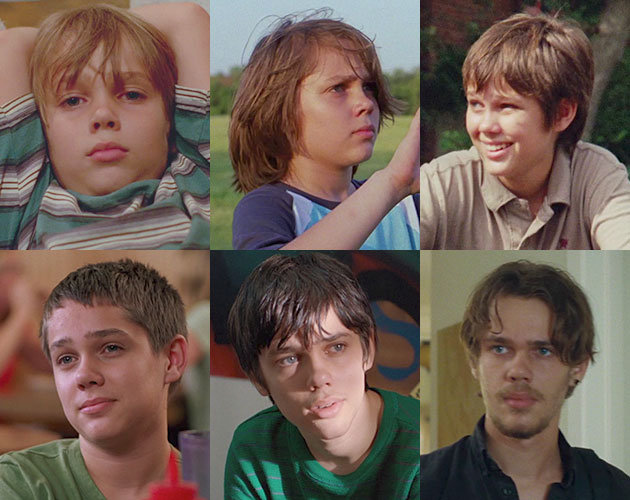
All that’s changing now, though. After over two decades operating, for the most part, on the margins (not that he doesn’t have a devoted fan base, it’s just not a terribly large one, comparatively speaking), the finished result of his grand 12-year-epic centered on young actor Ellar Coltrane as he ages from 7 to 19, Boyhood (originally titled 12 Years but re-named at the last minute to avoid confusion with recent Academy Award best picture winner 12 Years A Slave) is finally here, and Linklater’s richly-deserved moment in the spotlight has finally arrived. He’s made it to the to the top of the mountain. He’s the talk of the town. The man of the hour. The toast of Hollywood.

And ya know what? He deserves to be. I’m just not so sure he deserves it for this particular film.

b42cc340-cc96-11e3-8c33-07445b2e2595_boyhood-main

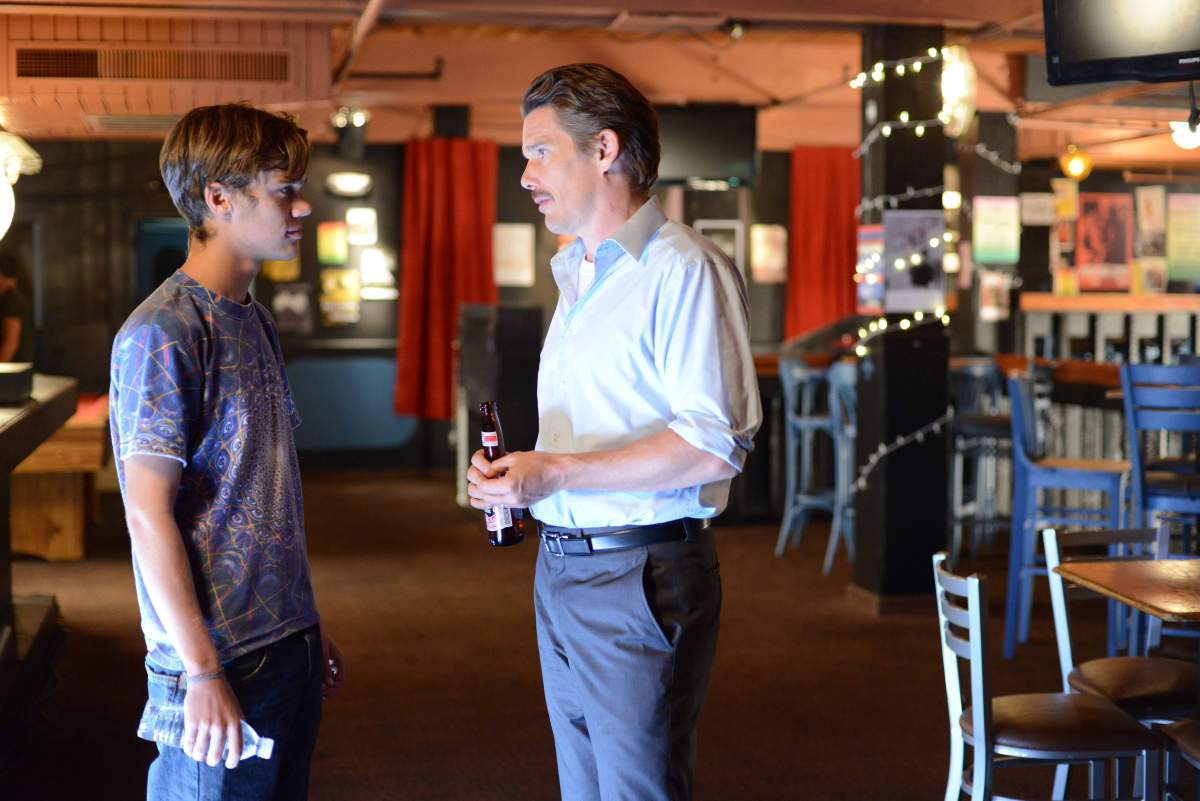
Don’t get me wrong — Boyhood is pretty good stuff in many respects. What Linklater’s pulled off here is certainly remarkable — getting essentially the same cast together year in and year out (the principle players being Coltrane as growing boy Mason, Patricia Arquette and Ethan Hawke as his divorced-from-the-film’s-outset parents, and the writer/director’s own daughter, Lorelei, as older sister Samantha) to make a series of short films that would eventually be assembled into one “grand work” is ambitious and bold and frankly just plain tough to work out logistically. So my hat’s off to to him for even realizing a project of this scope and magnitude.

I just wish the finished product were anywhere near as powerful, affecting, and awe-inspiring as we’re being told it is by the paid dictators of consensus opinion out there. The exploration of aging and the different stages we go through on, to sound unbearably pompous for a moment, life’s journey aren’t even particularly new themes for Linklater to explore — as a matter of fact, it’s what the “Before” series is all about, and they tackle the subject much better than this flick does. So maybe the folks who make their living telling us all what to think are just making up for lost time by showering accolades all over Boyhood after largely ignoring last year’s Before Midnight. Or maybe they honestly just like this one better because their taste isn’t all that great, I dunno.

In any case, I’ve still got a few good things to say about this before I lay out my gripes, so let me say that Linklater is to be commended for the smooth, easy flow with which he transitions from one scene to the next, and for letting events in the story take their time and “breathe” a bit without resorting to strict formulas of, say, 15 minutes per year or somesuch. Each and every actor is also to be congratulated for their work here, as the performances are quite simply astonishing. Yeah, Coltrane is obviously the star of the show, and watching him grow up in front of our eyes is every bit the amazing experience everyone makes it out to be, but all the other major players turn in terrific work, as well, as do many of the minor ones (Marco Perella deserves special mention here for his role as Mason’s troubled — and troubling — stepfather-for-a-time). So kudos to everybody involved for some truly great work.

Here’s the rub, though (you knew it was coming) — the material they’ve got to work with just ain’t all that hot. Linklater has taken his non-manipulative approach (you know, the one I was just praising him for) to  near-pathological extremes here and the end result is a film that feels almost clinically removed from its own subjects. Add in the disappointing fact that many of his characters are one-note ciphers — Mason’s mother gets an education and improves her economic and social standing over the years but still can’t help but marry one alcoholic loser after another, while his father  laregely remains a go-nowhere “slacker” for ages (Hawke spends the first half of the film essentially playing Jesse Wallace) before undergoing an instant transformation and getting a new wife, new baby, new mustache, and, apparently, his shit together all at the same time — and what we wind up with is a movie that never transcends its origins as a cinematic experiment,  as well as one that’s populated not by leaving, breathing people so much as specimens floating around in a celluloid petri dish.

Boyhood Image

I’m not foolish enough to think that unfairly-high expectations going in didn’t have something to do with why I left the theater feeling so flat after this one — shit, a 99% score on Rotten Tomatoes is flat-out unheard of — but even if this had been made by somebody I’d never heard of and landed on our screens out of nowhere, I’d still be less than awestruck by the finished product. I fully appreciate everything Linklater was trying to do here, sure, but what he’s ended up doing is completing what amounts to a 12-year-long sociological study that’s so concerned with preserving the integrity of its ground rules (don’t force anything, adhere to faux-documentary stylings at all costs, let things play out as absolutely naturally as you can possibly manage given you’re still working from a script, etc.) that it forgets it has an audience to win over. I admire Linklater for protecting his characters from directorial heavy-handedness, to be sure, but it’s a shame he wasn’t able to find a way to share their story that would have let us in while still keeping the melodrama and schmaltz out.

richard-linklaters-boyhood-movie-film-still-ellar-coltrane

So yeah, Boyhood definitely came up short for this armchair critic, despite the fact that I was rooting for it as hard as anyone. Walling off your characters to prevent Lifetime-movie-of-the-week-style syrup from oozing into their protective membrane is  one thing, but walling them off from from genuine viewer involvement results in a film that feels oddly disconnected, even divorced, from events that could be so much more effectively communicated if given even an ounce of immediacy. We want to care about Mason and his family beyond the level that Linklater allows us to , but he never lets us, or himself, get that close, and its  for that reason that Boyhood will always remain much more interesting for what it does than for what it actually is. Maybe he’ll give us another installment in 2026 that corrects the mistakes he made here?  Chuckle at the idea all you want, but no one saw a sequel to Before Sunrise coming, either.