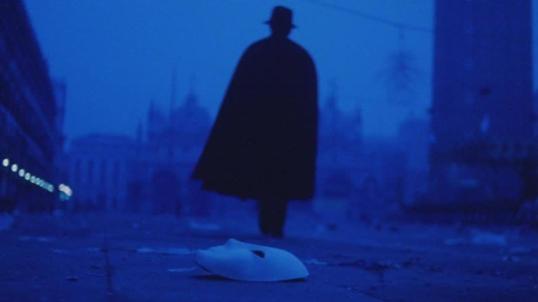
Song of the Day: White Rabbit (performed by Jefferson Airplane)


Since today is Grace Slick’s 85th birthday, today’s song of the day features her (and, to be fair, the rest of Jefferson Airplane) performing White Rabbit at the first Woodstock.

Grace Slick and Jefferson Airplane not only performed at Woodstock but they were also among the bands who attempted to perform at the Altamont Free Concert a few months later.  Needless to say, the vibe at Altamont — which featured the Rolling Stones as headliners and the Hell’s Angels providing security — was far more aggressive and hostile than the vibe at Woodstock.  While the Stones were performing, a member of the audience got into a fight with the Hell’s Angels, raised a gun, and was stabbed to death.

As seen in the documentary Gimme Shelter, even before the murder that ended the 60s, the Angels were aggressive, even knocking out Jefferson Airplane’s other singer, Marty Balin, in the middle of the band’s performance.  Also seen in that documentary is Grace Slick doing her best to calm the crowd and, along with Paul Kanter, rather fearlessly talking back to a drunk Hell’s Angel who tried to take over the stage.

(It should be noted that Grace did all of that even though she had forgotten to put in her contact lenses that day.  Me, I can’t even walk from one end of a room to another if I forget to put in my contacts.)

White Rabbit

(Lyrics by Grace Slick)

One pill makes you largerAnd one pill makes you smallAnd the ones that mother gives youDon’t do anything at allGo ask AliceWhen she’s ten feet tall
And if you go chasing rabbitsAnd you know you’re going to fallTell ’em a hookah-smoking caterpillarHas given you the callCall AliceWhen she was just small
When the men on the chessboardGet up and tell you where to goAnd you’ve just had some kind of mushroomAnd your mind is moving lowGo ask AliceI think she’ll know
When logic and proportionHave fallen sloppy deadAnd the White Knight is talking backwardsAnd the Red Queen’s off with her headRemember what the dormouse saidFeed your headFeed your head

Scenes That I Love: Bugsy Attacks in Once Upon A Time In America


In honor of Sergio Leone’s birthday, today’s scene that I love comes from his final film, 1984’s Once Upon A Time In America. 

In this scene, which takes place in 1918 in New York City, a group of young street kids who fancy themselves sophisticated criminals are ambushed by their rival, Bugsy.  With the combination of Ennio Morricone’s score and Leone’s haunting vision of New York City at the start of the 20th Century, this scene captures the loss of innocence that will eventually lead to all of the characters becoming ruthless (albeit successful) gangsters in their adult years.

4 Shots From 4 Films: Special Sergio Leone Edition


Sergio Leone (1929 — 1989)

4 Or More Shots From 4 Or More Films is just what it says it is, 4 shots from 4 of our favorite films. As opposed to the reviews and recaps that we usually post, 4 Shots From 4 Films lets the visuals do the talking!

95 years ago today, Sergio Leone was born in Rome, Italy.  The son of actor/screenwriter Vincenzo Leone and silent actress Edvige Valcarenghi, Sergio was born into the Italian film industry.  He began his career in the post-war rebuilding period, working as an assistant to Vittorio De Sica and, as an assistant director, for American films that were shot in Italy.  (Albeit uncredited, he worked on two Oscar-nominated Biblical epics, Quo Vadis and Ben-Hur.)

After making his directorial debut with The Colossus of Rhodes, Leone went on to direct the films that would change the face of international cinema.  Though he was hardly the first director of Spaghetti westerns, he was was the first to achieve far-reaching acclaim.  With the Dollars Trilogy, he made Clint Eastwood a star and Eastwood has often said that the majority of what he knows about directing, he learned from working with Leone and later Don Siegel.  Leone went on to direct the brilliant Once Upon A Time In The West and Once Upon A Time in America, two epic visions of American history that, sadly, were not initially treated well by their distributors.

Though Leone is only credited with directing eight films, his influence cannot be underestimated.  As both a visual artist and a cultural and political commentator, his films continue to influence directors to this day.

For that reason, it’s time for….

4 Shots From 4 Sergio Leone Films

The Good, The Bad, and the Ugly (1966, dir by Sergio Leone, DP: Tonino Delli Colli)

Once Upon A Time In The West (1968, dir by Sergio Leone, DP: Tonino Delli Colli)

Duck, You Sucker (1971, dir by Sergio Leone, DP: Giuseppe Ruzzolini)

Once Upon A Time In America (1984, dir by Sergio Leone, DP: Tonino Delli Colli)

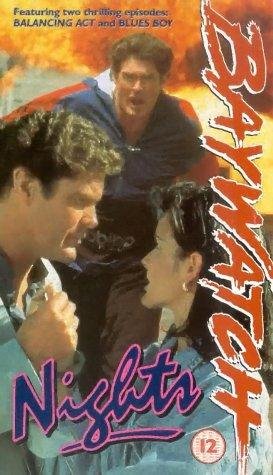
Late Night Retro Television Reviews: Baywatch Nights 1.8 “Balancing Act”


Welcome to Late Night Retro Television Reviews, a feature where we review some of our favorite and least favorite shows of the past!  On Tuesdays, I will be reviewing Baywatch Nights, an detective show that ran in Syndication from 1995 to 1997.  The entire show is currently streaming on Youtube!

This week, we discover how it all began!

Episode 1.8 “Balancing Act”

(Dir by Gus Trikonis, originally aired on November 18th, 1995)

The eighth episode of Baywatch Nights opens with Ryan and Garner on a stakeout.  It’s the middle of the day and they’re waiting for someone carrying an envelope full of evidence.  Mitch is nowhere to be seen, which actually makes sense.  I mean, Mitch is still working as a lifeguard.  Over the past seven episodes, I’ve often wondered how Mitch can work full-time as both a detective and a lifeguard captain.  This episode finally acknowledges that Mitch actually does have another job.

Garner and Ryan start talking about the first that they met and how they came to be partners in a detective firm.  It’s flashback time!  The flashbacks are to the show’s previously unaired pilot.  What’s funny is that, even though Garner is the one who is telling the story, the flashbacks are all narrated by Mitch.  I know that Garner and Mitch were extremely close friends during the early seasons of Baywatch but I didn’t realize they could actually hear each other’s thoughts.

Flashback Mitch explains that both he and Garner were wondering if there was anything more to life than their jobs.  Garner wanted to be more than just a beach cop.  Mitch was wondering if maybe there was something more out there than just being a lifeguard.  One day, when Mitch on vacation from his lifeguarding job, Mitch decided to accompany Garner to investigate a mysterious boat that had been showing up around the marina.  It was during the investigation that Mitch and Garner first met Ryan.  Ryan had paid $25,000 for a private detective agency in California, just to discover that the agency was not the high class operation that the previous owner, Nicky Pine (Philip Bruns), claimed it was.  However, before Ryan could confront him, Nicky was apparently killed by a group of criminals who wanted a valuable bracelet that Nicky owned.  Except the bracelet, which he gave to Ryan, was actually a fake and Nicky wasn’t actually dead and….

Ugh, this is complicated.  Seriously. I hate to admit that I couldn’t follow the plot of an episode of Baywatch Nights but this plot had so many nonsensical twists and turns that I pretty much gave up on trying to make sense of it all.  The important thing is that Garner got fed up with the police and quit, Mitch realized that he wanted to be a private eye, and Ryan got to be totally awesome as usual.  At one point, Ryan explained to Mitch that she was tough because she was from Dallas.  Woo hoo!  You tell him, Ryan!

Because this was a pilot, there were a few examples of early installment weirdness.  Troy Evans showed up as a police detective and one got the feeling that he was originally envisioned as being a recurring character.  Lisa Stahl’s Destiny was nowhere to be seen but there was a character named Andy (Linda Hoffman) was acted quite similarly to Destiny.  Even Nicky and his girlfriend, Rose (Jeanette O’Connor), seemed to be set up to become semi-regular characters.  Obviously, there was some retooling done after this pilot was produced.

Anyway, this episode’s plot is impossible to follow but the California scenery is lovely, which I think is the most that anyone could realistically demand from any show from the Baywatch universe.  Having now watched the pilot, I’m glad that the show went forward with just Mitch, Garner, and Ryan as regulars.  They’re a good team.

Catching Up With The Films Of 2023: May December (dir by Todd Haynes)


What comes after a life of tabloid infamy?

That’s one of the many questions posed by Todd Haynes’s latest film, May December.

Elizabeth Berry (Natalie Portman) is an actress who comes to Savannah, Georgia in order to research her next role.  We don’t learn much about Elizabeth’s career as an actress but it appears that, while it has brought her a certain amount of fame, it hasn’t exactly been full of acclaimed work.  One person mentions seeing a picture from a film that she did in which she was involved in a blood sacrifice.  (“I googled ‘naked Elizabeth Berry,'” he explains.)  Several other people mention how much they love her TV show, Norah’s Ark, in which Elizabeth plays a veterinarian.  Elizabeth’s latest film features her playing a real person, someone who was at the center of a scandal 20 years previously and who has since faded from the public view.  Elizabeth seems to believe that this role could redefine her career.

(Hey, it worked for Margot Robbie in I, Tonya.)

Elizabeth is going to play Gracie Atherton-Woo in an upcoming indie film.  Way back in 1992, the real-life Gracie (Julianne Moore) was 36 years old and married when she was caught having sex with a 13 year-old named Joe in the back of a pet store.  Joe was a classmate of Gracie’s son and Gracie was the one who was responsible for him getting hired at the pet store in the first place.  Gracie was sent to prison, where she gave birth to Joe’s daughter.  During her trial, Gracie and Joe were both tabloid mainstays.  The nation was transfixed by their affair before eventually moving on to the next scandal.  When Gracie was eventually released from prison, she married Joe.  Now, decades after appearing on the front of every trashy magazine, Gracie and Joe (Charles Melton) are still married and they now have three children.  They live in a big house in Savannah, Gracie has a career as a pastry maker, and, from the outside, they would appear to have a perfect domestic life together.

Wearily, Gracie and Joe allow Elizabeth to spend time with the family so that she can research her role.  Elizabeth interviews other people who were effected by Gracie’s actions.  Gracie’s ex-husband (D.W. Moffett) is surprisingly forgiving.  Gracie’s children are considerably less forgiving.  Georgie (Cory Michael Smith), who was Gracie’s son from her first marriage and a schoolmate of Joe’s, is bitter and describes his mother as being mentally unbalanced while, at the same time, trying to leverage his knowledge of Gracie’s past into a job on the film.  As for Gracie and Joe’s first daughter (Piper Churda), she states that she doesn’t want the film to be made.

Cracks start to appear in the perfect image that Gracie and Joe present to the world.  Gracie can be rigid and controlling while insisting that Joe was the one who initiated the encounter in the pet store.  Gracie talks about growing up with four brothers, two of whom were older and two were younger.  Gracie mentions that one of her brothers is an admiral and it’s implied that she grew up in an atmosphere where failure was not an option.  Gracie’s daughter talks about how, when she graduated, her mother gave her a scale as a graduation gift.  When someone cancels an order for a cake, Gracie takes it as a personal rejection and breaks down into tears.  Gracie is friendly towards Elizabeth but never totally lets down her guard.

As for Joe, he emerges as well-meaning but confused, someone who is still often treated like a child by bother his wife and, eventually, the woman who is studying his wife.  Whenever we see Joe with any other adults, he’s awkward as if he’s not sure how to behave.  (When he tells his elderly father that he can hardly believe that all of his children will soon be in college, the old man’s silence tells us everything that we need to know about their relationship.)  Joe is nearly forty but it’s clear that a good deal of his emotional development stopped when he was thirteen, leaving him desperate for approval.  When he catches his teenage son smoking a joint, Joe isn’t angry as much as he’s curious.  Smoking weed is one of the many things that Joe never did when he was younger.  When Joe get high, he becomes a paranoid and emotional mess as all the feelings that he’s repressed for 23 years come spilling out.  At the same time, when Gracie has a breakdown, Joe knows exactly what to say to help her through it.

Do Gracie and Joe truly love each other or is their marriage just their way of denying the reality of what happened?  Did Gracie groom Joe or, as Gracie insists, was their affair consensual?  At first, the audience’s natural tendency is to sympathize with Elizabeth and to expect her to play some sort of role in clarifying what actually happened in that pet store.  But Elizabeth soon proves herself to be a rather detached observer, a mimic who copies the emotions of others but who, even after she gets to know Gracie and Joe as human beings, still views them as just being characters in a story.  In the end, Elizabeth can’t help us understand what happened in the pet shop because, the film suggests, not even the people who were actually there understand what happened.  All Elizabeth can do, as an actress and an observer, is try to recreate what she imagines happened.

It’s a well-made film, with Haynes deftly mixing scenes of high drama with the awkward comedy of people trying to rationally discuss the irrational.  It can also be a frustrating viewing experience, if just because Haynes often does not seem to be sure what he’s trying to say about the characters or why we should even care about either Gracie or Elizabeth.  Fortunately, the film is lucky enough to have a wonderful cast.  While Moore and Melton gets the big, dramatic scene, it’s Portman who takes the audience by surprise, giving a performance that goes from being likable to being rather chilling as Elizabeth transforms herself more and more into Gracie.  For all the film’s themes about conformity, morality, and tabloid culture, it’s main message may very well be to never trust a method actor.

May December sticks with you, even if it’s not up to the level of Haynes’s Carol.  It’s a film about what happens after the infamy, with Gracie, Joe, and Elizabeth destined to be forever defined by what happened over the course of a few minutes in the backroom of a pet store.

Retro Television Reviews: Fantasy Island 4.7 “The Invisible Woman/The Snowbird”


Welcome to Retro Television Reviews, a feature where we review some of our favorite and least favorite shows of the past!  On Tuesdays, I will be reviewing the original Fantasy Island, which ran on ABC from 1977 to 1986.  Almost the entire show is currently streaming is on Youtube, Daily Motion, and a few other sites.

Smiles, everyone, smiles!

Episode 4.7 “The Invisible Woman/The Snowbird”

(Dir by Don Weis, originally aired on December 6th, 1980)

This week’s trip to Fantasy Island is all about entertainers.

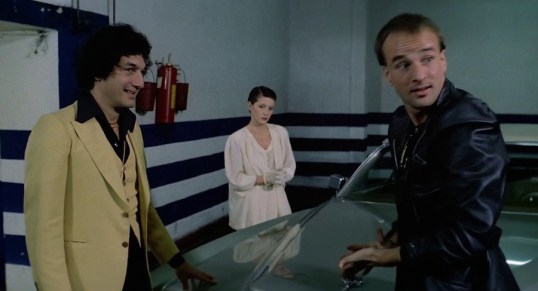
For instance, Ned Pringle (Douglas Barr) is not an entertainer but he wishes that he could be.  Instead, the handsome and athletic Ned is a popcorn salesman who works for a traveling circus.  He has a crush on a trapeze artist named Velda Ferrini (Pamela Sue Martin) but he feels that he won’t ever be able to talk her unless he too can become a trapeze-artist.

Mr. Roarke grants him his fantasy.  He hands Ned a magic pouch and has him climb up a magic ladder.  When Ned reaches the platform at the top, he suddenly discovers that he is now standing high above the ground.  Below him, the entire circus is waiting for him to audition.  Fortunately, as long as Ned has the pouch, there is nothing he can’t do.  He’s the world’s greatest acrobat and he is, of course, hired by the circus’s owner, Mr. Ferrini (Don Ameche).  Ferrini is the father of Velda and when he hires Ned, he does so under the condition that Ned not try to date his daughter.  Good luck with that, Ferrini!

Meanwhile, Velda’s older brother, Mario Ferrini (George Maharis), takes an interest in Ned’s career and he even starts to pressure Ned to attempt the same super dangerous quadruple summersault that led to Mario injuring his leg and having to drop out of the act.  Ned, however, realizes that Mario needs to do the summersault himself so that he can get back his confidence.  After a conversation with Mr. Roarke (who shows up swinging on the trapeze and wearing a white bodysuit!), Ned allows Mario to have the pouch.  Mario finally pulls off the quadruple summersault and he returns to the act.  Meanwhile, Ned realizes that he doesn’t have to be an acrobat to be worthy of Velda’s love and he instead becomes the circus’s new manager.

And good for all of them!  Ameche, Martin, Maharis, and Barr were all extremely likable in this story, though you do have to wonder what Maharis is going to do if he ever loses the magic pouch.  That said, the true stars of the story were the stunt crew.  It was pretty easy to spot everyone’s stunt double, which added to the fun of the story.  Ricardo Montalban’s stunt double, for instance, appeared to be about 20 years younger than him and blonde.

The episode’s other story deals with a veteran entertainer named Denny Palumbo (Dick Gautier).  Denny became a star doing a corny song-and-dance act with his wife, Trish (Neile Adams).  However, Denny and Trish got a divorce and their act broke up.  Denny is now engaged to Harriet (Elaine Joyce) and he is putting together a new act with two new dancers.  Trish’s fantasy is to become invisible so that she can make sure that Denny isn’t cheating on her.

“Boss!” Tattoo says, “Can you do that!?”

“It remains to be seen,” Roarke replies.

(Oh hey, I just got that!)

Just as Roarke gave Ned a magic pouch, he gives Harriet a magic potion that grants temporary invisibility.  When Harriet turns invisible, her clothes can still be seen and appear to be floating in mid-air.  This leads to her (in her invisible state) undressing in front of Tattoo and Roarke.  Tattoo’s eyes get especially wide as everything from Harriet’s dress to her underwear hits the floor.  In fact, Tattoo gets so distracted that Roarke snaps, “Tattoo!”

(Later, Tattoo deduces that Roarke can still see Harriet, even after she’s taken the potion and removed her clothes.  “Boss!” Tattoo gaps.  I’m a bit shocked, myself.  Mr. Roarke has always been such a gentleman in the past that I find it hard to believe that he would not have stepped out of the room or, at the very least, turned his back while Harriet undressed.)

Being invisible allows Harriet to spy on Denny.  It turns out that Denny is not cheating on her but invisible Harriet still deliberately ruins his rehearsal and causes the new dancers to quit.  Needing a partner, Denny turns to Trish, which upsets Harriet even though Harriet was the one who was secretly responsible for inspiring the other two dancers to quit in the first place.  Eventually, Harriet realizes that Denny and Trish are meant to be together but that’s okay because she also realizes that she’s meant to be with Denny’s manager, Monty (Sonny Bono, who apparently spent the early 80s living off whatever money he made from appearing on shows like The Love Boat and Fantasy Island).

This story suffered from the fact that all of Harriet’s problems could have been solved by Harriet not acting like an idiot.  As I’ve mentioned many times in the past, I am not a fan of the idiot plot.  Sonny Bono was likable as Monty but Denny and Harriet were so broadly drawn and performed that I mostly just wanted to Monty to totally get away from both of them.

This week’s trip to Fantasy Island was just silly.

Scenes That I Love: Burt Reynolds Meets Burt Reynolds in The Last Movie Star


Today, the national speed limit is 50 years old.

Boooo!

Yes, it was 50 years ago today that President Richard Nixon signed the law that set the national speed limit as being 55 miles per hour.  Perhaps this was Nixon’s final revenge on a nation that was making a huge deal out of Watergate.  Who knows?

In honor of the occasion, today’s scene that I love is from 2018’s overlooked The Last Movie Star.  In this scene, an elderly Burt Reynolds finds himself transported back to the days of Smokey and the Bandit, where he meets his younger self and takes a ride in a famous black sportscar.  It turns out that the two Burts do not agree when it comes to observing the posted speed limit.

4 Shots From 4 Films: Special Todd Haynes Edition


4 Shots From 4 Films is just what it says it is, 4 shots from 4 of our favorite films. As opposed to the reviews and recaps that we usually post, 4 Shots From 4 Films lets the visuals do the talking.

Today, the Shattered Lens wishes a happy birthday to director Todd Haynes!  It’s time for….

4 Shots From 4 Todd Haynes Films

Safe (1995, dir by Todd Haynes, DP: Alex Nepomniaschy)

I’m Not There (2007, dir by Todd Haynes, DP: Edward Lachman)

Carol (2015, dir by Todd Haynes, DP: Edward Lachman)

Dark Waters (2019, dir by Todd Haynes, DP: Edward Lachman)

Late Night Retro Television Reviews: CHiPs 1.8 “Green Thumb Burglar”


Welcome to Late Night Retro Television Reviews, a feature where we review some of our favorite and least favorite shows of the past!  On Mondays, I will be reviewing CHiPs, which ran on NBC from 1977 to 1983.  The entire show is currently streaming on Freevee!

This is such a weird episode.

Episode 1.8 “Green Thumb Burglar”

(Dir by Christian I. Nyby II, originally aired on November 10th, 1977)

This week’s episode is an odd one, largely because it all hinges on the usually uptight Sgt. Getraer suddenly revealing himself to be a fanatic about plants.

When Ponch and Baker roll up to headquarters while on their motorcycles, Getraer is so busy talking to some potted plants that he has set up outside the station that he almost forgets to yell at Ponch.  Getraer is really into taking care of plants and he’s not happy to learn that there is a criminal gang lurking on the highways and stealing plants.  Getraer says that he’s upset because of how much taxpayer money is being wasted due to the thievery but it’s pretty obvious that Getraer is actually taking the robberies personally as a plant lover.

Baker suggests that maybe the plants are being stolen by people who are disguised as city employees.  To me, that seems like a pretty obvious possibility but both Ponch and Getraer are amazed by Baker’s suggestion.  Crooks disguising themselves so that they can commit a crime without anyone calling the police on them?  Seriously, who would have guessed!?  Both Ponch and Getraer are so impressed that they each initially take credit for Baker’s idea.  Baker is quick to let everyone know that he’s the one that figured out the extremely obvious way that the criminals were operating.

And have no fear!  The Green Thumb Bandits are caught by the end of the show.  In fact, they are captured as soon as Baker comes up with his extremely obvious idea.  As is typical of CHiPs, the episode focuses on the cops pursuing the crooks and, as a result, we don’t really learn much about the crooks.  Personally, I would like to know how they came up with the ideas to steal plants.

This is a weird episode, even beyond Getraer’s obsession with plants.  At one point, Ponch and Baker pull over a guy wearing a fuzzy, yellow monster costume.  “It’s PuffnStuff!” Ponch exclaims.  A quick Google search revealed to me that PuffnStuff was apparently a children’s show character in the 70s.  Ponch is really excited to see him but I have to wonder if the actor who played PuffnStuff would actually wear the costume while driving.  PuffnStuff does say that he’s heading to a photo shoot but still, why not put the costume on when he arrives?

(Baker, for his part, does not own a TV and has no idea who PuffnStuff is.)

Finally, Ponch and Baker pull over two middle-aged twins for running a stop sign.  The twins explain that they are the world-famous Tidwell Twins and that they can see the future.  After Ponch laughs at their claim, one of the twins explains that Ponch will have four bad things happen to him.  One will involve a sharp object.  One will involve an authority figure.  One will involve a fire.  (Agck!)  One will involve a romantic disaster.  By the end of the episode, Ponch will have cut his hand on a can of beans, gotten yelled at by Getraer, gotten covered in fire-extinguishing foam, and dumped by his latest girlfriend.  Ponch has the worst luck but at least he got to meet PuffnStuff!

This was a weird episode.  As always, the California scenery was nice to look at and the motorcycles were cool.  But the plot was just all over the place.  At least Robert Pine got to do something other than just yell at Ponch.  He seems to be having fun portraying Getraer’s plant-obsessed gentle side.

Next week …. Ponch takes up bowling?  That’s what the plot description says.  Maybe meeting PuffnStuff inspired Ponch to follow his bowling dreams.  We’ll find out soon!

Catching Up With The Films of 2023: After Everything (dir by Castille Landon)


The saga of the world’s most boring and tedious couple finally comes to an end in After Everything.

When last we checked in on Tessa Young (Josephine Langford) and Hardin Scott (Hero Fiennes Tiffin), they were probably both wondering how they ended up with the type of names that most people would expect to find attached to fake profiles on a dating app.  Tessa had also just left Hardin, upset that he used the details of their relationship to write his first novel, After.

After Everything opens with best-selling, voice-of-his-whiny-generation Hardin being pressured to come up with a follow-up novel but he has writer’s block because Tessa won’t even return his texts.  As he explains it, he’s lost his muse and he can’t write anything without her.  (Maybe he should send her some of the money that he made off of her life story then.)  Despondent, Hardin starts drinking again.  This would be a big plot point if not for the fact that, in every After film, the alcoholic Hardin starts drinking again.  Hardin has gotten sober and given up his sobriety so many times that, at this point, it’s more about being indecisive than anything else.  Either be a drunk or don’t be a drunk but make up your freaking mind.

Hardin does what any struggling writer would do when confronted with writer’s block.  He goes to Portugal and reunites with a woman whose life he ruined.  Natalie (Mimi Keene) had a scholarship and a promising future until Hardin filmed himself having sex with her in order to win a bet.  When Hardin’s friends made the film public, Natalie was humiliated, she lost her scholarship, and she spent years mired in depression before she escaped to Portugal.  In a plot twist that is not only dumb but also rather offensive, she’s surprisingly forgiving of Hardin when he shows up in Lisbon.  Sure, he took her virginity to win a bet and sent a video to all of his friends without her consent but hey, Hardin’s had a rough life as the privileged child of two wealthy people who give him everything that he wants.  Natalie’s life may have been ruined, the film tells us, but Hardin has recently spent a few weeks feeling bad about it so they’re even.  Natalie introduces him to all of her friends.  (It doesn’t take long because Natalie only has two.)  Everyone is really impressed to discover that Hardin wrote After.

“I hear they’re making a movie!” one friend says.

“Harry Styles should play you!” the other friend shouts, a reference to the fact that the whole damned After franchise started as Harry Styles fan fiction.

(It’s a moment so awkwardly executed and so self-congratulatory that it reminded me of the moment in the second film when the author of the original book made a cameo appearance.  “What do you write?” she was asked.  “Oh,” she replied, smirking directly at the camera, “this and that.”  I threw a shoe at my TV but, fortunately, I have terrible aim.)

If Natalie forgiving Hardin isn’t bad enough, Hardin also decides to write a book about the time that he ruined her life, a book that he cleverly entitles Before.  You really do have to wonder if Hardin has ever met anyone that he didn’t end up exploiting in some terrible way.  Having learned his lesson with Tessa, Hardin allows Natalie to read the book before sending it off to the publisher.  Natalie happily gives her consent for it to be published because what girl wouldn’t want the guy who sexually humiliated her to use the memories of that humiliation as a way to make money for himself?

As you may have noticed, Tessa is not present for the majority of After Everything, though she does appear in several flashbacks to the earlier films.  She shows up briefly at the beginning and then the end of the film and there’s a point about halfway through the film where she wakes up and discovers that Hardin has sent her a weepy text.  When Hardin gives his best man speech at his half-brother’s wedding reception and, as usual, makes it all about himself, there’s a shot of Tessa looking moved.  But, for the most part, this installment is all about Hardin thinking about the past and saying stuff like, “I’m trying to be a better person.”  Of course, we do still get the franchise’s signature overheated but discreetly-shot sex scenes, though one of them is just Hardin having a dream about a flight attendant while most of the rest are just flashbacks.

(This film has so many flashbacks to the previous films that it’s hard not to notice that the franchise’s makeup artists could never quite remember the exact locations of all of Hardin’s tattoos.)

Unfortunately, Hero Fiennes Tiffin’s bland performance as Hardin has always been one of After’s biggest problems so basing an entire movie around his petulant screen presence was perhaps not the best way to go.  We are continually told that Hardin Scott is the most exciting writer in the world but there’s nothing about Tiffin’s performance that suggests that Hardin can even think in complete sentences, let alone write them down.  Hardin spends a lot of time whining and a lot of time drinking and there comes a point where you just want someone to say, “You’re a twenty-something alcoholic who is still bitching about stuff that most people get over when they’re 16.  Grow up.”  Unfortunately, no one does say that.  However, about 52 minutes into the film, Hardin totally gets his ass kicked by some beach bullies.  That was emotionally satisfying to watch.

In the end, Hardin and Tessa are reunited.  After five movies, Josephine Langford and Hero Fiennes Tiffin still do not have a shred of romantic chemistry.  It’s nice that Hardin and Tessa worked everything out but I would still dread getting stuck in a conversation with either one of them.

Apparently, this is the last of the After films and that’s probably for the best.  At this point, I think the only place left to go would be After Life, with Tessa and Hardin boring everyone in Purgatory with their story about how they first bonded over their shared love of an obscure novel called The Great Gatsby.  Writing this review, I was shocked to discover that this franchise is only 4 years old.  Seriously, I thought had been suffering for at least ten years because of these two.

Other After Films:

  1. After
  2. After We Collided
  3. After We Fell
  4. After Ever Happy