Film Review: The Split (1968, directed by Gordon Flemyng)


The Split2The Split is one of the many films to be based on one of Donald Westlake’s Parker novels.  A classic antihero, Parker was a ruthless professional criminal who was only partially redeemed by being so much better at his job than all the other lowlifes around him.  In the movies, Parker has been played by everyone from Lee Marvin to Robert Duvall to Mel Gibson to Jason Statham.  In The Split, Parker is renamed McClain and he is played by Jim Brown.

McClain and his partner, Gladys (Julie Harris), have a plan to rob the Los Angeles Coliseum during a football game.  (Actual footage of the Rams playing the Falcons was used.)  McClain personally recruits a crew of criminals to help him pull off the heist.  Harry Kifka (Jack Klugman) is the getaway driver.  Bert Clinger (Ernest Borgnine) is the muscle.  Marty Gough (Warren Oates) is the electronic expert.  Dave Negli (Donald Sutherland) is the sharpshooter.

After pulling off the robbery, McClain stashes the money with his ex-girlfriend, Ellie (Diahann Carroll).  When her landlord, Herb Sutro (James Whitmore), finds out that Ellie has the money, he murders her and steals it.  When homicide detective Walter Brill (Gene Hackman) solves Ellie’s murder, he kills Herb and takes the money for himself.  Meanwhile, Gladys and the crew are convinced that McClain knows where the money is.  With everyone out to kill him, McClain tries to find the money.

The Split is mostly interesting because of its cast.  For all of his physical presence, Jim Brown was never much of an actor but the large supporting cast more than makes up for his limitations.  It’s fun to watch Sutherland, Borgnine, Harris, and Klugman compete to see who can steal the most scenes.  Meanwhile, a youngish Gene Hackman is as cantankerous as ever.  Then there’s the great Warren Oates.  Warren Oates was one of the greatest actors of all time and he spent his far too brief career stealing movies like The Split.

(The Split was released a year after Jim Brown, Ernest Borgnine, and Donald Sutherland had all appeared in The Dirty Dozen.  A year after The Split, Warren Oates and Ernest Borgnine would both be members of The Wild Bunch while Hackman and Brown would costar in Riot.)

The Split has some historical significance as the first film to ever be given an R rating.  Though tame by today’s standards, at the time of its release, The Split was considered to be extremely violent and audiences were also shocked by a brief flash of nudity.  Seen today, The Split is a conventional heist movie but it still shows what a group of good actors can do with so-so material.

The Split

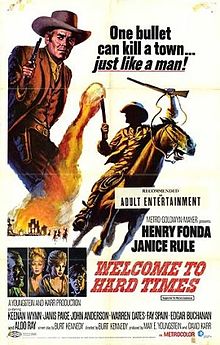
Film Review: Welcome to Hard Times (1967, directed by Burt Kennedy)


220px-WelcomehardtimesWelcome to Hard Times is a western that used to frequently turn up on TV when I was a kid.  I remembered that I had always enjoyed it but otherwise, I had largely forgotten about it when I saw that it was airing on TCM earlier today.  I rewatched it to see if I would still enjoy it.  Welcome To Hard Times has its flaws but it is still an above average addition to the genre.

Based on a novel by E.L. Doctorow, Welcome to Hard Times takes place in the small western settlement of Hard Times, Nevada.  When the mysterious Man From Bodie (Aldo Ray) shows up, he terrorizes everyone in the town.  When the town founder, Mr. Fee (Paul Birch), attempts to stand up to him, the Man from Bodie shoots him dead.  When the local undertaker, Mr. Hansen (Elisha Cook, Jr.) tries to stop the Man from stealing one of his horses, the Man silently guns him down.  As the town’s mayor, Will Blue (Henry Fonda), stands by and helplessly watches, The Man rapes and murders Fee’s girlfriend and also kills the local saloonkeeper, Avery (Lon Chaney, Jr.).  The Man burns down the town and finally leaves.

Thought most of the surviving townspeople abandon Hard Times, Will Blue stays behind and tries to rebuild.  He adopts Fee’s son, Jimmy (Michael Shea).  Also staying behind is Jimmy’s mother, Molly Riordan (Janice Rule), a former saloon girl who was also raped by the Man and who constantly taunts Will for not being able to stand up to him.  New settlers arrive and the town starts to rebuild.  Zar (Kennan Wynn) and his four girls reopen the saloon and serve the workers at a nearby mine.  Isaac Maple (John Anderson) reopens the general store.  Under Will’s leadership, Hard Times starts to thrive.

A drifter named Leo Jenks (the great Warren Oates) also moves in.  When Molly discovers that Leo is a crack shot, she gets him to teach Jimmy how to handle a shotgun.  Both she and Will know that the Man is going to return in the spring.  Molly is obsessed with vengeance and Will fears that Jimmy is going to be consumed by her hatred.

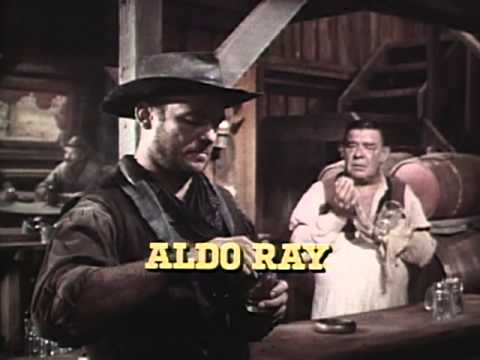
Aldo Ray  Welcome to Hard Times (1967)Of course, the Man does eventually return.

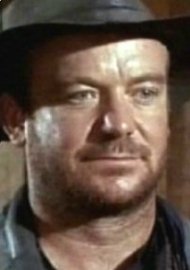
Welcome to Hard Times works best at the beginning and the end, when Aldo Ray is on-screen.  As the sadistic Man from Bodie, Ray gives a classic western bad guy performance.  He’s intimidating, he’s violent, and he guns down the citizens of Hard Times with even more casual arrogance than Lee Marvin, Jack Palance, and Lee Van Cleef combined!  The middle section of the film drags and it is hard to ignore Jane Rule’s shaky Irish accent.  It is obvious that Welcome to Hard Times is trying to say something about Will Blue’s humanistic approach but it does not seem to know what.

Director Burt Kennedy was best known for directing comedic westerns.  Welcome to Hard Times was a rare dramatic film for him.  It’s not a great western but, thanks to Aldo Ray’s performance and the excellent work of cinematography Harry Stradling, Jr., it’s still a worthy addition to the genre.


Aldo Ray

4 Shots From 4 Films: Fahrenheit 451, The Illustrated Man, The Martian Chronicles, Something Wicked This Way Comes


Happy birthday, Ray Bradbury.

4 Shots From 4 Films

Fahrenheit 451 (1966, directed by Francois Truffaut)

Fahrenheit 451 (1966, directed by Francois Truffaut)

The Illustrated Man (1968, directed by Jack Smight)

The Illustrated Man (1968, directed by Jack Smight)

The Martian Chronicles (1980, directed by Michael Anderson)

The Martian Chronicles (1980, directed by Michael Anderson)

Something Wicked This Way Comes (1983, directed by Jack Clayton)

Something Wicked This Way Comes (1983, directed by Jack Clayton)


The Fourth Annual Academy Awards: 1917


Lisa and I continue to reimagine the Oscar history, one year at a time. Today, we look at 1917. The U.S. enters World War I, the Pickfords take over Hollywood, and, for the first time, the entire membership of the Academy gets to vote.

Jedadiah Leland's avatarThrough the Shattered Lens Presents The Oscars

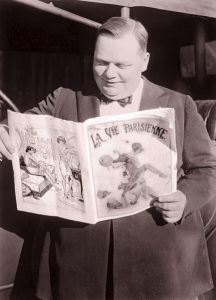
The host of the 4th Annual Academy Awards, Roscoe "Fatty" Arbuckle The host of the 4th Annual Academy Awards, Roscoe “Fatty” Arbuckle

On March 4th, 1917, President Woodrow Wilson took the oath of office and began his second term of President.  Just a few months earlier, he had run for reelection on a platform of maintaining American neutrality in the war that was ravaging Europe.  His slogan was “He Kept Us Out Of War,” and it was enough to allow him to survive one of the closest elections in U.S. History.

One month later, the U.S. declared war on Germany and entered into what would come to be called World War I.

Whereas the previous year had been dominated by films, like the Award-winning Civilization, that promoted neutrality and world peace, 1917 saw the release of several films that were designed to support the American war effort.  The pacifism of Civilization was forgotten as the box office embraced…

View original post 1,241 more words

4 Shots From 4 Films: Walkabout, Don’t Look Now, The Man Who Fell To Earth, Insignificance


Happy birthday, Nicolas Roeg.

4 Shots From 4 Films

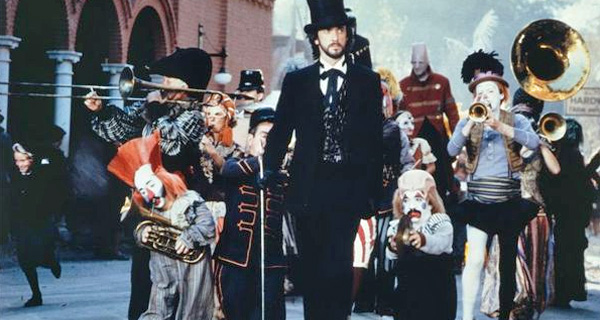
Walkabout (1971, directed by Nicolas Roeg)

Walkabout (1971, directed by Nicolas Roeg)

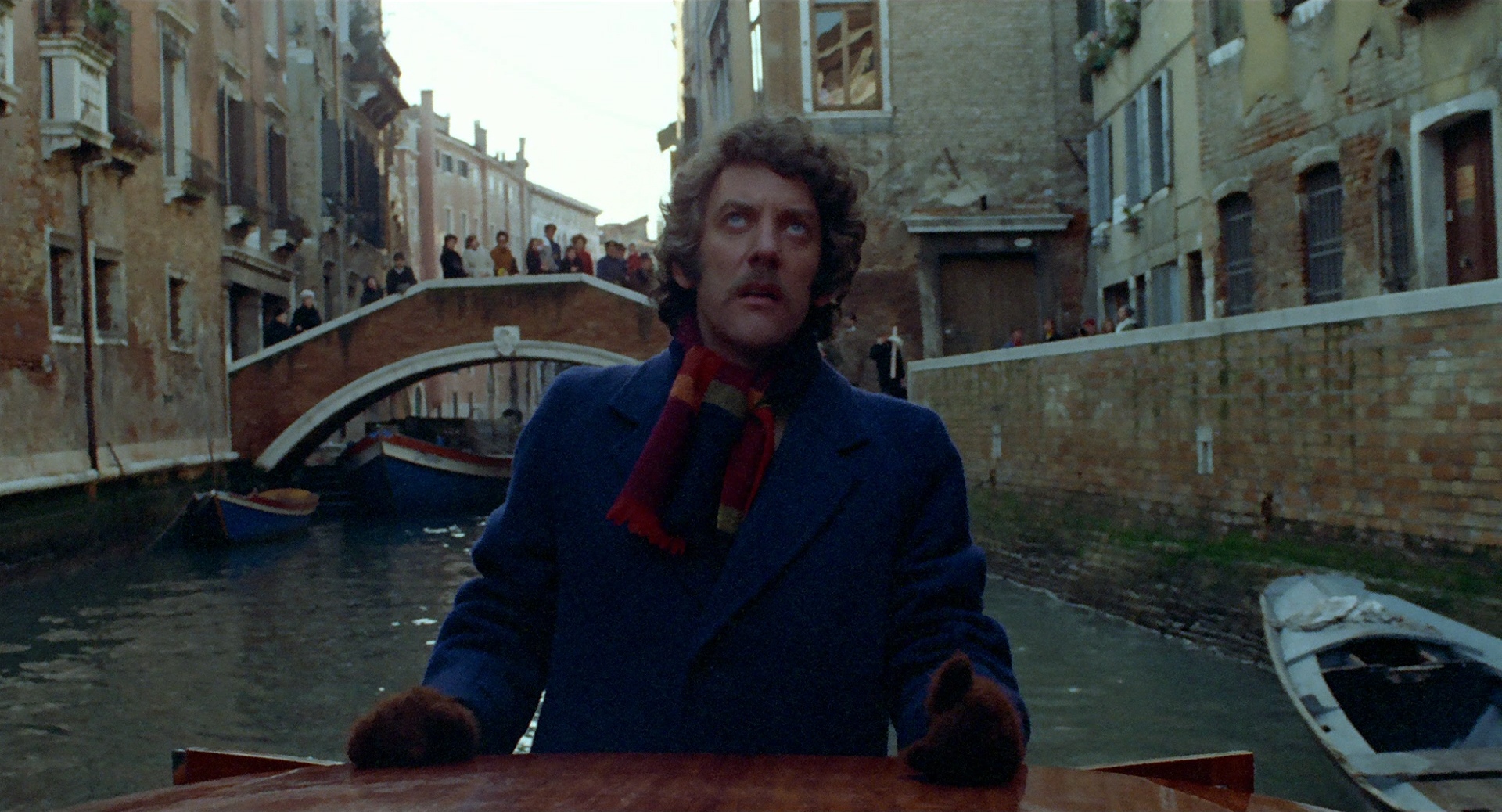
Don't Look Now (1973, directed by Nicolas Roeg)

Don’t Look Now (1973, directed by Nicolas Roeg)

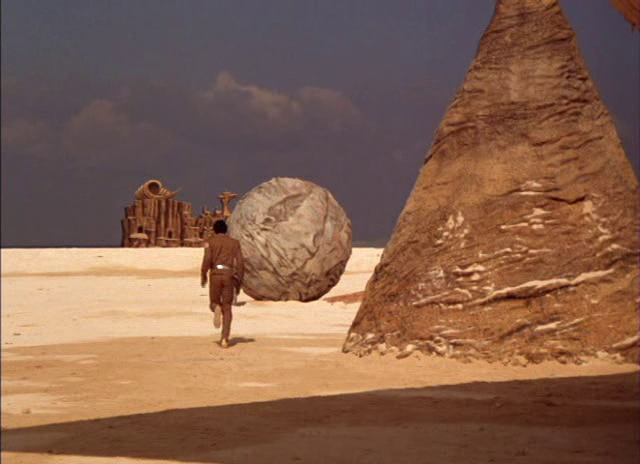
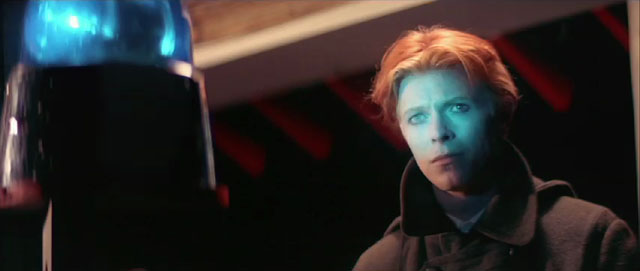
The Man Who Fell To Earth (1976, directed by Nicolas Roeg)

The Man Who Fell To Earth (1976, directed by Nicolas Roeg)

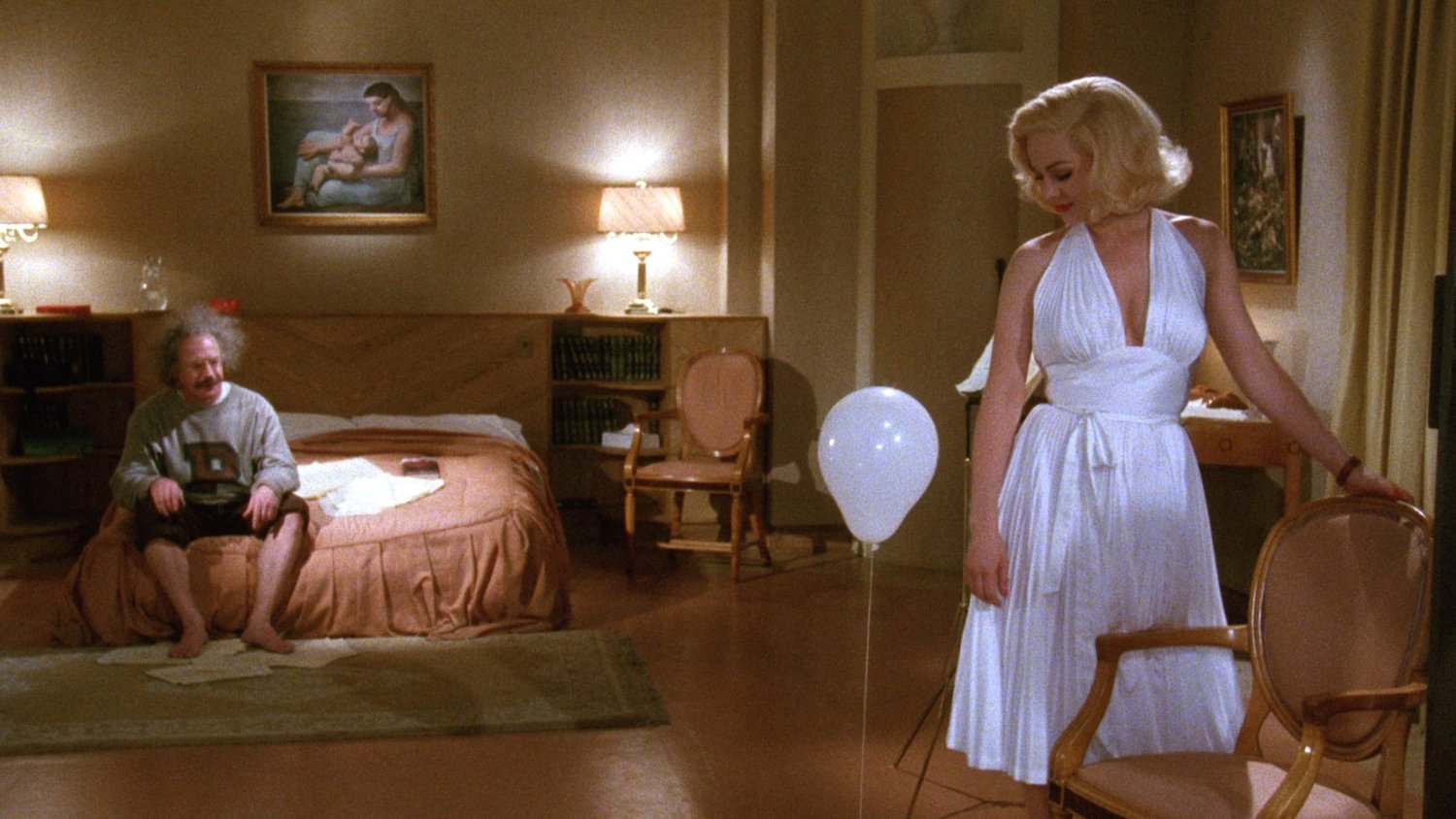
Insignificance (1985, directed by Nicolas Roeg)

Insignificance (1985, directed by Nicolas Roeg)

The Second Annual Academy Awards: 1915


Continuing to reimagine Oscar history one year at a time, LMB and I take a look at what 1915 could have been.

Jedadiah Leland's avatarThrough the Shattered Lens Presents The Oscars

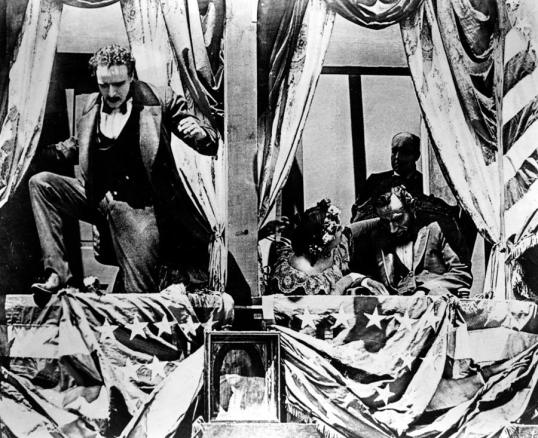
John Wilkes Booth (Raoul Walsh) flees after shooting Abraham Lincoln in D.W. Griffith's Birth Of A Nation John Wilkes Booth (Raoul Walsh) flees after shooting Abraham Lincoln in D.W. Griffith’s Birth Of A Nation

The second annual Academy Awards were handed out on January 20th, 1916.  For the second and final time, the ceremony took place in the Empire Room of the Waldorf Hotel in New York City.  Just as in the previous year, the awards were handed out after dinner and a speech from Academy President Mack Sennett.  Again, the winners were announced before the actual ceremony and were given certificates of achievement.  According to contemporary reports, the winners who were present all gave brief acceptance speeches but nobody bothered to record what anyone said.

As in the previous year, winners were selected by a jury of distinguished citizens.  The 1915 jury consisted of:

  1. Harry Chandler, businessman
  2. Owen McAleer, former mayor of Los Angeles, California
  3. Ellery Sedgwick, publisher of…

View original post 794 more words

Face Front, True Believers! The New Fantastic Four Is As Bad As The Old Fantastic Four!


FFFace front, true believers!

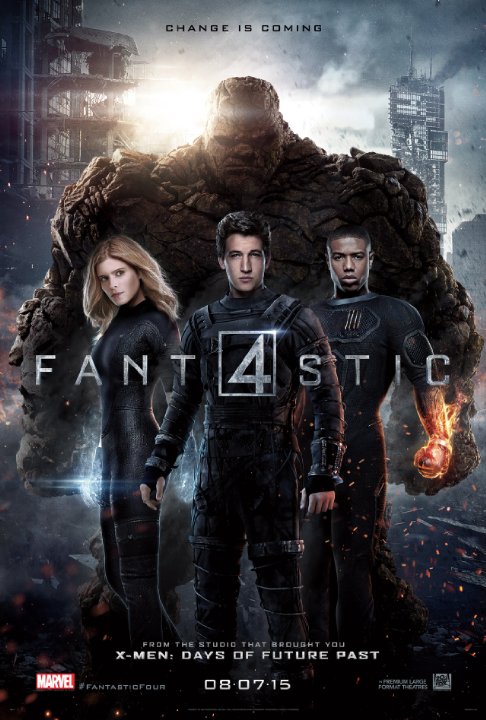
This is the one you’ve been waiting for!  There’s a new Fantastic Four movie out, looking to cash in on this cozy crazy comic book fad!  It’s been getting terrifyingly terrible reviews and the ravenous reviewers at Rotten Tomatoes have given it a scintillating score of 9%.  But don’t let my manic misplaced modifiers put you off, pilgrim!  The ancient prophecy is true!  Fantastic Four is as boldly bad as everyone says!  Not even the merriest members of the Merry Marvel Marching Society will find much to marvel at here!

This is the latest attempt to start a Fantastic Four film franchise.  This time Reed Richards (Miles Teller) and Ben Grimm (Jamie Bell) are both unlikely teenagers.  Dr. Franklin Storm (Reg E. Cathey) recruits Reed to help work on a “Quantum Gate” that will transport explorers to the Negative Zone.  Instead of being transformed by gamma rays, Reed and his friends become super human as a result of going to Planet Zero and getting splashed by green goo.  Reed has the power to stretch.  Ben develops a rock-like hide.  Dr. Storm’s son, Johnny (Michael B. Jordan), becomes a human torch while his adopted daughter, Sue (Kate Mara), is given the power of invisibility.

Doctor-DoomIt takes over an hour for Reed and friends to become fantastic and, even after they do, there’s no sense of wonder or excitement to Fantastic Four.  It’s obvious that a lot of money was spent on special effects but there is not a single scene that can match the power or imagination of a Jack Kirby illustration.  Worst of all is what is done to Dr. Doom (Toby Kebbell).  One of Marvel’s most complex and iconic characters is reduced to being just another vaguely motivated movie bad guy.  Fantastic Four feels like a throwback to the worst comic book movies of the 90s.  Nuff said?

This version of Fantastic Four was directed by Josh Trank, who previously directed the excellent ChronicleFantastic Four is so joyless and rudimentary in its approach that it feels like the anti-Chronicle.  After the initial negative reviews came out, Trank tweeted, “A year ago I had a fantastic version of this. And it would’ve received great reviews. You’ll probably never see it. That’s reality though.”  (He later deleted the tweet.)  Perhaps studio interference explains why Fantastic Four feels so disjointed.  It seems to be missing key scenes.  For instance, do you remember all of those cool moments from the trailer?  Most of them are not in the actual movie.

fant_fourIf you count the never released Roger Corman-produced 1994 film, this is the fourth attempt to reboot The Fantastic Four.  When I was growing up and reading comics, I never really cared about The Fantastic Four.  The only time I ever read Fantastic Four was if they were doing a crossover with the X-Men or Spider-man.  I knew they were important to the history of the Marvel Universe but they also seemed old-fashioned and almost corny.  It’s hard to take seriously a scientific genius who can not come up with a better name than Mr. Fantastic.  As characters, the Thing, the Human Torch, the Invisible Woman, and Mr. Fantastic all feel like they still belong in 1961 and maybe that is why all the recent film adaptations of The Fantastic Four have failed.   Perhaps the fifth attempt should take a retro approach and set the story in the 1960s.

Perhaps then the flashy, fulsome, and far-out Fantastic Four will get the marvelous movie masterpiece that they deserve!

Excelsior!

031611_ff


In Praise of Seinfeld’s Joe Bookman


BookmanLt. Joe Bookman is a cop.  He works for the New York Public Library, helping to track down delinquents who vandalize books and fail to pay their late fees.  Yes, the library cop is named Bookman but he has already heard all the jokes.

1971.  That was Bookman’s first year on the job.  Bad year for libraries.  Bad year for America.  Hippies burning library cards.  Abbie Hoffman telling everyone to steal books.  Bookman doesn’t judge a man by the length of his hair or the type of music that he listens to.  Rock and roll was never his bag.  But he’ll make sure you put on a pair of shoes before you step into the New York Public Library, fella!

You know that little stamp, the one that says “New York Public Library?”  That may not mean anything to you but it means a lot to Joe Bookman.   One whole hell of a lot.  Why would Bookman make such a big stink over old library books?  Here’s a hint, junior.  Maybe we can live without libraries, people like you and me.  Sure, we’re too old to change the world.  But what about that kid, sitting down, opening a book, right now, in a branch at the local library and finding drawings of pee pees and wee wees on The Cat In The Hat and The Five Chinese Brothers?  Doesn’t he deserve better?

Bookman 2Of the many odd characters who appeared on the sitcom Seinfeld, Joe Bookman (played by Philip Baker Hall) remains one of the most popular.  Unlike Kramer’s lawyer Jackie Chiles or Larry David’s impersonation of George Steinbrenner, Mr. Bookman only appeared in two episodes.  He had a cameo in the series finale and, before that, he appeared in the third season episode, The Library.  The scene where Bookman mercilessly grills Jerry Seinfeld about whether or not Seinfeld returned Tropic of Cancer is a classic, with Hall playing the dogged library cop like a modern-day Inspector Javert and Seinfeld obviously struggling not to laugh.

Seinfeld was famously described as being a show about nothing.  What set Lt. Bookman apart from the show’s regular characters was that he believed in something.  Joe Bookman believed in the sanctity of the New York Public Library.  He was an old-fashioned man with a code of honor, the type of man who take a bullet to save a book.

When he first appeared in 1991, Bookman was already angry about the way the world was changing around him.  He is probably even less happy today.  Where is Joe Bookman right now?  Maybe he’s retired and sitting on a beach, drinking a piña colada and reading Henry Miller.  Maybe.  But I like to believe that he is still on the job, collecting fines and searching for overdue books.

Whatever Bookman is doing now, he will always be there in syndication, reminding us to put our shoes on before stepping into the library and to return our books on time.

Book Review: How To Be A Superhero by Mark Edlitz


Who has not wanted to be a super hero?  When I was growing up, I wanted to be an X-Man until I realized that I would rather be the first American to play the Doctor on Doctor Who.  Over the years, many actors and actresses have actually gotten to be super heroes on both the small and big screen.  Some of them, like Hugh Jackman, became stars as a result.  Others, like Adam West and anyone who has ever played Superman, spent the rest of their career dealing with being typecast.  Of course, a few, like George Clooney, were lucky to survive the experience with any sort of career at all.

How To Be A Super HeroIn the new book How To Be A Superhero, Mark Edlitz interviews 30 actors, asking them what it was like to be a hero and how the experience changed (or did not change) their lives and careers.  Edlitz is a good interviewer and all of the conversations are full of interesting tidbits and trivia but what really sets this book apart is the wide variety of people who Edlitz interviews.

While Edlitz interviews everyone who you would expect to be interviewed in a book like this (Adam West, The Adventures of Superman’s Jack Larson, Dean Cain, Clark Gregg, Tom Hiddleston, and others), he also finds the time to speak to and acknowledge some of the lesser known heroes.  John Wesley Shipp and John Haymes Newton (who, in the early 90s, respectively played The Flash and Superboy) both share bittersweet memories of only getting to play their iconic heroes for one season.  Helen Slater reflects on playing the title character in 1984’s Supergirl.  In one of the book’s best interviews, Nicholas Hammond talks about playing Spider-Man on TV in the 1970s and how, as a result of getting into the role, he once tried to foil an actual mugging.  The cast of Roger Corman’s Fantastic Four share their disappointment when they discovered that their movie was never going to be released.  Even Chip Zien, who voiced Howard the Duck, offers up a few less-than-positive memories.

Not everyone that Edlitz interviewd wore a costume.  Leonard Nimoy, in one of his final interviews, assures Edlitz that Spock would win a fight against Kirk.  George Lazenby talks about coming to terms with the experience of briefly being James Bond.  Roger Moore’s memories are much more light-hearted.

Edlitz also speaks with some of the people who worked behind the scenes.  Especially interesting is his interview with screenwriter Tom Mankiewicz, who talks about what it was like to write for both James Bond and Superman.  Among many other stories, Mankiewicz tells how he introduced Sean Connery and Christopher Reeve at a party.  When Reeve asked what he should do if Superman turned out to be a hit, Connery advised him to hire a good lawyer and sue the producers for more money.

Insightful and always enjoyable to read, How To Be A Superhero is a book that belongs in the library of anyone who has ever dreamed of being a hero.

4 Shots From 4 Films: A Clockwork Orange, The Shining, Full Metal Jacket, Eyes Wide Shut


These 4 shots from 4 films are in honor of Stanley Kubrick’s birthday.

4 Shots From 4 Films

A Clockwork Orange (1971, directed by Stanley Kubrick)

A Clockwork Orange (1971, directed by Stanley Kubrick)

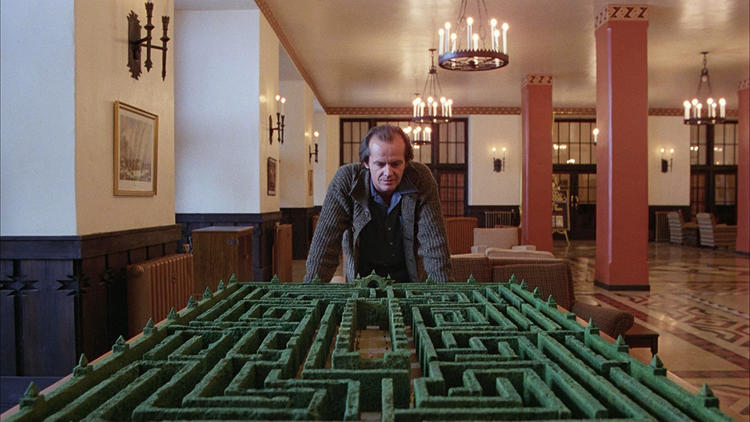
The Shining (1980, directed by Stanley Kubrick)

The Shining (1980, directed by Stanley Kubrick)

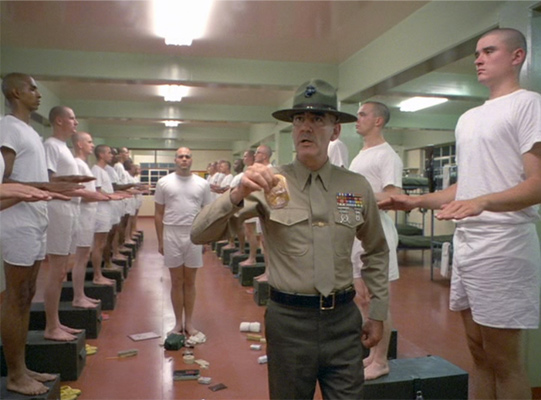
Full Metal Jacket (1987, directed by Stanley Kubrick)

Full Metal Jacket (1987, directed by Stanley Kubrick)

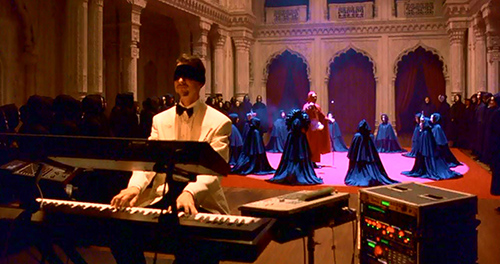
Eye Wide Shut (1999, directed by Stanley Kubrick)

Eyes Wide Shut (1999, directed by Stanley Kubrick)