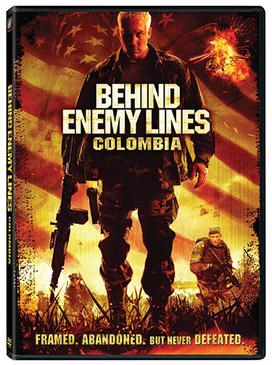
Behind Enemy Lines: Colombia (2009, directed by Tim Matheson)


After 40 years of war, the Colombian military and FARC, the cocaine-funded guerrilla insurgency, are finally meeting to discuss peace.  A group of Navy SEALS, led by Lt. Macklin (Joe Manganiello), have been sent into the Colombian jungle to secretly keep an eye on the peace talks and make sure that things don’t get out of hand.  However, as soon as they arrive, the conference is attacked by yet another group of terrorists.  Led by Alvaro Cardona (Yancy Arias), this third group kills the leaders of the Colombian military and FARC and attempts to frame the entire attack on the SEALS!  Now, Macklin and Carter Holt (WWE superstar Mr. Kennedy) are trapped behind enemy lines.  With the Colombian military, FARC, and Cardona after them and the CIA disavowing any knowledge of their existence, the two SEALS have to rescue a captured comrade and prove their innocence before all of South America plunges into war.

This film, which features Keith David recreating his commanding officer role from Behind Enemy Lines II: Axis of Evil, is a standard action movie.  Some of the action scenes are exciting but all too often, BEL: Colombia is done in by its own low budget.  This is especially obvious when the SEALS are parachuting into the jungle and the cheap green screen effects make the movie look like an old 80s tv show, with the SEALS clumsily superimposed over a picture of the sky.  Watching that scene, I wouldn’t have been surprised if the original Magnum P.I. or Simon and Simon suddenly appeared as a member of the team.  Even Jessica Fletcher wouldn’t have been out of place.

On the plus side, the acting actually isn’t bad and Cardona has a little more depth than the usual action movie villain. This is really not the type of film that you would expect to be directed by Otter from Animal House but Tim Matheson doesn’t do a bad job.  Again, the low budget hurts but he gets some decent performances and he shows that he can adequately handle an action scene.   BEL: Colombia isn’t terrible but it’s still not hard to feel that it would have been better if it had been made in 1988 by Chuck Norris and Menahem Golan.
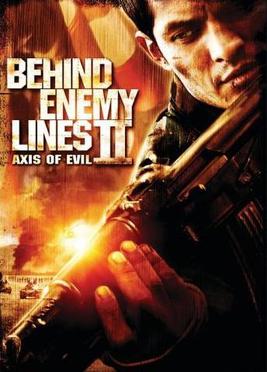
Behind Enemy Lines II: Axis of Evil (2006, directed by James Dodson)


After an intelligence satellite reveals that the North Koreans have built a nuclear missile that can hit anywhere in the world and that they’re currently pointing the missile right at the United States, the President (Peter Coyote) orders a team of Navy SEALs to parachute into North Korea and take out the missile site.  At the last minute, the mission is canceled but two SEALs have already jumped out of the airplane and two more follow because a SEAL leaves no man behind.

While the world sits on the brink of war, the stranded SEALs attempt to reach the missile site and knock it out of commission.  Unfortunately, two of the SEALs get killed by the North Koreans and the two survivors end up getting captured and are forced to undergo extreme torture.  With time running out, the president authorizes a military strike on the missile site, a move that could plunge the world into a nuclear war.  It’s now up to Lt. James (Nicholas Gonzalez) and Master Chief Callaghan (Matt Bushell) to escape from the North Koreans and complete their mission before the stealth bombers show up and do their thing.

Behind Enemy Lines II: Axis of Evil has nothing to do with the previous Behind Enemy Lines film, beyond featuring a Naval officer stranded in enemy territory.  Behind Enemy Lines II: Axis of Evil is one of those films that should be simple and easy to follow but it’s so frantically directed and edited that it’s actually difficult to understand what’s going on from scene to scene.  This isn’t a case where, as in Black Hawk Down, the film is deliberately confusing in order to show what it would be like to be under enemy fire.  Instead, Behind Enemy Lines II feels as if it was edited by someone who was getting paid per jump cut.  It becomes difficult to keep track of who is shooting at who and the overuse of the shaky handheld camera effect didn’t help.  Also, for some reason, there are some fantasy sequences that feel as if they belong in a different movie.

The scenes in Washington D.C., where the President and his advisers debate whether or not to plunge the world into war, are marginally better.  Peter Coyote has the right amount of moral authority to play the president and the great Glenn Morshower (you may remember him as Aaron of the Secret Service on 24) plays the admiral who suggests that maybe it would be a good idea not to hastily destroy the world.  Because this movie was made in 2006, the actress playing the Secretary of State is a dead ringer for Condoleezza Rice.

Behind Enemy Lines II is not a good movie but it made enough money to get a sequel, which I’ll review tomorrow.


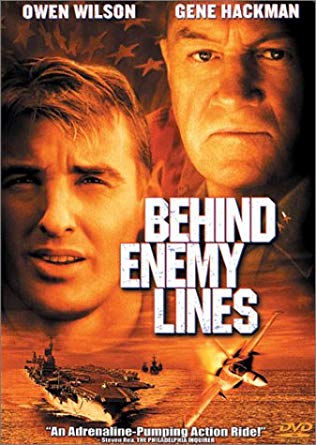
Behind Enemy Lines (2001, directed by John Moore)


When hotshot Navy flight officer Chis Burnett (Owen Wilson) is shot down while doing a reconnaissance mission over Bosnia, he finds himself stranded behind enemy lines.  While Burnett tries to avoid being captured by a Serbian general and find evidence of illegal military operations in yje demilitarized zone, Admiral Leslie Reigart (Gene Hackman) tries to mount a rescue operation.  Standing in his way are the NATO bureaucrats who would rather just leave Burnett to his fate than run the risk of disrupting the peace process.

Behind Enemy Lines was released early in Owen Wilson’s acting career and, after years of watching him in buddy comedies and eccentric character roles, it can be strange to see him playing a traditional leading man, much less an action hero.  Burnett has his goofball moment but, for the most part, this is probably as dramatic a role as you’re ever going to see Owen Wilson perform.  Once you get over the fact that he’s Owen Wilson and still speaking in the same stoner cadences that he’s used in everything from Bottle Rocket to Inherent Vice, Wilson actually gives a decent performance as Burnett.  The fact that he’s not a traditional leading man actually makes the film’s action scenes more exciting.  If Burnett had been played by someone like Brad Pitt or Tom Cruise, you would never have any doubt about his survival.  With Owen Wilson in the role, you’re no longer quite as sure that he’s going to be able to make his way to safety.

Gene Hackman also gave a good performance, even if he didn’t really do anything with the role that he hadn’t already done with all of the other authority figures that he played from Unforgiven on.  Hackman’s intimidating as Reigart.  When Burnett says that he wants to retire from the Air Force, Reigart looks like he’s about to reach over and rip off his face.  But Hackman has so much natural authority that you understand why his men automatically respect Reigart and follow his every order.  Burnett is lucky to have him on his side because there’s no way Reigart’s going to let someone from NATO push him around.

When Behind Enemy Lines first came out, it was not loved by the critics.  They complained that the movie was heavy-handed and predictable.  They were right but it really didn’t matter.  Behind Enemy Lines made a lot of money because it was a legitimate crowd pleaser.  I remember seeing it when it first came out.  This was less than month after 9-11 and the theater was packed with people who, like me, were still dealing with the greatest national trauma of our lifetime.  When Owen Wilson killed the men who were trying to kill him, the audience cheered.  When Reigart said that there was no way he going to abandon an American behind enemy lines, the audience applauded.  By the time the film ended, everyone was on their feet and chanting “USA!  USA!”  (At least, that’s the way I remembered it.)  Critics be damned, at that time, Behind Enemy Lines was the movie that we needed.

Behind Enemy Lines was a huge box office success so, of course, it got a sequel that wasn’t as good.  I’ll review Behind Enemy Lines: Axis of Evil tomorrow.

Cinemax Friday: Dead By Dawn (1998, directed by James Salisbury)


Tim Marsh (Bill Ferrell) makes a lot of money and is married to the sexy and beautiful Wendy (Shannon Tweed) but he still thinks of himself as being a loser.  He’d much rather have the life of his old high school buddy, Don White (Ted Prior).  Don is a former baseball player who is opening his own car dealership and is married to a much younger woman named Kim (Jodie Fisher).

One day, Don lets Tim drive his BMW, which Don brags was a gift from Ed McMahon.  Tim loves the car and, while driving it, feels more alive than he has in years.  Don then offers to allow Tim to sleep with his wife.  Tim says that there’s no way that he would ever cheat on Wendy but Don insists.  Eventually, after a party to celebrate Don’s new business, Tim takes Don up on his offer.  The next morning, after Tim has returned home to Wendy, someone murders Kim in her sleep.

Guess who the police suspect?

Dead By Dawn is typical of the low-budget, erotic thrillers that used to dominate late night Cinemax.  Most of these films had plots that could best be described as neo-noir and Dead By Dawn is no different.  Not much happens in Dead By Dawn.  Since there are only four main characters and one of them dies about an hour into the movie, it’s pretty easy to figure out who is double crossing who.  The main problem with the film is that it asks us to believe that Tim would cheat on Shannon Tweed instead of getting down on his knees every day and thanking God that a loser like him managed to marry … well, Shannon Tweed.

Not surprisingly, Shannon Tweed gives the film’s best performance.  Because of her background as a Playboy playmate and her relationships with Hugh Hefner and Gene Simmons, it’s often overlooked that Shannon Tweed was a fairly good actress who had the ability to be both sexy and believable.  She had a down-to-Earth quality to her that was lacking in most of the other direct-to-video vixens of the 90s.  She was the sex symbol who you could imagine running into at the grocery store.

When compared to some of the other films that we all remember from late night Cinemax, Dead By Dawn is fairly tame but aficionados of Shannon Tweed’s film career should enjoy it.

4 Shots From 4 Films: Happy Birthday Walter Hill!


4 Shots From 4 Films is just what it says it is, 4 shots from 4 of our favorite films. As opposed to the reviews and recaps that we usually post, 4 Shots From 4 Films lets the visuals do the talking.

Today is Walter Hill’s birthday!

Can you dig it?

4 Shots From 4 Films

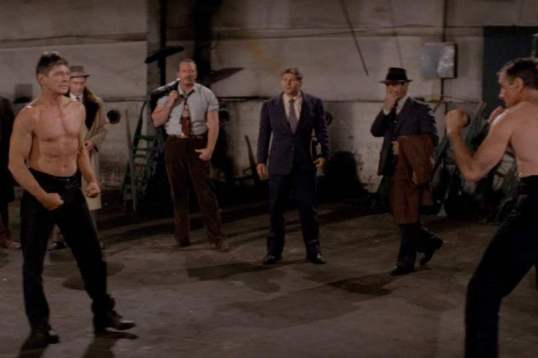
Hard Times (1975, directed by Walter Hill)

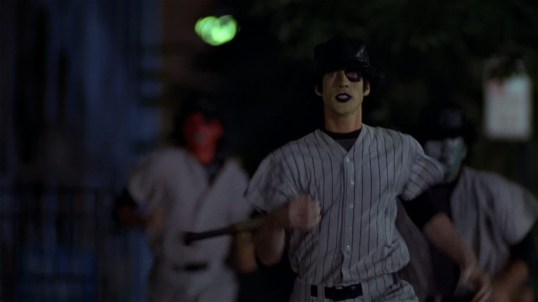
The Warriors (1979, directed by Walter Hill)

The Long Riders (1980, directed by Walter Hill)

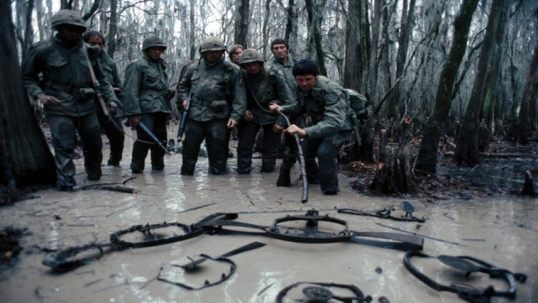
Southern Comfort (1981, directed by Walter Hill)

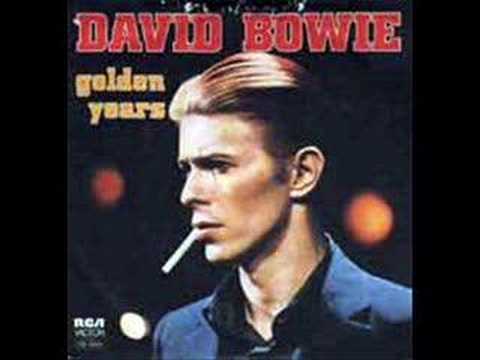
Music Video Of The Day: Golden Years by David Bowie (1975, directed by ????)


Four years ago, at the age of 69, David Bowie died of liver cancer.  Just as how there was no way that we couldn’t highlight a Bowie video on his birthday, there’s also no way that, on this day, we can’t share another video from him.

Golden Years was one of Bowie’s signature tunes.  Angela Bowie claimed that the song was written for her but David never denied or confirmed that claim.  David Bowie did say that he originally tried to give the song to Elvis Presley but Elvis turned it down.  At that time, Elvis probably did not want to be reminded that he was in his “golden years.”

In 1975, in the days before MTV, music videos were often simply performance clips.  The video for Golden Years was taken from Bowie’s performance on Soul Train.  Bowie appeared on the show on November 4th, 1975 and he performed both Golden Years and Fame.  Bowie was only the 2nd white artist to ever appear on Soul Train.  (The first was Elton John.)  A lifelong fan of American R&B, Bowie was a huge Soul Train fan and was reportedly so nervous about appearing on the show that he actually got a little drunk before his performance.

David Bowie, R.I.P,

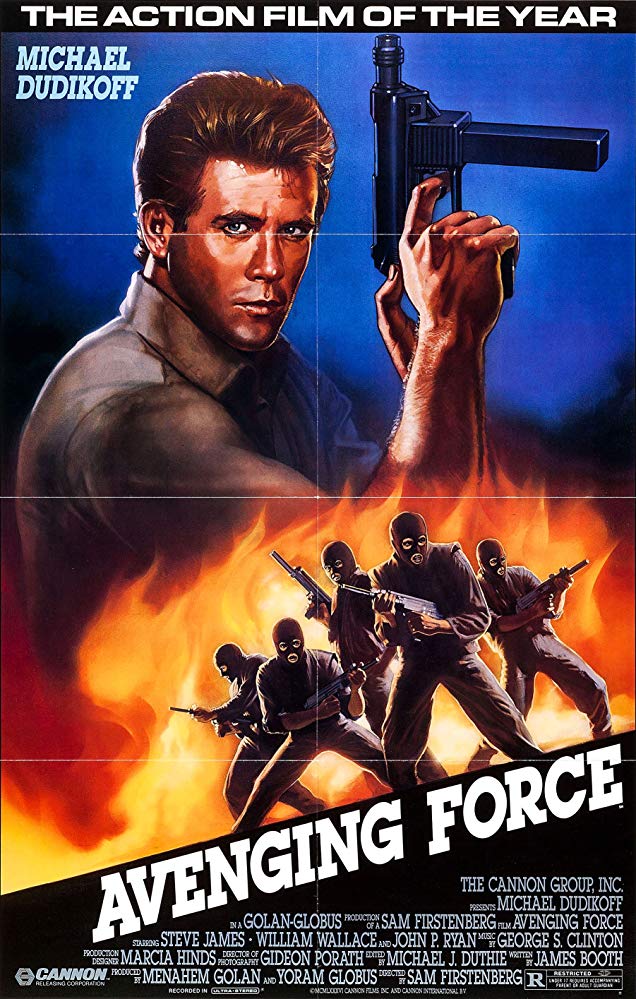
Avenging Force (1986, directed by Sam Firstenberg)


If you think this year’s elections are messed up, just watch Avenging Force and see what happens when two martial artists run against each other for a seat in the U.S. Senate.

Steve James plays Larry Richards, a former military commando who is now running for the Senate in Louisiana.  His opponent is Wade Delaney (Bill Wallace), who is described as being “the South’s youngest senator” and who is also secretly one of the world’s greatest martial artists.  Wade is a member of Pentangle, a Neo-Nazi cult that is made up of wealthy businessmen and other politicians.  When Larry and his family are invited to ride a float in the most sedate Mardi Gras parade of all time, the Pentangle attempts to assassinate him.  While Larry escapes injury, his oldest son does not.

Larry’s best friend, Col. Matt Hunter (Michael Dudikoff), is also in town and Hunter just happens to be another one of the world’s greatest martial artists.  (This film leave you wondering if there’s anyone in Louisiana who isn’t secretly a ninja.)  Matt tries to protect Larry and the remaining members of his family from Pentangle.  Matt fails miserably.  With Larry and the entire Richards family now dead, Matt goes deep into the Louisiana bayou, seeking both to rescue his sister (who has been kidnapped and is set to be sold at some sort of Cajun-run sex auction) and avenge Larry’s death.

As you probably already guessed, Avenging Force is a Cannon Film and it’s crazy even by that company’s fabled standards.  It’s not often that you come across a movie about a U.S. Senator who is also a neo-Nazi ninja who spends his spare time stalking people through the bayous.  What makes this plot point even more memorable is that no one in Avenging Force seems to be shocked by it.  Matt isn’t surprised in the least when an elected official suddenly lunges out of the fog and attempts to drown him in swamp water.  Of course, Senator Delaney isn’t the only villain in the film.  In fact, he’s not even the main bad guy.  That honor goes to Prof. Elliott Glastenbury (John P. Ryan), who lives in a huge mansion and who sees himself as a real-life version of The Most Dangerous Game‘s General Zaroff.  He not only wants to secretly rule the world but he also wants to hunt human prey in the bayou.  When Matt shows up at Glastenbury’s mansion, he is greeted by a butler who complains that Matt hasn’t bothered to wipe the blood off his shirt before showing up.

Avenging Force was originally planned as a sequel to Invasion U.S.A., with Chuck Norris reprising the role of Matt Hunter.  When Norris declined to appear in the film, the connection to Invasion U.S.A. was dropped and Michael Dudikoff of the American Ninja films was cast in the lead role.  (Of course, they didn’t bother to change anyone’s name in the script so the hero of Avenging Force is still named Matt Hunter, even if he’s not meant to be the same Matt Hunter from Invasion U.S.A.)  What Dudikoff lacked in screen presence, he made up for in athleticism and Avenging Force features some Cannon’s best fight scenes.  The plot may be full of holes but the idea of ninjas in the bayou is so inherently cool that it carries the film over any rough patches.

The critics may not have loved Avenging Force when it was first released but it holds up well as a fast-paced and weird action film.  It is perhaps the best Cajun ninja film ever made.

4 Shots From 4 Films: Happy Birthday Lee Van Cleef!


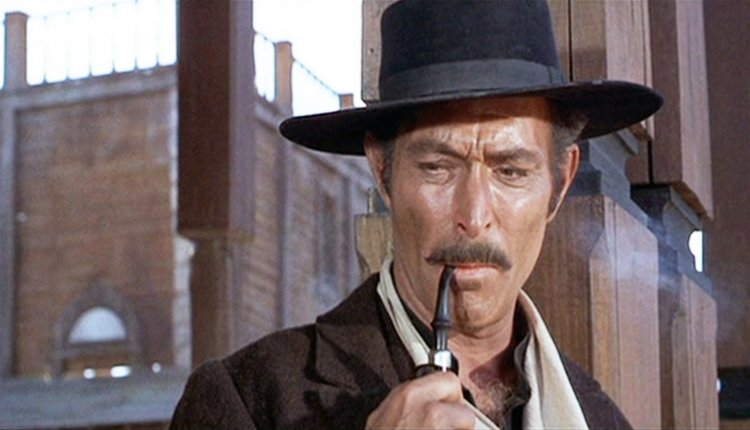
Lee Van Cleef in The Good, The Bad, and the Ugly

4 Shots From 4 Films is just what it says it is, 4 shots from 4 of our favorite films. As opposed to the reviews and recaps that we usually post, 4 Shots From 4 Films lets the visuals do the talking.

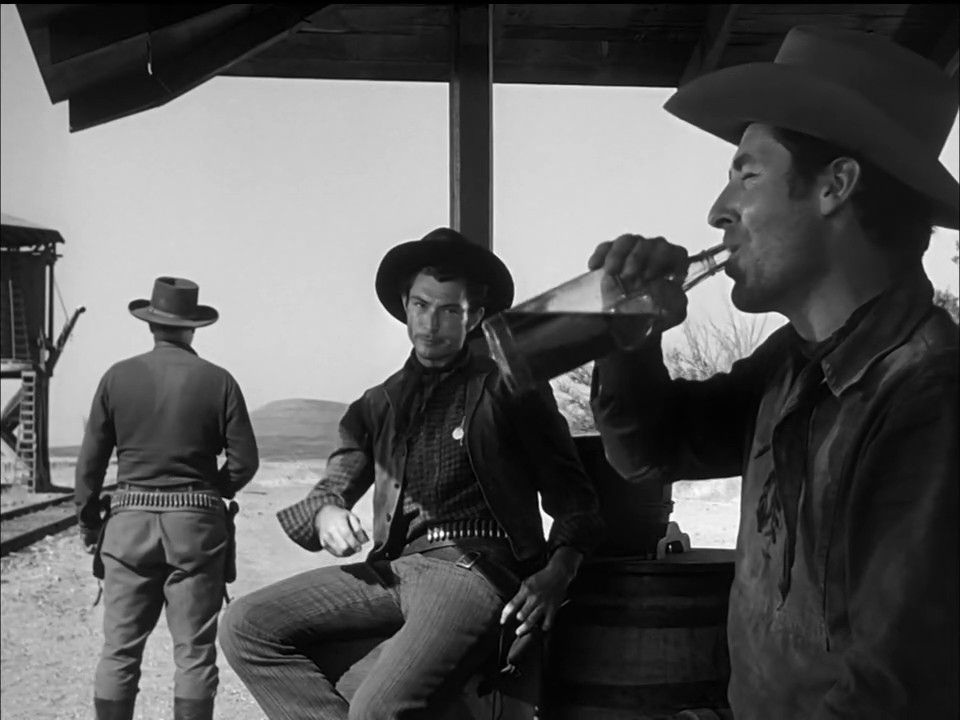
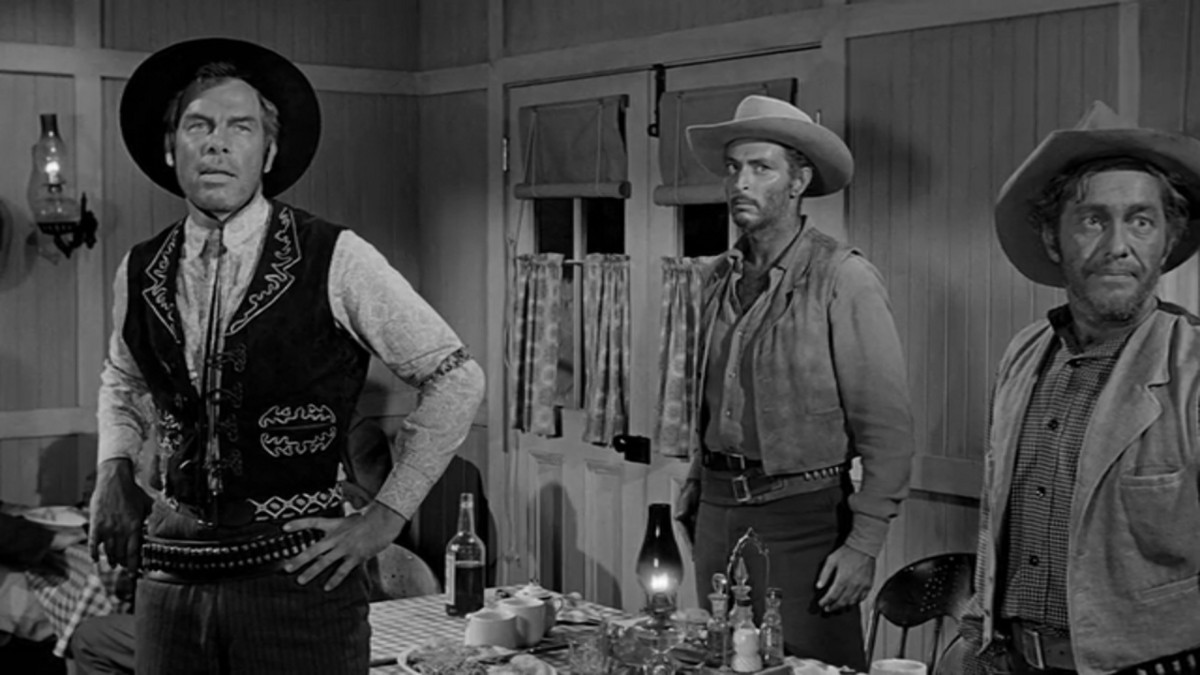
Today is the 95th birthday of the great, late Lee Van Cleef!  Van Cleef got his start playing western outlaws in Hollywood westerns like High Noon and The Man Who Shot Liberty Valance.  In the 1960s, Van Cleef did what many American actors of the time.  He went overseas to find better roles and bigger paychecks.  A series of roles in Spaghetti westerns made Van Cleeef one of the biggest stars in Europe and it also made him a timeless film icon.

In honor of the career and legacy of Lee Van Cleef, here are 4 shots from 4 films.

 4 Shots From 4 Lee Van Cleef Films

High Noon (1952, directed by Fred Zinnemann)

The Man Who Shot Liberty Valance (1962, directed by John Ford)

For A Few Dollars More (1965, directed by Sergio Leone)

Sabata (1969, directed by Gianfranco Parolini)


Music Video Of The Day: I Can’t Dance by Genesis (1992, directed by Jim Yukich)


“It’s not about being unable to dance.  It’s about guys that look good but can’t string a sentence together. Each verse is a piss-take at the scenario of a jeans commercial. It was good fun, but the audience thought, ‘What does he mean that he can’t dance?’ They didn’t see the humor, and it killed the fun.”

— Phil Collins on I Can’t Dance

Ok, Phil.  Whatever you say.

Tony Banks, Genesis’s keyboardist, has said that the song actually came about because he and Mike Rutherford were fooling around with various sounds in the recording studio and Phil, hearing what they were doing, suddenly sang out, “I can’t dance!” The song started out as an improvised joke but then went on to become one of the band’s biggest hits.  It was also nominated for a Grammy.

The end of the video is meant to be a parody of the original ending of Michael Jackson’s video for Black or WhiteBlack or White originally ended with Michael Jackson’s dancing erratically and destroying a car.  I Can’t Dance ends with Tony and Mike dragging Phil away before can do too much damage.

Enjoy!