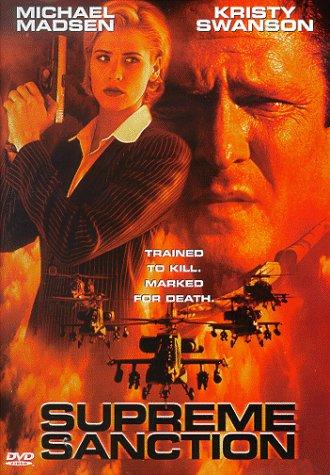
Cinemax Friday: Supreme Sanction (1999, directed by John Terlesky)


Jordan McNamara (David Dukes) is a world-renowned news reporter who is investigating why some U.S. Army helicopters were mysteriously shot down.  The sinister Director (Ron Perlman) doesn’t want McNamara to uncover the answers.  So, he dispatches Dalton (Michael Madsen) to take care of the problem.

Dalton leads a group of assassins but everyone knows that his best sniper is Jenna (Kristy Swanson).  Jenna has killed a countless number of people for Dalton but, when it comes to McNamara, she can’t bring herself to pull the trigger.  It’s because Dalton foolishly orders Jenna to take the shot while McNamara is on a beach with his daughter.  Jenna is not willing to kill a man in front of his daughter.  When Jenna refuses to pull the trigger, she becomes a target herself and she’s forced to go on the run with McNamara and her only friend, a hacker named Marcus (Donald Faison).

Supreme Sanction doesn’t feature any nudity or, for that matter, any sex but the presence of Michael Madsen and Kristy Swanson in the cast makes this feel like a late night Cinemax film nonetheless.  The movie starts out slow and David Dukes (a good actor who is strangely bland here) really isn’t believable as world-renowned journalist but things pick up once Jenna and McNamara go on the run.  The first time you see Kristy Swanson behind a sniper rifle, your instinct might be too laugh but she gives a surprisingly natural performance and, by the end of the movie, she’s actually a credible action heroine.  Meanwhile, in the role of Marcus, Donald Faison gets all of the good lines.  He’s a hacker and, since this movie was made in 1999, that means that he’s the comic relief who can do just about anything.

Not surprisingly, the movie is stolen by Michael Madsen.  Madsen gives a standard Madsen performance here, delivering all of his lines in a threatening whisper and smirking whenever anyone tries to talk back to him but, even if he doesn’t do anything new, he’s still entertaining to watch.  Madsen is one of the few actors who can easily switch between appearing in B-movies and major productions and that’s because it’s hard to think of anyone who can play a smug, overconfident villain as well as he can.

Supreme Sanction is an unapologetic B-movie and it’s pretty damn entertaining.

Isle of Dogs (2010, directed by Tammi Sutton)


No, this is not the slow-moving Wes Anderson film from a few years back.

Instead, this is a film about a London crime boss named — don’t laugh — Darius (Andrew Howard).  Darius has an anger problem and it is not helped by all of the cocaine that he snorts at his club.  He also has a Russian wife named Nadia (Barbara Nedeljakova), a former prostitute who Darius says that he rescued.  Darius is insanely jealous.  When he suspects Nadia is having an affair, he takes the man who he suspects was her lover out to the countryside and, after a lot of yelling, eventually gets around to executing him.  The only problem is that Darius got the wrong guy!

Instead, Nadia’s lover is a low-level hood named Riley (Edward Hogg).  Nadia is waiting for Riley to show up at Darius’s country estate and take her away from her life as the trophy wife of an abusive psycho.  When a masked intruder shows up with a knife, things start to get more complicated.

Unfortunately, just because things get more complicated, that doesn’t mean that they get any more interesting.  For a film featuring frequent violence, graphic gore, and more than a little sex, Isle of Dogs is a remarkably dull affair.  A huge part of the problem is that the characters are never that interesting so you really don’t care when they lose a limb or are forced to commit a murder.  Darius, Nadia, and Riley are all stereotypes who will be easily recognized from other, better British gangster films.  At first, it seems like Andrew Howard’s energetic cursing might make bring some life to Darius but after a while, even Darius’s temper gets old.  I was hoping that the film would at least make good use of London but instead, the majority of the film takes place at Darius’s country estate, which looks like every other country estate.

There are some twists to the plot.  The film makes liberal use of flashbacks and flashforwards, though they don’t add up too much.  For some reason, there’s a scene of a naked Darius practicing his golf swing.  Someone loses an arm and barely flinches.  The film probably would have been better if Wes Anderson had directed it.  At least he would have brought along Bill Murray.

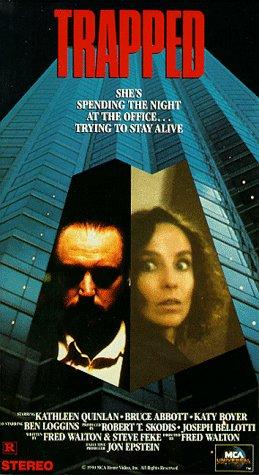
Trapped (1989, directed by Fred Walton)


A man (Ben Loggins) leaves his home one day, thinks about how his life has recently gone wrong, and then goes to an unfinished office building where he kills not only the people who he considers responsible but also anyone else who gets in his way.  Trapped in the building with him and trying to survive through the night until the doors automatically unlock in the morning are the building’s manager, Mary Ann Marshall (Kathleen Quinlan), and a corporate spy who is only willing to say that May Ann should call him John Doe (Bruce Abbott).

Trapped was produced for and originally aired on the USA network and it went on to become a USA mainstay for most of the 90s.  It’s a surprisingly violent and gory for a made-for-TV film from 1989 and the nearly-empty office building is an appropriately creepy setting.  Director Fred Walton does a good job of creating and maintaining a sense of suspense and he’s helped by three excellent lead performances from Kathleen Quinlan, Bruce Abbott, and especially Ben Loggins.  Loggins is credited as simply being “The Killer” and the film keeps his motives murky.  If you pay attention, you can discover what has driven him over the edge but the film is smart enough to concentrate on the cat-and-mouse game that he plays with Quinlan and Abbott.  One thing that sets Trapped‘s Killer apart from other psycho move stalkers is that Trapped‘s Killer is ambidextrous, carrying a dagger in one hand and a baseball bat in the other, making him even more intimidating than the typical movie psycho.  Kathleen Quinlan, an underrated actress who is probably best-known for playing Tom Hanks’s wife in Apollo 13, is also a feisty and likable heroine.

Don’t let its origin as a made-for-TV film scare you off.  Trapped is a good and suspenseful thriller.

Favorite Son (1988, directed by Jeff Bleckner)


During a reception on the steps of U.S. Capitol, an assassin kills Contra leader Col. Martinez (Geno Silva) and seriously wounds Sen. Terry Fallon (Harry Hamlin), an up-and-coming politician from Texas.  An eager media catapults Fallon to national stardom and the beleagued President (James Whitmore), who is facing a tough reelection bid, is pressured to replace the current vice president (Mitchell Ryan) with Fallon.

The FBI only assigns two of their agents to investigate the assassination, a sure sign that someone wants the investigation to just go away.  Nick Mancuso (Robert Loggia) is a crusty, hard-drinking veteran agent whose career is nearly at an end.  David Ross (Lance Guest) is his young and idealistic partner.  When Mancuso and Ross discover that Martinez was injected with the HIV virus just two days before the assassination, it becomes obvious that there is a bigger conspiracy afoot.  It all links back to Sally Crain (Linda Kozlowski), who is Fallon’s legislative aide and also his lover.  (Fallon has a wife but she’s locked away in a hospital.)  Sally has an interest in bondage, as Ross soon finds out.

Favorite Son was originally aired as a 3-night, 4 and a half-hour miniseries.  It was later reedited and, with a running time of less than two hours, released theatrically overseas as Target: Favorite Son.  As a miniseries, Favorite Son is an exciting conspiracy-themed film that is full of scheming, plotting, interesting performances, and pungent dialogue.  Target: Favorite Son, on the other hand, is disjointed and, unless you know the original’s plot, almost impossible to follow.  If you’re going to watch Favorite Son, make sure you see the original miniseries.  My mom taped it off of NBC when it originally aired.  That was the only way that I was able to originally see the film the way that it meant to be seen.  The entire miniseries has also been uploaded, in three parts, to YouTube.

Hopefully, the original miniseries will get an official release someday because it’s pretty damn entertaining.  Harry Hamlin isn’t really dynamic enough for the role of Fallon but otherwise, the movie is perfectly cast.  Robert Loggia is so perfect for the role of Nick Mancuso that it almost seems as if the character was written for him.  (Loggia did later star in a one-season drama called Mancuso, FBI.)  Linda Kozlowski seems to be destined to be forever known as Crocodile Dundee’s wife but her performance as Sally shows that she was a better actress than she was given credit for.  The supporting cast also features good performances from Jason Alexander, Ronny Cox, Tony Goldwyn, John Mahoney, Kenneth McMillian, Richard Bradford, and Jon Cypher.
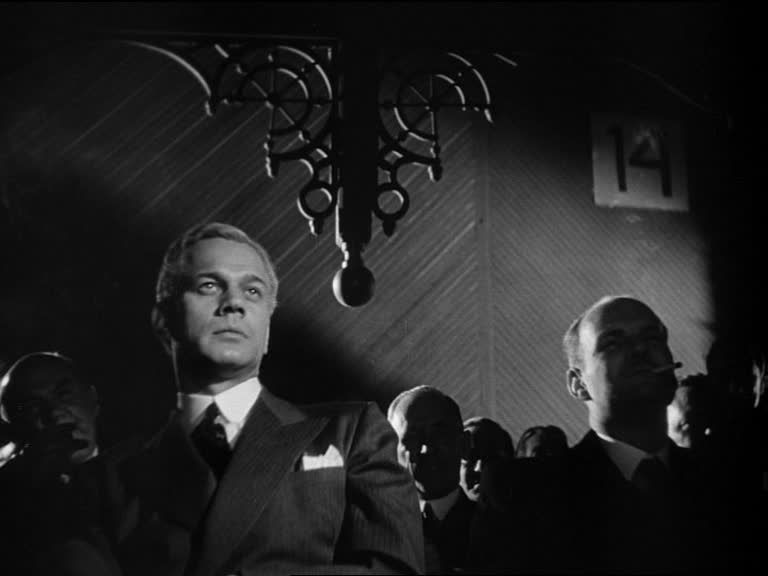
Favorite Son may be over 30 years old but it’s still relevant today.  In the third part, John Mahoney gives a speech about how American voters are often willfully ignorant when it comes to what’s going on behind the scenes in Washington and it’s a killer moment.  Melodramatic as Favorite Son may be, with its portrayal of political chicanery and an exploitative national media, it’s still got something to say that’s worth hearing.


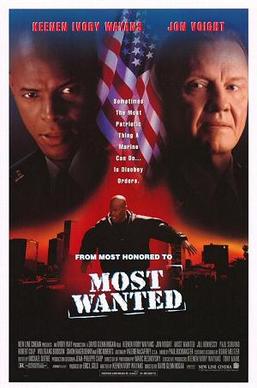
Most Wanted (1997, directed by David Hogan)


James Dunn (Keenan Ivory Wayans) is an army sergeant with a talent for getting framed for crimes that he didn’t commit.

During the Gulf War, Dunn’s superior officer orders Dunn to shoot a shepherd boy.  Dunn refuses and, when the two men get into a fight over a gun, his commanding officer is accidentally shot and killed.  The army refuses to listen to Dunn’s explanation.  He’s convinced of murder and sentenced to death.  However, while Dunn is on his way to Leavenworth, he is rescued by Col. Casey (Jon Voight).  Casey explains that he is giving Dunn a chance to join a super secret vigilante group that targets evil doers.  Yes, Dunn will be expected to assassinate people but they’ll all be bad.  With no other options available to him, Dunn agrees to work for Casey.

Dunn’s first target is the corrupt owner of a pharmaceutical company (played by Robert Culp) but — surprise — it turns out that the target was actually the First Lady and that the entire plan was to set up Dunn as a patsy!  Now a “most wanted” fugitive, Dunn is forced to go on the run with a doctor (Jill Hennessy) who recorded the assassination with a camcorder.  (Remember, Most Wanted was made during the days of the landline phones.)  With Casey and his second-in-command (played by Wolfgang Bodison) determined to kill him and with only Paul Sorvino (as the head of the FBI) doubting the official story, Dunn has to find a way to reveal the truth.

Though he was subsequently overshadowed by his brothers, Damon and Marlon, Keenan Ivory Wayans was a really big deal in the 90s.  As the man behind In Living Color, he proved that black comedians and writers could be just as funny (and, in many cases, funnier) than their white counterparts over at Saturday Night Live.  It can be argued Jim Carrey, Jamie Foxx, David Alan Grier, and Jennifer Lopez would not have the careers that they have today if not for Keenan Ivory Wayans.  (All of them first found fame as members of the In Living Color ensemble, Carrey, Foxx, and Grier as cast members and Lopez as a “fly girl.”)  Most Wanted was Wayans attempt to transform himself into an action hero (perhaps not coincidentally, a year before Most Wanted was released, Damon Wayans had a minor hit with Bulletproof).

Keenan Ivory Wayans not only starred in Most Wanted but he also wrote the script and it’s interesting just how straight the action is played.  It would be natural to expect Wayans to turn the movie into a spoof but there’s little intentional humor to be found in Most Wanted.  Most Wanted takes itself seriously and the end result is an adequate but hardly memorable action movie, with Wayans jumping off of buildings and fighting off the bad guys.  The action scenes are well-shot if not particularly imaginative but, unfortunately, Wayans doesn’t really have the screen presence necessary to be a believable action hero.  Both the character of James Dunn and Wayans’s performance are just too bland to really be compelling.  Far more interesting are Jon Voight and Paul Sorvino, who are both entertainingly hammy in their roles.

There’s one good scene in Most Wanted, where Dunn finds himself being chased by what appears to be the entire population of Los Angeles.  Otherwise, this one is adequate but forgettable.


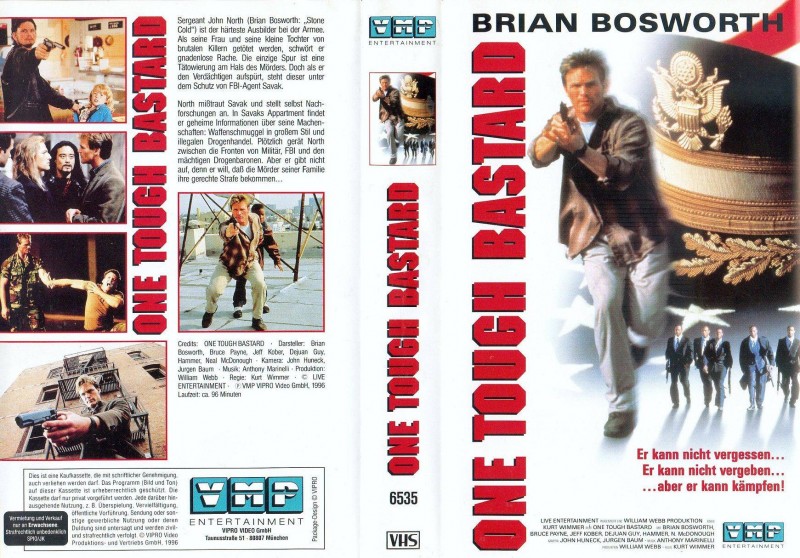
One Tough Bastard (1996, directed by Kurt Wimmer)


When the wife and the daughter of John North (Brian “The Boz” Bosworth) are gunned down by a mysterious gunman (Jeff Kober), North refuses to accept that they were just the victims of a robbery gone wrong.  Working with a tough street kid (DeJuan Guy) who needs a mentor to show him that violence is not the solution to all of the world’s problem, North sets out to discover the truth and get revenge in the most violent ways possible.  What North discovers is that the gunman who killed his family works for a corrupt FBI agent named Karl Slavak (Bruce Payne) and that Slavak is selling guns to a drug lord named Dexter Kane (played by … wait for it … MC HAMMER!)

You would think that any movie featuring M.C. Hammer as a drug lord would be worth seeing but the man who brainwashed a generation into making “U Can’t Touch This” jokes is actually pretty forgettable as Dexter.  This movie was made when Hammer had dropped the M.C. from his name and he was trying to reinvent himself as a harder-edged rapper.  That reinvention didn’t work because there’s absolutely nothing edgy about M.C. Hammer (much like Will Smith, he was the rapper whose music wouldn’t cause your parents to have an aneurysm) and One Tough Bastard proves it.

Instead, One Tough Bastard is worth seeing because of the epic meeting between two action stars who epitomized everything great about straight-to-video movies in the 90s, Brian Bosworth and Bruce Payne!  The Boz may have been a bust as a football player but he was a good action star, delivering one-liners and viscous beat downs with aplomb and, unlike some action stars (*cough* Seagal *cough*), he could play the dramatic scenes without embarrassing himself.  With his long hair and his nosering, Bruce Payne may be an unlikely FBI agent but he’s a great villain and he has no fear of shouting almost all of his dialogue.  Add in Jeff Kober and you’ve got a dumb but fun movie that’s enlivened by three actors who know how to be convincingly tough on camera.

One Tough Bastard lives up to the promise of its title.

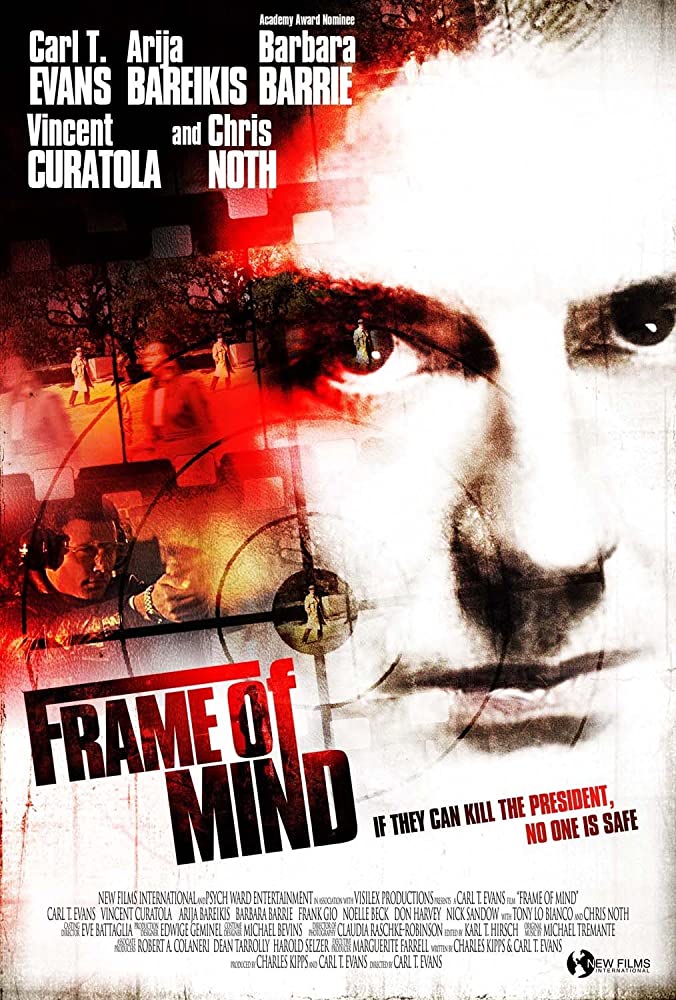
Frame of Mind (2009, directed by Carl T. Evans)


David Secca (Carl T. Evans, who also directed) is a New York cop who has just transferred to a town in New Jersey.  His wife, Jennifer (Arija Bareikis) has a new job as a teacher.  One day, while they’re out antiquing, they purchase a box that contains a roll of film.  Looking at the film reveals pictures of a dangerous looking man who has a gun and who appears to be standing on the infamous grassy knoll in Dallas, Texas.

Convinced that he’s uncovered new evidence in the assassination of John F. Kennedy, Secca carries out his own investigation of the film.  He tracks down the woman (Barbara Barrie) who actually shot the film and discovers that she is now 85 and confined to a nursing home.  He talks to a skeptical conspiracy theorist (Chris Noth).  As Secca investigates, his progress is monitored by people who, after all these years, still don’t want the truth about the Kennedy assassination to get out.  As Secca discovers, these people are still willing to kill to protect the conspiracy.

Frame of Mind is an attempt to make a conspiracy thriller that, unfortunately, is done in by its own low budget.  It’s difficult to make a conspiracy seem convincing when you don’t really have the money to hire more than a few extras.  Probably the most interesting thing about the film is that, despite the low budget, there are a few established actors in the cast.  Along with Barrie and Noth, Tony Lo Bianco, Don Harvey, Vincent Curatola, and even KISS’s Peter Criss all have small roles.  The strangest cameo of all goes to former New York Mayor David Dinkins, who plays a senator.  Being mayor of New York may be a dead end politically (just ask John Lindsay, Rudy Guiliani, Michael Bloomberg, and Bill De Blasio) but it can still serve as a launching pad for a career in the entertainment industry.

Frame of Mind might hold some interest for JFK assassination hobbyists, though it doesn’t really bring anything new to the able.  It’s mostly interesting just to see who shows up in the cast.


“They Might Think I’m A Part Of The Band” Rest in Peace, Fred Willard


Rest in Peace, Fred Willard.  The veteran comedian died, in his sleep, last night.  He was 86 years old.

It’s hard to think of anyone who was as naturally funny as Fred Willard.  Here’s one of my favorite Willard performances, from Rob Reiner’s This is Spinal Tap:

Willard appeared in all of Christopher Guest’s improvised mockumentaries.  Here he is, with Catherine O’Hara, in Waiting for Guffman:

He was also in Best of Show, where his commentary on the dog show proved to be one of the film’s highlights:

Fred Willard, R.I.P.

Cinemax Friday: Student Affairs (1987, directed by Chuck Vincent)


Director Chuck Vincent wasn’t the only director who making hardcore porn in the early 80s but he was one of the few to receive critical acclaim.  A director who put as much emphasis on storylines and characterizations as he did on getting the money shots, Vincent was responsible for some of the final films to come out of porn’s so-called Golden Age.  His best-known adult film, Roommates, was even given a favorable review in The New York Times.

Vincent was also one of the few porn directors to regularly direct “mainstream” films as well.  Of course, Vincent was never hired to direct a big studio film or anything like that.  Instead, he directed B-movies, the majority of which were either neo-noirs or dumb sex comedies.  Though Vincent was an above average director who had a knack for getting good performances out of unlikely actors, his mainstream films never got as much attention as his pornographic films.  (It makes sense when you consider that Vincent was, at the time, the best director working in the porn industry but just one of my many competent directors making B-movies.)  One place where Vincent’s B-movies were popular was on late night Cinemax.

Student Affairs is one of Chuck Vincent’s better B-films.  It opens with a group of actors auditioning for a dumb teen sex comedy called Student Affairs and then it follows them as they go to a high school and shoot the movie.  The film alternates between scenes of the sex comedy that they are filming and scenes of what’s going when the cameras aren’t rolling.  The cast is made up of familiar types.  There’s a centerfold who is worried that she is going to be washed-up at the age of 20.  There’s the intellectual and classically-trained actor who has been typecast as idiot.  There’s a vain male model and there’s another starlet who is convinced that she’s going to be a big star someday.  The film itself is almost plotless but it’s obvious that Vincent had a lot of affection for both his cast and the characters that they play.  When it comes to Student Affairs, both the film and the film-within-the-film are dumb sex comedies with predictable plots but Chuck Vincent’s direction makes this a surprisingly sincere dumb sex comedy.  When Rex (Andy Nichols) complains that he’s never going to have the career that he deserves because his physical appearance has typecast him as a dumb jock, both Vincent and the movie take him seriously.

There have been many great films made about the making of movies.  Francois Truffaut’s Day for Night comes to mind.  So does Richard Rush’s The Stunt Man.  Chuck Vincent was neither Truffaut nor Rush and Student Affairs is hardly a great film.  But, for a dumb sex comedy that was made for little money, Student Affairs is better than most.

Sadly, Vincent died just five years after the release of Student Affairs.  If he had lived longer and directed more films, Vincent and his oeuvre would probably be ripe for rediscovery.  Unfortunately, Vincent died just before directors like Quentin Tarantino and Robert Rodriguez made B-movie cool again.


4 Shots From 4 Films: In Tribute To Joseph Cotten


The Third Man (1949, directed by Carol Reed)

4 Shots From 4 Films is just what it says it is, 4 shots from 4 of our favorite films. As opposed to the reviews and recaps that we usually post, 4 Shots From 4 Films lets the visuals do the talking!

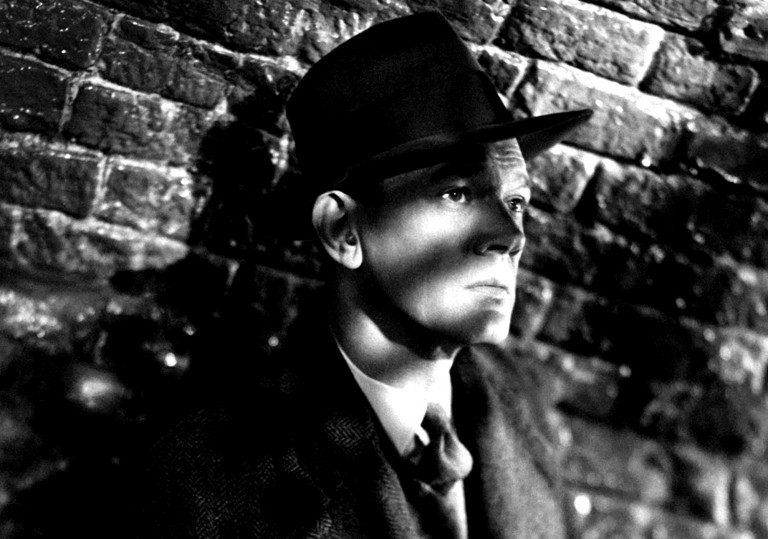
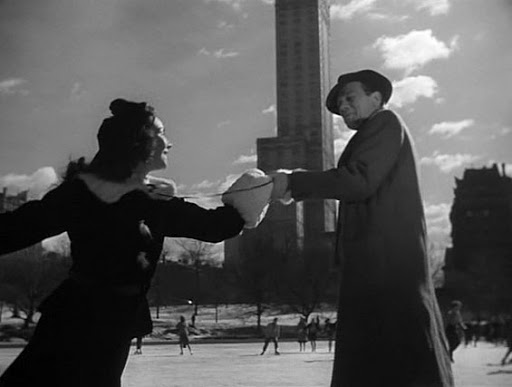
As you can probably guess from my pen name and my profile pic, Joseph Cotten is one of my favorite actors.  Born 115 years ago on this day, Cotten may be best known for his association with Orson Welles but he worked with several great directors over the years.  Along with playing Jedediah Leland in Welles’s Citizen Kane, he starred in Hitchcock’s Shadow of a Doubt and Carol Reed’s The Third Man.  Even while his film career was flourishing, Cotten continued to appear on the Broadway stage and, during the early days of television, he frequently appeared on anthology series, the majority of which were broadcast live.  Cotten even had a memorable cameo in Michael Cimino’s infamous film, Heaven’s Gate.

In honor of Cotten’s birthday, here are four shots from four of his best films.

4 Shots From 4 Films

Citizen Kane (1941, directed by Orson Welles)

Journey Into Fear (1943, directed by Norman Foster and Orson Welles)

Shadow of a Doubt (1943, directed by Alfred Hitchcock)

Portrait of Jennie (1948, directed by William Dieterle)