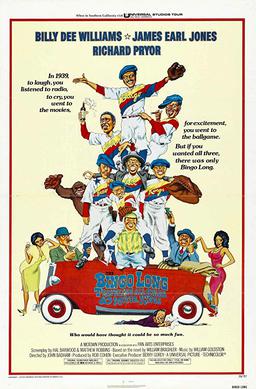
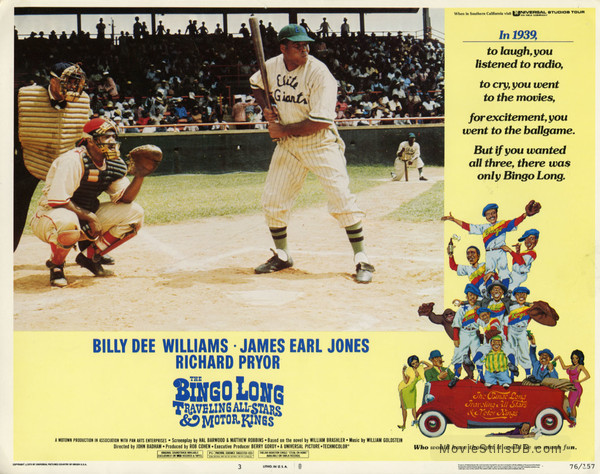
The Bingo Longo Traveling All-Stars & Motor Kings (1976, dir. by John Badham)


Up until 1947, Major League Baseball was segregated. Though there was no written rule barring blacks from playing on major league teams, there was an agreement among the team owners that no blacks would be signed to a major or minor league contract. Instead, starting in the 1920s, black players could only play for the teams in the Negro League. It was in the Negro Leagues that future greats like Jackie Robinson and Willie Mays got their start. Josh Gibson, who spent his entire career playing in the Negro Leagues, is believed to have hit more home runs in a season than Babe Ruth ever did. For that reason, many baseball fans believe that any MLB records set before 1947 should come with an asterisk included. How can you determine who was the best when many of the best players in the game were never allowed to compete against each other?

The Bingo Longo Traveling All-Stars & Motor Kings is a comedy that pays tribute to those players. Billy Dee Williams plays Bingo Longo, a charismatic pitcher who plays in the Negro Leagues but who, frustrated with the money that he’s earning and the owner’s callous attitude towards the players, breaks away and forms his own independent, barnstorming baseball team, the All-Stars Among the players that he recruits are catcher and power hitter Leon Carter (James Earl Jones) and Charlie Snow (Richard Pryor), who is constantly changing his name and lying about his background in an attempt to get signed to the major leagues. Bingo also steals a player named Esquire Joe (Stan Shaw) away from one of the teams that the All-Stars defeat.

Going across the country and playing other teams, the Bingo Longo Traveling All-Stars make a name for themselves as both players and showmen. Though Leon just wants to concentrate on playing the game, Bingo understands that importance of putting on a show for the people in the stands. They start out playing other independent black teams but soon, they’re even playing against amateur white teams. The games against the white teams are tense, as the All-Stars ever know how the people in the stands are going to react when the All-Stars win. The All-Stars usually do win, though. They’re the best and they’re not going to let the people watching forget it.

The Bing Longo Traveling All-Stars is a good film, especially if you’re interested in the history of baseball. It’s an episodic comedy with the emphasis on the various situations that the members of the All-Stars find themselves in as they travel from town to town but there’s also a serious subtext. The All-Stars are proving to a League that refuses to let them play that they are the best. At the same time, no matter how many games they win, the All-Stars still have to deal with living a society that treats them like second-class citizens. Even though they win on the field, they still have a hard time finding a hotel to stay at. It’s a movie that will make you laugh but it also makes you think. Billy Dee Williams is perfect in the role of Bingo Longo and James Earl Jones is the type of player that anyone would want on their team. The Bingo Longo Traveling All-Star & Motor Kings is a good film for both baseball fans and people who have never even heard of the designated hitter rule.
From Memorial Days Past


This image has an empty alt attribute; its file name is 0.jpg

I love vintage postcards. Below are a few that were designed to observe what would eventually become Memorial Day. The majority of these are from the early 1900s, when the day was still known as Decoration Day and was largely used as a time to honor those who lost their lives in their Civil War. These postcards were not only meant to pay tribute to those who made the ultimate sacrifice but also to remind us that the promise of peace is the best way to honor their memories.

Have a look:

This image has an empty alt attribute; its file name is 1.jpg
This image has an empty alt attribute; its file name is 2.jpg
This image has an empty alt attribute; its file name is 3.jpg
This image has an empty alt attribute; its file name is 4.jpg
This image has an empty alt attribute; its file name is 5.jpg
This image has an empty alt attribute; its file name is 6.jpg
This image has an empty alt attribute; its file name is 7.jpg
This image has an empty alt attribute; its file name is 8.jpg
This image has an empty alt attribute; its file name is 9.png
This image has an empty alt attribute; its file name is 10.jpg
This image has an empty alt attribute; its file name is 1900s.jpg
This image has an empty alt attribute; its file name is z.jpg

Artwork of the Day: Flags


by Erin Nicole

There’s a church nearby that, every Memorial Day and 4th of July, plants little American flags all over the neighborhood. These four flags were placed a few blocks away from my house. On the day that I took the original photograph, the grass was actually very green but, for this picture, I wanted to emphasize the red, white, and blue.

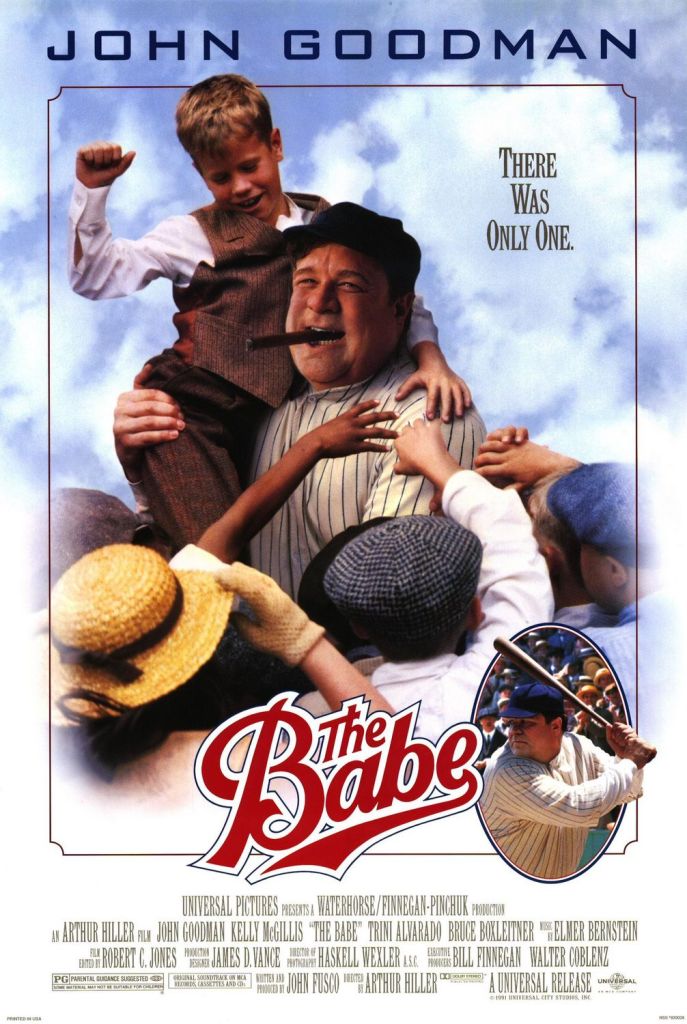
The Babe (1992, dir. by Arthur Hiller)


John Goodman. He’s a good actor but not a very convincing baseball player.

Last night, I watched The Babe, which starred John Goodman as Babe Ruth. Babe Ruth was one of the greatest baseball players of all time, the first of the great sluggers, and the holder of the career home run record from 1935 to 1974. He was the type of player that I wish The Rangers had right now because we’ve got a 22-27 records right now and the only bright spot is that we’re doing better than the Angels.

The Babe starts in 1902, with George Herman Ruth getting dropped off at reform school and learning how play baseball from Brother Matthias (James Cromwell) and then follows Ruth through his career, his first failed marriage, his attempts to become a manager, and his eventual retirement from the game. At first, everyone makes fun of the Babe because he’s not very sophisticated and all he wants to do is hit the ball. Then he shuts them all up by knocking ball after ball out of the park. Babe Ruth was a big man, like John Goodman. But he was also a great athlete. Goodman looked like he was in pain every time he had to swing the bat. Maybe that explains why Goodman plays the Babe as if he never actually enjoyed one minute of playing baseball.

The Babe is like a highlight reel of famous anecdotes. Babe Ruth hits his first home run in the Big Leagues. Babe Ruth promises a sick child that he’ll hit two home runs. Babe Ruth calls his shot. Babe Ruth hits three homers during his final game. In real life, Babe Ruth retired after he injured his knee. In the movie, he retires after he hears an owner talking about how having Babe on the team is only good for selling tickets to the rubes. All the famous Babe Ruth stories are here, along with all of the drinking and the womanizing. The movie never digs too deep into what made Babe tick or what it was like to be the most famous and popular athlete in America. It never even really explores how Babe Ruth changed the sport of baseball. Watching The Babe, you would never know that home runs weren’t even considered to be an important part of the game until Ruth established himself as someone who could hit one ball after another out of the park. The best baseball movies make you feel like you’re either out on the field with the player or you’re in the stands with the fans and they make you want to stand-up and cheer with every hit and every run across home plate. The Babe never does that. There’s no love of the game in The Babe.

The Covers of Lariat


July 1948 by Allen Gustav Anderson

Running from 1925 to 1951, Lariat was one of the many western magazines of the pulp era. At the time, it published stories and novellas about the men and the women who conquered the old west. Today, issues are sought by collectors who appreciate the magazine’s tough, colorful, and often violent covers. Some of the best artists of the pulp era did covers for Lariat.

Below is just a sampling of the covers of Lariat. Where known, the artists have been credited:

November 1943 by Allen Gustav Anderson
March 1945, Artist Unknown
May, 1945, Artist Unknown
November, 1945 by George Gross
March, 1947 by Allen Gustav Anderson
November, 1947 by Noman Saunders
January, 1948, by Norman Saunders
March, 1948 by Allen Gustav Anderson
September, 1948 by Allen Gustav Anderson
May, 1949 by Norman Saunders
March 1950, by Allen Gustav Anderson