Sing it, Frank!
Sing it, Frank!

Here’s the most famous scene from A Charlie Brown Christmas. When A Charlie Brown Christmas was first aired in 1965, Charles Schulz had to fight to keep CBS from removing the scene in which Linus explains the true meaning of Christmas. It has gone on to become one of the most popular moments in the special.
For those who may not be able to watch it on Apple TV+, here it is:
4 Shots From 4 Films is just what it says it is, 4 shots from 4 of our favorite films. As opposed to the reviews and recaps that we usually post, 4 Shots From 4 Films lets the visuals do the talking.
December 24th is not just Christmas Eve! It’s also the anniversary of the birth of Michael Curtiz! Michael Curtiz was born in Budapest in 1886 and, after getting his start making silent films in Hungary, he eventually came to the United States and became one of the most important directors of Hollywood’s Golden Age! Curtiz mastered every genre and worked with every star and the end result was some of the greatest films ever made.
Today, we honor the legacy of Michael Curtiz with….
4 Shots From 4 Michael Curtiz Films

The Walking Dead (1936, dir by Michael Curtiz, DP: Hal Mohr)

The Adventures of Robin Hood (1938, dir by Michael Curtiz, DP: W. Howard Greene)

Casablanca (1942, dir by Michael Curtiz, DP: Arthur Edeson)

Mildred Pierce (1945, dir by Michael Curtiz, DP: Ernest Haller)

By Ed Emshwiller
1 more day til Christmas…

By Ed Emshwiller

by Erin Nicole
Happy Christmas Eve!
Christmas in Hollis is one of the most famous Christmas rap songs, though it nearly didn’t happen. When Bill Adler first approached Run-DMC and asked them to contribute to the holiday compilation album, A Very Special Christmas, the band turned him down. It wasn’t until Adler suggested the title Christmas in Hollis that the band changed their mind.
All of the proceeds of A Very Special Christmas went to support the Special Olympics. (Other contributors included Madonna, Bruce Springsteen, Sting, Eurythmics, U2, and Pertenders.) Christmas In Hollis was the only original composition to appear on the album and it has gone on to become a holiday mainstay.
Hollis, of course, refers to the neighborhood of Hollis, Queens, where the members of Run-DMC grew up.
This video was named the “Best Video of 1987” by Rolling Stone Magazine.
Enjoy and Merry Christmas Eve!
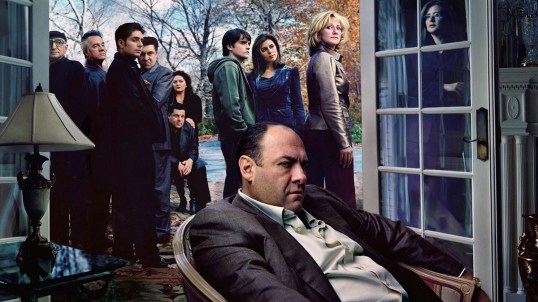 Here are the 2025 nominations of the New Jersey Film Critics Circle.
Best Picture
Hamnet
It Was Just An Accident
Marty Supreme
No Other Choice
One Battle After Another
The Secret Agent
Sentimental Value
Sinners
Train Dreams
Weapons
Best Director
Chloé Zhao – Hamnet
Park Chan-wook – No Other Choice
Paul Thomas Anderson – One Battle After Another
Joachim Trier – Sentimental Value
Ryan Coogler – Sinners
Best Original Screenplay
It Was Just An Accident
Marty Supreme
Sentimental Value
Sinners
Weapons
Best Adapted Screenplay
Bugonia
Hamnet
No Other Choice
One Battle After Another
Train Dreams
Best Actor
Timothée Chalamet – Marty Supreme
Leonardo DiCaprio – One Battle After Another
Joel Edgerton – Train Dreams
Ethan Hawke – Blue Moon
Michael B. Jordan – Sinners
Best Actress
Jessie Buckley – Hamnet
Rose Byrne – If I Had Legs I’d Kick You
Chase Infiniti – One Battle After Another
Renate Reinsve – Sentimental Value
Emma Stone – Bugonia
Best Supporting Actor
Benicio del Toro – One Battle After Another
Jacob Elordi – Frankenstein
Delroy Lindo – Sinners
Sean Penn – One Battle After Another
Stellan Skarsgård – Sentimental Value
Best Supporting Actress
Elle Fanning – Sentimental Value
Ariana Grande – Wicked: For Good
Inga Ibsdotter Lilleaas – Sentimental Value
Amy Madigan – Weapons
Teyana Taylor – One Battle After Another
Best Acting Ensemble
Marty Supreme
One Battle After Another
Sentimental Value
Sinners
Weapons
Best Original Score
F1
Hamnet
Marty Supreme
One Battle After Another
Sinners
Best Original Song
“Drive” – F1
“Golden” – KPop Demon Hunters
“I Lied to You” – Sinners
“Last Time (I Seen the Sun)” – Sinners
“Train Dreams” – Train Dreams
Best Editing
F1
Marty Supreme
No Other Choice
One Battle After Another
Sinners
Best Production Design
Frankenstein
Marty Supreme
One Battle After Another
Sinners
Wicked: For Good
Best Costume Design
Frankenstein
Hamnet
Hedda
Sinners
Wicked: For Good
Best Hair and Makeup
Frankenstein
Sinners
The Smashing Machine
Weapons
Wicked: For Good
Best Sound
F1
One Battle After Another
Sinners
Sirāt
Warfare
Best Animated Feature
Arco
Elio
Little Amélie or the Character of Rain
KPop Demon Hunters
Zootopia 2
Best International Feature
It Was Just An Accident
No Other Choice
The Secret Agent
Sentimental Value
Sirāt
Best Documentary
2000 Meters to Andriivka
Come See Me in the Good Light
Orwell: 2+2=5
The Perfect Neighbor
Predators
Best Cinematography
Hamnet
No Other Choice
One Battle After Another
Sinners
Train Dreams
Best Visual Effects
Avatar: Fire and Ash
F1
Frankenstein
Sinners
Superman
Best Stunts
F1
Mission: Impossible – The Final Reckoning
One Battle After Another
The Running Man
Sinners
Best Directorial Debut
The Chronology of Water
Friendship
Pillion
Sorry, Baby
The Ugly Stepsister
Best Breakthrough Performance
Miles Caton – Sinners
Chase Infiniti – One Battle After Another
Jacobi Jupe – Hamnet
Inga Ibsdotter Lilleaas – Sentimental Value
Eva Victor – Sorry, Baby
Best Animal in a Movie
Bing the Dog – The Friend
Googoo the Meerkat – Left-Handed Girl
Indy the Dog – Good Boy
Noochie the Cat – Sorry, Baby
Tonic the Cat – Caught Stealing
Best LGBTQIA+ Representation
Blue Moon
Hedda
Pillion
Plainclothes
Twinless
Best New Jersey Representation*
The Housemaid
Marty Supreme
Ponyboi
Presence
Springsteen: Deliver Me From Nowhere
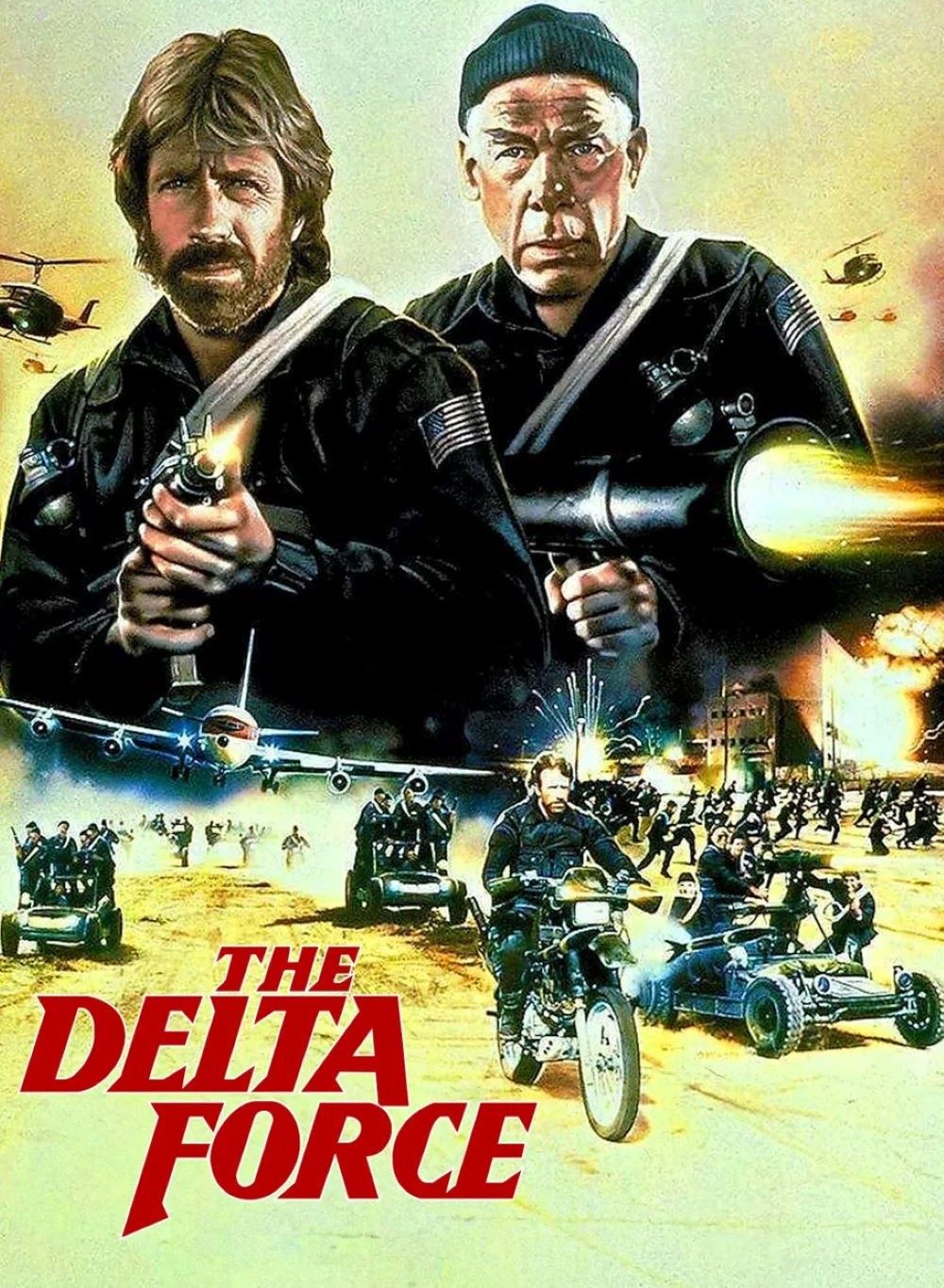
The Delta Force is the ultimate guilty pleasure from the ’80s, that rocket-bike-riding, Chuck Norris-kicking fantasy you pop on when you need two hours of unapologetic, brain-off escapism. It’s a hijacking thriller crossed with Cannon Films overkill, blending real Middle East tensions with pure action movie wish fulfillment, and yeah, it’s politically charged and dated as hell, but damn if it doesn’t deliver the kind of dumb-fun thrills that make you grin despite yourself.
Right from the jump, the film sets up its hook with a failed Delta Force raid in Iran, nodding to the real-life Eagle Claw disaster that still stung in 1986. Fast-forward, and Lee Marvin’s grizzled Colonel Nick Alexander gets yanked out of retirement when Lebanese militants hijack an Athens-to-New York flight, forcing it to Beirut and beyond. Enter Chuck Norris as Major Scott McCoy, the brooding ex-operator haunted by that botched op, who’s all too ready to strap on his gear when innocents are on the line. The setup drags you through passenger terror and terrorist demands, then explodes into rescue mayhem—it’s like the movie knows you’re here for the payback, and it serves it up hot.
As a plot, it’s pure popcorn simplicity: plane gets taken, hostages split by nationality and faith, planes hopscotch across terror hotspots, and Delta swoops in for the save. Drawing from the TWA 847 ordeal, the onboard stuff feels eerily real at first—sweaty close-ups of scared folks like Shelley Winters’ kvetching grandma or Martin Balsam’s anxious exec, turning the cabin into a pressure cooker. George Kennedy’s priest adds heart, and you almost buy the drama until Norris’ dirt bike starts spitting missiles, flipping the script to glorious absurdity. That’s the guilty pleasure pivot: from newsreel grit to arcade-game heroics, and you can’t help but love the whiplash.
Once the action ramps, The Delta Force leans into its B-movie soul with reckless abandon. McCoy’s team hits beaches, raids compounds, and yeah, that motorcycle sequence where Norris zips through baddies like a one-man apocalypse? Iconic cheese that screams “turn off your brain and enjoy.” It’s less about realism and more about catharsis—after watching hostages suffer, the third act’s bullet ballet feels like the justice porn we all secretly crave in these flicks. No deep strategy, just explosions and one-liners, perfectly tuned for that “hell yeah” rush that keeps you glued.
The cast is a riot of guilty-pleasure gold. Marvin, in his last role, growls through command with that unbeatable world-weary vibe, making every order land like gravitas wrapped in grit. Norris? Stone-faced perfection—says little, does everything, his quiet rage bubbling just enough to humanize the roundhouse legend. The passenger ensemble shines in panic mode: Winters chews scenery, Balsam frets convincingly, Kennedy prays with soul. Villain Robert Forster? Over-the-top terrorist glee, accent thick as plot armor, stealing scenes with gleeful menace that’s so cartoonish, it’s addictive.
Sure, the politics are a time-stamped minefield—terrorists as flat-out monsters, Middle East as villain playground, America as lone savior—but that’s part of the era’s guilty thrill. In a post-9/11 world, the stereotypes jar, yet for ’80s nostalgia buffs, it’s that raw, unfiltered patriotism dialed to eleven, the kind you laugh at now but cheered then. The film doesn’t pretend to balance views; it picks a lane—righteous rage—and floors it, making the righteousness feel perversely fun amid the preachiness.
Technically, it’s rough-around-the-edges charm personified. Menahem Golan directs with propulsive energy, keeping the 126 minutes zipping between dread and dazzle. Action’s shot clean—no shaky cam nonsense—with wide lenses capturing chaos in practical, pre-CGI glory that pops on a big screen. The score? Brass-blasting heroism that’s comically epic, sticking like glue and amping every slow-mo strut. Sets fake Beirut convincingly enough, backlots be damned, all fueling that immersive, low-budget magic.
The Delta Force thrives on its split personality: tense hijack bottle episode crashing into commando wet dream. Plane scenes build real unease, echoing headlines, but then rocket bikes and cheering crowds yank it back to fantasy ad. That clash? Pure guilty pleasure fuel—serious enough to hook you, silly enough to forgive its flaws, never letting tension sag.
Bottom line, embrace The Delta Force as peak time-capsule junk: terrorism tamed by ‘stache and firepower, geopolitics as blockbuster bait. Norris and Cannon diehards will fist-pump through every raid; casual viewers get a hoot from the excess. It’s flawed, fervent, and fantastically rewatchable— the kind of flick where you know it’s ridiculous, but two hours later, you’re humming the theme and plotting your next viewing. Guilty pleasure? Abso-freaking-lutely, and wear that shame badge proud.
Previous Guilty Pleasures
It’s not Christmas without the story of Ebenezer Scrooge and his visit with three ghosts. There have been numerous film versions of this story. The one below comes to us from 1938 and stars Reginald Owen in the role of Scrooge.
This version is surprisingly good, considering that it was apparently shot in a hurry. (The movie hit theaters just a few weeks after filming stopped.) Originally, Lionel Barrymore was going to play Scrooge but he had to drop out due to ill-health. Reginald Owen stepped in and gave a good performance as the famous miser.
(Barrymore himself would more or less play Scrooge a little less than ten years later in Frank Capra’s It’s A Wonderful Life.)
Sing us into the holidays, Dean!
 Through the Shattered Lens