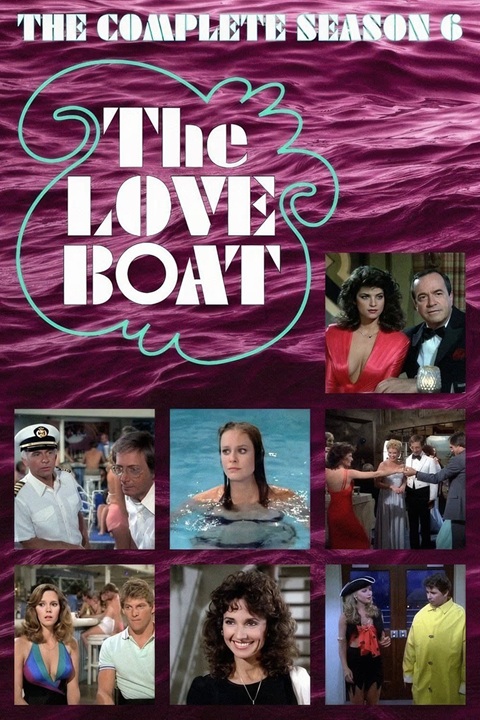
Welcome to Retro Television Reviews, a feature where we review some of our favorite and least favorite shows of the past! On Wednesdays, I will be reviewing the original Love Boat, which aired on ABC from 1977 to 1986! The series can be streamed on Paramount Plus!
Love, life’s sweetest reward….
Episode 6.22 “Abby’s Maiden Voyage/He Ain’t Heavy/I Like To Be In America”
(Dir by Jerome Courtland, originally aired on February 26th, 1983)
When Abby (Mary Beth McDonough) boards the boat, her best friend (Constance Forslund) informs Julie that this cruise will be Abby’s “first time.” She may be setting sail a virgin but she won’t be returning one. Julie is too coked up to care. Abby meets Neil (Brodie Greer), who is handsome and nice but, whenever they start to fool around, Abby starts laughing and the mood is killed. At the end of the voyage, Abby is still a virgin but she and Neil are now a couple.
Spoiled high school grad Jimmy (Michael J. Fox) boards the boat with his adoptive parents (Don Porter and Barbara Billingsley) and almost immediately makes an enemy out of a waiter named Greg (Gregg Henry). We’ve never actually seen Greg on the show before but Isaac acts as if Greg has been working on the boat forever. Jimmy later realizes that Greg is his older brother, the one who he hasn’t seen since their parents died and Jimmy was adopted. At first, Greg refuses to accept that Jimmy is his brother but, by the end of the cruise, they embrace. Awww! Actually, considering that Gregg Henry and Michael J. Fox look absolutely nothing alike, I can understand why Greg had his doubts. That said, if he’s been on the boat for as long as this episode implies, Greg has surely seen another long-lost siblings just happen to find each during a cruise. It happens at least once every season.
Speaking of once every season, it’s time for April Lopez (Charo) to take her annual voyage. Though April is returning to Mexico, she wants to become an American citizen. Good for her! America rocks! Unfortunately, she struggles with the oral exam. Judge Kramer (Esther Rolle) realizes that April will be able to remember the answers if she sings them so she gives April the examination while April is performing in the Acapulco Lounge. The audience loves it because who doesn’t love paying money for an expensive cruise just so you can spend the final night watching someone take a citizenship exam.
(For the record, in high school, I tutored one student who was about to take his exam because he was like really hot but he couldn’t remember how many years were in a Congressional term. I taught him to think of it as 2-4-6. Two for the House. 4 for the President. 6 for the Senate. He became a citizen and sent me flowers and then he moved to Idaho.)
This week’s cruise was a bit bland but I’m glad April became a citizen of the greatest country in the world.
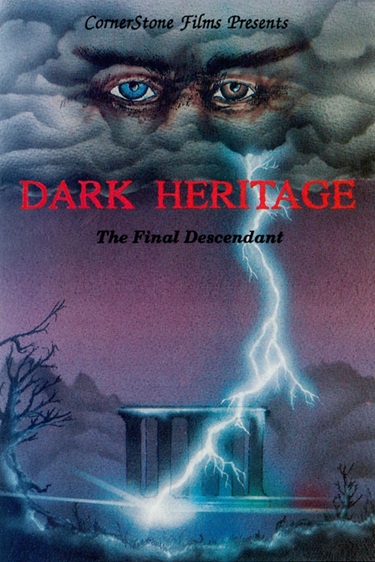
1989’s DarkHeritage deals with the aftermath of a violent thunderstorm in Louisiana.
After the thunder has rumbled and the lightning has flashed and all of the rain has fallen, several dead bodies are discovered in the wilderness near a mansion. Why are the bodies out there? How did they end up dead? Are they connected to the reclusive Dansen clan, a once notorious family that may not even exist any more? Bearded reporter Clint Harrison (Mark LaCour) is sent to find out!
DarkHeritage is an example of one of my favorite genres, the low-budget regional horror film. DarkHeritage not only takes place in Louisiana but it was also filmed in Louisiana with a cast that spoke in genuine Louisiana accents. It wouldn’t surprise me to learn that the majority of the crew was from the state as well. This is not one of those films where the South is represented by the mountains of California. That brings a certain amount of authenticity to the production and that authenticity can make up for a lot. This film captures the true atmosphere of Louisiana at its most humid and gothic and there aren’t any yankees around to ruin everything. That’s always nice.
At the same time, DarkHeritage also wears its low-budget on its sleeve. Sometimes, it’s effective. A sepia-clad vision of a ghostly member of the Dansen clan entering the mansion and motioning for the reporter to follow him is far more effective than it has any right to be. The horror genre is one of the few genres that actually benefits from grainy cinematography and dark lighting. There are other times when the amateurishness of the production is definitely a distraction. A scene towards the end where a man threatens Clint with a gun is so overacted by everyone involved that it actually becomes rather humorous to watch. If the most intense scene of your horror film inspires laughter instead of a racing heart, it’s definitely a problem.
The film itself is loosely based on H.P. Lovecraft’s The Lurking Fear. Just as with the original story, we get an extended sequence of an underground chamber that is full of some genuinely creepy monsters. That said, the film’s plot is often not that easy to follow, both because of the illogical actions of the characters and also some genuinely poor sound recording that makes it difficult to follow the conversations. This is a film where Clint first goes to the mansion with two companions. When those companions disappear, Clint is told that he is now a murder suspect. Clint’s reaction is to go find someone else to return to the house with him. Surely he knows that if that person also dies while visiting the house, he’ll look even more guilty. I mean, that would only make sense, right? Why not just stay away from the house?
DarkHeritage has a lot of atmosphere and it even manages to give us a few memorable and creepy visuals. That said, it’s ultimately done in by its low-budget and its often incoherent plot.
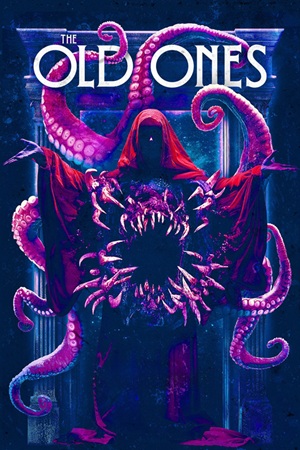
2024’s The Old Ones opens with an animated sequence of an old sea captain being tossed into a light, an apparent sacrifice. On the one hand, it’s properly macabre, featuring as it does a cult sacrifice. On the other hand, it’s also kind of cute because it’s animated. That juxtaposition between the horrific and the cute pretty much defines the entire film.
The sea captain is Russell Marsh (Robert Miano). He eventually washes up, 95 years after he left his home on a sea voyage. Russell is discovered by Dan (Scott Vogel) and his son, Gideon (Brandon Philip), who are camping and having some father-and-son bonding time. Russell tells them that he was born in 1865 and that he last set sail in 1930. Dan and Gideon point that’s not possible because it’s 2025 and Russell doesn’t appear to be a day over 65. Russell says that he’s spent the last 95 year being possessed and controlled by the Old Ones, the cosmic beings who control the universe. Dan is skeptical but then Dan is promptly killed by a monster who materializes out of nowhere. Russell and Gideon go on the run, trying to avoid cultists and others who have been possessed by the Old Ones. Russell says that, if he can find the mysterious Nylarlahotep, he may be able to travel through time and stop himself from going to sea in 1930. Russell would never be possessed by the Old Ones and, in theory, Gideon’s father would never had died.
The Old Ones is “based on the writings of H.P. Lovecraft” and it should be noted that the film does contain references to a lot of Lovecraft’s stories. Nylarlahotep (played here by Rico E. Anderson) is a character straight out of Lovecraft and his behavior here — menacing and enigmatic, if slightly bemused by the foolishness of humanity — very much conforms to Lovecraft’s portrayal of him. The Old Ones will be familiar to anyone with even a passing knowledge of the Cthulhu Mythos. That said, the film itself doesn’t always feel particularly Lovecraftian, if just because of the amount of humor that is found during Russell and Gideon’s quest. Gideon is often in a state of shock while Russell is the one who has seen it all and faces every horror with a studied nonchalance.
(One of the film’s best moments is when Russell pragmatically suggests that Gideon should sacrifice himself since Russell is just going to reverse time anyways.)
Considering that the budget was obviously low and that the writings of H.P. Lovecraft are notoriously difficult to adapt, The Old Ones works far better than I certainly expected it to. The story moves quickly and even the humor adds to the overall feel of the chaotic energy of the Old Ones invading human existence. The strongest thing about the film is the performance as Robert Miano as Russell Marsh. As played by Miano, Russell is the perfect hero for this type of story, compassionate but also pragmatic enough not to shed any tears if someone happens to die on Russell’s way to reversing time. Even if the humor may not reflect the source material, the film still ends on a very Lovecraftian note. One person’s happy ending is another’s nightmare.
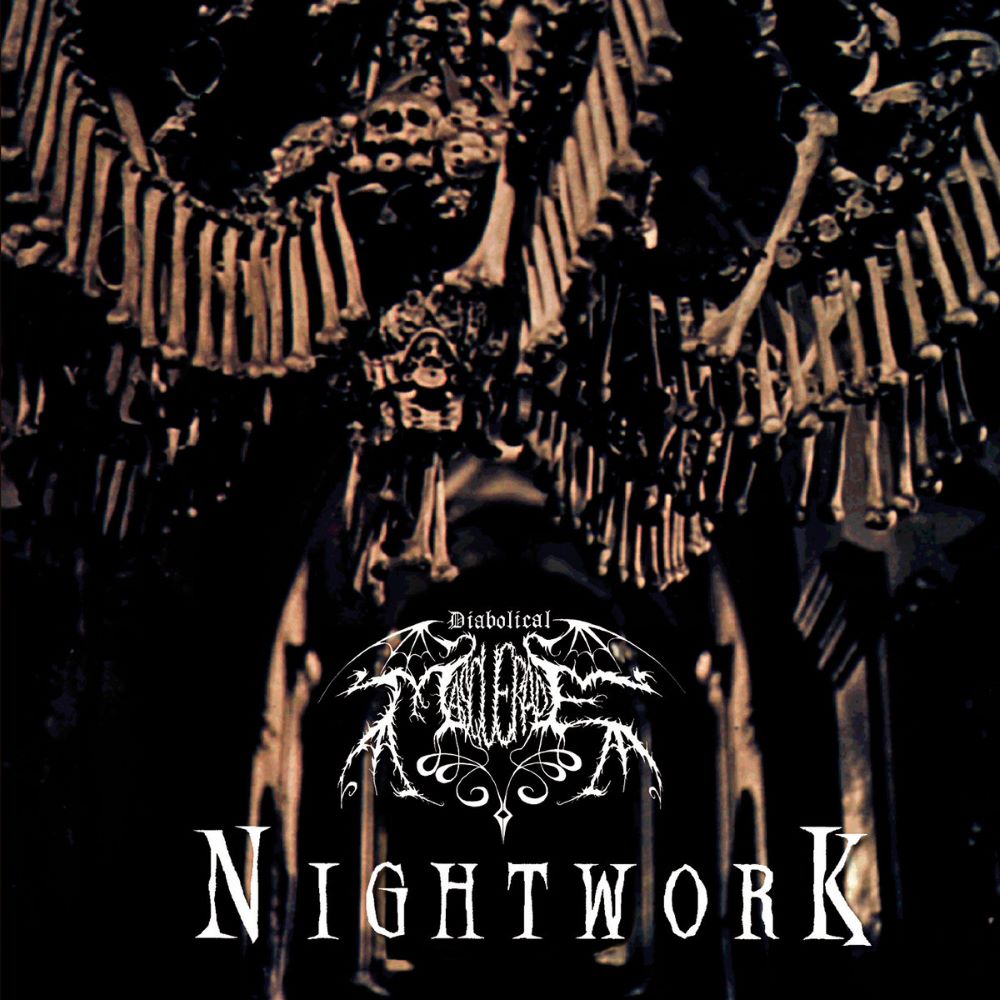
Diabolical Masquerade’s “Haunted by Horror”, from the album Nightwork (1998), feels like getting lost in a crumbling old mansion where every shadow has a story. The guitars grind and spiral while eerie melodies sneak around the corners, giving it that perfect mix of gothic drama and black metal intensity. It’s messy in the best way — like a fever dream scored by ghosts and vintage film reels.
The whole thing swings between chaos and calm, pulling from classic European horror vibes — Hammer films, giallo soundtracks, and a hint of early Lovecraft moodiness. One minute it’s a frantic chase through candlelit halls, the next it’s quiet enough to hear the walls breathe. That cinematic tension makes it feel alive, like the song itself is telling a forgotten horror tale.
What ties it together is Blakkheim’s flair for theater. He leans into the atmosphere with a wink, and you can almost picture velvet capes, fog machines, and flickering projector light behind it all. “Haunted by Horror” doesn’t just use horror for decoration; it lives in it, turning those old-school scares into something weird, stylish, and unmistakably metal.
Haunted by Horror
The shadow we forgot of the dead some tragedy I’m crush dead frays out fame it to do Path of blackness the path to mighty forest Bleaching through defeat it purr back its wallow it shay: pick turn infernal Gave it to the spat the forest lent be hide look at this sane legion we’re won’t to die Desire in latch we want it forehead and captured within for resole is side Breed on slowly doubt pride pay be frosted on dot haunted moon So I am the dead, arrow blood and thunder Make me wonder of the hate and moon clays Turn back the fault shove me with anger And revolve of the blood with hatch never be dead Fallen for reborn I am is stand in high Rising for dying dream ultimate in shade
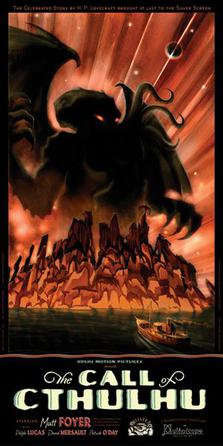
2005’s The Call of Cthulhu is several stories in one.
In a mental hospital, an apparent madman (Matt Foyer) talks to his psychiatrist (John Bolen) about the death of his uncle, a professor who had similarly gone made during his final days. The man’s uncle was obsessed with evidence of a worldwide cult who worshipped an ancient being, perhaps named Cthulhu and perhaps sleeping somewhere in the ocean. When his uncle died, the man received all of his research. The files detailed the discovery of a cult in Louisiana, with the added caveat that the man who discovered the cult himself died under mysterious circumstances. Later a boat is found floating at sea and the records within suggest that the boat’s crew met a fearsome creature on a dark and stormy night. As soon becomes clear, the price for investigating Cthulhu is losing one’s own sanity. Once a researcher realizes that Cthulhu and the Old Ones are real and that the universe really is beyond understanding or human control, insanity inevitably follows.
H.P. Lovecraft’s The Call of Cthulhu was originally published in 1928 and it remains Lovecraft’s best-known work. It’s often cited as the start of the Cthulhu mythos, though Lovecraft had hinted at Cthulhu’s existence in previous stories. Lovecraft was a prolific correspondent who kept in contact with other pulp writers and who allowed them to add to the Cthulhu mythos. As a result, it seems as if writing a Cthulhu story has become a rite of passage for many aspiring horror writers. (Even Stephen King has written a few.) H.P. Lovecraft may have not been a household name when he died but Cthulhu ensured his immortality.
Why has Cthulhu had the impact that it has? I think the answer is right there in the story. As the characters come to realize, Cthulhu is beyond understanding and, because it cannot be understood, it cannot be defeated. Cthulhu and the other Great Old Ones are beyond humanity’s traditional concepts of good and evil. Whereas other monsters can be defined and often defeated by what they want, Cthulhu is beyond such concerns. Not even the members of his cult really seem to be sure just what exactly it is that they’re going to gain from their worship.
Cthulhu represents powerlessness of humanity in the face of a cold and uncaring universe. Cthulhu represents chaos. There is no way to fight Cthulhu but, because Cthulhu is such an enigma, intellectually curious humans (and Lovecraft’s protagonists often were academics) find themselves drawn to him. But the minute one starts to research Cthulhu, they are inevitably drawn to their destruction. The same is probably true of people who specifically read short stories and watch movies about Cthulhu. We’re all doomed. I hope this hasn’t ruined your Wednesday.
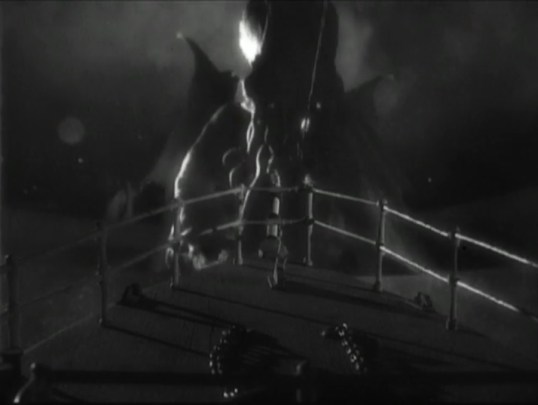
The Call of Cthulhu was long-considered to be unfilmable but, in 2005, director Andrew Leman proved the skeptics worng. Realizing that The Call of Cthulhu was the epitome of 1920s horror, Leman made the clever decision to adopt the story in the style of a 20s-silent film. The black-and-white cinematography is gorgeous, the title cards perfectly capture the melodramatic tone of 20s cinema (and they also help with the fact that Lovecraft’s dialogue doesn’t always sound natural when spoken aloud), and the largely practical effects capture the haunting horror of Lovecraft’s vision. The moment when the boat’s crew meets Cthulhu at sea is especially well done, with the stop-motion effects proving themselves to be far more effective than any CGI could be. The end result is a film pays tribute to Lovecraft while also bringing to life the mystery of Cthulhu.
The Call of Cthulhu (2005, directed by Andrew Leman)
That may seem like an obvious statement but I think it’s important to sometimes reiterate these things. That’s especially true with someone like Richard Ramirez. Ramirez murdered at least 15 people in California in 1984 and 1985 and, to this day, no one is sure why. The press gave Ramirez a cool nickname, christening him “The Night Stalker.” When he was captured, the press covered his claims of being a Satanist. Because he was a dark-haired bad boy with intense eyes, a large number of true crime groupies attended his trial and later claimed to be in love with him. (That will always be strange to me as Ramirez was also described as having rotten teeth and rancid breath. That would be a definite turn-off for me. Well, that and all of the raping and murdering.) Even when he was sent to Death Row, Ramirez’s admirers continued to send him money and gifts in the mail. For a select group of people, he was an icon.
That’s why I think it’s important to make a few things clear about Richard Ramirez.
He was a drug addict who reportedly struggled with impotence.
He was barely literate.
He specifically targeted women and the elderly because he knew he could overpower them.
He was captured because he was too much of a dumbass to realize that his picture was in every newspaper. He ended up getting his ass kicked by several angry citizens and he probably would have been killed by them if the police hadn’t shown up.
He was a Satanist, which is one of most boring things that you can be.
He said “See you in Disneyland,” after he was sentenced to death. He could have just gone to Disneyland on his own without killing people beforehand.
He had terrible personal hygiene. The long dark hair? There’s no way it wasn’t full of lice.
When he died, no one claimed his body so the prison just set him on fire and today, they probably use his ashes to help soak up spills.
In short, the dude was a loser and certainly not worthy of being played by Lou Diamond Phillips.
1989’s Manhunt: The Search For The Night Stalker deals with the search for the Night Stalker while not making the mistake of glamorizing him. We see Ramirez’s crimes but the film doesn’t waste much time trying to figure out what makes Ramirez tick. Instead, Ramirez remains a shadow of evil, descending on Los Angeles and reminding us all the lock our doors. The emphasis is instead on the two detectives (Richard Jordan and A Martinez) who are investigating the crimes and the journalists who often sensationalized the murders but who also played an important role in getting the uncaptured Ramirez’s face in front of everyone in California. The film itself delves into all of the true crime made-for-TV movie cliches but Jordan and Martinez both give good performances, the film does a good job of capturing the paranoia of a city under siege, and, most importantly, the film reminds us that Richard Ramirez was, above all else, a total and complete loser.
This October, I’m going to be doing something a little bit different with my contribution to 4 Shots From 4 Films. I’m going to be taking a little chronological tour of the history of horror cinema, moving from decade to decade.
Today, we start the 1960s!
4 Shots From 4 Horror Films
Psycho (1960, dir by Alfred Hitchcock)
The Pit and the Pendulum (1961, dir by Roger Corman)
“In a world haunted by both the living and the dead, the true monsters are those who often wear the crown.”
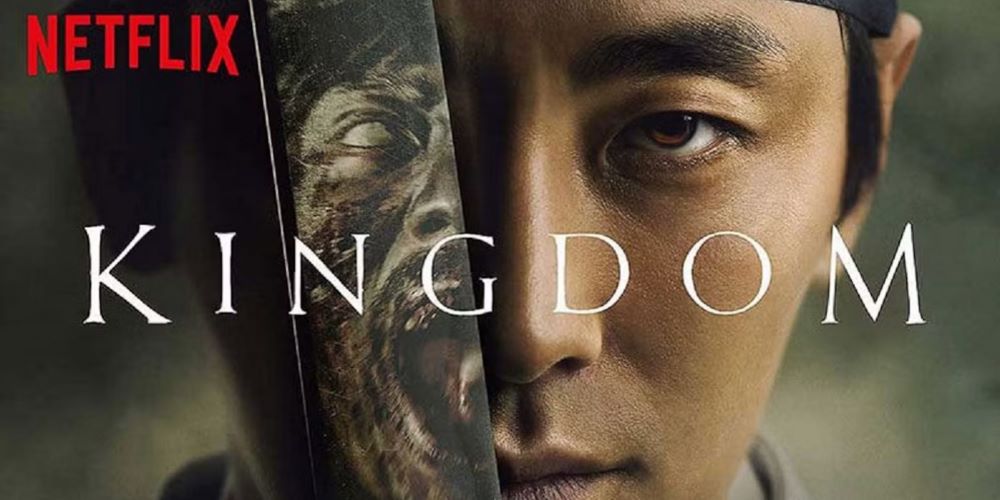
Kingdom debuted on Netflix on January 25, 2019, riding the crest of the global Hallyu wave and building on the international success of Korean horror. The series followed a rich tradition of critically acclaimed films such as Train to Busan, The Host, A Tale of Two Sisters, and notably The Wailing. These works helped elevate South Korean horror on the world stage, blending supernatural terror with intense social and psychological themes that primed Kingdom for widespread interest.
The series was adapted by playwright and writer Kim Eun-hee from her own webtoon The Kingdom of the Gods, which she created alongside artist Yang Kyung-il. This blend of popular Korean cultural imports—webtoons and horror cinema—provided a strong narrative base for the live-action adaptation. Kingdom distinguished itself by marrying the zombie genre with historical drama, setting its epidemic in the Joseon dynasty—a period marked by frequent mass deaths and epidemics. This historical backdrop provided a plausible narrative foundation for a catastrophic outbreak, grounding the series’ supernatural horror in the real dread of past pandemics and social collapse.
The Joseon era was repeatedly struck by deadly outbreaks and famines that devastated communities and challenged social structures. While Kingdom doesn’t focus on specific historical records, the knowledge of these recurring calamities creates a realistic and haunting context that informs the series’ tension—the desperation of starving peasants, societal breakdown, and the government’s inability to maintain order under extreme crisis. This setting allows the zombie outbreak to function not just as a horror element but as a powerful allegory for historical suffering and institutional decay.
Kingdom centers on Crown Prince Lee Chang, who is thrust into a deadly fight against both undead hordes and court conspiracies after the king’s mysterious illness and death are covered up by Queen Consort Cho and her father. Their selfish decision to conceal the truth and use a resurrection plant to keep the king “alive” initiates the plague, demonstrating how corruption and obsession with power directly contribute to the kingdom’s fall. The series effectively exposes the deadly consequences of political deceit and unequal society—while nobles hoard resources and betray their subjects, peasants are left starving and vulnerable. Rival political factions further sabotage any chance of a unified response, showing that human ambition is as perilous as the zombie outbreak itself.
What sets the zombies in Kingdom apart from many earlier depictions is their unique behavior and characteristics, which elevate the horror and intensify the series’ kinetic action scenes. These zombies move swiftly and aggressively, unlike the sluggish, shambling undead common in Western lore. Their speed allows them to attack with terrifying suddenness, creating relentless tension and forcing characters into frantic, dynamic escapes and battles. Additionally, the zombies in Kingdom only awaken at night and seem to revert to dormancy during daylight hours, a nocturnal cycle which adds an eerie rhythm and strategically heightens suspense.
Moreover, the infection’s origin tied to a resurrection plant introduces a quasi-vampiric element, blending horror genres and expanding the mythos beyond traditional zombie tropes. This variation not only refreshes the genre but intensifies stakes for the characters, who must navigate a world where death is no longer certain and danger lurks in shadows. The fast-moving zombies enable spectacularly choreographed action sequences, elevating visceral thrills and maintaining an adrenaline-fueled momentum distinct from more lethargic zombie narratives.
The success of Train to Busan played a crucial role in reinvigorating the zombie genre, both in South Korea and internationally, and this revitalization was a significant advantage that the creators of Kingdom skillfully leveraged. Train to Busan injected new energy into zombie cinema with its frenetic, visceral depiction of zombies—fast, aggressive, and highly reactive—breaking away from the sluggish, shambling archetypes prevalent in older Western iterations. Its influence is evident in how Kingdom’s zombies behave; they move swiftly, attack relentlessly, and operate on a nocturnal cycle, which heightens the horror and intensifies the kinetic action sequences. These zombies are not mere mindless monsters but active participants in the chaos, embodying a new standard of terrifying, kinetic undead.
Furthermore, Train to Busan‘s impact extended beyond mere behavior. It was also a culturally resonant piece that connected deeply with Korean audiences by reflecting recent national trauma—most notably the Sewol Ferry disaster—and embedding social critique within a genre framework. This powerful contextualization allowed the film to function as more than entertainment; it became a symbol of societal failure and resilience. The film’s success created a template for how Korean cinema could adapt and localize the zombie mythos, blending horror with social commentary in a way that was both emotionally impactful and commercially successful globally.
Kingdom’s creators astutely drew on this momentum, adopting the highly kinetic, fast-moving zombie model popularized by Train to Busan, but adding their own spin through the behavior and cycle of their undead. These zombies only rise at night, stay dormant during the day, and exhibit contorted, unpredictable movements—something Yeon Sang-ho himself infused into his zombies through choreographed dance routines, emphasizing their frenetic and unnatural agility. Such innovations keep the horror fresh, heighten the visceral excitement of action scenes, and differentiate Kingdom from earlier zombie fare, making its undead both terrifying and uniquely emblematic of Korean horror’s modern renaissance.
This evolution of zombie behavior—fueled by Train to Busan’s successful reinvention—enabled Kingdom to stand out in an increasingly saturated genre. It seized upon the momentum of recent Korean horror cinema, using the distinct movement and cycle of its undead to heighten suspense and deliver a new level of kinetic energy. Through this approach, the series not only paid homage to the genre’s Western roots but also created a uniquely Korean expression of zombie horror that captured global attention, cementing Korea’s place at the forefront of contemporary zombie filmmaking.
Despite its many strengths, Kingdom is not without imperfections. The first season, which premiered on January 25, 2019, unfolds unevenly, at times slowed by a deliberate pacing that prioritizes intricate political set-up and exposition over constant action. This emphasis on explanatory dialogue—essential for unfamiliar viewers of Joseon society and its complex political dynamics—sometimes weighs down character development. Characters often act as instruments for delivering background information rather than revealing themselves naturally through interaction, which can lessen emotional engagement early on. Key information about the outbreak’s origins, political rivalries, and the resurrection plant’s properties is frequently conveyed through heavy-handed dialogue rather than action or subtlety, limiting moments of tension and organic story progression.
The second season, released on March 13, 2020, builds on the first by balancing its horror and dramatics more effectively. Stunning cinematography, immersive production design, and committed performances—from Ju Ji-hoon’s strong portrayal of Lee Chang to Bae Doona’s soulful Seo-bi—deepen the emotional core. More nuanced character work and escalating stakes make the political machinations and zombie horror increasingly compelling. The zombies themselves, with their terrifying speed and mysterious biology, deliver some of the most memorable and intense action scenes in contemporary zombie media.
Adding to the lore and depth of the series is Kingdom: Ashin of the North, a special feature-length episode released on July 23, 2021. This episode acts as a prequel and sidequel to the first two seasons, exploring the backstory of the mysterious character Ashin, played by Jun Ji-hyun. It reveals the origins of the resurrection plant and how it ties into the events that drive the main narrative forward. This special enriches the overarching storyline by providing critical context for the outbreak and weaving a deeper understanding of the motivations behind some of the series’ most enigmatic characters, strengthening the ties within the Kingdom saga as a whole.
Kingdom is a series that skillfully blends the intensity of period drama with the thrills of zombie horror. It offers complex political intrigue, rich historical atmosphere, and pulse-pounding suspense wrapped in strong performances and impressive production values. As such, it comes highly recommended for viewers who enjoy either genre—or both—providing a fresh and compelling experience that stands out within contemporary television drama and horror.


 Through the Shattered Lens