Late Night Retro Television Reviews: Freddy’s Nightmares 1.1 “No More Mr. Nice Guy”


Welcome to Late Night Retro Television Reviews, a feature where we review some of our favorite and least favorite shows of the past! On Fridays, I will be reviewing Freddy’s Nightmares, a horror anthology show which ran in syndication from 1988 to 1990. The entire series can be found on Plex!
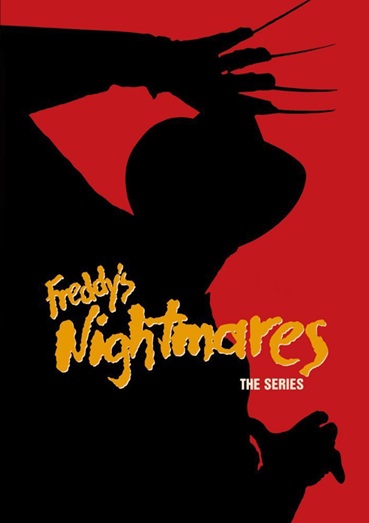
Having finished up Friday the 13th, I’m not going to take a look at another syndicated horror show that aired around the same time.  Freddy’s Nightmares was an anthology show hosted by Robert Englund, in character as Freddy Krueger.  Each story would take place in Freddy’s hometown of Springwood, Ohio.  Would the show be a dream or a nightmare?  Let’s find out!

Episode 1.1 “No More Mr. Nice Guy”

(Dir by Tobe Hooper, originally aired on October 9th, 1988)

Freddy Krueger has become such a familiar and popular figure that I think it’s sometimes forgotten that, when he first appeared, he was truly a horrifying character.  He was a child molester and a serial killer, one who escaped legal justice only because someone forgot to read him his rights when he was arrested.  He was killed by the citizens of Springwood, Ohio, set on fire in the same boiler room where he killed his victims.  Yes, he was brutally murdered and yes, the respectable people who murdered him covered up their crime.  At the same time, what would you do if a monster like Freddy was loose in your town and stalking your children?  “I’m burning in Hell,” Freddy says and that’s exactly what he deserved.

How did Freddy Krueger then become an oddly beloved pop cultural icon?  Some of that was undoubtedly due to his one-liners, which tended to be a slightly better than the typical slasher film banter.  If Freddy was pure evil in the first three Nightmare on Elm Street films, he became more a homicidal prankster as the series continued.  I think another reason why Freddy became popular is because the actor who first played him, Robert Englund, himself always comes across as being such a nice guy.  Unlike the personable but physically intimidating Kane Hodder, who looked like he could kill you even when he wasn’t playing Jason Voorhees, Englund always comes across as being slightly nerdy and very friendly.  He’s the neighbor who you would trust to get your mail while you’re on vacation.  If Englund hadn’t been cast as Freddy Krueger in 1984, he probably would have spent the 90s playing quirky programmers and hackers in tech thrillers.  The thing with Robert Englund is that seems to have a good sense of humor, he’s at peace with his place in pop culture, and he always seem to be having fun.  (In his autobiography, he even jokes about something that fans had been laughing about for years, the fact that the female lead in A Nightmare In Elm Street 2 looked almost exactly like Meryl Street.)  Those are qualities that bled over into Freddy.

As a result, Freddy became popular enough to host his own horror anthology.  The premiere episode of Freddy’s Nightmares open with Englund, in full Freddy makeup, telling us that we’re not about to see one of our nightmares.  Instead, we’re going to see his nightmare.  The episode gives us Freddy’s origin story, starting with Freddy getting off on a murder charge on a technicality and ending with Freddy getting bloody revenge of the police chief (played by Ian Patrick Williams) who set him on fire.

By almost any standard, it’s a disturbing story.  We open with Freddy on trial and we hear details about an 8 year-old boy that he left in a dumpster.  After the charges against Freddy are dismissed (damn those Carter judges!), Freddy happily gets into an ice cream truck and later, the police chief has a vision of the same truck coming straight at him.  After getting set on fire, Freddy doesn’t waste any time coming back and using his razor-blade gloves to slash his way to vengeance.  I think what’s particularly disturbing about this episode is that the police chief is not a bad guy.  He arrested Freddy as Freddy was trying to attack his twin daughters.  Throughout the episode, Freddy — in both life and death — makes it clear that he’s coming for the man’s daughters.  And in the end, Freddy will probably get them because their father fell asleep in a dentist’s chair and got his mouth drilled by Dr. Krueger.

Agck!  That’s disturbing stuff.  Of course, it would be even more disturbing if the show’s special effects and gore were anywhere close to being a realistic as what was present in the movies.  The show itself looks remarkably cheap.  I would say it almost looks like a community theater production of A Nightmare on Elm Street.  Director Tobe Hooper (of Texas Chainsaw Massacre fame) manages to wring a few jump scares out of the material and a scene where we see one of Freddy’s courtroom fantasies is genuinely horrifying but, for the most part, the budget is low enough that the viewer can safely say, “It’s only a TV show, it’s only a TV show….”  In the end, it’s very much an 80s TV show, right down to the oddly gratuitous scene where the police chief suddenly imagines the dental hygienist in her underwear.

Where will Freddy’s Nightmares lead us?  We’ll find out.  I’m sure it will be bloody, wherever it is!
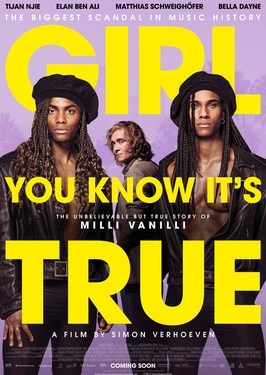
Girl You Know It’s True (2023, directed by Simon Verhoeven)


In 1988, a German music producer named Frank Farian (Matthias Schweighofer) has already recorded and produced a song called Girl You Know Its True.  He just needs to find two performers who are more photogenic than the middle-aged studio musicians who actually sang it.  Frank discovers Rob (Tijan Njie) and Fab (Elan Ben Ali), two friends who are trying to make it as dancers.  Rob is German and biracial.  Fab is French.  Frank tells them that all they have to do is lip-synch along with the record whenever they’re “performing” the song.  After Frank assures them that this type of thing is done all the time, they agree.  Frank also tells them that they will be known as Top Shelf.

The song becomes a hit and Rob and Fab become stars but they’re not known as Top Shelf, a name that is dismissed as being too German.  Instead, they find superstardom as Milli Vanilli.  With their popularity comes money, groupies, and drugs.  But when word gets out that neither Rob nor Fab actually sang on their record, everything collapses into one of the biggest entertainment scandals of the past 40 years.

I never would have guessed that a good movie could be made about the fall of Milli Vanilli but Girl You Know Its True is a surprisingly compelling and well-acted retelling of the familiar story.  The movie is as much as about the business of fame as it is about the band itself with Frank realizing and explaining that a band’s image is much more important than the music itself.  Rob and Fab are presented as being incredibly naive and trusting when it comes to Frank and his promises, with Rob also sabotaged by a need for acceptance that came out of his troubled childhood.  The villain in this story is not the band but instead a music industry that knowingly looked the other way on Frank’s deception and then scapegoated Rob and Fab when the truth came out.  Rob and Fab each deal with going from being superstars to being pariahs in their own individual way.  It leads to tragedy for one and regret for the other.

Even though I was familiar with the story, Girl You Know It’s True took me by surprise.  It’s a genuinely good film.

Retro Television Review: St. Elsewhere 2.8 “All About Eve”


Welcome to Retro Television Reviews, a feature where we review some of our favorite and least favorite shows of the past! On Fridays, I will be reviewing St. Elsewhere, a medical show which ran on NBC from 1982 to 1988.  The show can be found on Hulu and, for purchase, on Prime!

This week, everyone’s got the blues.

Episode 2.8 “All About Eve”

(Dir by David Anspaugh, originally aired on December 14th, 1983)

What a depressing episode!

With tension rising between Boston’s Catholics and its Protestants, threats are being called into the hospital because young Protestant Eddie Carson (Eric Stoltz) is still a patient.  (Last week, I assumed Eddie was Catholic but apparently, he’s supposed to be a Protestant.  I also assumed his parents were blown up in the pub bombing.  In this episode, it was made clear that the victims were his aunt and uncle.)  A group of masked, IRA-style terrorists break into Joan Halloran’s home.  Joan’s gone at the time but Bobby Caldwell is in the shower and he ends up getting beaten into unconsciousness.

(Wow, did someone on the writing staff have an issue with Irish Catholics?)

Meanwhile, Dr. Westphall has to explain to his several autistic son Tommy (Chad Allen) that their beloved housekeeper has quit and moved away.  Westphall’s daughter says she’s going to skip college and stay home to help take care of her brother.  While I’ve always known that the widowed Westphall had an autistic son, this was the first episode to actually show us Westphall interacting with Tommy.  And, with no disrespect meant to the autistic community, I can understand why Westphall always seems so depressed.  Tommy runs and hides in a corner.  Tommy hits his father.  Tommy demands to know if everyone is going to leave him.  By the end of the episode, Westphall was exhausted and I was even more exhausted from watching him.

But Westphall’s angst was not the most depressing thing about this episode.  On top of everything else, Eve Leighton died!  She didn’t die as a result of the heart that Dr. Craig transplanted into her.  The heart was working fine.  Instead, the rest of Eve’s body gave out.  Being in the hospital initially saved her life but it also shut her off from everything that inspired her to keep living.  Dr. Craig was in surgery when Eve coded.  By the time he was able to get to her room, she was already gone.  And with Eve’s death, that also means that the heart that once belonged to Morrison’s wife is gone as well.

I mean, seriously …. GOOD LORD!  It was a well-acted episode.  Both William Daniels and Ed Flanders broke my heart.  But I seriously had to rewatch Happy Gilmore after watching this show.  That’s how depressed it left me!

But that’s life and death in a hospital.  Every hospital is home to hundreds of different stories and the majority of them do not have happy endings.

Live Tweet Alert: Join #FridayNightFlix for Attack of the Killer Tomatoes!


As some of our regular readers undoubtedly know, I am involved in a few weekly watch parties.  On Twitter, I host #FridayNightFlix every Friday and I co-host #ScarySocial on Saturday.  On Mastodon, I am one of the five hosts of #MondayActionMovie!  Every week, we get together.  We watch a movie.  We tweet our way through it.

Tonight, at 10 pm et, I will be hosting #FridayNightFlix!  The movie?  1978’s Attack of the Killer Tomatoes!

If you want to join us this Friday, just hop onto twitter, start the movie at 10 pm et, and use the #FridayNightFlix hashtag!  I’ll be there happily tweeting.  It’s a friendly group and welcoming of newcomers so don’t be shy.

Attack of the Killer Tomatoes is available on Prime and Tubi!

See you there!

10 Films For The Weekend (7/25/25)


Leaving Soon

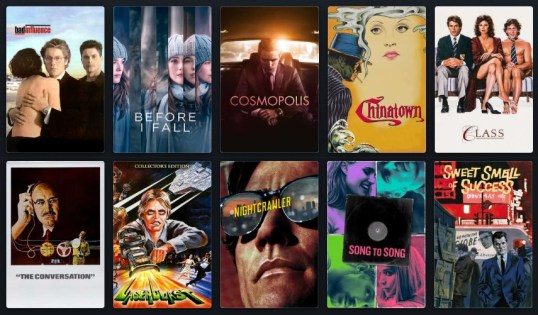
With the end of July approaching, I decided to take a look at what would soon be leaving Tubi.  I should mention that just because these films are leaving Tubi, that doesn’t mean they’re not going to start streaming somewhere else.  In fact, I imagine the reason that they’re leaving is because they’re going to start streaming somewhere else.  Here’s a few worthwhile films that are currently listed as “leaving soon” on Tubi.

Sweet Smell of Success (1957) stars Burt Lancaster as a viscous columnist and Tony Curtis as his henchmen.  When Lancaster discovers that his sister is dating a jazz musician, Lancaster decides to destroy the man’s life.  One can view this film as a satire on the tabloids, a metaphor for McCarthyism, or a commentary on cancel culture.  All those interpretations are legitimate.  Then again, it can also be viewed as just being a tremendously enjoyable and endlessly quotable pulp masterpiece, a noir where the damage isn’t done by bullets but instead by words.  Here’s the link on Tubi.

Terence Malick’s Song to Song (2017) is an intriguing Texas-set film.  It’s a Malick film and, in many ways, it’s Malick at his most self-indulgent.  There are times when the film, with its languorous shots and its multiple narrators, almost becomes a self-parody.  But there are also images that are so strikingly beautiful that they stick with you.  A talented cast — Michael Fassbender, Ryan Gosling, Natalie Portman, Val Kilmer, and others — wanders through the film and offers up tantalizing hints of what’s going on underneath the surface of their ennui-drenched lives.  It’s left to the viewer to decide what it all means.  It’s a Malick film and, because of that, worth taking a chance on.  Here’s the link on Tubi.

Based on a novel by Don DeLillo and directed by David Cronenberg, Cosmopolis (2012) is a surreal film that follows a businessman (Robert Pattinson) as he is driven around New York.  This is one of those films that people seem to either love or hate.  I loved it and I thought this was the first film that showed Pattinson was capable of doing more than just Twilight.  In a key supporting role, Paul Giamatti gives a notably disturbing performance.  Here’s the link on Tubi.

What would you do if you had the chance to live the last day of your life over and over again?  That’s the question asked by one of my favorite films of the past ten years, Before I Fall (2017).  This is a film that brough back memories of me and my friends in high school and left me wondering if I needed to apologize to anyone.  Here’s the link on Tubi.

I’m still annoyed (if not necessarily surprised) that Nightcrawler (2014) was thoroughly ignored by the Academy.  Jake Gyllenhaal definitely deserved, at the very least, a nomination for his performance as a sociopath who finds a successful career in crime journalism.  Bill Paxton and Rene Russo give excellent supporting performances.  This may be a mainstream film but its heart belongs to the grindhouse.  Here’s the link on Tubi.

Finally, what can I say about Chinatown (1974) that hasn’t already been said by a hundred other critics?  It’s one of the best noirs ever made and it’s debatable whether or not Jack Nicholson has ever been better than he was here.  Along with an intriguing mystery, the film features one of the most loathsome villains of all time, John Huston’s Noah Cross.  Faye Dunaway is excellent as the femme fatale with a devastating secret.  Here’s the link on Tubi.

Odds and Ends

After watching Chinatown, why not check out Francis Ford Coppola’s The Conversation (1974)?  I have to admit that I envy those who were alive in 1974 and who got to see the second Godfather, Chinatown, and The Conversation when they were all first released.  What’s it like to live during a cinematic golden age?  The Conversation is a brilliant thriller, featuring Gene Hackman at his best.  This is a true masterpiece of paranoia and it can be viewed on Prime.

If you’re in the mood for something completely different, the dramedy Class (1983) features Andrew McCarthy as a nerdy student who has an affair with the mother (Jacqueline Bisset) of his roommate (Rob Lowe).  It’s a very 80s film and definitely a guilty pleasure.  It can be viewed on Prime.

Speaking of Rob Lowe, he plays a bad guy in the enjoyably melodramatic Bad Influence (1990).  James Spader plays the good guy for once, an adorably nerdy guy who discovers that his new best friend doesn’t exactly have his best interests at heart.  Directed by Curtis Hanson, Bad Influence is sordid fun.  It can be viewed on Prime.

Finally, I should mention that I bought a copy of Gianni Russo’s autobiography this week.  Russo is the entertainer who played Carlo Rizzi in The Godfather and who appeared in a handful of other films, usually playing a gangster.  I’m disappointed to say that Russo did not write about the experience of co-starring in the gloriously absurd, totally 70s sci-fi flick, Laserblast (1978).  Fortunately, you can watch the film for yourself.  Russo’s role is actually pretty small but the Claymation aliens are just adorable!  This is also probably the only film ever made to feature Eddie Deezen as a bully.  Laserblast is on Prime.

You can check out last week’s films but clicking here!


A Book For The Weekend (7/25/25)


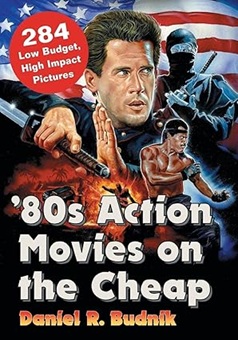
Yesterday, I received Daniel Budnick’s 80s Action Movies On The Cheap and I’m already in love with this book!

This book features 284 reviews of the 80s action films that tend to be ignored by those who now sing the praises of Stallone and Schwarzenegger.  We’re talking about the films of Michael Dudikoff here.  We’re talking about the directorial efforts of Cirio Santiago, Nico Mastorakis, Sam Firstenberg, and so many others.  We’re talking Italian action cinema.  In short, we’re talking about some of the most entertaining and unfairly overshadowed films of all time.

Yes, the American Ninja films are reviewed (or, at least, the ones that came out in the 80s are).  Yes, there’s a review of The Last Hunter and Space Mutiny and the Deathstalker films.  Much like me, Daniel Budnik appreciates Red Brown even if Reb’s habit of shouting during his action scenes does seem to be a bit weird.  But what I truly love about this book is that it also features reviews of films that even I previously didn’t know about.  I mean, honestly, there are hundreds of film guides out there.  What sets the great film guides apart from the good ones is how many previous unknown titles you can discover by just randomly flipping through it.  And when it comes to film reviews, the most important question is whether or not the review inspires you to try track down a film that you may not have seen or even heard about before.  The best film reviews inspire you to watch so that you can judge for yourself.  I’ve discovered a lot just by randomly opening this book.  And I now have a long list of cheap 80s actions films that I want to watch and which I will be watching and hopefully reviewing myself.

With 80s Action Movies On The Cheap as my guide, I look forward to all sorts of new discoveries.

(Click here for my previous entry in weekend books!)

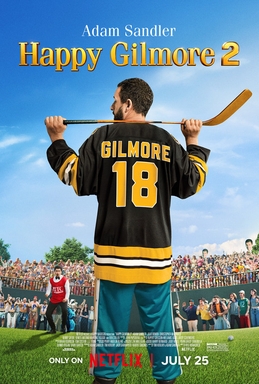
The Films of 2025: Happy Gilmore 2 (dir by Kyle Newacheck)


I love 1996’s Happy Gilmore and, over the past few months, I have very much been looking forward to the release of the long-delayed sequel, Happy Gilmore 2.  Still, I was a bit concerned when I opened the film on Netflix and discovered that the sequel had a nearly two-hour running time.  (The original clocked in at an efficient and fast-paced 90 minutes.)  Comedy is all about timing and, in general, shorter is funnier.  I know that Judd Apatow and Adam McKay might disagree with me on that but let’s be honest.  For all of the acclaim that it was met with, when was the last time you actually felt any desire to rewatch The King of Staten Island?  For that matter, if you have to pick between Anchorman or Anchorman 2, which are you going to pick?  The 90 minute original or the sequel that takes more than two hours to tell essentially the same story?

Having now watched the film, I can say that Happy Gilmore 2 does run a bit too long.  There are a few sequences that could have been trimmed without hurting the film.  I can also say that I thoroughly enjoyed the film.  I laughed more often than not.  It’s a funny film but it’s also a surprisingly touching one.

Taking place 29 years after the first film, Happy Gilmore 2 features an older and slightly more mature Happy.  It also features an older and slightly more mature Adam Sandler and, to its credit, the film acknowledges that.  It doesn’t try to convince us that Sandler and Gilmore are still the young hell-raisers that they once were.  (Happy’s Happy Place has changed considerably.)  I’ve often written that there are two Adam Sandlers.  There’s the youngish Sandler who made silly and often stupid films where he basically just hung out with his friends and didn’t seem to put much effort into anything.  That’s the Sandler who has won multiple Razzie awards.  And then there’s the older and wiser Adam Sandler, the sad-eyed character actor who gives sensitive performances as world-weary characters.  This is the Adam Sandler who seems to be overdue for an Oscar nomination.  If an alien came to Earth and only watched Adam Sandler’s serious films, they would probably think he was one our most-honored actors.  While Happy Gilmore 2 is definitely a comedy, it still features quite a bit more of the serious Sandler than I was expecting.

At the start of the movie, Happy is not in a happy place.  His grandmother has passed away.  His wife, Virginia, was killed by an errant tee shot.  He has four rambunctious sons and a daughter, Vienna (played by Sunny Sandler, who was so good in You Are So Not Invited To My Bat Mitzvah).  After Virginia’s death, Happy gave up golf.  He lost his money.  He lost his grandmother’s house.  Now, he’s working in a grocery store and he’s an almost forgotten figure.  He’s also an alcoholic, keeping bottles of liquor hidden around the house.  (A tiny liquor bottle is hidden in the cuckoo clock.)  And while this film is certainly not Uncut Gems or even The Meyerowitz Stories, Sandler still does a good job of capturing the reality of Happy’s depression.  There’s a true sense of melancholy running through the film’s first hour, as Happy returns to golf to try to make enough money to pay for Vienna to attend a prestigious dance academy.  The second hour, in which Happy leads a team of pro golfers against a team of “extreme” athletes is far more goofier but Happy’s love for his family is a theme that runs through the entire film.

Aging is the other theme that runs through the film.   Forced to play with three younger players (including Eric Andre and Margaret Qualley) at a local golf course, the rusty Happy grimaces when he hears one of them say, “Is he trying to do the Happy Gilmore swing?”  When Happy rejoins the PGA, he discovers that all of the younger players now hit the ball as hard as he used to.  An obnoxious tech bro (Benny Safdie) wants to start a new, extreme golf league, one that will “continue the revolution” that Happy started.  Happy finds himself defending traditional golf and it’s an acknowledgement that both Gilmore and Adam Sandler have grown up and have come to appreciate that not everything needs to change.  Sometimes, you just want to play a nice round of golf on a pretty course without having to deal with the sensory overload of the 2020s.

It’s a funny movie.  Even when he’s playing it straight, Sandler still knows how to deliver a funny line.  Ben Stiller returns as Hal L., who is now an addiction recovery specialist.  (His techniques include ordering people to wash his car.)  Christopher McDonald also returns as Shooter McGavin, having escaped from a mental asylum and now fighting, alongside Happy, to save the game that they both love.  As someone who always felt that Shooter kind of had every right to be upset during the first film, I was happy to see him get a bit of redemption.  Several professional golfers appear as themselves.  A running joke about Scottie Scheffler getting arrested and then forcing all of his cellmates to watch golf made me laugh a lot more than I was expecting it too.

The sequel is full of shout-outs to the first film.  A fight in a cemetery reveals that everyone who died during and after the first film just happens to have a gravestone and it was actually kind of a nice tribute.  (Even the “Get Me Out Of Here” Lady gets a headstone.)  It’s a sequel that truly appreciates and values the legacy and the fans of the first film.  It’s also a sequel that seems to truly love the game of golf, which is not necessarily something that could be said about the first film.

Happy Gilmore 2 is a worthy sequel, even if it is a bit long.  It made me laugh but, at the same time, it was hard not to be touched by the obvious love that Happy had for his family and that they had for him.  (It didn’t hurt that Happy’s daughter was played by Sandler’s daughter.)  In the first film, Happy played golf for his grandmother.  In the second film, he returns to the game for his daughter.  It’s all about family, as Adam Sandler’s unexpectedly heartfelt performance makes clear.

Film Review: Transformers: The Movie (dir. by Nelson Shin)


1986 was such a fantastic year.

With movies like Top Gun, Labyrinth and Ferris Bueller’s Day Off already out, the summer would give us Big Trouble in Little China, Aliens, & The Fly (Which at one point you could catch as a double feature with Aliens). The two best announcements at home were that a new baby was on the way and Transformers: The Movie was coming out. By August, we knew the baby would be a boy and a name was already set aside for him. We were naming him after a fallen Officer who was a friend of my father’s on the Force.

Impending older brotherhood was nice, but for 11 year old me, it all took a backseat to the Death of Optimus Prime. Up until then, the most shocking fictional event we had in school was either Return of the Jedi closing the book on Star Wars some years prior, K.I.T.T. getting destroyed (and rebuilt with Super Turbo Boost) in Knight Rider, or Rico losing Angelina in a car bomb during the Season Finale of Miami Vice just a few months back.

I didn’t get a chance to see Transformers: The Movie during the film’s initial run, simply because there wasn’t anyone at home who wanted to sit through it with me. My older brother, through other means, managed to score a VHS copy of the film within the first week or so of its theatrical release. I watched and re-watched that video so many times, and would even pause it to try to draw some of the characters. Eventually, I was able to catch a re-release for the film’s 30th Anniversary.

After two full seasons of the show, Transformers: The Movie was basically Hasbro’s way of cleaning house from the 1984 Generation 1 toy line to introduce a new set. The show sold figures, and the hopes were that the film would do the same. Granted, there were already a large number of Transformers to work with by the time the movie came out. With nearly 50 Autobots and about 35 Decepticons to choose from, the film focused on a few, such as the Insecticons, Dinobots and some of the G1 favorites like Soundwave, Starscream, Jazz & Bumblebee. The Constructicons (and Devestator)were the only group set to be featured in the movie. The Stunticons & Aerialbots would sit this one out. Hasbro really didn’t care too much about the impact of any of these changes on the movie’s plot. While most of the trailers asked “Does Optimus Die?”, their toy commercial line already introduced Rodimus Prime.

Produced by De Laurentiis Entertainment Group (Near Dark, Blue Velvet), Transformers: The Movie takes us to the future of 2005. The Autobots and Decepticons are still fighting it out, with a few changes in the war. The Decepticons own the Transformers home planet of Cybertron, but the Autobots have control of two of Cybertron’s Moons and a city on Earth. Lead by Optimus Prime (Peter Cullen, Eeyore on The Adventures of Winnie the Pooh), the plan is get back to Earth and then handle the Decepticons from there. Of course, the Decepticons and their leader, Megatron (Frank Welker, The Golden Child) find out about this and intercept an Autobot shuttle, outright killing classic show staples Prowl, Brawn, Rachet and Ironhide. I can’t imagine what it was like to be a kid, bring your favorite toy to the movies, only to see the character it’s based on killed on screen. To make things worse, a planet eating transformer named Unicron threatens both parties, including Cybertron. Can Unicron be stopped?


It wasn’t a total loss. We were introduced to new Autobots in the rookie Hot Rod (Judd Nelson, The Breakfast Club), the war hero Kup (Lionel Stander, TV’s Hart to Hart), the fast talking Blurr (John Moschitta, Jr., Dick Tracy), would be leader Ultra Magnus (Robert Stack, Airplane), an Autobot First Lady in Arcee (Susan Blu), and Triple Changer Springer (Neil Ross). The two most famous vocal additions were Leonard Nimoy (Invasion of the Body Snatchers) the new Deception leader Galvatron and Orson Welles (The Third Man) as Unicron. As a kid, it was pretty awesome to know that both Spock and the “No Wine Before It’s Time” guy were joining in all of this. It made Transformers seem a bit larger. My parents would point out that Orson Welles was “the” Orson Welles, but as Citizen Kane wasn’t on my radar (despite my Dad owning and watching it), I associated him with Wine commercials. To both their credit, Nimoy and Welles did just fine with their vocal talents.

While the animation for Transformers was never fantastic, the movie was a bit of an improvement. It never quite reached the levels of anime films like Fist of the North Star & Golgo 13: The Professional. The Soundtrack was ultimately where the film shined, with a mix of rock music from bands like Lion and Stan Bush and a score by Vince DiCola. Coming off of Staying Alive and Rocky IV, DiCola’s work on Transformers: The Movie was great, and remains a go to album for me when music is needed for a situation.

The Death of Optimus Prime was a bit of a shock to the audiences that saw (and cared about) it. Hasbro would eventually bring Prime back temporarily as a Zombie in an episode of the show’s 3rd Season, and then again to lead in the season’s 2 part finale, “The Return of Optimus Prime”.

After seeing the film, I asked me parents for some of the movie based Transformers. Christmas was put on hold by my Mom as she went into labor around Christmas Eve. I was able to open just one gift before Christmas. This happened to be a Hot Rod figure that I found in a toy store back in November, which was quickly snatched and wrapped for the Christmas Pile before I could get to open it. She had my little brother on Christmas Morning, and we eventually celebrated the holiday half a week later. Bless her heart, she gave me almost the entire Movie line – Galvatron, Rodimus Prime, Springer, Cyclonus, and the Predacons (who weren’t in the movie). Playing with them took a backseat to diaper detail, but hey, that Christmas was one of the best.

Overall, Transformers: The Movie is one of those films I happily return to from time to time. It’s not incredible in any major way, but it takes me back to one element of a magical year.

Scene That I Love: Bob Barker Beats Up Happy Gilmore


Happy Gilmore 2, the sequel to my favorite golf movie, is currently available on Netflix.  I’ll be watching it later today.  I have no idea if it’s any good or not.  I’m hoping for the best, though.

Anyway, this seems like a good time to share the best scene from the original Happy Gilmore.  In this scene, Happy and Bob Barker team up for a celebrity tournament.  It does not go well.  Reportedly, Barker initially turned down this cameo and only changed his mind after he was assured that he would win the fight.