I watched the classic Terence Hill film Super Fuzz last night. As anyone who has seen the movie can tell you, the movie features a theme song that just won’t quit. It’s been stuck in my head since last night. And now, it can be stuck in yours!
There’s a man, do you see? And he looks just like you and me Didn’t he know? Everything he got don’t show
There’s a cop, do you see? And he looks like every cop on the street You will discover You can’t judge this cop by his cover
He’s a super snooper Really super trooper A wonder cop, a one like you never saw
He’s a super snooper Really super trooper A wonder cop, who roll the side of the law
There’s a stir on the floor Super snooper open the door Didn’t he know? Everything he got don’t show
He’s a super snooper Really super trooper A wonder cop, a one like you never saw He’s a super snooper Really super trooper
He’s a super snooper Really super trooper A wonder cop, a one like you never saw He’s a super snooper Really super trooper
He’s a super snooper Really super trooper A wonder cop, a one like you never saw
He’s a super snooper Really super trooper A wonder cop who roll the side of the law
Songwriters: Angelo La Bionda / Carmelo La Bionda / Timothy Touchton
Some of the most inventive action films have been coming out of Southeast Asia these past 20 or so years. It was led by the very entertaining and brutal actions films headlined by martial artist turned action star Tony Jaa from Thailand then followed up by Indonesian action star Iko Uwais from The Raid series by Welsh director Gareth Edwards.
In 2018, Netflix bought the distribution rights for an Indonesian action thriller from director Timo Tjahjanto that starred the aforementioned Iko Uwais, Joe Taslim, Julie Estelle and a who’s who of Indonesia’s acting scene. At first glance, The Night Comes for Us looked to cash-in o the popularity of Gareth Edwards’ The Raid series, but one would be both mistaken and remiss to think such a thing.
The Night Comes for Us looked at Edwards’ The Raid duology and thought to itself that the action wasn’t brutal and visceral enough so decided to rectify that missed opportunity. Timo Tjahjanto took what he learned from his past work on horror films and decided to add some of those visual storytelling techniques to an action film that one would either have a hard time to sit through while viewing or just gobble with up with glee.
Guilty pleasure doesn’t mean the film has to be cheaply made or seen as being bad it’s good type of thing. I always thought that its something that one enjoyed despite knowing that there’s many out there who would look at someone askance for enjoying such a low-brow affair. The Night Comes for Us is both visually stunning in its production yet still has that low-down, grungy feel to it that harkens back to the hey day of grindhouse films of the 70’s and early 80’s. The only thing missing from this film was film grain imperfections such as film scratches and flaws to give it that 42nd street, NYC movie theater circa 1970’s experience (stale, days old popcorn and sticky floors included).
This film has it all and it has it in such abundance that one might just forgive Timo Tjahjanto for overdoing things when it came to the brutal violence that in years past would’ve earned it the dreaded XXX thus endearing it to the grindhouse crowd. The film actually opens up and ends in one of the few calm and introspective scenes with everything else in-between just straight up violence both hand-to-hand and gun variety. The Night Comes for Us is the film version of that saying “it woke up and chose violence.”
Joe Taslim headlines the film and he gives such a visceral and unhinged performance that one would be forgiven for mistaking his character as the villain if seeing the film in the middle after missing the beginning. Iko Uwais usually plays the reluctant hero in his previous films, but gets to let loose in a more antagonist role that more than matches Taslim when the two finally square off each other. The other stand-out performance to highlight would be Julie Estelle as The Operator who can throw down just as extreme as the men and, in fact, her fight scenes are pretty much the most brutal in the whole film and that is saying a lot.
So yeah, The Night Comes for Us, go see it and be horrified and/or amazed in equal measure. I guarantee that even if you hate the experience you won’t say that it was ever boring or bland.
Today, we wish a happy birthday to actress Geena Davis. Today’s scene that I love comes from 1996’s The Long Kiss Goodnight and features Geena Davis as a badass action movie star!
4 (or more) Shots From 4 (or more) Films is just what it says it is, 4 (or more) shots from 4 (or more) of our favorite films. As opposed to the reviews and recaps that we usually post, 4 (or more) Shots From 4 (or more) Films lets the visuals do the talking.
96 years ago today, Radley Metzger was born in New York, New York. After serving as a photographer in the U.S. Air Force, Metzger went into film distribution. He brought European “art” films to the United States and booked them in various grindhouse theaters. Like so many film distributors and producers, Metzger eventually realized that he could make a lot more many by making his own films. In the late 60s and the early 70s, Metzger was one of the pioneers of the adult film industry. He directed adult films that were distinguished by their strong sense of composition, intelligent storylines, and their sense of characterization.
Unfortunately, Metzger’s films were a bit too arty for the adult crowd and too explicit for the mainstream critics. Still, over the years, Metzger’s work has been rediscovered and appreciated by open-minded film lovers and by people like me who just happen to like artistically-minded decadence.
Today, we honor Radley Metzger with….
4 Shots From 4 Radley Metzger Films
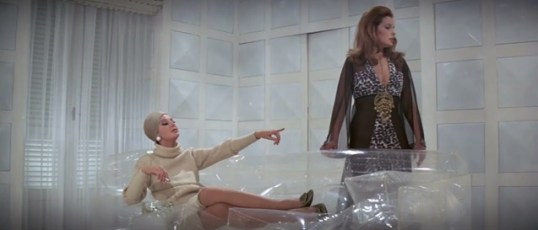
Camille 2000 (1969, dir by Radley Metzger, DP: Ennio Guarnieri)
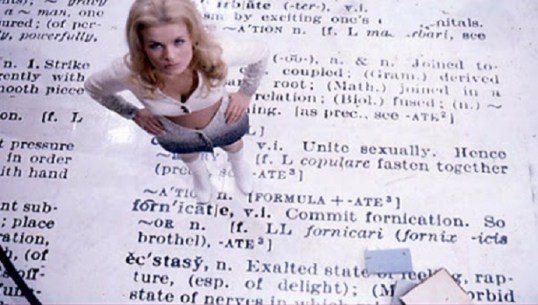
The Lickerish Quartet (1970, dir by Radley Metzger. DP: Hans Jura)
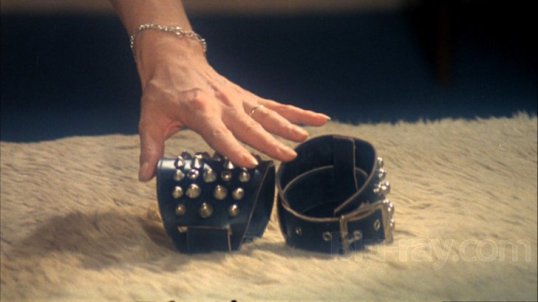
Score (1974, dir by Radley Metzger, DP: Frano Vodopivec)
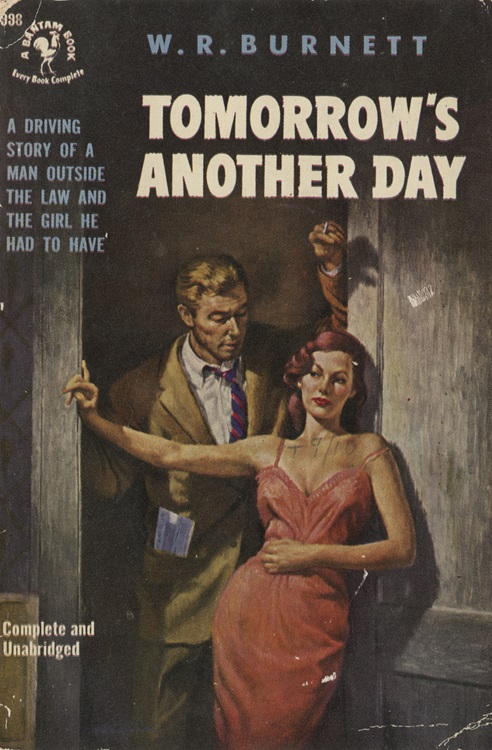
Barbara Broadcast (1977, dir. Radley Metzger, DP: Chico Carter)
In Reagan, Dennis Quaid stars at the 40th President of the United States.
Framed as a story being told by a former KGB agent (Jon Voight) who is attempting to make a younger politician understand why Russia lost the Cold War, Reagan starts with Reagan’s childhood, includes his time as an actor and as the anti-communist head of the SAG, and then gets into his political career. Along the way, several familiar faces pop up. Robert Davi plays a thuggish Russian leader. Mena Suvari plays Reagan’s first wife while Penelope Ann Miller plays his second. Xander Berekely plays George Schultz (who was just previously played by Sam Waterston in The Dropout miniseries.) C. Thomas Howell, Kevin Dillon, Dan Lauria, and Lesley-Anne Down all have small but important roles. And the usual suspects when it comes to conservative filmmaking — Nick Searcy, Kevin Sorbo, and Pat Boone — are there to compliment Voight and Davi. I was a little surprised to see that Dean Cain was not present.
As usually happens to films that feature sympathetic Republicans, Reagan was slammed by critic but better-appreciated by the audience for which the film was made. I wasn’t particularly surprised. Movie critics tend to be liberal and Reagan is very much not that. For a professional film critic, a film like Reagan must be met with snark and derision because otherwise, one would risk cancellation. Don’t get me wrong. I’m not saying that there aren’t things to criticize about Reagan the film. I’m just saying that one should always keep in mind that critics have their own individual biases. One reason why the Rotten Tomatoes score is such an unfortunate development is because it ignores the fact that most films have things that work and things that don’t work and that quality is often in the eye of the beholder. Instead, it just tells us that a film is either a 90% or a 10%.
As for Reagan, it’s definitely a bit on the heavy-handed side but, then again, I think the same can be said for just about every political film that’s come out over the last few decades. For those who claim Reagan is somehow more heavy-handed than most, I invite them to sit through Rob Reiner’s LBJ. Indeed, the only director who has really shown a willingness to admit that a President can be both good and bad was Oliver Stone and when was the last time anyone watched Nixon? Reagan is at its weakness when it tries to recreate Reagan’s time as an actor. Dennis Quaid gives a good and charming performance throughout the film but he’s also 70 years old and, in the scenes where he plays the youngish Ronald Reagan, all of the soft-lighting and Vaseline on the lens ends up making him look like a wax figure. Once Reagan gets older, Quaid is allowed to act his age and both he and the film become much more convincing. I enjoyed the film once Reagan became President, though you should understand that I have biases of my own. I’m a fan of low taxes and individual freedom, which is why I’m also not a fan of communism or, for that matter, any extreme ideology that attempts to tell people how to live or think. “Tear down this wall!” Regan says while standing in front of the Berlin Wall and it’s a rousing moment, both in reality and on film.
In the end, Reagan is a film that will be best appreciated by people who already like Ronald Reagan. Yes, the film is heavy-handed and the framing device is a bit awkward. But Dennis Quaid’s heartfelt (and, towards the end, heartbreaking) performance carries the film. The film is not at all subtle but you know what? I’ve seen a countless number of mediocre films that have portrayed Reagan negatively, often with as little nuance and just as heavy-handed an approach as Reagan uses in its positive portrayal of the man. I sat through The Butler, for God’s sake. There’s nothing wrong with having a film that looks at the man from the other side. Those who like Ronald Reagan will feel vindicated. Those who don’t will say, “What was up with that Pat Boone scene?”
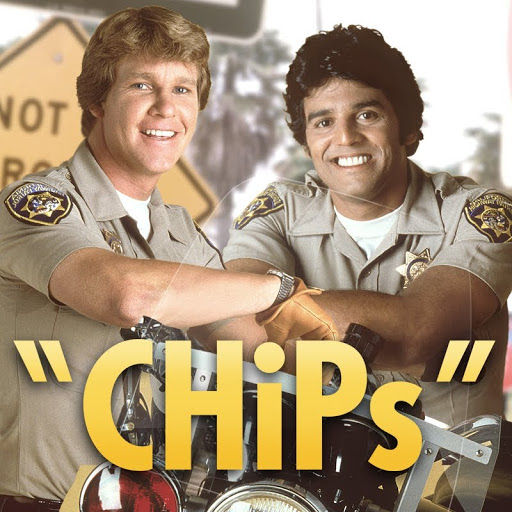
Welcome to Late Night Retro Television Reviews, a feature where we review some of our favorite and least favorite shows of the past! On Mondays, I will be reviewing CHiPs, which ran on NBC from 1977 to 1983. The entire show is currently streaming on Prime!
This week, someone dies! OH MY GOD!
Episode 3.5 “Death Watch”
(Dir by Barry Crane, originally aired on October 13th, 1979)
Dennis (Christopher Stone) is a veteran movie stunt driver who has never gotten over the tragic death of his child and the way he was treated by a heartless insurance company. He now drives up and down the freeway, looking for drivers who look like they have good insurance. Using his stunt skills, he causes accidents and then, under one of many assumed names, he files an insurance claim. Dennis’s wife (played by Dee Wallace, who was married to Stone at the time) thinks that Dennis is taking things too far but Dennis is convinced that he’s earned the right to commit insurance fraud. As he puts it, the companies have enough money that it’s not going to hurt them if he steals some of it.
Unfortunately, his latest attempt to cause an accident results in a delivery van swerving to the side of the road and striking two policemen who have pulled over a drunk driver. One of the policeman is series regular Bear (played by Brodie Greer). The other is a guy named Steve (Stephen Parr) who we’ve never seen before but who is quickly established as being everyone’s best friend. Or, I guess, he was everyone’s best friend as he dies shortly after being taken to the hospital. I have to admit that Steve dying was a bit jarring. It’s rare that anyone on CHiPs is seriously injured, much less killed.
The highway patrol officers are shaken by Steve’s death. Ponch and Baker go to the station’s gym and work off their frustration. Jon lifts weights. Ponch takes off his shirt and starts hitting a punching bag and, despite the tragedy of the situation, it was hard not to laugh at the show using it as an excuse for Erik Estrada to once again take off his shirt.
The members of the highway patrol attend Steve’s funeral. It’s pretty somber until Bear rolls into the church in his wheelchair and everyone breaks out into a huge smile. They’re happy that Bear survived but I do have to wonder how Steve’s family felt when they saw all those smiles and heard the officers joking amongst themselves. I guess they should have been happy that Ponch actually wore pants and a shirt to the funeral as opposed to showing up in a speedo. Seriously, if anyone would do that, it would be Ponch.
All of the bad drivers are brought to justice. The driver of the delivery van loses his job. Dennis goes to prison. By the end of the episode, everyone’s in a good mood again. Rest in peace, Steve!
This episode deserves some credit for trying to deal with a serious issue. Death is a big deal. Unfortunately, CHiPs really isn’t the best format for heart-rendering drama. Even after Steve was killed, the show still teased the audience with the promise of another crash. In the end, the main message seemed to be that it was better to lose Steve than Bear …. or, God forbid, Ponch!
The great director Federico Fellini was born, on this day, 125 years ago.
He was born in Rimini. That’s in Northern Italy. (The Italian side of my family comes from Southern Italy and yes, there is a difference.) Fellini was 19 years old when he enrolled in law school but records, which were admittedly spotty at the time, seem to indicate that he never attended a single class. Instead, Fellini found work as a writer, working first as a journalist and then a screenwriter. (He was one of the many credited for writing the screenplay for Rome, Open City.) He began his directing career as a neorealist in the 50s but soon crafted his own unique style, one which openly mixed humor with drama and fantasy with earthiness. Fellini established himself as one of the world’s best directors, a filmmaker who made art films that not only entertained but also provoked thought. Fellini was a director who embraced life’s contradictions as well as being a strong anti-authoritarian who rarely commented on politics but did make known his distaste for communism. He was also one of Mario Bava’s best friends.
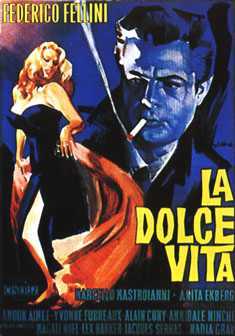
My favorite Fellini film is 1960’s La Dolce Vita.
Ah, to be rich, decadent, and jaded in Rome in the early 60s! Or maybe not. Sometimes, being jaded is not as much fun as it seems.
La Dolce Vita is largely remembered for the scene in which actress Sylvia (Anita Ekberg) and journalist Marcello (Marcello Mastroianni) wade into Rome’s Trevi Fountain. While that it is a great and sensual scene and justifiably famous (and, in fact, the film’s poster was originally a shot of Ekberg in the fountain despite the fact that the scene is only a small part of a 3-hour movie), it’s often overlooked that the scene itself does not have a happy ending. When Marcello and Sylvia return to Sylvia’s hotel, Sylvia is slapped by her loutish boyfriend (played by Lex Barker). Marcello, meanwhile, has a fiancée named Emma (Yvonne Furneaux) who is recovering from a recent overdose. Even though Marcello swears that he loves Emma and that he would do anything for her, he is still compulsively unfaithful.
When we first meet Marcello, he’s in a news helicopter, watching as a statue of Jesus is flown over Rome. However, Marcello is distracted by the sight of a group of women sunbathing on a nearby rooftop and he tries to get their phone numbers before returning to following the statue. That pretty much sets the tone for most of what we see of Marcello over the course of La Dolce Vita. He’s searching for the profound and transcendent but he frequently gets distracted by his own more earthy desires.
The film follows Marcello as he encounters different people in Rome and the surrounding area. Some of them are rich and some of them are poor. All of them are looking for something but none of them seem to be quite sure what it is. A possible sighting of the Madonna brings a crowd of people to the outskirts of Rome, where everyone asks for something but the end result is only chaos. A meeting with an intellectual friend of Marcello seems to offer a solution to Marcello’s ennui until a tragedy reveals that his friend was even more lost than Marcello. (The film’s sudden tragic turn took me very much by surprise when I first saw it, despite the fact that countless filmmakers have imitated the moment since.) A possibly important conversation on a beach is made unintelligible by the crashing waves and, instead of providing enlightenment, it ends with a shrugs and an enigmatic smile. There’s a definite strain melancholy running through the film though there’s also a certain joi de vivre to many of Marcello’s adventures. Marcello is torn between seeking transcendence and seeking pleasure. Fellini shows us that both are equally important. It’s left to use to decide whether the pleasure is worth the heartache and vice versa.
La Dolce Vita is visually stunning portrait of life in Rome at a very particular cultural moment. Marcello Mastroianni is the epitome of decadent cool in the lead role but he’s also a good enough actor to let us see that Marcello is never quite as proud of himself or as happt with his life as everyone assumes he is. La Dolce Vita may be about a specific cultural moment but, as a film, it is timeless.
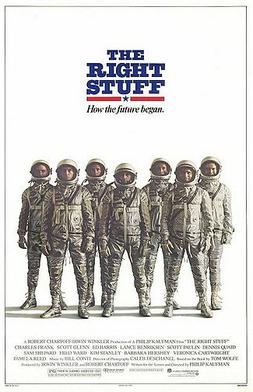
There’s a brilliant scene that occurs towards the end of 1983’s The Right Stuff.
It takes place in 1963. The original Mercury astronauts, who have become a symbol of American ingenuity and optimism, are being cheered at a rally in Houston. Vice President Lyndon Johnson (Donald Moffat) stands on a stage and brags about having brought the astronauts to his supporters. One-by-one, the astronauts and their wives wave to the cheering crowd. They’re all there: John Glenn (Ed Harris), Gus Grissom (Fred Ward), Alan Shephard (Scott Glenn), Wally Schirra (Lance Henrisken), Deke Slayton (Scott Paulin), Scott Carpenter (Charles Frank), and the always-smiling Gordon Cooper (Dennis Quaid). The astronauts all look good and they know how to play to the crowd. They were chosen to be and sold as heroes and all of them have delivered.
While the astronauts are celebrated, Chuck Yeager (Sam Shepard) is at Edwards Air Force Base. Yeager is the pilot who broke the sound barrier and proved that the mythical “demon in the sky,” which was whispered about by pilots as a warning about taking unnecessary risks, was not waiting to destroy every pilot who tried to go too fast or too high. Yeager is considered by many, including Gordon Cooper, to be the best pilot in America. But, because Yeager didn’t have the right image and he had an independent streak, he was not ever considered to become a part of America’s young space program. Yeager, who usually holds his emotions in check, gets in a jet and flies it straight up into the sky, taking the jet to the edge of space. For a few briefs seconds, the blue sky becomes transparent and we can see the stars and the darkness behind the Earth’s atmosphere. At that very moment, Yeager is at the barrier between reality and imagination, the past and the future, the planet and the universe. And watching the film, the viewer is tempted to think that Yeager might actually make it into space finally. It doesn’t happen, of course. Yeager pushes the jet too far. He manages to eject before his plane crashes. He walks away from the cash with the stubborn strut of a western hero. His expression remains stoic but we know he’s proven something to himself. At that moment, the Mercury Astronauts might be the face of America but Yeager is the soul. Both the astronauts and Yeager play an important role in taking America into space. While the astronauts have learned how to take care of each other, even the face of government bureaucracy and a media that, initially, was eager to mock them and the idea of a man ever escaping the Earth’s atmosphere, Chuck Yeager reminds us that America’s greatest strength has always been its independence.
Philip Kaufman’s film about the early days of the space program is full of moments like that. The Right Stuff is a big film. It’s a long film. It’s a chaotic film, one that frequently switches tone from being a modern western to a media satire to reverent recreation of history. Moments of high drama are mixed with often broad humor. Much like Tom Wolfe’s book, on which Kaufman’s film is based, the sprawling story is often critical of the government and the press but it celebrates the people who set speed records and who first went into space. The film opens with Yeager, proving that a man can break the sound barrier. It goes on to the early days of NASA, ending with the final member of the Mercury Seven going into space. In between, the film offers a portrait of America on the verge of the space age. We watch as John Glenn goes from being a clean-cut and eager to please to standing up to both the press and LBJ. Even later, Glenn sees fireflies in space while an aborigines in Australia performs a ceremony for his safety. We watch as Gus Grissom barely survives a serious accident and is only rescued from drowning after this capsule has been secured. The astronauts go from being ridiculed to celebrated and eventually respected, even by Chuck Yeager.
It’s a big film with a huge cast. Along with Sam Shepherd and the actors who play the Mercury Seven, Barbara Hershey, Pamela Reed, Jeff Goldblum, Harry Shearer, Royal Dano, Kim Stanley, Scott Wilson, and William Russ show up in roles both small and large. It can sometimes be a bit of an overwhelming film but it’s one that leaves you feeling proud of the pioneering pilots and the brave astronauts and it leaves you thinking about the wonder of the universe that surrounds our Earth. It’s a strong tribute to the American spirit, the so-called right stuff of the title.
The Right Stuff was nominated for Best Picture but, in the end, it lost to a far more lowkey film, 1983’s Terms of Endearment. Sam Shepard was nominated for Best Supporting Actor but lost to Jack Nicholson. Nicolson played an astronaut.


 Through the Shattered Lens