Late Night Retro Television Review: Friday the 13th 2.24 “The Shaman’s Apprentice”


Welcome to Late Night Retro Television Reviews, a feature where we review some of our favorite and least favorite shows of the past! On Fridays, I will be reviewing Friday the 13th: The Series, a show which ran in syndication from 1987 to 1990. The entire series can be found on YouTube!

This week, Micki is faced with a moral dilemma.

Episode 2.24 “The Shaman’s Apprentice”

(Dir by William Fruet, originally aired on May 29th, 1989)

Micki’s friend, Blair (Isabelle Mejias) is in the hospital.  She’s been having serious chest pains and, as Micki puts it, she’s too young to be suffering from them.  Blair finds out that she has a sarcoma and the doctors are not giving her much chance to live.  Dr. Lamar (James B. Douglas), the arrogant head of surgery at the local hospital, doesn’t seem to really care whether Blair lives or dies.  All he cares about is taking care of the wealthy patients who might be moved to donate some of their money to the hospital.

However, Blair has found a reason for hope.  There is a Native American doctor named John Whitecloud (Paul Sanchez).  He has his own clinic, one that is funded by a rich man who Dr. Lamar said couldn’t be saved.  Dr. Lamar hates Whitecloud, largely because Lamar is a racist who views Whitecloud’s “shamanistic” techniques with scorn.  However, Whitecloud appears to be capable of saving anyone.  Of course, the doctors and the nurses who have failed to treat Whitecloud with respect have a habit of mysteriously dying, usually right before Whitecloud manages to save a terminal patient.

Whitecloud does indeed have an objects that Jack and Ryan are interested in retrieving.  It’s not a cursed antique.  Instead, it’s a rattle that Whitecloud stole from his grandfather, Spotted Owl (Gordon Tootoosis).  Whitecloud is using the rattle to cure his patients but, for every cure, he also has to use it to kill someone else.  Whitecloud even uses it to kill Spotted Owl, though Whitecloud seems to feel bad about doing it.  When Jack realizes that Whitecloud’s next target is going to be Dr. Lamar, he and Ryan are determined to stop him….

….except, as Micki points out, stopping Whitecloud will mean that her friend Blair will die.  Why, Micki wonders, should Lamar get to live while Blair dies?  Micki argues that they should at least let Whitecloud cure Blair but Jack gently explains that it doesn’t work that way.  Jack says that their job is not to play God.

Long story short: The spirit of Spotted Owl shows up to drag Whitecloud into the afterlife.  Jack gives the rattle back to the tribe, despite Ryan feeling that it should be in the vault.  (“It’s not ours to take,” Jack explains in that reasonable and reassuring way of his.)  Micki is angry and depressed that Blair is probably going to die.  Blair stands on a street corner and stares at Whitecloud’s now empty clinic.  Roll the end credits!

Wow, that was depressing!  But it was really the only way the episode could end and I respect the fact that the show had the courage and the integrity to stay true to itself and end on such a down note.  Not many shows would have had the courage to resist coming up with some sudden, miracle solution.  This episode had some really cheap looking special effects and some not-so-great acting from some of the guest stars but Chris Wiggins, Robey, and John D. LeMay were as strong as always.  This episode was especially an effective showcase for Chris Wiggins, who played Jack with just the right amount of weary gravitas.  This was a depressing episode but it was a good one.

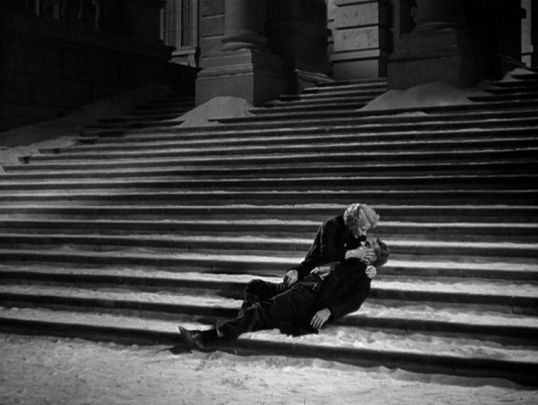
Lisa Marie Review An Oscar Nominee: Here Comes Mr. Jordan (dir by Alexander Hall)


1941’s Here Comes Mr. Jordan tells the story of Joe Pendelton (Robert Montgomery).

Joe’s a boxer, an honest and kind-hearted guy who is in training for the big title fight.  Despite the concerns of his trainer, Max (James Gleason), Joe decides to take his own private airplane out for a flight.  A freak accident causes the plane to go into a nosedive and Joe suddenly finds himself standing amongst the clouds with a bunch of other people who are waiting for their chance to enter Heaven.

7013 (Edward Everett Horton), an angel, explains that he took Joe’s soul up to heaven when he saw that the plane was about to crash.  Joe is not happy about this.  He wants his title fight!  7013’s superior, Mr. Jordan (Claude Rains), checks his records and discovers that a mistake has been made.  Joe was supposed to live until 1991 and he was also supposed to win the boxing championship.  Unfortunately, Max has had Joe’s body cremated.  Mr. Jordan decides to put Joe’s soul into the body of someone else who is scheduled to die.  Joe asks to be put in the body of an athlete so that he can pursue his boxing career.

Instead, Joe ends up in the body of a middle-aged banker named Bruce Farnsworth.  Farnsworth has been poisoned by his wife (Rita Johnson) and her lover (John Emery).  At first, Joe refuses to become Farnsworth but when he sees his murderers taunting Bette (Evelyn Keyes), whose father was defrauded by Farnsworth, Joe changes his mind.  His murderers are shocked when Farnsworth turns out to be alive.  Bette is shocked when the previously cold Farnsworth helps her get back the money that her father lost.  And Max is shocked when Farnsworth calls him to the mansion and explains that he’s really Joe Pendleton.  Only with Joe/Farnsworth plays the saxophone badly does Max believe what Joe says.  Joe asks Max to train him for the boxing match that he was scheduled to fight while alive.  Max agrees but Mr. Jordan warns Joe that, if he’s going to fulfill his destiny and become champ, it’s not going to be as Bruce Farnsworth, regardless of the fact that Joe/Farnsworth and Bette have now fallen in love.

A romantic comedy that is blessed with two likable performances from Robert Montgomery and Evelyn Keyes and a great one from Claude Rains, Here Comes Mr. Jordan was nominated for Best Picture of 1941.  It lost to How Green Was My Valley.  While Here Comes Mr. Jordan really can’t compare to some of the other films that lost (amongst the other nominees were Citizen Kane and The Maltese Falcon), it’s still a wonderfully charming film that holds up well today.  Everyone should be as lucky as to have a guardian who is as charming and urbane as Claude Rains is as Mr. Jordan.

In 1978, Here Comes Mr. Jordan was remade by Warren Beatty, who named his version of the story Heaven Can Wait.  That version of the story was also nominated for Best Picture, though it lost to The Deer Hunter.

Cops and Robbersons (1994, directed by Michael Ritchie)


Chevy Chase is Norman Robberson, a hen-pecked suburban dad who likes to watch cop shows.  When he is informed that his next door neighbor, Horace Obsborn (Robert Davi), is suspected of being a Mafia hitman, he agrees to allow Detectives Jake Stone (Jack Palance) and Tony Moore (David Barry Gray) to use his house as their stakeout location.

Cops and Robbersons is just as terrible as its title.  Norman is basically Clark Griswold without the excuse of a vacation or the holidays to explain away his stupidity.  Jack Palance growls and looks annoyed but without the same comedic flair that he brought to City Slickers.  Dianne Wiest is wasted as Norman’s wife.  Of course, Norman’s daughter develops a crush on Tony while Norman’s son dressed up like Dracula and tries to put the bite on Stone.  Norman keeps getting in the way of the two cops and trying to conduct an investigation on his own.  There has to be an easier way to capture a hitman.  The only thing that really works is Robert Davi’s performance as the hitman.  Davi doesn’t try to be funny, which actually brings out the best in Chase whenever they share a scene.  Chase’s goofy dad shtick works best when he’s dealing with someone who isn’t trying to score laughs of his own.

How did the great Michael Ritchie end up directing movies like this?  Whoever let that happen should be ashamed.


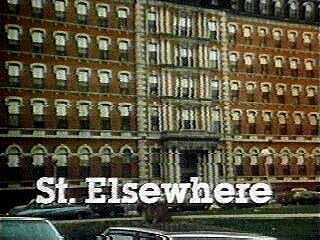
Retro Television Review: St. Elsewhere 1.8 “Tweety and Ralph”


Welcome to Retro Television Reviews, a feature where we review some of our favorite and least favorite shows of the past! On Fridays, I will be reviewing St. Elsewhere, a medical show which ran on NBC from 1982 to 1988.  The show can be found on Hulu and, for purchase, on Prime!

Oddly enough, this week’s episode is not available on Hulu.  I had to purchase it on Prime.  I’m not really sure why this episode — and apparently this episode alone — wouldn’t be on Hulu.  The world of Streaming is a strange and arbitrary place.

Episode 1.8 “Tweety and Ralph”

(Dir by Mark Tinker, originally aired on December 20th, 1982)

Dr. Craig is still trying to track down the mysterious Dr. Barnum, the man who says that he’s interested in Craig’s convertible.  Dr. Craig is constantly getting messages from Barnum.  He’s constantly hearing Barnum being paged on the PA.  Craig has become obsessed with tracking down the elusive Dr. Barnum.

Of course, Dr. Barnum does not exist.  What started as a practical joke on the part of Dr. Samuels has grown into a hospital-wide conspiracy of people playing with the emotions of the pompous and prickly Dr. Craig.  Craig is so obsessed with selling his car that he even cuts his hand while working on the engine.  Finally, Dr. Craig’s wife, Ellen (played by William Daniels’s real-life wife, Bonnie Bartlett), confronts Samuels and tells him that she knows what he’s doing.  When Samuels hears that Craig cut his hand, he feels guilty.  He knows how important a surgeon’s hands are.  Samuels finally works up the courage to tell Craig the truth.  Craig laughs.  And then he punches out Dr. Samuels.

And you know what?  Dr. Samuels totally deserved it.  Good for you, Dr. Craig!

(Everyone seems to have forgiven Dr. Samuels for causing a VD break-out during the pilot.  They’re very forgiving at St. Eligius.)

Meanwhile, the Legionnaire’s outbreak is finally contained, with the culprit being one dirty shower head.  Ward 5 is re-opened!  Yay!  Dr. Westphall celebrates his victory but still comes across as being the most depressed man on the planet.  While that goes on, Dr. Fiscus reveals that he now carries a gun so he won’t get mugged in the ER again and Dr. Cavanero considers her decision to devote her life to her career when a friend check into the hospital for hysterectomy.

That said, the majority of the episode centered around Ralph (Richard Marcus) and Jane (Laraine Newman), two psychiatric patients.  Jane is pregnant and Ralph is the father.  Ralph is a genius who graduated at the top of his class from MIT and who invented his own personal computer.  Unfortunately, he also thinks that he’s a bird and has been stealing medical supplies to build a giant nest in one of the supply closets.  Jane wants to marry Ralph but, when she and Ralph go out to dinner with Dr. Beale, Jane can only watch in horror as Ralph panics at the sight of a cat.  “Caw!  Caw!” Ralph shouts as he jumps up on  a chair.  The cat, for its part, just looks confused.

In other words, the marriage is off.  Jane tells Ralph that she’ll always love him but that she can’t be with him anymore.  The episode ends with a close-up of Ralph intensely staring at the camera.  Uh-oh, that doesn’t look good….

This was a weird but ultimately effective episode.  I really shouldn’t have been as emotionally moved as I was by Ralph and Jane’s story.  Ralph’s behavior was more than a little cartoonish.  But, I have to admit that I felt really sad as Jane said goodbye to Ralph.  Richard Marcus and Laraine Newman did such a good job playing the characters that I couldn’t help but be sad that things weren’t working out for them.

Oh well.  I guess that’s just another day at St. Eligius….

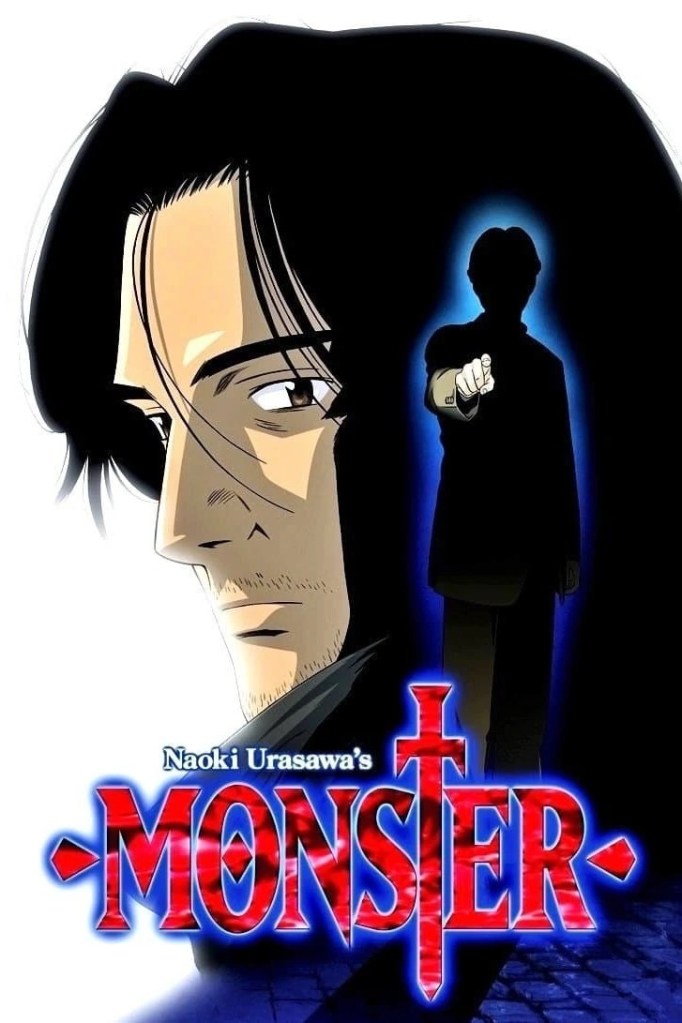
Anime You Should Be Watching: MONSTER


Naoki Urusawa is widely considered one of the great mangaka (comic artist who illustrates and/or writes manga) and some sees him as one of the great storytellers of our time. His work ranges from science fiction (20th Century Boys) to sports (Happy!) and to psychological thriller (MONSTER). It is his foray into the psychological thriller realm that we are here today.

MONSTER was originally published through 18 volumes from December 1998 to December 2001. This is a rarity amongst non-shonen manga which tend to be the type of manga that remains the most popular and non-ending publishing run. Urusawa’s psychological thriller wasn’t initially seen as something that would become popular and well-received when he first approached his editor about the idea for the epic story. Yet, despite his editor’s misgivings, MONSTER gained not just critical-acclaim but a strong following not just from manga readers, but from those who usually do not subscribe to what some would see as just another comic. It is this crossover appeal along all types of readers that would see Urusawa’s dark work sell over 20 million copies sold.

Like all popular manga, MONSTER would get an anime adaptation that ran from early April 2004 and to the series’ finale late September 2005. Just like its manga, the anime series would come to be known as one of the great anime series of the past 25 years. Where some anime adaptations of popular and critically-acclaimed works tend not reach the same level quality, MONSTER avoids the pitfalls of telling such a dense and heavy story by taking on the challenge and letting the series run for as long as it needs to be able to tell a faithful adaptation.

MONSTER the anime I would put up with all the other great live-action thrillers whether film or tv and for the most part would surpass most of them. The sophistication of its execution from the making the complex plot of the story easy to follow without dumbing it down for the general audience and, this is where MONSTER hits the mark, in keeping a steady and pace that neither rushes things or keep scenes last longer than they should before boredom begins to creep in.

Those who are not big on the cutesy and/or the hyper-action of most anime that tend to be popular with the general public, I suggest taking on MONSTER and just see just how mature and sophisticated the medium can be in addition to the rest.

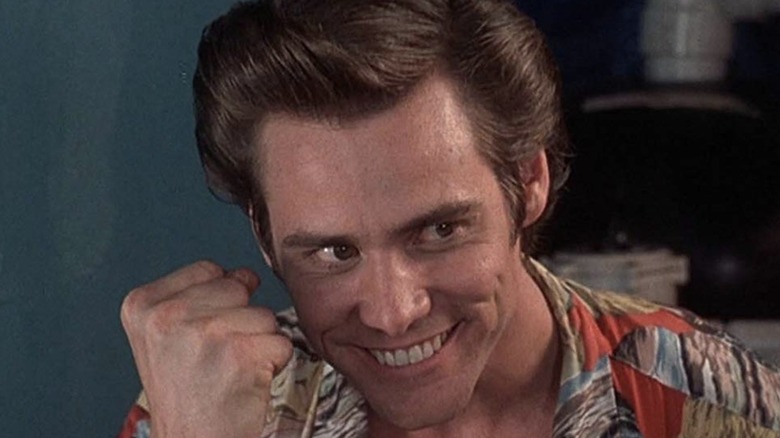
Happy 63rd Birthday, Jim Carrey! The ACE VENTURA (1994) montage sequence that made me a fan!


How many of you remember something specific that you did on February 9th, 1994? I do! I was sitting in a movie theater in Conway, Arkansas watching the goofy Jim Carrey comedy ACE VENTURA: PET DETECTIVE. I already knew he was a funny guy based on his various appearances on the sketch comedy show IN LIVING COLOR. I also remember seeing him in that vampire comedy ONCE BITTEN (1985) with Lauren Hutton when I was in junior high. To be honest though, when I was watching ONCE BITTEN in the mid-80’s, I was much more interested in Lauren’s character than I was in Jim’s. On this particular day in February of 1994, I was more interested in being at the theater because I had a major crush on the girl that was there with me. I figured the movie would be pretty silly, but that’s okay because I don’t mind silly comedies when they’re done right. Admittedly, I was also curious to see if Jim Carrey could actually carry a film by himself, and if the film would be as funny as the trailers I had seen.

I had settled in and was enjoying this film, when the montage shared below appeared on-screen, accompanied by Aerosmith’s “Line Up.” At the very end of the montage, when Ace Ventura resorts to chloroform to slow down the Dolphin player on the track, I probably laughed harder in the theater than I ever had up to that point in my life. I don’t think I’ve ever laughed as hard since either. The stars had all aligned and for that moment, I thought Jim Carrey was the funniest person on earth. Enjoy!

Song of the Day: Satch Boogie (by Joe Satriani)


There’s a saying amongst creatives that those “who can, do; those who can’t, teach”.

That label definitely doesn’t pertain to Joe Satriani. Not only is he one of rock’s greatest guitarists but he has also taught in one way or another some of the greatest rock and metal guitarists such as Alex Skolnick, Kirk Hammett, Stevie Vai and Larry LaLonde just to name a few.

Not just a genius on the guitar in a technical sense but also creatively as well. He has mastered many of the electric guitar techniques that’s become commonplace with guitarists in the rock and metal scene. Influenced by other greats such as Jimi Hendrix, Jeff Beck, Jimmy Page, Eric Clapton and Brian May, his many work shows some background in his fusion of jazz and rock that clearly makes him one of rocks virtuoso who stand amongst the Mount Rushmore of greats.

Just listen to “Satch Boogie” with special emphasis a the 1:50 mark.

Great Guitar Solos Series

4 Shots From 4 Films: Special Bootleggers Edition


4 Or More Shots From 4 Or More Films is just what it says it is, 4 shots from 4 of our favorite films. As opposed to the reviews and recaps that we usually post, 4 Shots From 4 Films lets the visuals do the talking!

Today is National Bootleggers Day so remember to speak easy!  In honor of everyone’s favorite entrepreneurs, it’s time for….

4 Shots From 4 Films About Bootleggers

The Roaring Twenties (1939, dir by Raoul Walsh, DP: Ernest Haller)

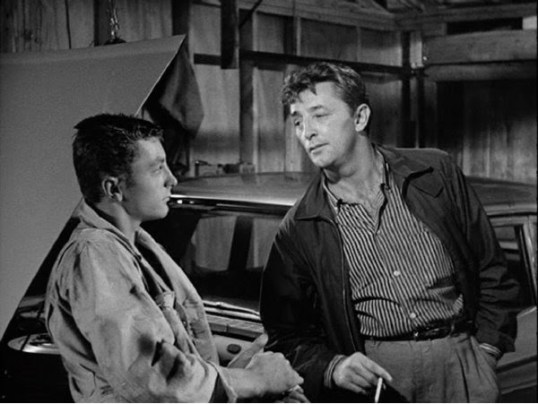
Thunder Road (1958, dir by Arthur Ripley, DP: David Ettenson and Alan Stensvoid)

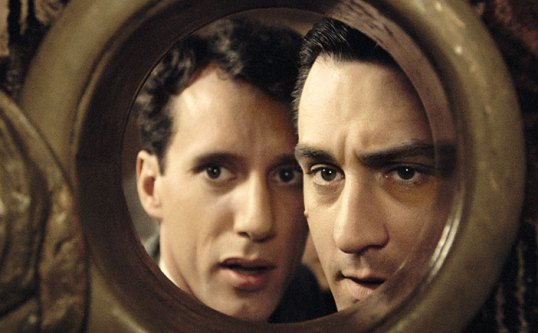
Once Upon A Time In America (1984, dir by Sergio Leone, DP: Tonino Delli Colli)

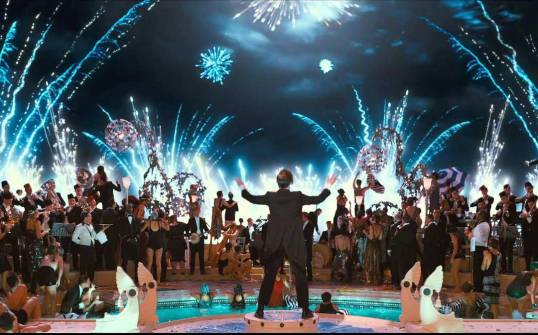
The Great Gatsby (2013, dir by Baz Luhrmann, DP: Simon Duggan)

Live Tweet Alert: Join #FridayNightFlix For Class of 1984!


As some of our regular readers undoubtedly know, I am involved in a few weekly live tweets on Twitter and Mastodon.  I host #FridayNightFlix every Friday, I co-host #ScarySocial on Saturday, and I am one of the five hosts of #MondayActionMovie!  Every week, we get together.  We watch a movie.  We tweet our way through it.

Tonight, at 10 pm et, #FridayNightFlix presents Mark Lester’s Class of 1984!

If you want to join us this Friday, just hop onto twitter, start the movie at 10 pm et, and use the #FridayNightFlix hashtag!  It’s a friendly group and welcoming of newcomers so don’t be shy.

Class of 1984 is available on Prime and Tubi!  See you there!

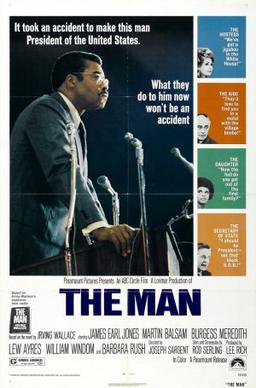
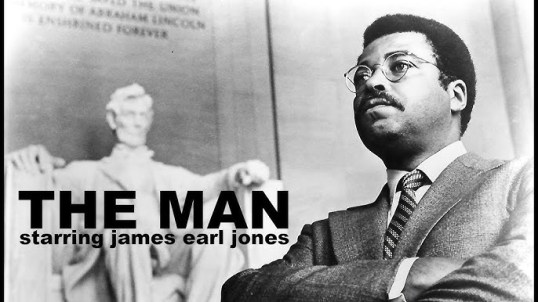
Starring James Earl Jones: The Man (dir by Joseph Sargent)


In 1972’s The Man, James Earl Jones stares as Douglass Dilman.

Dilman is a black college professor and a U.S. Senator.  To his friends, he’s a symbol of progress.  To his enemies, he’s a sell-out who is viewed as being improperly radical.  The U.S. Senate, eager to prove that it’s not a racist institution, has elected Dilman as the President Pro Tempore.  He is now fourth in line for the presidency but that doesn’t concern racist senators like Senator Watson (Burgess Meredith).  A lot would have to happen before Dilman would ever become President.

Needless to say, a lot does happen.

The President and the third-in-line Speaker of the House are attending a conference at a historic building in Frankfort when the roof collapses on them.  We don’t actually see this happen.  We just hear the people in the White House talk about how it’s happened.  We also don’t really learn many details about why the roof collapsed.  Someone nonchalantly says, “It’s an old building.”  Myself, I spent the entire movie waiting for some sort of big revelation of a conspiracy behind the roof collapse but it didn’t happen.  Apparently, in 1972, the Secret Service just let the President go anywhere without checking the place out first.  That said, it’s not a good thing when a serious movie opens with a dramatic plot development that, at the very least, draws a chuckle from the audience.  Seriously, we lost our President because a roof fell on him?  How is America ever going to live that down>

Vice President Noah Calvin (Lew Ayres) is wheeled into the White House cabinet room.  This was not the first time that a Ayres played a Vice President called upon to succeed the President.  Unlike in Advice and Consent, the Vice President announced that he cannot accept the honor of being sworn in because he’s too sick.  (Since when does the Vice President have the option to refuse to do his Constitutional duty?)  With Calvin putting the country ahead of his own ambition, Senator Watson announces that Secretary of State Eaton (William Windom) will be the new President.  No, Eaton says, Dilman will be the new president.  But once Dilman screws up and is either impeached or resigns, fifth-in-line Eaton will be sworn in.

Except …. it wouldn’t work that way.  Excuse me while I put my history/political nerd hat on….

First off, Calvin is apparently still Vice President so if Dilman did step down, Calvin would once again be the successor.  What if Calvin refused a second time?  As soon as the Speaker of the House died, the House of Representatives would elect a new Speaker and that person would be third-in-line.  And, as soon as Dilman became President, the Senate would elect a new President Pro Tempore and that person would be fourth-in-line.  In other words, Eaton is no closer to being President than he was before.

My reason for going  into all of this is to illustrate that The Man is a film about American politics that doesn’t really seem to know much about American politics.  That said, it does feature the great James Earl Jones as Douglass Dilman and Jones gives such a good and thoughtful performance that it almost doesn’t matter that no one else in the film seems to be taking it all that seriously.  Jones plays Dilman as being a careful and cautious man, one who understands that he occupies a huge place in history (Barack Obama was only 11 years old when this film came out) but whose main concern is just doing a good job as President.  Dilman finds himself in the middle.  On one side, he has advisors warning him not to scare America by being too radical.  On the other side, his activist daughter (Janet MacLachlan) brands Dilman a sell-out.  When a black student named Robert Wheeler  (Georg Stanford Brown) is arrested for assassinating a South African government official, Dilman’s first instinct is to believe Wheeler’s been framed but, as the film progresses, doubts start to develop and Dilman must decide whether or not to risk an international incident.  It’s an interesting story, well-played by James Earl Jones and Georg Stanford Brown.

It was originally mean to be a made-for-TV movie but, in order to capitalize on the excitement on the 1972 presidential election, it was released into theaters.  As a result, the film often has the cheap look of a made-for-TV movie and quite a few members of the cast give performances that feel more appropriate for television than the big screen,  (Some members of the cast, like Burgess Meredith, just overact with ferocious abandon.)  In the end, The Man is mostly of interest from a historical point of view.  (In 1972, the idea of a black man being elected President seemed so unrealistic that the movie actually had to drop the roof on 50% of the government just to get Dilman into the Oval Office.)  James Earl Jones, who would have turned 94 today, is the main reason to watch.