Late Night Retro Television Review: CHiPs 3.3 “Valley Go Home!”


Welcome to Late Night Retro Television Reviews, a feature where we review some of our favorite and least favorite shows of the past!  On Mondays, I will be reviewing CHiPs, which ran on NBC from 1977 to 1983.  The entire show is currently streaming on Prime!
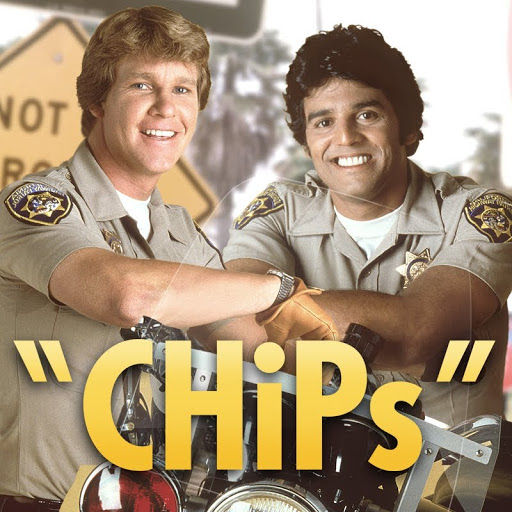
This week, Ponch and Jon go to the beach!

Episode 3.3 “Valley Go Home!”

(Dir by Barry Crane, originally aired September 29th, 1979)

There’s been a string of thefts at the beach.  Someone is stealing radios out of cars and then making a fast getaway.  Somehow, this thief is able to blend in so well with everyone else that no one even notices him breaking into the cars until it’s too late.  Jon and Ponch have been assigned to patrol the beach and keep the radios safe.

Of course, Jon and Ponch don’t just worry about radio thieves.  When two women lose control of their car while towing a sailboat, Jon and Ponch are there to not only help them stop the car but also to ask them out on a windsurfing date.  (Every episodes of CHiPs found a way to promote the so-called “California lifestyle.”  It was probably one of the most effective tourism commercials ever filmed.  I don’t even swim and this episode still made me want to go wind surfing.)  They also get involved in the rivalry between three local white surfers and a group of Latino teenagers from the Valley.  Both groups drive Chevy vans with ornate decals.  One gets the feeling that the blonde surfers call their van the “Second Base Mobile.”

This is an episode of CHiPs that takes place at the beach so you’ve probably already guessed that it doesn’t take long for Ponch to find an excuse to put on a speedo.  Baker and Ponch not only work together but they also hang out together.  On the show, they’re best friends.  (Behind-the-scene, Larry Wilcox and Erik Estrada were not quite so close.)  They spend a lot of time at the beach, eating ice cream.  Baker wears modest swim trunks.  Ponch walks around in his speedo and shows off his dazzling smile.  One gets the feeling that, if this episode had been made in 1999 instead of 1979, Ponch would have been handing out AOL CDs to everyone he met and saying, “When you sign up, I get fifteen free minutes to talk to you.”

Ponch has a theory that the radio thief is disguising himself as someone who works at the beach.  (Needless to say, Ponch comes up with the theory while Baker agrees because, on CHiPs, everything was much pretty much about Ponch.)  Ponch suspects that the thief might be the local ice cream man.  Ponch and Baker eat a lot of ice cream in this episode.  Eventually, it turns out to be the local trash collector.  The ice cream man is off the hook!

As far as the surfers and the Valley kids are concerned, it all works out.  Of course, it works out in the most dangerous way possible, with the surfers and the Valley kids chasing each other in their vans and both crashing their vehicles.  After 48 hours in jail, all of them are back on the beach.  The surfers agree to teach the Valley kids how to handle a board.  The Valley kids agree to take the surfers to Mexico.  Ponch and Jon have a good laugh before going windsurfing.  How can you not love California?

This was a pretty silly episode but the beach scenery was nice.  It’s hard for me to not enjoy a show that features not one but two vans.  All hail the 70s!
Lisa Marie Reviews An Oscar Winner: From Here To Eternity (dir by Fred Zinnemann)


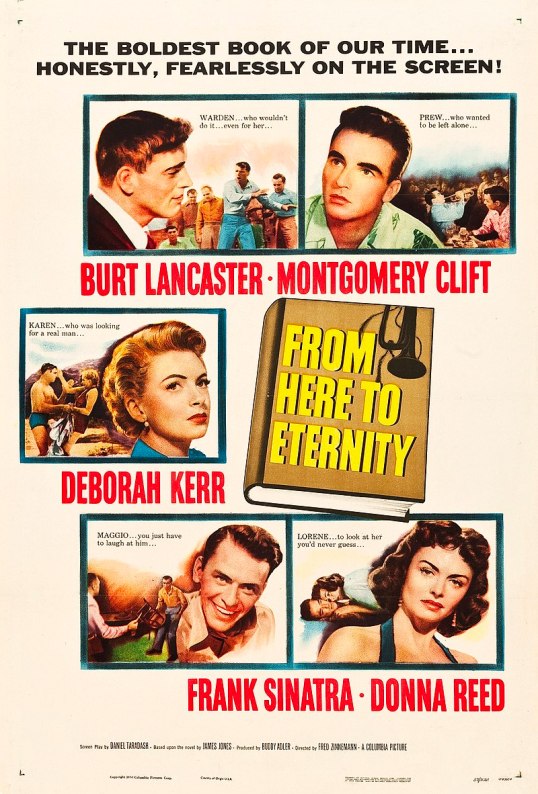
“The boldest book of our time,” shouts the poster art for 1953’s From Here To Eternity, “honestly, fearlessly brought to the screen!”

And indeed, James Jones’s novel was brought to the screen about as boldly as a studio film could be brought in 1953.  The book told the story of several soldiers in the days immediately before the attack on Pearl Harbor.  The Production Code was still in effect and, as a result, a few changes were made to the film’s plot.  Donna Reed played Lorene, a character who is described as being a “hostess” at social club but who, in the book, worked at a brothel that was popular with the soldiers from a nearby army base.  In the book, an unfaithful husband gives his wife a venereal disease that leads to her getting a hysterectomy.  In the movie, Karen’s (Deborah Kerr) hysterectomy was the result of a miscarriage that occurred after she discovered her husband was being unfaithful.  The book was critical of the Army and featured officers who faced no consequences for their actions.  The movie definitely presents the enlisted men as being at the mercy of officers but the worst of the officers is ultimately disciplined.  The movie was made with the cooperation of the U.S. Army and, as a result, the film’s villains — like Captain Holmes (Philip Ober) and the monstrous Fatso Judson (Ernest Borgnine) — were portrayed as being aberrations who did not represent the Army as a whole.  That said, the film version of From Here To Eternity is still a powerful, moving, and daring film.  What couldn’t be shown on screen is still suggested.  One might not see the specifics of what Fatso Judson does to Maggio (Frank Sinatra) in the stockade but it’s not difficult to figure out.

The film follows one company of soldiers as they laugh, fight, and fall in love while stationed in Hawaii.  They spend time training for a war that most of them think will never come.  Captain Holmes is more concerned with his regimental boxing team than the prospect of going to war and is confused when Private Prewitt (Montgomery Clift) refuses to stop back into the ring.  Prewitt, who takes pride in his ability as a bugler, quit boxing after he blinded an opponent in the ring but Holmes doesn’t care.  Holmes wants another trophy for his office.  He orders Sgt. Warden (Burt Lancaster) to make life Hell for Prewitt until Prewitt agrees to box.  Warden, who has seen a lot of officers come and go and who has been tempted to become an non-commissioned officer himself, is having an affair with Holmes’s wife, Karen.  Meanwhile, Prewitt and his friend Maggio spend their time looking forward to the weekends they’re allowed to spend off the base.  Prewitt has fallen in love with Lenore but, as with all the men in From Here To Eternity, Prewitt’s true love is for the army.  Even with Holmes pressuring him to box, Prewitt’s loyalty is to the men with whom he serves.  There’s a lot of drama, a lot of death, and a lot of romance.  This is the film in which Burt Lancaster and Deborah Kerr make out on the beach while the tide rolls in.  But, when Pearl Harbor is attacked, all of the drama and all of the romance is forgotten as America goes to war.

From Here To Eternity is one of the best films of the 1950s and certainly one of the more worthy winners for Best Picture.  Intelligently directed, wonderfully acted, deliriously romantic, and finally rather sad, it’s a film that embraces the melodrama without ever hitting a false note.  Burt Lancaster’s rugged weariness, Montgomery Clift’s method sensitivity, Frank Sinatra’s naturalism, Ernest Borgnine’s crudeness, Deborah Kerr’s classiness, and Donna Reed’s earnestness all come together to create a film in which the characters feel real and alive.  Warden, Prewitt, Lenore, Karen, and Maggio are all interesting, multi-faceted people, trying to find some sort of happiness in the shadow of an inevitable war.  The viewer may sometimes have mixed feelings about their actions (and Borgnine’s Judson is one of the most loathsome roles that the normally likable Borgnine ever played) but you never cease to care about them and their stories.  With all of the characters and the affairs and the secrets, From Here To Eternity can feel like a soap opera but it’s also a portrait of a world that is on the verge of changing forever.

A few years ago, I attended a screening of From Here To Eternity at the Dallas Angelika.  This is a film that definitely deserves to be seen on the big screen.  From the famous scene on the beach to the attack on Pearl Harbor to the tragic final moments, this is a big movie that deals with big emotions and big moments.  It’s one of the best.

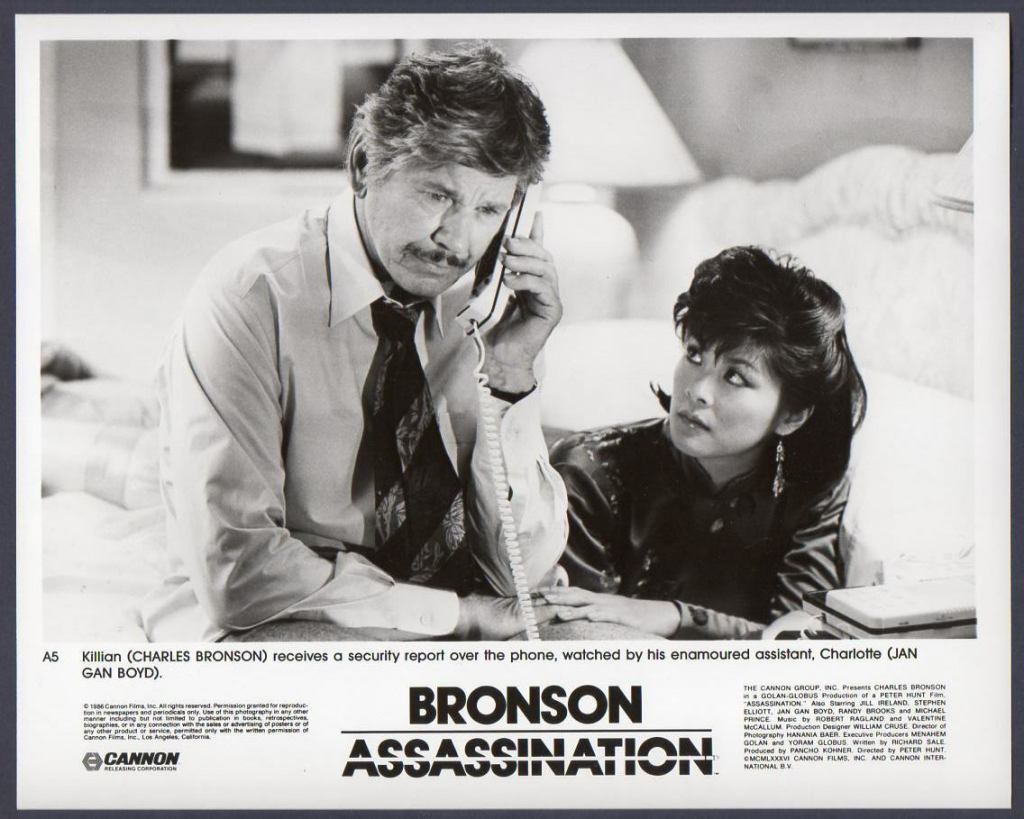
Happy Birthday to actress Jan Gan Boyd, Charles Bronson’s co-star in ASSASSINATION (1987)!


I wanted to take a moment and show some appreciation for actress Jan Gan Boyd on her birthday. Jan has been a part of my life since I was 13 years old since she co-starred with Charles Bronson in the 1987 Cannon film ASSASSINATION.

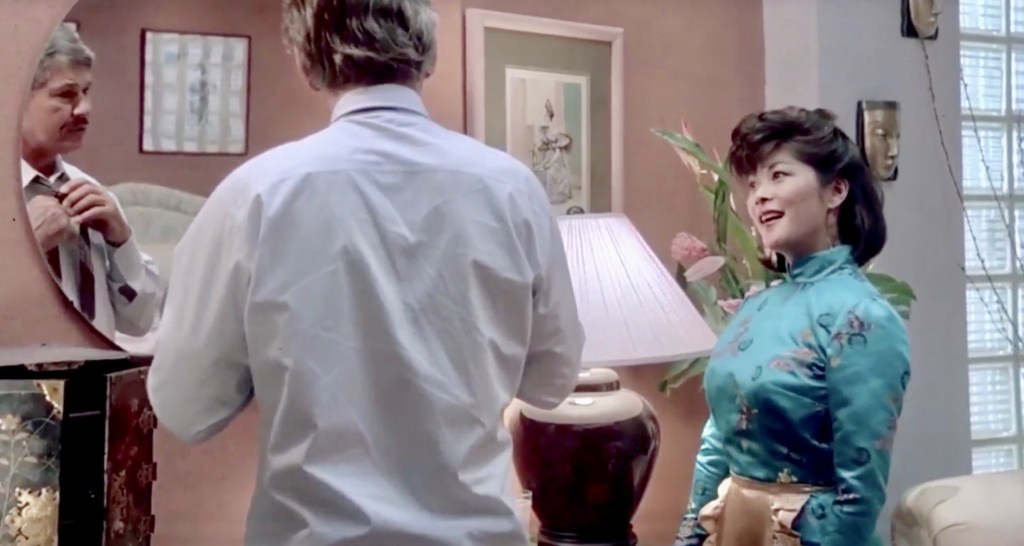
In a nutshell, the plot of ASSASSINATION revolves around secret service agent Jay Killian (Bronson), who finds himself in the position of trying to protect an extremely strong-willed first lady (Jill Ireland) from assassins trying to kill her. Jan plays Charlotte “Charlie” Chang, a member of the team assigned to protect the first lady, who has an extra special relationship with Killian. And while ASSASSINATION is not one of Charles Bronson’s best movies, I always liked Jan in the film. She had spunk and attitude, and her relationship with Bronson’s character is definitely unique in Bronson’s 80’s filmography. Believe it or not, Killian and Charlie had casual sex, and she survived the end of the movie to talk about it! As a matter of fact, her exchange with Killian the next morning leads to one of the great moments of Bronson dialogue:

Charlie Chang: “Killy, why don’t you move in here permanently?”

Jay Killian: “I don’t want to die of a terminal orgasm!”

I guess lines like that bond actors for life and Jan stayed friends with Charles Bronson and Jill Ireland all the way up to each of their deaths.

Jan got her start in the movies through her abilities as a trained dancer when she co-starred with Michael Douglas in the 1985 film, A CHORUS LINE, directed by Richard Attenborough. I think she’s one of the best characters in the film. And 1987 was a very busy year for Jan. After filming ASSASSINATION with Bronson, she would co-star with Martin Kove in the film STEELE JUSTICE, and then with David Soul in HARRY’S HONG KONG. She would spend the next few years of her career doing guest spots on shows like CHEERS, SISTERS, and SILK STALKINGS. It was at this point that she took a break from her career to get married and raise a family. Over the last few years, she has started to get involved in voice-over work, as well as appearing on shows like “Dance Dish,” where she discussed her time as a dancer and her work on A CHORUS LINE.

On a personal note, I must say that Jan Gan Boyd is one of the sweetest ladies I’ve ever met. My partner Eric Todd and I got the opportunity to interview her for an episode of the THIS WEEK IN CHARLES BRONSON podcast a couple of years ago. She told us some of the best stories about Charles Bronson and Jill Ireland, as well as what it was like to work with them on ASSASSINATION. She truly loved them in real life, and it was so fun sharing that time with her. As a matter of fact, over on our TWICB Facebook page, every January is now Jan-Gan-uary! I’ve attached a link to the podcast episode if you would like to hear more from Jan about her career and her work with Bronson, Michael Douglas, and Richard Attenborough.

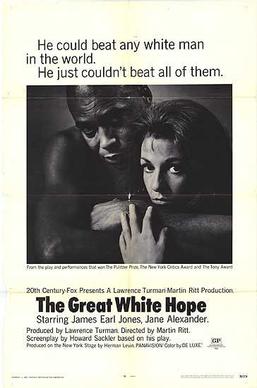
The Great White Hope (1970, directed by Martin Ritt)


The year is 1910 and the sports world is in a panic.  For the first time, a black man has won the title of the heavyweight champion of the world.  Jack Jefferson (James Earl Jones) had to go to Australia because no American city would agree to host the fight but he came out of it victorious.  The proud and outspoken Jefferson finds himself targeted by both the white establishment and black activists who claim that Jefferson has not done enough for his community.

It’s not just Jefferson’s success as a boxer that people find scandalous.  It’s also that the married Jefferson has a white mistress, a socialite named Eleanor Brachman (Jane Alexander, in her film debut).  While boxing promoters search for a “great white hope” who can take the title from Jefferson, the legal authorities attempt to arrest Jefferson for violating the Mann Act by supposedly taking Eleanor across state lines for “immoral purposes.”  Jefferson and Eleanor end up fleeing abroad but even then, their relationship is as doomed as Jefferson’s reign as the heavyweight champ.

Based on a Pulitzer-winning stage play by Howard Sackler, The Great White Hope features Jones and Alexander recreating the roles for which they both won Tonys.  Both Jones and Alexander would go on to receive Oscar nominations for their work in the film version.  It was the first nomination for Alexander and, amazingly, it was the only nomination that Jones would receive over the course of his career.  (It surprises me that he wasn’t even nominated for his work in Field Of Dreams.)  Both Jones and Alexander give powerful performances, with Jones dominating every scene as the proud, defiant, and often very funny Jack Jefferson.  Jones may not have had a boxer’s physique but he captured the attitude of a man who knew he was the best and who mistakenly believed that would be enough to overcome a racist culture.  (Speaking of racist, legendary recluse Howard Hughes reportedly caught the film on television and was so offended by the sight of Jones kissing Alexander that he thought about buying NBC to make sure that the movie would never be aired again.)  Hal Holbrook, Chester Morris, Moses Gunn, Marcel Dalio, and R.G. Armstrong all do good work in small roles.

Unfortunately, The Great White Hope still feels like a filmed stage play, despite the attempts made to open up the action.  Martin Ritt was a good director of actors but the boxing scenes are never feel authentic and the middle section of the film drags.  Jones and Alexander keep the film watchable but The Great White Hope is never packs as strong of a punch as its main character.

Retro Television Review: Miami Vice 3.12 “Down For The Count: Part One”


Welcome to Retro Television Reviews, a feature where we review some of our favorite and least favorite shows of the past!  On Mondays, I will be reviewing Miami Vice, which ran on NBC from 1984 to 1989.  The entire show can be purchased on Prime!

This week, Miami Vice says goodbye to a friend.

Episode 3.12 “Down For The Count: Part One”

(Dir by Richard Compton, originally aired on January 9th, 1987)

Larry Zito finally gets his own episode!

Played by John Diehl, Larry Zito was a part of the show from the very beginning.  Occasionally, it’s easy to forget that Diehl was a part of the ensemble because his character was rarely given anything to do and we rarely learned that much about Zito.  He was Switek’s partner and he seemed to have a quirky sense of humor.  Occasionally, he had long hair and a beard and he seemed to enjoy wearing elaborate disguises while working undercover.  That said, Zito was always a bit of an enigma.  Even the rare episodes that centered on the Switek/Zito partnership seemed to feature Zito mostly in the background.

In this episode, though, we finally learn a bit about Zito.  We learn that he has a background as a boxer and he’s good at training other fighters.  We learn that he takes it seriously whenever he hears about a crooked promoter manipulating a boxer.  We learn that Zito is a recovering alcoholic.  In this episode, we learn that Zito is more than just goofy comic relief.  He’s got a heart as gold.  When the Vice Squad investigates a crooked promoter named Guzman (Pepe Serna), Zito takes it upon himself to train an up-and-coming boxer named Bobby Sykes (Mark Breland).  Bobby’s previous trainer (played by Randall “Tex” Cobb) was a friend of Zito’s and was murdered by Guzman.  For Zito, this case is personal.  He even helps Bobby win a championship.  Yay, Zito!  That’s not bad for a supporting character!

Unfortunately, this also leads to Zito dying.  After the fight, Zito is confronted by Guzman and his men.  Switek later finds Zito’s body in the gym with a hypodermic needle sticking out of his arm.  Guzman gave Zito a fatal overdose of heroin.

This really depressed me!  I mean, Zito finally gets a chance to handle a serious case and, even more importantly, John Diehl finally gets a chance to show off the fact that he’s a very good actor and then, at the end of the episode, Zito’s dead!  Poor Zito!

(From what I’ve read, John Diehl wanted off the show because he felt his role was underwritten and he also preferred doing theater to weekly television.  That’s understandable.  At least he got one turn in the spotlight before he was written off the show.)

Needless to say, this episode is dominated by the death of Zito.  The scene with a tearful Switek cradling Zito’s dead body makes such an impression that it’s easy to forget that this episode also featured the odd spectacle of Don King playing Mr. Cash, an ex-con turned honest fight promoter who disapproves of Guzman’s tactics.  Somehow, Don King being the voice of integrity makes sense in the topsy-turvy world of Miami Vice.  King says that Guzman is in Miami because it’s a brand new territory and a place where anyone can make it rich.  That’s been one of the recurring themes of this show since it began.  Anything can happen in Miami.  Including Larry Zito dying….

Give me a moment to wipe away the tears.  Seriously, the end of this episode really depressed me!

Next week, Switek is out for revenge.  I hope he gets it!

Song of the Day: The Power of Love by Huey Lewis and the News


Since we’re in a Back to the Future sort of mood at the site today, today’s song of the day is an obvious one.  Here is The Power of Love, by Huey Lewis and the News!

The power of love is a curious thing
Make a one man weep, make another man sing
Change a hawk to a little white dove
More than a feeling, that’s the power of love

Tougher than diamonds, rich like cream
Stronger and harder than a bad girl’s dream
Make a bad one good, mm, make a wrong one right
Power of love that keep you home at night

You don’t need money, don’t take fame
Don’t need no credit card to ride this train
It’s strong and it’s sudden, and it’s cruel sometimes
But it might just save your life
That’s the power of love

First time you feel it, it might make you sad
Next time you feel it, it might make you mad
But you’ll be glad, baby, when you’ve found
That’s the power makes the world go ’round

And it don’t take money, don’t take fame
Don’t need no credit card to ride this train
It’s strong and it’s sudden, it can be cruel sometimes
But it might just save your life

They say that all in love is fair
Yeah, but you don’t care (ooh)
But you know what to do (what to do)
When it gets hold of you
And with a little help from above
You feel the power of love
Can you feel it?
Hm-hm

It don’t take money, and it don’t take fame
Don’t need no credit card to ride this train
Tougher than diamonds and stronger than steel
But you won’t feel nothin’ ’til you feel

You feel the power, just feel the power of love
That’s the power, mm, that’s the power of love
You feel the power of love
Feel the power of love

Songwriters: Huey Lewis / John Victor Colla / Christopher John Hayes

Moments #17: A Spider Does What It Can


On a sunny day last November, I stepped outside and spotted something in the upper corner of the garage door.

One spider was working hard to spin a web.

You’ll have to forgive the quality of some of the images.  The spider was too busy to stop and pose while I took its picture.

I went on a walk and when I came back an hour later, both the spider and its web were gone.  It was a windy day so I imagine the web only lasted a few minutes before it was blown away.  I’m glad the wind took care of it for me but I hope the spider knows that I was impressed with its hard work.

Previous Moments:

  1. My Dolphin by Case Wright
  2. His Name Was Zac by Lisa Marie Bowman
  3. The Neighborhood, This Morning by Erin Nicole
  4. The Neighborhood, This Afternoon by Erin Nicole
  5. Walking In The Rain by Erin Nicole
  6. The Abandoned RV by Erin Nicole
  7. A Visit To The Cemetery by Erin Nicole
  8. The Woman In The Hallway by Lisa Marie Bowman
  9. Visiting Another Cemetery by Erin Nicole
  10. The Alley Series by Erin Nicole
  11. Exploring The Red House by Erin Nicole
  12. The Halloween That Nearly Wasn’t by Erin Nicole
  13. Watchers and Followers by Erin Nicole
  14. Visitors by Erin Nicole
  15. Fighting by Case Wright
  16. Walking In The Fog by Erin Nicole

Monday Live Tweet Alert: Join Us for The Wraith!


As some of our regular readers undoubtedly know, I am involved in hosting a few weekly live tweets on twitter and occasion ally Mastodon.  I host #FridayNightFlix every Friday, I co-host #ScarySocial on Saturday, and I am one of the five hosts of Mastodon’s #MondayActionMovie!  Every week, we get together.  We watch a movie.  We snark our way through it.

Tonight, for #MondayActionMovie, the film will be The Wraith, starring Charlie Sheen, Sherilyn Fenn, Randy Quaid, Clint Howard, and Nick Cassavetes!

It should make for a night of fun viewing and I invite all of you to join in.  If you want to join the live tweets, just hop onto Mastodon, pull up The Wraith on YouTube, start the movie at 8 pm et, and use the #MondayActionMovie hashtag!

Enjoy!


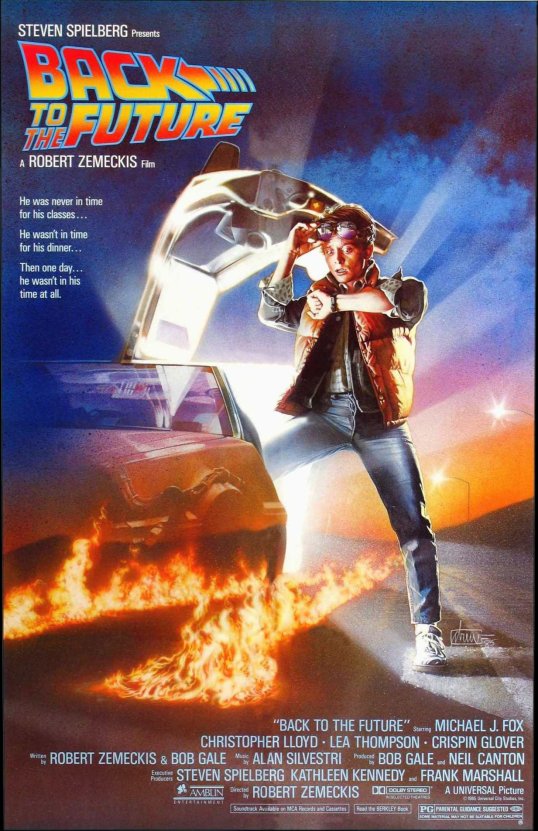
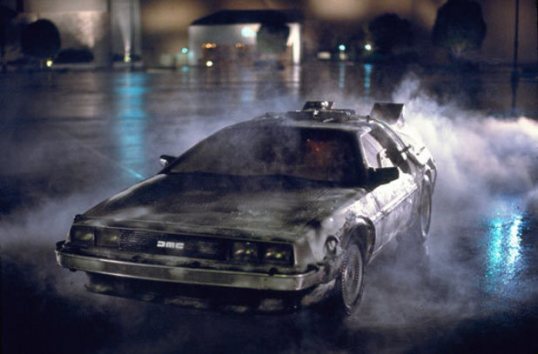
Scenes That I Love: Back To The Future


Today would have been the 100th birthday of inventor and would-be automotive tycoon, John DeLorean.  Today’s scene that I love comes from 1985’s Back To The Future and it features DeLorean’s most famous contribution to world of driving (not to mention Doc Brown’s most famous invention, as well!).

Thank you, John DeLorean, for giving us a car so cool that it could travel through time.

4 Shots From 4 Films: Special John Singleton Edition


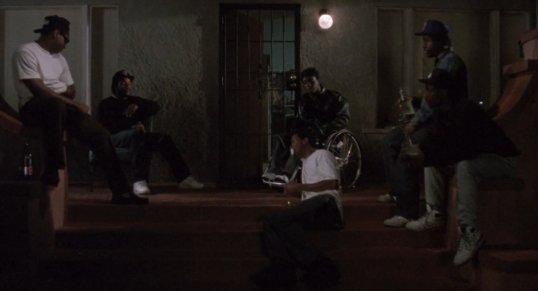
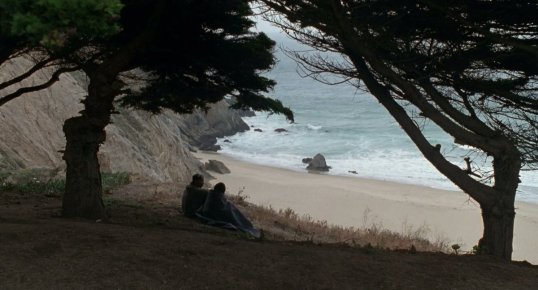
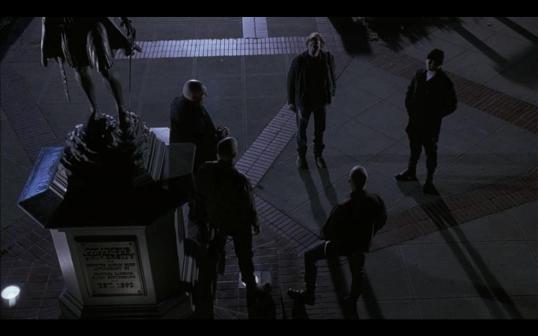
4 Shots From 4 Films is just what it says it is, 4 shots from 4 of our favorite films. As opposed to the reviews and recaps that we usually post, 4 Shots From 4 Films lets the visuals do the talking.

As I mentioned earlier, today would have been the 57th birthday of John Singleton, the first black filmmaker to ever receive an Oscar nomination for Best Director.  It’s time for….

4 Shots From 4 John Singleton Films

Boyz N The Hood (1991, dir by John Singleton, DP: Chuck Mills)

Poetic Justice (1993, dir by John Singleton, DP: Peter Lyons Collister)

Higher Learning (1995, dir by John Singleon, DP: Peter Lyons Collister)

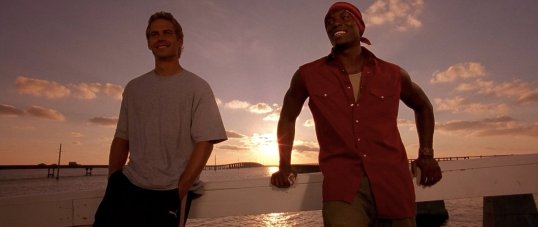
2 Fast 2 Furious (2003, dir by John Singleton, DP: Matthew Leonetti)