October Positivity: Whitcomb’s War (dir by Russell Doughten, Jr.)


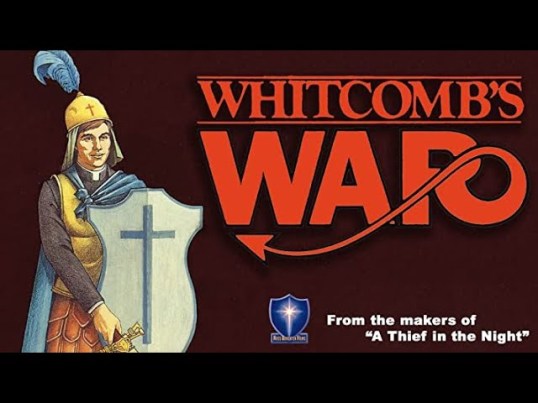
This 1980 film takes place in the town of Hurrah, Iowa.  One of the opening scenes features Pastor David Whitcomb driving up to Hurrah and stepping out of his car to take a look at the city limits sign.  Hurrah has a population of a little over 3,000.  Apparently, almost all of them belong to the same church and everyone works for the same factory.

Unfortunately, the owner of the factor is not a member of the church.  In fact, onery old Phil Esteen (say the same quickly) is determined to shut the church down by scheduling everyone to work on Sundays.  As a result, hardly anyone is able to attend any of Pastor Whitcomb’s sermons.  The pastor finds himself preaching to a church that is full of children whose parents are working at Esteen’s factory.  When people complain about Esteen’s tactics, Esteen threatens to move his company to the nearby town of Riverton, which apparently has a river.  Phil Esteeen loves to talk about that river.

Whitcomb is upset to discover that people in his church hate Esteen and view him as being unredeemable.  Whitcomb says that’s not a good attitude.  A huge reason why people have that attitude is because there’s a group of demons living in the church basement.  (They may be demons but essentially, they just look like a bunch of community theater actors wearing red shirts.)  They’ve been tasked with making the pastor’s life difficult.  The demons have a bulky personal computer that they use to type up their evil plans and which they occasionally turn to for advice.  The computer itself is treated as being a sort of exotic oddity.  One gets the feeling that 1980 audiences were expected to look at the computer and think, “What type of twisted creature would actually travel with one of those things!?”

When the women of the church lead a protest against Esteen’s business practices, it just makes Esteen all the more determined to keep people working on Sundays.  Pastor Whitcomb realizes he’s going to have to try something different to reach Esteen and convince him to change his ways.  Can he do it?

(Personally, I think the whole problem could have been solved by the employees forming a union or all quitting at the same time or maybe the church holding more than one service during the day.  My point is that there seemed to be many potential solutions that no one in this film ever considered….)

This was one of director Russell Doughten’s do-it-yourself regional productions.  He directed and self-distributed several of these films in the 70s and 80s.  Seen today, this films are grainy time capsules of the distant past.  Doughten’s didn’t exactly make films that featured nuanced discussions of theological issues.  He was frequently a heavy-handed filmmaker, working in a genre that was specifically designed to be magnify those self-righteous impulses.  At the same time, there’s something undeniably charming about just how cheap most of his Iowa-shot films looked and just how enthusiastically they were acted by their largely amateur casts.  (And yes, the term to  remember is “enthusiastically” as opposed to “convincingly.”)  Much as with Ed Wood, Doughten’s appeal is less about his films and more about his refusal to let a lack of funds or a lack of talent stand in the way of bringing his vision to the screen.  A film like Whitcomb’s War has a ton of technical flaws but seen today, it’s definitely a time capsule of the era in which it was made.  Watching it means taking a trip to the past, to an era when computers were still exotic and even the Devil had to use a landline phone to communicate with people.

Incidentally, I did a google search and apparently, the town of Hurrah, Iowa no longer exists.  Maybe everyone moved closer to the river after all.
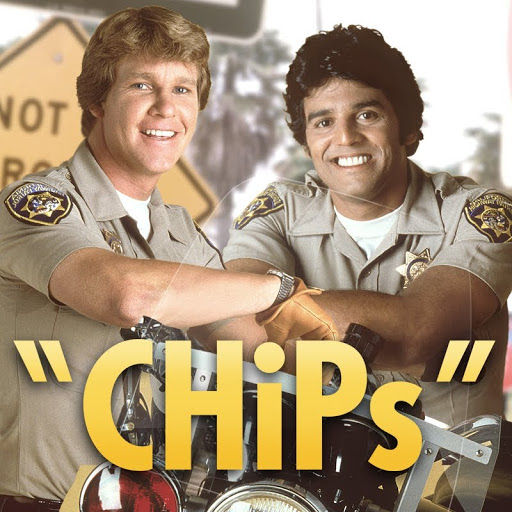
Late Night Retro Television Review: CHiPs 2.15 “MAIT Team”


Welcome to Late Night Retro Television Reviews, a feature where we review some of our favorite and least favorite shows of the past!  On Mondays, I will be reviewing CHiPs, which ran on NBC from 1977 to 1983.  The entire show is currently streaming on Freevee!

This episode was a tough one.

Episode 2.5 “MAIT Team”

(Dir by John Florea, originally aired on January 13th, 1979)

On a desolate stretch of highway, several cars sit totaled.  At least two are in flames.  A truck sits stalled in the middle of the road, the bloody body of the driver still behind the steering wheels.  A woman screams that her father is having a heart attack.  Sitting off the road, in a ditch, is an overturned police car.  Officer Sindy Cahill is unconscious in the wreckage.

This hardly a typical episode of CHiPs.  This show has featured many spectacular crashes but this episode is the first to feature fatalities.  And its not just one person who dies in the crash.  Eleven people die, including the driver of the truck and the man having a heart attack.  The sight of Ponch looking at the dead bodies is jarring because it’s not what we expect from a show like CHiPs.

And, I have to admit, it was jarring for me on a personal level.  In May, my Dad was in a serious car accident, one that ultimately involved four vehicles.  He broke his shoulder and, afterwards, had to learn how to walk again.  He spent a week in a hospital.  (That was the week that we didn’t have any power due to the storms so I couldn’t even call to get an update on his condition.)  He spent a month in a rehab facility, staying there until his insurance company kicked him out.  Severely weakened by the stress and Parkinson’s, he came home and died a month later.  I still find myself thinking about how, if he just hadn’t gone to the store that Sunday, he never would have been in that accident and he would still be alive today.  Did I say that I merely think about it?  It’s actually something that I’ve been obsessing on, even since the hospital first called me to tell me what had happened.  I had a hard time watching this episode of CHiPs and I’m having a hard time writing about it right now.

It’s a good episode, even if it is very different from the episodes that came before it.  Ponch, Jon, and a group of experts (known as the MAIT Team) attempt to determine what caused the accident.  With a lefty state senator (played by Victor Newman himself, Eric Braeden) and an insurance investigator (Michael Bell) both eager to put the blame on Cahill, it falls to the MAIT Team to figure out what caused the accident and to assign blame.  In the end, just as with my Dad’s accident, they discover that no one was truly at fault.  The setting sun reflected off a distant mirror and temporarily blinded the driver.  Cahill ended up in a ditch after she swerved to avoid him.  The other drivers were just in the wrong place at the wrong time.  Life is like that sometimes.

The emphasis here was on everyone working together to get to the truth.  Even the state senator and the insurance investigator played an important role in discovering what happened.  By being skeptical, they forced the MAIT Team to question everything and truly uncover the facts of the accident.  As this episode made clear, the MAIT Team wasn’t formed just to exonerate Cahill.  Instead, the MAIT Team was all about getting to truth, no matter what that truth might be.

Though this episode was not an easy one for me to watch, it was a good one.

Horror On TV: One Step Beyond 1. 16 “The Burning Girl” (dir by John Newland)


The 16th episode of One Step Beyond was called The Burning Girl and it dealt with a teenage girl (Luana Anders, who would later star in Dementia 13 and appear as a hippie in Easy Rider) who, whenever she got upset, could apparently cause fires to spontaneously erupt.  It was written by Catherine Turney and directed by host John Newland himself.

It was originally broadcast on May 5th, 1959 — presumably long before Stephen King even had the idea to write about a girl named Carrie.

Can you prove this didn’t happen!?

October Hacks: Party Night (dir by Troy Escamilla)


It’s prom night!

Except these students aren’t going to prom.  Instead, they’re going to have a party all their own.  They’re heading out to a house with quite a history, the perfect place to have a night that they’ll never forget.  And a night that they’ll be lucky to …. SURVIVE!

There.  Was that cheesy enough?

If my introduction was a bit over-the-top, it fits the general mood of 2017’s Party Night.  Party Night is a deliberate throwback to the slasher films of the 80s and the early 90s, before the genre started to take itself a bit too seriously.  (The worse thing that ever happened to the slasher genre is that a few of the films started to get positive reviews from critics who praised them for being subversive.  The end result of all that was David Gordon Green changing Michael Myers from a nightmarish boogeyman to just another buffoon living in a sewer.)  As such, Party Night is a film where a bunch of attractive young people go to a place that common sense say they shouldn’t go to.  And then they proceed to the dumbest things possible, like wander off by themselves.  The joy of the film comes from yelling at the screen, “Don’t do that, you idiot!” and then discovering that you were right to warn them not to do what they did.

I’ve made this point before but it is worth repeating.  The common complaint with most old school slasher films is that they feature characters who do stupid things.  That’s a valid comment but, to be honest, most people are pretty stupid.  And when you’re a teenager and it’s prom night and you’re hanging out with your best friends, you’re going to be even more stupid than usual.  In my case, when I sit there and roll my eyes at the girl in a slasher movie who wanders around outside in her underwear in the middle of the night, it’s because I’m trying to forget about all the times that I’ve walked up and down the alley in my sleepshirt, socks, and bathrobe while looking for the cat at two in the morning.  The fact of the matter is that we all do stupid things.  Some people do stupid things because they’re stupid.  Some people do stupid things because it’s just easier and takes less effort.  (In my case, it was more convenient to just throw on a bathrobe before I went out to look for the cat as opposed to actually taking the time to put on …. well, clothes.)  We recognize our stupidity in the characters who populate the slasher films of the 70s and 80s.  And the reason why so many people instinctively make fun of those films is because they know they would not survive an old school slasher film.  Myself, I’d probably be dead within the first fifteen minutes.

As for Party Night, it’s a low-budget film with a simple plot and an enthusiastic cast and an obvious love for the genre.  Fans of old school slasher films will appreciate the way the story pays homage to the films of the past.  It’s a film that understands that, at a certain age, everyone’s too stupid to survive a horror movie.

The TSL Horror Grindhouse: The New Kids (dir by Sean Cunningham)


Oh my God, this movie is awesome!

Within the first five minutes, the film features not only a training montage but also a scene where a family cheering good news immediately gets a phone call delivering bad news.  (“SHUT UP!” our hero yells at his friends and family.)  By the time the film hits the five minute mark, it has managed to denounce communism, terrorism, laziness, and drunk driving!  And that’s even before James Spader shows up as a cocaine-sniffing teenage crime lord!

First released in 1986 and directed by the same guy who did the first Friday the 13th, The New Kids tells the story of Loren (Shannon Presby) and his sister, Abby (Lori Loughlin).  Their father (Tom Atkins) was a badass army colonel who fought communists, received commendations from the President (and that President was Ronald Reagan so you know those commendations were for doing something cool and not just for posting memes on twitter), and who taught his children self-defense.  Every morning, he exercised with them and drilled into their heads the importance of being disciplined and willing to stand up for themselves.  Sadly, their father and mother were both killed in a car accident after meeting with President Reagan at the White House.

Though they’ve been taught how to survive in the world by an expert, Loren and Abby are both teenagers and the law says that they need adult supervision.  They move down to Florida and stay with their Uncle Charlie (Eddie Jones),  Charlie owns a run-down amusement park that he’s decided to call Santa Land.  He figures that tourists who are driving to “Walt Disney World and Epcot” will want to stop off at Santa Land.  Personally, I think the tourists will probably want to keep driving to where they actually want to go but who knows?  Uncle Charlie does have a petting zoo and there is something oddly charming about the idea of Santa hanging out in the bayous of Florida.  I mean, there’s a reason why Santa Claus And The Ice Cream Bunny is beloved by viewers all over the world.

At the high school, everyone notices Loren and Abby.  Abby gets  a dorky boyfriend named Mark (Eric Stoltz …. no, really!) and Loren starts dating the sheriff’s daughter, Karen (Paige Lynn Price).  Unfortunately, the new kids have been noticed by Eddie Dutra (James Spader) and his gang of inbred rednecks.  Dutra and his gang deal drugs and have a pit bull who they’re hoping to enter into dog fights.  (“Went straight for the jugular,” one gang member says at one point.)  Dutra decides that he likes Abby, which leads to Loren getting protective, which leads to Dutra and the boys waging their own war on Abby and Loren and everything eventually comes to a deeply satisfying Straw Dogs-style conclusion at Santa Land.

The New Kids is one of those films that succeeds by being thoroughly absurd and over-the-top.  Dutra and his gang aren’t just evil.  Instead, they’re downright Satanic in their determination to destroy the new kids.  The gang is fearsome enough, especially Gordo (Theron Montgomery), who is the fat future forklift operator from Hell.  But what really makes this gang memorable is the fact that their leader is James Spader, with bright blonde hair, a smooth Southern accent, and moves that are so assured that he sometimes seem to be dancing across the screen.  Dutra’s evil and the cocaine that he snorts leads to him making some bad decisions but he’s got style.  As for the New Kids, Shannon Presby is a bit bland as Loren but that blandness actually provides a nice contrast to Spader’s more flamboyant performance.  Lori Loughlin is likable and kicks Gordo in the balls, which is pretty cool.  (Gordo more than deserved it.)

Cheerfully sleazy and unapologetically ridiculous, The New Kids is 80s exploitation cinema at its best.

Party Line (1988, directed by William Webb)


“Hot singles are waiting to speak to you!”

Remember those party line commercials that used to air late at night in the 90s?  For just a few dollars a minute, you could call and talk to someone claiming to be a hot woman in your area of town.  (The commercials always featured women because everyone understood that only men would be dumb enough to call the number.)  Even when I was a teenager, I knew that there was no way that a young, hot woman was sitting at home alone and waiting for a stranger to call her.  But obviously, some people thought they were true because those party lines commercials aired for a long time and really only went away once everything moved online.

In Party Line, Greta Blackburn and Leif Garrett plays homicidal siblings who have money to burn so they spend all of their time on the party line, enticing men to sneak away from their wives and come to their mansion so that they can be murdered.  Detectives Richard Hatch and Shawn Weatherly are assigned to find out why so many married men are turning up dead.  The chief of police is played by Richard Roundtree, who is so smooth that his main purpose in the movie is to remind us that not everyone has to use a party line to pick up women.  It’s a standard 80s thriller that has some moments of unexpected humor, largely due to the contrast between the beautiful and rich killers and the people that they target.  Richard Hatch is wooden in the role of the detective but Shawn Weatherly is attractive and likable as his partner,  Greta Blackburn makes for an excellent femme fatale while Leif Garrett is twitchy but convincing as a killer who likes to wear a bridal gown.

Party Line was made when the idea of adult phone lines was still a new one.  Apparently, when those lines first started to advertise, the part about it costing money wasn’t actually mentioned and could only be discovered by reading the small print at the bottom of a television screen.  Since the small print was not only very small but also usually accompanied by a picture of a blonde in lingerie, no one ever bothered to read it.  I was not one of them but I do know more than a few 90s kids who came home from school to discover a parent waiting to talk to them about the phone bill.  The world was a different place back then.  Today, everyone should know that most hot singles have something better to do than to talk to you and if they don’t, they’re probably killers like people in Party Line.  It’s not worth a dollar for each additional minute.


Retro Television Review: Miami Vice 3.2 “Stone’s War”


Welcome to Retro Television Reviews, a feature where we review some of our favorite and least favorite shows of the past!  On Mondays, I will be reviewing Miami Vice, which ran on NBC from 1984 to 1989.  The entire show can be purchased on Prime!

This week, another friend of Sonny’s gets killed.

Episode 3.2 “Stone’s War”

(Dir by David Jackson, originally aired on October 3rd, 1986)

Sonny Crockett’s old friend, journalist Ira Stone (Bob Balaban), returns to Miami and he’s in trouble once again.

The last time we saw Stone, he appeared to be dying as the result of being severely wounded by Col. William Maynard (G. Gordon Liddy).  I guess Stone survived because this episode opens with him and a cameraman in Nicaragua, filming anti-Communist rebels opening fire on a village.  They even gun down a priest!  However, it turns out that the rebels have got some help from some men who appear to be American.  Stone’s cameraman is shot.  Apparently leaving him to die, Stone grabs the tape of the attack and then flees to Miami.

In Miami, Stone tracks down Sonny, who is reluctant to get involved with Stone.  However, when it becomes obvious that some agents of the government are not only following Stone but also trying to assassinate him, Crockett changes his mind.  It turns out that the men in Nicaragua do indeed work for Col. Maynard.  Maynard makes a return appearance, showing off a necklace of ears that have been chopped off of communists in an attempt to get businessmen to invest in his army.  This episode drops some very obvious hints that Maynard is now working for the U.S. government.

In their efforts to help Stone get his tape to the public, Crockett and Tubbs get a few people killed.  Local reporter Alica Mena (Lonette McKee) is murdered after Maynard’s men break into her office to search for the tape.  In the end, Stone himself is once again wounded by Maynard’s man and this time, he actually dies on-camera.  As for Maynard, he once again boards a private plane and escapes.  The episode ends on a properly cynical note, with Crockett listening to reports blaming the death of the priest on the Nicaraguan government.

Actually, this whole episode feels a bit cynical.  On the one hand, this episode criticizes the American government for being so anti-communist that it tries to overthrow the governments of other counties.  On the other hand, a good deal of the episode’s running time is devoted to showing off Sonny’s new car, a 1986 Ferrari Testarossa.  There’s even an extended chase scene that seems to exist largely so the show can work in as many close-ups of Sonny changing gears as possible.  It’s a cool car but just try to get one in Nicaragua, Venezuela, or Cuba.  (Or, I should say, try to get one without being related to someone who is in power.)

Ira Stone was a bit more compelling in his previous appearance on the show.  In this episode, Balaban’s performance is almost too low-key.  It lacks the manic instability of his first appearance, in which Stone was portrayed as being almost as mad as Maynard.  This time out, he’s just another independent journalist who is convinced the government is out to get him.  Fortunately, G. Gordon Liddy returns to Maynard and takes so much obvious joy in the role that he’s fun to watch.  As I mentioned when Liddy last appeared on this episode, my father had a “G. Gordon Liddy for President” bumper sticker.  As far as Watergate felons are concerned, Liddy was certainly less annoyingly self-righteous and more honest about his amorality than John Dean has turned out to be.

As a whole, this wasn’t a bad episode.  Like last week’s episode, it was serviceable but it still seemed to be lacking the spark that distinguished the show’s first two seasons.  For the second week in a row, Miami Vice puts more emphasis on its guest stars than the main cast and, perhaps as a result, the main cast seems to largely be going through the motions.  (Zito and Gina don’t even appear in this episode.  Castillo is barely present, which is interesting considering that the character is supposed to have connections in U.S. intelligence that would have perhaps been a bit helpful this time around.)  Still, it was good to see both Stone and Maynard return to the show and remind the viewers that the vice in Miami is often the result of conflicts happening elsewhere.

Horror Scene That I Love: The Wishmaster grants a wish in Wishmaster 2


I can’t let this Horrorthon pass without sharing a scene featuring one of my favorite horror movie characters, the Whishmater (Andrew Divoff)!

In the scene, from 1999’s Wishmaster 2, our favorite literal-minded Djinn grants another wish to someone who did not choose his words carefully.  Andrew Divoff really makes this scene work.  That smile is a thing of terrifying wonders.

Book Review: The Mall by Steve Kahn


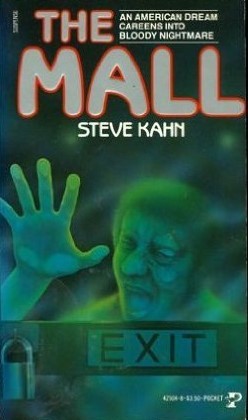
Just from the cover, you would think that The Mall, which was first published in 1983, was a horror novel about a bunch of shoppers getting trapped by a collection of angry spirits whose slumber was disturbed by the titular building being constructed on an ancient burial ground.

Or you might think that The Mall was a sci-fi story in the style of Jim Wynorski’s Chopping Mall, in which The Mall of the Future turned on shoppers and refused to let them escape while a bunch of robots struck a blow for machine rights everywhere.

That’s certainly what I thought when I came across this book and spent a few minutes starting at the cover at Half-Price Books a few months ago.  The cover seemed to show a man melting as he tried to open the doors of the mall!  I mean, seriously, who wouldn’t be intrigued by such a horrific image?  (If I did die at a mall, I would hope that I would at least die in an expensive store so people would be impressed when they heard.)  I bought the book because of the cover and the cover is why I waited until horrorthon to read it.

Unfortunately, it turns out that the cover is the best thing about the book.  It’s not really a horror novel, either.  Sure, it’s listed as being a part of the horror genre on every online listing that I’ve found for it but the book itself is more of a Die Hard rip-off.  (Yes, the book was published before Die Hard even went into production but that’s the power of Die Hard!  It was being ripped off before it even existed.)  The plot is that The Mall is a state-of-the-art playground for the upper and middle-classes.  It was built by Mel Goodman, an industrialist who built himself up from nothing.  On the same day that Mel is having his birthday party in the mall’s offices, his former employee, Jeffrey Prince, leads a group of criminals in an armed but surprisingly dull takeover of the mall.  Prince threatens to kill everyone unless his financial demands are met.  Unfortunately, no one can escape or enter the mall because the doors, I kid you not, have been superglued shut!

The frustrating thing about The Mall is that we are told that there are 40,000 people in the mall.  And yet none of them really try to do anything to thwart Prince’s plans.  Instead, they just wait patiently and some even continue to shop.  That might seem like a satirical commentary on American consumerism but this isn’t half as clever (or emotionally resonant) as Dawn of the Dead.   If anything, it’s the literary equivalent of one of those disaster films where a bunch of different people find themselves trapped in one location and they deal with their personal issues while waiting for the crisis to end.  I’m a little bit surprised this was never turned into a made-for-TV movie.

In the end, it’s not a very good book but the cover continues to haunt me.  Seriously, let that man out of the mall before he dissolves!

October True Crime: The Grim Sleeper (dir by Stanley M. Brooks)


It’s not known, for sure, how many people Lonnie David Franklin killed.

A residenct of Los Angeles and a former enlistee of the U.S. Army who was given a dishonorable discharge after doing time in prison for taking part in the gang-rape of a 17 year-old girl in Germany, Franklin was convicted of 10 murders but he was suspected of much more.  His earliest known murder was committed in 1984 and he was apparently very active up until 1988.  Then, much like the BTK Killer, Franklin appears to have taken a break for nearly two decades before returning to his murderous ways in 2002.  (It could be just as likely that Franklin was still killing but his victims were either not discovered or he was never linked to the crimes.)  Franklin’s murders didn’t get much attention, with the police not acknowledging that they were dealing with a serial killer until 2007.  Some of that can be blamed on the fact that many of Franklin’s murders were committed before DNA testing became a commonplace thing.  However, it has also been acknowledged that Franklin escaped detection because he targeted black women and tended to prey on sex workers, neither one of whom were a priority for the LAPD in the 80s.

2014’s The Grim Sleeper stars Dreama Walker as Christine Pelisek, the journalist who first reported on the existence of the Grim Sleeper and Ernie Hudson and Michael O’Neill as the detectives who investigated the murders and ultimately arrested Lonnie Franklin.  Franklin (played by James R. Baylis) only appears briefly in the film.  As The Grim Sleeper was made before Franklin had actually been convicted and sentenced to death for his crimes, the film does not actually state that the police arrested the right man.  Indeed, the film discusses very little about the man who was arrested for the crimes.

Instead, the film focuses on Pelisek and her attempts to get someone to take her seriously when she argues that there’s a serial killer on the loose and that the public has a right to know.  At first, everyone is skeptical of her claims.  Her editor tells her that she doesn’t have enough for a story.  The police tell her to mind her own business.  Her fellow reporters order her to get coffee.  The only people who really support Pelisek’s attempts to uncover the truth are the families of the victims, some of whom have spent over twenty years waiting for someone to tell them what happened to their loved ones.

The film is at its best when it focuses on the pain of the families, all of whom feel that they have been ignored and forgotten by the people who are supposed to be protecting them.  It’s at its least interesting when it focuses on Pelisek and her efforts to be taken seriously.  (Deama Walker has given good performances in films like Compliance and Once Upon A Time In Hollywood but she’s miscast here.)  Though flawed, the film honors the memories of those victimized by the Grim Sleeper and it reminds viewers that no one should be forgotten.

As for the real Grim Sleeper, he died suddenly while on Death Row.  The cause of death has never been released but he died in March of 2020, around the same time that COVID was spreading throughout the nation’s prisons and I’ve always assumed that he was an early fatality.  Regardless of the cause, the Sleeper met the Reaper and will never awaken again.