October True Crime: Drifter: Henry Lee Lucas (dir by Michael Feifer)


In 1983, a one-eyed, illiterate drifter named Henry Lee Lucas was arrested by the Texas Rangers.  Lucas was arrested for unlawful possession of a firearm but, once in custody, he confessed to murdering 82 year-old Kate Rich and his 15 year-old girlfriend, Becky Powell.  Upon being transferred to the Williamson County Jail, Henry Lee Lucas confessed to one murder and then another and then another and then …. well, soon, ol’ Henry Lee Lucas had confessed to over 300 murders.  According to Lucas, he had spent the past decade traveling the country with his friend and lover, Ottis Toole, and killing just about everyone they met.  (Ottis, who was already in prison in Florida, was Becky’s uncle.)  He claimed that he was a member of a nationwide Satanic Cult.  At one point, he even confessed to killing Jimmy Hoffa.

Soon, cops from across the county were traveling down to Texas and asking Lucas if he had killed anyone in their state.  Lucas’s confessed to almost every murder that he was asked about and often times, he provided details that were considered to be close enough to what happened that his confessions were considered to be credible.  The police were happy because they got to take a lot of unsolved murders off the books.  Lucas was happy because he was getting to travel the country, he was getting a lot of media attention, and he was being kept out of the general prison population.  Indeed, many of the Texas Rangers who escorted Lucas from crime scene to crime scene would testify that, the murders aside, Henry Lee Lucas was usually polite, soft-spoken, and genial company.  They would buy him a milkshake.  He would confess to a murder.

It was only after Lucas had confessed to so many murderers that he had gained a reputation for being the most prolific serial killer in history that people started to take a good look at all of Lucas’s confessions.  What quickly became apparent was that it would have been next to impossible for Lucas to have been everywhere that he claimed to be when he claimed to be there.  Many of Lucas’s confessions fell apart under closer investigation.  Lucas may have dropped out of the sixth grade but he was very good at picking up on details and manipulating people.  He told the police what they wanted to hear.  Even worse, it soon turned out that some of the cops were letting him look at their case files before getting his formal confession, allowing Lucas to learn details that only the killer would know.  When confronted with this, Lucas recanted all of his confessions.

How many people did Lucas kill?  It’s know that he killed his abusive mother when he was a teenager.  And, even after he recanted, most legal observers agreed that he killed Kate Rich and Becky Powell.  While some continue to insist that Lucas killed hundreds, it’s actually more probable that Lucas, as sick as he was, only killed three people.  That didn’t stop Henry Lee Lucas and his confessions from serving as the basis of John McNaughton’s terrifying classic, Henry: Portrait of a Serial Killer.

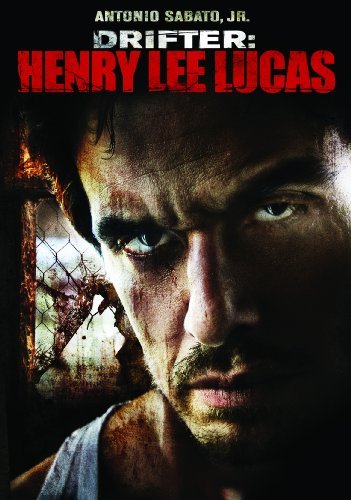
2009 saw the release of another film loosely based on the confessions of Henry Lee Lucas.  Drifter: Henry Lee Lucas opens with Lucas (played by Antonio Sabato, Jr.) being interrogated as to why he confessed to so many murders that he didn’t commit.  The movie then flashes back to Lucas killing Becky Powell (Kelly Curran) before then flashing forward to Lucas confessing to a murder and asking for a milkshake in return and then, once again, it flashes back to Lucas’s Hellish childhood in West Virginia.  That’s a lot of time jumps for just the start of the movie and it’s an early indication of just how jumbled the narrative of Drifter turns out to be.  To a certain extent, the jumbled narrative is appropriate.  It captures the feeling that, in many ways, Lucas is simply making up his life story as he goes along.

Physically, Henry Lee Lucas and Ottis Toole were two incredibly ugly people.  Drifter casts Antonio Sabato as Henry and Kostas Sommer as Ottis, both of whom are notably better-looking than the two men that they’re playing.  Sommer, in particular, is a hundred-time more handsome that Ottis Toole.  (The real Toole looked like one of the toothless hillbillies from Deliverance.)  Even if one overlooks their looks, both Sabato and Sommer are a bit too articulate to be believable as two backwoods murderers.  Sabato does a good job of capturing Lucas’s one-eyed squint but never once do you buy that he’s someone who grew up in the backwoods of West Virginia.  Meanwhile, as Becky, Kelly Curran is shrill and a bit annoying.  A lot of that is due to how Becky is written but still, it doesn’t make any easier to deal with her character.

Narratively, the film avoids taking a firm position on whether or not Lucas was lying.  We do see Lucas commit a few murders but they’re all told as a part of his narration, leaving open the possibility that Lucas could be lying.  Unfortunately, Henry’s stories aren’t that interesting.  What was interesting was that so many people chose to believe his stories, despite the fact that the majority of them fell apart under even the slightest amount of scrutiny.

In the end, Drifter reminded me that Henry Lee Lucas is far less interesting than how people reacted to Henry Lee Lucas and his willingness to confess to every crime that he was asked about.  There’s a great film to be made about the people who enabled Henry Lee Lucas’s lies.  Henry, himself, was far less interesting.
8 Shots From 8 Films: Special Mario Bava Edition


8 Shots From 8 Films is just what it says it is, 8 shots from 8 of our favorite films. As opposed to the reviews and recaps that we usually post, 8 Shots From 8 Films is all about letting the visuals do the talking.

This October, I am going to be using our 8 Shots From 8 Films feature to pay tribute to some of my favorite horror directors, in alphabetical order!  That’s right, we’re going from Argento to Zombie in one month!

Today’s director is Mario Bava, the maestro of Italian horror and one of the most influential and important filmakers of all time!

8 Shots From 8 Mario Bava Films

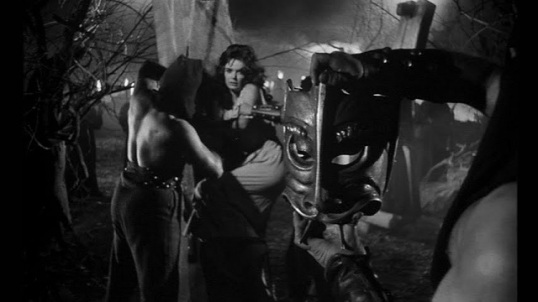
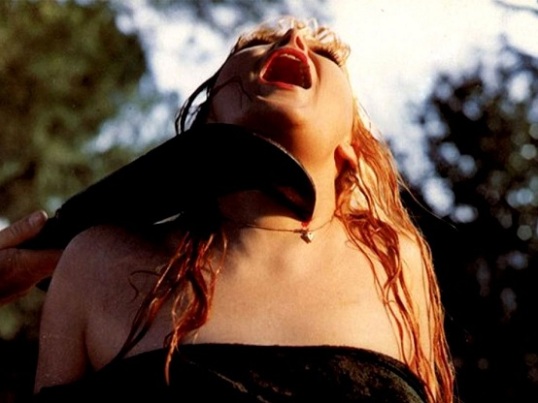
Black Sunday (1960, dir by Mario Bava, DP: Mario Bava)

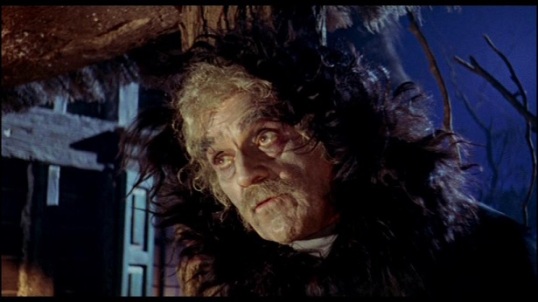
Black Sabbath (1963, dir by Mario Bava, DP: Ubaldo Terzano and Mario Bava)

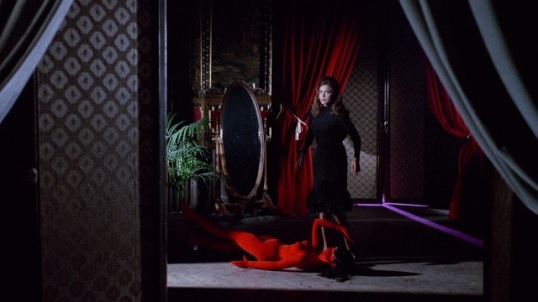
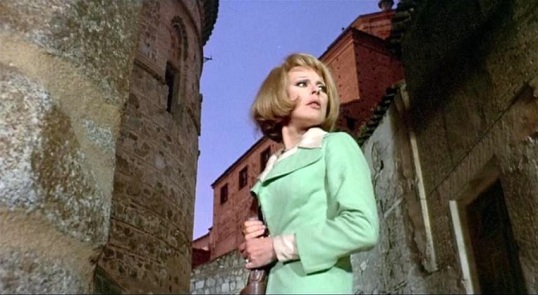
Blood and Black Lace (1964, dir by Mario Bava, DP: Ubaldo Terzano)

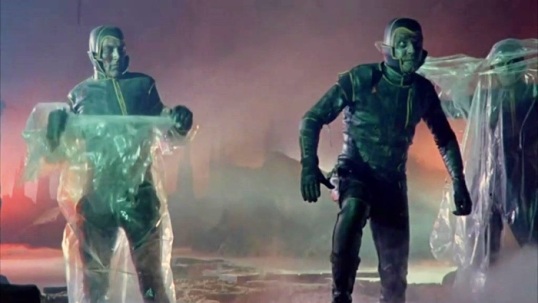
Planet of the Vampires (1965, dir by Mario Bava, DP: Antonio Rinaldi)

Kill Baby Kill (1966, dir by Mario Bava, DP: Antonio Rinaldi)

Bay of Blood (1971, dir by Mario Bava, DP: Mario Bava)

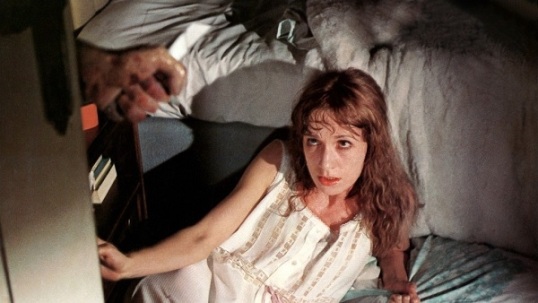
Lisa and the Devil (1974, dir by Mario Bava. DP: Cecilio Paniagua)

Shock (1977, dir by Mario Bava, DP: Alberto Spagnoli and Mario Bava)

Horror Film Review: Mark of the Witch (dir by Tom Moore)


If I had to guess, I’d say that there is probably nothing more dangerous than being the descendant of a witch hunter.  Even though your ancestors may have found some success hunting witches back in 1622, the witch’s spirit always seems to stick around and wait for its chance to possess someone close to you and get revenge.  Apparently, it’s impossible to get rid of the spirit of a witch once it’s sworn a curse upon you and your family.  In fact, it would probably be better to save everyone the trouble and just leave the witches alone.  At least, that’s what I’ve gathered from watching movies with the word “witch” in title.

Take for example 1970’s Mark of the Witch.  The film opens with a bunch of witch hunter’s sacrificing The Witch (Marie Santell).  The Witch announces that she will have her vengeance, right before she’s hanged.  Jump forward a few centuries and The Witch possesses Jill (Anitra Walsh), a college student who made the mistake of accepting her professor’s invitation to a séance.

Now that Jill’s possessed, it’s time to go after the descendants of the main witch hunter.  To help her out with this, she blackmails the professor (Robert Elston) and demands that he explain to her how modern life works.  There are a few scenes that feel like they could have been lifted from one of those sci-fi shows where the robot or the alien requests to know why humans laugh when they’re happy.  I mean, I don’t know what this witch has been doing in the spirit world but apparently, she hasn’t been keeping up with the times on planet Earth.  Jill’s boyfriend (Darryl Wells) suspects that there’s something wrong with Jill.  Can he save her from the Witch?

Mark of the Witch was an early indie film.  It was shot in Dallas in the 60s and sat on the shelf for a while.  The cast was made up of local actors and to call the acting inconsistent would be an understatement.  That said, Marie Santell gives an enjoyably over the top performance as the Witch and Anitra Walsh is likeable as Jill.  Both of them are required to give lengthy monologues about spells and revenge and magic and all the rest and they both do their best to bring some conviction to the occasionally florid dialogue.  The film itself is a bit too talky to be scary but, visually, there are a few artfully composed shots.  The opening scene, in which the Witch is executed, plays out with a certain dream-like intensity.  It’s not a great film but it has its moments.

For the most part, Mark of the Witch is primarily interesting as an early example of outsider cinema.  The budget was low and the cast and crew may have been amateurs but they still managed to get their movie made and it’s hard not to admire their dedication.  When first released, the film apparently played in a handful of Dallas drive-in but now it can be seen by anybody who is willing to search for it on YouTube.  Mark of the Witch lives on.

Live Tweet Alert: Join #ScarySocial for Troll!


As some of our regular readers undoubtedly know, I am involved in a few weekly live tweets on twitter.  I host #FridayNightFlix every Friday, I co-host #ScarySocial on Saturday, and I am one of the five hosts of #MondayActionMovie!  Every week, we get together.  We watch a movie.  We tweet our way through it.

Tonight, at 9 pm et, Tim Buntley will be hosting #ScarySocial!  The movie?  1986’s Troll!

If you want to join us this Friday, just hop onto twitter, start the movie at 9 pm et, and use the #ScarySocial hashtag!  I’ll be there tweeting and I imagine some other members of the TSL Crew will be there as well.  It’s a friendly group and welcoming of newcomers so don’t be shy.

Troll is available on Prime!

See you there!

Horror On The Lens: The Devil Bat (dir by Jean Yarborough)


In the 1940 film, The Devil Bat, the owners of a company in the small town of Heathville are super-excited because they’re going to be given their head chemist, Dr. Paul Carruthers (Bela Lugosi), a bonus check of $5,000.  However, since Carruthers’s inventions have made millions for the company, he is offended by the small check and decides that the best way to handle this would be to sue in court and demand fair compensation …. just kidding!  Instead, Dr. Carruthers sends his army of giant bats to kill the families of his employers.

The Devil Bat was produced by Production Releasing Corporation, a poverty row studio that specialized in shooting quickly and cheaply.  Going from Universal to PRC was technically a step down for Lugosi but The Devil Bat is actually an excellent showcase for Lugosi and he gives one of his better non-Dracula performances as the embittered Dr. Carruthers.  Indeed, one can imagine that Lugosi, who played such a big role in putting Universal on the map, could relate to Carruthers and his bitterness over not being fairly rewarded for the work he did to make others wealthy.

Enjoy The Devil Bat, starring the great Bela Lugosi!

Music Video of the Day: How You Gonna See Me Now? by Alice Cooper (1978, directed by Bruce Gowers)


How You Gonna See Me Now? is one of the songs to cite if anyone ever says that Alice Cooper was only capable of writing gimmicky songs.  This is one of Alice’s best ballads, asking his former companion how she is going to see him when he returns to her life.

Of course, the video features Alice in jail and getting what appears to be electroshock therapy, in between writing a letter home to his wife.  As with many of Alice Cooper’s videos, this video is memorable because of the contrast between the heartfelt and sincere lyrics and the macabre, sometimes bordering on campy imagery.

Director Bruce Gowers has also directed videos for Prince, Fleetwood Mac, Rush, Supertramp, and really just about anyone who was anybody in the 70s and 80s.

Enjoy!