Accused and convicted of a murder that he didn’t commit, John Brant (John Wayne) breaks out of prison in Maryland and, following the advice of Horace Greeley, he goes west. After making a narrow escape from the authorities, he meets and befriends Joseph Conlan (Lane Chandler). Conlan brings Brant into his gang, where Brant starts out as a cook but is soon being assigned to help rob stores and stagecoaches. Despite his time in prison, Brant is no criminal and he secretly thwarts every robbery that the gang tries to pull off. When the gang starts to suspect that Brant might be an undercover cop, Conlan is the only one willing to stand up for him and help him. Conlan is also responsible for the murder that Brant was accused of committing.
John Wayne as a hardened escaped convict? Maybe the older John Wayne could have pulled that off but, in 1933, Wayne was still too cheerful and easy going to be believable as someone who had spent the last few months doing hard time. Fortunately, even early in his career, Wayne was convincing when riding a horse or shooting a gun and that’s probably all that the audience for these short programmers demanded. There’s also an exciting scene where Wayne is forced to swim across a pond while his pursuers shoot at him. As the criminal with a conscience, Lane Chandler steals the film.
Fans of westerns will want to keep an eye out for legendary stuntman Yakima Canutt, playing yet another outlaw gang leader. Yakima Canutt started out his career risking his life as a rodeo rider and then went on to risk his life ever more as Hollywood’s most daring stunt performer. When he got too old to continue doing stunt work, he became a second unit director, for John Ford and others. He staged Ben-Hur‘s famous chariot race and was credited with making sure that not a single horse was hurt and not a single human was seriously injured during filming. Yakima Canutt lived to be 90 years old, outliving most of the actors from whom he doubled as a stuntman.
Welcome to Retro Television Reviews, a feature where we review some of our favorite and least favorite shows of the past! On Tuesdays, I will be reviewing the original Fantasy Island, which ran on ABC from 1977 to 1986. The entire show is currently streaming on Tubi!
This week, Eve Plumb and Leslie Nielsen visit Fantasy Island!
Episode 2.14 “Séance/The Treasure”
(Dir by Larry Stewart, originally aired on January 13th, 1979)
Tattoo is a horse thief! He claims that he just found the horse while wandering around the island but later, he comes across a wanted poster that has his picture on it and the declaration that Tattoo is wanted dead or alive. Mr. Roarke gets a good laugh out of that and even repeats the words, “Dead or alive,” as if he’s realizing that he’s finally found a way to get rid of his assistant. Fortunately, Mr. Roarke has a change of heart and, at the end of the episode, buys the horse for Tattoo. Awwwww!
As for this week’s guests, Joe Capos (George Maharis) is a fisherman who has always wondered what it would be like to be a millionaire. Joe and his wife, Eva (Shelley Fabares), come to the island and find themselves set up in a house that looks exactly like the one where Joe grew up. One day, Joe goes out fishing and what should he find in his net but a gold statue of Triton blowing his horn! It’s a valuable artifact, one that could make Joe a millionaire if it is found to be authentic. Soon, Joe is surrounded by a bunch of people who are hoping to be on his good side when he becomes rich. He’s the most popular man on the island! Unfortunately, Joe is having so much fun being rich and popular that his neglected wife leaves him. Joe knows that the only way to get Eva back is to return the statue to the ocean but will he have the courage to give up wealth and fame for love?
Meanwhile, Eve Plumb plays — wait a minute, Eve Plumb? Just last week, Robert Reed was on the show, playing a method actor who thought he was a vampire. Now, the original Jan Brady has come to the island. I wonder if the entire Brady Bunch will eventually make it to Fantasy Island?
Plumb is playing Clare Conti, a young woman who suspects that her twin brother was murdered. In order to prove it, her fantasy is to have a séance and contact him. Her entire family comes to the Island for the séance, including Uncle Victor (Leslie Nielsen). This episode is Neilsen’s second appearance on the Fantasy Island and, again, he’s playing a very serious and a very somber character but, because he’s so deadpan about it, it’s hard not hear everything that he says as being a joke. It’s always great fun to see Nielsen playing humorless authority figures in the days before he became a comedy superstar. The only thing that would make this episode better would be if Nielsen turned out to be the murderer but sadly, he’s not. As for the rest of the fantasy, the séance scenes manage to strike the right balance between being creepy and being campy. Clare’s dead brother yells a lot but I guess that’s what you do when you’re trying to communicate from the beyond.
This was an enjoyable episode, featuring good performances from the guest stars and fantasies that were intriguing without demanding too much from the audience. This trip to Fantasy Island was more than worth it.
The 1983 Italian film, Warrior of the Lost World, opens with a long title card that explains that society has collapsed, due to radiation, disease, wars, and multiple bank bail-outs. The world of the future is a dangerous place, where the roads are ruled by dangerous scavengers. It’s a world where survival is not guaranteed and only those who are willing to fight will live to see another day and….
Well, look, I’ll be honest. It was a really long title card and, as anyone who knows me can tell you, I don’t have a particularly long attention span. I read about the radiation and the diseases and then I kind of zoned out. The important thing to know is that the film takes place in the future and that the film was made in the wake of the international success of The Road Warrior. In the early 80s, the Italian film industry briefly abandoned zombies to make movies about people driving cars through a post-apocalyptic landscape. In fact, I initially assumed that David Worth was a pseudonym for someone like Enzo Castelleri or even Umberto Lenzi. David Worth is actually a cinematographer who worked on a few Clint Eastwood films and who went to Italy to make his directorial debut with Warrior of the Lost World. After this film, Worth went on to direct Kickboxer and handful of others.
(One thing that’s always interesting about watching these films is discovering that people were speculating about the collapse of society long before 2023. It’s kind of nice to be reminded that people have always been panicking about something, even while society itself continued to survive and grow.)
Robert Ginty stars as The Rider, a man so tough that he doesn’t even need a name. The Rider and his motorcycle travel across the country. The Motorcycle can talk, though it’s screechy voice might make you wish that it couldn’t. It warns The Rider whenever there’s danger nearby. When a bunch of punk rock rejects attempt to attack the Rider, his motorcycle identifies them as being “dorks.” Later, when the Rider is looking at a woman who he has just saved from death, the Motorcycle orders, “Kiss the girl!” The Motorcycle has a weird quirk where it says everything three times. The Rider talks back to the Motorcycle but he always mumbles all of his lines, to the extent that it’s often difficult to really understand what he’s saying. It’s hard not to get the feeling that Robert Ginty couldn’t believe that he was actually having to pretend as if he was a heart-to-heart with a motorcycle.
(The Rider’s bike is actually named Einstein but, to me, it will always by The Motorcycle.)
After the Rider crashes into a wall, he’s nursed back to health by a bunch of old people who are trying to organize a rebellion against the evil Prossor (Donald Pleasence), who rules the State of Omega. Prossor has kidnapped the rebellion’s leader, Prof. McWayne (Harrison Muller, Jr). The old people want The Rider to accompany McWayne’s daughter, Natasia (Persis Khambatta), to Prossor’s city. The Rider whines about being asked but eventually agrees to do so. I’m not sure why The Rider agrees to help because The Rider seriously never stops complaining about how inconvenient the whole journey is. While The Rider does manage to rescue McWayne, Natasia gets left behind so, of course, the Rider has to do it all over again. Fortunately, it turns out that the Omega army isn’t quite as competent as everyone claims that they are. In fact, outsmarting Prosser is so easy that you can’t help but wonder why no one bothered to it before.
Warrior of the Lost World is not necessarily a good movie but, when watched with a group of friends and with the right snarky attitude, it is a fun movie. The action and the plotting is just so over-the-top and ridiculous that it’s hard to look away from the screen and Robert Ginty seems so genuinely annoyed by every little thing that happens that it’s hard not to wonder if maybe The Rider read the script before heading off to confront Prossor. An extended sequence is devoted to everyone singing the Rebellion’s national anthem, the great Donald Pleasence rants like a pro, Fred Williamson has a largely pointless cameo, and the film features what appears to be a 20-minute kiss between The Rider and Natasia. (The Motorcycle watches.) If you can’t have fun while watching Warrior of the Lost World, I just don’t know what to tell you.
4 Or More Shots From 4 Or More Films is just what it says it is, 4 shots from 4 of our favorite films. As opposed to the reviews and recaps that we usually post, 4 Shots From 4 Films lets the visuals do the talking!
101 years ago, on the very day, Russ Meyer was born in San Leandro, California. Meyer would get his start filming newsreels during World War II, with much of his newsreel footage later showing up in films like the 1970 Oscar winner, Patton. When he returned to the United States, he continued to make films, though the subject matter changed a bit. Meyer was one of the pioneers of the adult film industry, though his once controversial films now seem rather quaint and innocent when compared to the industry’s later films. Meyer’s strong visual sense and his intentionally over-the-top plots made him a favorite amongst underground critics. In the 70s, he was briefly embraced by mainstream Hollywood but, unhappy with having to deal with the studio bosses, Meyer returned to making the type of independent, grindhouse films that made him famous.
Russ Meyer was 82 years old when he died in 2004. He was acclaimed as one of America’s first and most iconic independent filmmakers.
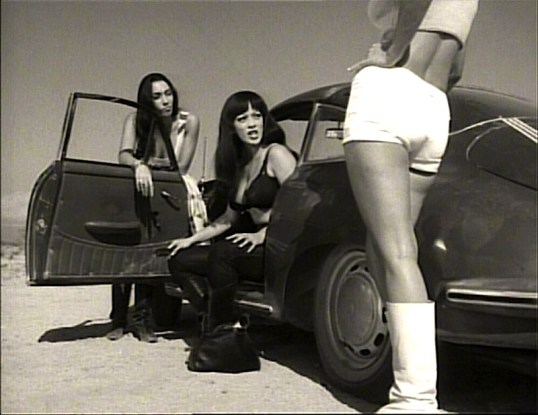
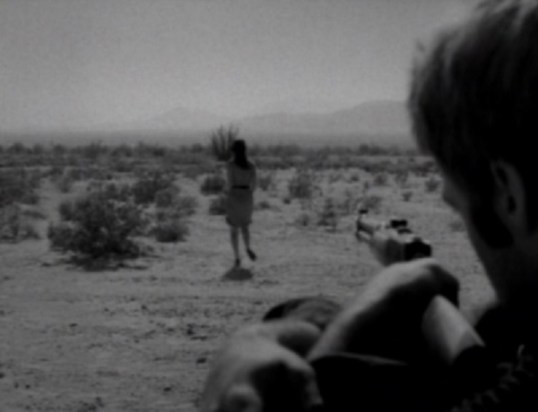
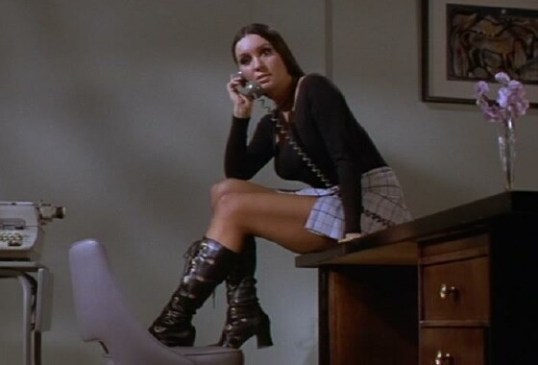
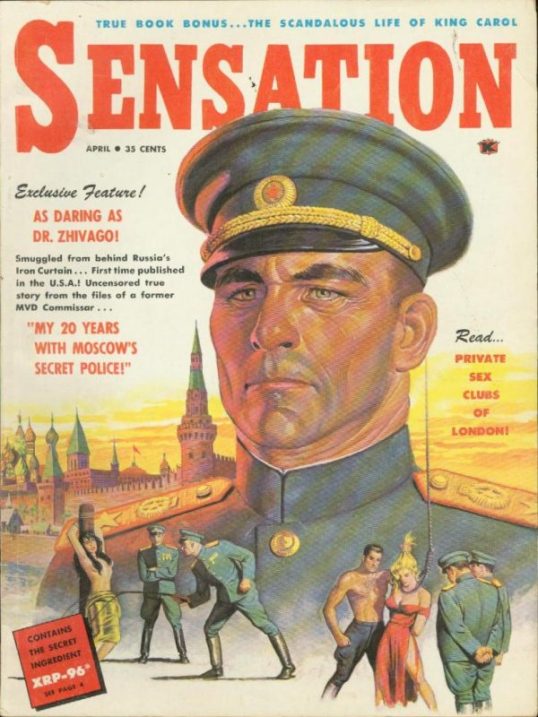
Here are 4 Safe-For-Work Shots From 4 Russ Meyer Films.
4 Shots From 4 Films
Faster, Pussycat! Kill! Kill! (1965, dir by Russ Meyer, DP: Walter Schenk)
Motorpsycho (1965, dir by Russ Meyer, DP: Russ Meyer)
Beyond The Valley Of The Dolls (1970, dir by Russ Meyer, DP: Fred J. Koenekamp)
The Seven Minutes (1971, dir by Russ Meyer, DP: Fred Mandl)
Today is Gary Oldman’s 65th birthday and, in honor of the occasion, here’s a scene from one of my favorite Oldman films, 2011’s Tinker Tailor Soldier Spy.
In this scene, British intelligence officer George Smiley (Gary Oldman) confronts his colleague and Russian mole Bill Haydon (Colin Firth). This scene is a masterclass of good acting, put on by both Firth and Oldman. As Haydon tries to justify his behavior, Smiley listens with deceptive calmness. When I first saw this film, Oldman suddenly raising his voice made the entire audience jump.
Today’s music video of the day comes to us from Miley Cyrus. It pretty much looks and sounds like almost every other music video that’s come out over the past few months but the familiarity is the point. We’re not living in an age of risk takers, especially when it comes to music.
Cowboy John Mason (John Wayne) rides into a frontier town. He is planning on working with his father, rancher Dad Mason (Joseph De Grasse). Unfortunately, John arrives just in time to witness his father being killed by a gang of thieves. John is wounded while chasing the thieves but, once he recovers, he’s determined to get vengeance against the man who killed his father. That man is Rudd Gordon (Dennis Gordon), who is also the brother of Alice Gordon (Marion Burns), the woman who nursed John back to health and who is also engages to marry John’s best friend, Ben McLure (Reed Howes).
There is a little deliberate humor to be found in The Dawn Rider. Every time someone is shot, the undertaker (Nelson McDowell) steps out of his office and measures the body while the town doctor celebrates having some business coming his way. Otherwise, this is one of the most serious films that John Wayne made in the years before Stagecoachmade him a star. John Mason is determined to get revenge, even if his obsession means hurting his best friend’s fiancé. (Though John Mason is less fanatical, it is easy to imagine him growing up to be The Searchers‘s Ethan Edwards.) Ben has to decide whether to support his friend or the woman that he loves. (Complicating matters is that John is in love with Alice, too.) John Wayne and Reed Howes are a good team and Dennis Gordon is a convincing villain. There’s a good action scene involving John protecting a gold shipment from the gang and the final shootout is handled well. This 55-minute programmer undoubtedly taught many young viewers about frontier justice, even if they didn’t pick up on the film’s ambiguity. The Dawn Rider is one of the more mature of John Wayne’s early films and offers hints of the actor that John Wayne would eventually become.
Welcome to Retro Television Reviews, a feature where we review some of our favorite and least favorite shows of the past! On Mondays, I will be reviewing Hang Time, which ran on NBC from 1995 to 2000. The entire show is currently streaming on YouTube!
Season 4 continues! Will Coach K ever figure out how to step into Coach Fuller’s shoes? Will the team ever come together? Will Julie and Mary Beth ever graduate? Let’s find out!
Episode 4.3 “Let Them Play”
(Dir by Patrick Maloney, originally aired on September 19th, 1998)
Another big game is coming up but the majority of the team doesn’t want to play it! It turns out that one of their rival teammates is HIV+ and, as a result, high schools across Indiana have been refusing to play them. When Coach K puts it to a team vote, only Michael argues that they shouldn’t cancel their upcoming game. Even St. Julie votes to cancel the game.
However, Michael then brings the HIV+ positive player down to The Stadium, the oddly sterile restaurant where everyone hangs out. The team discovers that their rival is just like them and almost all of them change their minds about playing. The only one who doesn’t now want to play is …. JULIE! Julie tells Michael that she doesn’t feel safe playing against a player with HIV, especially since she’ll be the one guarding him in the game. “C’mon, Julie,” Michael says, “we need you in this game!” And Michael’s correct because, if there’s anything we’ve learned from Hang Time, it’s that Julie is the only good basketball player in Indiana. Maybe that’s why she’s been allowed to stay at the high school for an extra year….
Despite the players changing their minds, the school board says that the game still cannot be played. As a way to protest, the teams decide to play an “unofficial” game. When a member of the school board comes by the gym to complain, Julie sees that it’s the same member of the board who always says that a girl shouldn’t be allowed to play basketball! Julie decides that she will play, once again proving that the best way to get Julie to do anything is to make it all about Julie.
This is one of those episodes that probably would have worked much better with the “old” cast. I imagine if this episode had aired during the previous season, Danny would have been the one arguing that the team should play and that would have been totally in character for him. Turning Michael into a social crusader with a conscience goes against everything that we’ve learned about Michael up until this point. As well, we still don’t know any of the new players so it’s a bit hard to know how to react to their feelings about playing against someone who is HIV positive. Are they prejudiced or are they just worried? Are they homophobic or are they just uneducated about how HIV is transmitted? And, finally, it’s hard not to notice that Dick Butkus has a bit less gravitas than Reggie Theus when it comes to discussing whether or not HIV can be transmitted through playing basketball. This episode came across as being well-intentioned but heavy-handed.
The B-plot features Mary Beth encouraging Kristy to write an angry letter to the art teacher who gave her a C on an assignment. As played by Amber Baretto, Kristy put so much joy into writing her letter that it was fun to watch. I laughed
Episode 4.4 “Lend A Helping Hammer”
(Dir by Patrick Maloney, originally aired on September 19th, 1998)
Nick Hammer gets his first storyline as a member of the Tornadoes! When he falls for Taylor, the new waitress at the Stadium, he’s shocked to discover that she and her family live at a homeless shelter. On Saved By The Bell, when Zack liked a girl who was without a home, he arranged for her and her father to live at his house. (And, much like the tenants of H.H. Holmes, they were never seen, heard from, or mentioned again….) Nick, however, convinces the Coach that, instead of using the money raised at the school dance to buy new uniforms, the money should be donated to Taylor and her family. Of course, Nick also accidentally announces that Taylor is homeless to the entire school.
This was another episode that probably would have worked better with the old cast. It’s easy to imagine it as being another Danny storyline. Nick goes out of his way to help someone in need, which is nice, but we don’t really know Nick so we don’t know if his behavior is unusual or if he just does this for everyone that he meets. It was a well-intentioned episode but it did seem to suggest that the best way to deal with homelessness is to have a bunch of wealthy friends. Everyone goes out of their way to help Taylor but everyone else at the shelter just kind of gets ignored.
In the B-plot, Kristy is using a lot of slang. Julie says that it’s because Kristy recently read a book by Queen Latifah. In the C-plot, the Coach makes the team take a ballet lesson to make them more flexible. “Ballet!” I excitedly exclaimed, when the idea was first brought up. Unfortunately, the ballet scene is really short and the entire team has terrible form.
So far, Hang Time Season 4 has yet to escape the shadow of the past. Hopefully, next week will be better for the Tornadoes and their new coach.
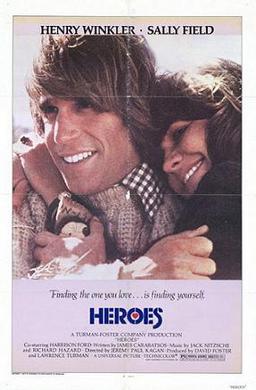
The 1977 film, Heroes, tells the story of Jack Dunne (a young Henry Winkler).
Jack spent four years fighting in Vietnam. Since returning to America, he has struggled to adjust to civilian life. Though he’s mentally blocked out much of what happened in Vietnam, he’s haunted by nightmares, When we first meet him, he’s a patient at a mental health facility in New York City. He has big plans, though. He wants to open up a worm farm in Eureka, California. He’s convinced that he can make a ton of money selling worms to fisherman and he wants all of the old members of his unit to join him in the venture. After Jack escapes from the hospital, he boards a bus heading for California.
He also meets Carol (Sally Field), who is supposed to be getting married in four days but who has decided to board a bus and take an impromptu vacation instead. When Carol is told that the bus is already full and she’ll have to wait for the next one, Jack bribes the ticket agent to get Carol on the bus. Once on the bus, Jack makes himself into a nuisance, continually bothering the driver (Val Avery) and embarrassing Carol. (In the film’s defense, it’s later established that Jack isn’t just being a jerk for fun. The driver’s uniform makes Jack nervous. That said, it’s hard not to feel bad for the driver, who is just doing his stressful job to the best of his ability.) Carol and Jack do eventually strike a tentative friendship. They’re linked by the fact that they’re both trying to escape from something.
At a diner, Jack tells her that he served in Vietnam.
“I protested the war,” Carol says.
“I fought it,” he replies.
Carol eventually joins with Jack in his quest to track down the three people who he expects to go into business with. One of them is missing. One of them never returned home from the war. And the third, Ken (Harrison Ford), is living in a trailer and raising rabbits for a living. Ken is also a stock car racer, though he eventually admits that he rarely wins. In fact, he seems to spend most of his time drinking and shooting off the M16 that he keeps in his car’s trunk. Meeting Ken sends Jack spiraling into depression but, with Carol’s help, Jack is finally starts to come to terms with the reality of what happened to him and his friends in Vietnam.
Heroes was one of the first films to sympathetically portray the plight of Vietnam veterans struggling to adjust to life back in the United States and it certainly deserves a lot of credit for its good intentions. (Indeed, it’s implied that a part of Carol’s concern from Jack comes from her own guilt over how the anti-war movement treated the returning soldiers.) That said, the film itself is an awkward mix of drama and comedy. The first half of the film, in which Henry Winkler comes across like he’s doing a manic Al Pacino impersonation, is especially uneven. Winkler and Field are both naturally likable enough that the film remains watchable but, during the first half of the film, most viewers will never buy their relationship for a second. It’s hard to believe that the driver wouldn’t have kicked Jack off the bus as soon as he started to cause trouble and the other passengers often seem to be unrealistically charmed by Jack’s behavior. If I’m on a crowded bus and some dude insists on walking up and down the aisle and taunting the driver, I’m probably going to get off at the first stop and refuse to get back on. Traveling with a bunch of strangers is already nerve-wracking enough without having to deal with all of that.
Not surprisingly, things improve once Harrison Ford shows up. This was one of Ford’s last character parts before he was cast as Han Solo in Star Wars. (Heroes, however, was released after Star Wars, which explains why Ford is mentioned prominently in the trailer despite having a relatively small role.) Ford gives a strong performance as the amiable but ultimately self-destructive Ken. Ford plays Ken as someone whose quick smile is a cover for the fact that his entire life is a mess. Whereas Jack wears his emotions on his sleeve (and Winkler never stops projecting those emotions), Ken is someone who has repressed his anger and his sadness and Ford gives an internalized and controlled performance. Perhaps not coincidentally, Winkler calms down a bit when he’s acting opposite Ford and, as a result, his own performance starts to improve.
After the meeting with Ken, Jack starts to realize that it’s not going to be as easy to start his business as he thought. Jack starts to come down from his manic high and, even more importantly, Henry Winkler stops overacting and instead, starts to dig into the sadness at the heart of Jack’s life. During its second half, the film finally settles on being a drama and Heroes becomes a much stronger story as a result. Even Jack and Carol’s relationship seems to make more sense during the second half of the film. Things end on a note of cautious optimism, which also acknowledging that life can never go back to what it was before the war.
Today, if anyone watches Heroes, it’s probably going to be for Harrison Ford. (I imagine the presence of Harrison Ford is the reason why it’s currently available on Netflix.) It’s a bit of an uneven film, one that feels as if it should have been stronger than it actually was. Still, it’s a worthwhile time capsule of 1977 and America’s struggle to come to terms with the Vietnam War. Today, we’re still struggling to come to terms with what happened in Iraq and with the botched withdrawal from Afghanistan and, again, it seems like the country is too busy trying to move on to take the time to take care of its veterans. It’s sad that so many people only seem to care about the soldiers who fight in popular wars. Heroes was a plea to America not to forget its veterans. It’s a plea that still needs to be heard.
 Accused and convicted of a murder that he didn’t commit, John Brant (John Wayne) breaks out of prison in Maryland and, following the advice of Horace Greeley, he goes west. After making a narrow escape from the authorities, he meets and befriends Joseph Conlan (Lane Chandler). Conlan brings Brant into his gang, where Brant starts out as a cook but is soon being assigned to help rob stores and stagecoaches. Despite his time in prison, Brant is no criminal and he secretly thwarts every robbery that the gang tries to pull off. When the gang starts to suspect that Brant might be an undercover cop, Conlan is the only one willing to stand up for him and help him. Conlan is also responsible for the murder that Brant was accused of committing.





 Through the Shattered Lens