International Film Review: Shanghai 13 (dir by Chang Cheh)


A Hong Kong-Taiwanese co-production that was first released in 1984, Shanghai 13 takes place during the early days of World War II in Asia, when the conflict was primarily viewed as being between Japan and China.  With the help of a thief named Black Hat (Jimmy Wang Yu), a low-level but patriotic Shanghai bureaucrat named Mr. Gao (Chiang Ming) steals a report that details the collaboration between Japan and a puppet regime that has been installed in Northern China.  Mr. Gao hopes to take the documents to Hong Kong, where he will be able to safely publish them and reveal just how corrupt the Chinese collaborators are.  Needless to say, the collaborators would rather this not happen and they are determined to assassinate Mr. Gao before he boards the last boat to Hong Kong.

Fortunately, Mr. Gao is not alone.  The 13 Rascals have been called in to protect Mr. Gao.  Who are the 13 Rascals?  They are a collection of talented marital artists and they are all patriots, determined to reveal the truth about what is happening in Northern China.  The 13 Rascals are played by an ensemble of Hong Kong and Taiwanese film veterans.  One appears after another, each getting their chance to show off what they can do while defending Mr. Gao.  Many of the rascals lose their lives to protect Mr. Gao but that seems to be the point of the film.  No sacrifice is too much when its done to protect the honor of one’s country.

To really understand what’s going on with Shanghai 13, it probably helps to know a bit about not only the Second Sino-Japanese War and the subsequent chain of events that led to the Republic of China relocating its central government to Taiwan.  My knowledge of these events is pretty much Wikipedia-level and I’m not going to present myself as being an expert.  That said, it’s pretty obvious that Mr. Gao, who is forced to leave his home city by a corrupt and ruthless government, is meant to serve as a stand-in for both Taiwan and Hong Kong (or, at least, Hong Kong before it was transferred to Chinese control).  Just as the Rascals will sacrifice their lives to protect Mr. Gao, they would do the same for Taiwan and Hong Kong.  The implication, of course, is that the audience should do the same.

Fortunately, if international politics are not your thing, Shanghai 13 can also be enjoyed as just a non-stop action film.  Admittedly, the film does get off to a bit of a slow start.  (If you’ve ever wanted to see every little detail of how to crack a safe, this is the film for you.)  Once the fighting begins, it’s pretty much nonstop and more than a little bloody.  Faces are kicked.  Bones are shattered.  Clawed gloves are worn.  One man carries a killer fan and laughs whenever anyone tries to remove it from his hands.  The film is full of Hong Kong and Taiwanese stars, all of whom get their chance to show off their moves and the majority of whom also get a dramatic death scene.  One man gets impaled a pole and still announces that he would rather die with honor than surrender.  (And, needless to say, he drops dead shortly afterwards.)  There’s enough slow motion to keep any slo mo of doom enthusiast happy.  The final battle takes place in a ship yard and features combatants jumping on top of shipping crates.  It’s exciting and weird.

Throughout it all, Mr. Gao stands in the background and watches.  Mr. Gao is not a fighter and he can only watch while everyone else in the movie sacrifices their lives so that Mr. Gao can reveal the truth about China’s puppet regime.  If this was an American film, I’m sure that the last-standing hero would probably get angry with Mr. Gao, much as Snake Plissken did with the President in Escape From New York.  But in Shanghai 13, all that matters is that Mr. Gao is a patriot.  He’s a man trying to protect his nation from a corrupt government and, for that reason, 13 people are willing to risk their lives to protect him.  We could use more people like the 13 Rascals.

Celebrate Dinosaur Day With The Pulps!


by Alex Schomburg

Happy Dinosaur Day!  Today is the day when we  celebrate the former rulers of our planet!  Dinosaurs were alwasy a popular subject with the pulps.  Pulp magazines were full of stories about modern-day dinosaurs and speculation about why the real ones when extinct.  Putting a dinosaur on the cover of a magazine or a paperback was a good way to catch the attention of readers all over.  Today, let’s celebrate Dinosaur Day with the help of the pulps!

Artist Unknown

Artist Unknown

by Edmund Emshwiller

by Frank R. Paul

by George Gross

by Howard V. Brown

by J. Allen St. John

by J. Allen St. John

by Lawrence Sterne Stevens

by Thomas Beecham

Happy Dinosaur Day!

by Jerome Podwil

4 Shots From 4 Films: Special Wes Craven Edition


4 Or More Shots From 4 Or More Films is just what it says it is, 4 shots from 4 of our favorite films. As opposed to the reviews and recaps that we usually post, 4 Shots From 4 Films lets the visuals do the talking!

83 years ago today, Wes Craven was born in Cleveland, Ohio.  Craven started his career as an academic, teaching high school English.  However, realizing that there was more money to be made in the film industry, Craven changed careers.  By his own admission, he started his career directing “hardcore, X-rated films” under a pseudonym and it has been rumored that he was a member of the crew of the first “porno chic” film, Deep Throat.  Eventually, Craven broke into the mainstream with some of the most influential and often controversial horror films ever made.  From being denounced for the original Last House On The Left to changing the face of horror with A Nightmare on Elm Street to becoming something of a revered statesman and a beloved pop cultural institution with the Scream franchise, Wes Craven had a truly fascinating career.

In honor his films and legacy, it’s time for….

4 Shots from 4 Wes Craven Films

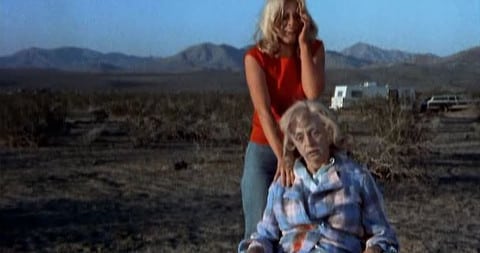
The Hills Have Eyes (1977, dir by Wes Craven, DP: Eric Saarinen)

A Nightmare on Elm Street (1984, dir. by Wes Craven, DP: Jacques Haitkin)

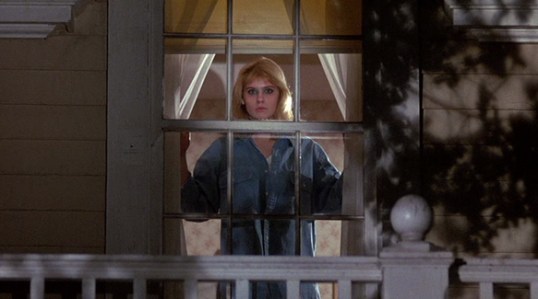
Deadly Friend (1986, dir by Wes Craven, DP: Philip H. Lathrop)

The People Under The Stairs (1991, dir by Wes Craven, DP: Sandi Sissel)

Music Video of the Day: Bother by Stone Sour (2002, directed by Gregory Dark)


The Spider-Man ring that is visible in this video is due to leader singer Corey Taylor being both a fan of the character and this song appearing on the soundtrack of the first Tobey Maguire Spider-Man film.  Just as Peter Parker and Spider-Man are the same but different, the same can be said of Corey Taylor, who is introspective and thoughtful as Stone Sour’s lead singer and something somewhat different when he’s performing as Number 8 with Slipknot.

This video, which features Taylor singing to rapidly aging and dying version of himself, was directed by Gregory Dark.  Dark, previously known as “the Steven Spielberg of the soft-score set” and “the Martin Scorsese of the erotic thriller,” was making the transition for directing films for adults to directing music videos.  It wasn’t always a smooth transition.  There was some controversy when he directed a video for Britney Spears, for instance.  I think this is one of Dark’s better videos.

Enjoy!

Here’s The Trailer For Cars On The Road


Cars is the only PIXAR franchise that has never made me cry.  This is largely because it’s about talking cars.  It’s easy for me to get emotionally worked up over toys fearing that they’ll be forgotten or WALL-E losing its personality and returning to collecting trash.  Don’t even get me started on some of the emotional trauma that I suffered from UP and Inside Out.  But Cars …. I mean, I know that cars don’t talk to each other so it’s difficult for me to get too emotionally involved in their issues.  In PIXAR’s defense, though, the Cars films have always been pretty honest about the fact that they’re just meant to be silly fun.  No one is going to mistake Cars for Toy Story but then again, PIXAR has never asked anyone to.

Cars on the Road is the latest entry in the franchise.  This original series will be premiering on Disney Plus on September 8th.  Here’s the trailer:

Here’s The Trailer for Star Wars: Andor


The upcoming Disney+ original series, Star Wars: Andor, is a prequel to Rogue One, which was itself the fourth prequel to Star Wars: A New Hope.  If Andor is a success, I’m sure it will lead to another prequel and then a prequel to that and then a prequel to that and eventually, we’ll have a Star Wars series that takes place right before the Big Bang.  

(As you may have guessed from the tone of that last paragraph, I’m a bit skeptical of prequels in general.  It’s rare that they’re ever worth the trouble.  Better Call Saul is really the only prequel that I can I think of that actually enriches the experience of watching the show from which it was spun off.)

Anyway, Star Wars: Andor will be available to stream on September 21st.  Here’s the trailer:

Here’s The Trailer For Devotion


Just to state the obvious, this trailer definitely has a Top Gun feel to it.  I imagine that can be said about any film that features aerial combat.  Plus, Top Gun: Maverick‘s Glen Powell has a role in this film as well.  However, unlike Top Gun, Devotion is based on a true story and it takes place during the Korean War.

Devotion is due to be released in November, which is typically the Oscar season.  I have a feeling that, fairly or not, Devotion might be overshadowed by the monster success of Top Gun: Maverick but you never know.  Audiences might show their devotion to another film about planes and the pilots who fly them.

Here’s the trailer:

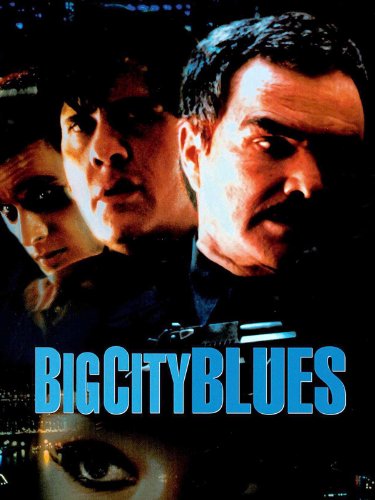
Big City Blues (1997, directed by Clive Fleury)


If you have ever wonder why Burt Reynolds, despite receiving an Oscar nomination for Boogie Nights and being a favorite of so many of the up-and-coming directors of the 90s and early 2000s, never made a real comeback, you only have to watch Big City Blues.

In Big City Blues, Burt plays a hitman who loves to watch and talk about old movies.  Over the course of one very long night, Burt and his partner (played by William Forsythe) drive through the city.  In between doing violent jobs for their boss, they talk.  Burt talks about movies.  Forsythe talks about how he doesn’t understand Burt’s love of the movies.  They talk nonstop and if this is making you think of Pulp Fiction, it’s probably intentional.  Today, I think people forget just how many Pulp Fiction rip-offs were released throughout the 90s, all featuring talkative criminals who were obsessed with pop culture.  Burt Reynolds and William Forsythe have got the equivalent of the roles played by John Travolta and Samuel L. Jackson.  Unfortunately, Reynolds and Forsythe don’t have the same chemistry as Travolta and Jackson.  You believed that Travolta and Jackson had been working together for years and, when they talked, that they were having an actual conversation.  Despite both of them being credited as executive producers on the film, Reynolds and Forsythe come across as being two talented actors who are phoning it in for a paycheck.

When the film isn’t focused on Reynolds and Forsythe, it follows two trans women (played by Giancarlo Esposito and Ayre Gross) as they walk around the city and debate whether or not Esposito should get sex reassignment surgery.  When it’s not following Esposito and Gross, it’s focusing on a sex worker (Georgina Cates) who wants to be a movie star and who keeps seeing evidence that she has a doppelganger who is living the respectable life that she craves.  Cates searches for her doppelganger while also servicing her clients, who are all typical middle-aged pervs.  (One gets off from listening to Cates sing Ol’ McDonald Had a Farm.)  Eventually, the paths of all the characters cross and Reynolds talks about how life is just celestial roulette.

Big City Blues doesn’t add up to much.  Like many 90s indie films, the characters are all talkative to the point of feeling like parodies.  (When the movie isn’t trying to rip-off Quentin Tarantino, it feels like a half-baked imitation of Richard Linklater.)  Even the likable performances of Cates, Esposito, and Gross can’t overcome how overwritten and derivative the script feels.  Beyond the script, the film just looks bad.  All of the scenes take place at night and the lighting is often so dark that it’s impossible to see what’s actually happening from scene to scene.  It feels amateurish.

So why was Burt Reynolds in this?  This was the first film that Reynolds made after the filming of Boogie Nights.  Probably thinking that Boogie Nights would flop, Reynolds signed up to appear in this Pulp Fiction knock-off, which is something that many former stars did in the 90s.  Instead of flopping, Boogie Nights turned out to be the film that reminded everyone that Reynolds could be a very good actor with the right material.  Unfortunately, Reynolds himself didn’t think much of the film and, perhaps even worse as far as Hollywood was concerned, he was open about not thinking much of the film.  As a result, even with that Oscar nomination, Reynolds didn’t get the type of career resurrection that John Travolta got from Pulp Fiction and Robert Forster and Pam Grier got from Jackie Brown.  That’s too bad.  Burt  Reynolds deserved better.

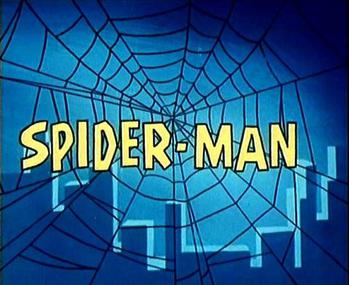
Great Moments In Television History #21: The Origin of Spider-Man


The first Spider-Man television series was the famous cartoon series that premiered in 1967.  This was the one the featured the theme song about how Spider-Man could do everything that a spider can.  The first season of Spider-Man was produced by Grantray-Lawrence Animation and it started in medias res, with Peter Parker already fighting crime as Spider-Man and also with Spider-Man already knowing most of his villains.

Grantray-Lawrence went bankrupt halfway through the first season of Spider-Man and, as a result, the second season was produced by Krantz Animation, Inc.  Krantz made the important decision to bring in Ralph Bakshi, to executive produce and direct the series.  Bakshi wanted to move the show away from just being a mindless kid’s cartoon.  Instead of emphasizing action, he emphasized character.  The 2nd season premiered on September 14th, 1968 and was rebooted the series, taking it in Baskshi’s new direction.  It started with The Origin of Spider-Man, which told the story of the death of Ben Parker in Bakshi’s trademark style.

In the scene below, Peter learns of his uncle’s death and suits up as Spider-Man to get justice.

We all know how the story ended.  Spider-Man continued to fight crime in New York and Ralph Bakshi continued to challenge the conventional assumptions about what animation had to be.

Previous Moments In Television History:

  1. Planet of the Apes The TV Series
  2. Lonely Water
  3. Ghostwatch Traumatizes The UK
  4. Frasier Meets The Candidate
  5. The Autons Terrify The UK
  6. Freedom’s Last Stand
  7. Bing Crosby and David Bowie Share A Duet
  8. Apaches Traumatizes the UK
  9. Doctor Who Begins Its 100th Serial
  10. First Night 2013 With Jamie Kennedy
  11. Elvis Sings With Sinatra
  12. NBC Airs Their First Football Game
  13. The A-Team Premieres
  14. The Birth of Dr. Johnny Fever
  15. The Second NFL Pro Bowl Is Broadcast
  16. Maude Flanders Gets Hit By A T-Shirt Cannon
  17. Charles Rocket Nearly Ends SNL
  18. Frank Sinatra Wins An Oscar
  19. CHiPs Skates With The Stars
  20. Eisenhower In Color