Film Review: Shut In (dir by DJ Caruso)


Shut In is not a political movie.

It’s important to point that out because much of the online reaction to Shut In will be totally political.  That’s because it’s the second film to have been produced by The Daily Wire.  And yes, Ben Shapiro is listed as one of the film’s producers.  For many, it doesn’t matter that the film’s script appeared on The Black List of the best unproduced scripts in Hollywood.  (Of course, some notoriously terrible movies have been made out of the scripts that appeared on The Blacklist — remember Cedar Rapids? — so maybe it’d be best not to call too much attention to that.)  It won’t matter that the script was initially purchased by a major studio or that Jason Bateman (who is hardly a right-wing media figure) was originally set to direct it before the project was delayed by the pandemic.  All that will matter is that the film was produced by the Daily Wire and therefore, it will be judged as being some sort of political statement.

Indeed, when the film’s premiere was streamed on YouTube earlier tonight, I kept one eye on the movie and another eye on the chat comments.  About 80% of them were from people saying, “Let’s go Brandon!”  18% were from people saying, “Biden 2024 Harris 2028.”  And 2% of the comments were from some group of weirdoes who were obsessed with Liz Cheney.  The film itself might not be political but the film’s audience definitely was and probably will continue to be so.  I imagine most hardcore online liberals will automatically hate the film because of who produced it while most hardcore online conservatives will be tempted to overpraise it and cite it as proof that a good film can be made outside of the Hollywood system.  It’s tempting to say that’s just the way of the world nowadays but, to be honest, it’s really just the way of the extremely online world.  Most people won’t care one way or the other.  They’ll just view it as a being an effective thriller.

And, make not doubt about it, Shut In is not a bad film.  It’s an effectively tense thriller, one that has plenty of suspense and which makes good use of its limited budget.  If it’s never quite a great film, that’s because there’s a few pacing and plausibility issues, especially early on in the film.

Shut In stars Rainey Qualley as Jessica, a former dug addict who has escaped from her abusive ex and who is now trying to start a new life, with her young daughter and her newborn son, in an isolated farmhouse.  Unfortunately, when her ex, Rob (Jake Horowitz), and his scummy friend, Sammy (Indie film legend Vincent Gallo, making his first film appearance in ten years), show up at the house, Jessica ends up getting locked in the pantry while Rob and Sammy ransack the house and, most importantly, steal her phone so she can’t call for help.  Trapped in the pantry, Jessica tries to figure out a way to escape while also trying to instruct her young daughter on how to take care of her baby brother.  The whole time, of course, she’s aware that Sammy and Rob could return at any minute.

Director D.J. Caruso does a good job of building and maintaining tension throughout the film.  The majority of the film’s action takes place in that pantry and, just like Jessica, we find ourselves forced to try to interpret the sometimes random footsteps and snippets of conversation that we hear throughout the house.  Rainey Qualley, who is the daughter of Andie MacDowell and who has a Southern accent that is almost as prominent as her mother’s, is sympathetic in the role of Jessica and does a good job of playing up not only her fear but her strength.  Jessica is a survivor and it’s difficult not to admire her as she searches for a way to escape.  Vincent Gallo is older but still as uniquely photogenic as he was during his indie heyday.  He’s memorably creepy as Sammy.

As I said, it’s not a flawless film.  It takes a while for things to really get going and, towards the end of the film, a few of the characters behave in ways that defy logic.  One key moment depends on a character surviving something that, by all logic, should have easily killed them.  It may not be a political film but there are a few bits of heavy-handed religious symbolism, including an injury that deliberately calls to mind stigmata.  That said, when Jessica finally begins to fight back, it’s an enjoyably cathartic moment.

Shut In is an effective thriller and a determinedly non-political one.  If nothing else, it’ll keep you out of the pantry.

A Mystery “Unfolding”


I’m all for formalist experimentation — even for its own sake — but Kimball Anderson’s self-published mini Unfolding (which I think was released in the latter part of last year, but I could be wrong about that — in any case, that’s when I got it) is formalist experimentation with an added layer of purpose beyond “just” or “only” that tacked on : utilizing typed text and collage, it manages, in the space of just 12 pages, to interrogate the very nature of information-gathering and information-sharing on levels both practical and conceptual.

Consider : there is something about someone or something (or both) that’s written (whoops, typed, sorry) on a small piece of folded paper. As you slowly open it, you find out more, each outward unfolding offering up a fragment of a larger puzzle that is actually, all told, no puzzle at all. It only appears to be such due to the fragmented nature of the, to borrow a lame term, “reveal.” But what if said “reveal” was — errrmmm — revealed by other means?

Buckle up, because we’ve got to take things a couple steps further here, okay? Suppose the process I just laid out is actually reversed, and the slip of paper is being folded up, but is being read section by section as it’s folded, so that you’re well and truly learning more while seeing less — textually speaking, that is. On the other side of the paper, there’s an image, nominally related in some subtle way to what’s wri — typed! Caught myself that time! —and now suppose this process is being repeated four times over, with four different pieces of paper. Following me so far? Good, since we’re not quite done yet.

Now, further suppose that each of these paper scraps contains a discrete piece of information that tells a small “story” unto itself — but that all four descriptive passages are actually interconnected even though they’re separate. Starting to get the picture? I dearly hope so, because “getting the picture” is precisely what this innovative-yet-simple project is all about.

I’m also fully cognizant of the fact that I’m probably-to-definitely making the whole thing sound more convoluted than it really is, but perhaps the sample pages included with this review explain it all far better than my uncharacteristically (but then I would say that) linguistic fumbling is managing to accomplish. Language is a big part of what Anderson is experimenting with here (and by “a big part,” I mean half) — using it in fragmented form to draw attention to its shortcomings as a means of communication — but so are pictures, and while this may not be a traditional “comic” per se, its premise (by default and by design in fairly equal measure) teases out what comics do so well, which is to say : they convey information by means both verbal and visual. And by deconstructing the ability to do both in plain sight, this ‘zine gives readers a newfound appreciation for the inherent strengths and possibilities of illustrated sequential storytelling.

Are Anderson’s goals here ultimately — shudder! — ironic, then? Nah, I really don’t think so, I just think that there’s some “natural,” if you will, irony woven into the framework of the project’s metaphorical DNA. Sometimes you don’t know what you’ve got until it’s gone, and all that. In any case, this is a work that got me to thinking — about what it was, about what it was doing, and about how it was doing it. That’s more food for thought than you normally get out of 120 pages, let alone 12. Saying “highest possible recommendation” is a pretty formal note to end things on, admittedly, but hey, this is formalist stuff, so — if the shoe fits, right?

************************************************************

Unfolding is available for $5.00 from Austin English’s Domino Books distro at http://dominobooks.org/unfolding.html

Also, this review is “brought to you” by my Patreon site, where I serve up exclusive thrice-weekly rants and ramblings on the worlds of comics, films, television, literature, and politics for as little as a dollar a month. Subscribing is the best way to support my continuing work, so I’d be very appreciative if you’d take a moment to give it a look by directing your kind attention to https://www.patreon.com/fourcolorapocalypse

Sam Neill and Laura Dern return in the Jurassic World Dominion Trailer!


It looks like life found a way yet again to bring us another Jurassic World film. This time around, the dinosaurs appear to be out and everywhere on the planet. It’s like someone at Universal saw Mission Impossible: Fallout and said “How about we try all of that, but with Dinosaurs?!”

Motorcycle chases? Check, now with dinos.

Issues on a flight? Check, now with dinos.

I’ll admit though that I’m excited for this one. I’ve always wanted to see a Jurassic Park scenario where Dinosaurs reached the mainland, and The Lost World was possibly the closest we had there. It’s also cool to see that Blue (everyone’s favorite Raptor) has a little one of her own!

This third film brings back both Sam Neill and Laura Dern, reprising their roles as Alan Grant and Ellie Sattler. Jeff Goldblum and B.D. Wong are back as well with the Jurassic World cast, Bryce Dallas Howard, Chris Pratt, Isabella Sermon, Daniella Pineda, Justice Smith, and Omar Sy. Dichen Lachman (Netflix’s Altered Carbon) and Mamoudou Athie (Underwater) are new to the series.

Jurassic Park Dominion premieres in theatres June 10, with Colin Trevorrow returning as Director.

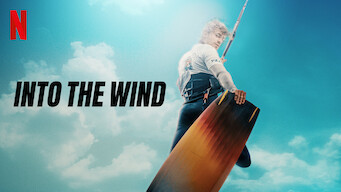
International Film Review: Into the Wind (dir by Kristofer Rus)


Ania (Sonia Mietielica) is the privileged daughter of a wealthy doctor.  She’s graduated from an exclusive high school in Warsaw and now, she’s about to start studying medicine in London.  The plan is that she’ll eventually take over her father’s medical practice and that she will, of course, marry someone from her upper class social circle.  Ania is haunted by the death of her artist mother and still struggles to get along with her stepmother (Sonia Bohosiewicz).

Michal (Jakub Sasak) is a handsome but poor athlete who works at the local beach resort.  At night, he’s a waiter.  During the day, he’s a kitesurfing instructor.  He may not have money or an education but he’s sensitive and artistic.  He likes good music, good weed, and hanging out good people.  He’s laid back but he cares about his friends and he’s got a romantic soul.

Together …. they solve crimes!

No, actually, they don’t.  There are no crimes to be solved in Into The Wind.  Instead, they meet when Ania accompanies her father, her stepmother, and her new baby brother to the resort for the summer.  While Ania listens to her father talk about how the pandemic has not really effected his practice (this is a 2022 film so, of course, there is talk of COVID in the background), Michal serves food and wine and is largely unseen by the other guests.  (The wait staff, as he explains it, is meant to be invisible.)  However, Ania sees him and he sees her.  And soon, they’re in love, they’re hanging out on the beach, they’re listening to music, and they’re kitesurfing!  But they’re also from two different worlds.  Ania’s father does not want his daughter to end up with a waiter.  And Michal’s friends are convinced that Ania will eventually return to her safe, upper class existence and Michal will be left heart-broken.

This Polish film is narratively predictable but visually stylish.  The plot should be familiar to anyone who has ever seen Dirty Dancing but then again, it’s not exactly as if Dirty Dancing was the most original film ever made.  That said, though the plot may be predictable, the film has enough lovely shots of the beach and the two leads have more than enough romantic chemistry to keep things watchable.  This is a good film to watch after a long and exhausting day, when you just want a simple story, a happy ending, and some nice pictures to go along with it.  Speaking for myself, as someone who spent last week dealing with below freezing temperatures and ice on the ground, the beach and the ocean looked very inviting and, for that matter, so did Jakub Sasak.  The beach and the cast are pretty and that’s pretty much all that a film like this really needs to work.

That said, I did really like the Kitesurfing scenes.  Kitesurfing is something that I personally would never do, seeing as how it would mean confronting not only my fear of drowning but also, potentially, my fear of heights but, even with that in mind, the film still made it a look like something that everyone should try at least once.  The scenes of people skimming across and occasionally floating above the water take on an almost religious grandeur as the surfer becomes onr with the forces of nature and fate.  Those scenes are exciting to watch, even if the story taking place around them is thoroughly predictable.

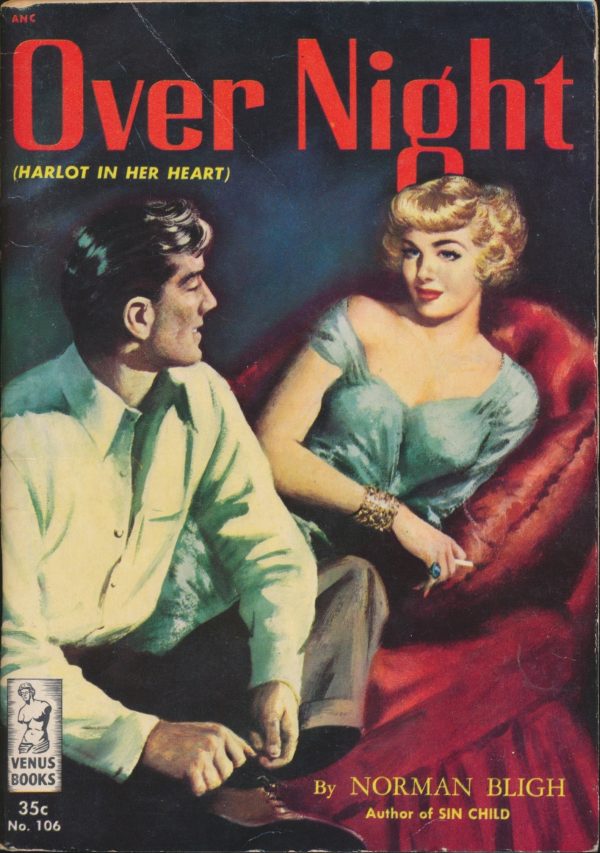
Artist Profile: Robert Oliver Skemp (1910 — 1984)


Born in Pennsylvania, Robert Oliver Skemp studied at the Art Students League of New York and also spent some time at the Grand Central Art School in New York.  He was also a member of the Merchant Marine, traveling across the world and no doubt picking up inspiration for the tough, two-fisted characters who would later appear in some of his artwork.

Most of Skemp’s career was spent in advertising but he was also a prolific pulp cover artist and portrait painter.  Here’s a small sampling of his paperback artistry:

Creativity While “Isolated”


When we look on things a few years from now (assuming we make it that far), there’s a damn good chance that 2020 will be seen as a turning point for small press, self-published, and otherwise independent comics. Not only did we have the “heavy hitters” like Simon Hanselmann’s Crisis Zone and Alex Graham’s Dog Biscuits, we had diary comics galore from any number of cartoonists, as well as a smattering of “lockdown”-themed anthologies — artists, like the rest of us, were looking for anything to keep them sane while they were (by and large) stuck indoors, and new (predominantly digital) distribution methods were utilized, both by choice and necessity, to get their work out there. In many ways, sure, it seems like only yesterday, but in others it seems like a lifetime ago, so completely has the landscape shifted. And the changes to production and distribution that the pandemic engendered have proven to be every bit as resilient as has COVID-19 itself, really — I mean, how many comics are you reading on Instagram these days? I bet it’s more than you were in 2019.

I was somewhat surprised, then, to receive in the mail recently a handsomely-produced little anthology called Isolated, edited and published by Tana Oshima and featuring work produced primarily (with some exceptions) during the “height” of the lockdowns, that is available only in printed form. This is not a complaint, mind you — I made mention of Instagram comics a moment ago, but the truth is I don’t even have an Instagram account myself and prefer to keep things as “old school” as is humanly possible. I’m well aware, however, of what’s happening in the digital comics realm in a general sense, and so the idea of a a collection of pandemic-themed strips that bucks the trends and stays with the tried-and-true is inherently appealing to a stick in the mud such as myself — and even more importantly, so are the comics that Oshima is presenting here.

Of course, how could they not be given the veritable “murder’s row” of international talent she’s managed to put together? Roll call, in order of appearance : Celine Hudreaux on covers, with interior stories by Pedro Pablo Bacallao, E.A. Bethea, Angela Fanche, Ana Galvan, Jessica Garcia, November Garcia, Ness Ilene Garza, Marie Gilot, Kim Lam, Drew Lerman, Lui Mort, Roman Muradov, Hue Nguyen, Weng Pixin, Areeba Siddique, and Lane Yates. Veteran readers of my blathering will no doubt recognize many a cartoonist I’ve sung the praises of included in this list of luminaries, but there are a handful of names that I admit were new to me here as well, and lo and behold, they contribute some of the strongest entries in the book, so that admittedly shop-worn “something old, something new” axiom with regards to putting together a successful anthology? It absolutely rings true in this case.

Everyone is given four pages to work with (apart from Galvan, who only uses two), and as one would expect, pretty much all these strips are autobiographical in nature, but even the ones that aren’t in form are in spirit, given the same thing was resting heavy on everybody’s shoulders all over the world at the time — which rather brings me to my main point here : expect a uniquely unpleasant and harrowing reading experience with this as you look back on a time that absolutely no one is nostalgic for. These are all cartoonists operating at the full height of their considerable powers, so that semi-apocalyptic sense of dread we all felt in 2020? You’re gonna feel it all over again. It hangs over all in Sword of Damocles fashion, even in the strips with a nominally “lighter” tone. So if you’re understandably not yet ready to go down that road, while I’d still strongly urge you to get this book — after all, who knows how many copies are even out there — I’d likewise advise that you put it aside until you really feel up to it. Please. For your own sake.

Speaking for myself (because that’s the only person I’m remotely qualified to speak for in the first place), the predominant sensation this collection evoked in me was the strange dichotomy of those times — we were all going through the same thing, but since we were separated, we all experienced and processed it in highly personal ways. It didn’t help, I suppose, that politics did its level best to wrest control of the situation from science — and I’ll always find it as tragic as it was predictable that the same assholes who lectured us about “coming together” in the wake of 9/11 so they could pursue bloodthirsty and profit-driven wars of conquest abroad were the ones telling us to piss in the face of unity during the lockdowns — but by and large the very nature of isolation itself gave rise to myriad interpretations of both what the lockdowns meant and how best to navigate them. This book, by dint of the wide range of distinctive voices it presents, captures the essence of what it means to individually experience a collective nightmare.

Also worth noting : thanks to the efforts of Oshima and her predecessor on the project Andrew Losowsky, grant funding was secured so that all of the contributors were paid for their efforts — and we all remember how vital that was at the time. You can feel good about buying this comic, then, even if it’s not a “feel-good” collection per se — it is, however, a vital and necessary one, as well as a testament to art’s ability to help us get through the roughest of rough times.

*****************************************************************

Isolated is available for $12.00 from Austin English’s Domino Books distro at http://dominobooks.org/isolated.html

Also, this review is “brought to you” by my Patreon site, where I serve up exclusive thrice-weekly rants and ramblings on the worlds of comics, films, television, literature, and politics for as little as a dollar a month. Subscribing is the best way to support my continuing work, so I’d be very appreciative if you’d take a moment to give it a look by directing your kind attention to https://www.patreon.com/fourcolorapocalypse

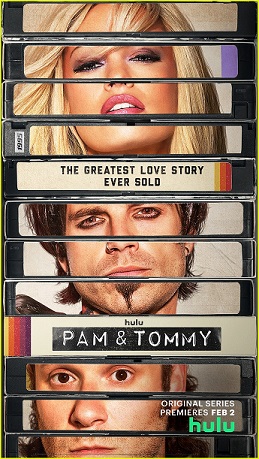
TV Review: Pam & Tommy 1.4 “The Master Beta” (dir by Lake Bell)


“I’ve made a terrible mistake.”

That was my thought after I published my review of the first three episodes of Pam & Tommy.  Don’t get me wrong.  I stand by everything that I wrote in that review.  The first three episodes were relatively well-made and they captured as specific point in time and Lily James was likably earnest as Pam.

Instead, my concern came from the fact that, by reviewing the first three episodes, I had now committed myself to watching and reviewing the entire series.  And, the more I thought about it, the more I realized that there was no way that Pam & Tommy could remain interesting for a total of 8 hours, not unless the show abandoned its Ryan Murphy-lite approach and did something really unexpected with its recreation of the story.  There’s just not enough there.  This is a good 2-hour story but Pam & Tommy is an 8-epiosde miniseries.  That’s 8-plus hours of Pam getting upset, Tommy acting like a dumbass, and Rand being every creepy guy who has ever approached you in a bar and started asking you about the book you’re reading.  (It would, of course, never occur to him that the main reason you’re reading the book is to avoid talking to guys like him.)

Having now watched the fourth episode, it’s hard not to feel that I was very much correct in my concerns.  Don’t get me wrong.  The fourth episode had its moments.  It featured an enjoyably intense performance from Don Harvey as the legendary Hollywood private investigator, Anthony Pellicano.  Once Tommy finally discovers that his safe has been stolen and Pam reminds him about the videotape, Pellicano is the man who they approach to track down the perpetrator.  This leads to a scene of Pellicano beating the crap out of Rand and it’s fun to watch.  Some of that is because Don Harvey is a master of portraying urbane menace.  But I have to admit that a lot of it is because Rand himself is such an annoying character.  This episode opened with Seth Rogen, as Rand, wandering around a porn set and trying to reconnect with his estranged wife (Taylor Schilling), who significantly was just trying to read Anne Rice’s latest book when he approached her.  Just the sight of Rand, with his mullet and his sad-sack facial expression, was so annoying that it was actually cathartic to see him get tossed around his apartment.

The problem is that the show wants us to feel some sympathy for Rand but there’s nothing sympathetic about him.  He’s a loser and the fact that he still loves his wife and still wants to take care of her doesn’t make him any less of a loser.  He’s a thief, a guy who accidentally stole a sex tape and then decided to put it online.  The fact that he later feels guilty doesn’t change the fact that he did it.  There’s as scene in the fourth episode where Rand is upset to see someone else selling bootleg copies of the tape.  On the one hand, it’s not a bad scene.  There’s an enjoyable irony to Rand discovering that someone has essentially stolen the tape from him after Rand went through so much trouble to steal the tape from Tommy.  But the show doesn’t seem to be sure whether it wants us to laugh at Rand’s misfortune or to sympathize with him as he realizes that the consequences of his actions are out of his control.  As a character, Rand is not compelling enough for both to be an option.

As for the title characters, both Sebastian Stan and Lily James do their best but I get the feeling that we’ve already learned all the we need to know about them.  There was one good moment that examined Pam and Tommy’s different reactions to the release of the sex tape but otherwise, neither Tommy nor Pam are really that interesting as characters.  I ended the fourth hour of Pam & Tommy very much aware that there were still four more hours to go.  What else, I found myself wondering, could be left to be said?