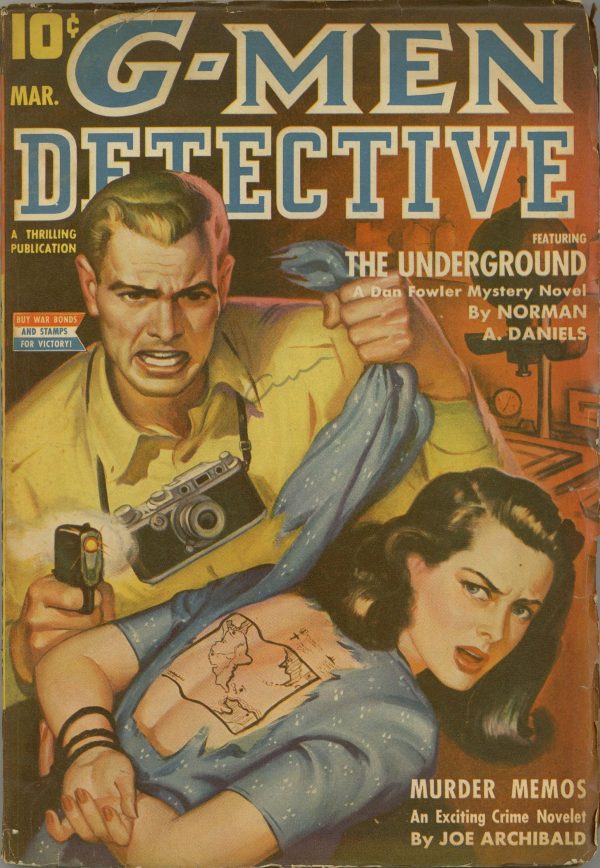
This is from 1943. I bet there’s an interesting story behind that tattoo!
This cover was done by Rudolph Belarski, who has been featured frequently on this site in the past and who will be featured frequently in the future.
This is from 1943. I bet there’s an interesting story behind that tattoo!
This cover was done by Rudolph Belarski, who has been featured frequently on this site in the past and who will be featured frequently in the future.
Operation: Mindcrime is the title track from Queensrÿche’s third studio album. The album was considered to be the band’s breakthrough album and, unlike a lot of heavy metal from the 80s, it still has a good critical reputation to this day. I’m not a huge Queensrÿche fan but I have to admit that the bass line in the title track is pretty awesome.
The album was a concept album, about a junkie named Nikki who was turned into an assassin by the evil Dr. X. (As with most concept albums, the plot was actually much more complicated but I’ve only got so much space for this post.) For the album, this song was about how Dr. X could program Nikki to kill simply by saying, “Mindcrime.” The video, while containing all of the themes from the overall album, simplifies things to two men playing Russian Roulette while sitting in an office that’s decorated with a portrait of Stalin.
This video was directed by Chris Painter, who directed several other Operation: Mindcrime videos and who also did the video for Rush’s Roll The Bones.
Enjoy!
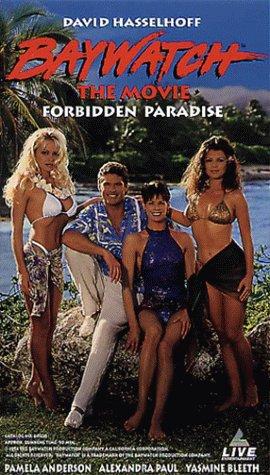
Earlier tonight, I watched the 1995 film Baywatch The Movie: Forbidden Paradise.
Why Was I Watching It?
The H&I network has been airing Baywatch every weekday at 5 and 6. I’ve been watching because the pure, unapologetic silliness of the show is a good way to unwind from whatever stress or annoyance I may have had to deal with during the day. Today, they aired Forbidden Paradise, which was originally released theatrically in Europe and straight-to-video in the United States. (To quote John Redcorn, “We are already straight-to-video. There is nowhere else left to go.”) A few months after its theatrical release, Forbidden Paradise was broadcast as a two-part episode of Baywatch, even though it featured characters who had since left the show. I imagine that was a bit confusing for some viewers.
(Or maybe it wasn’t. I doubt the majority Baywatch’s audience was particularly concerned with continuity.)
What Was It About?
The Baywatch team goes to Hawaii! Well, not all of them. Actually, it’s just Mitch (David Hasselhoff), CJ (Pamela Anderson), Stephanie (Alexandra Paul), Caroline (Yasmine Bleeth), Logan (Jaason Simmons), and Matt (David Charvet). They’re supposed to be taking part in a lifeguard exchange program but, as usual, it turns out that Stephanie is the only one who actually gives a damn about doing her job.
Instead, CJ considered whether or not she wants to model for a dorky photographer. Logan becomes obsessed with winning a surfing competition while Caroline obsesses on why Logan is always obsessing on stuff. Mitch and Matt end up getting lost in the jungle and briefly taken prisoner by a bunch of native villagers. It all leads to a chase through the jungle and an engagement on the beach. Stephanie helps that Hawaiian lifeguards save someone from drowning. At least Stephanie takes her job seriously.
What Worked?
Baywatch The Movie: Forbidden Paradise was actually filmed on location in Hawaii so the scenery was gorgeous. It was also apparently shot in approximately the same location as Lost so, whenever I got bored with the plot, I could think about Sawyer and the Others. This was especially true while David Hasselhoff and David Charvet were being chased through the jungle by all of the angry villagers. I felt like the Smoke Monster was going to pop out at any moment.
As with anything involving Baywatch, it could be argued that the whole film was so ludicrous that it worked as a self-parody. I’m certainly tempted to make that argument but I’m not really sure if any of the self-parody was intentional. That’s the great mystery when it comes to Baywatch.
What Did Not Work?
If you consider this movie to be a self-aware parody, than it all worked.
If you consider it to be an actual movie, with a plot and characters that you’re supposed to care about and interesting dialogue, than none of it worked. I mean, it’s Baywatch. It’s the adult version of Saved By The Bell. It’s entertainingly shallow but it’s never exactly good.
Probably the film’s biggest flaw is that the pacing is totally off. It seems to take forever for the film’s plot to actually get started and then, once it does, it keeps going off on these strange detours. For some reason, a lot of screen time is devoted to a model named Holly (Hedi Mark) and a remarkably unlucky photographer named Carlton Edwards (Ricky Dean Logan).
Myself, I was disappointed that David Chokachi (who played Cody, the lifeguard best-known for wearing a speedo in the opening credits) wasn’t even in the film.
“Oh my God! Just like me!” Moments
I’ve been to Hawaii! Seriously, I had a great time and I look forward to returning soon.
Lessons Learned
I refuse to learn anything from Baywatch.
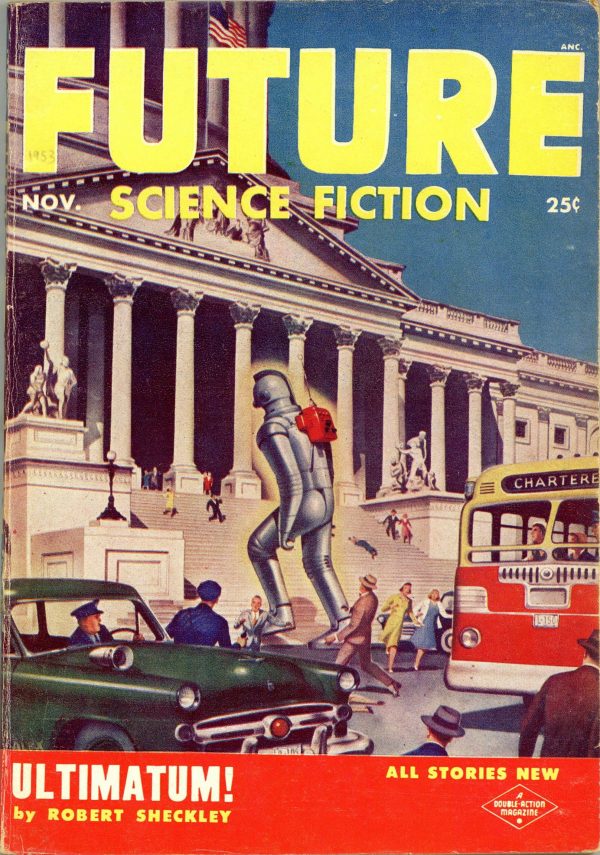
This cover, featuring what appears to be a galactic summit, is from 1954. The cover artist is Alex Schomburg, who has been featured on this site in the past and who will undoubtedly be featured again in the future.
Ship of Fools was the second single to be released from Robert Plant’s fourth solo album, Now and Zen. Now and Zen was the most financially and critically successful of all of Planet’s solo albums, though Plant himself has said that he feels that the album’s music “got lost in the technology of the time.” I would be disappointed if Robert Plant didn’t decry “the technology of the time” but, in this case, he’s being too hard on himself. Now and Zen is a very good album.
This song is mood piece, a love song. In the video, Plant appears to be singing in the rain and it works. The song was later used in “Freefall,” the final episode of Miami Vice, the show that epitomized the 80s and the technology of the time like no other.
Enjoy!

I have to admit that I kind of went back and forth on whether or not to share the trailer for Dear Evan Hansen, the film adaptation for the Tony-award winning Broadway musical.
It’s been a while since I’ve seen a trailer greeted with this much derision. My natural instinct is to be a contrarian and to try to defend it. (Remember …. I proudly put Money Plane on my list of the best films of 2020. I campaigned, albeit unsuccessfully, for Kesley Grammar to receive a Best Supporting Actor nomination for his career-defining performance as The Rumble in that same film. I’ve voted for multiple third party candidates and I still hold on to hope that Degrassi will somehow be renewed for another season. I am not scared of embracing a lost cause.) However, I actually agree with a lot of the comments that have been made about this trailer. For instance, it does give away almost the entire plot. And it does tend to go on and on. (No trailer should be over 3 minutes long.) And, perhaps most importantly, Ben Platt does look way too old to be playing a depressed and insecure high school kid.
It should, of course, be noted that Ben Platt originated the role of Evan Hansen, playing the role from the first reading of the show all the way to Dear Evan Hansen‘s eventual Broadway premiere. He played the role for three years. He won a Tony Award for playing Evan Hansen. One could argue that Ben Platt earned the right to recreate the role on film. However, judging from the trailer, Ben Platt may be 27 but looks at least ten years older. He looks less like Julianne Moore’s son and more like her younger brother. The attempts to make him look like a high school student just seem to age him even more. On stage, this would be less of an issue. However, watching the trailer, it’s pretty much the only thing that you can think about.
That said, this film was directed by Stephen Chbosky. Chbosky also wrote and directed one of my favorite films of all time, The Perks of Being A Wallflower. My hope is that Chbosky can pull it off and that Ben Platt’s performance will be so effective that it won’t matter that he’s way too old for the role.
Anyway, with all that in mind, here’s the trailer:
Resident Evil is back, I guess.
Resident Evil: Infinite Darkness is an upcoming CGI animated series, dealing with all of the usual Resident Evil stuff. Personally, I’m a fan of anything that features zombies in the White House. The series will be available to stream on July 8th, 2021 on Netflix.
Here’s the trailer!
Charles Grodin could have been Benjamin Braddock.
It was a story that he told often, about how he was a struggling, 30 year-old actor with a few film credits to his name when he was offered the lead role in The Graduate. Even though producer Lawrence Turman said the role would make him a star, Grodin turned it down because of the low salary that Turman offered. The role was then offered to Dustin Hoffman, who went on to become a star and spend several decades as an unlikely box office draw.
It’s easy to imagine Grodin in the role of Benjamin Braddock. He probably wouldn’t have been as insecure as Hoffman was in the role. He would have been a less passive Benjamin. Grodin’s Braddock would probably have been more obviously frustrated with Mrs. Robinson and his parents. Nobody played frustration quite as well as Charles Grodin. Audiences might not have been as quick to sympathize with Benjamin if Grodin had played the role but I think he would have eventually won them over. Grodin was an actor with a talent for making unlikable characters somehow funny and relatable.
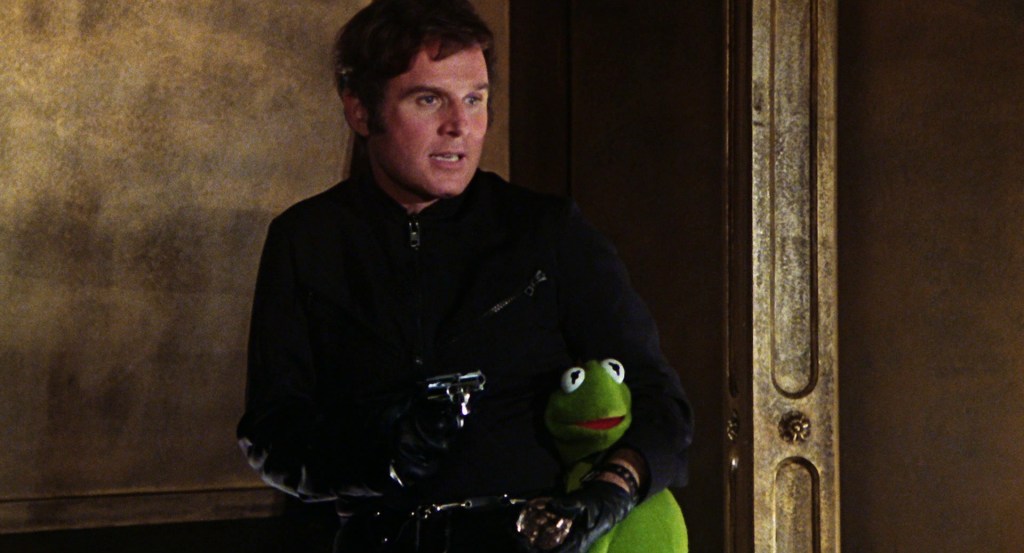
Though Grodin may not have played Benjamin Braddock, he still went on to establish himself as one of the funniest character actors in the business, a master of deadpan humor. He was often the best thing in the moves in which he appeared. In Heaven Can Wait, he was funny even while he was trying to kill Warren Beatty. In Real Life, he was a suburban father who found himself trapped in an early version of reality television. In Seems Like Old Times, he gets more laughs with one annoyed expression than Chevy Chase gets in the entire film. In The Great Muppet Caper, he fell in love with Miss Piggy and tried to kill Kermit. He was one of the few actors to make it through Ishtar with his dignity intact. In Midnight Run, he was the perfect comedic counterbalance to Robert De Niro. In Dave, he taught the government how to balance a budget. Though he was often cast in supporting roles or as a co-lead (as in Midnight Express), he proved that he could carry a film with his starring turn in The Heartbreak Kid.
A lot of people knew Grodin best as a late night talk show guest, where he always seemed to be annoyed about something. He would get into mock arguments with the hosts and leave audiences confused as to how serious any of it was. (According to David Letterman, none of it was.) He briefly hosted his own talk show, from 1995 to 1998. Legend has it that Lorne Michaels banned him from Saturday Night Live after he hosted the show, apparently because he was so difficult to work with. How much of that is true and how much of that was just Grodin doing a bit, no one knows. I’ve seen Grodin’s episode. It’s fine. He’s funny.
Charles Grodin died today of bone marrow cancer. He was 85 years old. I’m going to miss him.
Today is the 124 anniversary of the birth of Frank Capra and, in honor of this day, here’s a scene from one of my favorite films of all time, 1946’s It’s A Wonderful Life. In this wonderfully acted and directed scene, George Bailey tells off Mr. Potter, for the first but certainly not the last time:
4 (or more) Shots From 4 (or more) Films is just what it says it is, 4 (or more) shots from 4 (or more) of our favorite films. As opposed to the reviews and recaps that we usually post, 4 (or more) Shots From 4 (or more) Films lets the visuals do the talking.
109 years ago today, Richard Brooks was born in Philadelphia, Pennsylvania. He would go on to become an iconoclastic director, making films that challenged taboos and often dealt with the social issues that most mainstream Hollywood filmmakers refused to touch. With In Cold Blood, he launched the entire true crime genre. With Elmer Gantry, he was one of the first American directors to examine how religion became a big business. Throughout his long career, Brooks was a consistent opponent of bigotry, censorship, and hate. As one of the few independent directors to regularly work and achieve prominence during the studio era, he was a trailblazer for many today’s best directors.
In honor of the date of his birth, it’s time for….
6 Shots From 6 Richard Brooks Films


 Through the Shattered Lens