Mercy Island was originally published in 1941. Theodore Pratt was a Florida-based writer and all of his books, including this one, took place in the Sunshine State. The edition above came out in 1953. The cover was by Verne Tossey, who has been featured on the site in the past and who will be featured in the future.
The thing I like about this cover is the facial expressions of the three people involved. The man throwing the punch looks like he doesn’t even know where he is anymore. That shirt is about to get ripped.
More Than This was the first single to be released from Avalon, the album that would eventually become Roxy Music’s biggest seller. It was not only Roxy Music’s most popular studio album but it was also their last. Though More Than This only reached #58 on the US Charts, it’s a song that’s endured. (It did much better in the UK, reaching #6.) The song was discovered by a new generation of listeners when Bill Murray sang it in Lost In Translation.
The video is simple and very much a product of its time. Ferry performs the song and then watches himself and the band performing in what appears to be a movie theater.
It’s always a treat when a staple of your reading youth (and in this case I use the term “youth” advisedly, as I was well into my twenties when the series in question originally saw print) becomes available again for a new generation to enjoy — or for members of your own generation who may have missed out on it the first time around to finally discover for themselves. There’s bound to be a bit of risk involved in re-visiting something you hold in high esteem, though, isn’t there? I mean, a person’s tastes and expectations change over time, there’s no doubt about that — or at least they damn well should — so what appealed to you at age 25 stands a very real chance of just not doing the job for your 40-something self. Above and beyond that, though, there’s also a very real possibility that changing times
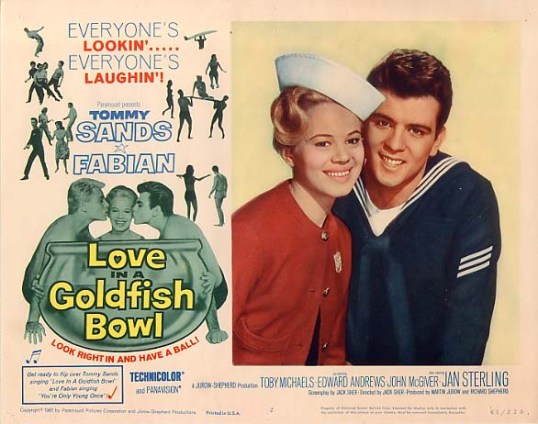
The 1961 film, Love in a Goldfish Bowl, tells the story of two college students.
Gordon Slide (Tommy Sands) and Blythe Holloway (Toby Michaels) are best friends. Their relationship is strictly platonic, though everyone at the college assumes that they’re more than just friends. Gordon and Blythe both share the common bond of coming from broken but wealthy families and they both want to do something more with their lives than just following the rules. Blythe is a good student, the daughter of a senator. Gordon is styles himself as being a cynic, or at least what was considered to be a cynic by the standards of 1961. (James Dean would have probably called him a phony.) The school’s headmaster (John McGiver) suspects that 1) Gordon and Blythe are more than just friends and 2) that Gordon is a bad influence on Blythe. He even orders them to stop seeing each other, which I guess is something that headmasters could get away with in 1961.
Still, it’s going to take more than some stuffy authority figure to keep Gordon and Blythe for enjoying their Spring Break! Especially when Gordon’s mother happens to own a beach house, which would be the perfect place for the two of them to hang out. Despite knowing that each of their parent probably wouldn’t approve of them spending the break together, Gordon and Blythe decide to do just that. Blythe even gets permission for her father, albeit by duplicitous means. (Gordon imitates the headmaster on the phone. Wow, that wild and crazy Gordon.)
At first, the beach house seems like the perfect place for Gordon and Blythe to unwind. But when they meet Giuseppe La Barba (Fabian Forte), things start to change. A member of the Coast Guard, Giuseppe plots to steal Blythe away from Gordon, with his schemes causing Gordon and Blythe to reconsider their feelings for each other.
Considering that this film is 60 years old, it’s perhaps not surprising that Love In A Goldfish Bowl often feels like it’s a rusty time capsule that someone buried in the sand on a California beach. Everything from the intrusive headmaster to the scandal of divorce to the domestic routine that both Gordon and Blythe naturally slip into as soon as they arrive at the beach house makes this film feel almost as if it comes from another planet. While the film is critical of adults who don’t understand what it’s like to be young and idealistic, it also ultimately ends with the suggestion that the adults might not be so clueless themselves. It’s a bit of a wishy-washy approach to what little conflict the film has to offer up.
My point here is that Love In A Goldfish Bowl is an amazingly innocent little film, the type of Spring Break movie that would cause even your grandma to say, “Those kids really need to loosen up and live a little.” Usually, I kind of like time capsule films like this, just because I’m a history nerd and I’m always interested in seeing how people used to live and communicate. Unfortunately, Love In A Goldfish Bowl is a remarkably slow 88 minutes and neither Tommy Sands nor Toby Michaels have enough chemistry to be interesting as friends, let alone as a chaste couple waiting for their wedding night. Fabian has a little bit more screen presence than Tommy Sands but overall, this is a pretty bland affair.
Ultimately, this film is mostly interesting as an example of what beach movies were like before AIP reinvented the genre with the Frankie and Annette beach party films. Thank goodness people finally learned how to celebrate being young and on the beach.
The great filmmaker, Akira Kurosawa, was born 111 years ago today, in Tokyo. Kurosawa would go on to become one of the most influential directors of all time, making 30 films over a career that lasted 57 years. Though Kurosawa is often cited as an influence on westerns (Seven Samurai became The Magnificent Seven, Yojimbo inspired Serigo Leone to create The Man With No Name), Kurosawa’s influence goes for beyond just one genre. He directed action films. He directed gangster films. He directed social problem films. He directed historical epics. Kurosawa taught an entire generation of future film film directors the language of cinema.
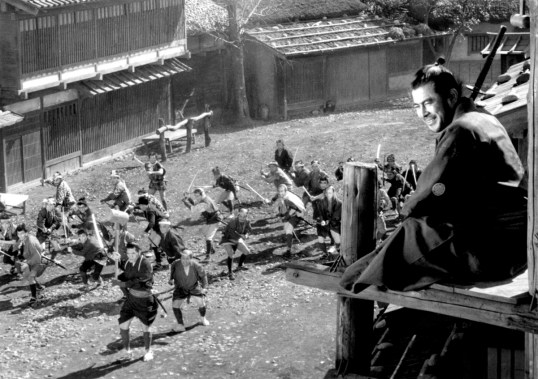
In honor of the anniversary of Akira Kurosawa’s birth, here is a scene that we all love from his 1961 masterpiece, Yojimbo. Playing the lead role of the lone swordsman is, of course, Kurosawa’s frequent star, Toshiro Mifune.
4 (or more) Shots From 4 (or more) Films is just what it says it is, 4 (or more) shots from 4 (or more) of our favorite films. As opposed to the reviews and recaps that we usually post, 4 (or more) Shots From 4 (or more) Films lets the visuals do the talking.
Today, the Shattered Lens wishes a happy 79th birthday to the great Austrian director, Michael Haneke! One of the most thought-provoking and visually proficient directors of all time, Haneke has been challenging viewers for decades. His films may sometimes be controversial but no one can deny their importance. Here are….
4 Shots From 4 Michael Haneke Films
Benny’s Video (1992, dir by Michael Haneke, DP: Christian Berger)
Time of the Wolf (2003, dir by Michael Haneke, DP: Jurgen Jurges)
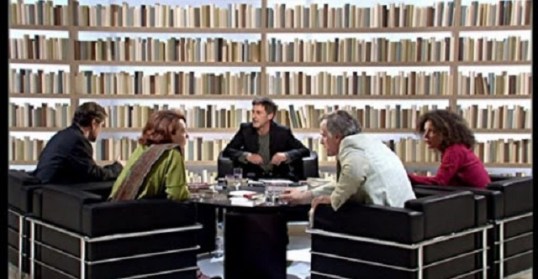
Cache (2005, dir by Michael Haneke, DP: Christian Berger)
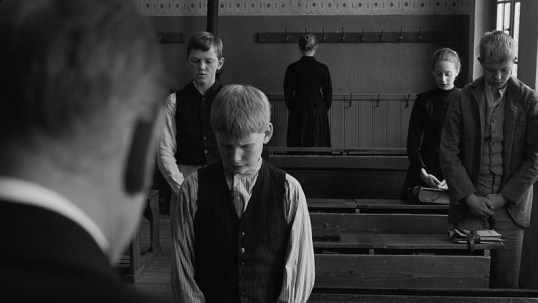
The White Ribbon (2009, dir by Michael Haneke, DP: Christian Berger)
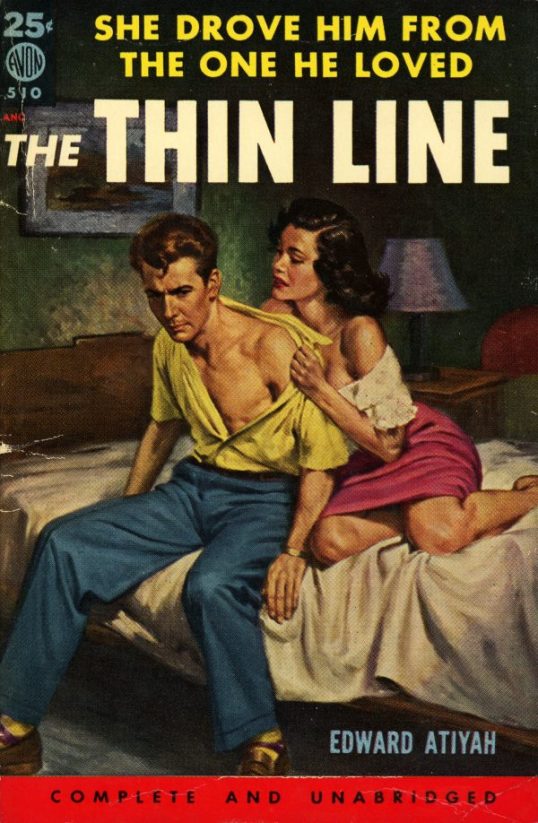
The Thin Line was first published in 1951. The cover is from the Avon edition of the book, which came out in 1957. Unfortunately, the artist of this cover is unknown so their work will have to speak for itself.
“I had a girlfriend when I was a teenager and somebody had called backstage to one of the shows and said, ‘Virginia still talks about you and your relationship.’ It was just one of those offhanded comments. I looked at her and just said, ‘Send her my love.’
I walked out, and it hit me: ‘Wait a minute, that’s a song!’
I went home and I called Steve Perry up and I said I came up with this idea, and we wrote it on the spot. A lot of this stuff we wrote was just on the spot. Very, very spontaneous. We kind of wrote with an urgency because we didn’t have a lot of time together. The road was hard enough. When we did write, we wrote very intense. All the lyrics were, like, within hours. We didn’t mess around.”
— Jonathan Cain on Send Her My Love
Like so many of Journey’ videos (with the notable exception of Separate Ways), the video for Send Her My Love is a no-nonsense performance clip. This video was directed by Phil Tuckett, who also directed videos for Slayer, Def Leppard, Europe, The Black Crowes, and others.
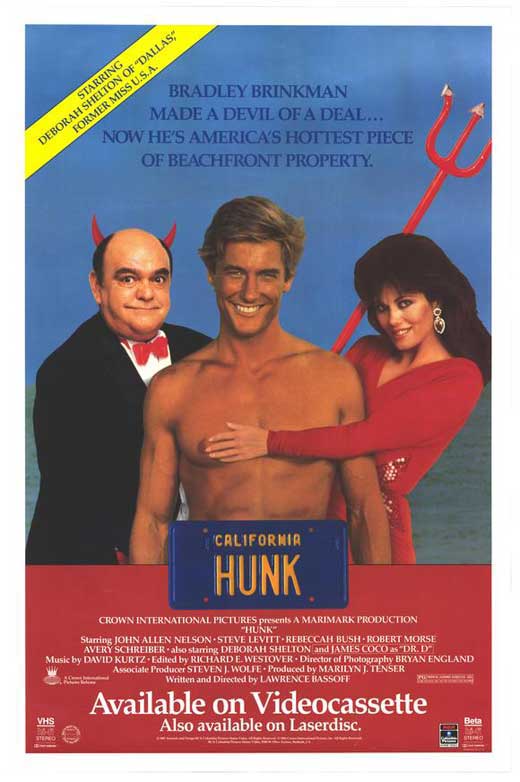
Released in 1987, Hunk tells the story of Hunk Golden (John Allen Nelson).
At first glance, Hunk seems to have everything. He lives in a huge house on the beach and he’s good-looking and muscular enough that he can actually pull off the rainbow speedo look. Women want to be with Hunk and men want to be Hunk. He’s rich. He can eat all the food in the world without putting on a single pound. He’s got a great smile and wonderful tan and he even knows karate! Hunk drives a red convertible that has a personalized license plate, one that reads: HUNK. If anyone else did it, it would seem narcissistic but Hunk can pull it off.
However, Hunk is deeply dissatisfied with his life. As he explains to his psychiatrist, Dr. Sunny Graves (Rebecca Bush), he wasn’t always Hunk Golden. He used to be a nerdy writer named Brady Brinkman (played by Steve Levitt). After Brady’s girlfriend left him for an aerobics instructor, he somehow managed to write a guide to how to become rich. Brady’s wasn’t sure where his inspiration came from but he was still able to make a fortune off of it. After Brady moved to the beach to work on his next project, he discovered that being wealthy didn’t mean anything unless he also had the right look.
That’s when he was approached by O’Brien (Deborah Shelton), an emissary of the devil (James Coco). O’Brien turned Brady Brinkman into Hunk Golden and taught him how to be …. well, how to be a hunk. The only condition was that, after a number of months, Hunk would have to give up his soul to the devil. Hunk agreed but now, with the deadline approaching, Hunk isn’t so sure that he wants to condemn his soul to eternal damnation. Is being the hottest guy on the beach really worth an eternity of burning in fire and being poked with those little pitchfork things?
Now, it probably won’t come as a surprise to our regular readers to discover that this film was produced and distributed by Crown International Pictures. From the 70s through the 80s, Crown International specialized in low-budget exploitation films, with a surprisingly large number of them taking place on the beach. Nowadays, of course, the Crown International filmography can be found in countless Mill Creek boxsets. Hunk can be found in several. I own enough Mill Creek boxsets that I’ve probably got a dozen copies of Hunk in my DVD and Blu-ray collections.
That said, while the film’s low budget is obvious in every frame, Hunk is actually slightly better than the typical Crown International beach film. While it seems to take forever for Brady to become Hunk, the film has got a likable cast and it actually delivers its message about self-acceptance with a surprising amount of sincerity. This is the rare Crown International Film with a heart and, for every joke that falls flat (and there’s several), there’s at least a few unexpectedly clever moments. The film takes an especially strange turn once Hunk becomes a celebrity and starts to wonder if he should accept the devil’s invitation to become a demon and help start a world war. Steve Levitt and John Allen Nelson both do a good job playing Brady and his alter ego, though all of Nelson’s dialogue appears to have been dubbed. James Coco delivers his evil lines with a properly devilish glee. Incidently, this was also Brad Pitt’s first movie. While he had no dialogue and went uncredited, he can be easily spotted as an extra in one of the beach scenes.
See him?
If you’re looking for silly and occasionally strange 80s beach movie, you could do worse than to check your Mill Creek boxsets for a copy of Hunk.
There’s this profoundly goofy, pathetic, and intellectually impotent notion on the political right that Antifa is some grand top-down organization, hell-bent on destroying the so-called “American way of life,” flush with cash from George Soros and other “globalist” (i.e. Jewish) donors, and lurking in the shadows within every institution just waiting for the right moment to pull the string and bring society to its knees on behalf of its “Marxist” overlords.
It’s absurd on its face, of course — but also entirely emblematic of the kind of shared fever-swamp delusion that has become the right’s stock in trade ever since they elevated a six-times-bankrupt, syphilitic, failed game show host/con man to cult leader status. Of course you’d have to be dumber than a festering, putrefying nine-ton sack of pigshit to believe it (hell, Trump’s own FBI director said Antifa was “an ideology, not an organization”), but ya know what? I’m…







 Through the Shattered Lens