4 Shots From 4 Films: The Crow: City Of Angels (1996), The Crow: Salvation (2000), The Crow: Wicked Prayer (2005), Barb Wire (1996)


A few weeks back I was disappointed to find out that I had not seen The Crow: City Of Angels like I thought I had way back in the 90s. Even worse, I discovered they made two more sequels. And for the final cherry on top, they were available to watch. So let me share a little bit from each film, and Barb Wire because I watched it at the same time.
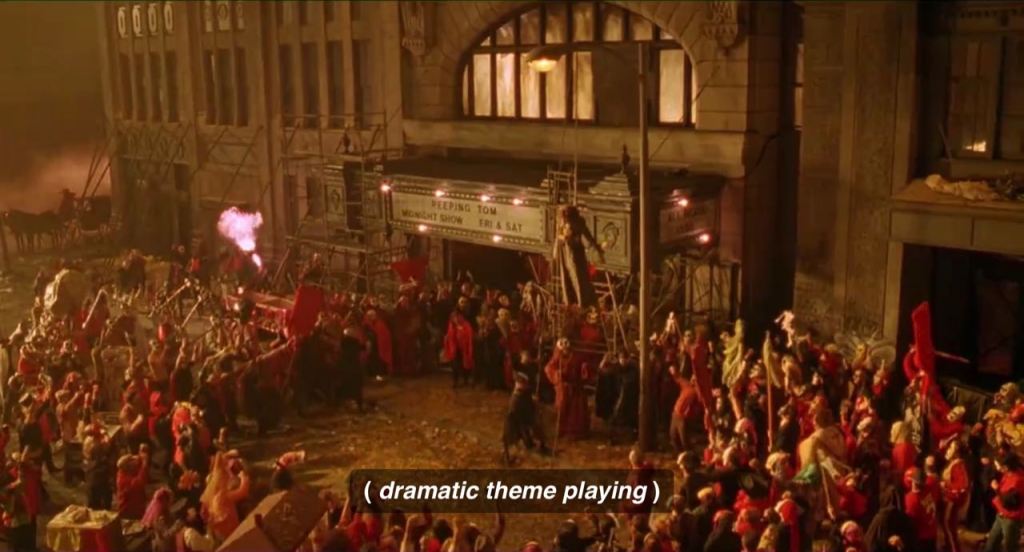
The Crow: City Of Angels (1996, dir. Tim Pope)

Unsurprisingly, the film isn’t very good. It’s a pale rehash of the first film. I hear there’s a print that included a bunch of material that wound up the cutting room floor. I didn’t see it, so I can’t speak to it.

Getting to the screenshot, while I know the villain is impaled before getting Tony Goldwyn’s death from Ghost (1990), I want to know why Michael Powell’s Peeping Tom (1960) is playing in The Crow universe. It made sense for Michael Myers to reference it in Resurrection. I don’t know what it’s doing here. The Weinsteins produced both films, so maybe they just really liked it.
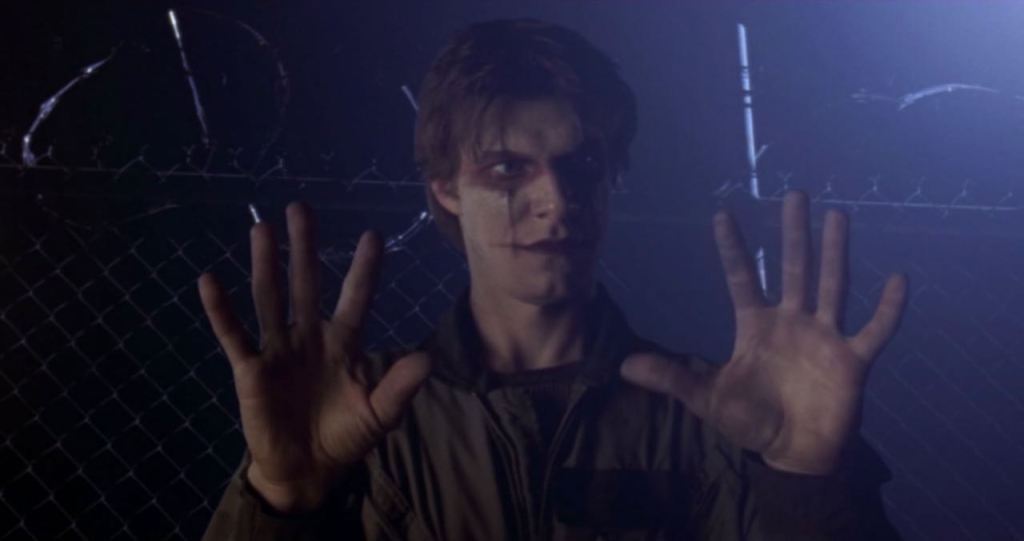
The Crow: Salvation (2000, dir. Bharat Nalluri)

Of the the three sequels to The Crow, this is the one I’ll remember the most. This one has a guy who is falsely accused of murdering his girlfriend. He is executed in the electric chair, and the crow brings him back. This movie would probably be memorable simply on the grounds that it has Kirsten Dunst, William Atherton, and Fred Ward. Not to me. They’re icing on the cake. The accused killer is played by Eric Mabius. Yes, the actor who plays Hallmark’s wound-tighter-than-a-drum postal worker from the Signed, Sealed, Delivered movies plays the person brought back to seek vengeance. I find that to be amazing.
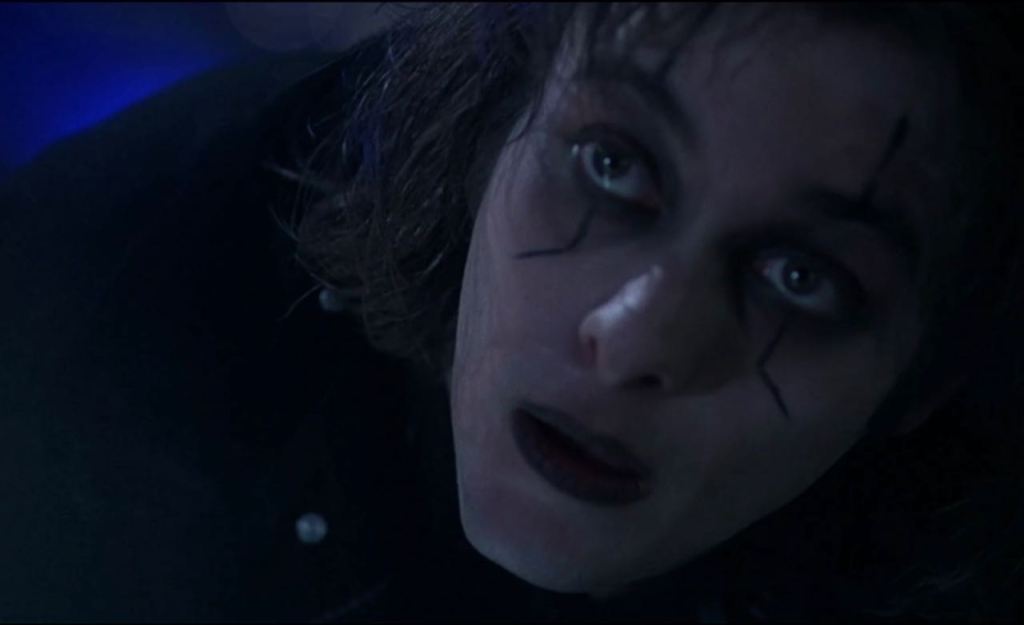
The Crow: Wicked Prayer (2005, dir. Lance Mungia)

Edward Furlong as The Crow. Why not? This movie also brings us Tara Reid as a person who steals someone’s ability to see the future. We have a satanic cult run by David Boreanaz. We have Danny Trejo and Dennis Hopper for good measure. The film sets up like it’s going to be like a spaghetti western, which I guess these movie were to begin with seeing as the plots aren’t too dissimilar to something like Django Kill… If You Live, Shoot! (1967). It’s also the only sequel that includes a bunch of scenes during the day. However, all of it comes together as a mess that never really goes anywhere.

Here’s a bonus shot to show you how much they were trying to go with the spaghetti western look.
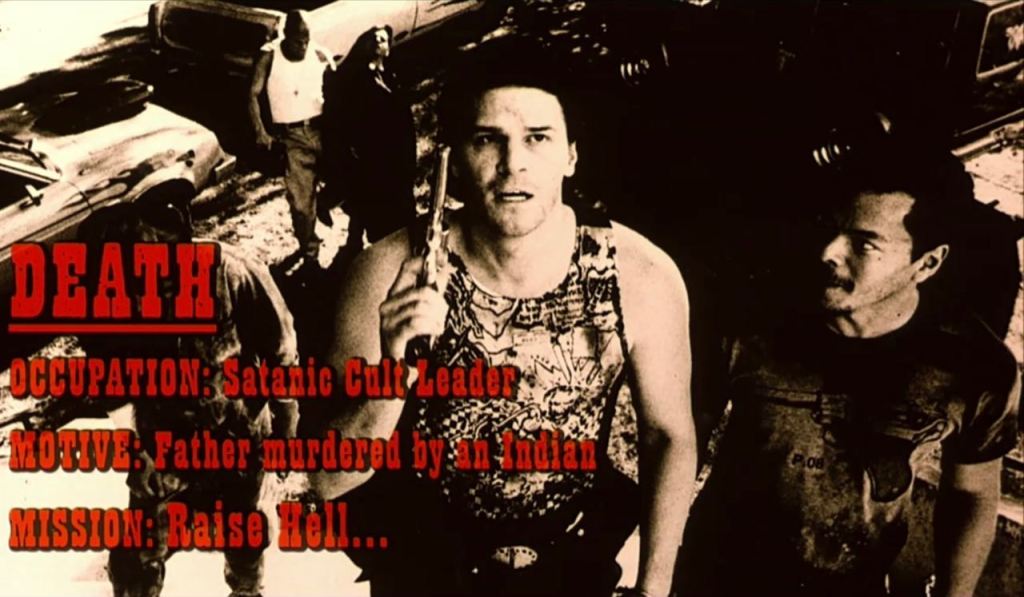
And yes, the other members of his gang are called War, Pestilence, and Famine.
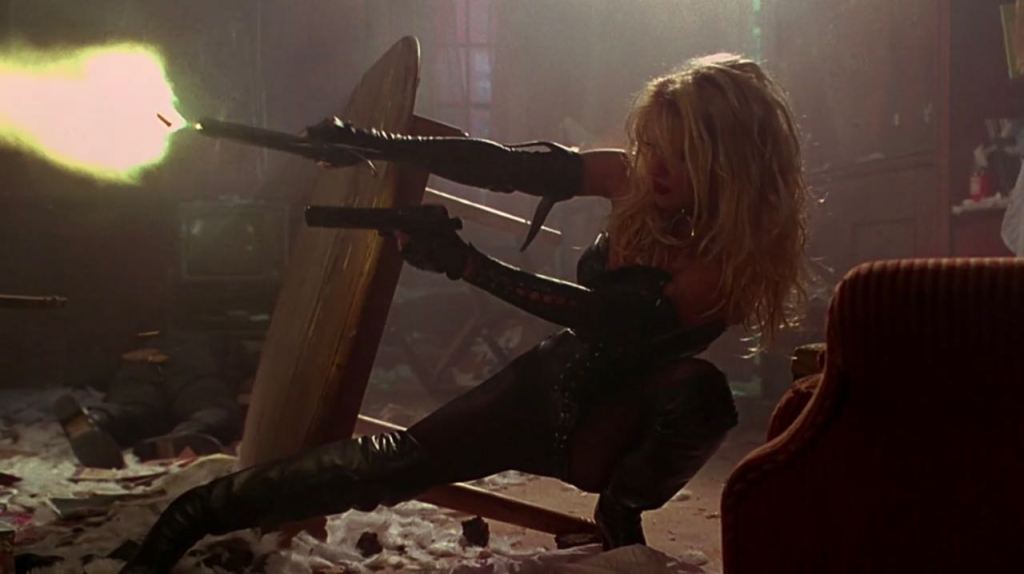
Barb Wire (1996, dir. David Hogan)

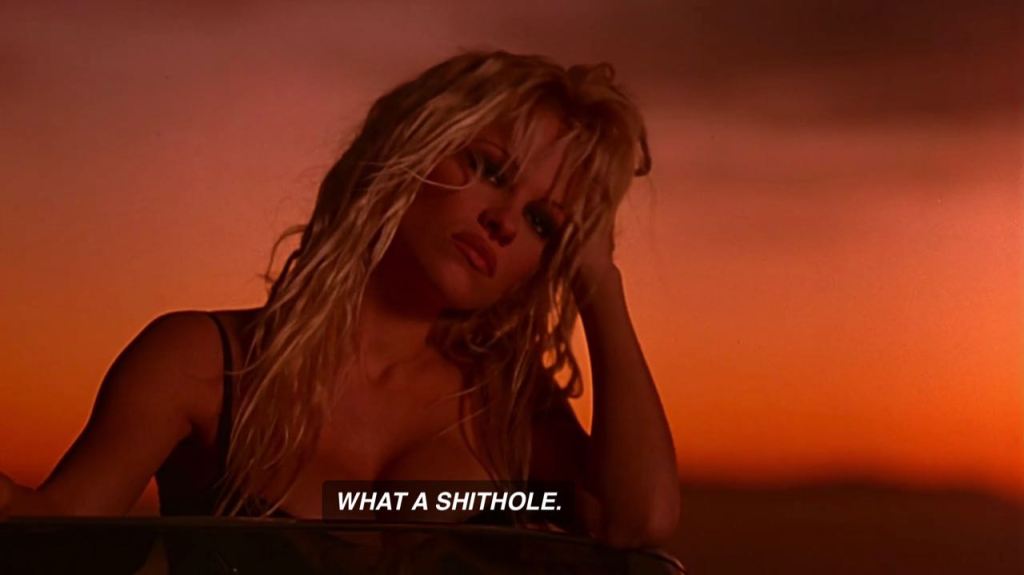
I remember when Barb Wire came out. Baywatch was everywhere expect on my TV. Pamela was unavoidable, at least if you were a kid at the time. It only stuck with me because of the “Don’t call me babe” line that they played in the trailers. I didn’t actually see it till over 20 years later…sort of.

Have you seen Casablanca (1942)? It’s the same movie with a fictional world rather than the real one. It doesn’t even pretend that it isn’t. I know that at heart Star Wars did same kind of thing. The letters of transit are the Millennium Falcon, Han Solo is Rick, and so on and so forth. But Star Wars threw in some Kurosawa and made it all feel exciting and new. It made it its own. The only thing Barb Wire adds is post-apocalypse…and boobs. It’s Pamela Anderson. They come with the package.

You can go through almost every key element or character from Casablanca and find it here. The one upside is that WWII is replaced by a civil war that starts in 2017 and Pamela gives us an eerily accurate description of the real world in the couple of years that followed 2017.
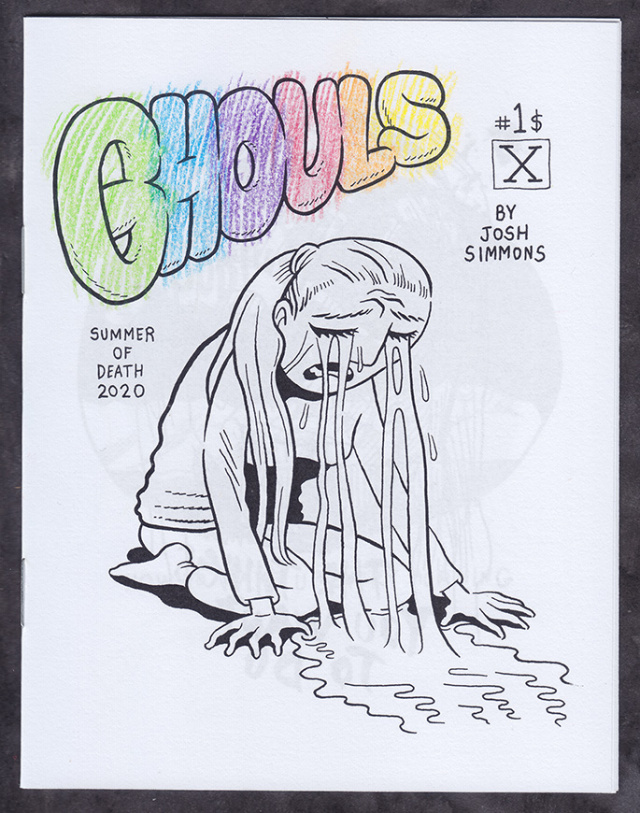
Two From Josh Simmons : “Ghouls”


Ryan C. (fourcolorapocalypse)'s avatarRyan C.'s Four Color Apocalypse

Horror and humor are often a potent mix — as any fan of films like Frankenhooker or Street Trash can tell you (and, for the record, I’m “guilty” as charged on both counts) —but, more often than not, humor is the “senior partner,” if you will, in the pairing, largely because it’s easier to make someone laugh at atrocious shit than to show them how frightening the stuff we laugh at can actually be. A pure half-and-half serving of each is perhaps an even more rare thing to come by — and the challenge to create precisely that when you’re dealing with subject matter that delves into the existential ? Well, that’s a fairly stiff one indeed.

Still, it seems that’s the task Josh Simmons set for himself with his just-released mini Ghouls, a self-published series of single-panel cartoons that begins with an “abandon hope, all ye who enter…

View original post 684 more words

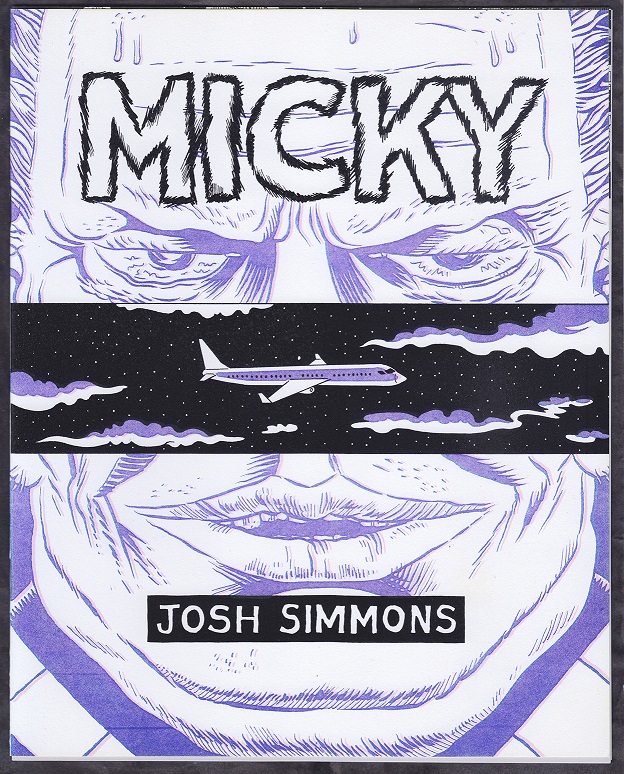
Two From Josh Simmons : “Micky”


Ryan C. (fourcolorapocalypse)'s avatarRyan C.'s Four Color Apocalypse

We’ve all been there — you’re sitting on a plane, or a train, or a bus, and some nosy asshole plunks down next to you and starts asking all sorts of invasive questions, most likely because they’re both bored and boring. After all, when you haven’t got much of a life yourself, then you become unnaturally interested in the lives of others. But what if the person who started nosing around in your business had motivations beyond merely alleviating the tedium of their existence?

That’s the premise behind Josh Simmons’ latest self-published mini (well, okay, it’s only a “mini” in terms of length — as far as its physical format goes, it’s magazine-sized and offset-printed) Micky, an intense short story that plays to its artist’s strengths as the small press scene’s most accomplished purveyor of visceral horror. But the visceral only hits home as anything beyond…

View original post 445 more words

Cotter (1973, directed by Paul D. Stanley)


Cotter (Don Murray) is an alcoholic Native American who works as a rodeo clown.  One day, when he’s too drunk to do his job, a bull rider is killed as a result.  All of the other bull riders track Cotter down in his trailer and tell him that his days of being a clown are over.  They tell him that if they ever see him anywhere near another rodeo, they’ll kill him.  It’s a dramatic scene that would probably be more powerful if Cotter wasn’t wearing a clown make-up while rolling around on the floor in a drunken stupor.

With nowhere else to go, Cotter returns to his hometown and tries to surprise his old friend Roy (Rip Torn) by jumping through Roy’s front door while wearing his clown make-up.  However, when Cotter jumps into the living room, the only person he meets is Roy’s half-naked wife, Leah (Carol Lynley) and she promptly fire two barrels worth of buckshot at him.  Showing the reflexes that would have saved that bull rider’s life if only Cotter had been sober, he manages to duck out of the way.

When Roy comes home, he’s at first excited to see his old friend.  He even invites Cotter to stay with them.  Leah slowly warms up to Cotter.  However, the other townsfolk are suspicious of Cotter because of his heritage and his reputation for being a hard drinker.  When a local rancher turns up dead, almost everyone immediately assumes that Cotter must be responsible.  Not even Roy is willing to stand up for his friend.

Made for a low-budget, Cotter is a well-intentioned film that doesn’t work.  A large part of the problem is that, while Don Murray and Rip Torn were both good actors, they both overact in Cotter.  For some reason, both of them yell the majority of their lines.  Torn was a good bellower but Don Murray, who was usually a far more low-key actor, seems uncomfortable in his role.  While it is true that Don Murray first found stardom playing a headstrong cowboy in Bus Stop, it’s also that, from the 60s onward, Murray was always best cast as men of authority and it’s hard to buy him as an irresponsible character like Cotter.  Maybe the film would have worked better if Torn and Murray had switched roles.  Carol Lynley seems more comfortable with her role than either one of the two male leads, though she doesn’t get to do much beyond suffer at the hands of Roy and eventually fall in love with Cotter.  Also giving a good performance is Sherry Jackson, cast as a sympathetic barmaid, though she’s also not given much to do beyond reacting to Cotter and Roy.

Cotter doesn’t have a bad message and it at least acknowledges that Cotter’s alcoholism is largely his way of dealing with the prejudice that he’s suffered his entire life, though Cotter’s monologue on the subject would have probably been more effective if it had been delivered by an actual Native American actor instead of the very white Don Murray.  Unfortunately, good intentions aside, Cotter just never really comes together as a movie.

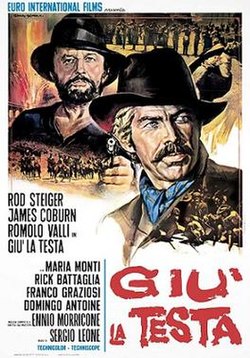
Song of the Day: Gui La Testa by Ennio Morricone


Today’s song of the day comes from Ennio Morricone’s score for Sergio Leone’s 1971 film, Duck, You Sucker!  Also known as A Fistful of Dynamite, this is probably Leone’s most underrated film and Morricone’s excellent score seems to be a bit underrated as well.

Though it may have been dismissed when originally released, many critics have recently discovered that the film actually holds up surprisingly well.  So does Morricone’s score.

From Duck, You Sucker!:

Previous Entries In Our Tribute To Morricone:

  1. Deborah’s Theme (Once Upon A Time In America)
  2. Violaznioe Violenza (Hitch-Hike)
  3. Come Un Madrigale (Four Flies on Grey Velvet)
  4. Il Grande Silenzio (The Great Silence)
  5. The Strength of the Righteous (The Untouchables)
  6. So Alone (What Have You Done To Solange?)
  7. The Main Theme From The Mission (The Mission)
  8. The Return (Days of Heaven)
  9. Man With A Harmonic (Once Upon A Time In The West)
  10. The Ecstasy of Gold (The Good, The Bad, and the Ugly)
  11. The Main Theme From The Good, The Bad, and the Ugly (The Good, The Bad, and the Ugly)
  12. Regan’s Theme (The Exorcist II: The Heretic)
  13. Desolation (The Thing)
  14. The Legend of the Pianist (The Legend of 1900)
  15. Theme From Frantic (Frantic)
  16. La Lucertola (Lizard In A Woman’s Skin)
  17. Spasmodicamente (Spasmo)
  18. The Theme From The Stendhal Syndrome (The Stendhal Syndrome)
  19. My Name Is Nobody (My Name Is Nobody)
  20. Piume di Cristallo (The Bird With The Crystal Plumage)
  21. For Love One Can Die (D’amore si muore)
  22. Chi Mai (various)
  23. La Resa (The Big Gundown)
  24. Main Title Theme (Red Sonja)
  25. The Main Theme From The Cat O’Nine Tails (The Cat O’Nine Tails)
  26. Deep Down (Danger Diabolik!)
  27. Main Theme From Autopsy (Autopsy)
  28. Main Theme From Investigation of a Citizen Above Suspicion (Investigation of a Citizen Above Suspicion) 
  29. Main Theme From A Fistful of Dollars (A Fistful of Dollars)
  30. Main Theme From For A Few Dollars More (For A Few Dollars More)

The Adventurous Covers of Action Stories


Artist Unknown

Action Stories was published from 1921 to 1950.  It specialized in action-packed stories about men doing manly things and women who knew how to handle a rifle.  Despite the dinosaur featured in the cover above, Action Stories was known for usually turning down horror and fantasy-themed stories and instead specializing in westerns, war stories, and sports fiction.  Among the writers that were published by Action Stories: Robert E. Howard, Walt Coburn, Morgan Robertson, Horace McCoy, Theodore Roscoe, Greye La Spina, Anthony M. Rud, Thomas Thursday and Les Savage, Jr.

Below are a sampling of adventurous covers from Action Stories!

by Allen Gustav Anderson

by Allen Gustav Anderson

by Allen Gustav Anderson

by Allen Gustav Anderson

by Emery Clarke

by H.C. Murphy

by Harry Lemon Parkhurst

by Norman Saunders

Unknown Artist

Unknown Artist

Music Video of the Day: Hell In A Bucket by Grateful Dead (1987, directed by Len Dell’Amico)


I may be going to Hell in a bucket but at least I’m enjoying the ride

The members of the Grateful Dead didn’t do many music videos.  I think Hell In A Bucket was their second video, following the surprise hit that they had with A Touch of Grey.  From what I’ve read, it was the band’s record label that insisted that the band make some videos to help promote their 12th studio album, In the Dark.  Some members of the band were concerned that agreeing to do music videos would mean that they were “selling out.”

The video for Hell In A Bucket feels like it could be a parody of the type of videos that were popular on MTV.  With his Miami Vice-Style outfit and the way he mugs for the camera, Bob Weir almost seems like he could be Huey Lewis’s coked-out older brother.  The video opens in a biker bar, populated with the type of rough characters who most bands would never dream of featuring in a video.  While Jerry Garcia keeps his distance, Bob Weir sings a song of rock and roll decadence that seems to be saying, “This is what it’s all really about.”

No, I don’t know why there’s a duck at the bar.  It’s just there.  Jerry daughter’s Trixie is also in the video.  She plays one of the dancing devils.

Enjoy!


The Hanged Man (1974, directed by Michael Caffey)


In this made-for-TV western, Steve Forrest stars as James Devlin.  A hired killer and a notorious outlaw, Devlin has finally been captured and is sent to the gallows.  At first, it seems as if the hanging’s been a success and Devlin’s life has been extinguished at the end of the rope.  But then, while his body is at the funeral home and is being prepared for burial, Devlin suddenly opens his eyes and reveals that he’s alive.

No one can figure out how Devlin manage to survive being hung, especially not Devlin.  However, Devlin is now alive and free to leave town.  Has Devlin been sent back to Earth to serve God or did he just get lucky?  Devlin may not be sure himself but he is determined to turn around his old ways.  That starts with protecting a widow (Sharon Acker) and her son (Bobby Eilbacher) from Lew Halleck (Cameron Mitchell), a greedy businessman who wants their land and is prepared to go to any lengths to get it.  Devlin is not only still as good with a gun as he was before his execution but, having survived his hanging, he can now read minds!

The Hanged Man was designed to be a pilot for a weekly TV series and watching it, it’s easy to imagine how the show would have developed.  Devlin would have traveled around the old west, helping out a new guest star every episode and presumably trying to discover why he had been returned to life.  It’s not a bad idea for a show, though the pilot film doesn’t do enough with it.  Despite the fact that Devlin might be undead and that he now has the power to read minds, it really is just a conventional western, featuring the saintly widow and the evil land baron and all of the other familiar tropes of the genre.  It may begin with Devlin coming back to life but it ends with a shoot-out that could have been lifted from any number of old TV shows.

Still, as far as made-for-TV westerns are concerned, this one is entertaining enough.  Steve Forrest is a good hero and, as always, Cameron Mitchell is a good villain.  I wish they had done more with the supernatural aspects of the story but The Hanged Man is good enough for undemanding fans of the genre.

Val’s Mini-Post: A Jump In The Kiddie Pool With 365 Days (2020, dir. Barbara Bialowas & Tomasz Mandes)


Considering I am not on TikTok I of course heard about that challenge to watch the first scene of Gaspar Noé’s self-important, wish-fulfillment film called Love (2015). Fortunately, I had already subjected myself to that movie back in 2015. Unfortunately, that challenge apparently started with some Polish movie I had never heard of before called 365 Days. At the time of writing this post, this is the plot summary on IMDb for it:

Massimo is a member of the Sicilian Mafia family and Laura is a sales director. She does not expect that on a trip to Sicily trying to save her relationship, Massimo will kidnap her and give her 365 days to fall in love with him.

As no one will remember, when Fifty Shades Of Grey (2015) came out I tweeted that it sounded like it was a film for kids to watch during a sleepover so they can think they saw something. It turned out to be accurate. The plot summary above for 365 Days made me think the same thing, so of course I watched it. Don’t judge me. The previous three movies I watched were DDR With Joey King (The Kissing Booth 2), Basically Lego Power Rangers (The Lego Ninjago Movie), and Late Night Cable With 90’s 3D Graphics (Virtual Girl). I already know I have bad taste. So what did I think of it?

It’s not worth your time unless you are a kid who is looking for a movie that will make you think you saw something salacious. Go figure that it’s the same thing I said about Fifty Shades Of Grey. It’s almost like I mentioned that for a reason.

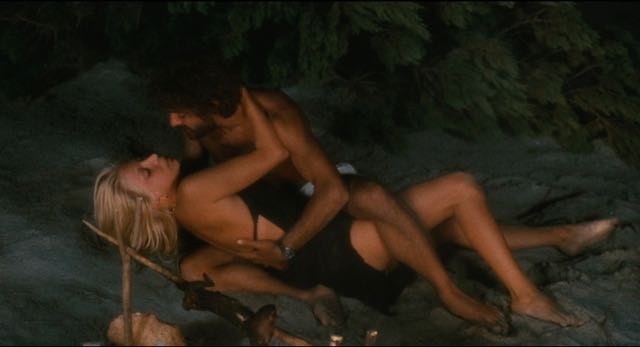
To add a little depth, it’s a pale imitation of something I could see Italian director Lina Wertmüller doing back in the 70s or 80s but with some modern, stylish set design and cinematography added on to it. Specifically, I’m thinking of Wertmüller’s Swept Away (1974)

Swept Away (1974)

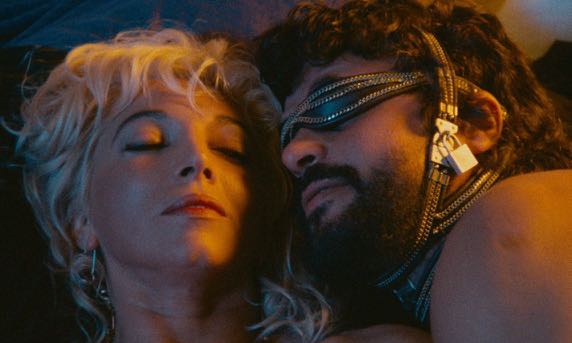
and Summer Night With Greek Profile, Almond Eyes And Scent Of Basil (1986).

Summer Night With Greek Profile, Almond Eyes And Scent Of Basil (1986)

And that’s me being very, very kind.

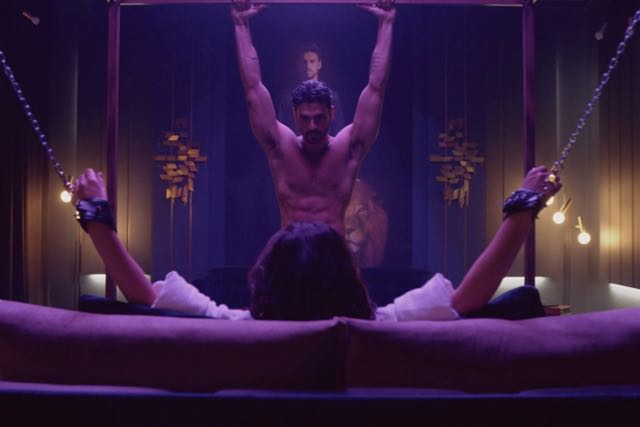
Here’s a couple screenshots that people have included on IMDb for obvious reasons. They get across what it’s like to watch this movie.

We meet again Joey King.

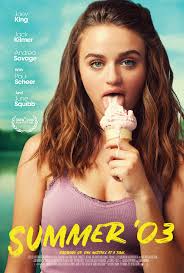
Summer ’03 (2018, dir. Becca Gleason)

It’s an image that is so taboo that it is quickly undercut by the poster for a coming-of-age movie with Joey King. It’s one of the many teases without any substance behind it that you’ll find in this film.

Yes, I’m aware it’s also similar to the poster for Lolita 2000 (1998). You don’t need to remind me.

You might think that he is going to tame her like that lion back there. But like almost all of the sex stuff in this movie, it’s over very quickly and/or goes nowhere like the scene pictured above. Another woman shows up on the other side of the room, she appears to be kissing his knee over and over instead of centering herself, he approaches the kidnapped lady, and then decides against doing anything.

The only scene I remember being complete was a blow job he gets on an airplane from someone else to establish that he takes what he wants. That’s why aside from kidnapping her, he doesn’t really take what he wants in this movie. He nudges her in various ways to try and convince her to give it to him. Character development? I think it was their way of pretending as if she had at least as much choice as Beauty/Belle in Beauty And The Beast, which greatly varies depending on the film version you watch.

This is one of those erotica movies that if you haven’t seen something like it, or something more interesting, then it will still wash on by you without leaving much of an impression. It looks stylish. It’s well-shot. It tries to have some sort of forbidden plot-line to entice you into watching it and others into getting worked up about it. That’s about it!

I wish I had more to say, but I don’t think I should be recommending anything more along these lines–you can find those yourself. It’s also so forgettable that I’m losing memories of it as I type. I don’t think I can even say that it’s worth taking the time to riff. Skip it.