Lisa’s Week In Review — 4/6/20 — 4/12/20


Happy Easter!  Hopefully, next year, we will be able to enjoy the holiday under happier conditions.

Interestingly enough, while I was putting this rundown together, it occurred to me that, when you’re in lockdown, it feels like each day lasts a year.  I find myself looking over my week and thinking, “Wow, Monday was only 6 days ago?”  I’ll be glad when all this finally ends.

Here’s what I did this week:

Films I Watched:

  1. The Ballad of Andy Crocker (1969)
  2. Ben-Hur (1959)
  3. Breathless (1960)
  4. Charlie Chan at the Circus (1936)
  5. The Experiment (2001)
  6. Forty Nights (2016)
  7. The Greatest Story Ever Told (1965)
  8. King David (1985)
  9. King of Kings (1961)
  10. Moses, the Lawgiver (1974)
  11. Past Life (2016)
  12. Reversal of Fortune (1990)
  13. The Ten Commandments (1956)
  14. Throne of Blood (1957)
  15. Two Orphan Vampires (1997)
  16. Zombie Lake (1981)

Television Shows I Watched:

  1. 60 Days In
  2. Blockbusters
  3. The Bold and the Beautiful
  4. Classic Concentration
  5. Dark Shadows
  6. Easter Sunday Mass
  7. Easter Vigil Mass From Rome
  8. Ghost Whisperer
  9. Head of the Class
  10. Lotsa Luck!
  11. Magnum P.I.
  12. Match Game
  13. The Match Game/Hollywood Squares Hour
  14. Oz
  15. The Paul Lynde Show
  16. Survivor 40
  17. Twin Peaks
  18. Twin Peaks: The Return
  19. The Young and the Restless

Books I Read:

  1. American Brutus: John Wilkes Booth and the Lincoln Conspiracies (2004) by Michael W. Kauffman
  2. John Wilkes Booth and the Women Who Loved Him (2018) by E. Lawrence Abel

Music To Which I Listened:

  1. Active Child
  2. Armin van Buuren
  3. Beat Market
  4. Big Data
  5. The Chemical Brothers
  6. The Crystal Method
  7. David Guetta
  8. Dillon Francis
  9. Elohim
  10. Fatima
  11. Grimes
  12. Jakalope
  13. Moses Sumney
  14. Nicole Scherzinger
  15. Nine Inch Nails
  16. The Pussycat Dolls
  17. Saint Motel
  18. Selena Gomez
  19. SIA
  20. twenty one pilots
  21. UPSAHL
  22. Windows 96

News From Last Week:

  1. Austin’s Vulcan Video closes permanently amid coronavirus losses
  2. Louisiana police apologize for using siren from ‘The Purge’ to signal coronavirus curfew

Links From Last Week:

  1. Why we love to hate celebrities
  2. Bob Dylan’s First #1 Hit! The Singer’s “Murder Most Foul” Tops The Charts! My “Songs For Sunday” Has The Lyrics!

Links From The Site:

  1. Ryan reviewed Fine and The Cutaneous Adventures of P.L. Dermes!
  2. I shared music videos from Dillon Francis and Windows 96!  Plus, I reviewed King David, The Experiment, Moses: The Law-Giver, Past Life, The Ten Commandments, Breathless, Aguirre The Wrath of God, and Charge over You!
  3. Jeff shared music videos from Aerosmith, Iron Maiden, John Prine, Motley Crue, and Stray Cats!  He reviewed Tequila Sunrise, Dead Presidents, The Ballad of Andy Crocker, Get Christie Love!, Tactical Assault, Black Brigade, and Did You See The Sun Rise?
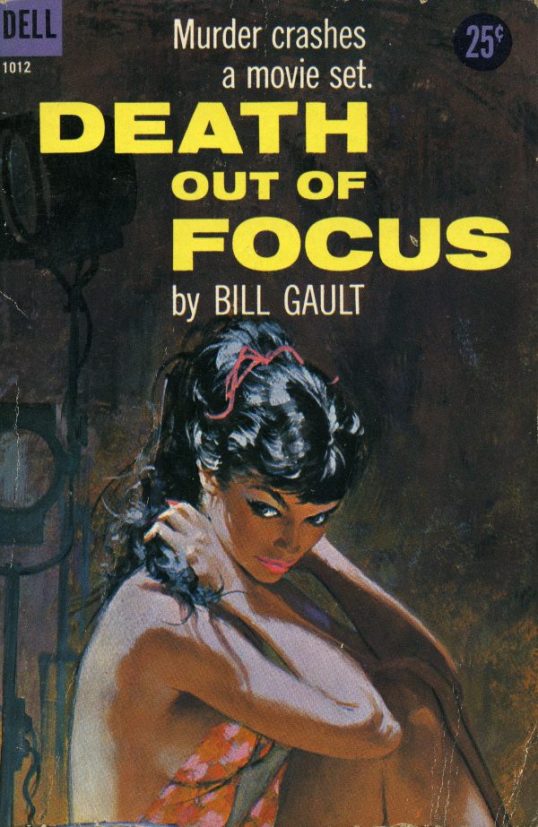
  4. Erin shared The Racy Covers of Exotic Novel Magazine and: Sex Before Six, Smash Detective Stories, Scandalous Lady, The Fire That Burns, The Velvet Knife, Death out of Focus, and Looking For The Sun!

More From Us:

  1. Ryan has a patreon, to which you should subscribe!
  2. At Reality TV Chat Blog, I reviewed Survivor!
  3. At SyFyDesigns, I shared: I Just Want To See Black Widow
  4. At my dream journal, I shared Last Night’s Weird College Dream!
  5. At my music site, I shared songs from Grimes, Moses Sumney, The Pussycat Dolls, Nicole Scherzinger, Elohim, Beat Market, and Fatima!
  6. At her photography site, Erin shared: What A Day It’s Been, Trash, Today’s Sky, Watching, To The Side, Looking Up, and Faith!
  7. At Pop Politics, Jeff updated his lockdown journal: 4-6-20, 4-7-20, 4-8-20, 4-9-20, 4-10-20, and Bernie’s Out!
  8. At Days Without Incident, Leonard shared: She’s Gone Away by (The) Nine Inch Nails

Want to see what went on last week?  Click here!

Did You See The Sun Rise? (1982, directed by Ray Austin)


Ivan (Bo Svenson) is a KGB colonel who, working under the guise of being a diplomat, has set up operations on Hawaii.  During the Vietnam War, Ivan tortured and brainwashed an American POW named TC (Roger E. Mosely), placing a hypnotic suggestion in his brain on just the off-chance that Ivan would need a Manchurian candidate to do some dirty work at some point in the future.  With the help of another former POW, Sebastian Nuzo (James Whitmore, Jr.), Ivan plans to activate TC and then use him to assassinate the visiting prime minister of Japan.  What Ivan hasn’t counted on is that TC has two friends looking out for him, a club owner named Rick (Larry Manetti) and a laid-back, Hawaiian-shirt loving private investigator named Magnum (Tom Selleck).

Did You See The Sun Rise?  Is it a movie or is it just a two-hour episode of the original Magnum P.I.?  I think it’s both because, while it’s definitely an episode of TV series (it was, in fact, the premiere episode of Magnum‘s third season and the fact that it was a special, extra-long episode shows how popular Magnum was back in the 80s), it’s also good enough that it can stand on its own and be viewed and appreciated even by those who have never seen any other episodes of the show.  For the most part, Magnum P.I. was a breezy detective show that mixed comedy and mystery-solving.  Occasionally, though, the show would do a more serious episode and, more of than not, that episode would deal with Magnum, T.C., and Rick’s time in Vietnam.  (At the time it premiered, Magnum was unique in that it was one of the only shows to feature characters who had served in Vietnam without portraying them as being unhinged, unemployable, or potential threats to society.  Magnum and his friends had been effected by their experiences in Vietnam but, unlike someone like Rambo, they were not solely defined by their status as being veterans of what was then America’s least popular war.)  Of those serious shows, Did You See The Sun Rise? is the best example.

There’s a lot to recommend Did You See The Sun Rise?  It’s well-acted by series regulars Selleck, Manetti, Mosely, and John Hillerman.  Bo Svenson plays a great villain and even his Russian accent is more credible than you’d probably expect it to be.  The Vietnam flashbacks are handled well.  The episode has an unexpected twist, one that daringly kills off one of the show’s semi-regular supporting characters.  Even the entire Manchurian candidate plot, even if it is a little more out there than Magnum usually got, is handled well.

And then there’s that final scene.  Did You See The Sun Rise? ends with a freeze frame of Magnum doing something that TV show heroes didn’t normally do in 1982.  You can’t blame him, of course.  It’s a satisfying ending but it still leaves you knowing that nothing is ever going to be same for any of these characters ever again.  In that final scene, Did You See The Sun Rise? takes things further than most shows would have the guts to do.  The ending may not seem as shocking today but you have to remember that this episode aired long before networks like HBO regularly challenged the assumptions of what a show’s main character could or could not do on television.

The original Magnum P.I., including Did You See The Sun Rise?, is available for free on Amazon Prime.


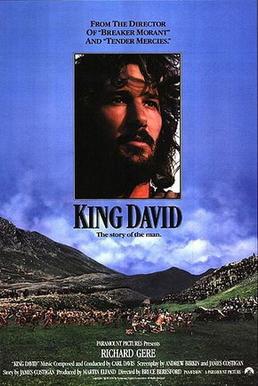
Film Review: King David (dir by Bruce Beresford)


A film about David, the young shepherd and musician who eventually became the second king of Israel?

That sounds like a great idea!

After all, David is one of the most compelling figures in history.  Whether it’s the slaying of Goliath or his ill-fated friendship with Jonathan or his uneasy relationship with Saul, every detail about David’s youth feels perfect for cinematic drama.  And then, once David become king of Israel, the drama doesn’t end.  David finds himself dealing with both politics and temptation.  He falls in lust with Bathsheba and, in a moment of terrible weakness, he arranges for her husband to be killed in battle.  His own son, Absalom, turns against him and then, despite David’s very clear orders to the contrary, Absalom is executed while he helplessly hangs from a tree.  For every triumph in David’s life (like the time he used a slingshot to take down Goliath), there’s a tragedy.  For all of David’s attempts to be a good and wise king, he still struggles with his own weaknesses.  Every detail of David’s life seems like it belongs on the big screen.

So, now that we’ve agreed that the life of David would be perfect for a movie, consider this: A film about David, a master of both poetry and politics who was known for his deep emotions, starring Richard Gere?

Uhmmmm….

The 1985 film, King David, has all the potential to be a great film but it’s pretty much doomed by the fact that David is played by Richard Gere.  Today, of course, Richard Gere is an above average character actor who is well-cast as older, seemingly successful men who have never quite conquered their own self-doubt.  That’s not the Richard Gere who shows up in King David.  The Richard Gere who shows up in King David is the blank-faced, youngish Richard Gere who was best-known for films like An Officer and a Gentleman and American Gigolo.  Richard Gere is so miscast as David that just the sight of him takes you out of the film’s reality.  While the film plays out, you find yourself saying, “Richard Gere just killed Goliath.  Richard Gere just spied on Bathsheba.  Richard Gere is dancing through the streets of Jerusalem.”

There are a few good things about King David.  Edward Woodward gives a good performance as Saul, who has always been overshadowed David but who was, in his own way, almost as compelling a character.  The film does a credible-enough job recreating the ancient world and it’s entertaining to see the iconic Italian actor George Eastman show up as Goliath.  Far too often, though, King David becomes one of those films where every big action scene is shown in slow motion and there’s too many close-ups of swords being tossed into the air.

According to Wikipedia (that’s right, I did some “serious” research for this review), King David was actually made because it was felt that the film would be able to draw in the same audience that loved Star Wars.  That turned out to not be true as the film was a huge flop and apparently damaged a lot of careers.  But, flop or not, it was still on TV last night, which just proves that movies are forever.

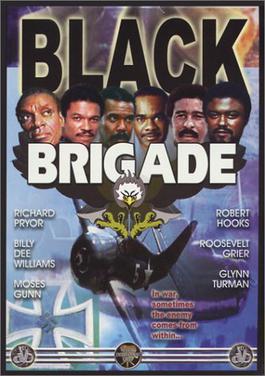
Black Brigade (1970, directed by George McCowan)


During the closing days of World War II, General Clark (Paul Stewart) wants to capture a Nazi-controlled dam and he thinks he’s found just the man for the job.  Captain Beau Carter (Stephen Boyd) is a tough and good with a knife and a gun.  Carter is sent to take command of a ragtag group of soldiers who have spent the last three years waiting for combat.  The only catch is that the soldiers are all black and Captain Carter is a racist redneck.

This was an Aaron Spelling-produced television movie that was originally broadcast under the name Carter’s Army.  When it was released on video, the name was changed to Black Brigade, probably in an effort to fool viewers into thinking that it was a cool blaxploitation film instead of a simplistic TV movie.  The film has gotten some attention because of the cast, which is full of notable names.  Roosevelt Grier plays Big Jim.  Robert Hooks is Lt. Wallace while Glynn Turman is Pvt. Brightman (who keeps a journal full of the details of the imaginary battles in which he’s fought) and Moses Gunn brings his natural gravitas to the role of Pvt. Hayes.  Probably the two biggest names in the cast are Richard Pryor as the cowardly Crunk and Billy Dee Williams as Pvt. Lewis, who says that he’s from “Harlem, baby.”

Don’t let any of those big names fool you.  Most of them are lucky if they get one or two lines to establish their character before getting killed by the Germans.  The movie is mostly about Stephen Boyd blustering and complaining before eventually learning the error of his ways.  The problem is that Carter spends most of the film as such an unrepentant racist that it’s hard not to hope that one of the soldiers will shoot him in the back when he least expects it.  The other problem is that, for an action movie, there’s not much action.  Even the climatic battle at the dam is over in just a few minutes.

There is one daring-for-its-time scene where Lt. Wallace comes close to kissing a (white) member of the German Resistance, Anna Renvic (Susan Oliver).  When Carter sees him, he angrily orders Wallace to never touch a white woman.  Anna slaps Carter hard and tells him to mind his own goddamn business.  It’s the best scene in the movie.  Otherwise, Black Brigade is forgettable despite its high-powered cast.

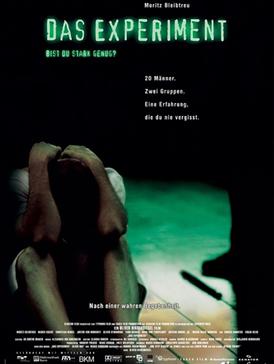
The International Lens: The Experiment (dir by Oliver Hirschbiegel)


The 2001 German film, Das Experiment, is a film that’s probably more relevant today than when it was first released.

The film deals with a social experiment.  For a payment of 4,000 marks, volunteers are separated into two groups.  One group will be prisoners and they will spend several days in a makeshift prison that’s been constructed in the basement of a lab.  The other group will serve as guards.  Though the “guards” have been told that they are not allowed to physically harm any of the “prisoners,” they are still under strict orders to maintain order in the prison.  While the two groups play their roles, they’ll be observed by Prof. Thon (Edgar Selge) and his assistant, Dr. Grimm (Andrea Sawatzki).

If this premise sounds familiar, that’s because it’s based on something that actually happened in the United States in 1971.  At Stanford University, a group of students were split into prisoners and guards, much as in The Experiment.  In real life (and, in the film), both groups of students quickly adapted to their roles.  In real life, the experiment was canceled after it became apparent that the guards were abusing the prisoners.  In the film, the experiment continues even after it becomes obvious that things are getting out-of-hand.

The Stanford Prison Experiment is often cited as an example of both how quickly power can corrupt otherwise normal human beings and how, psychologically, people have a habit of assuming the habits of whatever group to which they’ve been assigned.  It’s often seen as proof of how easily people can fall into an authoritarian mindset.  That’s certainly what happens in The Experiment, in which the guards quickly go from being a bunch of fun-loving dudes (one of them is apparently an amateur Elvis impersonator) to being a bunch of power-mad sadists who justify their actions by saying that they have to maintain order no matter what.  Even when ordered by Dr. Grimm to end the experiment, the guards assume that her objections are just a scripted part of the experiment and they instead escalate their behavior.

The main character in The Experiment is Tarek Fahd (Moritz Bleibtreu ), a freelance journalist who also works as a taxi driver.  Tarek agrees to take part in the experiment because he wants to write an article about the experience and make some extra money.  Tarek is assigned to be a prisoner and given a new name: #77.  What Tarek doesn’t know is that Prof. Thon specifically selected him because Thon feels that Tarek’s rebellious nature will lead to a conflict with Berus (Justus von Dohnányi ), the most severe of all the guards.  It turns out that Thon is more correct than even he realizes.  The participants in the experiment may start out joking and enjoying themselves but it doesn’t last.  While Tarek seeks refuge in his fantasies and his memories of making love to the enigmatic Dora (Maren Eggert), the guards are thinking of new ways to psychologically abuse him. Perhaps not surprisingly, it all leads to torture, rape, and eventually murder.

The Experiment is an effective look at how quickly people can be seduced by their own power, one that is all the more disturbing for the fact that it’s taking place in Germany, a country full of people who should know where an authoritarian mindset leads.  The first time I watched the film was in 2010 and it was difficult not to associate what happens to Tarek to what was going on in the war on terror.  At the time, the film seemed heavy-handed but crudely powerful.  Watching it last night, while under lockdown, the film felt downright prophetic.  Watching the guards slowly go mad, it was hard not to question whether or not that’s what we have to look forward to in the future as more and more people take it upon themselves to police whether or not their neighbors are standing 6 feet apart from each other.  If we’ve learned anything over the past two months, it’s that more people fantasize about living under an authoritarian state than are willing to admit.

The Experiment was directed by Oliver Hirschbiegel.  It was his directorial debut.  Three years after making The Experiment, Hirschbiegel would lunch a thousand memes by directing Downfall, a film about the final days of Hitler.  If you want understand why Hitler lost the war, watch Downfall.  If you want to understand how Hitler came to power in the first place, watch The Experiment.

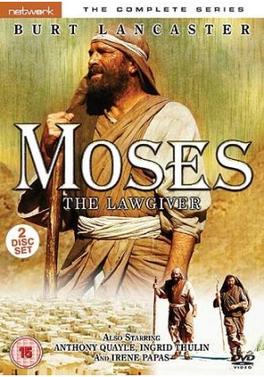
Film Review: Moses, The Law-Giver (dir by Gianfranco De Bosio)


I should probably start this review by admitting that there’s a legitimate question concerning whether or not 1974’s Moses, the Law-Giver should be considered a film or a miniseries.  Though there was an edited version of Moses that ran for 141 minutes and which was apparently released in theaters, the unedited version of Moses is 300 minutes long and was broadcast on television over a period of 6 nights.  The long, unedited version is the one that I watched on Prime for five hours on Friday.  Having watched the entire thing in one sitting, I personally consider Moses, the Law-Giver to be a film, albeit a very long one.

Moses, The Law-Giver tells the story of Moses and how he was exiled from Egypt, just to return years later to demand that Pharaoh set his people free.  The first two and a half hours deal with Moses and Egypt.  The second half of the film follows Moses and the Israelites as they seek the Promised Land.  Moses covers the same basic ground as The Ten Commandments, just in a far less flamboyant manner.

For instance, Charlton Heston was a powerful and fearsome Moses in The Ten Commandments.  In Moses, the Law-Giver, Burt Lancaster is a bit more subdued in the lead role.  Even though Lancaster was far too old to play the role, he still gives a convincing performance.  He plays Moses as a man who starts out unsure of himself but who grows more confident as the journey continues.  He’s also a man who is constantly struggling to control his emotions because he knows that he doesn’t have the luxury of showing any sign of weakness.  Whereas Heston bellowed in rage at the sight of the Golden Calf, Lancaster comes across more like a very disappointed father who is about to ground his children.  Lancaster’s low-key performance pays when, towards the end of the film, Moses is told that he will see the Promised Land but that he will not enter it.  The sudden look of pain on Moses’s face is powerful specifically because we’ve gotten so used to him holding it all back.  For a brief moment, he drops his mask and we realize the toll that the years have taken on him.

In The Ten Commandments, Yul Brynner was a determined and arrogant Pharaoh.  In Moses, the Pharaoh (who is played by Laurent Terzieff) is far more neurotic.  He’s portrayed as being Moses’s younger cousin and he seems to be personally hurt but Moses’s demand that the slaves be granted freedom.  It creates an interesting dynamic between the two characters, though it also robs the film of a credible villain.  Whereas Brynner’s Pharaoh was a fearsome opponent, Terzieff plays the character as being weak and indecisive.  Even if one didn’t already know the story, it’s till impossible to be surprised when Terzieff finally relents and allows the Israelites to leave Egypt.

Most importantly, Moses, The Law-Giver devotes more time to the relationship between Aaron and Moses than The Ten Commandments does.  In The Ten Commandments, John Carradine’s Aaron was an often forgotten bystander.  In Moses, Anthony Quayle plays Aaron and he’s pretty much a co-lead with Lancaster.  The film is as much about Aaron as it is about Moses and it actually takes the time to try to logically develop how Aaron could have been duped into creating the Golden Calf.  Quayle gives the best and most compelling performance in Moses, playing Aaron as a well-meaning and loyal sibling who, unfortunately, is often too worried about keeping everyone happy.  For all of his loyalty to Moses, Aaron still struggles with feelings of envy and Quayle does a wonderful job portraying him and turning him into a relatable character.

As a film, Moses, The Law-Giver is never as much as fun as The Ten Commandments.  It’s almost too subdued for its own good.  On the one hand, it’s possible to appreciate Moses for taking a somewhat realistic approach to the story but …. well, is that really what we want?  Or do we want the spectacle of decadent Egypt and the excitement of the red sea crashing down on Pharaoh’s army?  You can probably guess where I come down on that.

Of note to fans of Italian cinema, the film’s score — which is pretty good — was composed by Ennio Morricone.  The film’s special effects are credited to none other than Mario Bava!  This was one of Bava’s final credits.  Unfortunately, the special effects are never really that spectacular and there’s a few scenes where it’s obvious that stock footage has rather awkwardly been utilized.  But, no matter!  It still made me happy to see Bava’s name listed in the end credits.

Moses, The Law-Giver has its moments but, ultimately, The Ten Commandments remains the Moses film to watch.