Music Video of the Day: Lights by Journey (1978, directed by ????)


Though this classic Journey song eventually became a tribute to the band’s hometown of San Francisco, it didn’t start out that way.

As Steve Perry explained in an interview, “I had the song written in Los Angeles almost completely except for the bridge and it was written about Los Angeles. It was ‘when the lights go down in the city and the sun shines on LA.’ I didn’t like the way it sounded at the time. And so I just had it sitting back in the corner. Then life changed my plans once again, and I was now facing joining Journey. I love San Francisco, the bay and the whole thing. ‘The bay’ fit so nice, ‘When the lights go down in the city and the sun shines on the bay.’ It was one of those early morning going across the bridge things when the sun was coming up and the lights were going down. It was perfect.”

Lights was the third single released off of their Infinity album, which was the first album to feature Steve Perry as lead singer.  Though Lights would only reach #68 on the charts, it’s popularity increased over time, to the point that it became one of Journey’s signature songs.

Like almost every Journey video, the video for Lights is a simple performance clip, though some very 70s special effects are included as almost an afterthought.  This would be Journey’s style until they tried something different with the infamous video for Separate Ways.

Enjoy!

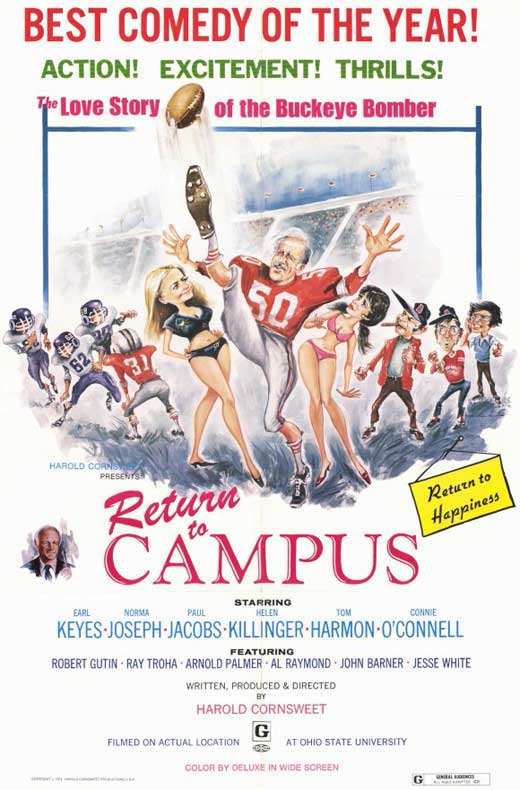
Film Review: Return To Campus (a.k.a. The World’s Greatest Kicker) (dir by Harold Cornsweet)


This little film from 1975 is a weird one.

Return to Campus aired on TCM last night.  I DVR’d it because, just judging from the title, I assumed that it was either going to be a raunchy comedy from Crown International Pictures or it was going to be some sort of ultra low-budget slasher that I could potentially review for October.  Instead, it turned out to be an odd little vanity project about a 55 year-old college football player.

Hal Norman (played by an actor named Earl Keyes, who basically looked like an old school driving instructor) is a semi-retired aviation engineer who is obsessed with football.  Back in 1939, he was a college football star but then World War II intervened and he ended up not only giving up his athletic career but dropping out of college as well.  He’s gone on to make a good life for himself but he’s still haunted by questions of what could have been.  Being at “odds and ends,” he decides to re-enroll at Ohio State.  Not only will he be finishing up his senior year but he’s also determined to try out for the football team!  Hal wants to kick field goals.

A 55 year-old kicking field goals!?  Impossible, you say?  Well, not if you’re willing to cheat.  Apparently, Hal has invited some sort of spring that, when he puts it into his shoe, allows him to kick a field goal from 80 yards away.  There’s four separate scenes in which Hal tells another character that there’s nothing in the rules books that says that he can’t use a special spring when he does his kicks.  Since I don’t know much about football, I’ll take his word on that but still, it all seems a little bit unethical.  I mean, think about it.  You’ve got actual athletes out there, risking injury and depending on their own carefully developed natural talents.  And then you’ve got some jackass having a midlife crisis overshadowing them because he’s found a loophole in the rules.  (I kept waiting for someone to point out the obvious, which is that the only reason the rules don’t mention the spring is because no one but Hal knows that it exists.)  It may not be illegal but it’s hard not to notice that Hal is very careful not to tell too many people about his magic spring.

(And really, it seems like if Hal was smart, he would patent his magic spring and make a fortune instead of using it to humiliate a bunch of college students.)

Anyway, the strange thing about Return to Campus is that very little actually happens in the movie.  Hal goes back to college.  Hal kicks a lot of field goals.  Hal starts dating his English professor.  Hal moves into the dorms and get a roommate named …. I kid you not …. Pighead.  (Even the dean of students calls him “Pighead.”)  You would think that, with a name like Pighead, he’d be some sort of wild party guy but instead, he’s just kind of dorky.  Pighead’s girlfriend, Joyce, gets angry at Hal and tries to steal his magic kicking shoes.  It leads to a extremely leisurely car chase, during which a pizza deliveryman nearly gets run over and loses all of his pizzas.  “Mamma Mia!” he shouts.  Everything plays out at a very leisurely pace.  You never have any doubt about whether everything’s going to work out in the end because it’s just that type of movie.

Return to Campus was filmed in the 70s but there’s not a hint of drugs or campus dissension to be found in the film.  Instead, it’s kind of like a kid’s film for old people.  Most of the dialogue probably would have seemed old-fashioned in the 50s.  For instance, when Hal is told that he has a meeting with a referee to discuss his kicking shoe, his girlfriend offers to go with him for support.  Hal tells her no because this is a discussion meant for men.  And his girlfriend — an English lit professor! — smiles and nods as if that’s the most sensible thing that she’s ever heard.

As I said, it’s a strange film and it was obviously very much an amateur production.  In fact, it was so weird that I actually did some research after I watched the movie and I discovered that Harold Cornsweet (who wrote, directed, and produced the film) was an actor who appeared in a few small roles before returning to his hometown of Cleveland and making this film.  He also actually was a kicker at Ohio State in 1939 so it seems probable that there’s a heavy element of wish-fulfillment in this film.  In fact, that’s one reason why I can’t be too critical of Return to Campus.  As inept as the film may be, it’s also an obvious labor of love.  According to the information that I found online, Cornsweet died just two years after this film was released so it’s actually kind of sweet that he got to film a love letter to both his college and his sport before he went.

Return to Campus is incredibly inept and it possibly made me even less interested in football than I was before I watched it but I can’t help myself.  I just have a soft spot for these amateur productions.

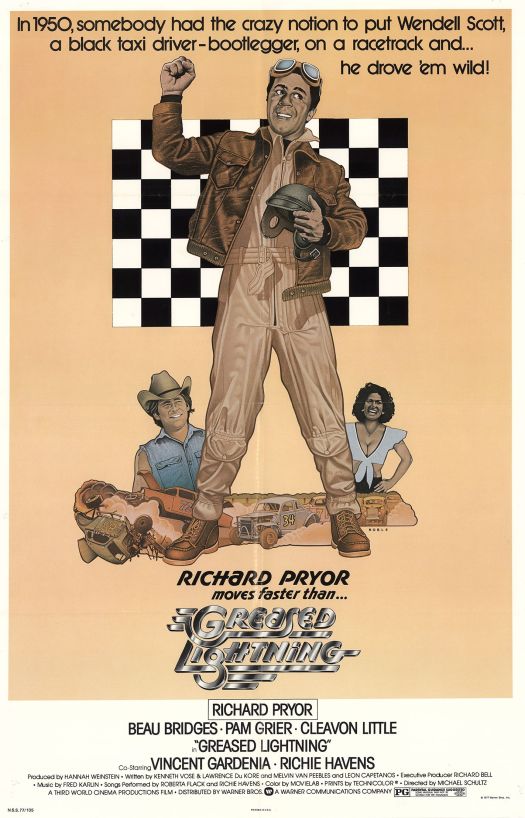
Built For Speed: Richard Pryor in GREASED LIGHTNING (Warner Brothers 1977)


gary loggins's avatarcracked rear viewer

Richard Pryor  (1940-2005) has been hailed as a comedy genius, and rightly so. But Pryor could also more than hold his own in a dramatic role. Films like WILD IN THE STREETS, LADY SINGS THE BLUES, and BLUE COLLAR gave him the opportunity to strut his thespic stuff, and GREASED LIGHTNING gave him top billing as Wendell Scott, the first African-American NASCAR driver. Pryor plays it straight in this highly fictionalized biopic about a man determined to break the color barrier in the predominantly white sport of stock car racing.

We see Scott returning to his rural Danville, VA hometown after serving in WWII.  He tells everyone he wants to drive a cab and someday open a garage, but his secret wish is to become “a champion race car driver”. He meets and falls in love with Mary (Pam Grier, who’s never looked more beautiful), and they eventually marry…

View original post 427 more words

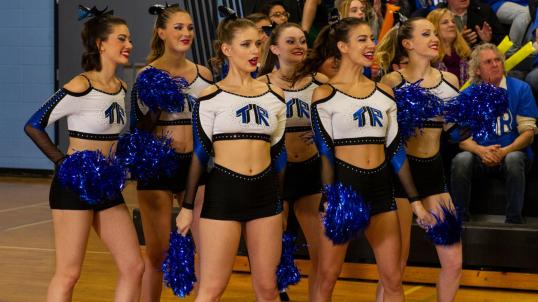
Lifetime Film Review: The Cheerleader Escort (dir by Alexandre Carriere)


I swear, how did I ever make it through college?

That’s a question that I often find myself wondering while watching a Lifetime movie.  In the world of Lifetime, college is always prohibitively expensive and families — regardless of how big of a house in which they’re living — always struggle to pay their daughter’s tuition.  It seems like, whenever it’s time to head off to college, there’s always either a divorce or a sudden bankruptcy or some other financial calamity designed to destroy idealistic hopes and dreams.  Inevitably, the only way to pay for college is by descending into a sordid world of scandal, infidelity, and occasionally even murder.

That’s the situation in which Cassie Talbot (played by Alexandra Beaton) finds herself in The Cheerleader Escort.  Cassie’s just started at a good college and her best friend is even her dorm roommate!  Even better, she’s just made the school’s renowned cheerleader squad!  It all sounds perfect but there’s a problem.  Cassie has to figure out a way to pay for all of this.  Her parents are divorced and, while her father originally promised to help pay for college, he has since disappeared.  Her mother, Karen (Cynthia Preston), says that he might “be gambling again.”  Well, he’s just gambled away Cassie’s future because, after Karen’s injured in an auto accident, there’s no way that Cassie’s going to be able to afford tuition!

Unless….

It turns out that there are wealthy men, most of whom are members of the college’s alumni association, who are more than willing to help the members of the cheerleading squad pay the bills.  As long as the cheerleaders agree to “spend some time” with them, they’ll donate all sorts of money.  In fact, that was one reason why Cassie was selected for the squad.  It was felt that the alumni would react well to her innocent personality and indeed, they do.  Soon, Cassie is spending all her time with the older and richer Terry Dunes (Damon Runyan).  That doesn’t leave much time for going to her classes but who goes to college just to sit in a boring classroom?

Anyway, it seems like a good arrangement until another member of the squad, Gabby (Joelle Farrow), informs Cassie that she’s pregnant and that the father is another wealthy member of the alumni association.  Gabby is super excited about having the baby.  The baby’s father is a bit less happy about the prospect.  In the real world, this would all probably lead to Dr. Phil doing a prime time special on “Sugar Daddy websites,” but this is a Lifetime movie so, of course, it all leads to murder and scandal.

And thank goodness for that!  I mean, seriously, you’re not watching this film because you’re expecting to see a serious examination of why college is so damn expensive or why so many students are graduating with a mountain of debt.  You’re watching this film for the drama and, on that front, The Cheerleader Escort delivers.  In the grand tradition of previous Lifetime films like Confessions of Go Go Girl and Babysitter’s Black Book, The Cheerleader Escort delivers all of the sordid melodrama that you could hope for.

Really, we don’t ask for a lot when it comes to a movie like this: a little sex, a little melodrama, a nice house, and big drama.  The Cheerleader Escort delivers all four.

Music Video of the Day: Paranoid by FARR (2019, dir by Roméo, Max Junk & Justin Bretter)


The main character in this video has good reason to be paranoid because seriously, real life is just kicking his ass.  Maybe he should have blown off that interview and taken those boxing lessons….

Or maybe, in another reality, that’s what he did.  Maybe the two realities are becoming one and our unfortunate protagonist is having to both go to an interview and a boxing lesson at the same time.  It’s totally possible.  Universes collide all the time.

Anyway, this is a good video, a paranoid film for paranoid times.  Let’s be sure to give some deserved credit to Max Wilbur, who gets beaten up with panache and who gives a very good underdog performance in this video.  You can’t help but hope that things work out for him.

Enjoy!

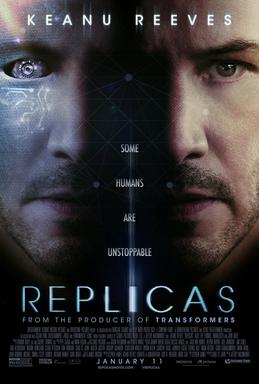
Film Review: Replicas (dir by Jeffrey Nachmanoff)


Don’t even ask me to explain what’s going on in Replicas, a sci-fi film that was released way back in January to terrible reviews and non-existent box office.

Admittedly, this film has a plot and you can kind of follow it if you force yourself to.  And really, it’s not that unusual of a plot.  It’s another one of those things where a scientist is shocked to discover that his top secret research is actually being funded by the military and everyone in the audience is supposed to be like, “OH MY GOD!  NO!  NOT THE MILITARY!”  As you can probably guess from the title, the film is also about clones.  Have you ever noticed that bad sci-fi films always seem to involve cloning?

It’s not so much that the plot can’t be followed as that the film’s storyline just feels oddly underdeveloped.  Watching Replicas, you get the feeling that the filmmakers got bored with the plot and just decided to go ahead and make the movie, without thinking everything through.  As a result, the film touches on all of the ethical and philosophical issues that come along with cloning people but that’s all it does.  Instead of actually exploring any of those issues or trying to come up with an original spin on the story, Replicas just mechanically moves from one scene to another.

Keanu Reeves plays William Foster, a scientist who, along with his longtime friend and partner, Ed Whittle (Thomas Middleditch of Silicon Valley fame), has figured out a way to transfer a dead person’s mind into a robot’s body, hence bringing the person kind of back to life.  A big evil corporation has set up a lab in Puerto Rico for Foster and Whittle to do their research.  The problem is that every time that they put a dead soldier’s mind into an android body, the dead soldier gets pissed off and destroys the body.  Evil Mr. Jones (John Ortiz) demands that they figure out a way to keep the dead soldier from getting mad.  Somehow, it doesn’t occur to Foster or Whittle that Jones wants them to put the soldier’s mind in the android’s body so that the android can then be used as a weapon of war.

(Also, if you want to use androids as soldiers, why not just do some sort of remote control thing like they do with drones?  Seriously, I don’t think Jones has thought his evil scheme through.  The less complicated the better.)

Anyway, Foster and his wife, Mona (Alice Eve), and his three children decides to spend the weekend camping and things don’t go well.  In fact, they go so badly that Foster ends up crashing the SUV and his entire family ends up dead.  Not to worry though!  Foster’s a scientist and he knows how to create clones.  So, he’ll just clone his family.  Of course, to do that, he’ll have to pretend that they’re all still alive and, because he only has room for three clones, he’ll have to pretend like his fourth child never existed.

Does Foster succeed?  Well, the movie is called Replicas.  What’s weird is that it’s obvious that Foster’s going to succeed but the movie still spends an entire hour with Foster and Whittle trying to figure out how to bring the clones to life.  I understand the movie wanted to at least pretend like there was a chance that Foster might not be able to do it but, again, the movie is called Replicas.

Anyway, Foster does eventually resurrect his family but then he discovers that Jones is actually a bad guy and soon, Foster and the Replicas are fleeing for their lives.  It really doesn’t add up too much because the film doesn’t bother to really explore any of the issues that it brings up.  Potentially big moments — like Foster deleting his youngest daughter’s existence — happen but are never really explored.  You keep waiting for some sort of twist — like the clones turning on their creator or Foster discovering that he’s a clone himself — and it never happens.  Instead, the film turns into a rather standard if not very exciting sci-fi action film.

To give credit where credit is due, Keanu Reeves does appear to be taking the film seriously and he has a few scenes that suggest that the film would have been improved if it had played up the idea of Foster being a mad scientist.  The rest of the cast seems to be either bored or miscast but Reeves does try to bring some heart to the film.  Otherwise, Replicas is pretty forgettable.
“0.03” Is Number 1 In My Book


Ryan C. (fourcolorapocalypse)'s avatarRyan C.'s Four Color Apocalypse

If I had to guess — and I don’t, but I will — I’d surmise that the title for Haleigh Buck’s self-published (on nice heavy cardstock) 2018 (I think?) mini 0.03 refers to a particular size of pen tip . Probably a very tiny pen tip. But I could be wrong about that.

What I’m not wrong about is that this compact collection of illustrations was, in fact, drawn with some pretty tiny-tipped pens — and the detail in each of them is as staggering, even as unsettling, as the subject matter they explore. Roll call : death, skulls, demonic entities, random historical settings, nature, and more death. Picking up on a theme here?

This is seriously obsessive work, and I can only speculate on how much time was spent getting every aspect of every drawing exactly right. “A hell of a lot” may not be much of…

View original post 516 more words