30 Days of Noir #3: Footsteps in the Night (dir by Jean Yarbough)


The 1957 film Footsteps in the Night opens in a small motel apartment in Los Angeles.

Jazz blares from a record player.  Playing cards are spread across a table.  A cigarette burns in an ashtray while a stack of poker chips sits undisturbed nearby.  When the apartment’s resident, Henry Johnson (Douglas Dick) steps into the room, he nearly stumbles over the dead body that’s lying in the middle of the floor.

Henry looks down at the body.  Is he shocked?  Is he scared?  Is he regretful?  Is he guilty?  It’s impossible to tell from his somewhat perturbed but mostly blank facial expression.  He takes in the scene and then promptly turns out the lights.

The dead man is Henry’s neighbor, Fred Horner (Robert Shaye).  When the police arrive, Detectives Andy Doyle (Bill Elliott) and Mike Duncan (Don Haggerty) immediately deduce that someone murdered Fred in the middle of a poker game.  Since everyone says that Henry was not only a degenerate gambler but that he also frequently got into arguments with Fred, Henry becomes the number one suspect.  Not helping Henry’s case is the fact that he’s disappeared and his girlfriend, Mary Raiken (Eleanore Train), won’t reveal where he’s hiding.

It seems like an open-and-shut case but Doyle has his doubts.  The case against Henry is almost too perfect and Doyle wonders if maybe they’re overlooking something.  As Doyle and Duncan continue to investigate, they discover that Fred Horner was an angry and misanthropic man.  They also discover that there’s a salesman named Bradbury (James Flavin) who is staying at an adjacent hotel and who bears a strong resemblance to the dead man….

Clocking in at just 62 minutes, Footsteps in the Night is a fast-paced police procedural with elements of film noir tossed in for good measure.  While I was doing some research for this review, I discovered that Footsteps in the Night was actually the fifth and final film in which Bill Elliott played Detective Andy Doyle.  Before taking on the role of Doyle, Elliott appeared in several westerns and he plays Doyle much like an ideal frontier sheriff.  He’s a no-nonsense lawman who solves cases with common sense and doesn’t have much time for wild speculation.  Dan Haggerty backs him up as the equally no-nonsense Mike Duncan.  As opposed to the modern tendency to celebrate cops who “break the rules,” Footsteps in the Night emphasizes the professional, by-the-book attitude of Doyle and Duncan.  If you were ever murdered, Duncan and Doyle are the type of cops that you would want assigned to the case.

As for their number one suspect, Henry may claim to have just been an innocent bystander but his gambling addiction makes him less than trustworthy in the eyes of many cops.  It’s only when Doyle and Duncan start to dig into the case that they discover just how cruelly Fred manipulated Henry’s addiction.  In the best tradition of many murder mysteries, Footsteps in the Night not only leaves you wondering who the murderer may have been but also whether or not the victim may have gotten what he deserved.

Footsteps in the Night is a good police procedural.  I look forward to watching and reviewing the other four films in which Bill Elliott played Detective Doyle as well.

Rocking “From Crust Till Dawn” With Sarah Romano Diehl


Ryan C. (fourcolorapocalypse)'s avatarRyan C.'s Four Color Apocalypse

If there’s one thing I find suspect about any number of autobio/memoir comics, it’s how specific they tend to be. On the one hand, of course, I get it : the impetus to cobble together disjointed instances and events into a cohesive, “A-to-B” narrative is natural enough, and logic dictates that it makes for interesting, even compelling, reading. Accuracy be damned, as long as the general gist of things is presented  more or less as it happened, that’s the important thing, right? And yet —

Memory doesn’t really work that way, does it? Specifics get lost over time, while the overall character of a given memory tends to swell, even magnify. Events that followed tend to “backtrack” and inform the way we remember things that came before. Time-frames get muddled. People do and say things they possibly never did. The past takes on a dreamlike quality the further we get…

View original post 662 more words

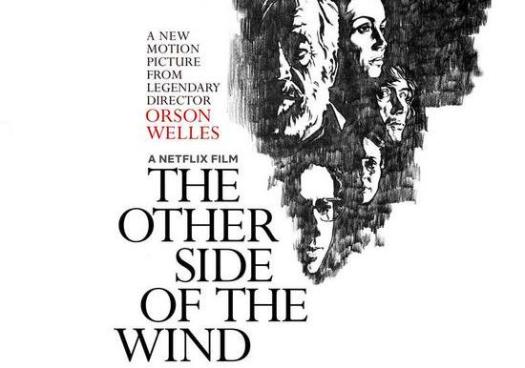
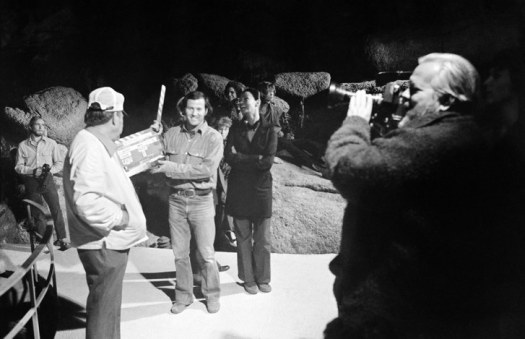
What A Long, Strange Trip It’s Been: Orson Welles’ THE OTHER SIDE OF THE WIND (Netflix 2018)


gary loggins's avatarcracked rear viewer

The day has finally arrived. November 2, 2018. I ordered a free trial of Netflix specifically so I could watch the completed version of Orson Welles’ final film, THE OTHER SIDE OF THE WIND . Welles worked on this project for over a decade, and the footage sat for decades more before finally being restored and re-edited. A film buff’s dream come true – perhaps. There were questions I needed answered. Was there enough salvageable material to make a coherent movie? Does it follow Welles’ vision? Would it live up to the hype? Was it worth the wait?

The answer: OH, HELL YEAH!!

Welles shot over ten hours of film, utilizing different film stocks (Super 8, 16mm, 35mm), switching back and forth from color to classic black and white, to create his movie, which is a documentary about the movie-within-the-movie’s director – a movie-within-a-movie-within-a-movie. It took six years (from 1970-76)…

View original post 719 more words

Film Review: Billionaire Boys Club (dir by James Cox)


Have patience.  This is kind of a long story.

Billionaire Boys Club, a fact-based film about two murders that occurred back in the greed and cocaine-filled 80s, was first announced in 2010.  After five years of pre-production, the film started shooting in 2015.  It featured up-and-coming stars Ansel Elgort and Taron Egerton in the lead roles and Emma Roberts in a key supporting role.  It also featured a certain two-time Oscar-winning actor, who we will talk about shortly.  There was speculation that Billionaire Boys Club could be an Oscar contender.  At the very least, that two-time Oscar-winning actor might pick up another supporting nomination.  Shooting started in December of 2015 and wrapped in January of 2016.

And then …. nothing.

What happened?

Kevin Spacey happened.  On October 29th, 2017, Anthony Rapp told how, when he was 14, an intoxicated Kevin Spacey made a sexual advance towards him.  Subsequently, 15 other people came forward with stories about Spacey making similar advances towards them.  At the time, the Oscar-wining actor had key supporting roles in two upcoming films: All The Money In The World and Billionaire Boys Club.  The producers of All The Money In The World replaced Spacey with Christopher Plummer and hastily refilmed all of his scenes.

Unfortunately, that really wasn’t an option for the producers of Billionaire Boys Club.  Whereas Spacey’s role in All The Money In The World was basically an extended cameo, he was a key part of Billionare Boys Club.  Spacey had been cast as Ron Levin, a flamboyant con man whose murder led to the collapse of an 80s investment firm.  There was really no feasible way to replace Spacey without reshooting the majority of the film.  As a result, Billionaire Boys Club sat a while in limbo before finally getting an extremely limited release back in July.  On opening day, the film made a total of $126.  (The final weekend gross was $618.)

As for the film itself, the behind the scenes drama is far more interesting than anything that actually happens on screen.  Elgort and Egerton play Joe Hunt and Dean Karny, two middle-class guys who want to be rich in the 80s.  They do this by starting an investment firm called Billionaire Boys Club and, for a few months, everything seems to be perfect.  They appear to be making money.  They drive nice cars and live in big mansions and throw big parties.  There’s all the usual stuff that you expect to see in films about rich twentysomethings: cocaine, swimming pools, black lingerie, and fast cars.  In fact, that’s kind of the problem with the film.  There’s nothing surprising about what happens to Joe and Dean.  If you’ve seen Wolf of Wall Street, you’ve seen it all before.  In fact, if anything, the film’s recreation of greed-fueled decadence is almost too tame.  I mean, sure — we get the shot of the lines of cocaine getting snorted off a counter top but it’s hardly the mountain of coke that usually shows up in a movie like this.  If anything, this movie needed more cocaine.

Of course, everything eventually falls apart.  It turns out that Ron Levin, their main financial backer, was actually a con man who had managed to trick everyone into thinking that he was a millionaire.  In the end, it all leads to two murders, one prison sentence, and one new life in the witness protection program.

The film tries to critique the culture of greed but it fails because it never seems to understand why that culture would be so attractive to two guys like Joe and Dean in the first place.  Despite the efforts of Elgort and Egerton, Joe and Dean just come across as being two ciphers who maybe watched Wall Street one too many times.  It’s never clear what made these two click or why they were able to trick so many people into believing in them.  Unlike something like The Wolf of Wall Street, Billionaire Boys Club is so busy scolding everyone for being greedy that it never acknowledges that being rich can also be a lot of fun.  (It doesn’t help that Billionaire Boys Club features first person narration, which often leads to the film telling us what it should be showing us.)

As for Kevin Spacey, he gave the same performance that he gave in any number of similar films.  He’s arch and sarcastic and sometimes ambiguously flamboyant.  He gets upset whenever anyone says anything against his dog.  When he announces that he’s a “hustler” and brags about how he can get away with anything because he’s convinced people that he’s something that he’s not, it’s hard not to cringe.  It’s not really a bad performance, as much as it just kind of a predictable one.  It feels destined to be remembered only for being Spacey’s final appearance in a feature film.

Billionaire Boys Club will be making its Showtime premiere later tonight.  It’s not a terrible film but it’s not a particularly memorable one either.

30 Days of Noir #2: Whispering Footsteps (dir by Howard Bretherton)


The 1943 film Whispering Footsteps opens with Mark Borne (John Hubbard) getting ready for his day.  In his bedroom, at the boarding house where he lives, Mark turns on his radio and hears a news report of a double murder in a nearby town.  Two girls have been strangled.

As the news report says that the killer has brown hair, Mark brushes his brown hair.

As the news report says that the killer has brown eyes, Mark looks at his brown eyes in the mirror.

As the news report says that the killer has a “lean, intelligent” face, the camera focuses on Mark’s lean, intelligent face.

Finally, as the news report says that the killer was wearing a gray, double-breasted suit, Mark puts on gray, double-breasted suit.

Yes, Mark looks just like the murderer and that quickly becomes a problem for him as he attempts to go about his day.  When he walks to his job at the local bank, he notices that he’s being followed by a detective (Cy Kendall).  When Mark later tries to take his lunch break, he again finds himself being followed.  Desperate to escape from the detective, Mark steps into a bookstore and buys a random book.  It’s only once he steps outside that Mark discovers that the title of the book is Psychology of the Homicidal.

Mark is a respectable member of the community but, because he looks like a serial killer, everyone in town soon starts to gossip about him.  Why does he go for so many walks?  Why does he sometimes seem to be in a bad mood?  Could he be a murderer?  Even the other residents of the boarding house start to view him with suspicion.  Every time that she sees him, Rose Murphy (Juanita Quigley) screams.

Of course, Rose screams whenever anything happens.  For instance, when she is shown a newspaper story about a local murder, Rose screams.  Whenever anyone walks up behind her, Rose screams.  Whenever anyone says hi to her, Rose screams.  When a woman is found strangled in the basement, Rose screams again.  Admittedly, it’s easy to get annoyed with Rose’s constant screaming but, in that last case, she’s probably justified.

Anyway, Mark only has one person on his side and that’s Brook (Rita Quigley), the daughter of his boss.  And yet, at one point, Brook finds herself being chased through the night by a man in a double-breasted suit.  Is Mark guilty or does he just have the worst luck in the world?

If nothing else, Whispering Footsteps will keep you guessing.  Up until the last minute of the film, you’re never sure whether Mark is innocent or guilty.  Who is the monster, the film asks.  Is it Mark or is it the gossips who have decided to judge him?  As convincingly played by John Hubbard, Mark starts out as upbeat and just a little bit shallow but, by the end of the movie, he’s become a haunted and paranoid man, embittered by the town’s refusal to believe in him.  Charles Halton, as Mark’s self-righteous boss, and Rita Quigley provide good support.  Less successful are some awkward attempts at humor.  It won’t take you long to get tired of Rose screaming.

Clocking in at 52 minutes, Whispering Footsteps was obviously meant to be the second part of a double feature.  It’s a well-done examination of guilt, innocence, and gossip.  See it on a double bill with In A Lonely Place.

One Hit Wonders #22: “Heartbeat – It’s A Lovebeat” by The DeFranco Family (20th Century Records 1973)


gary loggins's avatarcracked rear viewer


Now that I’ve got horror movies out of my system (at least for a minute!), let’s switch gears to the saccharine sweet DeFranco Family, Canada’s answer to the Osmond Brothers, The Partridge Family, and The Jackson 5, who scored a #1 hit in 1973 with the bubblegum-pop “Heartbeat – It’s A Lovebeat”:

Siblings Benny, Marisa, Nino, Merlina, and Tony DeFranco had been making music together all their lives before a demo tape earned them a contract with 20th Century Records. 13-year-old lead singer Tony was groomed to be the Next Big Teen Idol, and his face was plastered all over the covers of teen magazines of the era: Tiger Beat, 16, Fave!, ad nauseam. The DeFranco’s popularity was brief however, as disco began taking over the airwaves, not to mention Tony hitting puberty and his liltingly light voice changing! The family became a Vegas lounge act for a couple of…

View original post 59 more words

Music Video Of The Day: Adi Ulmansky — Gurl Powa (2013, dir by Adi Ulmansky and Nir Perry)


My BFF Evelyn and I absolutely love Adi Ulmansky so I figured what better way to start a new month than with one of her videos?

What’s going on this video?  I’m not really sure.  Obviously, Adi’s in an arcade but what’s going on with the dancing bear?  It’s probably best not to question too much.  The important thing is that everyone appears to be having a good time and that this song appears on an album called Shit Just Got Real.

Enjoy!