Happy Friday the 13th!
Enjoy!
Happy Friday the 13th!
Enjoy!

Hi, everyone!
Well, it’s that time again! It’s time for me to post my very early Oscar predictions. I do this on a monthly basis. I always make it a point to acknowledge that, this early in the year, this is something of a pointless exercise. We’re still not far into 2018 and but, surprisingly, several excellent films have already been released. Who knows what the rest of the year will be like!
So, as always, the predictions below are a combination of instinct and random guesses. This month, I’ve kind of let my imagination run wild. And you know what? That’s the way it should be. What’s the point of trying to predict stuff if you can’t have fun?
So, without further ado, here are my predictions for April!
(Click to see my predictions for January, February, and March!)
Best Picture
Boy Erased
First Man
The Happytime Murders
If Beale Street Could Talk
Mary, Queen of Scots
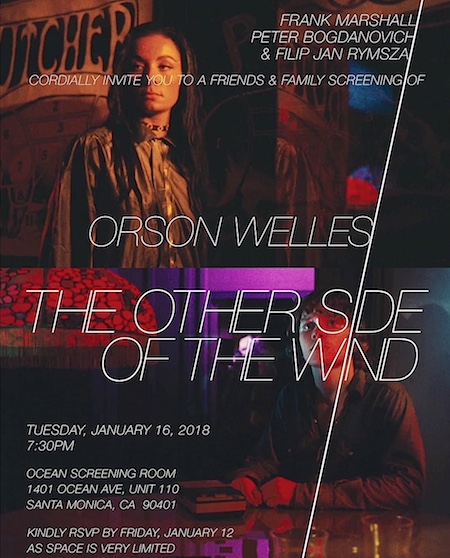
The Other Side of the Wind
A Quiet Place
Widows
Best Director
Ryan Coogler for Black Panther
Barry Jenkins for If Beale Street Could Talk
John Krasinski for A Quiet Place
Steve McQueen for Widows
Orson Welles for The Other Side of the Wind
Best Actor
Steve Carell in Beautiful Boy
Willem DaFoe in At Eternity’s Gate
Matt Dillon in The House That Jack Built
Ryan Gosling in First Man
John Huston in The Other Side of the Wind
Best Actress
Cate Blanchett in Where’d You Go, Bernadette?
Viola Davis in Widows
Melissa McCarthy in Can You Ever Forgive Me?
Saoirse Ronan in Mary, Queen of Scots
Kristin Stewart in JT LeRoy
Best Supporting Actor
Peter Bogdanovich in The Other Side of the Wind
Russell Crowe in Boy Erased
Michael B. Jordan in Black Panther
David Tennant in Mary, Queen of Scots
Forest Whitaker in Burden
Best Supporting Actress
Laura Dern in JT Leroy
Claire Foy in First Man
Nicole Kidman in Boy Erases
Regina King in If Beale Street Could Talk
Margot Robie in Mary, Queen of Scots

Clint Eastwood is posing as a preacher in a small Montana town, giving his Sunday sermon. Meanwhile, carefree Jeff Bridges steals a Trans Am off a used car lot and goes for a joyride. Clint’s sermon is interrupted by a hit man who opens fire in the church, chasing Eastwood down through a wheat field, when Bridges comes speeding along, running the killer down. Clint hops in the Trans Am, and the two become fast friends, setting up THUNDERBOLT AND LIGHTFOOT, a wild and wooly tale that’s part crime caper, part character study, and the directorial debut of Michael Cimino.

Clint plays Korean War veteran John Mahoney, a criminal known as “The Thunderbolt” who pulled off a successful half-million dollar armory robbery. His ex-gang members (George Kennedy ,Geoffrey Lewis ) think he betrayed them, and are out to kill him, but not before finding out where the loot is…
View original post 511 more words
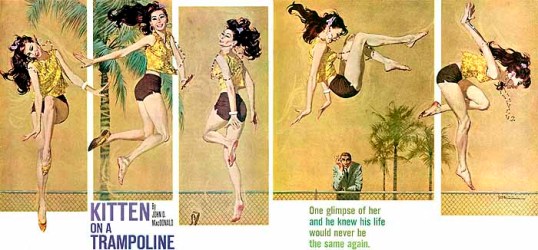
by Robert McGinnis
I missed Rex Manning Day last week (it’s celebrated on April 8th, for future reference) but I can make up for it with today’s music video of the day!
Enjoy!
(SPOILERS)
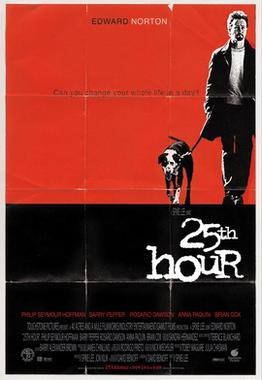
First released in 2003, 25th Hour is one of those films that gets better and better with each subsequent viewing.
Monty Brogan (Edward Norton) may have done some very bad things in the past but nearly everyone has benefited. His childhood friends, a trader named Frank (Barry Pepper) and a teacher named Jacob (Philip Seymour Hoffman), both get to live vicariously through their friend, even if neither one of them is quite willing to admit it. Monty’s father (Brian Cox) is a retired fireman who now owns a bar that was largely purchased with the money that Monty made from dealing drugs. Monty’s girlfriend, Naturelle (Rosario Dawson), is “living high” off of the profits of Monty’s drug deals. For that matter, so is Monty. Monty has a nice apartment, a loyal dog, and a supportive boss named Uncle Nikolai (Levan Uchaneishvili).
Of course, Monty understands that he’s in the business of destroying lives. When Monty first met Naturelle, he had just completed a transaction with a well-dressed businessman. Years later, when Monty is sitting on a bench with his dog, that same man approaches him and begs for more drugs. The man’s no longer wearing a suit. Now, he’s apparently homeless and so addicted that he takes it personally when Monty informs him that he’s no longer in the drug-selling business.
Why is Monty no longer selling? Someone told on Monty. When the DEA showed up at his apartment, it didn’t take long for them to find the packages that he had hidden in the cushions of the couch. For all of his swagger and confidence, it would appear that Monty wasn’t quite as clever as he thought he was. Monty was arrested and subsequently sentenced to seven years in prison.
The majority of 25th Hour takes place during Monty’s final night of freedom, a night that he’s planning on spending it with Frank and Jacob, both of whom could have made the same mistakes that he did but, for whatever reason, they didn’t. Needless to say, Monty’s got a lot on his mind. For all of his attempts to hide it, Monty isn’t as tough as he pretends to be. He knows that it’s not going to be easy for him to do seven years in confinement. He’s terrified of getting raped in prison and he worries that he’s going to be locked in a holding cell with 200 other criminals. Both he and his friends know that, even if he does survive, he’ll be a different man when he gets out. Frank suggests that he and Monty could open a bar when Monty is released but they both know this is an empty promise. Not only is Monty is scared of the future but he’s haunted by the past. Is he getting what he deserves? What if he had made different choices? Will Nautrelle wait for him or, as some of his associates suggest, is she the one who betrayed him in the first place?
Over the course of the night, both Frank and Jacob are also forced to deal with their feelings towards Monty. Frank is a Type A personality, the one who spends his day screaming into telephones and who eagerly looks forward to exploiting bad economic news for his own financial gain. Frank says that Monty is getting what he deserves but, as the film progresses, it becomes obvious that Frank knows that he has more in common with Monty than he wants to admit. Jacob, on the other hand, is a socially awkward teacher who is struggling to deal with a crush that he’s developed on one of his students (Anna Paquin). If Frank fears that he’s more like Monty than he wants to admit, Jacob wishes he could be more like him. At first, it’s hard to imagine that these three men could ever have been close friends but, as soon as you see them together, it all makes sense.
As directed by Spike Lee, one of American cinema’s greatest provocateurs, 25th Hour is more than just the story of one man’s last night of freedom. Over the course of the film, Monty becomes a symbol of not just New York City but of America itself. Driven by self-interest, Monty has spent his life ignoring the consequences of his actions and, now that he has no choice but to confront them, it’s too late. During the film’s most famous scene, Monty stares in a mirror while his reflection rants against every single neighborhood and ethnic group in New York City. The rant is such a powerful scene that it’s easy to miss the most important point. Only at the end of the rant does Monty’s reflection admit that he’s as much to blame for his life as any of them.
Oh yes, the Rant. The Rant is so famous that I was almost tempted to not mention it in this review, just because it doesn’t seem as if there’s much left to be said about it. Even people who dislike the film seem to be in agreement that the Rant is one of the most powerful and incendiary moments in early 21st century cinema. The Rant gives us a portrait of a divided and angry society in collapse and it’s a portrait that is probably even more relevant today than it was when the film was first released. The Rant feels like such a classic Spike Lee moment that it’s surprising to discover that the Rant was included in the script even before Lee was attached to the film.
A few things about the Rant:
As well-done and brilliantly acted as it may be, the Rant has tended overshadow an even better moment. It has been said that the key to a successful work of art is a good ending. As a writer, I can tell you that endings are a hundred times more difficult than beginnings. Fortunately, 25th Hour has an absolutely brilliant ending.
After having finally convincing Frank to beat him up (in an effort to make himself look tougher once he arrives in prison), Monty is being driven to the prison by his father. As they leave New York City, Monty takes one final look at the city and it’s citizens enjoying freedom that he’ll never again have. (This is such a New York City that you can’t help but feel that it’s adding insult to injury that Monty’s going to have to serve his time upstate.) As he drives, Monty’s father begins to talk…
It’s all about decisions and consequences. Monty made his decisions years ago. Over the course of Monty’s last night of freedom, Frank, Jacob, Naturelle, and even Uncle Nikolai made their decisions. And now, as he drives his son to prison, Monty’s father is forced to make a decision of his own. There’s so much great acting to be found in 25th Hour but, during that final soliloquy, Brian Cox upstages all of them. Brian Cox is one of those character actors who seems as if he’s been around forever. He’s the type of dependable actor who, much like Monty’s father, is often taken for granted. If nothing else, you have to be thankful for a film like 25th Hour because it gives everyone a chance to be reminded of just how brilliant an actor Brian Cox truly is.
(Here’s a random bit of a Brian Cox trivia. While everyone knows that, in Manhunter, Brian Cox was the first actor to play Hannibal Lecter, he also played Winton Churchill the same year that Gary Oldman won an Oscar for playing the same role in Darkest Hour.)
25th Hour is not an easy film to watch. At times, it’s one of the most depressing films ever made. It’s tempting to say that, as bad as things ultimately turn out for him, you’re glad that Monty has his father and his friends but that’s really not true. No matter how much his friends care about him or how much Naturelle and his father love him, Monty’s going to prison and his story is simply not going to have a happy ending.
And yet, 25th Hour is one of those films that you can’t look away from and, after you watch it, you simply can’t forget. Every time I watch 25th Hour, I find new details to appreciate. With each subsequent viewing, the pungent dialogue becomes even more multi-layered. With each subsequent viewing, Monty becomes even more of an intriguing and tragic figure. This is a film that makes you appreciate the brilliance of Edward Norton and mourn the fact that Barry Pepper rarely gets roles as good as his role here. With each viewing, 25th Hour reminds you of what a great talent we lost when we lost Philip Seymour Hoffman. It’s film that gets better with each viewing.
Assuming that Monty survived and managed to stay out of trouble, he should be out of prison by now. Hopefully, wherever he is, he’s doing okay.
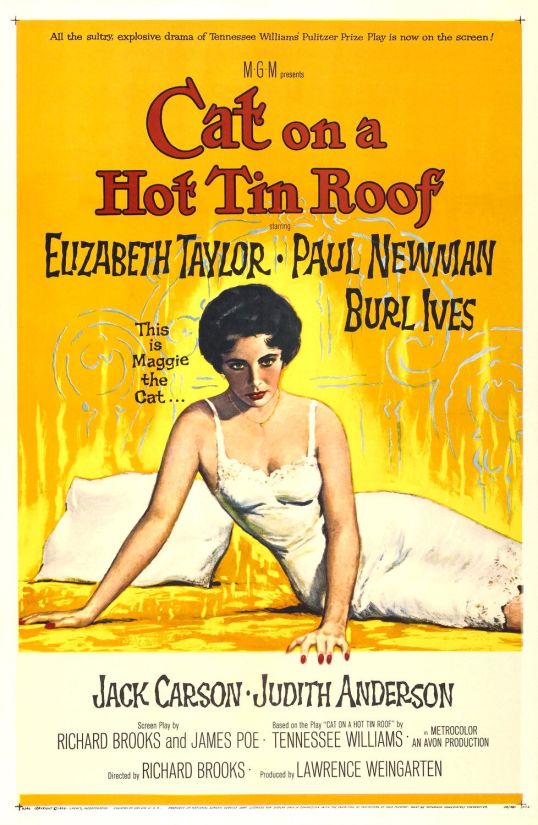
by Reynold Brown
In the 1970 film Performance, a sadistic gangster named Chas (James Fox) goes on the run and ends up hiding out in a mansion that’s currently occupied by a burned-out rock star named Turner (Mick Jagger). Turner, we’re told, used to be great but then he “lost his demon.” Could Chas be his new demon?
Well, before the answer to that question can be revealed, Chas ends up under the influence of hallucinogenic mushrooms and that’s when he sees Turner transformed into a London mob boss and performing Memo From Turner, a song about his exploits.
Though this is a scene from a movie, it’s still most definitely a music video. In fact, it’s frequently cited as the first “true” music video. (I imagine that John’s Children, Procol Harum, and Nancy Sinatra would disagree.) Still, even if it’s not the first, it’s influence on subsequent videos is undeniable.
Enjoy!
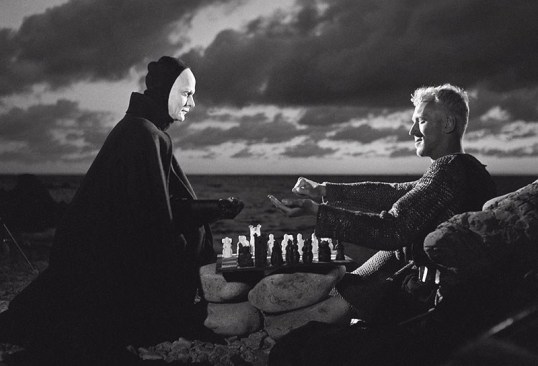
The Seventh Seal (1957, directed by Ingmar Bergman)
I had a bit of a panic attack earlier today when I logged onto twitter and I discovered that everyone was both sharing picture of the great actor Max Von Sydow and debating which one of his many roles was his best.
“Oh my God!” I thought, “Max von Sydow must have died! 2018 sucks now!”
I looked over at the trending topics and, to my shock, Max von Sydow was not trending. However, Mark Zuckerberg was.
“Goddammit,” I thought, “Mark Zuckerberg is totally overshadowing the legendary career of one of the most important actors of all time!”
I was prepared to take advantage of the no-filter atmosphere of twitter and start screaming at people for not showing the proper respect to the life and legacy of Max von Sydow. Fortunately, before I totally lost my temper, I decided to make sure that my assumptions were correct. That’s something that I rarely do but I’m certainly glad that I did it this time because, by doing so, I discovered that Max von Sydow was not dead.
Instead, today was his 89th birthday!
Happy birthday, Max von Sydow!
What is Max von Sydow’s greatest role? There’s so many to choose from. He’s got a whole new legion of fans as a result of his appearances in last two Star Wars films. Considering that he’s been an outspoken agnostic, it’s somewhat ironic that his first English-language role was as Jesus Christ in The Greatest Story Ever Told and that he epitomized everyone’s idea of the ideal priest in The Exorcist. He’s played assassins, saints, and intellectuals. He’s twice been nominated for an Oscar. When I asked my boyfriend for his pick for Max von Sydow’s greatest performance, he picked the Emperor Ming in Flash Gordon. Speaking of famous villains, von Sydow also played Blofield in Never Say Never Again and let’s not forget the assassin he played in Three Days of the Condor or his role in Minority Report or his performance as Leland Gualt in Needful Things! And what about his performance in The Diving Bell and the Butterfly or his Emmy-nominated turn in Game of Thrones…
Well, I could sit here and spend hours listing great Max von Sydow performances. But, when talking about the career of Max von Sydow, you have to start with the films of Ingmar Bergman. And when you talk about Bergman and von Sydow, you have to start with 1957’s The Seventh Seal.
(Some sites claim that The Seventh Seal was von Sydow’s film debut but that’s not true. It may have been his first film for Bergman but von Sydow actually made his screen debut in 1949. Before finding film stardom, von Sydow dominated the Swedish stage.)
In honor of both Max von Sydow’s 89th birthday and his amazing career, today’s scene that I love is from The Seventh Seal. This haunting and atmospheric film is one that you definitely should see if you haven’t see it already. Here von Sydow’s knight first meets Death (Bengt Ekerot*) and settles in for a game of chess.
Happy birthday, Max von Sydow!
—-
*While Bengt Ekerot never went on to achieve the type of international fame that von Sydow did, his performance here set the archetype of how Death, as a character, continues to be portrayed in books and films to this day.
On Sunday night, immediately after watching Twin Betrayal, I watched and, working with TSL contributor Case Wright, live tweeted a film called Evil Doctor!

Why Was I Watching It?
The first reason was an obvious one. It was a Lifetime movie and, as our regular readers know, there’s no way that I would ever miss the chance to watch a Lifetime film.
The other reason was that the film was named Evil Doctor, which made it sound like the origin story of perhaps the greatest MCU villain of all time. As a general rule, any Lifetime film that has the word “evil” in the title is going to turn out to be good. Evil is right up there with “Bad,” “Confessions,” and “…at 17” as far as words in Lifetime movie titles are concerned.
What Was It About?
Everyone wants something.
Aubrey Lewis (Jen Lilley) just wants to have her baby in peace.
Aubrey’s husband, Matt (Corin Nemec), wants to be a respected television writer, even if he is stuck writing for a sitcom called Family Phun.
And what does Dr. Natalie Barnes (Dina Meyer) want? She wants to have a baby and she wants a baby now! She also wants to deal with all of the unresolved issues that she had with her dead father, who happened to look just like Matt! What better solution to Natalie’s problems than seduce Matt, steal Aubrey’s baby, and kill anyone who gets in her way?
Seriously, she’s not called an evil doctor for nothing.
What Worked?
Obviously, with a film like this, success is going to depend on how effectively the title character is played. Fortunately, Dina Meyer really threw herself into the role of the evil doctor, kidnapping babies, seducing starlets, and murdering anyone who looked at her the wrong way. Dina Meyer has always done a good job when she’s been cast as a Lifetime movie psycho and Evil Doctor was no different. As well, Corin Nemec and Jen Lilley were likable as the objects of her obsession.
Evil Doctor was one of those Lifetime films that showed no hesitation about going totally and completely over-the-top. Between the evil doctor plotting and the wayward husband trying not to get caught and the poor wife just trying to have her baby in peace, there was not one ounce of drama that this film did not explore. It was outlandish, flamboyant, silly, and a hell of a lot fun!
What Did Not Work?
I think that the film missed a huge opportunity by not recruiting Eric Roberts to reprise his character from Stalked By My Doctor in a cameo appearance. I would have ended the film with Matt and Aubrey going to see their new doctor and discovering Dr. Beck waiting for them in his office. That would have been a legendary ending!
(For the record, according to the imdb, Eric Roberts currently has 57 films that are either currently filming or in post-production. That has nothing to do with Evil Doctor but it is a fun piece of trivia.)
Other than the glaring lack of Eric Roberts, everything worked in Evil Doctor. I mean, let’s be honest. When you watch a film with a title like Evil Doctor, you know what you’re going to get. You watch a film like this because you want to embrace the melodrama and you’re looking forward to trying to predict every outlandish twist. Evil Doctor delivered exactly what it promised.
“Oh my God! Just Like Me!” Moments
I totally related to Janelle (Kelsey Griswold), who was Aubrey’s sister and who moved in to help around the house while Aubrey was pregnant. Janelle had this wonderfully sarcastic, no-bullshit approach to life, to which I totally related. Janelle disliked almost everyone who came by the house and never made any attempt to hide that fact.
Lessons Learned
Always trust your sister’s instincts.

 Through the Shattered Lens