(Lisa is once again in the process of cleaning out her DVR! She recorded the 1947 film noir Lady In The Lake off of TCM on June 17th!)
You are Raymond Chandler’s world-famous private detective, Phillip Marlowe!
Well, no. Actually, you aren’t. Lady in the Lake is best-known for being one of the first (if not the first) film to be shot from the viewpoint of the main character but actually, the film goes out of its way to remind you that you’re seeing the story through Marlowe’s eyes but you’re not Marlowe yourself. There are three scenes in which Marlowe (played by Robert Montgomery, who also directed the film) is seen sitting behind a desk and directly addressing the audience. He shows up to fill in a few plot details and to assure the audience that, while the film they’re watching may be experimental, it’s not too experimental. For his part, Montgomery looks and sounds absolutely miserable whenever he has to speak directly to the audience. One gets the feeling that these scenes were forced on him by nervous studio execs, who were probably worried that the film would be too weird for mainstream audiences.
However, the rest of the film is seen totally through Marlowe’s eyes. When Marlowe gets punched, we see the fist flying at him. When Marlowe smokes a cigarette, we see the smoke float away from him. When Marlowe leers at every single woman that he meets, the camera leers as well. When Marlowe looks at himself in a mirror, we see his reflection. When Marlowe passes out after a beating or a car accident, the image grows blurry before fading to black. There’s even a rather clever scene when Marlowe leans in for a kiss, just to suddenly change his mind and pull back.
Today, of course, the film’s technique doesn’t seem quite as revolutionary. We’re used to point of view shots and moving cameras. Last year, Hardcore Henry told its entire stupid story through a point of view shot and the shaky cam effect actually made me physically ill. In Lady in the Lake, there is no shaky, hand-held camera work and I was happy about that. Marlowe may turn his head left and right and he may walk forward but he apparently has nerves of steel because the image stays steady and only shakes when Marlowe’s getting beat up.
As for the film’s plot, it opens with Marlowe explaining that, since he’s not making enough money as a P.I., he’s decided to try his hand at writing for a pulp magazine. While his stories are not accepted, publishing executive Adrienne Fromsett (Audrey Totter) does hire him to track down the missing wife of her boss, Derace Kingbury (Leon Ames). As Marlowe quickly figures out, nobody’s motives are exactly pure. Adrienne wants to marry her boss and get her hands on his money. The wife’s lover (Richard Simmons) claims that he hasn’t seen her in weeks but still lets slip that she may no longer be alive. The police (represented by Lloyd Nolan and Tom Tully) are corrupt, rather rude, and may know more than they are letting on. Even a seemingly innocent landlady (Jayne Meadows) might have a secret or two.
And, of course, there’s the dead woman who is discovered in a nearby lake. Her identity holds the key to many mysteries…
It’s an intriguing puzzle and it actually helps to see everything through Marlowe’s eyes. If nothing else, it cuts down on the red herrings. If Marlowe stops to stare at something, you know exactly what he’s staring at and you can be sure that it will prove to be important at some point in the story.
By the way, did I mention that Lady In The Lake is not just an experimental film noir but a Christmas movie? Seriously, it opens with holiday music playing in the background and the opening credits are printed on cheery Christmas cards. It’s only after the credits are over that we see that there’s a gun underneath the cards. As a director, Montgomery does a great job juxtaposing the cheeriness of Christmas with the sordidness of the people who Marlowe has to associate with on a daily basis. He may be dealing with a bunch of murderers and greedy con artists but almost everyone has a Christmas tree in their apartment.
In fact, it’s so easy to get so wrapped up in the film’s technique that the viewer runs the risk of not noticing just how dark and cynical Lady in The Lake truly is. Everyone that Marlowe meets is sleazy. Marlowe, himself, does not come across as being particularly likable. Every room that Marlowe enters is underlit. Interestingly, with the exception of the opening credits and a driving montage, there’s not much music to be heard in the film, a reminder that we’re only hearing what Marlowe hears. And, in Marlowe’s world, there’s no music playing in the background to provide relief from the tension. There’s just a mix of lies and threats.
Lady in the Lake is an intriguing film and it shows up on TCM fairly frequently. Keep an eye out for it.



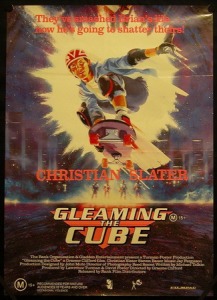 Brian Kelly (Christian Slater) is a California skater with a rebellious attitude and an adopted Vietnamese brother named Vinh (Art Chudabala). When the movie starts, all Brian cares about is not selling out and finding empty pools to skate. He even hires an airplane to fly him and his friends over Orange County so they can get a bird’s-eye view of the layout. Vinh is more worried about his job with the Vietnamese Anti-Community Relief Fund. The fund has been set up to send medical supplies to Vietnam but, when Vinh comes across a discrepancy in the shipping records, he realizes that something else is going on. When Vinh turns up dead in a hotel room, everyone else may believe that it is suicide but Brian knows that his brother was murdered. With the help of his fellow skaters and a sympathetic cop (Steven Bauer), Brian sets out to bring his brother’s killers to justice.


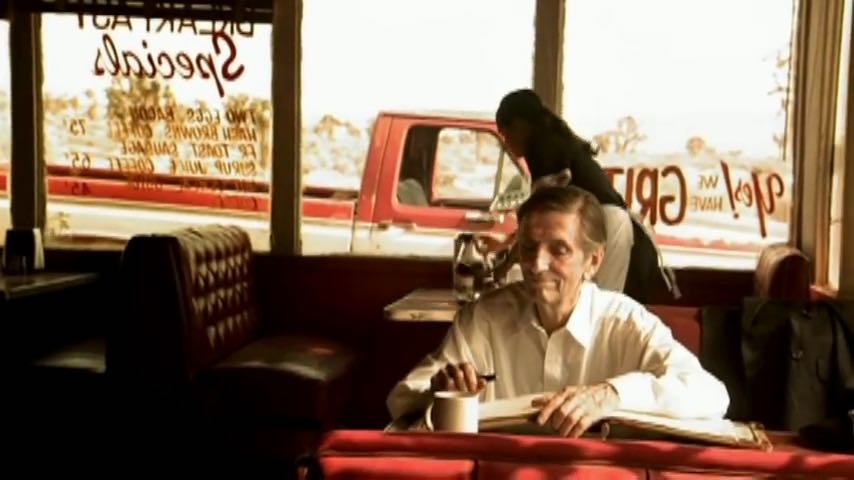


 Cory Webster (a young Josh Brolin, who looks identical to older Josh Brolin) is an amateur skateboarder from the Valley who hopes to win a downhill competition and score some sweet corporate sponsorship. Chrissy (Pamela Gidley) is an innocent blonde from Indiana who is staying with her brother in Venice Beach. Cory and Chrissy are in love but there is only one problem. Chrissy’s brother is Tommy Hook (Robert Rusler), leader of The Daggers, a punk skateboard gang. There’s no way Hook is going to let his sister go out with someone from the Valley.
 Tom Selleck is Phil Blackwood, a best-selling mystery author who is suffering from writer’s block. Paulina Porizkova in Nina, a beautiful Romanian who has been accused of murder. When Phil sees Nina being arraigned in court, it is love at first sight. He provides her with a false alibi and invites her to stay with him while he writes a book based on her case. At first, Phil thinks that she is innocent but he soon has his doubts, especially after Nina shows off her skills as a knife thrower.
 Through the Shattered Lens