Cleaning Out The DVR #36: Toni Braxton: Unbreak My Heart (dir by Vondie Curtis-Hall)


(For those following at home, Lisa is attempting to clean out her DVR by watching and reviewing 38 films by the end of today!!!!!  Will she make it?  Keep following the site to find out!)

tb

It’s becoming a new annual tradition.  Every January, Lifetime airs a biopic about a singer.  As I watched Toni Braxton: Unbreak My Heart, I found myself thinking about what makes a good biopic.  Unfortunately, good lives rarely make good biopics.  After all, we watch biopics for the drama behind-the-scenes.  When someone has lived a successful life and has basically lived her life with intelligence and integrity, it makes them a role model.  But it doesn’t necessarily make them into a fascinating subject for a movie.

Now, I have to admit that, before watching this movie, I didn’t know much about Toni Braxton.  My musical taste tends to run from EDM to more EDM.  I had heard the name Toni Braxton, of course.  I knew that there was a reality show called Braxton Family Values, though I’ve never seen an episode.  But I didn’t know much about her or her life.

So, as I watched, I kept waiting for the inevitable moment when Toni Braxton would first be pressured into trying cocaine or when she would end up in an abusive marriage or when she would eventually end up going through a Hellish rehab experience.  But none of that happened, largely because Toni Braxton appears to have been pretty intelligent when it came to making her life decisions.

Oh, there’s certainly some drama.  She had some financial difficulties early on her career.  Some members of her family get jealous of her success but not so jealous that they can’t be totally supportive.  She gets married but the marriage ends — not because of infidelity or abuse but just because sometimes marriages end.  And really, Lifetime should be commended for the way it handled the end of Braxton’s marriage because sometimes, marriages just don’t work out and it’s not anyone’s fault.  Finally, Toni discovers the she has Lupus.  Lupus is a serious disease and both Toni and the movie deserve full credit for educating the public.

In the end, Toni Braxton: Unbreak My Heart is a well-made and perfectly pleasant film but it’s not particularly memorable  Lex Scott Davis does a good as Toni and the film provides good roles for a lot of talented African-American performers.  But, as a movie, Toni Braxton: Unbreak My Heart never quite reaches the memorable heights of last year’s Whitney.

Cleaning Out The DVR #35: Stage Door (dir by Gregory La Cava)


(For those following at home, Lisa is attempting to clean out her DVR by watching and reviewing 38 films by the end of today!!!!!  Will she make it?  Keep following the site to find out!)

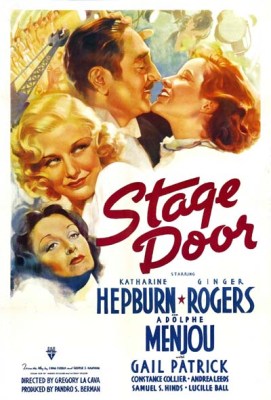
Stage_Door_(1937)

The 1937 film Stage Door is a great example of a unique genre of American film, the Katharine Hepburn Gets Humbled genre.

In the 1930s, Katharine Hepburn went through a period of time where she was considered to be “box office poison.”  She was undeniably talented but it was obvious that the studios weren’t sure how to showcase that talent.  They put her in high-brow films that often did not have much appeal to audiences.  As well, the press hated her.  Katharine Hepburn was outspoken, she was confident, she was a nonconformist, and, too many, her refusal to do interviews and sign autographs marked her as a snob.  Very few people wanted to see a movie starring Katharine Hepburn and therefore, very few people were willing to make a movie starring Katharine Hepburn.

(Interestingly enough, as I sit here typing this, another KH — Katharine Heigl — is pretty much in the exact same situation, with the main difference being that Hepburn was a far more interesting actress.)

Fortunately, Katharine Hepburn was smart enough to recognize the problem and she started to appear in films like Stage Door.  In Stage Door, she essentially played a character who mirrored the public’s perception of her.  Terry Randall is a snobbish and pretentious aspiring actress who comes to New York to pursue her career and moves into a theatrical rooming house.  At first, her attitude makes her unpopular with the other actresses living in the house.  But, as the film progresses, Terry slowly starts to let down her defenses and reveals that she’s just as insecure, neurotic, and vulnerable as everyone else.  She also proves herself to be willing to stand up to manipulative producers and condescending directors.  When she’s cast in her first Broadway show, it turns out that the show is being financed by her father and his hope is that she’ll do such a bad job and be so humiliated that she’ll give up acting.  And, at first, it appears that Terry will be terrible.  During rehearsals, she is stiff and mannered.  (Hepburn was actually quite brave to portray Terry as being such a believably bad actress.)

Of course, Terry isn’t the only actress at the rooming house who has issues to deal with.  For instance, Judy Canfield (Lucille Ball) has to choose between pursuing her career or getting married and starting a family.  Kay (Andrea Leeds) is a once successful actress who is now struggling to find roles, can’t pay her bills, and has become suicidal as a result.  And then there’s Jean (Ginger Rogers), Terry’s cynical roommate and frequent enemy and occasional friend.  Jean is falling in love with Anthony Powell (Adolphe Menjou), the lecherous producer of Terry’s play.

Stage Door is a wonderfully entertaining mix of melodrama and comedy.  You’ll laugh, you’ll cry, and you’ll really find yourself hoping that all of the actresses at the rooming house will have their dreams come true.  While the film is dominated by Hepburn and Rogers, it truly is an ensemble piece.  Not only does the cast include Eve Arden, Lucille Ball and Andrea Leeds (giving the film’s best and most poignant performance) but the great dancer Ann Miller appears as Jean’s equally cynical best friend.  Stage Door may be 79 years old but it’s aged wonderfully.

At the box office, Stage Door was a modest success and it directly led to Hepburn being cast in the classic screwball comedy, Bringing Up Baby.  Stage Door was nominated for best picture but it lost to The Life of Emile Zola.

Cleaning Out The DVR #34: The Story of Louis Pasteur (dir by William Dieterle)


(For those following at home, Lisa is attempting to clean out her DVR by watching and reviewing 38 films by the end of today!!!!!  Will she make it?  Keep following the site to find out!)

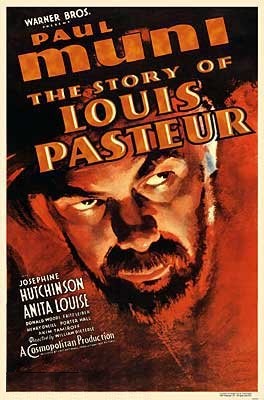
The_Story_of_Louis_Pasteur_poster

OH MY GOD, LOUIS PASTEUR WAS THE DEVIL!

Okay, maybe not but that’s certainly the impression that you might get from looking at the one sheet for the 1936 film, The Story of Louis Pasteur.  Seriously, Louis looks quite sinister!

As the movie starts, that’s certainly the view of the 19th century French medical establishment.  A doctor has been murdered by a grieving husband and it’s believed that the murder was inspired by one of Pasteur’s incendiary flyers.  What does the flyer demand?  That doctors should wash their hands and sterilize their instruments before operating.

That’s right!  Washing your hands before plunging them into a human body was once considered to be a controversial notion.  Pasteur is put on trial, accused of inciting violence with his quackery.  Even though Pasteur is acquitted, he finds himself a pariah.  The autocratic and close-minded Dr. Charbonnet (Fritz Leiber) declares Pasteur to be guilty of great quackery and even the ducks are offended.  That’s how hated Pasteur has become.

But, of course, we the audience know that Pasteur is not a quack.  Not only do we know that he is responsible for discovering the process of pasteurization but he’s also apparently important enough to have his own 1930s Warner Bros. biopic.  And he’s played by Paul Muni, who made a career out of playing great men in 1930s biopics.

The film follows Pasteur as he discovers cures for anthrax and rabies.  Along the way, he yells at a lot of people and he gives a lot of speeches.  This film might as well have been called The Paul Muni Show and … well, his performance is okay.  It’s not great.  If you’ve seen the very first version of Scarface, you know that Paul Muni was capable of giving a far better performance than he gives here.  But then again, as written, all Louis does is bellow against everyone who disagrees with him.  (And cure rabies, we shouldn’t overlook that.)

The Story of Louis Pasteur is one of those old-fashioned biopics that feels a bit creaky and stiff today.  As I watched it, I kept thinking that it felt like something you might across on PBS at three in the morning.  However, 1936 audiences disagreed with me.  The Story of Louis Pasteur did quite well at the box office and was nominated for best picture, though it lost to another biopic, The Great Ziegfeld.

Cleaning Out The DVR #33: Heaven Can Wait (dir by Ernst Lubitsch)


(For those following at home, Lisa is attempting to clean out her DVR by watching and reviewing 38 films by the end of today!!!!!  Will she make it?  Keep following the site to find out!)

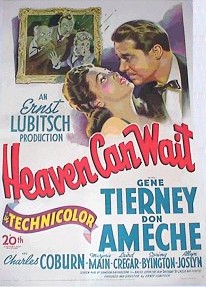
Heavencwaitposter

The 1943 film Heaven Can Wait opens with a 70 year-old man named Henry Van Cleve (Don Ameche) stepping into an opulent drawing room and having a conversation with a refined but menacing man known as His Excellency (Laird Cregar).  From their conversation, it quickly becomes obvious that Henry has recently died and His Excellency is in charge of Hell.  Most people who come to see His Excellency do so because they want to argue that they do not belong in Hell and they usually end up falling through a convenient trap door.  However, Henry is there to argue that, after living an enjoyable but dissolute life, he belongs in Hell.

Henry tells the story of his life.  He tells how he was born into great wealth and influenced by his down-to-Earth grandfather (Charles Coburn).  As a young man, he spent most of his time chasing after showgirls bur eventually, he met the beautiful and kind-hearted Martha (Gene Tierney).  He immediately fell in love with Martha but, unfortunately for him, she was engaged to his cousin (Allyn Joslyn).  Henry, however, used his considerable charm to convince her to elope with him.

(It helps, of course, that Henry’s cousin was totally and completely obnoxious, in the way that rival suitors often are in films like this.)

And, for 25 years, Henry was happy with Martha.  It took him a while to settle down and, at one point, Martha even left him as a result of his affairs.  However, they always got back together and Henry eventually did settle down, even going so far as to prevent his son from running off with a showgirl of his own.  It was only after Martha herself died that Henry, who always felt he didn’t deserve her love, returned to his old ways.

And, Henry argues, it’s because he was unworthy of his wife that he deserves to spend an eternity in Hell.  Does His Excellency agree?

Well, it would certainly be a depressing movie if he did.

One of the great things about TCM’s 31 Days of Oscar is that it gave me a chance to discover several films from director Ernst Lubitsch, films like The Smiling Lieutenant, The Love Parade, Ninotchka, and Heaven Can Wait.  Of those four Lubitsch films, Heaven Can Wait is probably the least substantial but it’s still an undeniably entertaining and nicely romantic film.  This is one of those films that you watch because the sets look wonderful, the costumes are to die for, and the performers are all pleasant to watch.  It’s pure entertainment, a crowd-pleaser in the best sense of the word.

In fact, tt was such a crowd-pleaser that it was nominated for best picture of the year.  However, it lost to the ultimate crowd-pleaser, Casablanca.

Cleaning Out The DVR #32: Ninotchka (dir by Ernst Lubitsch)


(For those following at home, Lisa is attempting to clean out her DVR by watching and reviewing 38 films by the end of today!!!!!  Will she make it?  Keep following the site to find out!)

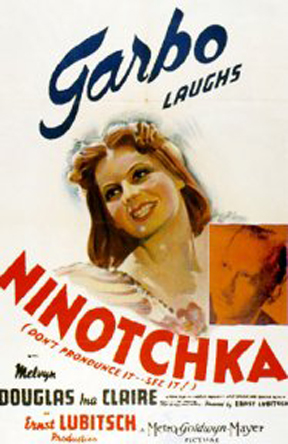
Film_ninotchka

Oh my God, I love this movie!

First released in 1939, Ninotchka is many things.  It’s a love story.  It’s a comedy.  It’s a story of international intrigue.  It’s a political satire.  It’s a celebration of freedom.  And, perhaps most importantly, it’s a showcase for one of the greatest actresses of all time, the one and only Greta Garbo!

But you know what?  As great as Garbo is, she’s not the only worthy performer in this film.  Melvyn Douglas plays Garbo’s love interest and his performance is full of charm and class.  And guess who plays the main villain?  BELA LUGOSI!  That’s right — this was one of Lugosi’s few roles that did not require him to play a variation on his famous Dracula.  And, even if he doesn’t have a lot of scenes, Lugosi does a pretty good job in Ninotchka.  It’s interesting to see Lugosi playing an all-too real monster for once.

Ninotchka opens in Paris.  Three Russians are in town and they’re trying to sell some jewelry that was confiscated by the government during the revolution of 1917.  That’s right — they’re communists!  When they first show up in Paris, they make a big deal about hating the decadence of capitalism.  But then they meet Count Leon d’Algout (Melvyn Douglas), who proceeds to introduce them to the wonders of the free market.  Soon, the three of them are holed up in their luxurious hotel, ordering room service and having a nonstop party.

(Leon, incidentally, is working for the original owner of the jewelry.  The jewelry, as you’ve probably guessed, is what Hitchock would have called a macguffin.)

Once it becomes obvious that the first three Russians have been corrupted by western society, Ninotchka (Greta Garbo) is sent to bring them back to Moscow.  Ninotchka is a “special envoy” and, from the minute that she meets Leon, it’s obvious that she’s going to be a lot more difficult to corrupt.  For all of Leon’s charm, he cannot get Ninotchka to smile or drop her “all Marxist business” attitude.

Of course. from the minute that she first appears, we all know that Ninotchka is eventually going to loosen up and come to love both the west and Melvyn Douglas.  But what makes Garbo’s performance truly special is that we like and sympathize with Ninotchka even before she embraces decadence.  Even when Ninotchka is reciting Marxist-Leninist dogma, there’s a playfulness to the way Garbo delivers the lines.

That’s one reason why it’s so much fun to watch as Ninotchka (and Garbo) starts to actually relax and enjoy both Paris and life.  Wisely, the film doesn’t suggest that Paris has changed Ninotchka.  Instead, it merely shows that being in Paris and getting to know Leon has finally allowed her to act like the person that she was all along.

(Before her appearance in Ninotchka, Garbo was known for playing very dramatic roles.  Not only is this film about Ninotchka learning to enjoy herself.  It’s also about Garbo proving that she could play comedy just as well as she could play melodrama.)

Of course, eventually, Ninotchka and the three Russians are forced to return to Moscow and director Ernst Lubitsch does a wonderful job contrasting the glamour of freedom-loving Paris with the drabness of life under communism.  Just when it looks like Ninotchka is going to be forced to spend the rest of her life in her depressing apartment and missing the luxury of being able to wear silk stockings, her boss (Lugosi) tells her that she is being assigned somewhere else.  Ninotchka doesn’t want the assignment but, as Lugosi explains, the revolution doesn’t care what the individual wants.

Will Ninotchka and her friends ever find their way back to freedom and Leon?  Or will she remain trapped in the bureaucracy?  You’ll have to watch the film to find out!

I really liked Ninotchka.  Even 77 years after it was first released, it remains a wonderfully romantic and sweet-natured little comedy.  If you haven’t seen it, you definitely should!

Ninotchka was one of the many great films to be nominated for best picture of 1939.  However, the Oscar went to another famously romantic film, Gone With The Wind.

I Should Have Watched Something Else, But I Sat Through Superdragon vs. Superman (1975, dir. Chia Chun Wu)


vlcsnap-2016-03-17-16h30m02s191

The movie is also called Bruce Lee Against Supermen. By that they mean Bruce Li Against 80 Minutes Of Your Life. I really should have been watching something else.
Right now a woman is riding a shark while wearing a bunny suit. (Zodiac Fighters, 1978)

Right now a woman is riding a shark while wearing a bunny suit. (Zodiac Fighters, 1978)

The movie begins with a car chase. Get used to that cause it will happen a lot. This time it’s a police car chasing a couple of criminals. The criminals see that the police are catching up. They are carrying a bag full of money, which they promptly toss out the window. A man and a woman find the money, but are surprised by Bruce Li dressed as Kato.
vlcsnap-2016-03-17-16h28m12s305

Why is he dressed like Kato? Who knows? Once a battle after the credits is done, he won’t do it again for the whole movie. There will be a mention of The Green Hornet who I’m pretty sure is two guys dressed like Supermen. Kato takes the couple to his car and drives them away to the police station.

Right now a dog taught to hate is heading towards a tragic end. (White Dog, 1982)

Right now a dog taught to hate is heading towards a tragic end. (White Dog, 1982)

Now the film cuts to the opening credits. There are flies all over them. I’m not sure why. Later we’ll see flies on the Superman uniforms of the Supermen who might be The Green Hornet in this movie.

After dropping the couple off at the police station we see Kato drive away. He doesn’t get far before he appears to have trouble with his tire. After getting out he is attacked from behind.
vlcsnap-2016-03-17-16h40m11s216

One thing immediately clear is that not only is Bruce Li not as good an actor as Bruce Lee, but not as good a fighter either. However, everyone else is worse than him in this movie.

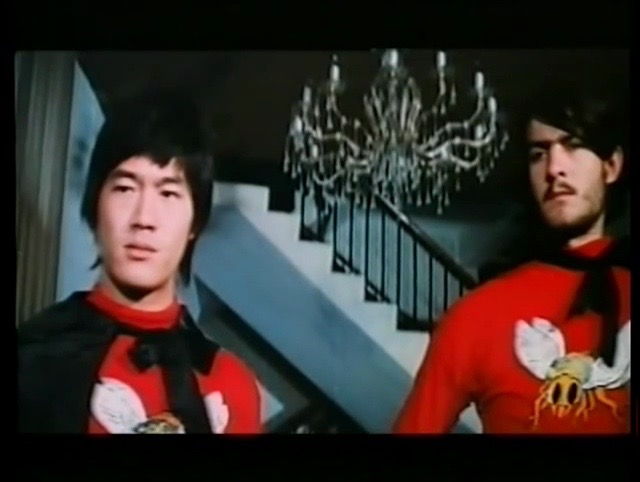
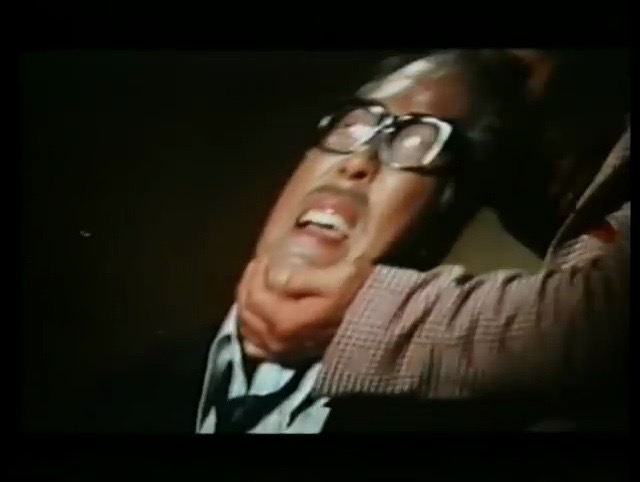
After Bruce Li dispatches with them, it cuts to one guy in a suit strangling another guy in a suit. The guy being strangled tells him The Green Hornet did it. That’s when it cuts to some newspapers to tell us that Dr. T has invented a way to refine food from petroleum by-products. He has been invited by the Arabs so he is going to travel to the middle east with his daughter. Then we get to see the Supermen who might be The Green Hornet.
vlcsnap-2016-03-17-16h43m23s258

They also have this glowing ball.

vlcsnap-2016-03-17-16h43m21s248

Sadly Burt Reynolds doesn’t talk to them through it. Instead, it flashes, and a printer spits out something we can’t read. If you watch this movie, then I hope you enjoy this shot of the Supermen because you won’t see them again in uniform till the very end of the film.
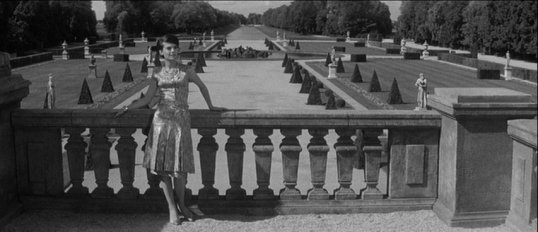
Right now a Russian Count may or may not be coming to the rescue. (The Marquise of O, 1976)

Right now a Russian Count may or may not be coming to the rescue. (The Marquise of O, 1976)

That’s when we cut to the bad guys talking to a guy who is willing to pay big bucks for the bad guys to get Dr. T’s formula. He is willing to pay a lot of money. Now we cut to the “Middle East”
vlcsnap-2016-03-17-16h46m31s674

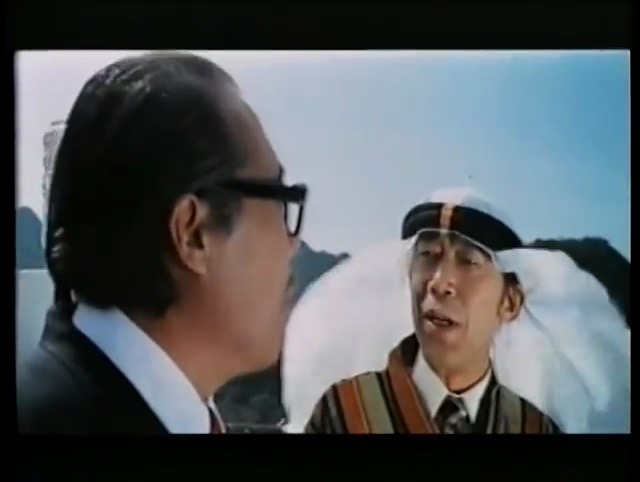
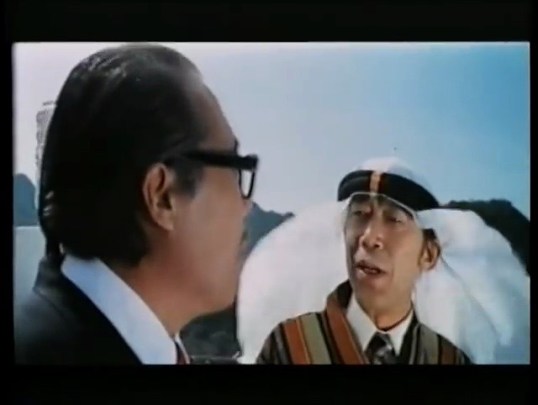
No joke. That’s supposed to be an Arab. That Chinese guy right there is supposed to be an Arab. You might be wondering what he sounds like. He sounds like a Chinese stereotype. I think he is trying to do a Middle Eastern accent, but it’s hard to tell. I seriously doubt they cared. Now the movie cuts to Will Our Heroes Be Able to Find Their Friend Who Has Mysteriously Disappeared in Africa? (1968) as they take Dr. T out to a dig site.
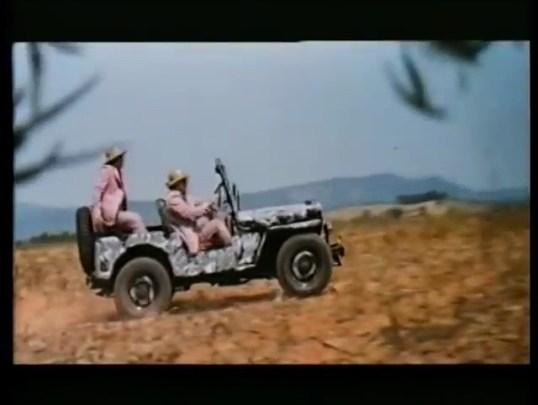
vlcsnap-2016-03-17-16h48m34s625

When they arrive at the site they hand the doctor some ore. He suddenly has an attack, but is okay once his daughter gives him some medication. Then he takes a good long look at the ore. We get nice closeups of the ore. We get a zoom shot on her dropping a liquid on the ore. We get a zoom shot on the doctor looking through a magnifying glass at the ore. Once that padding of the movie is done, the daughter decides to go swimming.
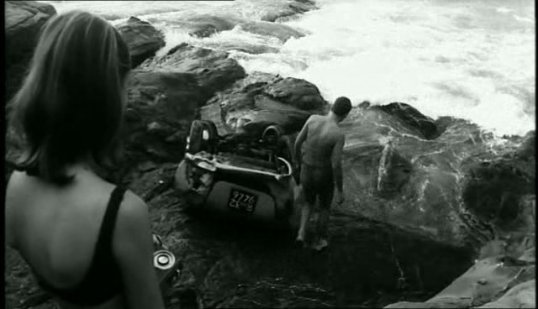
Right now a playboy is realizing he killed someone. (Il Sorpasso, 1962)

Right now a playboy is realizing he killed someone. (Il Sorpasso, 1962)

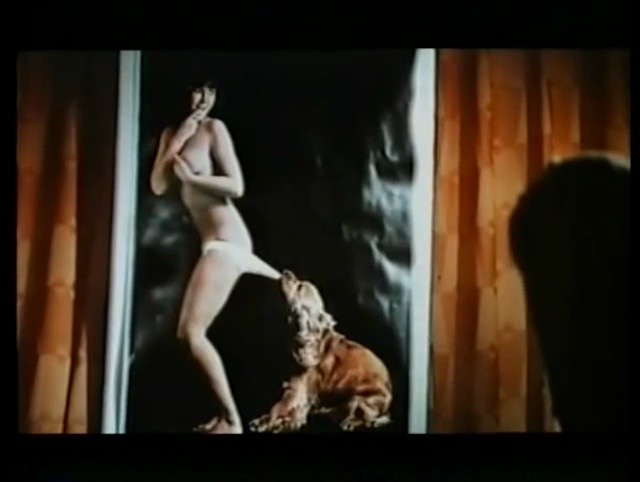
This is when the movie decides it’s time to show us the daughter swimming around naked. Oh, and we see the bad guys spying on her, but it’s really just so we can see her naked. Will they actually say anything? Nope. She just gets dressed, then cut to an airplane landing.

Now we watch a man cross the street for a minute or so before hailing a cab to pad the movie out some more. Then we cut to fighting.
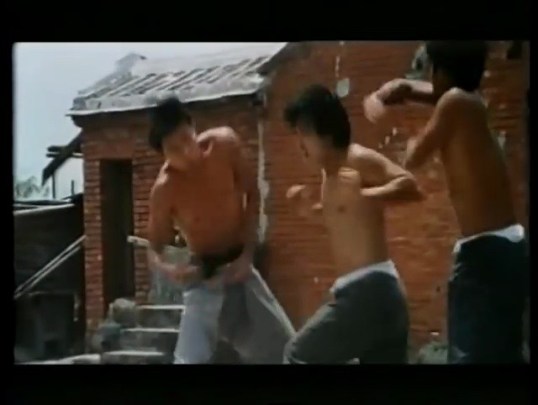
vlcsnap-2016-03-17-16h56m00s779

We don’t know what they are fighting about at first, but who cares! They’ve got 80 minutes of your life to take away so some of it might as well be mildly entertaining. It turns out they were just practicing. We find out…
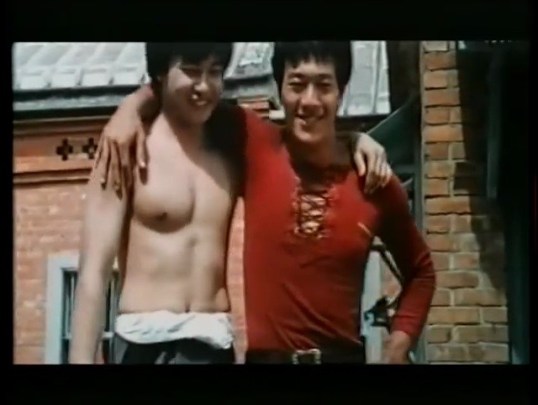
vlcsnap-2016-03-17-16h57m32s417

this guy in red needs help protecting Dr. T and his daughter. I’m quite sure it’s Bruce Li, but I’m not sure if he was one of the Supermen at the beginning or not. Doesn’t matter because in the next scene Dr. T is getting kidnapped and shoved in a car. In a car that’s passing, the two guys above spot the car and give chase. A long slow car chase.
vlcsnap-2011-09-04-00h27m04s45

Right now a pen tester is going through somebody’s trash. (Sneakers, 1992)

Back in the movie the car chase is still happening with a needlessly crazy angle…
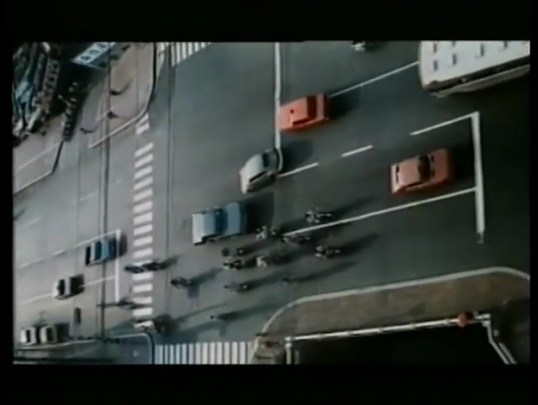
vlcsnap-2016-03-17-16h59m22s256

that doesn’t add anything to the film.
Right now a boxer is finding out that winning the fight doesn't keep him from the fate he didn't know was coming. (The Set-Up, 1949)

Right now a boxer is finding out that winning the fight doesn’t keep him from his fate he didn’t know was coming. (The Set-Up, 1949)

After a four minute slow speed car chase our two heroes pretend to be lying on the road to stop the kidnappers. They take them by surprise and a fight breaks out.
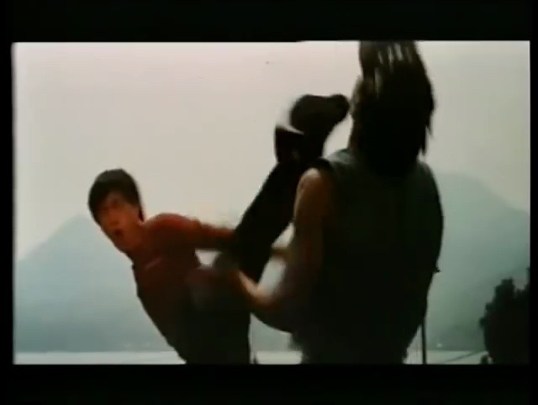
vlcsnap-2016-03-17-17h16m12s901

I call that kick, the Dolemite. That’s where you just place your foot near their face and they pretend to get hit.
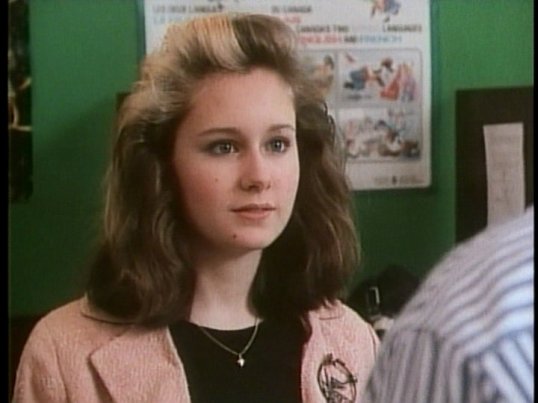
Right now you're looking at Degrassi long before Netflix got ahold of it.

Right now you’re looking at Degrassi long before Netflix got ahold of it.

After three minutes of fighting we cut to this guy…
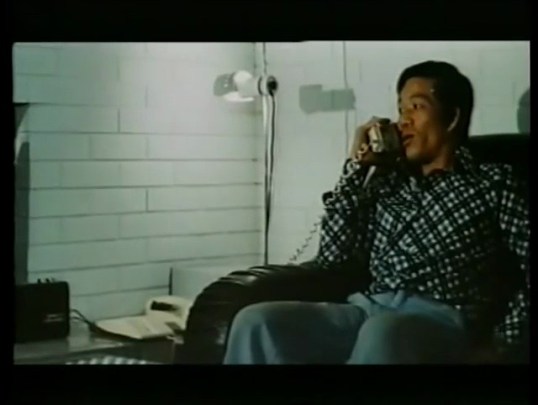
vlcsnap-2016-03-17-17h19m55s572

who is ordering a sniper. Then we cut to who I assume is Bruce Li and Dr. T’s daughter walking around.
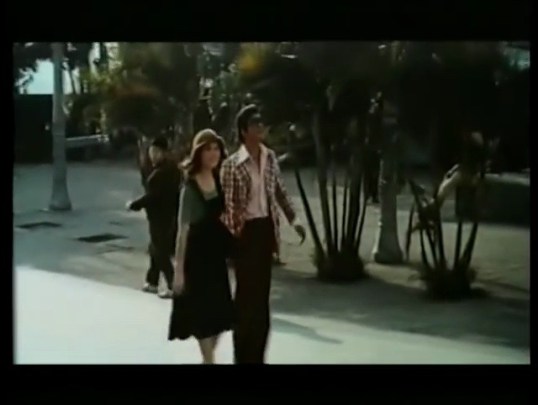
vlcsnap-2016-03-17-17h20m41s206

Then they walk around some more.

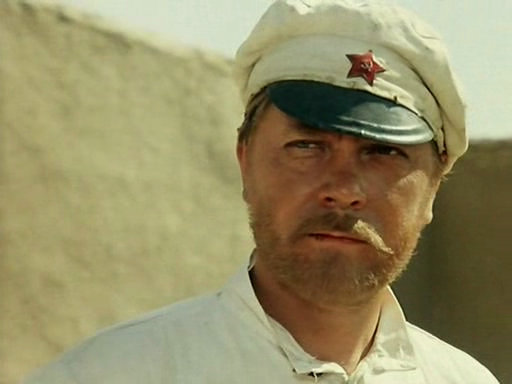
Right now you're looking at an Eastern you should see. (White Sun of the Desert, 1970)

Right now you’re looking at an Eastern you should see. (White Sun of the Desert, 1970)

After three minutes of walking around we cut to a shot of a building. For reasons that I don’t know, a guy who I assume is still Bruce Li walks up to a little girl and somebody takes a shot at him. He grabs the little girl and they hide behind a pillar. She is carrying a little wind up toy. Bruce winds it up and places it on the street. He leaves the girl to make a run for the building.

vlcsnap-2016-03-17-17h25m09s059

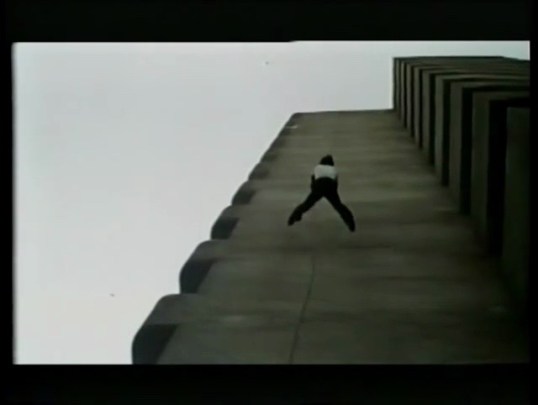
He runs to the top of the building where the shot came from. Then he throws a rope over the edge of the building and rappels down the side of it to pad the movie out some more.
vlcsnap-2016-03-17-17h26m46s838

Then he gives chase.

vlcsnap-2010-07-05-15h22m13s199

Right now this woman is in the middle of having explained to her what happened last year. (Last Year at Marienbad, 1961)

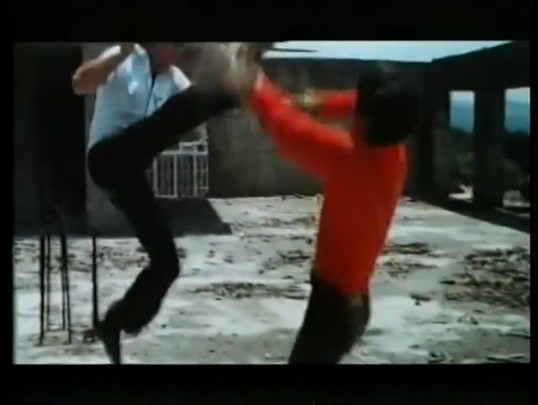
After seven and a half minutes of him chasing him, the two fight.
vlcsnap-2016-03-17-17h59m49s658

It cuts to this shot during the fight.

vlcsnap-2016-03-17-18h01m46s334

After leaving the audience wondering Where’s Waldo? it then cuts back to the two of them on the top of the building where the bad guy falls to his death.

Back to the phone guy, and we learn that “The Green Hornet” is a real problem for him. But after listening to the unseen person on the other end, he says he’ll just get Superman. Maybe that’s this next guy who now does his part to pad this movie out more.

vlcsnap-2016-03-17-18h04m07s082

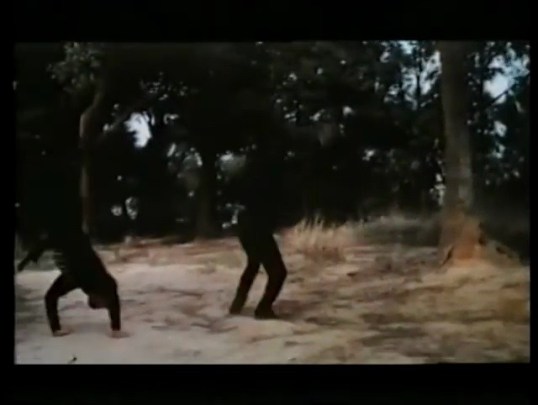
After he spends a minute of doing his martial arts/calligraphy routine, we cut to ninjas flipping.
vlcsnap-2016-03-17-18h04m53s424

No really, random ninjas inserted that flip around for 10 seconds. Maybe Godfrey Ho did this part of the movie.
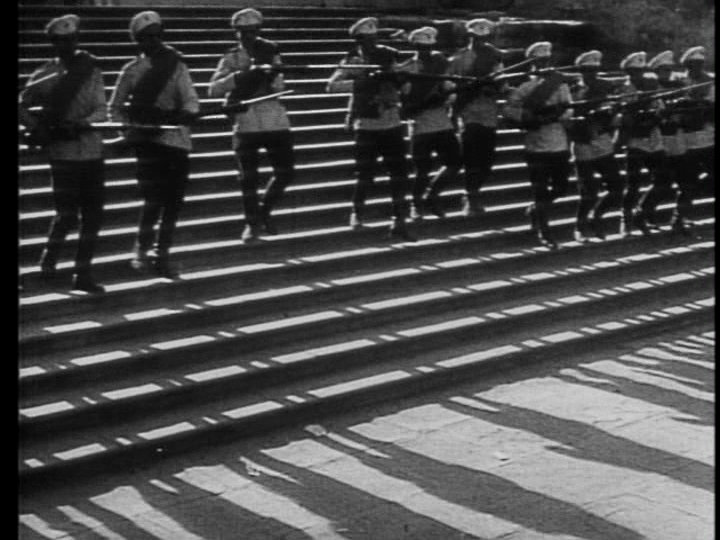
Right now you're looking at a very famous scene of a historical event that didn't take place where the film says. (Battleship Potemkin, 1925)

Right now you’re looking at a very famous scene of a historical event that didn’t take place where the film says. (Battleship Potemkin, 1925)

Now a guy and a girl speak in Adam and Eve talk before padding the movie out with sex.

vlcsnap-2016-03-17-18h06m44s222

We cut to the doctor getting kidnapped again before cutting back to sex. Now the doctor’s daughter runs on the street, bumps into a guy, and he takes her to the sex scene. Then we see more sex to pad the film out some more. Daughter bursts in and immediately starts a cat fight with the girl. After one tries to hold the other’s head under a running shower, we cut to this.
vlcsnap-2016-03-17-18h11m06s173

While they have to wait for “Green Hornet”, the doctor is getting tortured by bad camera effects.
vlcsnap-2016-03-17-18h13m49s917

Planet of Dinosaurs (1977)

Planet of Dinosaurs (1977)

Right now that’s how I feel about the rest of this review. Let’s cut through this: chase, fight, pointless hostage scene, fight, chase, fight, pointless hostage scene, fight, fight, fight, chase, and movie!

vlcsnap-2016-03-17-19h41m17s959

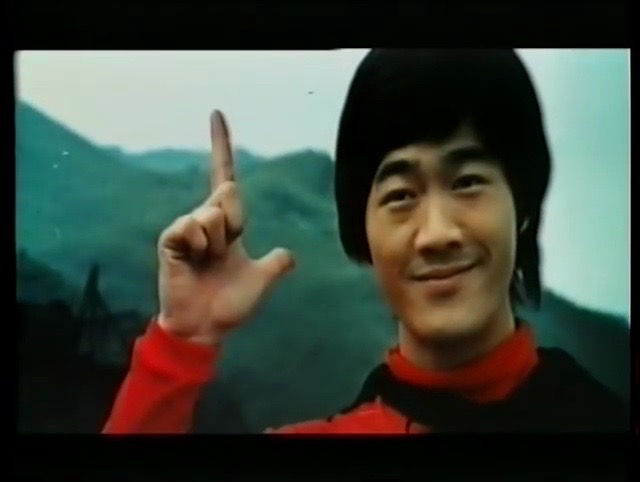
Make that the middle finger, and you have what I felt the film was trying to tell me. You didn’t miss anything. It’s all padding. The chase scenes go on forever, the fighting is boring, and the plot is almost non-existent. Please go watch the other movies and TV Shows I mentioned rather than subjecting yourself to this. Well, that is except for the one just below this text. That documentary was awful.
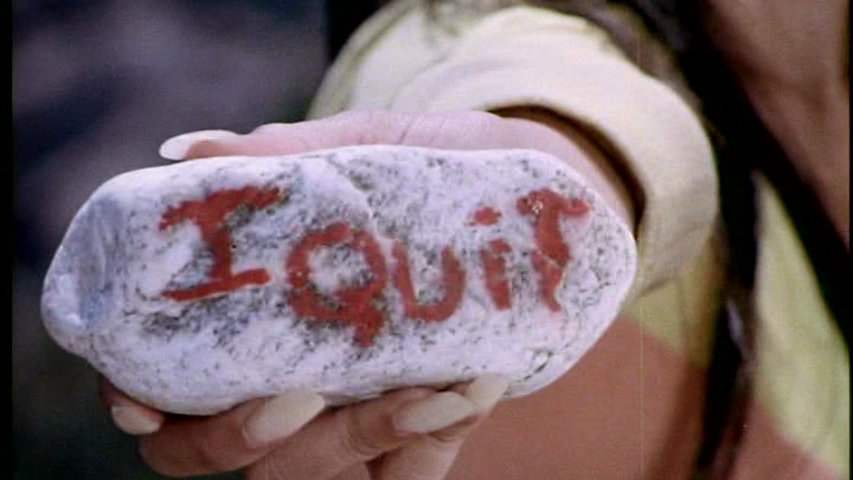
Right now another bad movie is getting made because of what this title card says. (I Love Dollars, 1986)

Right now another bad movie is getting made because of what this title card says. (I Love Dollars, 1986)
Cleaning Out The DVR #31: Libeled Lady (dir by Jack Conway)

(For those following at home, Lisa is attempting to clean out her DVR by watching and reviewing 38 films by the end of this Friday.  Will she make it?  Keep following the site to find out!)

In the 1936 comedy Libeled Lady, tabloid newspaper editor Warren Haggerty (Spencer Tracy) has a problem.  His newspaper has just published a story accusing wealthy heiress Connie Allenbury (Myrna Loy) of being the other woman in a scandalous divorce.  The problem is that Connie was not the “other woman” and she is now suing the newspaper for $5,000,000.

“5 million dollars!” an astonished Warren declares, “nobody has that type of money!”

(It was 1936, after all.)

However, Warren has a plan and, since this is a screwball comedy, it’s an unneccesarily complicated plan.  He hires a former reporter, the suave Bill Chandler (William Powell, the suavest man alive in the 30s) to meet with Connie.  Warren believes that there’s no way that Connie won’t fall in love with Bill.  (Perhaps Warren had recently seen The Thin Man…)  Once Connie does fall in love, Warren will arrange for Bill’s wife to catch the two of them together.  In order to avoid the scandal, Connie will drop the suit.

The problem is that Bill isn’t married.  However, Warren has a solution for that as well.  Warren arranges for Bill to marry Warren’s fiancée, Gladys (Jean Harlow).  Gladys is not happy about the arrangement but goes along with it because, despite his behavior, she truly loves Warren and Warren promises her that the marriage will only last for 6 weeks.

(When the minister says that he hopes he’ll be invited to the new couple’s silver anniversary, Gladys replies, “It better be in six weeks.”)

And, at first, things go as planned.  Bill meets Connie on a luxury cruise and she quickly falls in love with him.  However, Bill finds himself falling in love with her too.  Soon, he no longer wants to frame her.  However, that’s not the only complication.  Finally fed up with Warren’s behavior, Gladys has started to think that maybe it would be better to be married to Bill.  Soon, she decides that she has no intention of getting a divorce…

Libeled Lady is a minor but enjoyable screwball comedy.  The plot is thoroughly implausible but, fortunately, William Powell was one of those actors who could get you to believe almost anything.  As anyone who has seen any of the Thin Man films can tell you, Powell and Myrna Loy had great chemistry together.  Spencer Tracy seems a little uncomfortable with the role of Warren but Jean Harlow is a lot of fun as Gladys.  She doesn’t have a big role but, at the same time, you can still understand why she was such a huge star and why her tragic death a year later was such a shock.

(At the time the movie was made, Harlow was dating William Powell.  She wanted to play Connie but MGM was determined to repeat the formula of previous William Powell/Myrna Loy comedies and Harlow settled for the secondary role of Gladys.)

As enjoyable as the film is, it still does seem a bit strange that it was nominated for best picture.  It lost the Oscar to The Great Ziegfeld, another MGM film that starred William Powell and Myrna Loy.

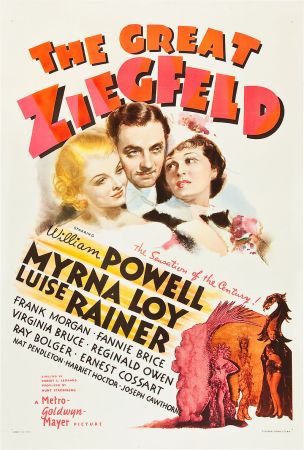
Cleaning Out The DVR #30: The Great Ziegfeld (dir by Robert Z. Leonard)


(For those following at home, Lisa is attempting to clean out her DVR by watching and reviewing 38 films by the end of this Friday.  Will she make it?  Keep following the site to find out!)

Great-Ziegfeld-1936-Poster

Do you know who Florence Ziegfeld was?

Don’t feel bad if you don’t because, until I saw the 1936 film The Great Ziegfeld, I had no idea and history is my number one obsession.  Florence Ziegfeld was a theatrical producer who, in the early days of the 20th Century, produced huge spectacles.  He was a showman who understood the importance of celebrity and gossip.  He produced a show called The Ziegfeld Follies, which was considered quite risqué at the time but which looks remarkably tame today.  Florence Ziegfeld was so famous that he even got his own Oscar-winning biopic.

The Great Ziegfeld features the always smooth William Powell as Ziegfeld.  When we first meet him, he’s promoting a strongman and a belly dancer and nobody takes him seriously.  But through hard work, good luck, and his own instinct for showmanship, he becomes famous and his shows gets bigger and bigger.  The film follows Ziegfeld as he gets married, both times to someone he is grooming to be a star.  His first wife is Anna (Luise Rainer), who loves him but divorces him when it becomes obvious that Ziegfeld’s life will always revolve around his work.  His second wife is Billie Burke and we know that she is Ziegfeld’s true love because she’s played by Myrna Loy.  Whenever you see William Powell and Myrna Loy in the same film, you know that they belong together.

The majority of The Great Ziegfeld is taken up with recreations of Ziegfeld’s stage shows.  In fact, the film almost feels more like a musical variety show than a real biopic.  (Judging from the credits, quite a few of Ziegfeld’s stars played themselves and recreated their acts on the big screen.)  I can understand why this was attractive to audiences in the 1930s.  With no end in sight to The Great Depression and Ziegfeld himself recently deceased, this movie was their only opportunity to see one of his spectacles.  The film made sure that they got their money’s worth.

However, for modern audiences, all of the acts just add to what is already an oppressive running time.  My main impression of The Great Ziegfeld was that it was really, really long.  The movie itself is well-produced and William Powell and Myrna Loy are always fun to watch but the movie just goes on and on.  As well, this biopic is so worshipful of Ziegfeld — the title is meant to be taken literally — that, as a result, he comes across as being one-dimensional.  I did appreciate the film as a historical artifact but otherwise, it didn’t do much for me.

However, it did something for the Academy.  The Great Ziegfeld was named the best picture of 1936!  Luise Rainer won best actress despite only being on-screen for a handful of scenes.  So many people were critical of Rainer’s award that, the very next year, the Academy introduced the award for best supporting actress.

As for why Ziegfeld won that Oscar — well, if you look at its competition and some of the other 1936 films that received nominations, you’re struck by the lack of truly memorable films.  It would appear that, in a weak year, the Academy decided to give the award to the biggest production they could find.

And that was The Great Ziegfeld.

(Incidentally, if Flo Ziegfeld were alive today, he would probably be a reality TV producer.)

Cleaning Out The DVR #29: Broadcast News (dir by James L. Brooks)


(For those following at home, Lisa is attempting to clean out her DVR by watching and reviewing 38 films by the end of this Friday.  Will she make it?  Keep following the site to find out!)

220px-Broadcast_News

I’ll give you three chances to guess what the 1987 film Broadcast News is about.

Broadcast News takes place at the Washington bureau of a major network news operation.  (You can tell this film was made in the 80s in that nobody’s working for a blog and there’s no mention of Fox, MSNBC, or CNN.)  This is where a group of hard-working men and women do their best to make the national news anchor, Bill Rorish, look good.

Bill Rorish is played by Jack Nicholson and, even though he only has about five minutes of screen time (out of a 133 minute movie), he pretty much dominates the entire film.  Some of that is because he’s Jack Nicholson and he kicks ass.  All Jack has to do to dominate a scene is show up and arch an eyebrow.  But, beyond that, everyone in the movie is obsessed with impressing Bill Rorish.  Whenever a reporter and his producer get a story on the air, they obsessively watch to see if Bill smiles afterward.  Bill Rorish is the God they all hope to please and the film (as well as Nicholson’s performance) suggests that he barely even knows that they’re alive.  It’s telling that the only time Bill shows up in person (as opposed to appearing on a TV screen), it’s because a huge number of people at the Washington bureau are being laid off.

When Bill says that it’s a shame that budget cuts are leading to so many good newspeople being laid off, someone suggests that maybe Bill could help by taking a cut in his million-dollar salary.  Needless to say, Bill Rorish is not amused.

Broadcast News centers on three of the characters who work at the Washington Bureau.  First off, there’s Jane Craig (Holly Hunter), a producer.  Jane is a true believer in the mission and the importance of journalism.  Her ethics and her belief in what constitutes proper journalism are everything to her and, at times, she can get more than a little self-righteous about it.  (If Broadcast News were made today, Jane would spend the entire movie whining about how new media is destroying the country.)  At the same time, Jane is completely neurotic, a self-described “basket case” who, at one point, ends up sobbing in a hotel room as she prepares to go to sleep by herself.

Jane’s best friend is Aaron Altman (Albert Brooks), a reporter who wants to someday be an anchor.  Aaron is smart and funny (and he better be, seeing as how he’s being played by Albert Brooks) but he’s not telegenic and he’s almost as neurotic as Jane.  Like Jane, Aaron is all about journalistic ethics but there’s a defensiveness to Aaron.  Whenever Aaron complains about vapid news anchors, it’s obvious that he’s more jealous than outraged.

And then there’s Tom Grunick (William Hurt), who represents everything that Jane and Aaron claim to be against.  He’s handsome, he’s smooth, he’s charismatic, and he’s definitely not an intellectual.  He knows little about the specifics of current events.  However, he has great instincts.  He knows how to sell a story and he knows how to present himself on camera.  He’s also a surprisingly nice and sincere guy, which makes it all the more difficult for Aaron to justify his belief that “Tom is the devil.”

From the minute that Tom arrives at the Washington bureau, there’s a strong attraction between Tom and Jane.  (Jane even sends another reporter to Alaska after she finds out that Tom slept with her.)  Tom wants to be a better reporter.  Jane wants to be happy but fears compromising her ethics.  And Aaron … well, Aaron wants Jane.

Not surprisingly, considering that the film was made 29 years ago, there were some parts of Broadcast News that felt extremely dated.  A scene where Aaron complains about a story that Tom did on date rape feels especially uncomfortable when viewed today and both Jane and Aaron occasionally came across as being a bit too self-righteous.  In today’s media world, Tom’s sins really didn’t seem like that big of a deal.

But, for the most part, I enjoyed Broadcast News.  It was an intelligent film, one the featured people having actual conversations about actual ideas and, listening to them, I realized how rare, in both movies and real life, that actually is.  It’s a witty film, full of good performances.  While I hope I never become as self-righteous as Jane, I could still relate to her in her more neurotic moments.  And who wouldn’t want a best friend like Aaron?

And, for that matter, who wouldn’t want a lover like Tom?

(That’s something I never expected to write about a character played by William Hurt.)

And, of course, there’s this scene.  Poor Aaron!

Broadcast News was nominated for best picture of 1987.  However, it lost to The Last Emperor.