Insomnia File No. 6: Frogs For Snakes (dir by Amos Poe)


What’s an Insomnia File? You know how some times you just can’t get any sleep and, at about three in the morning, you’ll find yourself watching whatever you can find on cable? This feature is all about those insomnia-inspired discoveries!
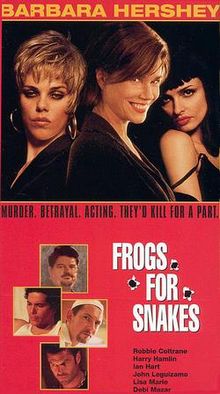
220px-Frogs_for_Snakes

If you were suffering from insomnia last night, at around two a.m., you could have turned over to Flix and watched the 1998 film Frogs For Snakes.

And if you were suffering from insomnia, watching Frogs For Snakes would probably have been a good idea because this film is amazingly dull.  In fact, I am not sure that I have the words to express to you just how tedious Frogs For Snakes truly was.  It may be necessary for me to go back to school and learn how to speak in a dead language in order for me to express the boredom that I felt while watching Frogs For Snakes.

And yes, I realize that I’m talking about an obscure film that was released nearly 20 years ago and it might seem kind of petty to, at this late date, make a big deal about how terrible this film was.

But seriously, Frogs For Snakes was really, really bad.  In fact, it was disturbing to think that a film this bad could have actually been made.  It was even more disturbing to consider that this film was apparently given a theatrical release and, all these years later, still pops up on cable so that it can proudly display its overwhelming mediocrity.

Now, I’m going to tell you what Frogs For Snakes is about and you’re going to think, “That actually sounds like it might be kind of interesting.”  Don’t be fooled!  The film may sound interesting but it’s not.

Frogs for Snakes takes place in a stylized, neo-noir version of New York City.  Eva Santana (Barbara Hershey) is an aging actress who claims to have quit the business, though it’s clear that it’s more a case of the business quitting her.  She talks about leaving New York and raising her son in a better environment.  However, until she gets around to leaving, she’s making ends meet by working as a waitress at a diner owned by the kind-hearted Quint (Ian Hart).  And, of course, when she’s not waitressing, she’s working as a debt collector for her ex-husband, a loan shark named Al Santana (Robbie Coltrane).

That’s right, this actress has a gun and she uses it frequently.  However, because Eva is good at heart, she rarely kills anyone.  Instead, she just shoots them in the foot and tells them to pay back their loans while they lay on the floor and scream in agony.  (All that agonized screaming got pretty old after a while.)

As for Al, he’s not just a loan shark.  He’s a theatrical impressario.  He’s planning on putting on a production of David Mamet’s American Buffalo.  He promises his driver a role in American Buffalo on the condition that the driver assassinate Eva’s new boyfriend (John Leguizamo, of course).

Soon, actors all over New York are literally killing to get a role in Al’s play.  Meanwhile, Eva just wants to retire and get out of New York but first, she has to do one last job for Al…

In between all the killing, the characters frequently launch into monologues that have been lifted from other films.  John Leguizamo does a Brando imitation.  Lisa Marie (Tim Burton’s ex, not yours truly) delivers the cuckoo clock speech from The Third Man.  A suggestion for aspiring filmmakers: if you’re going to make a bad film, don’t remind your audience that they could be watching The Third Man instead.

Anyway, the plot sounds interesting but none of the potentially intriguing ideas are explored.  I imagine that the film was meant to be a satire of Off-Broadway ruthlessness but ultimately, the film is just another tediously violent indie film from the 90s.  This is one of those movies where nobody can do anything without spending an excessive amount of time talking about it beforehand and, when things do turn violent, it’s the worst type of quirky, sadistic, drawn-out, “look how crazy we are” violence.

There’s a scene towards the end of the film where Al shoots a group of people in a bar.  This is intercut with clips from the Odessa Steps sequence from Battleship Potemkin.  As Al leave, he shoots the TV showing Battleship Potemkin and, I have to say, that really annoyed me.  Seriously, just as a bad filmmaker should not remind people that they could be watching The Third Man, he shouldn’t invite them to compare his film to Battleship Potemkin unless he’s willing to back up the comparison.  When Al shot the TV, I found myself hoping that Sergei Eisenstein would pop up and shoot him.

Frogs for Snakes is one of the worst films that I’ve ever seen.  It may, in fact, be the worst but I would need to rewatch Ted 2 before I said that for sure.  But, if you have insomnia, Frogs For Snakes will at least put you to sleep.

http://www.youtube.com/watch?v=xNAn0xuRTmE

Previous Insomnia Files:
  1. Story of Mankind
  2. Stag
  3. Love Is A Gun
  4. Nina Takes A Lover
  5. Black Ice


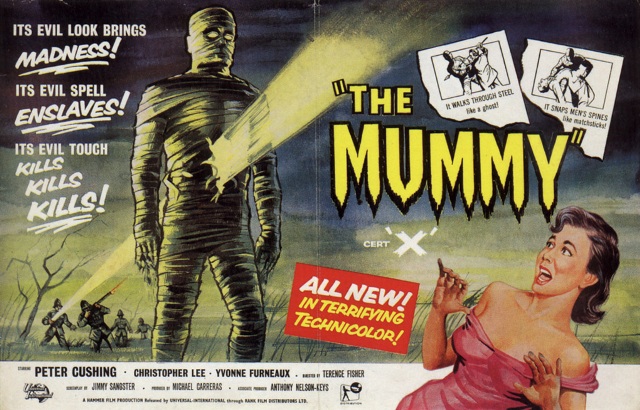
Gods of the Hammer Films 3: Peter Cushing, Christopher Lee, and THE MUMMY (1959)


gary loggins's avatarcracked rear viewer

the-mummy-hammer-horror-films-830835_640_410

(third ina series)

The gang’s all here in 1959’s THE MUMMY – Christopher Lee, Peter Cushing, director Terence Fisher, writer Jimmy Sangster – but the result is far different than CURSE OF FRANKENSTEIN and HORROR OF DRACULA. Based on Universal’s 40s Mummy series, not the 1932 Karloff classic, THE MUMMY is as slow moving as…well, as a mummy! Try as they may, the film suffers from budget constrictions and a poor script. Definitely not one of Hammer’s shining moments.

It’s 1895, and the Banning family (father Steve, son John, uncle Joe) are on an archeological expedition in Egypt when they stumble upon to tomb of Princess Ananka. Father finds the sacred Scroll of Life and, upon reading it, is driven mad by the sight of mummy Kharis (Christopher Lee) returning to life. Mehemet Bey (George Pastell), servant of the great god Karnak, vows vengeance on those who’ve dared to desecrate the…

View original post 409 more words

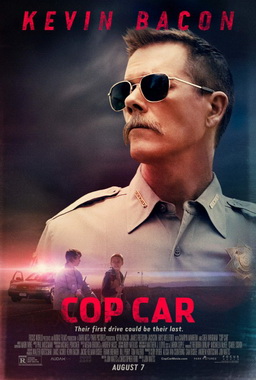
Film Review: Cop Car (dir by Jon Watts)


Cop_Car_poster

Cop Car opens with two young boys, Travis (James Freedson-Jackson) and Harrison (Hays Wellford) walking through a field.  Over the course of the film, we really don’t learn that much about either Travis or Harrison.  They speak in the tones and accent of childhood and the trailer park.  They’re just two ordinary kids, who appear to be bored out of their mind and who can blame them because it appears that they live out in the middle of nowhere.

And then, suddenly, their boredom ends.

They comes across a deserted cop car sitting in the middle of the wilderness.  After a successive number of dares, they end up inside of the car.  And then, they discover that the keys are still in the car as well.  Soon, Harrison and Travis are taking turns driving the car, roaring down the highway, nearly running an irate motorist (Camryn Manheim) off the road and basically having a great time.

What the kids don’t know is that the cop car belonged to Sheriff Kretzer (Kevin Bacon), a grim-faced lawman who isn’t going to allow two little kids to make a fool out of him.  Even while Harrison and Travis are playing around in the car, Kretzer is pursuing them.  Along the way, Kretzer is reduced to stealing a truck, gets stopped for speeding, and basically sacrifices any ounce of personal dignity that he may have.  Along the way, cars crash and cows are nearly run over.

And it all sounds like the making of a comedy, doesn’t it?  Just from reading the plot description, you might be justified in thinking that Cop Car is a white trash version of Ferris Bueller’s Day Off.  Well, make no mistake.  Cop Car has its funny moments but it is definitely not a comedy.  Sheriff Kretzer may occasionally be a bit of a bumbling adversary but he is no Principal Rooney.  Instead, Kretzer is a vicious and effective killer.

The reason Kretzer was away from his car is that he was busy burying a body in the woods.  And what the kids don’t realize, at first, is that there’s another body in the trunk of the car.  Kretzer is determined to get back his cop car and he’s willing to kill the boys to do it.  Even worse, Kretzer’s badge and uniform give him both the ability and the authority to do so.

There’s one particularly effective scene where Harrison and Travis playing with the weapons that Kretzer left in the car is juxtaposed with Kretzer pouring a baggie of cocaine into a toilet.  But, at the same time, I almost wish that the whole drug dealing subplot had been left out of the film.  When we first meet Kretzer, he’s scary precisely because his motives are unknowable.  He’s an authoritarian with a badge, and a bad mustache.  The more specific the film gets about Kretzer’s motivations, the less interesting he becomes.  Imagine if Kretzer has simply been an unstoppable force of wounded machismo, motivated by nothing more than his belief that his law is the only law that matters.  By making Kretzer a criminal as well as a cop, Cop Car dilutes its otherwise strong critique of the pro-authoritarian strain that currently runs through American culture.

As a thriller and chase film, Cop Car works pretty well, though the first half is significantly better than the second.  (The second half gets a little bogged down with the man in the trunk.)  Director Jon Watts keeps the film moving at a good pace and he shows that he knows how to generate suspense.  There’s a lengthy and narratively risky scene where Kretzer repeatedly tries and fails to pick a lock but the scene pays off in the end and Watts deserves some credit for having faith in the patience of his audience.

But really, Cop Car works largely because Kevin Bacon has become a national treasure.  It’s always fun to watch him throw himself into playing off-center roles like Sheriff Kretzer.  Bacon is smart enough to play up Kretzer’s stupidity without ever downplaying his dangerous and cunning nature.  It’s a great performance in a pretty good film.

http://www.youtube.com/watch?v=O4PulMiFpMk

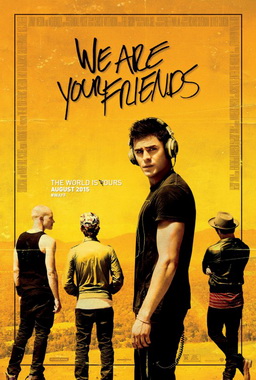
A Quickie With Lisa Marie: We Are Your Friends (dir by Max Joseph)


We_Are_Your_Friends

So, this morning, I read some of the harsh reviews that mainstream critics have given the new film We Are Your Friends and I have to admit that I’m starting to get a little ticked off.

That’s not to say that We Are Your Friends is a very good movie.  I saw it last night with my BFF Evelyn and we enjoyed it but mostly, that was because we talked through almost the entire movie.  And yes, I know that it’s rude to talk through a movie but seriously, the theater was nearly deserted.  When we bought our tickets, there was a huge crowd of people gathered outside the theater but it turns out that they were all buying tickets for War Room.

Anyway, We Are Your Friends tells the story of Cole (Zac Efron), a DJ who lives with three idiot friends (who are so identical to the group from Entourage that one of them is even named Squirrel).  He spends his days working at a mortgage company and his nights DJing.  Then he meets James (Wes Bentley), a formerly great DJ who is on his way down.  James takes Cole under his wing and mentors him and teaches him how to get a room dancing.  But, Cole ends up falling in love with James’s abused girlfriend, Sophie (Emily Ratajkowski), which leads to… well, it leads to exactly what you think it’s going to lead to.  Storywise, We Are Your Friends is not going to win any points for originality.

While we were watching the movie, Evelyn and I agreed that Zac Efron is a strange actor.  I mean, yes, he’s hot and yes, he’s talented enough that he can walk while delivering his lines but, at the same time, his dramatic performances always feel oddly empty.  You watch him and you get the feeling that he’s still trying way too hard to prove that there’s more to him than just High School Musical.  He’s like the guy who you have crush on until you actually get to know him and discover that, beyond his looks, he’s really not that interesting.  Efron always seems to be putting in a lot of effort but, whenever you watch one of his performances, you get the feeling that there’s not much going on underneath the beautiful surface.  For all intents and purposes, Zac Efron is the anti-Gosling.

And some movies have made good use of Efron’s limits.  He was perfectly cast in Me and Orson Welles, for instance.  And he’s good in comedies, where he can play against his good looks.  But in a film like We Are Your Friends, where you’re actually supposed to have some sort of emotional stake in his hopes and dreams, Efron just feels miscast.

That said, I still enjoyed We Are Your Friends and I think that a lot of the reviews have been a bit too harsh.  Why did I enjoy the movie?  It all comes down to the music and the dancing.  If you love EDM, you’ll find a lot to enjoy in We Are Your Friends.  And if you’re not into EDM — well, then fuck off.  I could sit here and write another 500 words about how clichéd the storyline is but, ultimately, that’s not what the film is about.  The film is about the music.  The film is about the ecstasy of dancing all night and then waking up with the beats still playing in your head.  At its best, that’s what this film captures.  It’s not a great film.  A month from now, I have a feeling that it’ll be a struggle to remember much about We Are Your Friends.  But I’ll probably still be listening to the soundtrack.

That’s what a lot of the harsh reviews are missing but then again, most mainstream film reviews are written by people who are too old to appreciate EDM in the first place.  EDM is music for people who are young and who are still capable of enjoying the present and dreaming about the future.  Boring old mainstream critics will never get it and that’s why the reviews of We Are Your Friends feel so condescending.  The critical consensus on Rotten Tomatoes reads: “We Are Your Friends boasts magnetic stars and glimmers of insight, but they’re lost in a clichéd coming-of-age story as programmed as the soundtrack’s beats.”  Now I know how those Christians who went to see War Room feel whenever a reviewer thinks he’s being clever when he says that one of their films “doesn’t have a prayer.”  It’s all so condescending and cutesy.

Listen, We Are Your Friends is not a particularly good film.  But it’s not as bad as you might think.  The plot is bad but the music is good and really, isn’t that the point?

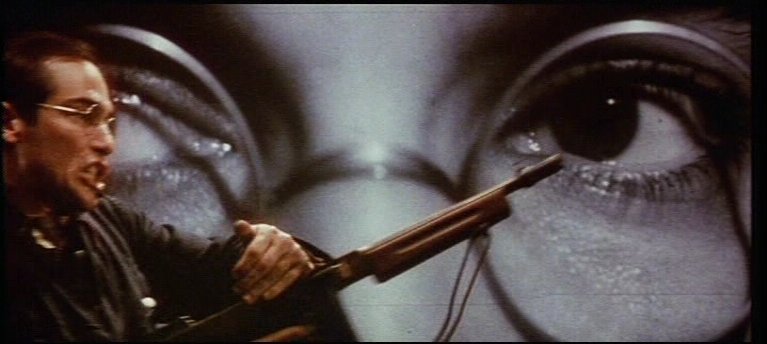
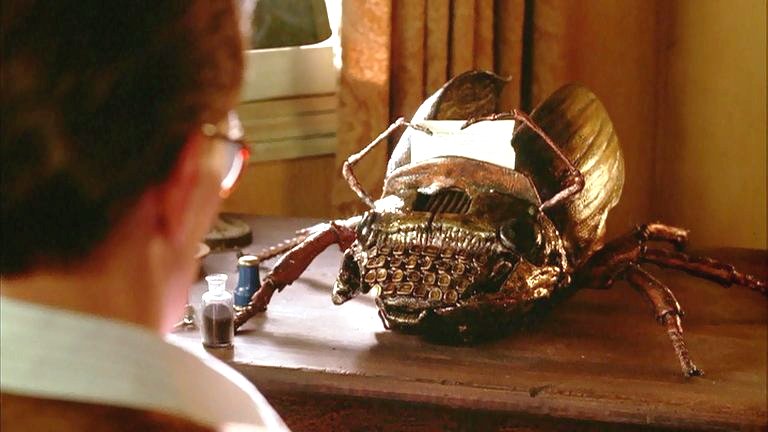
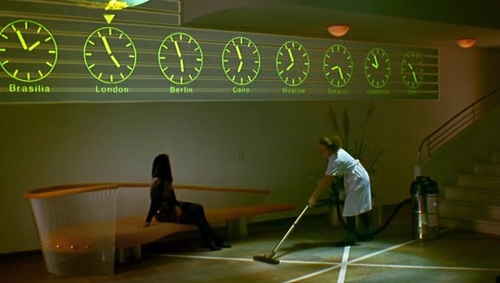
4 Shots From 4 Films: Cold Heaven, Europa, Naked Lunch, Until The End of the World


4 Shots From 4 Films

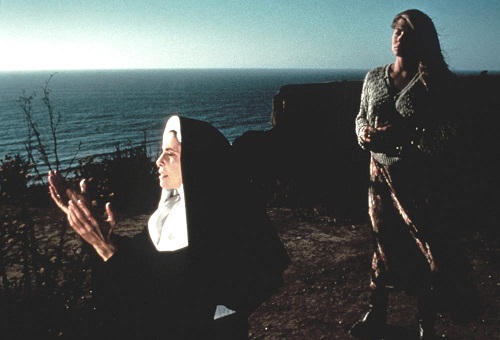
 Cold Heaven (1991, directed by Nicolas Roeg)

Cold Heaven (1991, directed by Nicolas Roeg)

Europa (1991, directed by Lars Von Trier, released as Zentropa in North America)

Europa (1991, directed by Lars Von Trier, released as Zentropa in North America)

Naked Lunch (1991, directed by David Cronenberg)

Naked Lunch (1991, directed by David Cronenberg)

Until the End of the World (1991, directed by Wim Wenders)

Until the End of the World (1991, directed by Wim Wenders)

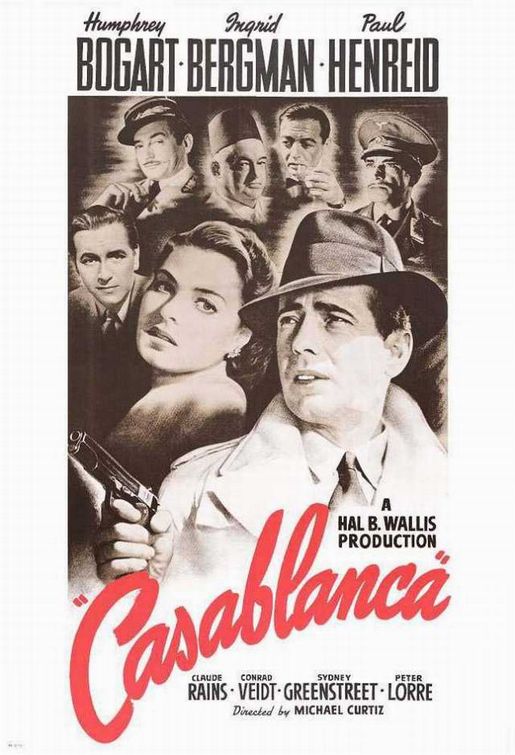
Top Ten Reasons CASABLANCA is The Greatest Movie Ever Made!!


gary loggins's avatarcracked rear viewer

CasablancaPoster-Gold

Seventy three years have passed since CASABLANCA was first released. What can I possibly say about this film that hasn’t been said before, by writers far more skilled than me? Well, since CASABLANCA is my all-time favorite, I feel obliged to put my two cents in. So, here are my top ten reasons why CASABLANCA is the greatest movie ever made:

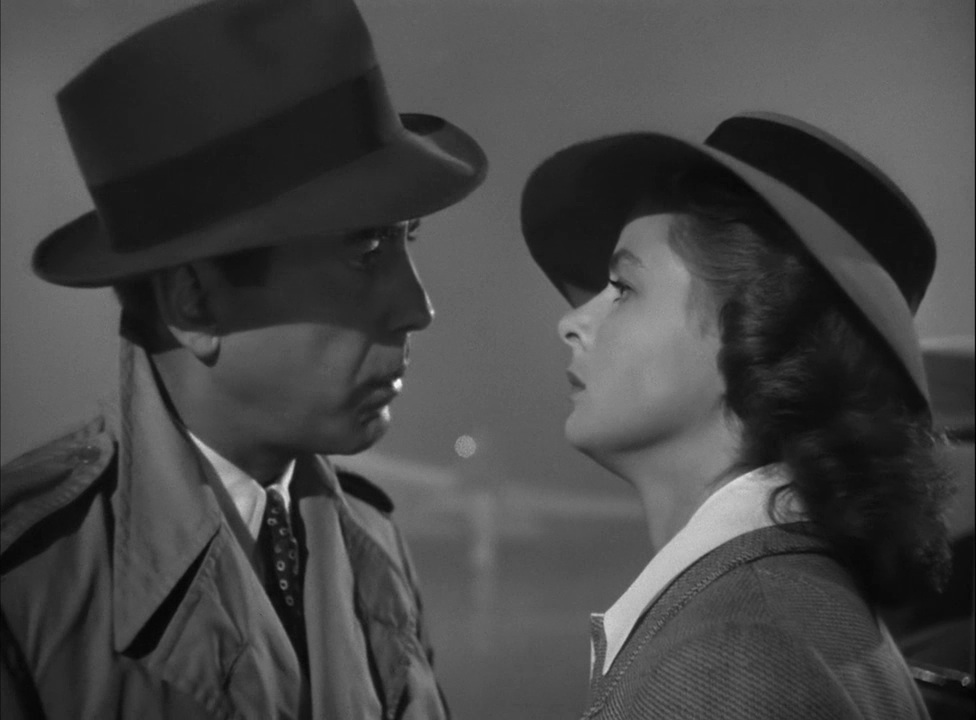
casablanca_1

  1. Humphrey Bogart as Rick.  While Bogie was already a star thanks to THE MALTESE FALCON, his performance here sent him into the stratosphere. Cynical, self-centered Rick Blaine, bitter over a lost love, sticks his neck out for nobody. His character is multi-layered, and his true nature wins out in the end. Without Bogie in the role, CASABLANCA wouldn’t be half as good.
  2. Ingrid Bergman as Ilsa.  Beautiful Bergman underplays her part in what should have been an Oscar winning turn (sorry, Greer Garson). Ilsa’s feelings are torn between Rick and husband Victor Laszlo…

View original post 507 more words

Film Review: Chandler (1971, directed by Paul Magwood)


C1971chandler1handler (Warren Oates) is a former private investigator who quits his job as a security guard and gets back into the detective game.  An old friend of his, Bernie Oakman (Charles McGraw), hires Chandler to follow and protect a woman named Katherine Creighton (Leslie Caron).  Katherine is scheduled to testify against gangster John Melchior (Gordon Pinset) and Oakman tells Chandler that he believes Melchior may be planning on murdering her.  What Chandler does not know is that Oakman is being manipulated by a corrupt federal agent, Ross Carmady (Alex Dreier), who is planning on duping Chandler into killing Melchior so that Carmady can take over Melchior’s racket.  Though Chandler tries not to get emotionally involved in his cases, he ends up falling for Katherine.

In case you are keeping count, Chandler is the sixth Warren Oates film that I’ve reviewed this week.  Some of that is because TCM devoted all of Monday to showing his films but it’s also because Warren Oates was a really cool actor who died too soon and never got as much credit as he deserved.  Warren Oates combined the talent of a leading man with the face of a character actor and, as a result, he played some of the most memorable supporting roles of the 60s and 70s.  He was the tough guy who could talk a mile a minute and his upturned grin always showed up at the most unexpected of times.  Warren Oates brought humanity to outcasts and sympathy to villains.

Chandler is one of Warren Oates’s few leading roles.  Unfortunately, it’s not much of a showcase.  Director Paul Magwood and producer Michael Laughlin felt that the then-head of MGM, James Thomas Aubrey, interfered with the production of the film.  After the film’s release, Magwood and Laughlin took out a full-page, black-bordered ad in Variety that read:

Regarding what was our film Chandler, let’s give credit where credit is due. We sadly acknowledge that all editing, post-production as well as additional scenes were executed by James T. Aubrey Jr. We are sorry.

Chandler is a strange film to watch.  The plot is complicated but nothing really happens until the downbeat ending.  Much like Robert Altman’s far more successful The Long GoodbyeChandler tries to contrast the title character’s old-fashioned 1940s style and moral code with the 70s.  Chandler, who always wears a suit and drives an old car, is meant to be a man out of time.  Warren Oates does a good job, giving a Humphrey Bogart-style performance.  But since Chandler doesn’t seem to be sure what it is trying to say about either the 40s or the 70s, it’s all for naught.

Chandler is a forgettable film, one that is only worth watching for the rare chance to see Warren Oates as a leading man.

Warren Oates in Chandler

Warren Oates as Chandler


Val’s Movie Roundup #19: Hallmark Edition


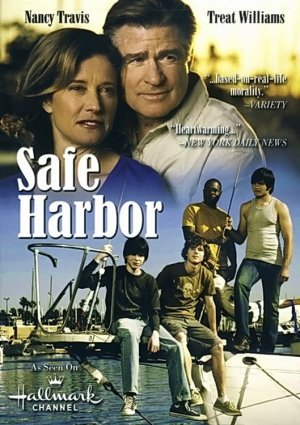
Poster_of_the_movie_Safe_Harbor

Safe Harbor (2009) – As far as Hallmark movies go, this was one of the best I’ve seen. Although, it’s almost like it’s 20 years past when it should have been released. It’s about a retired couple played by Nancy Travis and Treat Williams. One day a judge shows up who knows Williams and just dumps a couple of toubled kids on them who need a place to stay. It’s a little of the blue, but okay cause Williams gives a bit of background later. Turns out Williams once punched a cop after that officer shot his dog. Apparently, Williams had been living under a bridge. It’s after that he joined the Merchant Marine. Quite a lot of important information that his wife apparently didn’t know after all those years. I almost expected him to say I also used to go by the name Arnold Friend and did something really bad once.

Of course the judge finds a way to dump a few more kids on them. The couple steps up and decides to take care of them. They meet a little resistance from a lady in Social Services, some of the locals, especially after a fire, and one of their mothers, but for the most part it’s just getting the kids over their issues. Doing that, the movie works. It just feels like something that should have been released in 1989 as it feels reminiscent of episodes of MacGyver.

Since Mystery Woman: Game Time felt the need to censor the word “butt” in the phrase “pain in the butt”, I was rather shocked that not once, but twice, Travis and Williams try to have sex before being interrupted by the kids.

This is one of the good ones.

MV5BMTUyNzI5ODg1NF5BMl5BanBnXkFtZTcwNTI5MzI4Nw@@._V1_SX214_AL_

Notes from the Heart Healer (2012) – This has to be the most forgettable of the Hallmark movies I have watched so far. It’s a movie technically, but barely. It’s the third film in a trilogy and I’ve only seen this one. It’s about a writer who seems to be an advice columnist type. A lady turns up at one of her book signings. She has been fired, has no place to stay, and has a baby she can’t take care of. She tries to turn to the writer for help, but when the writer’s husband shows up, she runs away. Later on she drops the baby off at the writer’s doorstep.

What follows is a very forgettable story of the writer mulling over a child she had to give up for adoption and what to do with the baby she now has in her hands. There were only two parts that were memorable. First, during the film the writer jots down some diary entries and in one she mentions that cutting the baby in two story. Honestly, I’m not sure why, but what was memorable was that she felt the need to refer to it as a decision made by “Biblical” King Solomon. A war on Christmas type thing where we want to make sure you don’t divorce the widely known story from it being in the bible? I’m really just guessing. It just stuck with me like hearing someone say “up twice down twice” when saying the Konami code. Just not something I think I’ve ever heard someone feel the need to do when that story is referenced. The second thing is when the husband reacts to something about the baby in kind of an asshole manner, for lack of a better word. But it doesn’t really go anywhere.

There, that those are the things I strongly remember tells you how forgettable this one is. Maybe the first two were better. I’ll probably find out eventually.

url

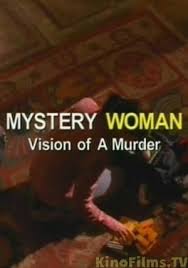
Mystery Woman: Vision of a Murder (2005) – Once again, we join Kellie Martin and Clarence Williams III for another murder mystery. I haven’t mentioned her in my earlier reviews of these movies, but there is a character played by Nina Siemaszko who is basically Martin’s Beth Davenport from The Rockford Files. She’s an attorney who is frequently part of the case and definitely is in this one. In this one Martin joins Siemaszko to go to a spa and take photographs of the place. Siemaszko is going there for the spa. It’s not just a spa, but a place that does plastic surgery and other such beauty treatments.

It’s run by Charles Shaughnessy so you know something is up. But just in case you didn’t, Felicia Day is in this looking and acting like “the dog who gets beat” in that lyric from the Alice In Chains’ song Man In The Box. She might as well be wearing a sign around her neck that says “I’ve got secrets to tell.”

Describing much more is spoiling it. A dead body turns up at the spa and Day turns out to be psychic. There is a funny scene where Kellie Martin pretends to be a doctor. Funny, since she’s most famous for her role on ER. And finally, that when you get near the ending, no, it isn’t clever enough to end the way you hope.

Still, decent entry in the series and one of two of them that Kellie Martin directed herself.

SecondChances

Second Chances (2013) – Yet another Hallmark romance, right? Well, not exactly. Don’t get me wrong, there is a couple, but that’s not really where the story is. The story is with her kids. It’s also a Larry Levinson Production so apparently that means they must include goofs with technology. Not sure why that’s a thing, but it seems to be.

But let’s back up here. The story begins with a firefighter and a 911 dispatcher. They kind of know each other from going back and forth on the radio during calls, but they’re really still strangers. He gets injured and needs to spend some serious downtime according to his doctor played by James Eckhouse of Beverly Hills, 90210 fame. He’s quite good and makes the most of the few scenes he’s in. The dispatcher gets her hours cut back and decides to rent out a room at her house to make up the difference. The firefighter decides to move in. That’s this movie’s excuse for the boy and girl to spend time together.

However, this is when the kids kind of take over the movie. They know that their Mom needs money so they decide to start charging residents of a nursing home a dollar for reading to them. These parts are the best parts of the film. It’s actually a shame that there had to be other parts cause if they had made that the whole film and let it go deeper then it could have been even better. But they don’t, so we do get a little romance between the two as well as some backstory on them. It really isn’t worth going into because you’re watching this for the kids and the two tech goofs.

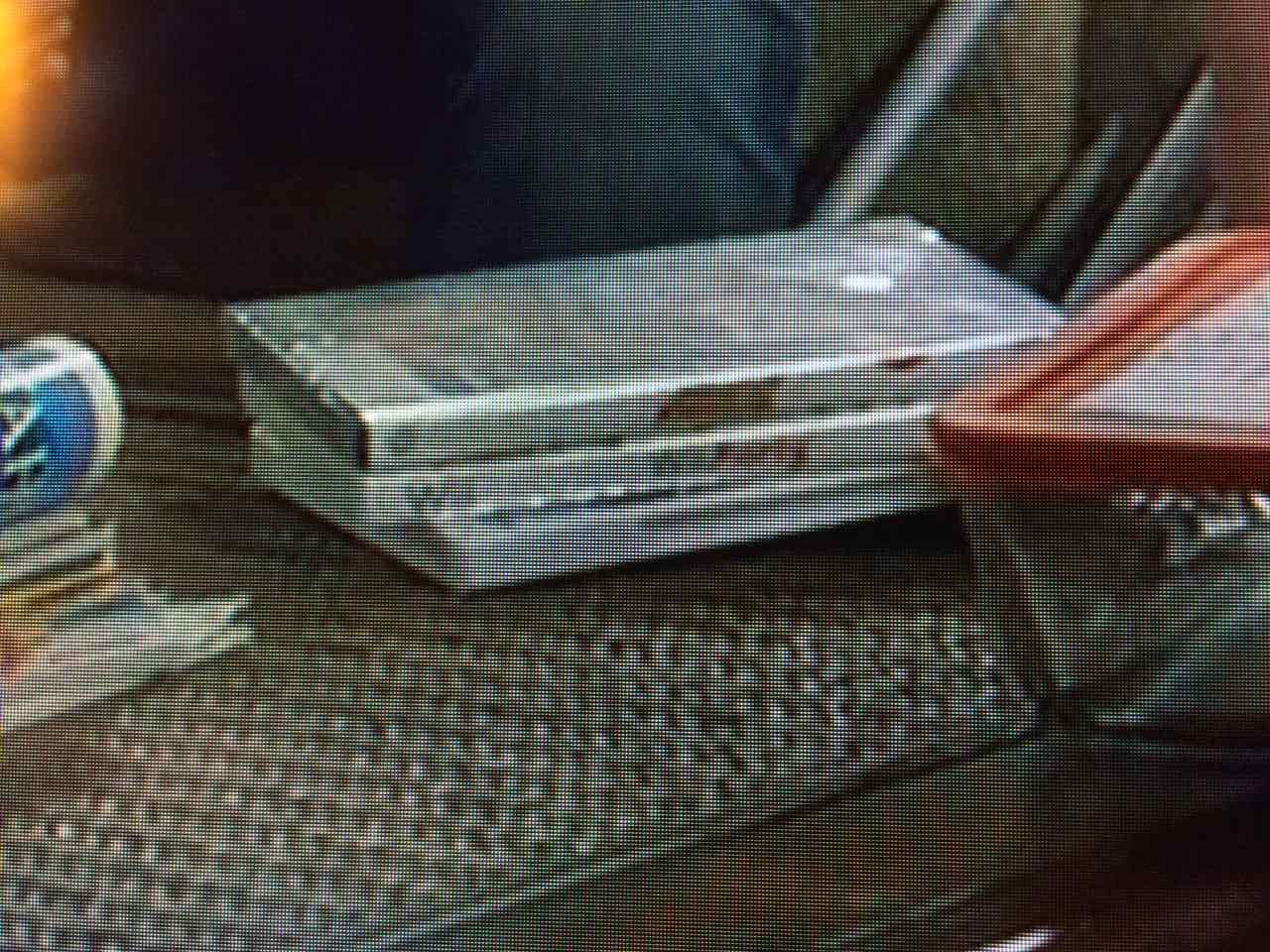
The first tech goof comes really early in the movie. They obviously thought no one would notice and I don’t blame them here, but considering what it would have taken to make it right, it’s pretty stupid. If you have a better version of this then the one I watched on TV and can prove me wrong, then I’m all ears, but the firefighter picks up a sealed copy of a game the kid is supposedly playing from their living room table and talks to the kid about it. The kid isn’t a collector or anything. That sealed copy of the game is what he is supposedly playing. It’s weird because the two games under it are open. Again, if you have a higher definition copy and see differently, then tell me. But here’s what I was able to capture.

Notice the top of the box that shouldn't be shining if it were really open.

Notice the top of the box that shouldn’t be shining if it were really open.

The second goof, there’s no mistake. Throughout the movie there is a fake 911 dispatch screen. Fake because it’s in a Hallmark movie, but not fake because it looks ridiculous. That is, until for reasons beyond me, they felt the need to give us a closeup of the terminal portion of it where we can see that it’s a DOS command line. It’s open to a directory called “C:\Users\Art Department\” and apparently someone has been typing random crap in and trying to execute it only to get error messages.

IMG_9717

Like I said though, this is one of the better Hallmark movies, and the credit goes to the story with the kids.

Film Review: There Was a Crooked Man… (1970, directed by Joseph L. Mankiewicz)


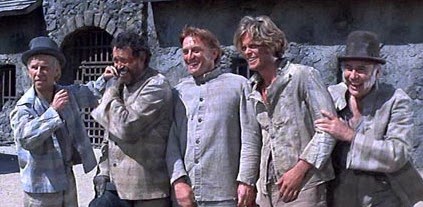
Crooked_manI first saw There Was A Crooked Man as a part of TCM’s tribute to the great actor Warren Oates.  Warren Oates was rarely cast in the lead but, as a character actor, he appeared in supporting roles in several great films.  Unfortunately, There Was A Crooked Man is not one of them.

Directed by Joseph L. Mankiewicz and written by the screenwriting team of Robert Benton and David Newman (best known for writing Bonnie and Clyde), There Was A Crooked Man is meant to be a comedic western.  Outlaw Paris Pittman (Kirk Douglas) is arrested while visiting a bordello.  Paris is sent to an Arizona prison, where everyone tries to get him to reveal where he has hidden the stash from a $500,000 robbery.  Pittman uses everyone’s greed to manipulate them into helping him attempt to escape.  Standing in Pittman’s way is the new warden, a liberal reformer played by Henry Fonda.

There Was A Crooked Man is a long movie that features a lot of familiar faces.  Burgess Meredith plays The Missouri Kid, who has been in prison for so long that he is now an old man.  Hume Cronyn and John Randolph play a bickering gay couple who eventually become a part of Pittman’s scheme to escape.  Even Alan Hale, the skipper from Gilligan’s Island, shows up as a guard named Tobaccy!  There Was A Crooked Man is a big movie but it’s also not a very good one.  It’s not serious enough to be a good drama but it’s not funny enough to be a good comedy either.

At least the movie has Warren Oates going for it.  Oates plays Harry Moon, a prisoner who is drafted into Pittman’s escape plot.  It is a typical Warren Oates supporting role but he steals every scene that he appears in.  Even in the smallest of roles, Warren Oates was worth watching and he’s the best thing about There Was A Crooked Man.

Hume Cronyn, Warren Oates, Kirk Douglas, Michael Blodgett, and John Randolph in There Was A Crooked Man

Hume Cronyn, Warren Oates, Kirk Douglas, Michael Blodgett, and John Randolph in There Was A Crooked Man

Film Review: Badlands (1973, directed by Terrence Malick)


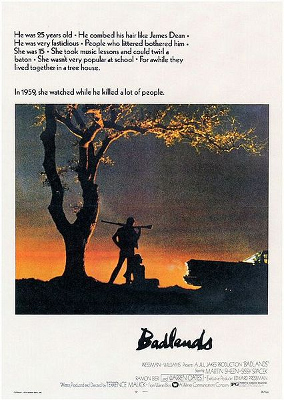
Badlands_movie_posterTerrence Malick is such an influential director that it is easy to forget that he has only directed nine films over the past 42 years.  (One of those ten, Knight of Cups, will be released later this year.  Two other are currently in postproduction.)  He has received Oscar nominations for The Thin Red Line and The Tree of Life but, for me, Malick’s best work remains his directorial debut, Badlands.

Badlands is based on the real-life murder spree of Charles Starkweather and his girlfriend, Caril Ann Fugate.  In 1958, 20 year-old Starkweather murdered 11 people in Nebraska and Wyoming.  14 year-old Fugate was with Starkweather at the time of the murders but has always claimed that she was Starkweather’s hostage.  After the two of them were captured, Starkweather was sent to the electric chair while Fugate served 17 years of a life sentence.

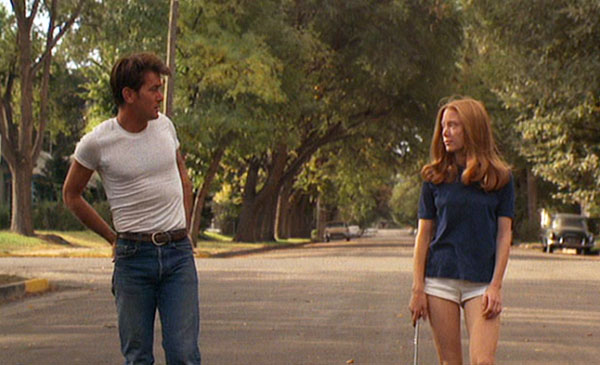
In Badlands, 25 year-old Kit (Martin Sheen) is a garbage man who has a huge chip on his shoulder.  One day, Kit spots 15 year-old Holly (Sissy Spacek) outside, twirling a baton.  Kit starts to talk to Holly, who thinks that he looks like her favorite actor, James Dean.  Kit and Holly start dating.  Holly’s father (Warren Oates), a sign painter who has never recovered emotionally from the death of his wife, tells Kit to stay away from his daughter.  After Kit murders her father, Holly joins him in fleeing from the scene of the crime.  With the police and bounty hunters chasing them, the two young lovers head across the midwest and leave a trail of bodies in their wake.

Badlands sticks pretty close to the facts of the real-life Starkweather/Fugate case but, at the same time, it is definitely the product of Terrence Malick’s artistic vision.  It is interesting to see how, even in his first film, Malick was already exploring the themes and using the techniques that would later distinguish both The Thin Red Line and The Tree Of Life.  Like those two films, Badlands is full of majestic scenery, contrasting the beauty of nature with the ugliness of humanity.  Like all Malick films, Badlands also features a narrator.  Holly tells us her story but, in contrast to the philosophical narrators from Malick’s later films, Holly speaks exclusively in romantic clichés and delivers her narration in a flat, unemotional style.

badlands-1973-starkweather-holly-kit-martin-sheen-sissy-spacek

When we first see Holly, her white shorts, blue shirt, and red hair add up to an all-American tableau.  When Holly falls in love with Kit because of his resemblance to James Dean and then either justifies or ignores every destructive thing that he does, she is predicting the rise of our current celebrity-dominated culture.  Meanwhile, Kit is so determined to be James Dean that he even imitates Dean’s performance from Rebel Without A Cause while talking to the police.

Badlands is one of Malick’s most accessible films.  Sissy Spacek is amazing as the childlike Holly and Martin Sheen has probably never been better than in his role here.  And, of course, you have the great Warren Oates in the small but crucial role of Holly’s harsh father.  Badlands is an American classic and still the best film of Terrence Malick’s legendary career.