Halloween’s almost here and it’s time for the Great Pumpkin to bring gifts to all the good boys and girls of the world. Never stop believing, Linus.
Monthly Archives: October 2014
6 Madly Scientific Trailers for Halloween
It’s been way too long since we posted a new edition of Lisa Marie’s Favorite Grindhouse and Exploitation Film Trailers! Personally, I blame the Trailer Kitties. You know how they can be! But, earlier today, I sent them out and I told them to come back with 6 trailer for Halloween!
This is what they returned with!
1) Frankenstein (1931)
2) Bride of Frankenstein (1935)
3) Son of Frankenstein (1939)
4) Ghost of Frankenstein (1942)
5) Curse of Frankenstein (1957)
6) Andy Warhol’s Frankenstein (1973)
What do you think, Trailer Kitty?

Horror On The Lens: Creation of the Humanoids (dir by Wesley E. Barry)
What makes us human? What does it mean to have free will? What is love? What is freedom? The questions and more are asked in the low-budget (and rather odd) science fiction epic The Creation of the Humanoids, which you can view below!
Now, I should warn that Creation of the Humanoids is an extremely talky film. And the plot really doesn’t make much sense. However, I still like it because it’s just such a strange movie. I love it for the colorful set design, the contrast between the resentful robots and the paranoid humans, and the fact that the film — despite being made for next to nothing — actually has more ambition than anything ever made by Michael Bay.
First released in 1962, Creation of the Humanoids was reportedly one of Andy Warhol’s favorite films. Keep an eye out for Plan 9 From Outer Space‘s Dudley Manlove.
Horror Review: The Walking Dead S5E03 “Four Walls and a Roof”
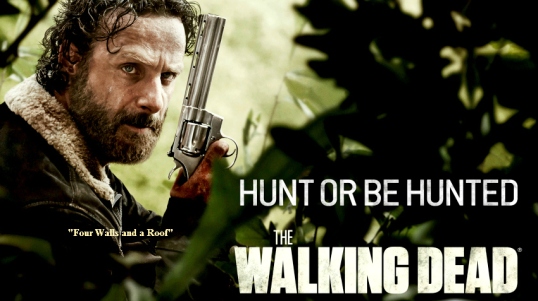
“TAINTED MEAT!” — Bob Stookey
[spoilers]
Well, that was one hell of an episode.
“Four Walls and a Roof” was a surprising episode as it unfolded not because of the payoff in the end, but how it further signifies the changes in how the show’s writers have been handling the show’s pacing. This was a major development considering the criticism it’s detractors (and some fans) have had about the series.
In seasons past, The Walking Dead always had major issues with it’s pacing. Despite what some have been saying the show does have some great episodes, but we do get several slow and wheel-spinning episodes following it up. Almost as if the writers were trying to find a way to help the audience decompress after a very tense, action-packed and/or horrific episode. It wasn’t such a major issue during it’s premiere season which was only six episodes long, but as each season got longer there came a time when too obvious filler episodes were aired that sucked the momentum from the series.
Even some of the show’s most strident supporters have complained about the necessity for extending certain story-arcs when it was obvious that they could’ve been handled and resolved in just a handful. Tonight’s episode was such a surprise in that it resolved a story-arc that was a major one in the comics in so short a time. Yet, despite having condensed the “Hunters” storyline from the comics into just three episodes they still kept the impact that it’s much longer comic book version had on readers.
The episode itself begins pretty much right after last week’s episode. It’s a cold opening that’s eerily done with images of zombies and the Terminans eating meat interspersed to make the two groups indistinguishable. Calling themselves Hunters, Gareth and his bunch were still having a moonlit dinner with Bob’s left leg as the main course. Of course, Gareth continues to monologue his way through the cold opening as if he just can’t help do so now that he has such a captive audience in Bob. One could almost sense that his own people were probably sick of hearing him talk through dinner, but were more afraid of him to say so. Gareth’s moment gets a major interruption as Bob, in a fit of crazed laughter, finally tells them a secret of why he was out all alone in the end of the previous episode. Bob didn’t make it out of the flooded food bank unscathed and the festering bite on his right shoulder was evidence enough for Gareth and his Hunters to lose their appetite.
One thing that could easily have derailed tonight’s episode was to spend too much time trying to figure out what happened to Bob and if Father Gabriel was involved in some fashion. Even after last week’s revelation that the people who have been stalking Rick and his people was Gareth and his small band of Hunters there was still theories that Father Gabriel might have been involved in some way. Gabriel had survived this long without having to deal with the zombies and other survivors looking for sanctuary. Someone must’ve helped or made a deal to spare him and Gareth looked like someone pragmatic enough to come up with a plan and deal to keep Gabriel stocked with food and not bothered as long as he pointed some people towards Terminus.
The fact that we get to the bottom of Gabriel secret and shame in the very first ten minutes of the episode was a nice change in how the show has been treating major personal secrets. The expectation that the show would keep Gabriel’s secret for more than two episodes was a given, but to have it resolved in swift fashion showed that Scott M. Gimple and his stable of writers do understand that pacing on the show has been an issue and they’re trying to fix that.
To top Gabriel’s secret now out we also get another surprise in Bob being brought back by Gareth and his people to just outside the church. The plan by Gareth to traumatize and put Rick and his people back on their heels actually was a sound plan, but he failed to factor in the fact that this band of survivors was not the type he and the Terminans have had to deal with since their fall into the darkside.
Rick might be a leader who has had some bouts of indecisiveness and more than just a tad bit of self-loathing which made him a liability, but his dedication to keeping his family (which now includes those he has added since Atlanta) alive throughout this hellish new world has seen him go from an idealistic man of the law to one who now understood that pragmatism and controlled brutality was now the coin of the land. We saw the final nail in the peacemaker Rick begin to recede in the back of his mind when the Governor returned in the mid-season finale of season 4 and saw Hershel killed and his prison haven destroyed and his people scattered.
Throughout the series there has always been the main question of does someone get to keep their humanity in a world where it has no room for it if one was to survive. It’s a question that’s been answered in one form or another whenever Rick and his people come across other survivors who have discarded their humanity and done evil things to survive. Some have become haunted by their acts while others have embraced them. Rick has become the barometer by which we judge our band of survivors. He’s taken it upon his shoulders to be the one that makes the hard decisions.
He’s always tried to deny the role of leadership and just want to be there for his son and daughter, but we’ve come to realize through his own personal revelations that people would always look to him as their leader whether he wants them to or not. Others see it in him and even Gareth, right up to the end, sees that this was a man who has done terrible things to survive this long to save his people. Where the difference lies between Rick and Gareth (and the Governor and Joe in past encounters) is that Rick still strives to keep some hold on his personal moral code. He might be setting aside his humanity to get the job done, but he does it as a necessary evil and always looking back to make sure that his humanity still waits for him once the task was done.
Tonight’s episode was a perfect example of Rick finally accepting his role as group leader and doing what must be done to keep everyone safe.We’ve only seen glimpses of this through the first four seasons of the show and it’s refreshing to finally see the writers stop waffling about Rick should continue to torment himself about doing the right thing.
Does this put him on the same path which tainted the Governor, Joe and Gareth?
There’s a good chance that it could, but as we’ve seen Rick has something those other men never had to keep him from falling to the darkside. Rick has good people around him to offer friendship and moral advice. They understand that Rick has taken on much to keep them alive and it’s their job to help him keep his humanity intact once the nightmare ends.
Bob might be gone from the group, but just like Hershel before him, his very optimism in a world that rewards nihilism and brutality has left a mark on everyone. His parting words to Rick showed that Rick still remains a good man despite doing things that Gabriel and others would call evil.
The Walking Dead has had it’s ups and downs since it’s first season and I don’t think a barreling first three episodes of this new season could solve all the problems it has had. But it’s encouraging to see that the producers and writers haven’t been tone deaf to the complaints about the show’s storytelling and its work on making the characters believable and complex. Even with its ridiculous ratings with each new episode they do understand there’s room for massive improvement and if what we’ve been witness to this early in the fifth season then The Walking Dead might just have it’s best days still to come.
Notes
- “Four Walls and a Roof” was written by Angela Kand and Corey Reed and directed by Jeffrey F. January.
- Like how even the smallest details in this young season has become a major factor. An example was Glenn finding the three suppressors in the looted gun store in the previous episode feeling like some throwaway moment, but it sure made a difference in tonight’s episode.
- It looks like there might be further issues between Rick and Abraham if tonight’s episode was any indication.
- One of the best scenes in tonight’s episode happens in the end as Michonne glances down at the carnage they heaped on the Terminans and notices that one of them was carrying her katana. The look on her face she drew it out was priceless. She’s whole once more despite telling Rick last week that she didn’t miss it.
- Tyreese and Glenn look to be the frontrunners on who should be taking on the role of moral center since Hershel left the group midway through last season.
- Surprising how Larry Gilliard, Jr. wasn’t a guest in tonight’s Talking Dead episode.
- Talking Dead guests tonight are Slash (Guns ‘N Roses, Velvet Revolver), Mary Lynn Rajskub (24, Californication) and Gareth himself, Andrew J. West.
Season 5
Horror on TV: Baywatch Nights 2.19 “The Eighth Seal”
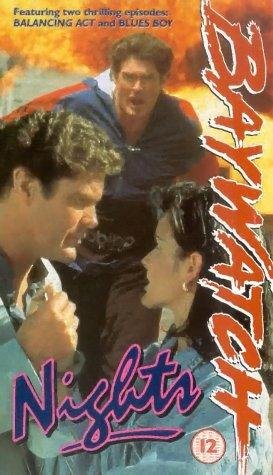
Did y’all know that there used to be a TV show that featured David Hasselhoff as a paranormal investigator who battled supernatural monsters on the beaches of California?
Well, don’t feel too bad because, up until my boyfriend told me about it last night, I didn’t know either. But apparently, there was and it was called Baywatch Nights!
And here’s an episode of it for tonight’s excursion into the world of televised horror!
The Eighth Seal was originally broadcast on April 26th, 1997 and it features David Hasselhoff getting possessed. So, there’s always that.
Review: Harakiri for the Sky – Aokigahara
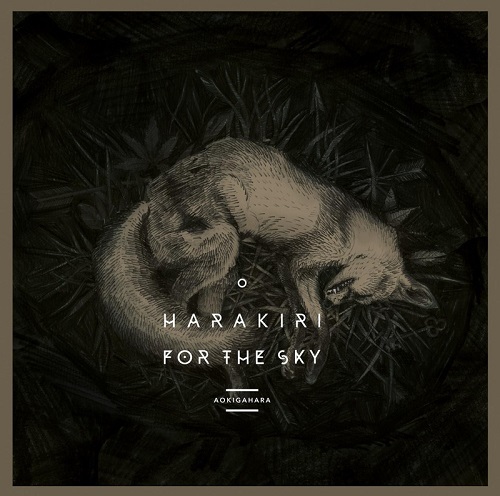
There are two reasonable places to start with Aokigahara. One is to point out that that album cover is going to give me serious nightmares. The other is to state that this is an album of contradictions, its Austrian origins being only the most trivial. It is the most over-the-top emo cheese ball of lyrics you could hope to stumble across, with lines like “I’m losing friends and above all, I’m losing confidence,” and “I feel so fucking lonely.” Yet it succeeds in making me feel really, really sad time and time again. And in spite of track titles like “Nailgarden” and “Gallows (Give ‘Em Rope)”, it is really quite beautiful.
Harakiri for the Sky – My Bones to the Sea, from Aokigahara
As one of my first reviews in ages, you could have easily guessed that it would fall firmly in the post-black metal category. But where my last review, Woods of Desolation, showcased a sort of innocent jubilee with limited care for production value and plenty of homage to Explosions in the Sky and Alcest, Harakiri for the Sky’s Aokigahara offers exquisite attention to detail and a “post” sound rooted more in the Agalloch side of the spectrum. The opening track’s plodding dirge offers a lavish soundscape that wants to encompass you in vibrations without ever upping the tempo to a blast-beat driven daze. Don’t worry; there is plenty of that to come. But this is an album meant to be swallowed from start to finish, and not a second of its 60+ minutes feels unwarranted or out of place.
I don’t know much about mixing or production, but I have to think it doesn’t get much better than this. (Youtube bit rates do not come close to doing it justice.) The most immediate and consistently striking feature of the album to me is how well all of the instrumentation melds together. The bass manages to wrap itself around everything and remain distinct no matter how much activity is layered over top of it. The percussion is pleasantly quiet (a modesty so many black metal bands lack) and offers a faint echo that seems to reverberate back into the bass and make the two whole. V. Wahntraum’s vocals maintain their depth even when he rises to the point of an all-out scream (6:20, for instance), and he picks his words to emphasize with care. You might not know what he’s saying, but he manages to convey a sense of sincerity regardless. The guitar seems to bleed into the middle of it all with no distinct range, fading into the doomy haze at its extremities. The end effect is a warm blanket of a sound that wraps around you gently, letting you experience every aspect of it as a unified force.
Harakiri for the Sky – Jhator, from Aokigahara
I must have listened to twenty new albums passively while I worked over the last two days, and my back-of-the-mind impression of Aokigahara was “that one that made me feel cozy”. It wasn’t until I engaged it with no distractions that the darkness of this album really set in. The album cover should have been my first hint. You see the baby fox–an endearing little thing, bathed in warm, fading color–lying dead on a bed of nails and arrows, a grimace of pain across its face. You want to pull it out of the image and hold it close. You want to comfort it. But even if you could reach it, get ahold of yourself. It’s dead. There is nothing you can do. It evokes your most altruistic instincts and denies their use.
The sound of Aokigahara is that same kind of warmth. It is the kind you feel but cannot share, though every ounce of your body aches to. Matthias Sollak and V. Wahntraum let you know this in subtle ways. My first question about the band was “what’s with all this Japanese nonsense if they’re two white dudes from Vienna?” It begs you to hop on Wikipedia. Maybe “Harakiri” isn’t as well known of a word in Austria as it is in America. If it isn’t, “for the Sky” might have given you a positive vibe until you looked it up. I googled “Aokigahara”. I got “Suicide Forest”, a location at the base of Mount Fuji where hundreds of Japanese go every year to end their lives.
So I took a second look at the track titles to this “warm” album of mine. Track two was “Jhator”. Wikipedia: “Sky burial”. Jhator is a Tibetan practice of giving one’s body up for food to sustain the life of others in death. The closing lyrics to the song are “There is only one decision in our lives we can choose on our own: vultures or worms?” That sick knot in my stomach doubled.
Harakiri for the Sky – Burning from Both Ends, from Aokigahara
And then I thought about the track title that had intrigued me the most before I started this little investigation. “69 Dead Birds For Utøya”. I didn’t know what Utøya was, conveniently. The track title kind of already had that simultaneous warm and disturbing feeling to it. Kind of. I think it was the “69” that threw me off at first though, before I started giving the album a serious listen. I instinctively thought it was one of those “when heavy metal efforts to offend get downright weird” moments like Spear of Longinus’s hit classic “YHWH Penis Abominator”. So I googled Utøya. …It’s the fucking island in Norway where Anders Behring Breivik gunned down 69 children and camp organizers.
With the present track blaring in the background, I stared into the album cover in a thoughtless haze, an overwhelming sense of sorrow creeping over me. I wanted to puke, or cry, or put my fist through my monitor, and all from a track title and a melody. Truly great art digs into us and unlocks our deepest, most powerful emotions, whether we want to feel them or not. It plants the seed and screams our reaction louder than anything we can muster on our own. This was no attempt to be “heavy” or “brutal”–no boast about abstract violence or atrocities long relegated to the subject of myth–no Elizabeth Bathory or Vlad Tepes to keep us cool and edgy. This was art doing its job, and while the experience might not always be pleasant, it is always something beyond what we can safely allow ourselves to feel on a constant basis. We forget, we ignore, we desensitize, but the feelings are still there within us. An elite few bands like Harakiri for the Sky have mastered the art of bringing them back to the surface.
Harakiri for the Sky – Nailgarden, from Aokigahara
I definitely started throwing around “best of the year” boasts too early in my last post. I should have kept my mouth shut until I’d done a good dozen or so reviews and not based my opinions on a bunch of superficial background noise listens, because Aokigahara has already struck me deeper than the last album I had a go at. The music is excellent from start to finish without a doubt, but it’s the underlining theme and presentation that tips it on the scale of greatness. From the song writing to the production to such typically afterthought factors as track titles and cover art, Aokigahara bleeds a common creative agenda. The warmth you feel and think and see is real, but any time you try to take it beyond yourself, you find only loss that you are helpless to counter. “I feel so fucking lonely, although I am never alone,” might be a cheesy lyric in and of itself, but Aokigahara manages to imbue it with substance. Real, brutal substance, like being totally impotent to stop a gunman from slaughtering helpless kids. Maybe the lyrical conclusions are flawed; there seems to be a hint of indifference in the end of every song–a resolution that life just isn’t that important. But it is not convincing. The overarching focus is the helplessness, not the apathy. It’s a 63 minute ball of compassion that you simply cannot share. And let’s be honest, who listens to black metal with their friends?
Film Review: Jodorowsky’s Dune (dir by Frank Pavich)

I have to admit that I’m always a little bit cynical whenever I hear various film fans bemoaning films that were never made. These are the films that were nearly made but ended up being abandoned because the production company ran out of money or maybe a lead actor died or maybe the studio refused to release it or else they released it in a heavily edited form. There’s a certain tendency among hipsters to decide that any movie that they will never be able to see would automatically have been the greatest film ever. It’s rare that anyone ever suggests that maybe it’s for the best that Stanley Kubrick never made his version of Napoleon or that maybe Ridley Scott’s version of I Am Legend would have been just as bad as the version that starred Will Smith or even that the footage that we have of Orson Welles’s unfinished The Other Side of The Wind doesn’t look that impressive.
In fact, some day, I want to see a documentary about an abandoned film where everyone says, “Oh my God, I’m glad that movie never got made. It would have sucked!”
However, that documentary is never going to be made. The great thing about praising a film that was never made was that you don’t have to worry about anyone watching the film and then going, “You have no idea what you’re talking about!”
For instance, I recently watched an excellent documentary called Jodorowsky’s Dune. This film tells the story of how the iconoclastic director Alejandro Jodorowsky attempted to make a film out of the science fiction novel Dune in the mid-70s. During the documentary, Jodorowsky explains that his version of the story would, in many ways, be different from the book. Since I’ve never read the book nor have I seen any of the various adaptations that actually were eventually produced, I can’t say whether Jodorowsky’s changes would have been an improvement. For that matter, I can’t say whether or not Jodorowsky’s film would have been great or if it would have been a legendary misfire. I’ve seen El Topo and The Holy Mountain so I’m pretty sure that his version of Dune would have been uniquely his own. But there’s no way for me — or anyone else for that matter — to say whether or not the film would have been any good because, after assembling an intriguing cast (Orson Welles, Mick Jagger, Salvador Dali, and David Carradine) and recruiting several talented artists and technicians (H.R. Giger, Dan O’Bannon, Chris Foss, and Moebius), Jodorowsky was never able to make his film. The Hollywood studios took one look at Jodorowsky’s vision and said, “There’s no way were paying for that.”
However, the documentary goes on to make a very intriguing argument that Jodorowsky’s Dune may be the most influential film never made. Many of the people who collaborated with Jodorowsky would go on to work on other science fiction films and, when they did, they brought with them many of the ideas and concepts that were originally developed for Dune. The documentary not only suggests that this might be true but also offers up some pretty compelling evidence, showing us how everything from Raiders of the Lost Ark to Prometheus has featured scenes that originally appeared in Jodorowsky’s Dune storyboards.
I may not be totally convinced that Jodorowsky’s Dune would have been the greatest film ever made but I love this documentary. The majority of it is spent just listening as Jodorowsky, alternating between English and Spanish, tells us the story of what he hoped to do with Dune and how, ultimately, he could not do it. Jordorowsky’s love of film and art is obvious with each word that he says. Whether he’s talking about meeting Salvador Dali or passionately advocating for creativity and imagination, Alejandro Jodorowsky is never less than charming and inspiring.
If you love movies, you’ll love Jodorowsky’s Dune. If you don’t love movies, Jodorowsky’s Dune will change your mind.
Horror On The Lens: The Legend of Boggy Creek (dir by Charles B. Pierce)
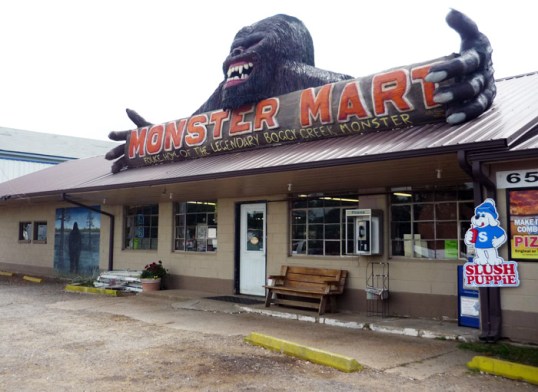
Today’s Horror On The Lens is the 1972 documentary, The Legend of Boggy Creek. The Legend of Boggy Creek tells the story of the legendary Fouke Monster, a bigfoot-like creature who has long been rumored to live near the small town of Fouke, Arkansas. It was actually filmed in Fouke and, for better and often worse, it featured actual townspeople. It was directed, produced, and distributed by a Texarkana businessman named Charles B. Pierce and apparently it was one of the most financially successful films of all time.
Of course, the main reason that I’m sharing this movie is because my family lived in Fouke back when I was 8 years old. Before you ask, we never saw the monster. But maybe some day…
Until then, enjoy The Legend of Boggy Creek!
Review: Woods of Desolation – As the Stars
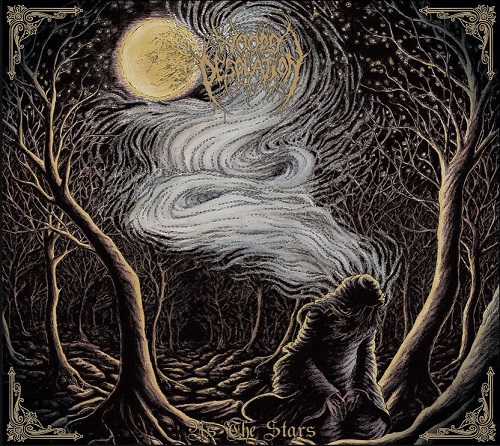
Has it really been two years since I’ve reviewed a new album? The fact came as a bit of surprise, but here it is late October and I’m staring at a massive horde of 2014 releases that I’ve barely cracked. I was a bit more diligent about keeping up with these when I actually took the time to write about them!
I hope to jump back into this business in force, but in case I fail, I’ll not put off the cream of the crop. My album collection is starting to get overrun by “Woods of” X artists; it seems to be the most popular black metal prefix after “Dark” these days. But one among them might be destined to distinguish itself with my #1 album of the year pick.
Woods of Desolation – Unfold, from As the Stars
I spent a great deal of my late teens and early 20s basking in the polarizing glories of post-rock and black metal. The likes of Explosions in the Sky, Sigur Rós, Emperor, and Nokturnal Mortum pumped the residual poison of rock and roll out of my blood and raised me to higher expectations of musical fulfillment. I listened to them not with a care for technical precision or physical skill, but in search of an experience I did not fully understand. Both genres approached this through similar means, but fell short as social stigmata demanded modesty or brutality carry the day. As I grew into an adult, the ice was broken. Neige’s Le Secret whispered its meaning into my ears just as I was old enough to embrace it. He’d broken the Berlin wall of music, and what awaited beyond was strange and beautiful.
Post-black metal, shoegaze metal, “transcendental”, call it what you will. Ten years ago, this album–what the woefully uninformed all-purpose reviewers will write off as a Deafheaven copycat–was not possible. It emerged as many musicians with the same thoughts and greater talent than myself caught glimpse of that beautiful beyond and embraced it. You can name a dozen artists that might have influenced the Australian solo project known as Woods of Desolation, but this brave new genre demands our presence in the here and now. It calls on us to bask in glorious tremolo sweeps triumphant over entwined barricades of light and darkness. “Proud to be living in the echo–the mist of all things combined,” Krallice once wrote, and though they designed to crush it, we retain the luxury to return. When I hear a song this triumphant, that line always comes to me, and the albums that accomplish it are still few and far between. I still love Explosions in the Sky and their ilk, but they offer a different sort of grandeur. Theirs is an experience of climbing to the peak. Songs like “Unfold” allow us to explore the pinnacle at length, from start to finish.
Woods of Desolation – Like Falling Leaves, from As the Stars
To start at the summit and know where you stand. That might be post-black metal in a nutshell. What we can do there… that is still an on-going exploration. Where Liturgy and Primordial roar like lions into the jaws of death, “Like Falling Leaves” is something of the opposite. It accepts the end awaiting it. In this track we don’t hear any of the overarching optimism of “Unfold”. Instead, we’re accepting that something dear is gone forever, and we are held fast in that moment of realizing the fact’s finality. The bulk of the album seems in keeping with these two vibes, sometimes heightened, sometimes subdued, sometimes entwined. “Withering Fields” and “And If All the Stars Faded Away” seem peculiarly triumphant and longing simultaneously, while “Ad Infinitum” is pretty enough for a new Alcest album. Nearly every track bears a sufficiently memorable hook to sound familiar by the second or third play through, and at a mere 35 minutes, it does not waste much time dragging out build-up in between.
I don’t know that As the Stars will retain my #1 spot through the end of the year, especially if I start to pump out album reviews in force again. It is nothing remotely on par with my picks for the last three years, and it suffers from muddy production that can’t always do the song writing justice, but I stand by it as my favorite so far. This is one I’ll keep near and dear to me long after the bulk of my 2014 collection has been forgotten.
Horror on TV: Sabrina The Teenage Witch 6.4 “Murder on The Halloween Express”
In this episode of Sabrina The Teenage Witch (which was originally broadcast on October 26th, 2001), Sabrina (Melissa Joan Hart) is upset to discover that none of her friends have the proper Halloween spirit. So, Sabrina arranges for all of them to spend Halloween on a Murder Mystery Train. However, it quickly turns out that the train is magical and now, Sabrina and her friends have to solve an actual murder!
Things like that always seemed to happen to Sabrina…
Incidentally, Salem was always my favorite character! Are you surprised?
 Through the Shattered Lens