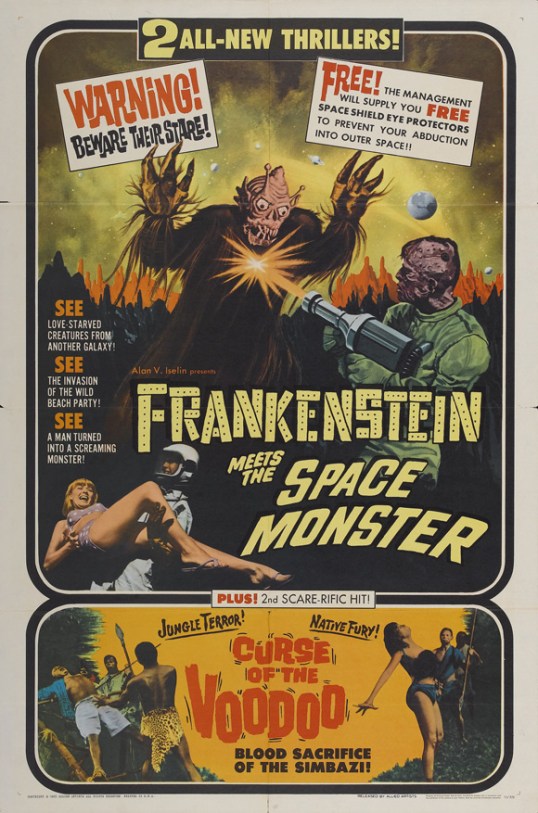
For today’s selection of horror on the lens, we offer up the odd 1965 horror/sci-fi/beach movie hybrid, Frankenstein Meets The Space Monster. Despite the movie’s title, it’s not about Frankenstein. Instead, it’s about an astronaut named Frank who is actually an android. When his latest mission into space goes wrong, Frank ends up crashing in Puerto Rico. Now malfunctioning, Frank causes some major chaos. Can his creator, Dr. Adam Steele (played by character actor James Karen, who years later would appear in Return of the Living Dead), track Frank down and put an end to his reign of terror?
And what about the Martians? Android Frank isn’t the only threat in Puerto Rico. A group of Martians have landed and are determined to kidnap any girl wearing a bikini so that they can use them to repopulate their race. We’re told that every woman on Mars — with the apparent exception of Princess Marcuzan, played with evil haughtiness by Marilyn Hanold — has been killed as the result of an atomic war. Assisting Princess Marcuzan is Dr. Nadir (Lou Cutell), a short, bald Martian with pointy ears.
One of the oddest things about Frankenstein Meets The Space Monster is that, despite being a standard — if wonderfully nonsensical — low-budget B-movie, it features a great soundtrack!
Beyond Belief: Fact or Fiction aired off-and-on for about five years on the Fox network. A sign of just how randomly this show was scheduled can be found in the fact that season 3 started in 2000 while season 4 didn’t start until 2002. Reruns of the show currently air on the Chiller Network which is where I recently discovered it.
Hosted by Jonathan Frakes, each episode would present the viewers with five different stories. Each story would appear to defy logic and then, at the end of the episode, Frakes would reveal which of the stories were fact and which were fiction. The show was often incredibly silly and yet, it occasionally had an odd charm to it. A lot of this was due to Jonathan Frakes, who always seemed to be rather amused with it all.
Even more importantly, as bad as this show often was, it’s the perfect type of show to watch in October. It’s the television equivalent of a scary story being told around a campfire.
Below, you’ll find the final episode of the third season. Can you guess what’s fact and what’s fiction?
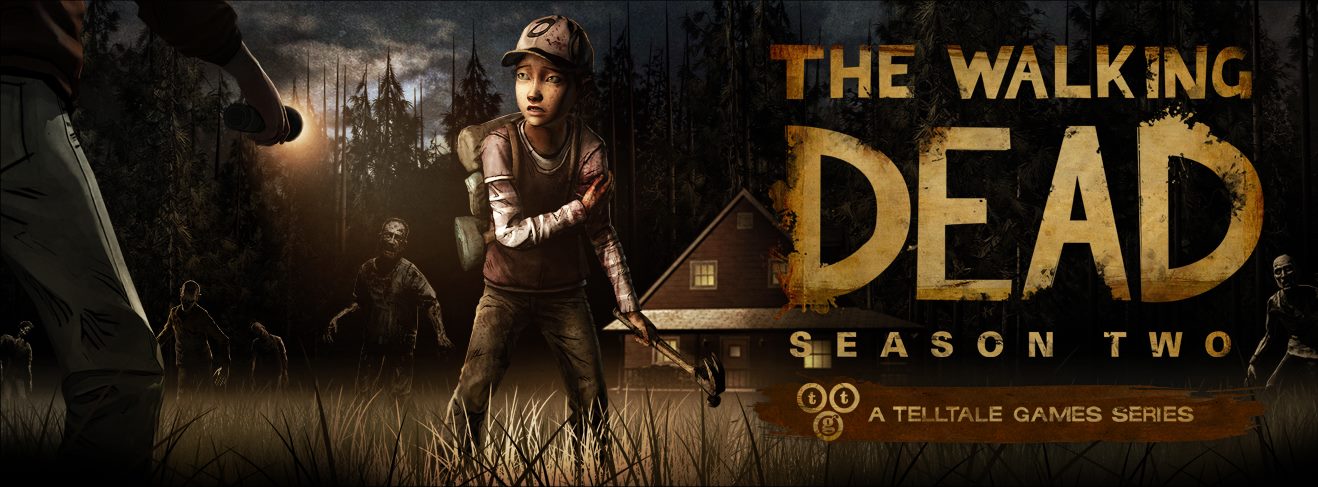
The Walking Dead by Telltale Games scarcely needs any introduction. Widely agreed to be one of the best games of 2012, its narrative dictated by your choices punched at the player’s gut with its strong emotional content in a subtle sidestory of atonement, fatherhood, and of course, survival, in the zombie universe of The Walking Dead.
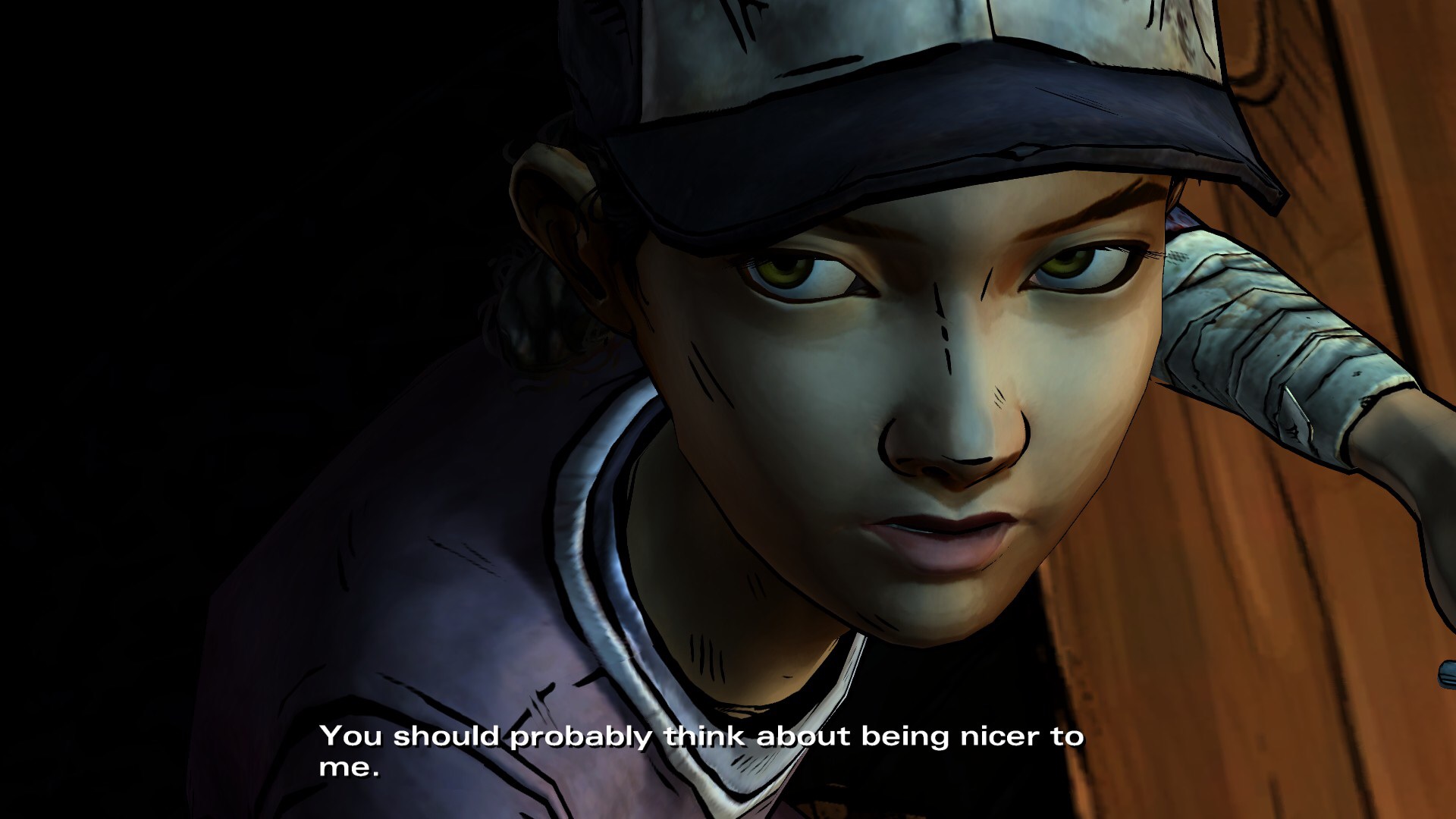
Clem does keep that hair short, whether you like it or not.
However, the gameplay and its difficult choices were an illusion. A magic trick. As long as you looked at the story you didn’t notice how much you didn’t make a dent at the course of the storytelling. Two playthroughs will prove that the story is almost exactly the same, even if you interpreted protagonist Lee Everett two polar opposite characters. Not that it mattered, since it was made to play once; to become emotionally involved and keep your little saved game until next time, for the next season, much like the TV Series.
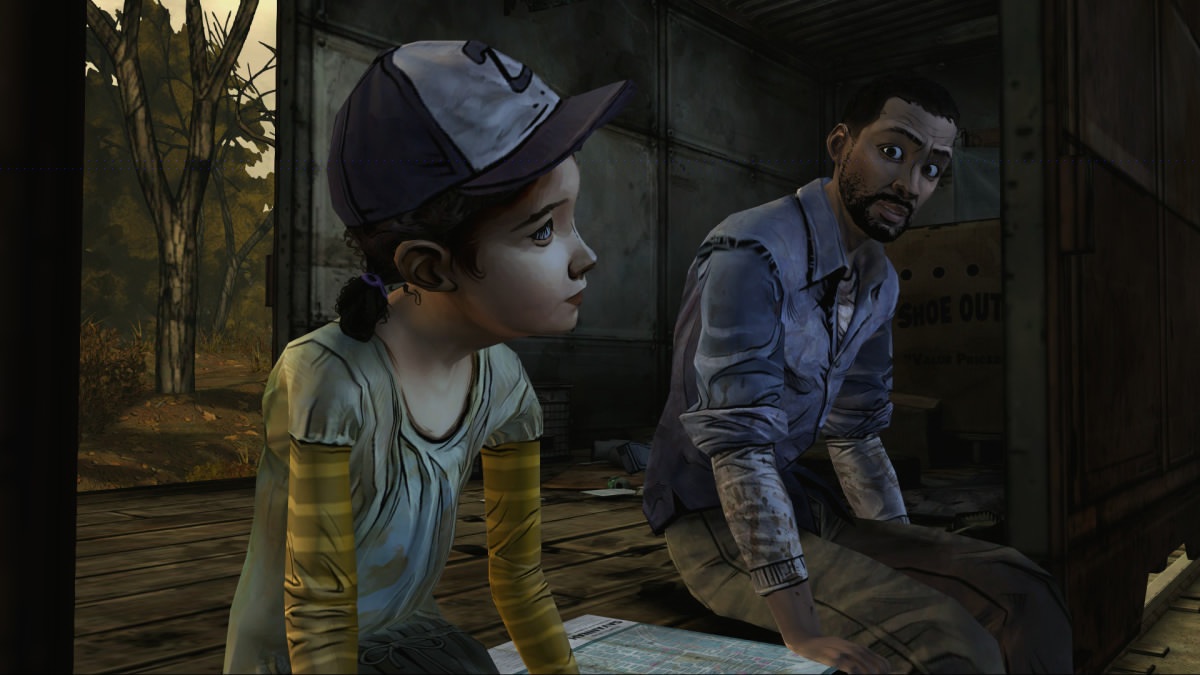
And so it came to pass that Season Two came out. Through the emotional roller coaster we go again, load your season one save for vaguely rewarding shoutouts to your playthrough of season one. This time the story is set two years after the its predecessor. You play as Clementine, Lee’s (now) eleven year old protegé. Having survived through the hell zombie apocalypses tend to dish out, young Clem is not the the little girl up in the treehouse anymore, having become sullen and untrusting, used to the bedouin life of scavenging and killing after society breaks.
The story does progress ostensibly slow at first. Episodes One and Two may appear as uninspired reflections of the original game and may be hard to tolerate for some, but it’s worth it. Seeing the full game, they are justified. The magic trick was being set up again, with more flair this time. As you start interpreting this little girl’s choices and behavior, you start to become emotionally involved again. Her persona becomes an extension of your own (Verily, in a way, you become an eleven-year old, which is super fucking weird). By episode three it’s all set, and you’re looking at the magic hand again, while the other supposedly weaves a defined scenario.
Reminder: Eleven years old.
This time is different though. If in the first game you (Lee) took the role of leadership, in Season Two, you (Clem) are the pivot character. People want to do what’s safer for the child, she is the motive of concern of every survivor group, and being forced to take sides ultimately creates different paths that don’t end the same way, in contrast to Season One. The multiple endings pay off. Enthralled by this story, you’re encouraged to follow through it as if you were a wildly different person, with feelings and thoughts. You feel the weight of being Clementine.
From the beggining of episode three to the end of five, the last one, Clem is swept in a crescendo of intrigue. The group is trying not to break and she is often encouraged to voice her opinions, except when she disagrees with someone, in which case it doesn’t matter because adults know better. But that may also mean that she’s agreeing with another person, and her opinion is defended as the most important because the weakest needs to feel safe. You can’t seem to fix this group, driving it further into discord in fact. You may take one side entirely or try to keep things nice and easy for everyone, and in the end you are responsible for Clem’s fate. For better or for worse. The subject “Clem” and the subject “you” are sort of interchangeable in this paragraph.
The new season is more emotionally complex and more morally ambiguous. Really, it’s about the evil that men do rather than zombies. Though not an entirely original concept, Season Two does create a very nice example of it. It’s difficult to say if it’s better or worse than the first one. It’s just different. However, it shows improvement in its immersion and narrative, and proves that Telltale is capable of carrying on the quality of their own version of The Walking Dead.
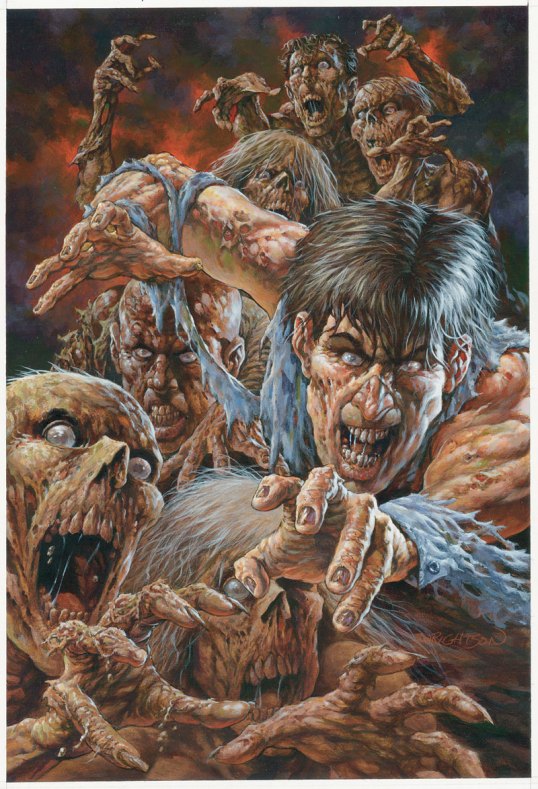
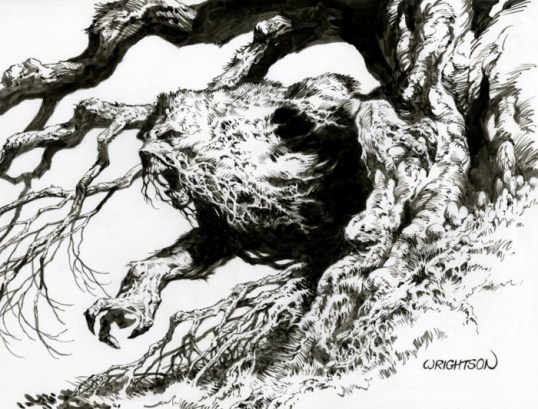
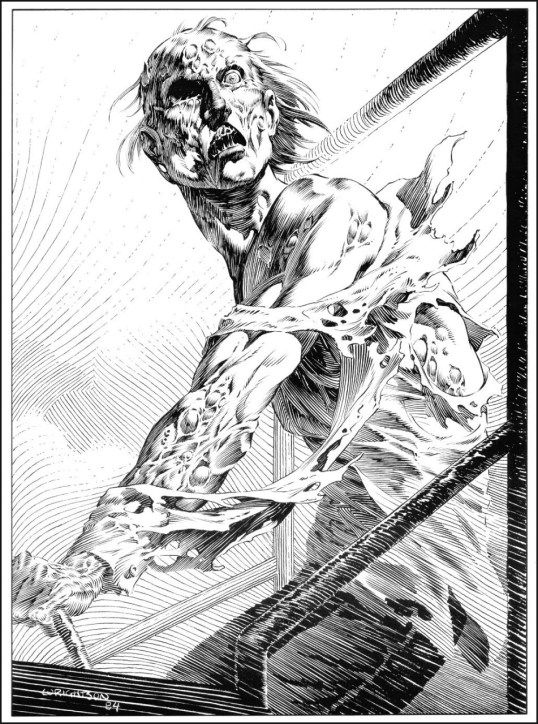
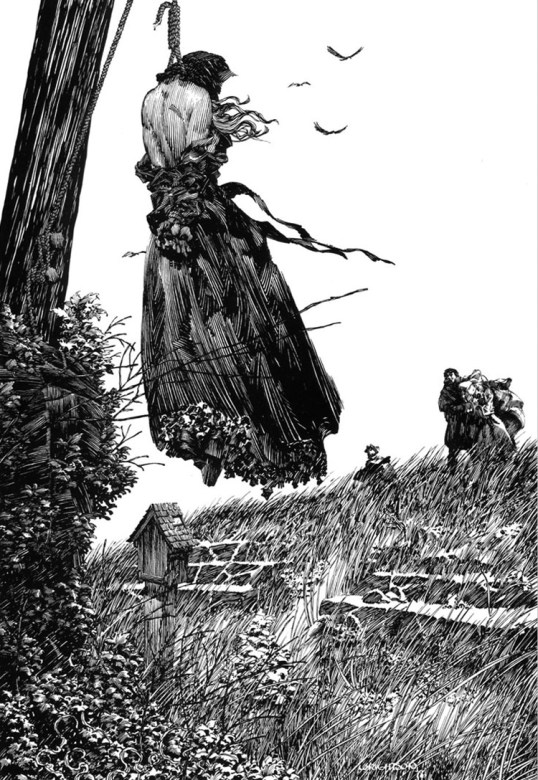
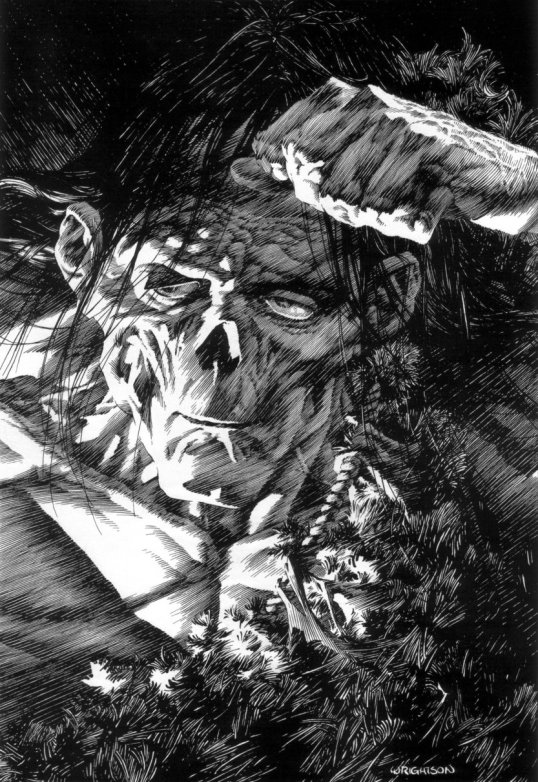
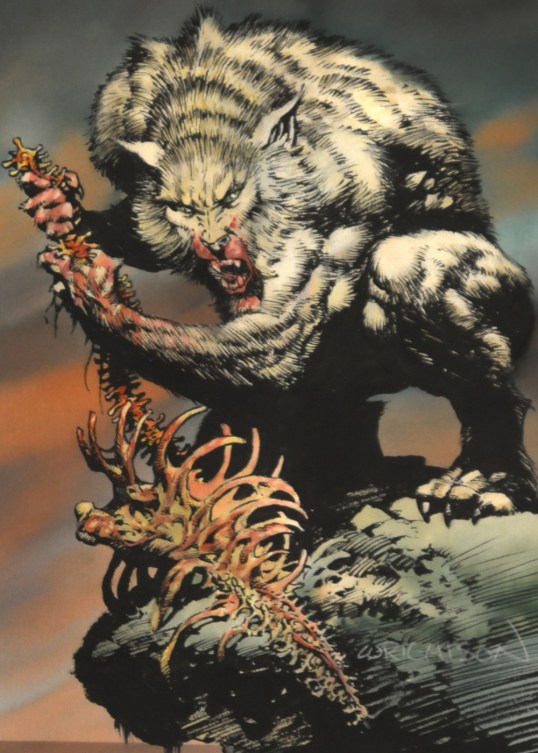
Horror fans know who Bernie Wrightson is even if not by name, but by the work he has done in the horror field.
Born in October 27, 1948, Bernie Wrightson has made his name creating some of the more recognizable horror illustrations since the 1970’s. Wrightson would have his break out work in conjunction with Len Wein in co-creating the character Swamp Thing for DC Comics in 1971. In time, Wrightson would move on from DC Comics and the character he created for Warren Publishing that were well-known for producing black-and-white horror titles.
Throughout the years, Wrightson would end up producing some classic images for horror stories ranging from Mary Shelley’s novel Frankenstein right up to several Stephen King novels (The Stand, Cycle of the Werewolf and Wolves of the Calla).
Here’s to hoping that Wrightson has many more years of horror work ready to fire up the imaginations of horror fans everywhere.
For today’s Horror on the Lens offering, we present you with The Night Flier, a 1997 adaptation of a Stephen King short story. Miguel Ferrer plays a sleazy tabloid reporter, named Richard Dees, who is pursuing a serial killer who could very well be a vampire.
I have to admit that I’m not quite as big a Stephen King fan as some of my fellow writers here at the Shattered Lens. In fact, I’ve been meaning to write a “10 Reasons Stephen King Is Overrated” article for a while. Far too often, it seems like Stephen King adaptations manage to capture all of King’s weaknesses without making use of any of his strengths. However, The Night Flier is one of the more effective King adaptations. It’s no Shining but it’s still better than The Shawshank Redemption. Plus, it features a great lead performance from Miguel Ferrer.
Anyone who have gotten to know me throughout the years (decades even) know one indisputable fact and that’s one of my favorite films of all-time is George A. Romero’s classic horror masterpiece, Dawn of the Dead.
This film is not just a great horror film, but just a great film. Sure, some have said that it hasn’t aged well, but those detractors only see the era it was filmed in. If one looks part that then they can see that Dawn of the Dead works just as well now as it did when it premiered in 1978.
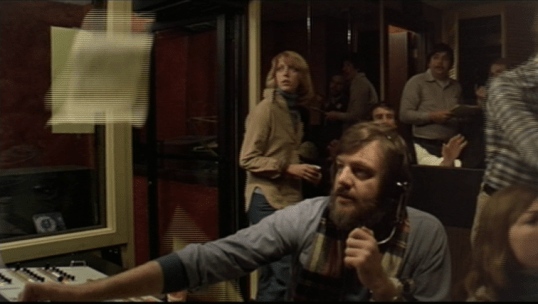
One of my favorite scenes in the film is actually the beginning of the film. It’s rare that a film can fully capture and explain an overriding theme in the film’s narrative right from the beginning, but Romero did it and did it well.
The scene I’m talking about is the film’s intro that’s set in a chaotic Pittsburgh TV station. It’s a scene of chaos because the zombie apocalypse is already in full swing and people have begun to lose their trust in the fourth estate. In times of crisis the people depend on the news to bring to them answers or, at the very least, the correct information to survive said crisis. In Dawn of the Dead, the fourth estate has failed as in that they’ve become just as unreliable as the rest of the mechanisms which make civilization operate.
Even when the right information was being relayed by the the guest scientist in the scene, the audience reaction (the tv station crew themselves) was one of exasperation and disbelief. This scene would influence future zombie apocalypse stories both in film, tv and print in that the people would lose faith and trust in the very institution who were supposed to be trusted to be objective and informative.
This is just one of several scenes from Dawn of the Dead which I consider a favorite, but then the entire film I would consider a favorite scene as a whole in a story that hasn’t ended.
In many ways, 2014 was the year of Hercules. Or, at the very least, it could have been the year of Hercules. Neither one of the two Hercules film released this year exactly managed to set the American box office on fire. Of the two, The Legend of Hercules was memorable largely for being forgettable while the Dwayne Johnson-starring Herculeswas far better than any film directed by Brett Ratner has any right to be.
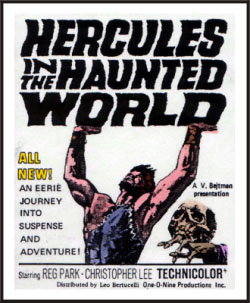
Neither one of them, however, can really hold a candle to the 1961 film, Hercules In The Haunted World. In this Italian film, Hercules (Reg Park) discovers that his lover Princess Deianira has gone insane so he goes to Hades in order to get the Stone of Forgetfulness, so he can use it to cure her. The story’s really not that important. What is important is that this visually stunning film was the first color film to be directed by Mario Bava and that the film’s villain is played by Christopher Lee.
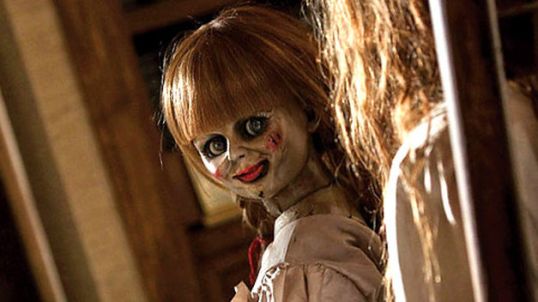
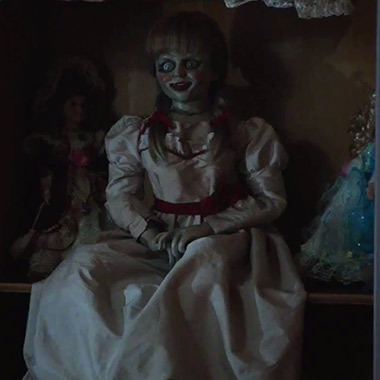
Remember Annabelle, the tres creepy doll from The Conjuring?
Well, she’s back and she’s starring in a film of her very own! Annabelle is the first horror film to be given a wide release this October and, judging from the commercials, New Line Cinema and Warner Bros. are really hoping that you’ll remember just how scary and effective The Conjuring was when it comes time to decide whether you want to see Annabelle or Gone Girl this weekend.
Of course, Annabelle actually have very little do with The Conjuring. Though Father Perez, the token concerned priest played by Tony Amendola, mentions Ed and Lorraine Warren, neither one of them actually appears in the film. Neither do any of the other characters or ghosts from The Conjuring. The only link between the two films is that doll.
Taking place in 1969, Annabelle is an origin story of sorts. Doctor John Gordon (Ward Horton) buys a doll for his pregnant wife, Mia (Annabelle Wallis). The doll looks evil from the minute that Mia unwraps it but, according to the film, it was actually harmless until a psychotic hippie girl (Tree O’Toole) bled on it. That blood seeped into the doll’s eye and the next thing you know…
No, I’m not going to spoil it for you. In fact, it’s really not necessary for me to spoil it for you because I imagine you can probably guess everything that’s going to happen. If you’ve ever seen a haunted house film, you know exactly what’s going to happen when John goes to work and Mia gets left in the house alone. If you’ve ever seen a demonic possession film, you can guess what’s going to happen when Mia happens to stumble across the occult book store next door. And, if you’ve ever seen any film, you can guess that the book store is managed by a sassy mystic played by Alfre Woodard.
That’s right! There’s nothing surprising about Annabelle!
But that’s not necessarily a bad thing. Horror films are unique in that they often times actually benefit from being so predictable. You watch in dread because you know that something terrible is going to happen even though the characters in the film do not. You know enough to yell, “Don’t open that door!” but the characters in the film don’t. That’s exactly what makes a film like Annabelle scary.
The Conjuring, I thought, was not only a great horror film but it was also one of the best films of 2013. That’s because, along with being a scary movie, The Conjuring also dealt quite intelligently with very real issues of faith and family. The Conjuring was fun to watch because it was scary but it stayed with you because it was full of subtext. Annabelle, on the other hand, is a film without subtext. Everything important about Annabelle can be found right on the surface.
Annabelle is a film that exists solely to scare you and how much you enjoy it will probably depend on how much you enjoy horror films to begin with. The shock scenes are handled well, with an emphasis on sudden noise on the soundtrack and intimidating shadows appearing in the background. Everything that distinguished The Conjuring — the attention to detail, the lively performances, and the imaginative plotting — has been pushed to the side to make room for the next scare.
As a result, Annabelle is one of those films that makes you jump while you’re watching it but doesn’t stick around in your head afterwards. If you’re a fan of the horror genre and like a good scare, you’ll probably find something to enjoy in Annabelle. (It’s no Devil’s Due but it’s still better than the latest Paranormal Activity film.) If you’re not a horror fan — well, then you probably weren’t planning on seeing Annabelle in the first place.
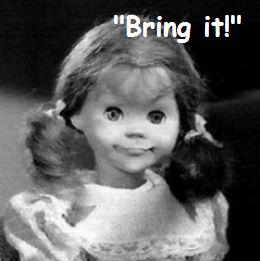
Today’s televised horror is the Living Doll episode of The Twilight Zone. This memorably creepy episode takes a look at what happens when a suburban jerk of a father (played by Telly Savalas) gets into a fight with his daughter’s doll, Talky Tina (voiced by June Foray). Things do not end well for one of them.
Seriously, don’t mess with Talky Tina.
This episode was directed by Richard Sarafain, written by Charles Beaumont, and originally broadcast on November 1st, 1963.





 Through the Shattered Lens