If you’re a fan of movies about the military, like Arleigh or Erin, you will probably be excited by the first trailer for the upcoming World War II film Fury. I have to admit that I’m not particularly a fan of war movies but I still think that the Fury trailer is undeniably effective. I don’t know if I’ve quite bought into the idea that Fury is going to be an Oscar contender (as some Oscar bloggers are suggesting) but the trailer still suggests that Fury will, at the very least, be better than The Monuments Men.
Monthly Archives: June 2014
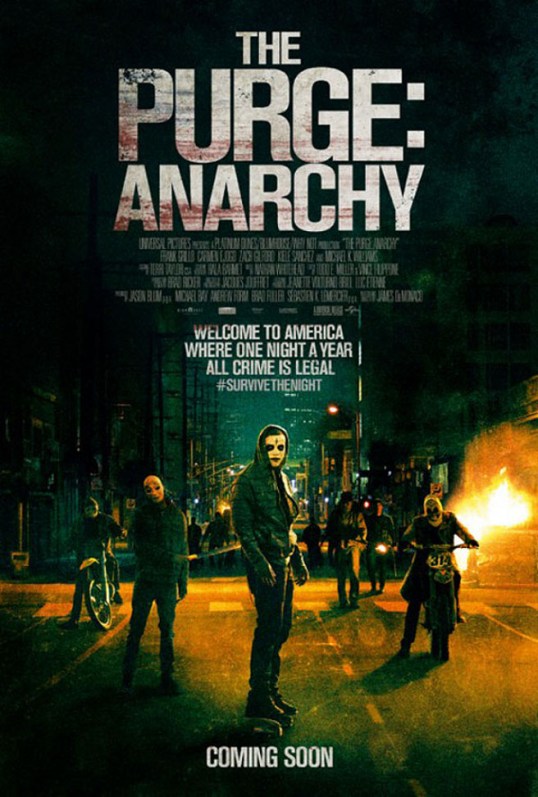
The Purge: Anarchy Trailer #2: Grillo Strikes back
Last summer’s surprise hit, The Purge, was something that ended up being better than it should’ve been. Using a premise that the United States of America has a yearly 12-hour event where all crimes are legal in order for the population to vent their frustrations was an interesting one. The fact that this event was cooked up by what the film calls America’s Second Founding Fathers was a nice touch.
The film itself started well enough but ended up becoming another take on the home invasion trope. At least, the box office success of the film meant a sequel was quickly greenlit. What we have with The Purge: Anarchy takes the original film’s premise and goes much wider in scope and scale. Instead of the film using a home invasion premise we now go the “Most Dangerous Game” route. If we’re to believe what the latest trailer is showing it’s that the Purge Event might be something cooked up by those rich and powerful.
We also have the very awesome Frank Grillo channeling his inner Frank Castle and using the Purge event to find those who killed his son in the year’s previous Purge.
This sequel has me more excited for it than I probably should, but if the film pulls off half of what this trailer promises then I’ll be satisfied.
Oh, if The Purge was real then people better not be trying to give me a visit because I’m ready.
Scenes That I Love: Eli Wallach Searches For The Gold In The Good, The Bad, and the Ugly
I just heard that, earlier today, the legendary character actor Eli Wallach passed away at the age of 98. Wallach made his film debut in 1956’s Baby Doll and made his final film appearance 54 years later in Wall Street: Money Never Sleeps. I have to admit that I don’t really remember much about Wall Street or Wallach’s performance in the film. However, I do remember his wonderful cameo appearance in The Ghost Writer.
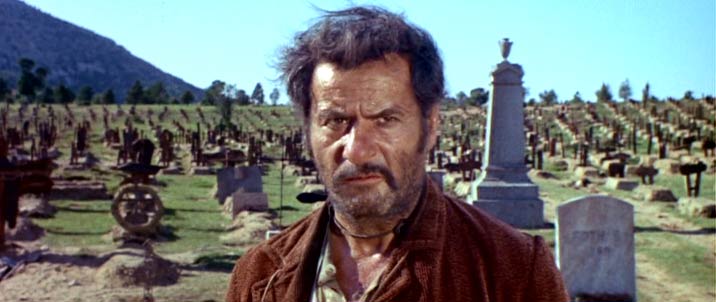
And, of course, everyone remembers Eli Wallach’s best role, that of Tuco in Sergio Leone’s classic spaghetti western The Good, The Bad, and the Ugly. In the role of a comedic yet ruthless bandit, Wallach brought a lot of life to Leone’s epic portrait of greed in the west. His unabashedly flamboyant performance provided a wonderful (and much-needed) contrast to the more stoic performances of Clint Eastwood and Lee Van Cleef.
For me, the best scene in The Good, The Bad, and the Ugly is one in which not a single bullet is fired nor a word uttered. In this scene, Tuco has finally discovered the cemetery where a stolen shipment of gold has been buried. All he has to do is find Arch Stanton’s grave and he’ll be a very rich man. What Tuco did not take into consideration was just how many other graves there would be in the cemetery.
This is a rare moment in the film in which Tuco is not speaking but just watch Wallach’s performance here to see how much a great actor can do with just body language and facial expressions. (Needless to say, Ennio Morricone’s classic score helps out as well.)
Eli Wallach, R.I.P.
Quick Reviews: ‘Ida’ (dir. Pawel Pawlikowski) & ‘We Are The Best!’ (dir. Lukas Moodysson)
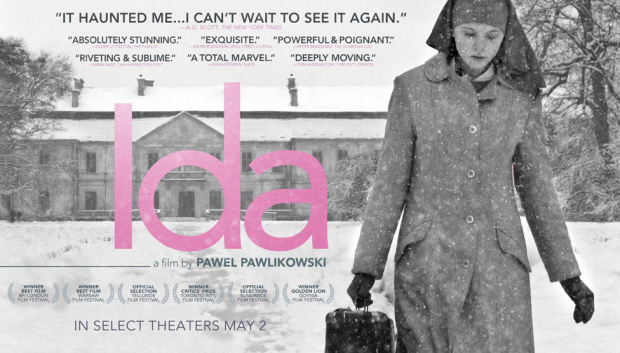
“Ida”, the best looking film so far this year, is the bittersweet story of a young woman named Anna living in a convent in Poland, waiting for the day when she will take her vows. Before that can happen, a Nun asks her to visit her aunt, the only known relative she has. During that visit she learns that her parents were Jewish and died during the events of WWII. Anna wants to know where they are buried, and so goes on a road trip with her aunt to their old family home to find answers. The journey opens her eyes to the joys and also sorrows of the world as she struggles with coming to terms with the past, present and her future. She now must decide whether she should stick with her devotion to god and err on the side of tranquility and solitude; or to live the life her mother couldn’t, risking pain and loss but possibly finding love and freedom.
It is an already beautiful story made more so through gorgeous cinematography and imagery. The sort that says more in each frame than its dialogue could ever hope to say. It is also the sort of Bergman-esque, quiet and contemplative, European film that I can only imagine will be more rewarding on multiple viewings. The performances are also wonderfully reserved, especially Agata Trzebuchowska who played Anna and has possibly the most mesmerizing eyes I have ever seen. It all adds up to an incredibly rewarding experience. Go see it if you get the chance.
“We Are The Best!”, one of the best films I have seen so far this year, is a wonderful story of youth, rebellion and friendship that perfectly captures the ups and downs of adolescences.
The film revolves around three young girls in Sweden during 1982. They are fans of punk, though all their classmates make a habit of telling them it is dead. One winter, after playing around in their youth club’s rehearsal space, they decide to make their own punk band to spread their own message…mainly how much they hate sports.
Their conflicts throughout this process are rather inconsequential. One of their parents is divorced and focuses more on men than her daughter; another’s is overly religious and restrictive. They are also often picked on in school, question their looks, and have the usual boy trouble one would expect from a film about a group of thirteen-year-olds. What sets this apart from those other films is that these conflicts, as I mentioned, are shown as just minor bumps in the road for these three; it is their love of music and each other, love that could see them through anything, that shines through. Plus, it is all just a whole lot of fun.
It is that wonderful and relatable portrayal of friendship and youth that fills “We Are The Best!” to the brim with warmth and heart. Honestly, if you don’t walk out of the theater with a smile on your face then I can only hope your cold icy heart sees you through the hot summer ahead!!
————————————————-
So, with that said, now that June is almost over here is my list of favorite films so far in 2014 (with trailers!):
1) Boyhood
2) We Are The Best!
3) Under The Skin
5) Ida
6) The Trip to Italy
7) The Grand Budapest Hotel
8) Enemy
Review: True Blood 7.1 “Jesus Gonna Be Here”
I have to start out this review of the 7th season premiere of True Blood with an explanation and an apology.
I always like to think that I can write a good review regardless of what else might be going on in my life. If I took a break from writing every time that I felt less than great, I certainly would not have ever reviewed Black Swan or The Perfect Teacher. Sometimes, you just have to take your medicine and get things done. That said, I should let you know that summer has just begun down here in Texas. Pollen is everywhere and I have spent today battling my allergies. I am definitely under the weather as I write this review and I apologize if that has effected my ability to properly consider tonight’s episode.
However, for the season premiere of a show that’s known for its complex storylines and huge cast, it doesn’t really seem like there’s much to analyze about what happened tonight.
Don’t get me wrong. True Blood has always been an uneven show. For every great episode of True Blood, there’s also a mediocre one. For every brilliantly drawn and acted character (like Kristin Bauer van Straten’s Pam), there’s been characters who have never quite reached their potential but yet remain in the cast. For every storyline that worked, there will be memories of Bill getting possessed by Lillith.
In the past, mediocre episodes or creative misfires did not worry me. I accepted them as being just a part of what happens with all long-running television shows. I accepted the occasional bad because I knew that the good would be great and I always knew that there was a chance that any creative miscalculations would be corrected in a future season.
However, we’ve now reached a point where there are no more future seasons. This is it! Season seven has ten episodes and then True Blood — as a television series — is over. Rumor has it that there will be a Broadway musical and I’m certainly looking forward to it eventually showing up on the community theater circuit because I really do think that I’d be a natural for it. But, until then, these final 10 episodes are all that we have left and True Blood — being True Blood — has a lot of storylines that it needs to somehow resolve so that viewers like me don’t feel like we’ve spent the last 7 seasons being set up for an anticlimax.
After all, we don’t want True Blood to end up like Dexter.
That’s why I can’t simply laugh off a mediocre or uneventful episode now. As I sat through tonight’s premiere, a part of me was thinking that things were moving slowly because the show is setting up the foundation for a proper and satisfying finale. However, another part of me wanted to scream, “HELLO — WE’VE ONLY GOT 10 EPISODES LEFT! THESE HAVE TO COUNT!”
And I will admit — though this may have been the headache talking — I did end up hissing at the screen, “Where. The. Hell. Is. Erik!?” As we all remember from last season’s finale, Erik was last seen naked on a mountain, bursting into flame as the sun shined down on him. The important thing, however, is that we never saw Erik explode into red goo. I chose to believe that Erik is still alive and, apparently, Pam agrees with me because tonight’s episode found Pam in Morocco searching for Erik. There really weren’t enough scenes featuring Pam but I was happy for what we got of her. Pam’s snarkiness always brings True Blood to life. Hopefully, Erik will show up next week.
As for everyone else:
Tonight’s premiere began where season 6 ended. A group of infected vampires attacked a human-vampire mixer at Bellfluer’s. During the attack (which was well-filmed but still a bit too chaotic for its own good), vampire Tara is apparently killed and Holly and Arlene are kidnapped by the infected vampires. Sam, who is now the mayor, orders that all the humans go home with an uninfected vampire, the idea being that the human will feed his vampire in return for protection. Nobody is really happy with the arrangement and, as quickly becomes apparent, everyone blames Sookie. What people don’t consider is that Sookie can hear their accusatory thoughts. At the end of the episode, she goes to church and tells everyone off. So, it looks like Sookie is once again frustrated with living in Bon Temps and thinking about saying goodbye to all of the drama and going off on her own. Then again, that’s pretty much what always happens to Sookie.
(Sookie, incidentally, is now in a relationship with Alcide and good for her! I still have a feeling that she’ll end the show with Sam but when you’ve been through everything that Sookie has, you’ve earned the right to spend a few nights with Alcide.)
Meanwhile, Sheriff Andy and Bill spent the episode looking for the kidnapped humans and I have to say that Andy has actually turned into a badass, even getting to save Bill from a group of human vigilantes. However, Andy assures Bill that, even if there are temporarily allies, Andy still hates Bill and every other vampire.
Jessica, meanwhile, is stuck outside of Andy’s house, protecting Adelyn. Despite the fact that Andy ordered his daughter not to invite Jessica inside, Adelyn does allow Jessica to enter to escape both the rising sun and to thank her for protecting her from a random vampire who wanted to drink Adelyn’s blood. Once inside the house, Jessica nearly attacks Adelyn but manages to stop herself.
And finally, Jason has sex with his vampire girlfriend. It’s not an episode of True Blood unless Jason is having sex with his vampire girlfriend.
I always enjoy watching True Blood and I’m looking forward to the rest of the season but I have to admit that I was a bit disappointed with tonight’s premiere, which seemed to move slowly and, oddly for True Blood, didn’t really seem to be too concerned with moving any of the show’s dozen or so storylines forward. Hopefully, future episodes will pick up the pace because, after all, we’ve only got nine more left and they have to count!
And, hopefully, Erik will return.
Soon.
“Empire Of The Dead” #5 : George Romero’s Grand Chessboard Finally Comes Into Focus
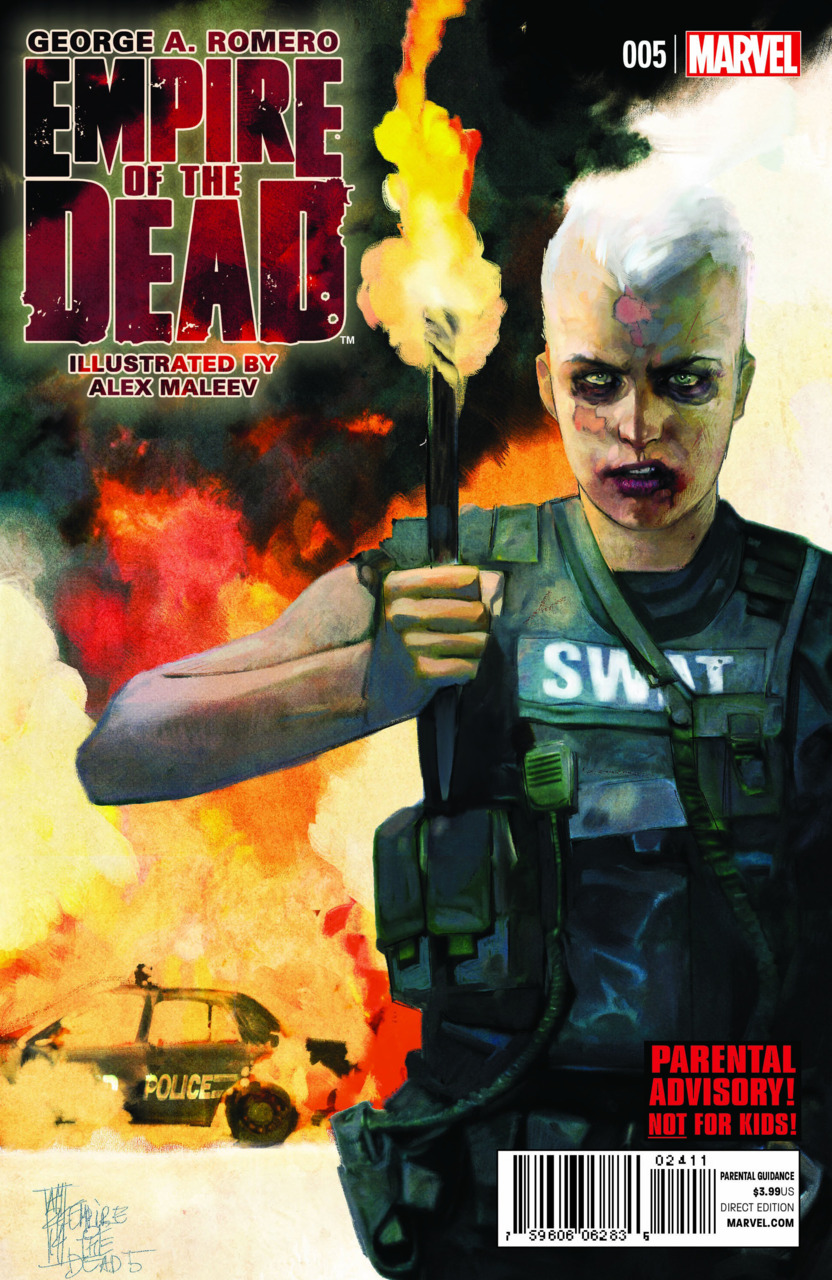
If it seems like it’s been awhile since we looked at a new issue of Empire Of The Dead around these parts, that’s because it has — the fifth and final segment of the first arc in George Romero’s printed-page zombie epic (officially titled in the copyright indicia as George Romero’s Empire Of The Dead Act One #5) is a good few weeks late in maintaining its purportedly monthly schedule, but now that it’s finally here, let’s not waste any more time, shall we?
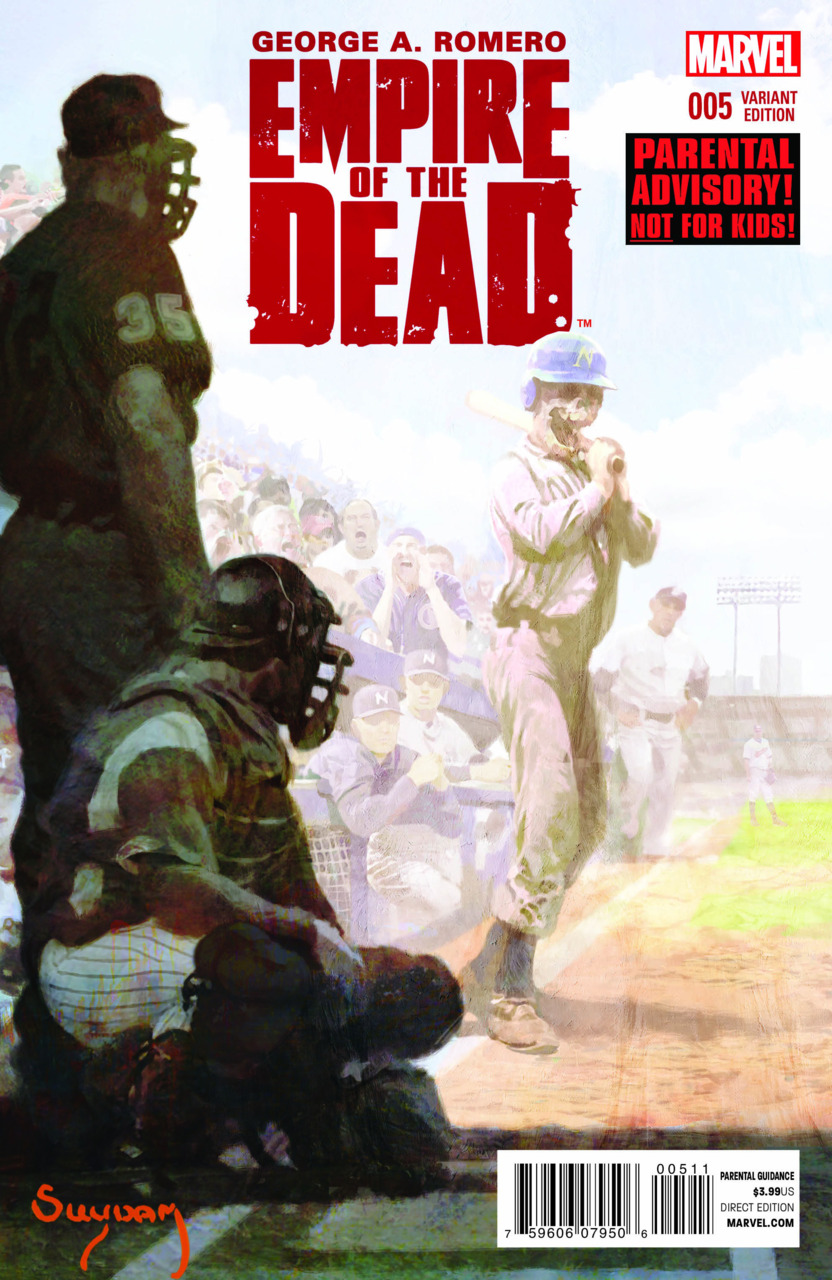
I’ve remarked previously about how this first arc seems more and more like pure set-up the longer it goes on, and I’ve wondered aloud about just how the father of the modern zombie genre was going to bring all the disparate subplots he was working on together in time for at least something resembling a decent climax by the time this issue was over, but I also stated that I still had an innate trust in our guy George’s storytelling ability and reiterated each time I felt like things were headed at least slightly off the rails that I was still reasonably certain that he’d find some sensible way connect all his metaphorical dots before the sand ran out in his equally metaphorical hourglass. As it happens, it seems my faith was not misplaced, because Empire #5 does exactly what you want all good “season-ending” stories to do : brings the overall picture into much clearer view while simultaneously whetting your appetite for the next new episode — and the TV “season” analogy probably isn’t a bad one here given that Romero and artist Alex Maleev (how ’bout that awesome cover he’s cooked up for this one, huh? Arthur Suydam’s “NYC variant,” as they’re known, is reproduced a couple of paragraphs below) will be returning for their second five-issue “act” in September, right around the same time most television series begin their new episodic runs.
But damn — I don’t really wanna wait that long, ya know? Romero opens the action here in issue number five by delivering Xavier and her makeshift army of “smart” zombies right into the hands of Dr. Penny Jones and “trainer” Paul Barnum, and leaves us with one of his trademark ethical quandaries : will the marginally-more-intelligent undead horde be better off as lab rats, or fodder for coliseum death matches? Either outcome seems grim, and Romero seems to be taking the editorial stance we’ve grown accustomed to from him over the years : the real “monsters” here are the humans, and the zombies can’t win either way unless and until we butt out and leave them the fuck alone.
Palace intrigue is the other major order of the day here, and without giving too much away I’ll just say that the vampiric Mayor Chandrake’s sloppy-ass nephew, Billy, finally screws the pooch here and sees his recklessness get him cut off from the “family business.” Not to worry, though : unbeknownst to all, including Billy himself, this blood-drinking version of Fredo Corelone has friends in high places, who are distinctly unhappy with how his uncle is running the show and think it might be time for some new leadership in New York.
And speaking of friends in high places, it turns out that Southern hell-raiser Dixie Peach and her motley crew of social deviants and hell-raisers might just have some, as well — and they’ve got guns. Lots and lots of guns. And tanks. And bazookas. And grenades. And everything else an ambitious young sociopath might require for a fun night on the town. They’ve also got one thing Dixie herself doesn’t seem to possess — an agenda, and how she fits into that (as well as for how long) remains something of an open question as their siege gets underway on this issue’s climactic final page.
If it seems like I’m pretty stoked at this point for act two, you’re absolutely right. My only real “beefs” with this issue — and they’re comparatively small ones — are that Maleev’s art does, in fact, look a little bit rushed in some spots, and Romero’s dialogue veers into ever-clunkier territory as things progress. Don’t get me wrong : on the whole the visuals are still quite striking and perfectly suited to the story, but especially for a book that a good 3 or 4 weeks late, I’d expect more consistently-good-looking panels, and Maleev looks like he was cranking it out in order to meet his deadline (not that he made it) in several places here. The dialogue thing is both more excusable and less : obviously Romero had to get a lot done in a short amount of time here, so overly-expository “info-dumps” are to be expected, but if he’d paced himself a bit better earlier on (remember what a complete waste of time, story-wise, the second issue, in particular, was?) he might not find himself as hard up against the wall as he does here.
Overall, though, I can’t claim that these two factors, important as they are, detracted too much from my overall enjoyment of this issue. Nine out of ten of Maleev’s images still look amazing, and events in the story aren’t just moving at this point, they’re flat-out steamrolling. I would expect that Marvel will be issuing a trade paperback collection of this initial run sometime fairly soon in the weeks ahead, and this will probably prove to be an even stronger and more cohesive read in that format, so if you haven’t been following this series in its monthly (-ish) installments, that will give you a good opportunity to get caught up before the next series gets rolling.
Bring on September already!
Lisa’s Homestate Reviews: Louisiana and Sister, Sister
My sixth and (to date, anyway) final home state is Louisiana, where my family called Shreveport home from December of 1996 to May of 1998. Louisiana was the last state I lived in before moving back to Texas, where I’ve remained ever since.
Whenever people find out that I used to live in Louisiana, they always seem to automatically assume that means that I either lived in New Orleans or next door to the family from Duck Dynasty. They always seem to be somewhat disappointed to learn that I lived in Shreveport, which has a lot more in common with East Texas than with the things that most people visualize when they think about Louisiana. However, I will always have good memories of Shreveport and let me tell you why. For most of my childhood, I had a really bad stutter and, as a result, I was extremely shy. However, shortly after my 12th birthday, my stutter went away. Whether it was the result of spending hours with speech therapists or if it’s just something that I outgrew, Shreveport will always be the city where I stopped stuttering. (And, it should be noted, Shreveport may not be New Orleans but it still celebrates Mardi Gras. It’s just that the celebrations in Shreveport are a bit more …. sedate.) So, seriously — don’t say a word against Shreveport.
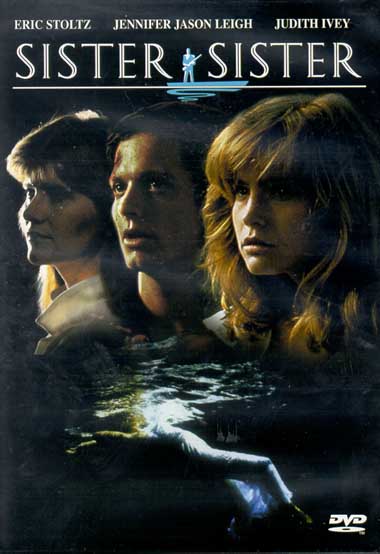
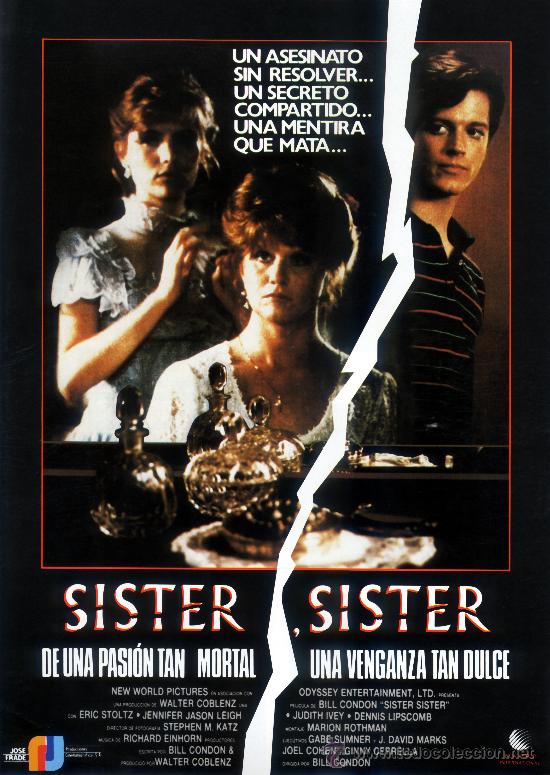
Besides, Shreveport has a wonderful atmosphere all of its own. In fact, the same thing can be said about all of Louisiana. With its long history and unique culture, Louisiana is perhaps the most atmospheric state in the union and that atmosphere is perfectly displayed in Sister, Sister, an effective little thriller from 1987.
Sister, Sister tells the story of two sisters living in a dilapidated mansion on the bayous. The older sister, Charlotte (Judith Ivey) is in love with Sheriff Cleve Doucet (Dennis Lipscomb) but she knows she can never marry him because she has to watch and protect her younger sister, Lucy (Jennifer Jason Leigh). Lucy is mentally unstable and claims that she can communicate with the ghosts that live in the bayous.
Charlotte and Lucy have turned their mansion into the boarding house and they rent a room to Matt (Eric Stoltz), a congressional aide who is taking his vacation in the bayous. Matt takes an interest in Lucy, which raises the suspicions of Etienne (Bejamin Mouton), a sinister handyman who appears to be obsessed with Lucy himself. As you can probably guess, nobody in this film is quite who he or she appears to be and it all leads to the uncovering of dark secrets from the past.
So, let’s just start with the obvious. The plot of Sister, Sister doesn’t make much sense. If you think about it, you’ll find a lot of improbabilities. So, my suggestion is that you just don’t think about it. Instead, watch the film for the performances of Judith Ivey and Jennifer Jason and the atmosphere of the bayous. Making his directorial debut here, future Twilight director Bill Condon captures a lot of haunting images of the bayou and his direction emphasizes mood over cheap thrills. The end result is a horror film that might not be scary but it certainly is creepy and stays with you after it’s over.
If nothing else, Sister, Sister is an effective B-movie. It’s also a nice showcase for my former home state of Louisiana.
Lisa’s Homestate Reviews: Colorado and Over the Edge
From August of 1994 to July of 96, my family lived in Longmont, Colorado. Whenever I think back to living in Colorado or the times that I’ve visited it since, there’s always two things that I remember. First off, Colorado had the cleanest air that I’ve ever breathed and, for someone like me who grew up with severe asthma, that’s a big deal. Secondly, Longmont had some great dance teachers. I may have taken my first dance classes in Texas but I’ve always liked to think that Colorado is where I first truly fell in love with dancing.
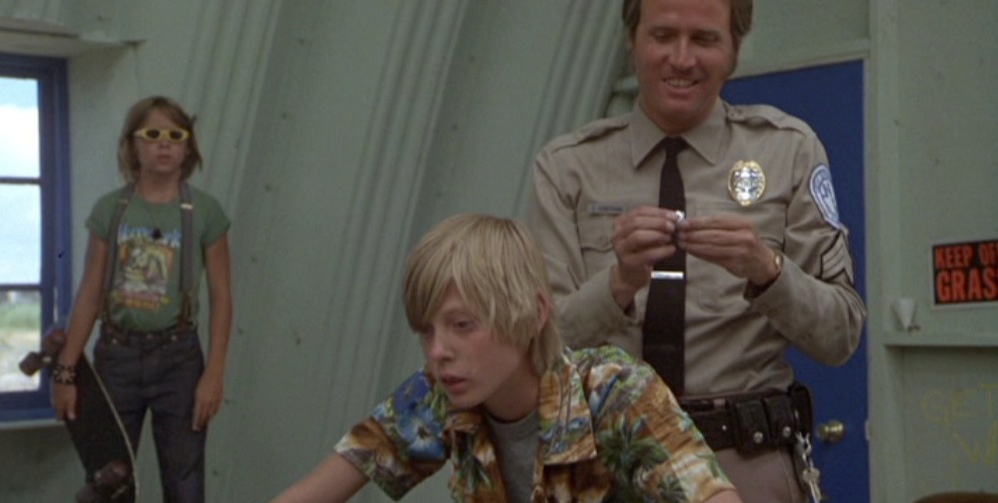
Fortuantely, my family and I lived in Longmont and not New Granada, the setting of the Colorado-shot 1979 film Over the Edge. New Granada is a planned community, a collection of identical houses and sterile buildings that sit out in the middle of the desert. The majority of town’s adult population views New Granada as less a home and more of a business opportunity. When their children misbehave, they worry less about why and more about how that’s going to effect the effort to get a visiting businessman to invest in their town. The streets of New Granada are patrolled by a fearsome cop with the very appropriate name of Doberman (Harry Northup). Doberman may claim to be maintaining the peace but, as quickly becomes apparent, he’s just a bully with a uniform.
Is it any wonder then that the teenagers of New Granada are out-of-control? Between living in a town where there is literally nothing to do other than skip school, smoke weed, and hang out at a dilapidated rec center and having to deal with parents who don’t really seem to want them around, the youth of New Granada are angry and Over the Edge suggests that they have every right to be.
When Mark (Vincent Spano) uses his BB gun to shoot a hole in Doberman’s windshield, Doberman reacts by blaming and harassing Carl (Michael Kramer) and his friend Richie (a very young Matt Dillon). When Doberman demands that Richie tell him who shot the BB gun, Richie replies, “I only got one law. Any kid who tells on another kid is a dead kid.”
Things escalate. When a Texas businessman visits the town, the rec center is closed in an attempt to keep any of the kids from being seen. Doberman arrests Claude (Tom Fergus) for possessing a gram of hash, which leads to Richie realizing that one of the kids has turned into a snitch. Doberman’s obsession with finding out who shot the BB gun leads to the death of one of New Granada’s teens. Eventually, the adults of New Granada attend an emergency PTA meeting down at the high school, just to find themselves locked into the building by their children, the majority of whom proceed to riot and destroy the town outside.
Directed by Jonathan Kaplan and based on a true story, Over the Edge is one of the best youth-in-revolt films ever made. Not only is it well-acted (with Matt Dillion in particular showing a lot of rebellious charisma as Richie) but it’s also unique in that it is totally on the side of the young people. While Over the Edge does not necessarily endorse the violence that dominates the film’s finale, it also suggests that acting out was perhaps the only option left to the teenagers of New Granada. That Over the Edge was made in the 70s is obvious as soon as you hear the soundtrack and see the clothes and hairstyles. However, with its portrayal of both youthful alienation and out-of-control authority, it’s still very relevant today.
It’s a great film with an absolutely hear-breaking ending and it’s one that you should see if you haven’t yet.
Lisa’s Homestate Reviews: Oklahoma and Terror at Tenkiller
When I was growing up, I lived twice in Oklahoma. In July of 1992, my family moved from Carlsbad, New Mexico to Ardmore, Oklahoma. We lived in Ardmore until January and then we moved to Texarkana. 3 years later, we would return to Oklahoma when we moved from Longmont, Colorado to Tulsa. We called Tulsa home for five months before my Dad got a new job working in Shreveport, Louisiana and we moved yet again.
Now that I live in Texas, I’m almost legally obligated to give Oklahoma a hard time but actually, it’s a pretty nice state. There’s a lot pretty scenery and, even more importantly, Oklahoma is home to some of the nicest people you could ever hope to meet. Add to that, I often feel that I owe my fascinating with the horror genre to Oklahoma. When we were living in Ardmore, there was an abandoned barn near our house and a group of mean older sisters and cousins of mine told me that there were monsters living inside of that barn. That inspired the very first nightmare that I ever had and, all these years later, I’m still scared of barns.
When I sat down to write a review of a film that was made in my former homestate, I ran into a problem that I really hadn’t planned for. There just aren’t that many movies that were filmed entirely on location in Oklahoma. At first, I thought I might go with either The Outsiders or Rumble Fish, since both of those films were shot in and around Tulsa but I really can’t say that I was enthusiastic about the prospect of sitting through and reviewing either one of those. Fortunately, I had the bright idea to check with Wikipedia and that’s when I first came across Terror at Tenkiller, an independent slasher film from 1987.
“Ah!” I thought, “a horror film, which will tie in nicely with my memories of that scary barn!”
Even better, I quickly discovered that some generous soul had previously downloaded the film to YouTube.
“Yay!” I thought, as I sat down to watch Terror at Tenkiller, “This may be bad but at least I won’t have to sit through The Outsiders!”
Anyway, Terror at Tenkiller is really, really bad. The acting is terrible, the film reveals the identity of the killer within the first few minutes and then actually has the nerve to brag about the fact that the killer is basically motiveless, all of the dialogue was rather clumsily dubbed into the film, and the film is so ineptly lit that you often can’t even tell what’s happening on screen. Yes, it’s a pretty bad film alright but I still have to admit that I enjoyed watching it.
What can I say? When it comes to my movies, much like my men, it’s impossible for me not to find something to enjoy about them. Even more importantly, I have a weakness for low-budget regional horror films. First off, the film takes place at Lake Tenkiller, which is absolutely gorgeous and, whether he was simply trying to pad out a thin story or not, director Ken Meyer wisely includes a lot of footage of the surrounding countryside. Secondly, the film is full of people who were obviously locals. What they lacked in acting talent, they made up for authenticity. I’ve had to sit through a lot of bad films that have featured a lot of professional actors trying their best to sound like they’re from my part of the world but, in the end, simply sounding like they’ve never even seen the Mason-Dixon Line, let along traveled below it. If I’m going to watch a bad movie, I’d rather watch a bad movie that gets the accents right as opposed to one where everyone sounds like they just failed their dialect midterm at the Actors Studio.
Finally, I think the argument can be made that the low-budget and the stiff acting and the random volume level of the dubbing actually works to this film’s advantage. If nothing else, these so-called flaws gives Terror at Tenkiller an undeniably dream-like feel. The surrealism of Terror at Tenkiller may be unintentional but does that make it any less effective?
Anyway, you can make up your own mind by watching below. The film itself is only 87 minutes long but the upload on YouTube has been divided into 6 different parts, each one of which lasts about 14 minutes. In the interest of space, I’m only embedding part one but, at the end of the video, you should be able to find links for the other five parts. If you’re at work, be warned. This film does contain some very brief nudity and you probably shouldn’t be watching movies at work anyway.
Lisa’s Homestate Reviews: New Mexico and A Million Ways To Die In The West
My family lived in Carlsbad, New Mexico from January of 1991 to July of 1992. I was only 5 years old when we arrived and 6 when we left so I really can’t say that I remember that much about Carlsbad, beyond the fact that my mom was always worried about rattlesnakes, I was excited about going to kindergarten and that, when my Dad announced that we were moving to Oklahoma, I cried and cried because, even at that age, I knew that meant I’d never get to see my friends again.
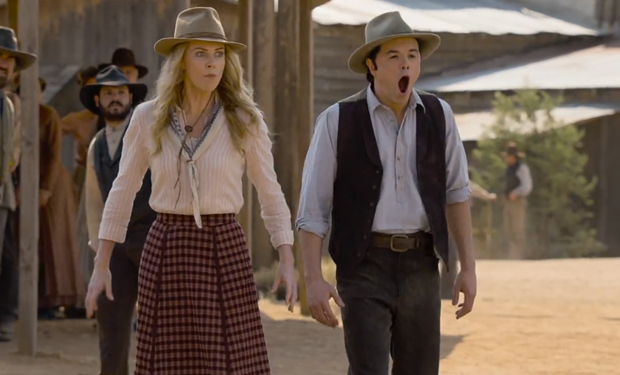
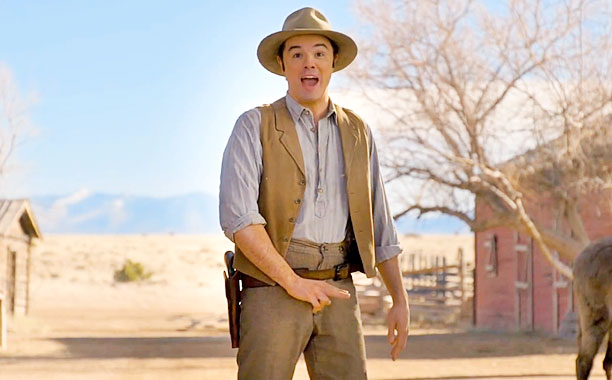
So yeah, some of my memories of New Mexico are a little traumatic. But are they as traumatic as watching Seth McFarlane’s A Million Ways To Die In The West, a film that was shot in New Mexico and which is an early front-runner for claiming the title of worst of 2014?
Written by, produced by, directed by, and starring Seth McFarlane, A Million Ways To Die In The West tells the story of a sheep farmer named Albert (played by Seth McFarlane) who basically spends the entire movie whining about how much he hates living in the old west. His girlfriend leaves him for … well, look, the plot is stupid. You knew the plot was going to be stupid when you first saw the trailer earlier this year. You probably even knew the film wasn’t going to be that good. However, as bad as you might think the film is, it’s nothing compared to how bad the movie actually is. And the blame pretty much rests with Seth McFarlane.
Seth McFarlane has got cold, dead eyes and a curiously unlined face that, when taken along with his ever-present smirk, tends to make him look like one of those horror movie mannequins that comes to life once the store closes and murders horny teenagers. I understand that it’s always been a part of McFarlane’s act to present himself as being an asshole with a heart of gold but, for the most part, that works best when you only have to deal with his voice. The minute that you see his smug face, which is as immobile as his voice is expressive, the heart of gold part disappears. All your left with is an asshole who insists on telling the same joke over and over again. As both a comedic writer and director, McFarlane’s technique is to basically beat the audience into submission, dragging jokes out to such an interminable length that you eventually laugh because you simply cannot believe that you’re wasting so much time watching this crap. Some people have mistaken that technique for genius. Those people should be forced to watch A Million Ways To Die In The West in much the same way that Malcolm McDowell was forced to watch violent movies in A Clockwork Orange.
(And I write all of that as perhaps the only woman in the world who was not offended by Seth McFarlane singing The Boob Song at the Academy Awards, if just because the joke was clearly meant to be at the expense of McFarlane and the overage frat boys who seem to make up his fan base.)
A Million Ways to Die In The West is full of familiar faces. Liam Neeson goes totally overboard as the film’s villain. Neil Patrick Harris, as usual, is fun to watch, or at least he is until he’s forced to take part in one of McFarlane’s trademark endless musical numbers. Eventually, Harris’s character gets slipped a laxative and it’s just as disgusting as it sounds. Giovanni Ribisi plays McFarlane’s best friend and his joke is that he’s a Christian (yes, Seth takes on Christianity — what a rebel!) and that his girlfriend (Sarah Silverman, who deserves better) is a prostitute who is willing to have sex with everyone but him. Amanda Seyfried has the thankless task of playing McFarlane’s girlfriend while Charlize Theron plays the enigmatic woman who teaches Seth how to shoot a gun. (Theron gives a far better performance than this movie deserves and it was hard not to wish that the entire film had just been about her character.) There are also several celebrity cameos — Ryan Reynolds, Christopher Lloyd, and even Jamie Foxx show up.
But, ultimately, the entire film is about Seth McFarlane. He wrote it, he directed it, and he stars in it. Seth McFarlane dominates this film and that’s the problem. What might be slightly amusing in a 22-minute cartoon is not going to be funny enough to sustain a nearly two-hour film. For a rambling and often aimless film like A Million Way To Die In The West to succeed, it needs a star who is both skilled at comedy and likable enough that he’ll be able to anchor the mayhem. (Seth Rogen, for instance.) Instead, we’re given a smirking Seth McFarlane and the end result is a film that somehow manages to be both forgettable and a disaster.
Now, you may be wondering how I ended up watching this film. Well, originally I wasn’t planning on ever seeing it but then I started to read reviews about how terrible it was and I was like, “This is a film that I definitely need to see for myself, so that I can see if the film is actually a misunderstood masterpiece or if it’s a film that I’m going to have to keep in mind when I’m compiling my annual list of the year’s worst films.” (Plus, when I arrived at the theater, The Fault In Our Stars was sold out.) But anyway, I sat through it and I forced my sister Erin to watch it with me and I think Erin may be on the verge of finally forgiving me.
Finally, what was more traumatic? Leaving behind my friends or watching this movie?
Too close to call.