Kid Midas


I was thinking that the Marvel Universe is in dire need of a new villain instead of constantly rehashing mega events with the same old people or promoting villains like Norman Osbourne to a world wide threat.

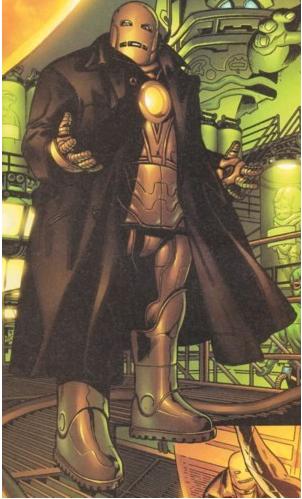
I believe Dr. Midas from Grant Morrison’s Marvel Boy series would fit the bill for a major world wide threat. He’s a ruthless perversion and amalgam of Iron Man and the Fantastic Four. Everyone from his minions to his own daughter are mere stepping stones to him. Sure he *spoiler*ended up on some immaterial plane of existence at the end of the miniseries*spoiler* It’s comics so there’s always a way to bring him back.

My Idea:
Auric Midas is the cloned son of Dr. Midas. He is the designer baby developed in information-rich nutrient artificial womb and programmed with the memories of the original Doctor Midas.  He was awakened after the death of his “father” and before he could reach physical maturity.  Kid Midas resumed control of the Atlas Corporation and used a Ghost Box to acquire the vast technological resources available across the Multiverse.   He is eager to end Noh-Varr’s life for the shame that he has brought the Midas name in addition to retrieving his original cosmically enhanced self from the Mindless One’s home dimension.  Kid Midas will be shocked to discover that Dr. Midas has moved pass his petty pursuit of power from his time in the Mindless Ones’ dimension and is now reformed (along the lines of Kang mellowing out and become the philosophical Immortus).  There will be a mind switch and Kid Midas will gain the Cosmic Man body.
Skills:
Adept in multiple human and alien martial arts.
Proficient in the use of mechanized armor.
Fluent in numerous Earth and alien dialects.
Technology:

  1. SMGH is a variant of Mutant Growth Hormone created from cellular samples extracted from deceased and captured Super Skrulls.  It temporarily grants the user shape shifting abilities in addition to post human abilities.
  2. The Midas amulet is based on Darla Deering’s Thing Ring and contains the Midas Suit in its unstable molecules state.
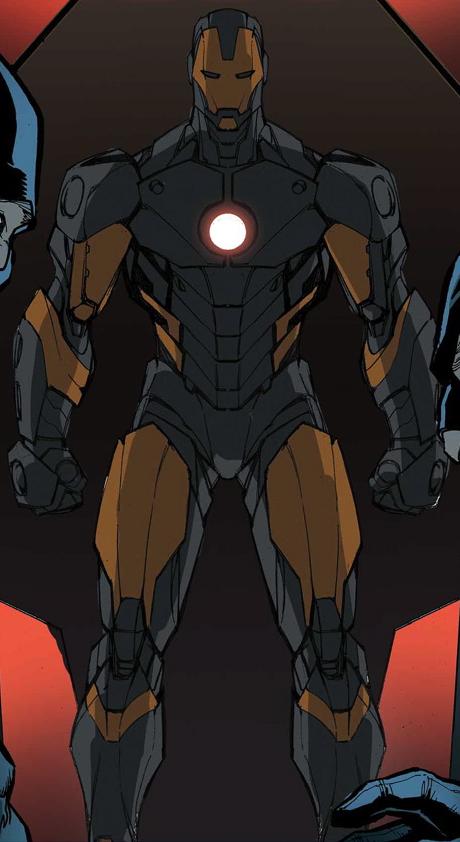
  3. The Midas Suit is an unstable molecule variation of the Thing Exoskeleton derived from a damaged sample of Dr. Midas’ cosmically irradiated and enhanced flesh.   Its design is based on Anthony Stark’s Iron Man Armor Model 42.  Its molecular template retains the Cosmic Earth properties, its Cosmic Fire properties are stabilized by Pyronanos circuitry, and its Cosmic Air property was replaced with ghost technology derived from Omnisapient Systems.  It is powered by a Kirby Battery, a portable derivative of The Marvel’s Kirby Engine.

Midas Suit Properties:
It greatly magnifies the user’s strength, durability, stamina, and sensory perceptions.
The repulsor beam system has been modified to discharge fiery cosmic flames.
It propulsion system has been enhanced by the Pyronanos and grants hypersonic flight.  Its stealth technology grants invisibility and intangibility.
A concealed alien weapons array consists of Badoon particle rays, Skrull Photon Blasters, Nega Missiles (projectiles containing explosive Negative Zone energy), Shi’ar Raptor Armor concussive cannons (containing darkforce energy) and self-repair functionality.

The Original Dr. Midas by J.G. Jones
DrMMrvB

Iron Man Armor Model 42 by Greg Land
Iron_Man_Armor_Model_42_from_Infinity_Heist_Vol_1_1_cover

Machete Kills: Trailer #2


PCAS

So, when I saw You’re Next last weekend, I also saw the second trailer for Machete Kills.

The audience I saw seemed to be really excited about the trailer but I have to say that, after seeing it, I’m actually a bit worried about Machete Kills.  The first Machete was a parody of grindhouse filmmaking but it was an affectionate parody.  As over-the-top as it was, it still felt like it could have also been a genuine grindhouse film.

This trailer for Machete Kills, however, feels like the exact opposite.  Instead of celebrating the excesses of the grindhouse, this trailer feels more like it’s inviting us to mock the films to which it claims to be paying homage.

This trailer almost feels like it’s for a film that was made by somebody who has never seen an actual grindhouse film but who has seen plenty of YouTube videos.

Hopefully, I’ll be proven wrong.

Trailer: Inside Llewyn Davis


PCAS

This trailer has been around for a little while but, seeing as how I’m really looking forward to seeing this film, I figured I’d go ahead and share it here on the site.

Inside Llewyn Davis is directed by the Coen Brothers and it stars Oscar Isaac!  Seriously, what else can you ask for?


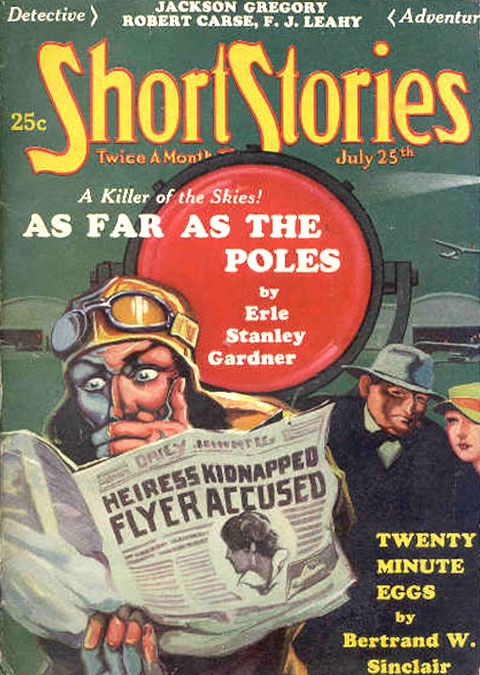
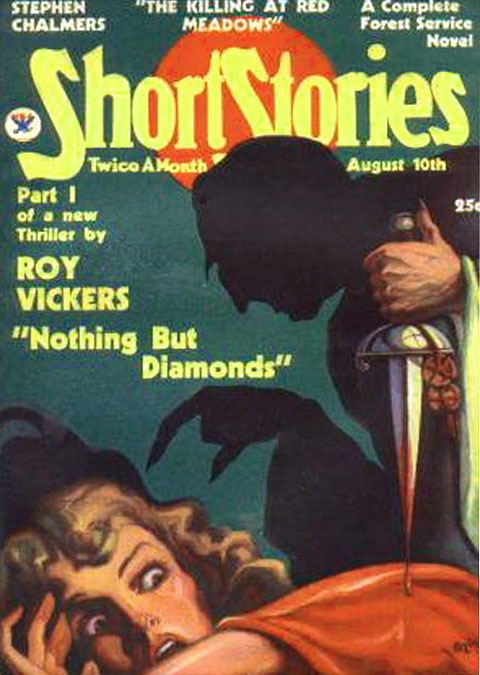
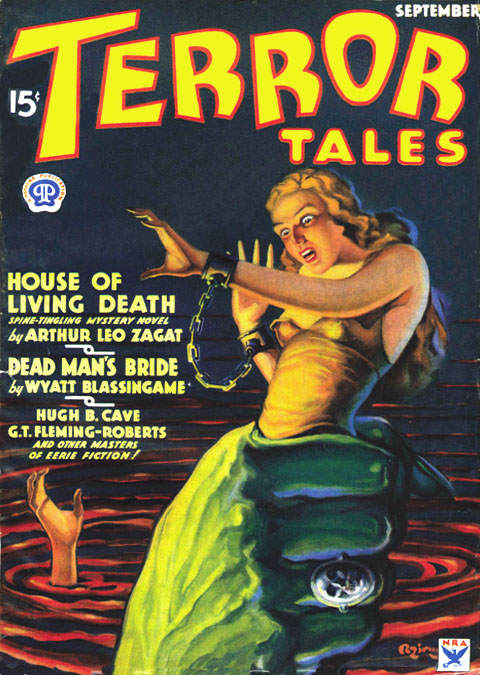
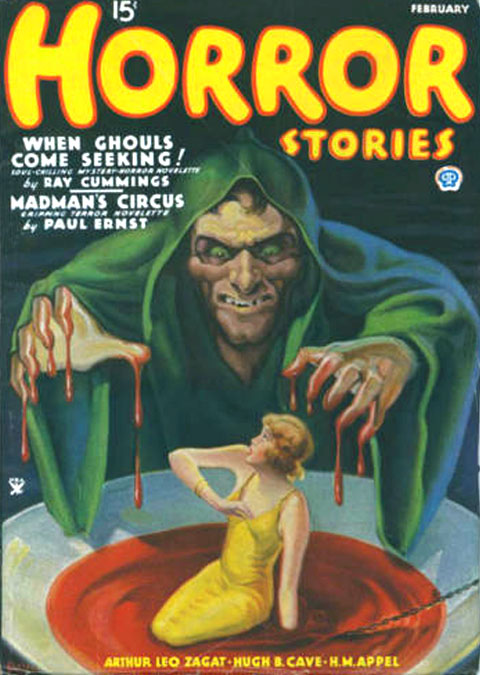
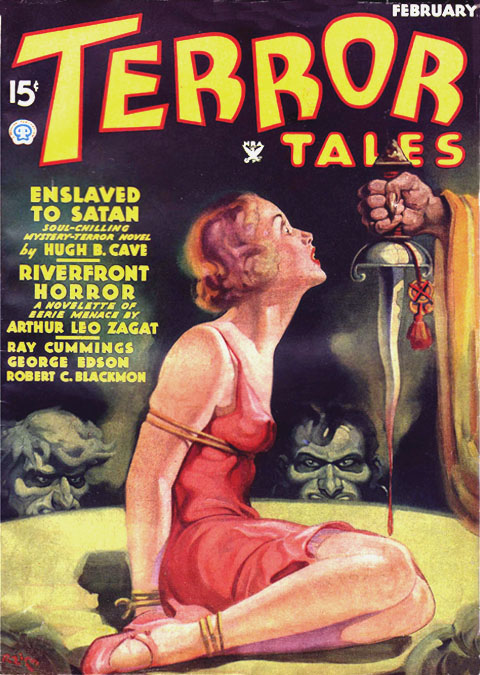
Artist Profile: Rudolph Zirm (1894 — 1952)


The son of German immigrants, Rudolph Zirm was born in New Jersey.  Though he never had any formal artistic training, Zirm pursued a career as a freelance artist after the print shop he worked at closed in 1933.  Though he only worked as an artist for 6 years and was never acclaimed during his lifetime, Zirm’s work is now highly praised and sought by collectors.

A sampling of his work can be found below.

Zirm1Zirm2Zirm3Zirm4Zirm5Zirm6Zirm7Zirm8

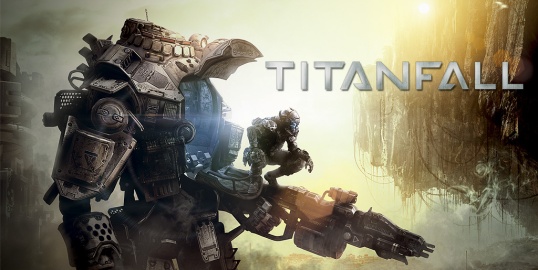
Trailer: Titanfall “Gamescom Gameplay”


TitanfallReveal

Titanfall is really turning out to be one of my most-anticipated game titles of 2013.

It’s the very first title for Respawn Entertainment. A studio made up of the people who first created the Call of Duty studio, Infinity Ward, and who ended up being fired (or leaving to follow their fired leaders) by the powers-that-be who held sway over Activision. There was talk about whether Respawn Entertainment would ever get a chance to show Activision and it’s detractors that they still had what it takes to succeed in the first-person shooter market dominated by three titles (Call of Duty, Battlefield and Halo).

Titanfall looks to dispel such notions first with a triumphant return to this summer’s E3 where they revealed the title to everyone to much acclaim. Now we got to see more of the gameplay itself both in mechanics and graphics at this past week’s Gamescom 2013 over at Cologne, Germany.

The gameplay trailer pretty much dispelled whatever doubts I might have had about this title and now has my money ready to be exchanged for it when it comes out for the Xbox One (for some on the PC or Xbox 360) in early 2014.

Let’s Second Guess The Academy: Best Picture 1993


Dazed and ConfusedOccasionally, I like to do a little thing that I call “Let’s second guess the Academy.”  This is when we look at the films that have won Academy Awards in the past and we ask ourselves, “Should that film have won?”

For this latest edition of Let’s Second Guess the Academy, let’s take a look at 1993.  The 1993 Academy Awards were dominated by Schindler’s List.  Steven Spielberg’s powerful Holocaust drama won both best picture and best director.   It remains the film by which all other Holocaust dramas are judged.

But did Schindler’s List deserve to win?  Or would you have preferred to see one of the other four nominees win the title of Best Picture of 1993?  Let us know by voting below!

Now, here comes the fun part.  Let’s say that Spielberg never got around to directing Schindler’s List.  And maybe The Piano never played in the states and The Fugitive bombed at the box office.  Let’s say that none of the five best picture nominees had been eligible to be nominated in 1993.  Which five films would you have nominated in their place?

Below, you can vote for up to five alternative nominees.

Dazd

Film Review: Fruitvale Station (dir by Ryan Coogler)


On January 1st, 2009, a young man named Oscar Grant was executed in Oakland, California.  Grant was returning home from celebrating the New Year’s in San Francisco when he and several other young black man were pulled off a train by the Bay Area Rapid Transit Police.  According to the police, Grant had been involved in a fight on the train.  In a moment that was recorded by several cell phones (and later broadcast across the world), Grant was shot in the back by a BART policeman.  According to the police, Grant had been resisting arrest and his executioner had meant to use his taser but had grabbed his gun by mistake.

The death of Oscar Grant made the news even down here in Texas and I can still remember discussing it with my friends.  As a bunch of good, white liberals (and yes, believe it or not, I was once a little bit liberal, though even back then I was, at heart, more of a civil libertarian than anything else), we were all properly outraged by what happened.  At one point, I declared that this proved that police hide behind the power of their tasers.  We all agreed that it was a terrible thing that had happened and that the cop involved needed to be held responsible.

Only recently did I realize that, even as fashionably outraged as me and my friend were and even though we did feel that this was a classic case of police overreactions, we also automatically assumed that the cop was telling the truth when he said that he meant to grab for his taser.  For all of our righteous indignation, we — as a bunch of white people who had spent most of our time living in white neighborhoods and white towns — still had a hard time accepting the idea that a white police officer had intentionally executed a black man.  As outraged as we were, we were assumed that we were angry about an aberration.  As such, we assumed that the shooter would be held responsible and we went on with our comfortably sheltered lives.  Needless to say, we were incredibly naive.  While the death of Oscar Grant made national news, it made far less news when the man who shot him was eventually sentenced to only two years in prison.  (He was paroled after 8 months.)

I’ve been thinking about Oscar Grant (and the way that my friends and I initially reacted to the news reports of his death) ever since I saw Fruitvale Station, a devastating independent film that also marks the directorial debut of Ryan Coogler.

Starting in the early morning hours and ending in the first hours of 2009, Fruitvale Station follows Oscar Grant (played, in an award-worthy performance by Michael B. Jordan) as he lives the final day of his life.  In between doing such every day things as buying a birthday card for his mother (played, in a luminous performance, by the great Octavia Spencer) and picking up his daughter from daycare, Oscar worries about how he’s going to pay his rent and struggles against the temptation to return to his former life of dealing drugs.

While we watch the film knowing what Oscar doesn’t — that this is the last day of his life — the film itself manages to be a lot more than just a recreation of a tragic event.  There’s a vibrancy and sense of hope to the scenes where Oscar drives through Oakland or hangs out with his family.  That vibrancy makes the film’s inevitable conclusion all the more powerful and devastating.

As for the actual shooting, Fruitvale Station leaves it to the audience to decide whether Oscar was intentionally executed or if he was shot by a cop who thought he was holding a taser.  As the cop who shot Oscar, Chad Michael Murray is only on-screen for a split second.  As the other cop on the scene, Kevin Durand (who played Martin Keamy on Lost) shouts and bullies as only Kevin Durand can do.  If the film leaves it ambiguous about whether or not Oscar was intentionally shot, it’s not ambiguous about the fact that Oscar was killed because, as a black man, he was automatically viewed as being a potential threat by the white police officers.  Whether the intention was to tase him or to shoot him, the ultimate goal was to reassert the authority of the police.

As Fruitvale Station makes clear, the shooting was both an individual tragedy and a piece of the larger tragedy that’s still being played out across this country.   The film’s triumph is that it makes Oscar Grant into both a compelling individual and a powerful symbol of the struggle that many Americans face as they try to survive under a system that’s been designed to keep them down.

So, have you seen Fruitvale Station?  If you haven’t, you need to.  It’s one of the best films of 2013.

Dance Scenes I Love: Cinema Italiano From Nine


Today’s dance scene that I love comes from the 2009 musical Nine.

To be honest, Nine is a terrible film that almost plays like it was specifically designed to parody flashy but superficial musicals. However, Nine is meant to be taken seriously and that’s is its greatest failure. Cinema Italiano is one of Nine’s better-known songs, despite the fact that, in many ways, it epitomizes a lot of what’s wrong with the film as a whole. For one thing, it’s obvious, from the lyrics, that the song’s writer knows very little about Italian cinema. (If anything, it sounds like the song was meant to describe the French new wave.)

And yet, I have to admit that I love the scene where Kate Hudson performs Cinema Italiano. I think it’s because, even though Hudson is not a great singer, she so throws herself into her performance that she wins the viewers over. This is the epitome of a guilty pleasure, a scene that I shouldn’t love and yet I do.

Payday 2


Payday2_logo_white

A little while back, a little studio called Overkill put a game on Steam called Payday: The Heist. The release completely passed me by. In fact, I was totally ignorant even of the existence of the title until a group of my friends all bought it and decided to start robbing banks together. They were so taken with it that they demanded that I join them, and I couldn’t have been happier with the purchase. We passed many nights (and into the early mornings, sometimes!) trying to grind our way through harder difficulties, and try to learn more advanced ways to stealth through the various ‘heists’, which included stuff ranging from your standard-issue bank job through a Left 4 Dead inspired hospital mission called, fittingly, No Mercy, where a shadowy anonymous buy was willing to pay bank in exchange for a sample of infected blood.

The game was marked by a number of good ideas. It includes minor RPG elements in that your account ‘levels up’ as you play more heists, granting access to useful abilities. In the original game, most of these bonuses were tied directly to weapons and armor and your ability to last in combat against the inevitable waves of police and SWAT forces that would attempt to keep you from escaping with your ill-gotten gains. Being stealthy at the start of a heist by using silenced weapons and preventing any civilian hostages in the area from escaping to summon help could pay significant dividends as you waited for your large thermal drill to bore its way into this vault or that one. A variety of weapons and gadgets rounded out your heisting arsenal, modeled off of real-life weapons augmented by just a bit of fancy. The game included multiple difficulty levels for every heist which would affect the number and types of enemies that spawn, and add other random factors that could make heists substantially more challenging. Indeed, that random AI Director feature of the game also helped its replayability dramatically, as heists could play out very differently if things went right – or very much wrong.

Payday 2 improves noticeably upon almost all of this. The heists are now more elaborate, including multi-day criminal enterprises (such as a ‘Watchdog’ mission where you must first secure a shipment of cocaine against an FBI operation, then in ‘day 2’ load the coke onto a drug boat at the docks, all while under police assault), and a wider variety of possible objectives – your crew are no longer strictly robbers, but rather highly skilled specialists for higher, men of limited principles and significant hardware.

The skill trees (Mastermind, Enforcer, Technician and Ghost, respectively) now include a wider variety of abilities, many of which can be directly employed for greater speed or stealth in the missions. Now, being a high level player with access to the best gadgets can make the simpler heists significantly easier, allowing the players to focus on the greater challenges of high difficulty level multi-day jobs. I personally find it very rewarding to try and work through missions in a stealthy way. Not only can some rewards become greater when you don’t have to battle you way through police lines, but the heists can also (often) be done cleaner and more quickly with the application of stealth. Returning is the oft-failing thermal drill which is the centerpiece of a number of missions where you try to gain access to a safe or other place you shouldn’t be, but this can now be circumvented if your technician is skilled enough to deploy shaped charges to blow off hinges, or if your ghost has an ECM Jammer that can bypass electronic security. The Mastermind can talk down inquisitive guards on the other end of the phone, easily intimidate and control civilians, and provide a slew of buffs to the group, and the Enforcer can (among so many other things) bring a powerful rotary saw to slice open less-imposing lockboxes, ATM machines, and encroaching enemies who draw too close.

Also notable in Payday 2 is a more credible electronic opponent. In the original game, the challenge was typically increased by sending more powerful units earlier in the mission, legions of ‘special’ units, and an unending stream of SWAT goons and their guns. To an extent, this is still completely true. However, the enemy now employs lesser raw numbers in favour of better tactics, and more threatening enemy units. Of course, stealth your way through the missions, and you may never have to suffer their wrath…

Payday 2 is not by any means a perfect game, however. The mission select is now done through an interface called Crime.net, which is a black and white overhead map of a city on which missions appear as ‘pings’ (as if the job just became available, complete with a timer before the job eventually disappears). Because of this system, if your crew is in favour of running a particular heist, it quite literally might take as long as half an hour of ‘browsing’ Crime.net for it to appear (or perhaps even longer!). In the most recent update, Overkill added some very basic filters to the Crime.net interface, allowing you to opt out of missions below a certain difficulty level… but this seems woefully inadequate. Though the game contains 10 heists, they re-use a couple of maps between them, and some of them are completely basic – there’s almost nothing to them. These are offset by some very complex heists higher up in pay scale, but some of them start to feel less replayable after a couple of solid nights with the group. This happened in the first game too, of course, but it’s much more annoying now with the obstacle of Crime.net possibly throwing you copy after copy of an undesirable heist that you are totally burned out on… instead of something you’d really like to do. I frankly do not understand the creative choice behind not offering better filters for this system.

While it is true that the police do not attack in such great numbers as before, they do still leave a lot of artifacts around the map, with corpses, piles of ammo, and miscellaneous gear (such as riot shields) strewn about, and I have seen the game start to chug on systems that are powerful enough to run many other contemporary games without issue. By its nature, this is probably something that’s hard for this game to overcome, but it’s a frustrating problem to have when the key resource that you need to enjoy this game to its fullest is friends who can also play it with you.

Yes, Payday 2 has in-game voice chat, and yes, you can jump into public games with strangers anytime you want. Some people might really enjoy doing so, in fact, and I don’t really mind it…. but I would much rather gather a group of 3 friends to roll with and work in tandem to complete heists. The AI team-mate can be valuable in combat because of their accuracy (though sometimes the team AI seems bewildered in a way the police AI rarely is… failing to respond even in a dire emergency) but is also frustratingly useless as they cannot transport filthy lucre, or drugs, or whatever, cannot advance mission objectives, and will occasionally blunder into unwinnable firefights against a legion of police in the middle of the street… where they can’t even be reached for a quick revive. As a result, you really want a full party, regardless of how you have to get it.

One thing to admire entirely about Payday 2 is its price point. At $29.99 on Steam (it’s also available on Xbox 360 and Playstation 3, the physical media involved means your price point will be $39.99 instead), this game has real value, though I can’t necessarily recommend it if you don’t have at least one friend who would be willing to buy the game as well and commit to playing it with you. Your mileage may vary with teaming up with strangers (I’ve had a mixed bag of results, myself) but I wouldn’t have purchased the game without friends I knew for certain would play, so I certainly won’t tell you to do it!