Today’s ghost of Christmas past comes to use from the year 1955.
Alfred Hitchcock Presents was an anthology show, in which director Alfred Hitchcock would sardonically present a weekly tale of suspense and surprise. The series’ 12th episode was a Christmas-themed episode in which character actor Barry Fitzgerald played a recently paroled convict who gets a job as a department store Santa Claus. Though Fitzgerald starts out as a rather grumpy and cynical St. Nick, he starts to get into the holiday spirit after he meets an equally cynical young shoplifter. It’s a surprisingly sweet little story that’s well-worth watching for Fitzgerald’s excellent lead performance.
We are halfway through the 44 Days of Paranoia! In order to mark this special occasion, I’d like to feature one of the first true American conspiracy films, the 1954 film noirSuddenly.
Suddenly takes place in the small town of Suddenly, California. (If only the town had been named Tranquility, so much trouble could have been avoided.) On the day that President of the United States is scheduled to visit the town, a group of gangsters led by John Baron (Frank Sinatra) takes over the house of the Benson family. It turns out that the Benson House overlooks the train station where the President will be arriving and Baron is planning on assassinated the President as soon as he steps off the train. Baron sets up his rifle in the family dining room and, while he waits for his target to arrive, he also has to deal with a steadily growing number of hostages who do not want the President to be assassinated in Suddenly.
Clocking in at just 70 minutes and basically taking place on only one set, Suddenly is a grimly suspenseful film that is all the more effective because it deliberately keeps Baron’s motives obscure. We know that someone has hired Baron to kill the President but we’re never quite sure who. In the role of John Baron, Frank Sinatra gives one of his best performances and invests the character with subtle menace.
Frighteningly, Suddenly has apparently recently been remade by Uwe Boll. That’s the type of news that will make any lover of classic film go, “Agck!” However, the original Suddenly has entered into the public domain so, if you have 70 minutes to spare, please feel free to watch it below.
However, 12 Years A Slave has been doing well with the smaller critics groups. Earlier today, it was named best picture by the Washington D.C. Area Film Critics Association.
Here’s the full list of winners from D.C.:
Best Picture: “12 Years a Slave”
Best Director: Alfonso Cuaron, “Gravity”
Best Actor: Chiwetel Ejiofor, “12 Years a Slave”
Best Actress: Cate Blanchett, “Blue Jasmine”
Best Supporting Actor: Jared Leto, “Dallas Buyers Club”
Best Supporting Actress: Lupita Nyongo, “12 Years a Slave”
Best Adapted Screenplay: John Ridley, “12 Years a Slave”
Best Original Screenplay: Spike Jonze, “Her”
Best Art Direction: Catherine Martin, “The Great Gatsby”
Best Cinematography: Emmanuel Lubezki, “Gravity”
Best Editing: Alfonso Cuarón and Mark Sanger, “Gravity”
Best Score: Hans Zimmer, “12 Years a Slave”
Best Foreign Language Film: “The Broken Circle Breakdown”
I haven’t seen that many episodes of The Brady Bunch but the few I have seen lead me to suspect that The Brady Bunch may be the most creepy show ever made. With their eternally optimistic attitudes and their total and complete faith in authority figure Mike Brady, you have to wonder if The Brady Bunch is a family or if they’re a cult. Plus, what was the deal with Alice? Was she an indentured servant? Did Mike Brady win her in a poker game? I mean, seriously, I’ve never seen anyone so happy and willing to devote her life to picking up after a bunch of entitled little brats.
However, I also know that some people love this show and see it as a perfect example of bizarre Americana. And I have to admit that I’ve often said, “Oh! My nose!” just to get a cheap laugh on twitter.
So, with that in mind, tonight’s Ghost of Christmas Past is the very first Brady Bunch Christmas episode. First aired in 1969, The Voice of Christmas tells what happens when Carol loses her voice. Does Mike use Carol’s lack of verbal ability to confess that he’s been cheating on her with his secretary? Do Marcia and Greg finally act on their secret feelings together while sharing a cup of coffee?* You’ll have to watch to find out!
——
* That’s a reference to what those of us who watch too much TV call the “Folgers Too Close Siblings commercial.” It used to air every Christmas but I haven’t seen it yet this year. Here it is, in case you’re curious:
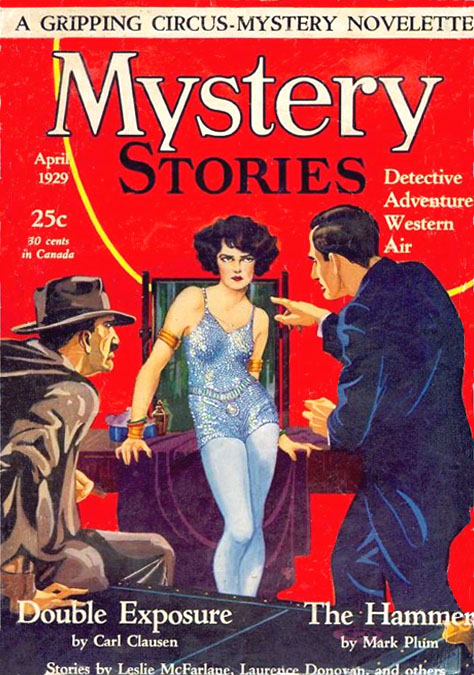
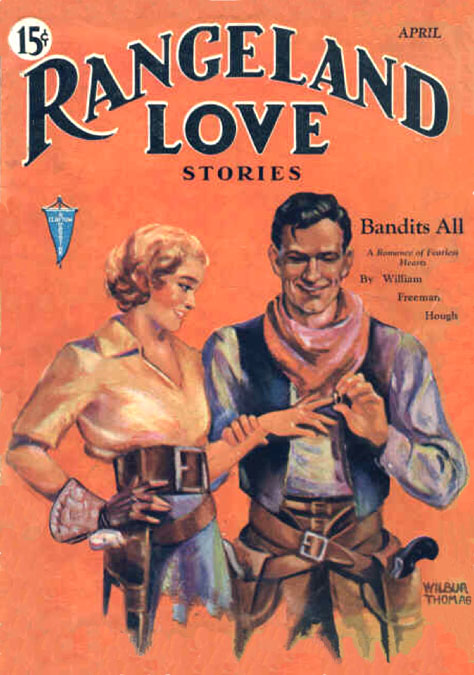
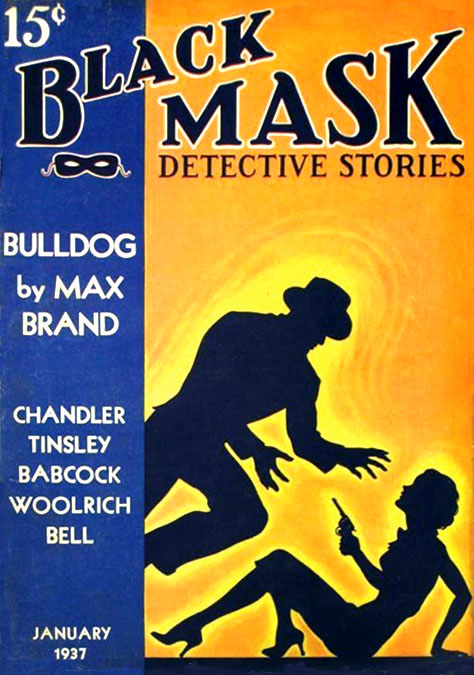
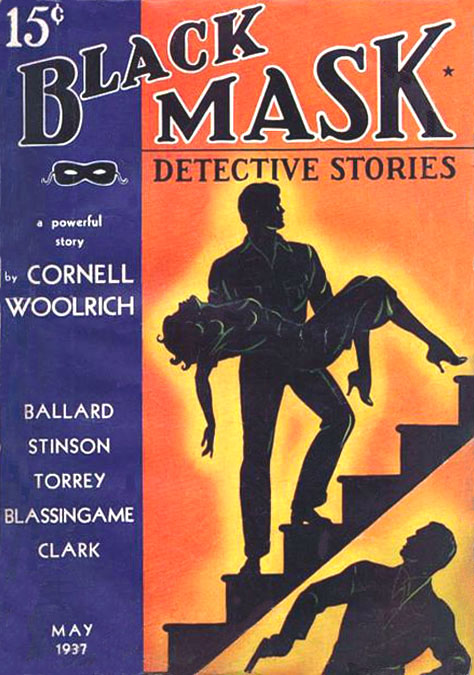
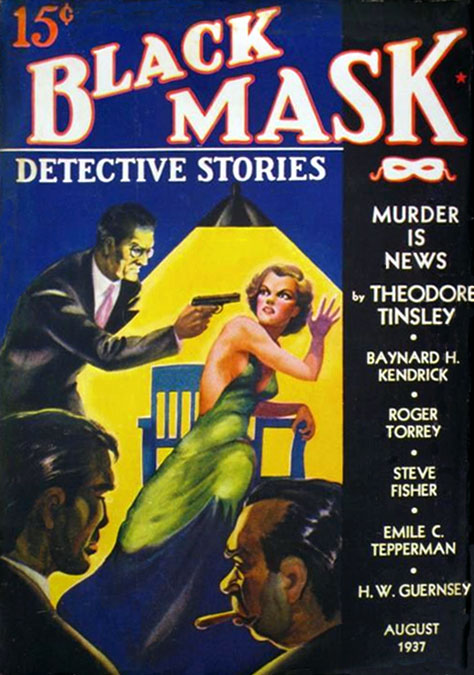
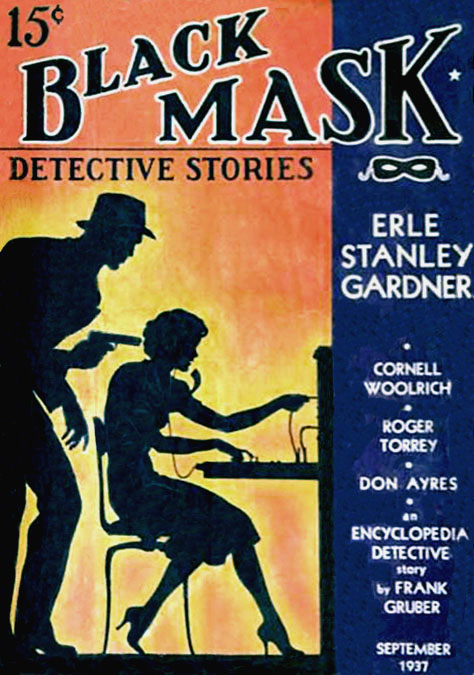
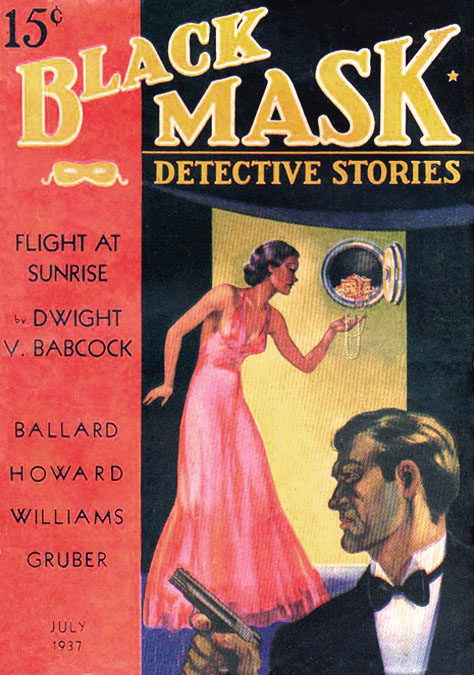
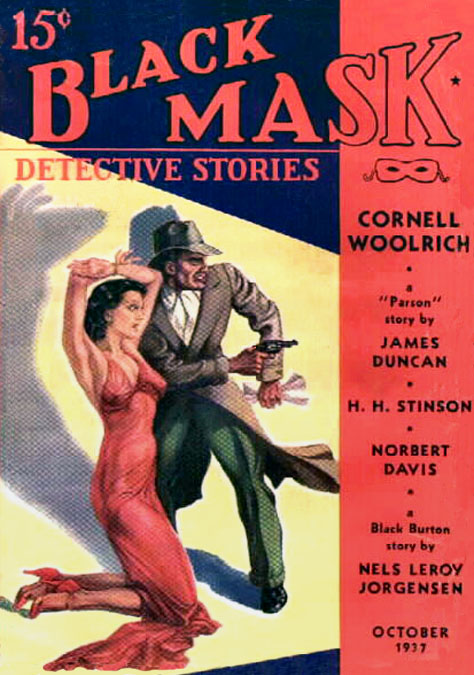
Wilbur Thomas painted covers for pulp magazines from 1929 until 1940, when he became the art director for an advertising agency. He is best remembered for several covers that he did for Black Mask, which featured shadowy figures caught in sinister acts.
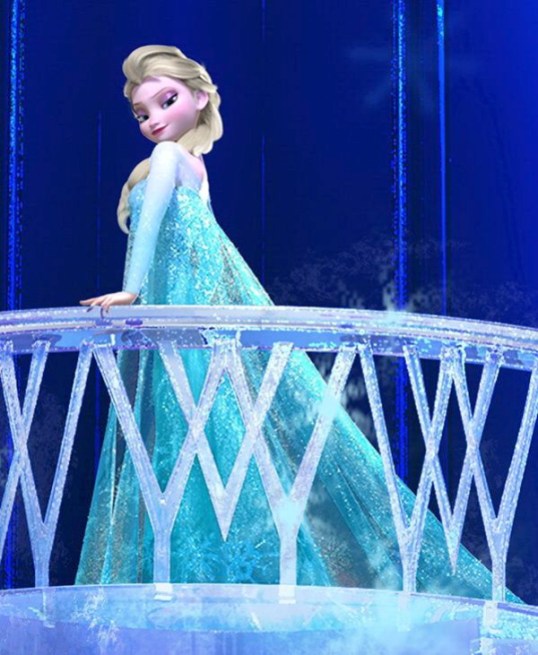
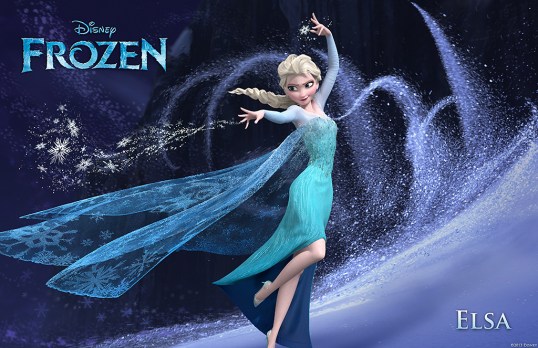
My latest review was one where I mention my surprise at just how good Disney’s latest animated film really turned out. It was a surprise born out of seeing the House that Mickey built returning back to it’s fairy tale roots. A return which first began with 2010’s Tangled and now continues with their latest, Frozen.
Close to everyone who has seen Frozen have fallen in love with the film and with many of the characters in the film. Like all past classic Disney animated films, Frozen also succeeds in having some great musical numbers. Frozen doesn’t just have strong characters, storytelling and musical numbers, but it has some great singing performances to round everything into what looks like a classic in the making.
Disney Animation has been kind enough to provide, for free, one of the biggest highlights of the film and what I consider my favorite singing performance in a cast full of them. Idinia Menzel as Elsa didn’t just hold her own in the acting department, but also knocks it out of the park with her power ballad “Let It Go”. Her voice just has a power all their own which brings the character of Elsa to life. The emotions she shows throughout this number just grows and grows as her character grows gradually from the unsure Elsa and into the sassy and confident queen inspired by Hans Christian Andersen’s character from his fairy tale, The Snow Queen.
Best to just watch and listen to Idina Menzel just sing her heart out.
Let It Go
The snow glows white on the mountain night Not a footprint to be seen A kingdom of isolation, and it looks like I’m the Queen The wind is howling like this swirling storm inside Couldn’t keep it in, heaven knows I tried
Don’t let them in, don’t let them see Be the good girl you always have to be Conceal, don’t feel, don’t let them know Well now they know
Let it go, let it go Can’t hold it back anymore Let it go, let it go Turn away and slam the door I don’t care What they’re going to say Let the storm rage on, the cold never bothered me anyway
It’s funny how some distance Makes everything seem small And the fears that once controlled me Can’t get to me at all
It’s time to see what I can do To test the limits and break through No right, no wrong, no rules for me I’m free
Let it go, let it go I am one with the wind and sky Let it go, let it go You’ll never see me cry Here I stand And here I stay Let the storm rage on
My power flurries through the air and to the ground My soul is spiraling in frozen fractals all around My one thought crystalizes like an icy blast I’m never going back, The past is in the past
Let it go, let it go When I’ll rise like the break of dawn Let it go, let it go That perfect girl is gone Here I stand in the light of day Let the storm rage on, The cold never bothered me anyway
During the 1990’s Disney was the king of animated films. It was a decade where they enjoyed a new Golden Age of film animation which first started with Little Mermaid. As the company entered the new millenium their success with traditional animation began to wane and a new kid on the block took over as king. This new kid was called Pixar and soon enough they joined the House that Mickey built. So, it was through Pixar that Disney retained their crown when it came to animated films, but their own in-house animation house suffered setbacks through failed projects and/or subpar productions.
It was in 2010 when Disney itself began a nice comeback with the surprise hit Tangled. This new Disney take on the Rapunzel fairy tale became not just a hit with both critics and fans, but showed that Disney could compete with their very own Pixar when it came to CG animation and storytelling. These were two areas that Pixar were known for and Disney followed it up with another critically-acclaimed and fan-favorite Wreck-It Ralph.
Frozen marks the latest from Walt Disney Animation and, at first glance, the film looked like an attempt to replicate the fun and whimsical nature of 2010’s Tangled. Even some of the character animations looked similar. The film wasn’t helped by a media and ad campaign which made the film feel like it would be about pratfalls and juvenile jokes. Yet, what the public got when it was finally released this past Thanksgiving was a definite return for Walt Disney Animation to their heyday of the 1990’s.
The film takes Hans Christian Andersen’s Snow Queen fairy tale and makes it into a story about the love of two sisters in a faraway kingdom where one grows up repressing her ability to control and create ice and snow for fear of harming her younger sister. It’s this part of Frozen which brings the film from becoming just an animated production for little kids and into the realm of appealing to audiences of all ages. Even Olaf the Snowman who was a prominent face in all the ads leading up to the film’s release ended up becoming more than just comedic relief.
The characters of Elsa and Anna, at first, look like your typical Disney princesses, but as the narrative moves forward the two pretty much blow up whatever negative tropes that have been attributed to past Disney princess roles. Anna didn’t just come off as the spunky little sister, but becomes a multi-faceted character who actually becomes the redemption for her older sister Elsa.
Now, speaking of Elsa, Disney has been famous for creating some very iconic female characters with their animated films. Some of these characters have been the protagonists in their films, but some have also been the villains. In Frozen, Disney has created a character in Elsa who many could say inhabited both sides of the film’s conflict. She becomes a sort of antagonist midway through the film due to fear and ignorance of her ability to create and control snow and ice. This incident also prompts the film’s turn from being just a cute and fun film and into the realm of becoming a classic in the making.
Seeing Elsa accepting her true nature and becoming more confident in herself as a woman makes Frozen a rarity in animated films where females character tend to have male counterparts to help them along. Elsa also becomes such a great character due to Idina Menzel’s voice performance both in the speaking parts and the songs Elsa becomes a part of. In fact, I would be quite surprised if the most pivotal moment and song in the film, “Let It Go”, doesn’t end up winning best original song come Oscar time. Ms. Menzel brought so many facets of emotions through Elsa from a sense of despair to a sassy determination that should make the character a fan-favorite of little girls and mature women for years to come.
Frozen, a film that looked like it was a flop for Disney waiting to happen, ends up becoming one of the surprise hits of this holiday season and cements the return of Walt Disney Animation back to the forefront of animated film storytelling. This was a film that ended up becoming more than it’s initial first impression had going for it. A film that showed the power of female-centric storytelling could compete with the sturm und drang of the male-dominated blockbusters.
I wholeheartedly recommend people see this film on the bigscreen if just to experience Idina Menzel’s performance in “Let It Go” on the biggest screen venue as possible.
For today’s entry in the 44 Days of Paranoia, let’s take a look at one of the most disappointing films of 2013, Broken City.
It’s a bit hard to describe the plot of Broken City, not because it’s particularly clever but just because there’s so much of it. The film starts with New York police detective Billy Taggart (Mark Wahlberg) murdering a man in cold blood. But don’t worry, the murdered man was a murderer himself who was only out of jail on a technicality. The Mayor of New York, Nicholas Hostetler (Russell Crowe, who sounds like he’s as much of a New Yorker as I am and I ain’t no New Yorker), pulls some strings and get a judge to drop the charges against Billy. The Mayor tells Billy that he’s a hero but Billy is still forced to leave the police.
Jump forward seven years later. Mayor Hostetler is locked in a tight re-election battle. His opponent is a liberal councilman named Jack Valliant (Barry Pepper.) Yes, the man’s last name is Valliant and — surprise! — it turns out that he’s actually a really sincere guy who wants to make New York a great place to live. We know this because we get to sit through an endless debate between him and Hostetler. While Hostetler gives a speech about how he’s against higher taxes, Valliant says that all he’s doing is asking the rich “to pay their fair share.” The debate audience, of course, explodes into applause. Valliant never gets around to saying, “If you like your plan, you can keep your plan.” Maybe they’re saving that for the sequel.
Meanwhile, Billy is now a private investigator. His girlfriend is an actress who has just appeared in an independent film. When Billy goes to the premiere, he’s so upset over the sight of his girlfriend being taken from behind on the big screen that he starts drinking and attacking random strangers on the street.
Meanwhile, (in many ways, Broken City is a movie of meanwhiles) Mayor Hostetler has hired Billy to follow his wife Cathleen (Catherine Zeta-Jones) and discover who she’s having an affair with. Working with his assistant (played by Alona Tal), Billy follows Cathleen and discovers that she’s been spending time with Paul Andrews (Kyle Chandler), who happens to be the manager of the Valliant campaign…
Or is she? As Billy subsequently discovers, the truth is a lot more complicated than it seems (or probably needs to be).
Broken City got a lot of attention because the script was listed on the 2008 Black List. The Black List is an annual list of the “best” unproduced scripts in Hollywood. Now, it should be understood that the concept of what makes something the “best” is always open to interpretation. In the case of the Black List, the “best” is determined by a survey of studio and production executives. The Black List comes out every December and it usually provides an excuse for lazy entertainment writers to write yet another article or blog post bemoaning all of the Hollywood remakes while so many creative and original scripts remain unproduced.
But here’s the thing. Since, I started reviewing films for the Shattered Lens, I’ve had the chance to see several films that were produced from Black List scripts. A few of them have been good but the majority of them have either been likable but forgettable (i.e., CedarRapids) or else they’ve been total and complete disasters, like The Beaver. Typically, Black List films tend to be overly complicated, overly ambitious, and never quite as intelligent as they may seem. Frequently, Black List scripts tend to be a bit cutesy in a way that’s effective on paper but annoying on screen. (For example, naming your film’s only good politician Jack Valliant is one of those cutesy concepts that tend to turn up in a lot of Black List scripts.) Several of these scripts, Broken City included, are thrillers that attempt to use the conventions of the genre film to make some larger point about American society. They’ve usually got some sort of dreary political subtext and they always seem to feature a twist that’s surprising only because it doesn’t make any sense.
And that is certainly the case when it comes to Broken City. Don’t get me wrong — the film starts well and Mark Wahlberg is well-cast as the hero. But, with each passing minute of film, things get messier and messier until, finally, it’s impossible to take the film seriously. It’s obvious that director Allen Hughes meant for Broken City to be more than just a thriller. Instead, in much the same way that Charles Dickens used London, Hughes makes a valiant effort to use the film’s New York as a metaphor for our own corrupt society. Under Hughes’s direction, Broken City does a lot without doing any of it that well.
Indeed, if I could give this film an A for effort and ambition, I certainly would. However, in the end, a film should first be judged by what is actually seen on-screen. Taken by that standard, Broken City is a mess, a disorganized collection of themes and subplots that attempts to do so much that it accomplishes very little. Russell Crowe and Catherine Zeta-Jones both struggle to sound like New Yorkers while Barry Pepper is so overly intense and wired as the saintly Valliant that I would be scared to vote for him. Seriously, he seems like the type who would start a war in the name of social justice and then end up having so much fun killing and conquering that he’d forget what the reason for fighting was in the first place. On a positive note, Mark Wahlberg and Alona Tal have a very likable chemistry and it’s too bad that the rest of the film didn’t take better advantage of it.
For our latest ghost of Christmas Past, here’s the concluding chapter of the Lego Star Wars Christmas Special Trilogy! As with the previous installments, this comes to us from Al Nickels Films.
12 Years A Slave didn’t just win Boston today. It was also named best picture of the year by the New York Film Critics Online.
Personally, I’m hoping that next year, sites like AwardsDaily, AwardsWatch, Goldderby, and others will join together to form the Online Oscar Precursors Watchers Association and they’ll give out awards to the various critical groups. For example, they could hand out awards for the Best Jump On The Bandwagon, Best Out-Of-Nowhere winner, or the Honorary Award For The Award That Was Most Obviously Determined By A Desire To Tick People Off.
But, until that happens, here’s are the New York Film Critics Online’s pick for the best of 2013:
BEST PICTURE
“12 Years a Slave”
BEST DIRECTOR
Alfonso Cuaron (“Gravity”)
BEST ACTOR
Chiwetel Ejiofor (“12 Years a Slave”)
BEST ACTRESS
Cate Blanchett (“Blue Jasmine”)
BEST SUPPORTING ACTOR
Jared Leto (“Dallas Buyers Club”)
BEST SUPPORTING ACTRESS
Lupita Nyong’o (“12 Years A Slave”)
BEST SCREENPLAY
Spike Jonze (“Her”)
BEST BREAKTHROUGH PERFORMANCE
Adele Exarchopoulos (“Blue Is the Warmest Color”)
BEST MUSIC
“Inside Llewyn Davis”
BEST DEBUT DIRECTOR
Ryan Coogler (“Fruitvale Station”)
BEST CINEMATOGRAPHY
Emmanuel Lubezki (“Gravity”)
BEST DOCUMENTARY
“The Act of Killing”
BEST FOREIGN LANGUAGE FILM
“Blue Is the Warmest Color”
 Through the Shattered Lens